




The Kingdom of Satan
7: 7-8
The Kingdom of Satan DIG: How is the fourth beast different from the other three that preceded it? Here Dani’el 7:8 refers to a “little horn,” but Dani’el 8:9 refers to a “small horn.” Are these the same or different? List the traits of our current world climate that would enable a global leader like the antichrist?
REFLECT: What kinds of things do you see around you that remind you that the Kingdom of Satan is still alive and well? When you think about the end times that Dani’el’s vision describes with the antichrist, what gives you hope? How can we be sure that believers will not suffer the wrath of the Great Tribulation?
The ten toes of Dani’el 2 are the ten horns and ten kings of Dani’el 7:7-8 and 24, which will come from a future imperialistic one world government. Dani’el 2 gives us the perspective of the times of the Gentiles from a human viewpoint as something majestic, but Dani’el 7 gives us the perspective from God’s viewpoint as something dreadful. Therefore, Chapter 7 elaborates on the prophecies that were made in Chapter 2.
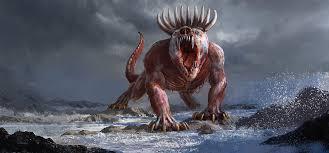
The fourth beast (7:7): As frightening as the first three beasts were (to see link click Cc – The Kingdoms of This World), the most hideous creature was yet to come. After that, in my vision at night (inspiring great fear) I looked, and there before me was a fourth beast – terrifying and frightening and very powerful. It was different from all the former beasts, and it had ten horns with which to gore its victims (7:7). The fourth beast could not even be described in terms of earthly animals. It was frightening, dreadful, and incredibly strong, with large iron teeth it crushed and devoured its victims and trampled underfoot.195 Trampling with the feet emphasizes vengeance. One example of the method of conquest in history is the war of Rome with Carthage in 146 BC. Located on the eastern shore of Lake Tunis in what is now Tunisia, Carthage was one of the most prosperous cities in the classical world and one of the most important commercial centers in the ancient Mediterranean area. After a nearly three-year siege, Rome annihilated the city, never to be rebuilt. The Roman armies swept across the ancient world defeating one nation after another until the empire extended from the Atlantic Ocean in the east to the Caspian Sea and from North Africa to the Rhine and Danube Rivers, Canaan and Syria were also under Roman domination.196 In the same manner, the fourth empire would crush civilizations, which the other three empires did not do.
The fourth beast’s ten horns correspond to the ten toes of Nebuchadnezzar’s statue (2:31-33). In the teaching of Dani’el 2, it was noted that those parts of the statue represented an empire that could best be described as “Imperialism” (see Bb – The Fourth Empire: Imperialism). This fourth empire was shown to undergo multiple stages described in Chapter 2: The United Stage (Bc), the Divided Kingdom Stage (Bd), and the One World Government Stage (Be). It was pointed out that the United Stage was fulfilled by the Roman Empire. It was one of the most successful imperial states in world history in terms of its geographical reach, longevity, and subsequent influence. Yet, it was only the first of several stages. Dani’el’s vision in Chapter 7, then, adds to the information that has been given so far about the Fourth Kingdom.197

The little horn (7:8): Then Dani’el described the appearance of an eleventh horn on the head of the fourth beast. While I was thinking about the ten horns, there before me was another horn, a little one (the same one that is seen in 8:9), that came up among them, and three of the first horns were uprooted before it. This horn was much smaller than the other ones. Yet, it had strength, for in the process of emerging, it uprooted three of the original ten horns. Furthermore, this horn was distinct in that it had human characteristics. This horn had eyes like the eyes of a human being and a mouth that spoke arrogantly.198
This little horn is the antichrist (see Dz – The Antichrist), the beast of Revelation (see the commentary on Revelation Dn – All the Inhabitants of the Earth Worship the Beast). This man of lawlessness will exalt himself and defy everything that people call god and every object of worship. He will even sit in the Tribulation temple (see Revelation Bx – The Tribulation Temple), claiming to be God Himself (see Revelation Dr – The Abomination That Causes Desolation) (Second Thessalonians 2:3b-4 NLT). Dani’el prophesied that in the last days a powerful kingdom made up of a confederation of nations will rise out of the ashes of the old Roman Empire. It will be the Kingdom of Satan, and it will have incredible power, for by its sheer force the counterfeit trinity, Satan, the antichrist, and the false prophet, will rule the whole world. That period in human history is called the Great Tribulation (see Revelation Ch – The Beginning of the Great Tribulation). It will be a time when the wrath of Ha’Shem will be poured out on the earth.
How can we be sure that believers will not suffer the wrath of the Great Tribulation? Approaching the Scriptures from a Jewish perspective can be helpful in many ways, but when dealing with events of the end times, it is especially beneficial. The key to understanding the sequence of end time events can be clearly seen when studying Feasts of Isra’el (see Leviticus Dw – God’s Appointed Times). The first four feasts were fulfilled by the program of the First Coming of Yeshua. The feast of Passover was fulfilled by the death of Messiah (see Leviticus Dy – Pesach), Unleavened Bread was fulfilled by the sinlessness of His sacrifice (see Leviticus Dz – Hag ha’Matzot), Firstfruits was fulfilled by His resurrection (see Leviticus Ea – Rasheet), and Pentecost was fulfilled by the birth of His Church in Jerusalem (see Leviticus Ec – Hag Shavu’ot).
Between the first four feasts and the last three feasts, there is a four-month interval mentioned in passing. When you reap the harvest of your land, do not reap to the very edges of your field or gather the gleanings of your harvest. Leave them for the poor and for the foreigner residing among you. I am ADONAI Your God (Leviticus 23:22). During the pause between the two sets of festivals, life is to continue as normal. This interval is pictured as a summertime of labor in the fields in preparation for the final harvest of the summer and before the fall harvest. This verse is not related to any feast. Unless one understands what is really happening, it almost seems like an unnecessary interruption. However, it is the pause between the festivals that fulfilled the program of the First Coming as opposed to the festivals to be fulfilled by the program of the Second Coming. This internal of four months does have a Messianic implication.
The Messianic implication is the insertion of the Dispensation of Grace (see my commentary on Hebrews Bp – The Dispensation of Grace), interrupting the program of the feasts of Isra’el. Indeed, the gleanings for the poor and the foreigner residing among you is a very good picture of the mission of the Church itself in Gospel evangelism. For example, Yeshua stated: Look to the fields! They are ripe for harvest (John 4:35)! Thus, it becomes a fitting symbol of the obligation of the Church to proclaim the Good News. Therefore, Leviticus 23:22, being a parenthetical verse interrupting the discussion of the feasts of Isra’el, is significant in that it symbolizes the present age in which we now live and in which the program of the feasts of Israel has been temporarily interrupted. The last three festivals in the second cycle of festivals also come close together, even closer than those of the first cycle of feasts. In fact, they all come within two weeks of each other. The last three feasts of the second cycle are to be fulfilled by the program of the Second Coming.
So, back to my original question, will believers suffer the wrath of God during the Great Tribulation? In a word, no! How can I be so sure? The last three feasts will be fulfilled by the program of the Second Coming of Yeshua. The feast of trumpets will be fulfilled by the Rapture of the Church (see Leviticus Ee – Rosh ha’Shanah), which comes before the Day of Atonement (see Leviticus Ef – Yom Kippur), and that will be fulfilled by the Great Tribulation. As far as the Rapture is concerned, the Lord Himself will come down from heaven, with a loud command, with the voice of the archangel and with the trumpet call of God, and the dead in Messiah will rise first. After that, we who are still alive and are left will be caught up together in the air. And so we will be with the Messiah forever. And because we will not go through the Great Tribulation, Paul can say: Therefore, comfort each other with these words (1 Thessalonians 4:16-17). The English word Rapture comes from the Latin translation of the Bible called the Latin Vulgate. There, the word caught up is translated rapturo, and this is where we get the English word Rapture. The events described here and First Corinthians 15:50-53, differ considerably from those that will accompany Yeshua’s return to the earth to set up His earthly Kingdom (Rev 19:11-21). This is the distinction between the Rapture and the Second Coming.
From the Greek translation of the Bible, the phrase caught up comes from the word harpazo. It has four meanings, all of which tell us a great deal about the Rapture. First, it can mean to carry off by force. Satan and his demons, whose kingdom runs through the lower atmosphere of the earth, will offer opposition to the believers going through their territory on their way to heaven. Paul speaks of the Adversary in Ephesians 2:2 as the ruler of the kingdom of the air, and the word for air there means the lower, denser, atmosphere. That is why it will be necessary for the Lord to come down and carry us off by supernatural force against the opposition of the dragon of old and his demons.
Secondly, it can mean to snatch out of the way of danger. The Bible teaches that God did not appoint us to suffer wrath but to receive salvation through our Lord Yeshua Messiah (First Thessalonians 5:9), and one of the purposes of the Great Tribulation is to bring wrath upon an unbelieving world. The prophet Isaiah tells us: See, the Day of the Lord is coming – a cruel day, with wrath and fierce anger – to make the land desolate and destroy the sinners within it (Isaiah 13:9). Thus, according to God’s timing, the wrath of the Great Tribulation will be visited upon the earth. And because the Church is made up of His children, our Lord will come and snatch us out of the way of danger.
Thus, since Rosh ha’Shanah comes before Yom Kippur, the Rapture comes before the Great Tribulation. We are not appointed to suffer wrath, and wrath is exactly what the Great Tribulation is all about. But on the last three days of the Great Tribulation, the leadership of the remaining Jews will recognize that Yeshua really is the Messiah and cry out for Him to return (Hosea 6:1-3). Only after the Great Tribulation do we celebrate Sukkot which will be fulfilled by the Messianic Kingdom (see Cf – The Kingdom of Messiah).
Dear heavenly Father, praise You for being the very best father that ever could be! Your steadfast love always wraps around all that You do. Thank you for being such a wise and wonderful heavenly Father who in love and kindness seeks to use whatever it takes, even trials and Tribulation, to draw people back to loving you as their God, so you can have mercy on them and bring them home to heaven to live in great joy and shalom with You forever! In Messiah Yeshua’s holy Name and power of His resurrection. Amen
Leave A Comment