




The Deliverance of Darius
6: 25-28
The Deliverance of Darius DIG: How does King Darius respond to Dani’el being saved out of the lion’s den? Why did he become a believer? If God receives glory from miraculous rescues and good-guy endings, why do you think the righteous still suffer? How were the decrees of Nebuchadnezzar and Darius the same? Different? How is the theology expressed by Darius as true as anything written by Moses, David, or Paul?
REFLECT: What parallels do you see between Dani’el’s betrayal in 6:3-18 and Yeshua’s? Between Dani’el’s vindication in 6:19-28 and Messiah’s? An angel protected Dani’el. In what ways have you seen evidence of the work of an angel in your life? Dani’el faced the lions because of his beliefs. What penalties have you faced for your beliefs? What would you say is the key to giving God glory no matter what?
ADONAI is the living God, who endures forever, His dominion will never end;
He offers deliverance, performing signs and wonders in the heavens and on the earth.
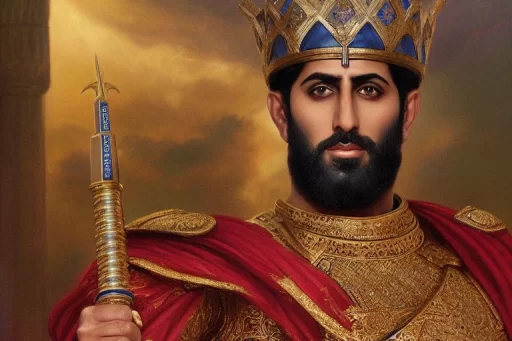
The deliverance of Darius (6:25-27): The plot of Dani’el Chapter 6 was set in motion by the king issuing a decree that prayers could only be directed toward or through him (to see link click Dm – The Conspiracy of the Royal Administrators). But after experiencing Dani’el’s miraculous deliverance from the lions’ den (see Do – Dani’el in the Lion’s Den), the chapter ends with a counter-decree, nullifying his original edict, and promoting the God of Abraham, Isaac, and Jacob.348 Like his ancestor King Nebuchadnezzar, Darius wrote to all the peoples of every language in the Province of Babylon. Both decrees offered the same greeting: May you prosper greatly! I issue a decree that in every part of my province, people must fear and reverence the God of Dani’el (6:25-26a). Darius stated his decree more positively than the decree of Nebuchadnezzar which threatened to cut people into pieces and have their houses be turned into piles of rubble if they defamed the God of Shadrach, Meshach, and Abednego (3:29).
For He is the living God (6:26b): This indicates that He not only exists, but is active in the world. Certainly Dani’el’s rescue showed that in a dramatic fashion. This reference to the living God not only contrasts YHVH with the lifeless gods of the nations (Jer 16:18; Hab 2:19), but also calls attention to His capacity to preserve life as a God who saves and rescues His followers (6:27a). As Psalm 42:2a declares: I thirst for the living God.
and He endures forever (6:26c). Darius agreed with Nebuchadnezzar, who said: God’s dominion is an eternal dominion (4:34b). And the Psalter agrees with both of them, declaring: Give thanks to ADONAI, for He is good, and His lovingkindness (see the commentary on Ruth Af – The Concept of Chesed) endures forever. He alone does great wonders, His love endures forever (Psalm 136:1 and 3). And because His love endures forever, that means that the righteous of the TaNaKh, and believers in every dispensation will endure forever (see the commentary on The Life of Christ Ms – The Eternal Security of the Believer).
His Kingdom will not be destroyed and His dominion will never end (6:26d): In the past, Nebuchadnezzar had said the same thing in different words: His kingdom endures from generation to generation (4:34c). This theology expressed in the decree of Darius is as true as anything written by Moses, David, or Paul. ADONAI is the living and eternal God whose Kingdom, unlike the four Gentile Empires that precede it, will never be destroyed (see Bg – The Fifth Empire: The Kingdom of God).349
He delivers and he rescues (6:27a): Nebuchadnezzar said basically the same thing to Dani’el, “Surely your God is the God of gods and the Lord of kings,” the ruler over the kings of the earth, and a Revealer of mysteries (2:47). I think that King Darius believed this, and it was credited to him as righteousness (Genesis 15:6). The fear of ADONAI is the beginning of wisdom, and knowledge of the Holy One is understanding (Proverbs 9:10). Darius decreed that his subjects needed to fear and reverence the God of Dani’el (6:26a). Therefore, I believe that he had gained wisdom and knowledge of the Holy One.
He performs signs and wonders in the heavens and on the earth (6:27b): Both royal decrees make the same claim . . . Ha’Shem is sovereign and He does as he pleases with the powers of heaven and the peoples of the earth (4:35b). Perhaps for the Hebrews held captive in Babylon (see Jeremiah Gu – Seventy Years of Imperial Babylonian Rule), the testimony of Darius to God’s power to perform signs and wonders, and to deliver His people stirred thoughts of the signs and wonders associated with the exodus from Egypt and the possibility of a return to the Promised Land (see Ezra-Nehemiah Ag – The First Return).350
He has rescued Dani’el from the power of the lions (6:27c): The signs and miracles that YHVH performed were not to “show off,” but to demonstrate to a lost world that He is the true God and should be honored. Dani’el’s rescue from the lion’s den seems to have had a profound effect on Darius. While it is true that Darius’ decree did not violate any of the polytheistic beliefs of the Babylonian culture at that time, there are no qualifications in his statements. He clearly and undeniably declared that the God of Abraham, Isaac, and Jacob delivers and rescues (6:27a). Obviously, his personal beliefs did not lead to a revival of the province of Babylon, but I do believe he was miraculously rescued spiritually, just as Dani’el was miraculously rescued physically. There are many today, like Mormons, Hindus, Buddhists, Wiccans, Druids, and most traditional African religions, who are rescued out of a polytheistic religious system. Thus, God is not limited in His ability to rescue anyone from any polytheistic religion. This has been evidenced throughout human history.
Prospering in the exile (6:28): So Dani’el prospered during the reign of Darius and the reign of Cyrus the Persian (see Ag – Cyrus and Darius). In the context of this verse, the Aramaic term for prospered (haslah) refers to political success. We have seen Dani’el climb the political ladder from captive prisoner to entering the king’s service (1:19-20), to being in charge of all the wise men in Babylon (2:48), to the king’s personal advisor (4:27), to being set over the whole province of Babylon like a Prime Minister (6:3).351
So Dani’el prospered during the reign of Darius and the reign of Cyrus the Persian. This rounds off the story of Dani’el’s life, and puts his experience in the lions’ den into a broader context. It reminds us that most of Dani’el’s life was spent in exile, in the metaphorical lions’ den. Yet, as the end of Chapter 6 reminds us, God preserved him to prosper under successive kings, until the reign of Cyrus, when Dani’el’s prayers for Jerusalem finally began to be realized once the Persian king issued a decree that the Jews could return to their homeland and rebuild their holy City (see Ezra-Nehemiah Ai – The Decree of Cyrus).
As far as we know, Dani’el never returned home to his beloved Judah. His reward would have to wait for the Jerusalem that is above (see Hebrews Dc – The Earthly Sinai and the Heavenly Tziyon). In the experiences of Dani’el and his three friends, YHVH demonstrated that He could keep His people safe in the midst of their enemies. Life in exile would never be home. However, through the faithfulness of ADONAI, it was possible for His people to survive the exile as strangers and aliens, serving the earthly empire in which they found themselves, even while they looked for another heavenly City that was yet to come.
This is how Dani’el 6 addresses us as well, for we too are strangers and aliens in this world. We should learn from Dani’el’s experience that the world in which we live is a dangerous place. This world is not our home and it never will be (Heb 13:14). Yet, at the same time, we must also recognize that the hostility of the world can never hurt us beyond what the Lord permits (Job 1:1-12). Messiah is the only One we need to please, and His opinion of us is the only one that counts (see Revelation Cc – We Must All Appear Before the Bema Seat of Christ). So, in the midst of the greatest of trials and suffering, even when we are persecuted for our faith, we can have a peace that will astound the world, for our Lord holds our oppressors in His hands.352
Deliverance today: If I asked you if you were a sinner, what would you say? Romans 3:23 says: For all have sinned and fall short of the glory of God. That includes you and me, doesn’t it? Most people feel that being good gets you into heaven and being bad keeps you out. That simply is not true; we all have sinned. What would you say sin is? I think we can agree that we are both sinners; now let’s define sin. Some have said, “I’m not perfect,” or “I have made some mistakes.” But what do you think the Bible means by sin? Well, the Bible says that everyone practicing sin practices lawlessness – indeed, sin is lawlessness (First John 3:4). Have you ever disobeyed your parents? Have you ever misused the name of God? Have you ever told a lie? This is what sin is. It’s practicing lawlessness. And any time you practice lawlessness there is a penalty. If you run a stop sign, the penalty is a fine. If you rob a bank, the penalty is jail. What is the penalty for practicing lawlessness?
The Bible teaches us that the wages of sin is death (Romans 6:23a). The wages of work is money, but the wages of sin is death. In other words, what I earn – the penalty, the punishment of sin – is death. Death is separation. The Bible speaks of two kinds of death that are two kinds of separation. The first death is separation of the body and the soul. If I were to die right now my body would fall to the floor, but my soul, the real me, would go somewhere else. But the Bible speaks of another death, one it calls the second death. This is separation of the soul from God. Now, the penalty of sin is death, spiritual death, and separation from the LORD. To put it simply – hell. All this is really bad news. But there is good news.
But God demonstrates His own love for us in this: While we were still sinners, Christ died for us (Romans 5:8). We were spiritually dead and unable to make the first move toward God because we inherited Adam’s sin nature that rebelled and separated us from Him. So, God made the first move toward us by sending His one and only Son to die in our place for the payment for our sins. We stand before the Son of God, guilty of sin, and facing a death penalty. But Yeshua, as judge (John 5:27), comes down from behind the seat of judgment, takes off His judicial robe and stands beside us. It is there that He says to us, “I will take your place. I will die for you.” And if you were the only person in the world, He still would have died for you. The penalty for sin is death, but Messiah died and paid for sin so we do not have to go to hell.
It is not what you do for God that saves you, it is what God has already done for you.
You don’t get to heaven by what you do; you get to heaven by what you believe.
What is it that I need to believe in, to trust in, to have faith in, to be saved?
For God so loved the world that He gave His one and only Son who died for our sins according to the Scriptures, that He was buried, that He was raised on the third day according to the Scriptures, and whoever believes in Him shall not perish but have eternal life (John 3:16 and First Corinthians 15:3b-4).
If you believe this, you are saved. Nothing else matters.
Salvation = faith + nothing (not baptism, not good works . . . nothing means nothing). Without faith it is impossible to please God because anyone who comes to Him must believe that He exists and that He rewards those who earnestly seek Him. Now is the day of salvation (Heb 11:6 and 2 Corinthians 6:2c).
Would you like to be saved right now?
Pray this simple prayer in faith. But before you do, I want you to remember that saying a prayer does not save you, trusting in Yeshua Messiah does. God, I admit that I have sinned. I believe Yeshua Messiah died for my sins and rose in Victory. I want to trust Him to save me right now. Lord, please come into my heart and live inside of me, please make me a new person. I accept your gift of salvation.
If you were to die right now, where would you go?
Why should God let you into His heaven?
That’s right, because Yeshua died to pay for your sins.353
Leave A Comment