




Antiochus Epiphanes
11: 21-35
Antiochus Epiphanes DIG: How is it that the heart of man can contain so much evil and yet God can fulfill His purposes through him? When faced with persecution, what are the factors that make people turn back on their faith? This was a refining time for God’s people. List some other times throughout history that have refined God’s people. How did Antiochus Epiphanes come to power? Who did he foreshadow?
REFLECT: What are your feelings about believers being called to defend, with force, certain human religious rights and freedoms? When faced with persecution (as the Jews suffered under Antiochus and believers will suffer under the antichrist), what are the factors that enable people to stand firm in the faith, even to the point of death? Have you ever faced persecution in your life? If so, how did you handle it?
Antiochus Epiphanes was a picture of the coming antichrist.
After fifteen verses that cover the reigns of seven Seleucid kings over a period of around 150 years (11:5-20), the next fifteen verses focus our attention on the reign of a single Seleucid king, Antiochus IV.388 These verses serve as a climax to the section (to see link click Du – Prophecies Already Fulfilled). The historical preview (see Dv – Alexander the Great) was given in order to set the stage for the prophetical fulfillment of this eighth Seleucid ruler. We have already met this wicked man, who in his character and activities, pictures the future antichrist (see Ck – The Ram and the Male Goat: The small horn), and he was also seen when the persecutions of this madman would come in less than four hundred years after Dani’el’s death (see Cl – Living in the Valley of Darkness: Antiochus Epiphanes). The prophecy’s appraisal of his importance and his character is based solely on the turmoil that his rule created in Jerusalem.390
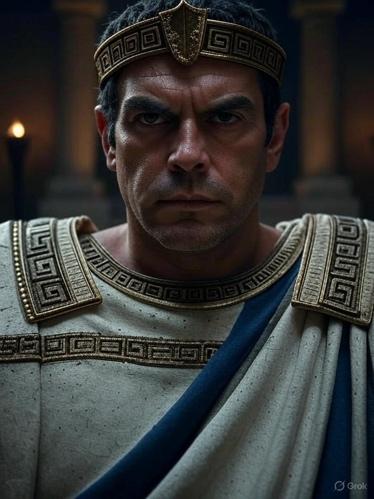
Antiochus IV’s rise to power (11:21-24): As related by Arnold Fruchtenbaum in his commentary on Dani’el, the angel (see Dt – The Arrival of an Angel) revealed that Antiochus would usurp the throne that rightly belonged to the last king, Seleucus IV Philopator (11:20) will be succeeded by a contemptible person. He gave himself the name Epiphanes, which means glorious one, but the unnamed angel called him a contemptible person. The Hebrew term contemptible, nivzeh, comes from the root bazah, meaning to despise. Among the ancient tyrants, he was the most brutal oppressor of the Jewish people.
While Antiochus IV Epiphanes was the son of Antiochus III the Great and, therefore, the brother of the former monarch, Seleucus IV, he was not in line for royal succession (11:21a). The rightful successor was Demetrius I Soter, son of Seleucus IV. After the Battle of Magnesia in 189 NC, the defeated Seleucid king, Antiochus III, was forced to sign a truce. One of the conditions of the treaty was that he had to hand over Hannibal (the general who had commanded the forces of Carthage in their battle against Rome in the Second Punic War) as well as his own son, Antiochus Epiphanes, who remained a prisoner in Rome until 176 BC, when he was released in exchange for his nephew, Demetrius I. Thus, not only was Antiochus Epiphanes contemptible, but he was also an illegitimate king.
The next phrase in the angel’s prophecy predicted that Antiochus Epiphanes would invade the kingdom when its people feel secure. He was in Athens when he heard that his brother had been murdered by Heliodorus (11:20). At that point, his young nephew, probably around five at the time, became the rightful king. Heliodorus maintained the real power behind the throne. At that point Antiochus Epiphanes arrived in Syria and proclaimed himself co-ruler in an unlawful succession. He killed Heliodorus and sent his nephew into the background, pretending to be the boy’s legal guardian. In 170 BC the boy died. It’s possible that his uncle ordered the assassination. The angel revealed that Antiochus Epiphanes would seize the kingdom through intrigue (11:21b). The Hebrew word for intrigue is chalaklakot, meaning smoothness, and is better translated intrigue or trickery (JPS 1985).
Then the angel provides a prophetic description of Antiochus Epiphanes’ consolidation of power. Then an overwhelming army will sweep away his enemies before him like a flood. Hence the prophecy stated that he would succeed in military conquests. This prophecy was fulfilled by numerous victories, including one in 170 BC when he fought the Egyptians in an area halfway between Gaza and the Nile delta (see The First Egyptian Campaign below). Then the angel mentioned the prince of the covenant without giving any further information about his identity (11:22). As verses 28 and 32 will show, this phrase refers to the Jewish high priest, who functioned as a ruler of the Jewish people at that time. As mentioned in the discussion of 8:9-14, the rightful high priest was Onias III. In 175 BC, Antiochus Epiphanes forced Onias out of the office and replaced him with his brother Jason. In 172 BC, Onias was murdered by Menelaus, another brother of his, who bribed himself into the office of the high priest by sending money to Antiochus for the privilege.
Next, the angel deals with Antiochus Epiphanes’ growth in strength. After coming to an agreement with him. The agreement mentioned in this verse historically refers to Antiochus Epiphanes’ alliance with Egypt. Cleopatra I, his sister, was the de facto leader of the Ptolemaic Empire, and he took advantage of that familial bond for a time. But, as the angel predicted, he acted deceitfully. Egypt was, at the time, embroiled in a civil war between Ptolemy VI Philometor and Ptolemy VIII Physcon. Antiochus backed Philometor because he believed that by doing so, he could eventually gain control of Egypt. Over time, Antiochus Epiphanes rose to power. His rise to power had nothing to do with the size of his kingdom, because it only had a small force of people left after its defeat by Rome (11:23).
Then, the angel prophetically describes the growth of Antiochus Epiphanes’ wealth. When the richest provinces feel secure, he will invade them and will achieve what neither his ancestors nor his forefathers did. He will distribute plunder, loot and wealth among his followers. In fulfillment of this prophecy, Antiochus Epiphanes attacked other nations when the richest provinces felt secure, when they least expected it. In that way he was able to capture even the richest provinces. His ancestors had looted other nations in order to increase their personal wealth, and enjoy lives of luxury. Antiochus, on the other hand, distributed the plunder to his followers. This didn’t mean he was a generous person; rather, he used the plundered money to bribe people and win favors. He plotted the overthrow of fortresses of Egypt – but only for a time, as it turned out, that was twelve years (11:24).
The First Egyptian Campaign (11:25-28): These verses prophetically describe the first of several campaigns Antiochus IV Epiphanes conducted against Egypt. The exact sequence of events that led to the invasion of the neighboring country is the subject of scholarly debate. To understand who participated in the campaigns, it may be best to review the familial ties of the Seleucids and Ptolemies. Antiochus Epiphanes had a sister by the name of Cleopatra. She was the daughter referred to in 11:17. Antiochus III, their father, had wed Cleopatra to Ptolemy V, the king of Egypt. Ptolemy was a young boy at the time of the wedding. Thus, his Seleucid wife effectively became the monarch of Egypt. The couple eventually had three children: Ptolemy VI Philometor, Ptolemy VIII Physcon, and Cleopatra II. All three siblings will be mentioned in the discussion of Antiochus Epiphanes’ first and third Egyptian campaigns.390
During this time there was a fresh outbreak of the old hostilities between the Seleucids and Ptolemies, the king of the North and the king of the South. Verse 25 reveals the beginning of the First Egyptian Campaign in 170 BC. With a large army Antiochus Epiphanes stirred up all his strength and courage against the king of the South. At that time, the king of the South was his nephew, Ptolemy VI Philometor. Egypt had been given to the Seleucids as a dowry when Berenice married Antiochus II Theos (11:6). Assuming that the internal struggles for the Seleucid throne would make repossession of the territory easy, the Ptolemies were planning on invading Isra’el. Yet, Antiochus Epiphanes had no intention of letting them take one of his valuable assets.
Another reason for Antiochus Epiphanes’ attack on Egypt was that the Ptolemies demanded the return of Coele-Syria, a region in the southwest region of his kingdom. When the empire of Alexander the Great was divided by his four generals, Ptolemy I took control of Coele-Syria, but ultimately it was given to Seleucus I Nicator. The successors of the generals were embroiled in a series of conflicts regarding this region, and now was one of those times. Ptolemy I and Antiochus Epiphanes met at Pelusium, an Egyptian frontier city east of the Nile Delta in northern Sinai. Although the king of the South came with a large and very powerful army, he was not able to stand because of the plots devised against him. Treachery determined the outcome of the battle. Historically, Ptolemy VI’s most trusted advisors betrayed him to Antiochus. Those who eat from the king’s table will try to destroy him; his army will be swept away, and many will fall in battle (11:25-26).
The angel declared that the two kings themselves would also lie to each other. The two kings were Antiochus VI and Ptolemy, who was then held captive by his uncle. When the people of Alexandria heard that their king had been captured, they enthroned his brother, Ptolemy VIII Physcon. In order to achieve his goal of getting full control of Isra’el, Antiochus Epiphanes needed to be in control of all the affairs of Egypt. Yet, the new king posed a threat to his plans. Therefore, Antiochus Epiphanes pretended to befriend his nephew and captured king Ptolemy VI Philometor, promising to reinstate him as ruler of Egypt if he would help him in return. Philometor pretended to believe his uncle. In this way, the two men fulfilled the prophecy that the two kings, with their hearts bent on evil, will sit at the same table and lie to each other, but to no avail. Antiochus only succeeded in making Philometor a puppet king of Memphis because the people of Alexandria rejected his reinstatement as Egypt’s ruler. When Antiochus finally left Egypt empty-handed, the two brothers, Ptolemy VI and Ptolemy VIII, reconciled and agreed to rule the kingdom together instead of fighting a civil war. As the subsequent verses will show, their agreement didn’t mean the end of the war because an end would come at the appointed time (11:27), and that time had not come yet.
Historically, Antiochus Epiphanes eventually returned to Syria, with great wealth. Yet he failed in his ultimate goal to take over all of Egypt, and that made him angry. His heart was set against the holy covenant, meaning the theocracy of Isra’el under the leadership of the priests. While he was in Egypt, Jason, who was outbid for the high priesthood, began a revolt in Jerusalem against acting high priest Menelaus (11:22), who wanted to Hellenize Jewish worship. On his way home, Antiochus Epiphanes put down that revolt. Then he fulfilled the prophecy that said he would take action against the holy covenant by plundering the land of Isra’el (1 Maccabees 1:20-28; 2 Macc 5:11-17). He killed 40,000 men, women, and children, and took 40,000 other Jews into slavery, thus causing a great deal of suffering, then he returned to his own country (11:28).
The Third Egyptian Campaign (11:29-30a): Dani’el Chapter 11 does not deal with Antiochus Epiphanes Second Egyptian Campaign, which took place in 169 BC. Historically, Antiochus Epiphanes’ Third Egyptian Campaign occurred in 168 BC. He came at the appointed time to invade the South again. He had heard that his nephews, Ptolemy VI Philometor and Ptolemy VIII Physcon, had agreed to co-rule Egypt, and he felt betrayed by Philometor. The angel, however, had prophesied that this time the outcome will be different from what it was before, meaning that this time Antiochus Epiphanes would not be so victorious. Indeed, just when he was on the brink of annexing Egypt to Syria, Roman allies from Cyprus came against him (11:29-30a). With its own sights set upon Egypt, Rome warned Antiochus not to expand his kingdom in that direction. So when the Syrian king approached Alexandria, he was not confronted by the Egyptians, but by the Roman commander Gaius Popillius Laenas. As Antiochus stuck out his hand to greet him, the Roman commander handed him a decree from the Roman Senate telling him to leave Egypt alone. He was told to read it on the spot. When Antiochus said he wanted to consult with his friends before answering, Popillius drew a circle in the dirt around the Syrian king and demanded an answer before stepping out of it. Check mate. After a brief interval of embarrassing silence, Antiochus replied that he would do whatever the Romans demanded. Then he withdrew his army from Egypt and headed back to Syria, groaning all the way.
The persecution of the Jews (11:30b-35): On his way back to Syria, a humiliated and demoralized Antiochus Epiphanes once again stopped in Jerusalem. After being thwarted in his ambitions to annex Egypt, he showed up in a bad mood and allowed himself to vent his frustration against the holy covenant. A section of the Jewish population had become apostates. They supported the enforcement of Greek culture, religion, and literature, and were led by the illegitimate high priest Menelaus. Therefore, those Hellenizers abandoned the holy covenant, just as the angel had prophesied. First Maccabees 1:47 records the atrocity. “They set up altars, and groves, and chapels of idols, and sacrifice of pig’s flesh and unclean beasts.” Besides the Sanctuary, Antiochus Epiphanes also profaned the fortress that guarded the Temple and showed favor to those who forsook the holy covenant (11:30b). They fortified the City of David with a great strong wall and strong towers, and it became their citadel. They stationed there sinful people, lawless men. The rebels strengthened their position, stored up arms and food, and collected the spoils of Jerusalem which were stored there and became a great snare. It became an ambush against the Sanctuary, an evil adversary of Isra’el at all times. On every side of the Sanctuary they shed innocent blood, and defiled it (1 Macc 1:33-37).
Antiochus Epiphanes even took away the continual burnt offering (see the commentary on Leviticus Ai – The Burnt Offering: Accepted by God). His armed forces will rise up to desecrate the Temple fortress and will abolish the daily sacrifice (11:31a). The reason the Temple is spoken of as a fortress is because it was used as a military citadel. In 167 BC the king sent letters by messengers to Jerusalem and the towns of Judah; he directed them to follow customs of strange to the Land, to forbid circumcision, possessing the TaNaKh, burnt-offerings and sacrifices and drink-offerings (Leviticus 23:18) in the Sanctuary, and to forbid sabbaths and festivals (see Leviticus Dw – God’s Appointed Times) on penalty of death (1 Maccabees 1:50 and 63). According to rabbinic commentaries, the suppression of the Jews in this manner lasted about three years.
Yet, the desecration of the Holy Temple reached its climax on December 15, 167 (First Maccabees 1:54), when Antiochus Epiphanes set up the abomination that caused desolation (11:31b). He erected an image of Zeus and offered up the sacrifice of a pig. The situation is described in Second Maccabees 6:2-5: Not long after this the king sent Geron the Athenian to force the Jews to abandon the mitzvot of the Torah and no longer live by it, also to profane the Temple and dedicate it to Olympian Zeus, and the one on Mount Gerizim (Deuteronomy 27:12) to Zeus the Host of Strangers, as the people who dwelt in that place. This was harsh and utterly intolerable evil. The Gentiles filled the Temple with debauchery and revelry; they amused themselves with prostitutes even in the sacred courts. They also brought forbidden things into the Temple, so that the altar was covered with abominable “offerings” prohibited by the TaNaKh. The future antichrist will put his own image in the Temple when he breaks his covenant with the Jews in the middle of the Great Tribulation (see Revelation Dr – The Abomination That Causes Desolation).
In verses 32-35, the angel foretold how the Jews would respond to those atrocities, starting with the rise of the Maccabees. With bribes he will corrupt those who have acted wickedly against the covenant. Historically, Antiochus Epiphanes fulfilled the first part of this prophecy in the following manner. Those Jewish apostates who turned on their own people and acted wickedly against the covenant he encouraged by corrupting them with bribes. By pitting one element of the population against the other, he gained control of the entire population. Then he elevated the apostates into positions of authority. His schemes led to revolt of the Maccabees. They were the people who knew their God. As the angel foretold, they firmly resisted him (11:32). Eventually, they defeated every army that Antiochus Epiphanes sent against them (1 Macc 2:1 to 13:53, 16:1-2; 2 Macc 8:1 to 15:39). One battle after another, the Maccabees proved victorious.
Verse 33 prophetically speaks of another element of Jewish society of the second century BC that is not well known, the Hasidim: Those who are wise among the people will instruct many (11:33a). The Hebrew term for wise, maskile, comes from the root sachal, meaning to consider or to be prudent. In the books of Maccabees, those wise among the people are identified as the Hasidim (Hasideans, in English). For example, First Maccabees 2:42 states, “Then they were joined by a group of Hasideans, mighty warriors of Isra’el, all of them devoted to the Torah.” The Hasidim were known for their strict adherence to the Torah. To defend religious liberty and stem the tide of Hellenization, they joined the revolt of the Maccabees against Antiochus Epiphanes. They had no interest in politics per se, and as soon as they regained their religious freedom, they withdrew from the Maccabean Revolt. Historians typically attribute the disappearance of the Hasidim to their gradual assimilation with the Pharisees. Despite the similarity of their names, the Hasidim did not contribute to the development of either the Hasidic mysticism of the 12th-century Germany or the larger Hasidic movement in 18th-century Poland.
The angel called the Hasidim the wise among the people, prophesying that they would instruct many. Historically, the Hasidim continued to instruct others in the way of ADONAI despite Antiochus Epiphanes’ decree against teaching the Torah. Realizing that he would not stop his persecution of the Jews on peaceful grounds, they formed a small army that led a rebellion against the Syrians. Yet, just as the angel foretold, they fell by the sword, and were burned, captured or plundered (11:33b). The main reason for their defeat against the Seleucids was that the Hasidim did not fight on the Sabbath. When their enemy got wind of this policy, they purposefully attacked on the Sabbath day and quickly destroyed them. When the Maccabees led the revolt, they removed that stipulation from their policy. Among those who died in the revolt of the Hasidim was Eleazar the Scribe, whose story is recorded in Second Maccabees 6:18-31. A second example is the mother of the seven brothers mentioned in Second Maccabees 7:1-42. Both of these accounts may be legendary, but they still serve as reasonable examples of Syrian actions against the Jews.
Next, the angel predicts the fall of the Maccabees. When they fall, they will receive a little help, and many who are deceitful will join them (11:34). Historically, the Maccabees succeeded in freeing Isra’el from the Syrians, but at great cost. There were five Maccabean brothers, and not one of them died of natural causes. Three died in battle, and two died by treachery. All of this was in fulfillment of the angel’s prophecy that they will fall. However, the angel also foretold that many who are deceitful will join them. Which is exactly what happened. Even some Hellenizers joined the Maccabees because of their military successes without agreeing with the theology or goals that motivated the rebellion in the first place. Later, the apostates succeeded in corrupting the descendants of the Maccabees, who became greater Hellenizers than those they had fought.
The angel’s prophecy regarding the Maccabean Revolt ends with a description of God’s purposes: Some of the wise will fall, so that they may be refined, purified and made spotless until the time of the end (11:35a). Again, the wise ones were the Hasidim, who fell together with the Maccabees. ADONAI declared that He would allow the persecution of His people for three reasons: first, so that they may be refined; second, they may be purified; and third, that they may be made spotless until the time of the end. Then verse 11:35b provides a transitional prophecy that connects this file to the next major character in the book. For it will still come at the appointed time. Just as in Chapter 8, the prophecy moves from the discussion of Antiochus Epiphanes to the antichrist. The reason for this was previously stated. Antiochus Epiphanes was a type of the antichrist. What he did in history, the antichrist will do in the future. As great as the persecution was under Antiochus Epiphanes, it will be nothing compared to the greatest trial reserved for the appointed time (see Revelation Ch – The Beginning of the Great Tribulation), the far eschatological future.391
You can see how unbelieving liberal “scholars” think these prophecies were written after they happened historically because of the amount of exact detail in them.
Dear heavenly Father, praise Your wisdom in knowing the future, in exact accurate detail! Though the future is unknown to our thinking, You know all, even future events, as though they had already happened. How wonderful that in times of trial your children can be at peace and even rejoice, knowing for certain that all of Your prophesies will come true. Living for You, focused on pleasing You, and looking forward to an eternity in heaven is so much more important than living for any small temporary goal that will soon be over. Heaven and hell are both real and the choice is made by who is most loved while living on earth. In Messiah Yeshua’s holy Name and power of His resurrection. Amen
Leave A Comment