




Wise and Foolish Speech
12: 15-28
A proverb is a short and memorable saying designed to be our blueprint for living in the world that ADONAI has created. It is important to note that proverbs are not promises; they are generally true principles, all other things being equal.
The wise: Lady Wisdom shouts in the streets, she lifts her voice in the square. She calls to the crowds along the main street, to those gathered at the city gate. How long will you mockers delight in your mocking? How long will you fools hate knowledge (1:20-23)?
The foolish: They hated knowledge and did not choose to fear ADONAI. They would not accept my counsel, and spurned my rebuke. So they will eat the bitter fruit of living their own way, choking on their own schemes. For the simple turn away from Me to their own demise. Fools are destroyed by their own complacency (1:29-32).
I am amazed at the difference among believers when it comes to accepting instruction. Some never seem to learn. Many believers remain keenly aware of God’s leading, submitting to every nuance of His internal prompting, but many other followers of Messiah insist on learning the hard way. They are exposed to the same truths year after year, but wisdom fails to soak in. Multiple warnings from family and friends go unheeded. Brushes with disaster fail to alter their course. Even as they sit in the rubble of sin’s consequences, they typically ask, “How did this happen? Why am I suffering?” When we look at the three types of people in Scripture, we can understand these people struggle with a common problem. They are people of opposition; they oppose God’s instruction. These rebels come in three varieties, each described in Proverbs by Solomon and his fellow wise men.
The simple minded: They are insensitive to danger or evil (7:6-9 and 22); they do not foresee or even consider the consequences of their decisions (9:16-18); they are gullible and lack discernment (14:15); they fail to learn, repeating the same mistakes time and again (22:3).
The fool: They are absolutely convinced that they can get along without God. Appearing to be rational, they participate in nothing more than modern day idolatry. They create an idol for themselves and then convince themselves it has supernatural power (Isaiah 44:16-17).
The mocker: They won’t listen to words of correction because they don’t believe in God. They mock because they refuse to acknowledge God’s sovereignty. This character trait rejects all submission to authority and affects all of their relationships (9:7-8, 13:1, 22:10). 256
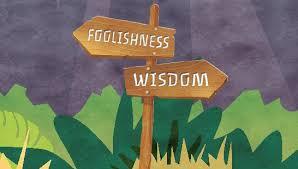
The way of fools seems right to them (12:15a NIV) and are not sensitive enough to realize the problem with their lives. They are self-opinionated and reject advice. Wisdom teachers were suspicious of those who thought themselves wise in their own eyes and were not open to outside criticism and just kept marching forward to their own destruction. But the wise listen to advice (12:15b NIV). They are willing to pay attention to advice gathered along the way. The proverb is about remaining open to the counsel of other people, which involves humility and lack of pride.
A fool is quick tempered, but a wise person stays calm when insulted (12:16 NLT). Doing this in the heat of anger, he arouses contention. This proverb values staying calm over impulsive displays of emotion. Thus, it is similar to those proverbs that value silence over much speech (10:14, 13:3 and 16, 17:27-28). Prudence (1:4) is the ability to regulate one’s emotional display for one’s own advantage. The wise person depends on the integrity of his life and it does not fail him. This verse expresses a thought common in Proverbs: the instability of the fool and the security of the righteous of the TaNaKh. The wicked die and disappear, but the family of the godly stands firm (12:7).
An honest witness tells the truth, but a false witness tells lies (12:17 NIV). The setting seems most natural in a court of law, though the principle may be applied outside the courtroom, the consequences of lying in a legal setting make the contrast even more dramatic. This theme is so important that it is often repeated throughout the book (6:19, 14:5 and 25, 19:5 and 9, 21:28). The point may be summarized by saying, on the one hand, the wise speak the truth and therefore their speech is just. On the other hand, false witnesses are deceitful and thus their words twist the truth.257
Idle talk can pierce like a sword, but the tongue of the wise can heal (12:18 CJB). Reckless words cause damage, here depicted in a vivid image of piercing like a sword. Truthful words endure forever, but a lying tongue lasts only for a moment (12:19 NIV). The tongue, or idle talk, harms through insults and negative comments. It can demean people and, like a sword, injure others. Boasting is ultimately a self-injuring form of speech. Solomon says that fools spout pride, but the wise protect themselves from this danger (14:3). Comparable to the sin of the evil tongue (gossip), reckless talk slashes the heart of another like a sword. In contrast, the tongue of the wise heals relationships. According to Rashi, unlike idle talk, truthful words will endure, as the Talmud (Shabbat 104a) says, “Truth stands while falsehood does not stand.” And because of his glory and excellence, he has given us great and precious promises. These are the promises that enable you to share his divine nature and escape the world’s corruption caused by human desires (2 Peter 1:4).258
Deceit fills the heart of those plotting evil; joy fills the heart of those planning peace (12:20 Hebrew). Deceit in the hearts of those who plan evil is also the topic of 11:1, 12:5 and 17. They don’t care for the truth; they are happy to deceive others or even themselves. On the other hand, joy comes to the peacemakers. The difference between plotting evil and planning peace seems to be that the former leads to social chaos, while the counselors of peace work for a harmonious society, and their endeavors bring them a feeling of joy.
No harm can come to the righteous, but the wicked are overwhelmed with evil (12:21 CJB). This statement taken alone is quite bold. It simply says that the righteous person will avoid the pitfalls of life, but the wicked person will not escape trouble. However, anyone with a little life experience realizes that this cannot be taken as an ironclad promise. Nor can it be used as a kind of barometer of righteousness of other people in the way that Job’s three friends did. As stated above, it is important to note that proverbs are not promises; they are generally true principles, all other things being equal. It is more likely that life will be easier for the righteous (who has Torah as his blueprint for living), than it is for the wicked, following the desires of his sin nature. This verse deals with the issue of retribution (to see link click Bv – Security Through Righteousness). The intention behind this principle is to encourage righteous behavior rather than wicked behavior.
Lying words are an abomination to ADONAI, but He delights in those who tell the truth (12:22 Hebrew). Many times in the book of Proverbs we hear that lies are evil and truth is godly. It is a fundamental principle of the book that words ought to reflect reality of the heart (16:23 and 18:4) as well as the reality in the world. Here, the principle is stated with great force by using the phrase an abomination to ADONAI. The opposite of this is the phrase His favor as seen in 11:1.
A prudent person doesn’t make a show of their knowledge, but fools broadcast their foolishness (12:23 NLT). This proverb draws a contrast between a prudent person and a fool. Prudence is a word associated with wisdom (1:4). The prudent person conceals their knowledge, while the fool proclaims their stupidity. We would expect the opposite! But the idea fits the humility/pride theme of the book (3:5 and 7, 21:4, 25:6-7, etc). It’s not that prudent people don’t act on their knowledge; they just don’t make a big deal about it. But, by proclaiming their stupidity, fools let everyone realize just how stupid they are. The idea expressed by this proverb is similar to another important theme in the book, the contrast between the silence of the wise person and the chattiness of the fool (10:14, 12:18 etc).
Those who work hard become leaders, while those who are lazy become slaves (12:24 Hebrew). We have already learned in 10:4 that idle hands bring poverty, but diligent hands bring wealth. The contrasts in these two verses support the larger teaching in Proverbs that pits a negative view of laziness over a positive picture of hard work (see Be – Don’t be Lazy). Here, the one who works hard, will be in charge, while the lazy person will be forced to work.
Anxiety weighs down the heart, but a kind word cheers it up (12:25 NIV). The Hebrew word anxiety (de’agah) refers to one’s emotional response to a threat to one’s well being. Anxiety rises because of uncertainty about the future. Persistent anxiety leads to depression. This proverb provides an observation of life that suggests an antidote to depression: kind words. The truth of this proverb is rather self-evident, but it nevertheless reminds the reader of it. This proverb fits in with the general teaching of the book about the impact that speech has on people. It also catalogues Solomon’s concern for people’s psychological state.
The godly give good advice to their friends; but the wicked lead them astray (12:26 NLT). This proverb contrasts one who knows where they are going (with the ability to lead others in the right direction) and being lost. Thus, righteous people benefit not only themselves but also others. They lead their neighbors on the right path. On the other hand, while the righteous and those they influence move in the right direction, the wicked have no certain guide and thus wander aimlessly. This encourages people to righteous behavior.
Lazy people don’t even cook the game they catch. All proverbs with reference to the lazy seem to have more or less of a humorous character, and this one means either that the man is too lazy to cook what he has caught, or to catch his own game at all. But the diligent make use of everything they find (12:27 NLT). The obvious intention here is to encourage determination and diligence so as to discourage laziness.
The way of the righteous leads to life, and in its pathway there is no death (12:28 Hebrew). Since death is the penalty for sin. Life is prolonged for the righteous – a basic teaching of this book. This is another example of the contrast between two paths, the path of wisdom (connected with righteousness) and the path of foolishness (or the path of abomination). By naming the positive ultimate consequences of the former and the negative consequences of the latter, the proverb intends to guide people toward godly behavior.259
Dear heavenly Father, praise You for Your perfect holy wisdom wrapped in your awesome steadfast love! Life in this world will be over in a blink. The only thing that really counts, is to believe in You and serve You. The words that we say reflect on You because we are Your children. Sadly, many are fools, simple minded or mockers, and they do not think with wisdom, but instead they choose to say and to do whatever pleases them and makes them happy for the moment. May we, like King David, seek to please You in all we say, and in our heart meditations. May the words of my mouth and the meditation of my heart be acceptable before You, ADONAI, my Rock and my Redeemer. (Psalms 19:15). In Messiah Yeshua’s holy Name and power of His resurrection. Amen
Leave A Comment