




Lady Wisdom and Madam Folly
10: 1-16
A proverb is a short and memorable saying designed to be our blueprint for living in the world that ADONAI has created. It is important to note that proverbs are not promises; they are generally true principles, all other things being equal.
The title, the proverbs of Solomon (10:1a NIV), implies that this begins a distinct collection, ending 22:16. No longer are there relatively long discourses of a father or Lady Wisdom to a son, but now we have a collection of proverbs. Even though Chapters 1-9 constitute a different section from what follows in Chapters 10-31, we are to understand the theological message of those earlier chapters as casting their long shadow across the individual proverbs in this second major section of the book.215 Even though the topic heading is the same as the opening of the entire book 1:1 and drapes his covering over the entire book, there are sections within the book that he did not author, as evidence in the titles in 22:17, 24:23, 30:1, and 31:1. Yet, this section can be attributed to him in the sense that he authored many of them, adopted and adapted others, and gathered still more to give a comprehensive set of cameos that tell it like it is. Solomon wrote about 84 percent of the book, all of it of course being inspired by the divine Author, the Ruach Ha’Kodesh.216
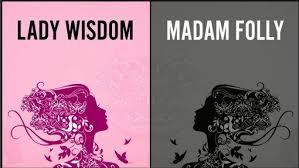
A wise son brings joy to his father, but a foolish son brings grief to his mother (10:1b NIV): What we see here is a contrast between a wise son and a foolish son; the wise son has chosen to listen to Lady Wisdom (to see link click Bn – Lady’s Wisdom’s Invitation to Life), and the foolish son has chosen to listen to Madam Folly (see Bo – Madam Folly’s Invitation to Death). The wise son is contrasted with a foolish son in 13:1 with a mocker, and in 15:20 with a foolish man. A son who has become wise, by heeding his parents’ teachings (see Ak – Obey Your Parents), brings joy to his father, a fact stated several times in Proverbs (15:20, 23:15 and 24, 27:11 and 29:3). A foolish son (1:7), on the other hand, brings grief to his mother. This does not mean that a foolish son does not grieve his father, as is clearly stated in 17:21 and 25, and 19:13; nor does it mean that a mother’s heart is not filled with joy by her son’s wisdom. The use of “father” in the first part of the verse and “mother” in the second part of the verse is typical of proverbial literature. Both parents experience either joy or grief, just as both are involved in teaching the son (1:8, 4:3-4, and 6:20).217 This proverb is a good illustration of an antithetical (contrasting) proverb, constructed mainly from antonyms (wise/foolish; glad/sorrow; father/mother).
Prosperity and want (10:2-5): These proverbs all concern wealth and want. While God’s overt involvement in causing the righteous to flourish is usually not explicitly mentioned, it is a theological belief of the book that ADONAI always sustains the order of creation. This makes it appropriate to introduce this idea early.218 Wealth gained by wickedness does not profit, but righteousness delivers from death (10:2 NLT). At first glance, the connection between cola 1 (a single unit of poetry) and cola 2 seems vague. While wickedness and righteousness are opposites and provide a kind of contrast, the first cola appears to be about wealth, whereas the second does not. However, a closer look shows that the two parts of the verse are related and combine to say that there is something more valuable than wealth. And wealth cannot save us from death.219
ADONAI will not let the godly go hungry, but He refuses to satisfy the cravings of the wicked (10:3 NLT). The way of ADONAI is a stronghold to the upright, but destruction awaits those who do evil (10:29). What is Solomon’s point here? Actually, He is the unseen stronghold for the upright, for those who sincerely desire to please God and submit to His authority. He is an invisible obstacle in the way of the wicked, those who willfully reject God’s will and intentionally try frustrate His plans. But Ha’Shem’s sovereign rule is so complete that He will accomplish His objectives and reward the faithful regardless of anyone’s opposition.220
However, though the meaning of the proverb is clear, the urgent question is, “What connection does it have with reality?” Is it really true that the righteous are well cared for by ADONAI and the wicked are ignored? Can this proverb be a barometer of our relationship with God, so that if we starve, we must not really be believers? Of course not (Psalm 37). That view is totally undermined by the books of Job and Ecc. We must remember that proverbs are not promises; they are generally true principles, all other things being equal.
Idle hands bring poverty, but diligent hands bring wealth (10:4 CJB). This is part of a collection of proverbs in Chapters 10-31 that describe the contrast between laziness and hard work (among other places see 6:6-11, 10:26, 12:11 and 24, and 24:30-34). This is an antithetical (contrasting) proverb with an observation of the consequences of laziness followed by an observation on the consequences of hard work. The former leads to poverty and the latter to wealth. This is a consistent message throughout the book of Proverbs. A wise son gathers in the summer, but he who sleeps during the harvest is a disgrace (10:5 CJB). Insight is a quality of the wise; disgrace is a moral evaluation of the fool. The contrast is between an industrious son and a slacker. Reflecting on 10:3, we may generally say that the righteous would be diligent workers and would therefore not go hungry because of their work. It is ADONAI who gives the believer wisdom and the drive to succeed. Again, this is a generalization, all things being equal.221
The righteous and the wicked (10:6-7): Both of these proverbs contain a contrast between the righteous and the wicked, linking the righteous with blessing (not just the hard work as in verse 4), and contrasting the enduring value of being righteous with the self-destructive path of the wicked.222 The godly are showered with blessings, but violence overwhelms the mouth of the wicked (10:6 Hebrew). The first colon associates blessings with the righteous. The word blessing is associated with the covenant in Deuteronomy. Indeed, one aspect of being righteous is being in a covenant relationship with ADONAI (Deuteronomy 28:2). The memory of the righteous is a blessing, but the name of the wicked will rot (10:7 BSB). There is a clear association between this proverb and the previous one. Here memory balances with names as synonyms, and righteous and wicked as antonyms. Blessing and rot play off each other as well.223
The babbling fool (10:8-10): These verses are tied together by the mention of the babbling fool coming to ruin at the end of both verses 8 and 10. The babbling fool is literally the fool of lips, implying that fools use their speech to promote foolishness. The wise of heart are glad to be instructed, but babbling fools’ lips will be ruined (10:8 Hebrew). Whoever walks with integrity walks securely, but those who follow crooked paths will be exposed (10:9 Hebrew). Beginning in 1:10-19, Proverbs has many allusions to the metaphor of life as a path. This proverb is an observation on the difference between those who live honestly and those who live deceptively. The point of the first colon seems to be that someone with a clear conscience allows one to live life openly and with boldness. The second colon issues a warning to those who live deceptive, evil lives that even though they pretend to be innocent, though they try to hide it, their evil will be found out. Whoever winks at evil, thus dismissing it, causes trouble, and a babbling fool will be ruined (10:10 Hebrew).
The importance of speech (10:11-14): These verses focus on the importance of speech for both the wise and the foolish. Verse 12 does not directly refer to speech, but the explicit mention of speech or the mouth in the surrounding verses implies that the hatred and love of this verse probably also refer to these attitudes being expressed in words.224 The mouth of the righteous is a fountain of life. As a fountain gives life-saving water, so the mouth of the righteous utters life-saving words. These might be words of encouragement or of rebuke to correct the errors of another. The life-giving words of the righteous are contrasted with the words of the wicked, which conceals violence (10:11 Hebrew), a word suggesting death.
Hatred stirs up strife, but love covers all offenses (10:12 ESV). The hateful person spreads rumors of his perceived adversaries, which stirs up strife. The wise person does not repeat such gossip, thus covering another person’s transgressions with love. Peter would later quote this verse when he wrote: Above all, love each other deeply, because love covers a multitude of sin (First Peter 4:8). Readers of the B’rit Chadashah will also recognize Paul’s comments on love (see First Corinthians Cu – The Necessity of Love).
Lady Wisdom is found on the lips of the discerning (10:13a Hebrew). Notice there is a connection between discernment and wisdom. The person who speaks wisdom is prudent (1:4) and first considers a matter before commenting on it. Discernment comes from a diligent study of God’s Word, while wisdom comes from consistent obedience to the Word. The two operate together to give one wise speech. But the rod is found on the back of those who lack understanding (10:13b Hebrew). Fools, by contrast, do not consider their ways or examine their lives in light of God’s Word. Their speech is therefore mere empty gibberish. They might consider themselves to be “wise,” but the rod of correction awaits them. The wise store up knowledge, but the mouth of a fool invites ruin (10:14 NIV). This storehouse is filled up from the study of Scripture. As our storehouse grows, it will overflow into wise words. The fool however, is quick to respond, even though he is devoid of wisdom. As a result, his words will bring about his own destruction.225
The value of wealth (10:15-16): The rich man’s wealth is his fortress, but the poverty of the poor is their ruin (10:15 NLT). The point of comparing wealth to a fortress is to highlight how wealth can protect one against the dangers of life. A fortress can keep an invader out, so wealth can keep problems at bay. To give a modern example, take a plumbing example. If a pipe bursts, no problem. Just pay the plumber to fix it. On the other hand, if a pipe bursts in the home of the poor, what are they to do? Put it on their credit card and go down the road into debt? As we proceed through Proverbs, we will see that this is not the only perspective that it has on wealth (3:9-10, 22:22 to 23:11, 28:1-11, and 28:12-28).226
The wages of the righteous bring life, but the earnings of the wicked are sin and death (Proverbs 10:16 NIV); the profits of the wicked are deceptive (Hebrew: shaker); but those who sow righteousness gain true reward (11:18 Hebrew). As Derek Leman relates in his book Proverbial Wisdom and Common Sense, sitting around the table, the Jewish family observes the traditional Shabbat dinner. Mom lights the candles, saying the ancient Hebrew blessing as the family waits. The smell of the Shabbat meal tempts everyone as they wait. Dad lifts the cup and recites the prayer of sanctification. When he has finished drinking, mom says, L’chayim meaning to life. This is a short Jewish prayer, or a toast. It reflects one of the highest Jewish values: the wages of the righteous bring life.
Potentially, this could mean that the goal of the work of the righteous is their own life or the life of others. In other words, this verse could mean, “The righteous work to live,” or “The righteous work to help others live.” In either case, the contrast with the wicked would make sense, “The righteous are working to earn a living, while the wicked work to fund their sinful lifestyle.”
On the other hand, the work spoken here may refer to more than simply the occupational work of the righteous. It might also refer to voluntary labor, or any activity on behalf of others. Thus, the contrast would be, “The righteous spend their spare time promoting life, while the wicked spend their time enabling sin.”
A third possibility is that L’chayim refers to the favor of ADONAI in this life. YHVH bestows eternal life to His children. No one wants to be blotted out of God’s book of life, which prior to its use in Revelation 3:5 with regard to eternal life, was always understood as referring to this life. Moshe taught the people about God’s blessings and curses with regard to the Sinai Covenant, and said that they had a choice between life (blessing) and death (curse) (see Deuteronomy Fq – Choose Life). Perhaps the righteous labor of rewards in this life.
Whichever the case, the question of motive is raised by this proverb and asks the question, “Are you working for life or for sinful pleasure?” Is your motive for going to work to live a life of wanton pleasure? Or are you working to provide a life for yourself, for others, to promote life, and perhaps to please ADONAI and find His favor in this life? If not, Solomon says you are working for an illusion. The word deceptive in 11:18 is shaker, which refers to a lie, false hope, or uselessness. In other words, the wages promise something that is not delivered. Stolen bread looks sweet, but afterward it tastes bitter.
The whole idea is best summed up by Yeshua, who said: What will it benefit a person if he gains the whole world but forfeits his own life (Luke 9:25). Messiah tells of a rich fool whose crops prospered greatly one year. In considering what to do with his great wealth, the rich man decided to store it in silos. He wanted to live the easy life for the rest of his life. So, rather than using his excess to help others, he stored it up for his own comfort. But he was a fool because that was the very night that Ha’Shem was coming to claim his life. He would not enjoy the fruits of his selfishness. Our Lord’s application is short but sweet: That’s how it is with anyone who stores up wealth for himself without being rich toward God (Luke 12:21).227
Dear heavenly Father, praise You for Your gracious invitation to an eternal home of joy and peace for those who trust in You. Yeshua answered and said to him: If anyone loves Me, he will keep My word. My Father will love him, and We will come to him and make Our dwelling with him (John 14:23). Wisdom chooses the path of eternal joy where there is no shame. For if you confess with your mouth that Yeshua is Lord, and believe in your heart that God raised Him from the dead, you will be saved. For with the heart it is believed for righteousness, and with the mouth it is confessed for salvation. For the Scripture says, “Whoever trusts in Him will not be put to shame” (Romans 10:9-11). Great joy comes to all who believe in You and are adopted into Your family (Ephesians 1:5, John 1:12). It is so wise to make choices with eternity in view. An eternal life of joy and peace is of far greater value than any pleasures on earth that will vanish like smoke. In Messiah Yeshua’s holy Name and power of His resurrection. Amen
Leave A Comment