




Certain Gain or Loss
11: 28-31
A proverb is a short and memorable saying designed to be our blueprint for living in the world that ADONAI has created. It is important to note that proverbs are not promises; they are generally true principles, all other things being equal.
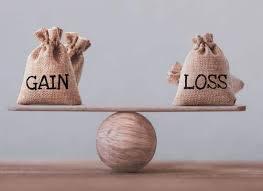
Solomon presents another paradoxical statement. He who trusts in worldly riches will fall, but the righteous will flourish like leaves in spring (11:28 CJB). One might expect wealth to lead to prosperity and success, but this proverb states that wealth cannot be relied upon to come through in dire circumstances. Riches won’t help you on the day of wrath, but righteousness can save you from death (11:4). The two parts of the proverb are stated in such a way that it pits wealth with righteousness, not with poverty. In this way, righteousness is seen to be the most valuable asset. Such a thought likely lies behind Yeshua’s shocking statement to His apostles: How hard it is to enter the kingdom of God! It is easier for a camel to pass through the eye of a needle than for a rich man to enter the kingdom of God.
The problem is not with wealth; indeed, Proverbs recognizes the value of wealth and the fact that it can often be a blessing of God (to see link click At – Honor ADONAI from Your Wealth). The issue is one’s attitude toward it. Trust is something that should only be placed in YHVH. Wealth is a poor substitute. Righteousness implies godliness, in that one cannot be righteous without being godly. So it is one’s relationship with God that leads to prosperity. The metaphor of the righteous blooming like leaves in spring is like the righteous person in Jeremiah 17:7-8: Blessed is the one who trusts in ADONAI, whose confidence is in Him. He is like a tree planted by water, that sends out its roots by the river, and does not fear when heat comes, for its leaves remain green, and is not anxious in the year of drought, for it never fails to bear fruit.
Whoever brings ruin to their family will inherit the wind (see the commentary on the Life of Solomon Cc – The Failure of Earthly Things), and the fool will be a slave to the wise (11:29 NIV). The chief obstacle in interpreting this proverb has to do with the relationship between the two colons. The first colon is clear enough and conforms with the teaching that anyone who harms his own family will reap the consequences. The idea of inheriting the wind is equivalent to saying that one receives nothing of substance. This may mean that the troublemaker is cut off, or perhaps the family will lose assets because of foolish actions. The second colon confirms that the fool will be a financial slave to the wise. He toils hard to accumulate money, the fruits of which he will not enjoy. So he is practically a slave, working for those who will inherit his wealth.
The fruit of righteousness is a tree of life. As Tremper Longman III relates in his commentary on Proverbs, the first colon uses the tree of life as a metaphor, considers the righteous to be its fruit, and reminds us of Psalm 1:1-3. Blessed is the one who does not walk in the counsel of the wicked, or stand in the way of sinners, or sit in the seat of mockers. But his delight is in the Torah of ADONAI, and in His Torah he meditates day and night. That person will be like a tree planted by streams of water, which yields its fruit in season, and whose leaf does not wither, whatever he does prospers. According to the Hebrew text, the second colon says: the wise gather lives (11:30 NIV). There is a question around the phrase translated tentatively gathering lives. If this is the correct translation, there are at least two possible understandings. First, it may be that those who gather lives are those who make friends easily. If so, then this verse fits in with the theme of friendship in the book. The second interpretation suggests that the actions and advice of the wise preserve and enhance the lives of others. This interpretation is the one I lean toward. The third interpretation is that presented by the NIV, which spiritualizes the text. It seems to be misled by the modern expression “winning souls,” but this interpretation seems quite foreign to the TaNaKh. The difficulty with the phrase does lead many to adopt the changing of wise Hebrew: chakam) to violence, leading to an interpretation rendered something like the NRSV (supported by the Septuagint): The fruit of the righteous is a tree of life, but violence takes lives away.
If the righteous are rewarded here on earth, what will happen to wicked sinners (11:31 NLT)? This verse addresses the issue of retribution. The rhetorical question format of the verse may assume that there was some question about this, as surely there must have been as the books of Ecclesiastes (8:15-18) and Job seem to confirm. Proverbs suggest that if all things are equal, retribution will happen on the earth. However, one might misunderstand this verse to say that the righteous are paid back with blessing and the wicked with punishment. Ha’Shem will not overlook the deeds of the wicked, and will exact the full penalty. The verse may actually suggest that even the righteous are paid back for their less heinous offense (see Ecc 7:20 for the admission that the righteous also commit offenses). If so, how much more will those who are worse get what is coming to them? This seems to be the understanding of 1 Peter 4:18, which quotes the Greek version: And, “If it is hard for the righteous to be saved, what will become of the ungodly and the sinner?”253
Dear heavenly Father, praise you for being so loving and so wise. Your love gave the greatest gift that could ever be given-the gift of adoption into Your family (John 1:12). Adoption as sons through Messiah Yeshua, in keeping with the good pleasure of His will (Ephesians 1:5b). It is very wise and great gain to have trusted God and so have Messiah’s indwelling, and be welcomed into Your holy heaven for an eternal life of peace and joy with You forever. His good pleasure that He planned in Messiah. The plan of the fullness of times is to bring all things together in the Messiah – both things in heaven and things on earth, all in Him (Ephesians 1:9c-10). What a great gain it is to be “in Messiah.” Living with eyes focused on eternity by believing in Messiah as our Lord and Savior, is very wise and a great gain! In Messiah Yeshua’s holy Name and power of His resurrection. Amen
Leave A Comment