

Ba – The Third Empire: Belly and Thighs of Bronze 2: 39b

The Third Empire: Belly and Thighs of Bronze
2: 39b

The third empire, belly and thighs of bronze DIG: Who founded the Third Empire? What happened after his death? What was the extent of the Third Empire’s reign? What was the one thing that remained constant about these various kingdoms?

REFLECT: What does it mean to you that “God is in control of history?” How does the Kingdom of God change the dynamic of the Fourth Empire? Which kingdom are you building? How do you react when things are going badly? When life is going well?

ADONAI begins to reveal to Dani’el the initial revelation regarding the Times of the Gentiles (see AoThe Times of the Gentiles). He provides an initial overview of the four empires that will govern this period. As the book progresses, God’s revelation becomes increasingly specific, reaching their climax in Chapter 12.
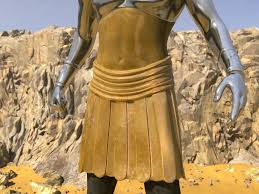
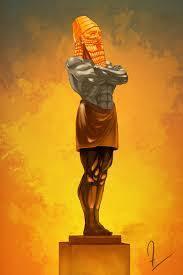
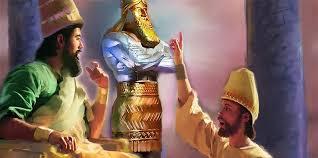
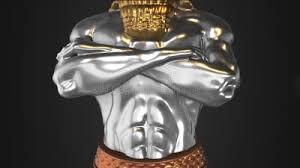
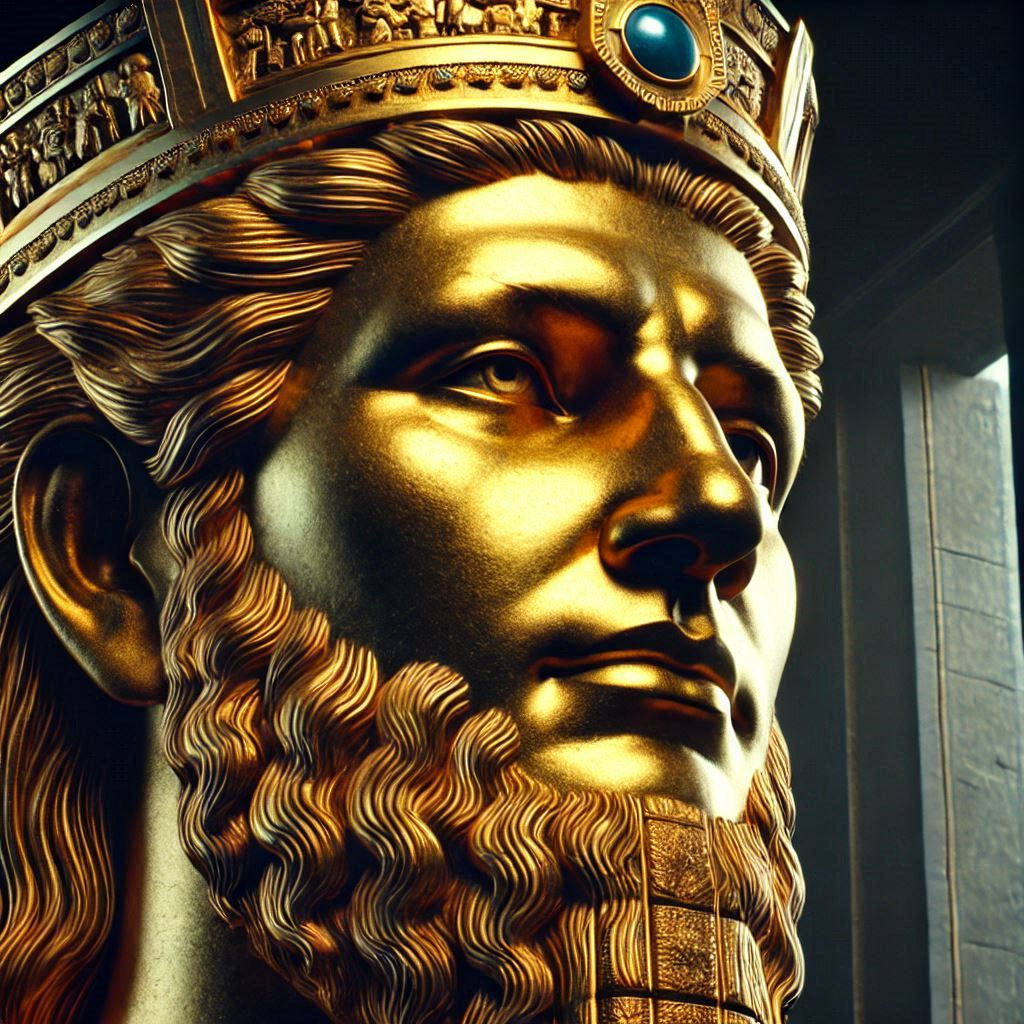
Just as he had spent only a half a verse on the Second Empire, Dani’el, again, devoted only a half a verse to the Third Empire, when he said: Next, a Third Empire, one of bronze, will rule over the whole earth (2:39a). The bronze on the statue started at the belly and ended at the thighs (2:32c). The empire that followed Medo-Persia was founded by Alexander the Great (to see link click DvAlexander the Great). He was born in 356 BC, his father was king Phillip of Macedon. Alexander had a famous tutor, Aristotle, who taught him Greek (Hellenistic) philosophy. But although Alexander was Macedonian and not Greek, he became fascinated with the Greek culture. As a result, he had a desire to spread the Greek philosophy, culture and language throughout the whole world. Phillip, united the two kingdoms of Greece and Macedonia and was preparing to conquer Persia when he was murdered. So Alexander became king in 336 BC when he was only 20 years old, and the Greek Empire dominated for 185 years. Bronze is stronger than silver and the Greek Empire was stronger than the Medo-Persian Empire. Pictured as two thighs, it occupied territory in both the Greece and Macedonia.

After his death, six of Alexander’s generals fought for control of his empire I the Wars of the Diadochi (321-281 BC). The Diadochi divided the empire into four power blocks: the Ptolemaic Kingdom of Egypt, the Seleucid Empire in the east, the Kingdom of Pergamon in Asia Minor, and Macedon. The Hellenistic period is marked by the ceaseless warfare between the Diadochi and their successors. As a result, the Hellenistic Empire gradually weakened and made room for rival forces. The power blocks that had direct bearing on Isra’el were the Ptolemaic Kingdom of Egypt in the west and the Seleucid Empire (Syria) in the east, which is represented by the thighs of the dream statue. Dani’el stated next that the Third Kingdom would rule over all the earth. ADONAI granted Alexander the Great the same authority to rule globally that He had granted to Nebuchadnezzar. However, just like Nebuchadnezzar, Alexander and his successors never took advantage of God’s grant. It was the third of Four Gentile Empires to dominate Jerusalem.81

The Greeks were the Third Gentile Empire: Therefore, Nebuchadnezzar was the head made of pure gold (2:32 and 38). When viewed from head to foot, the various metals decreased in value, but increased in strength. For the decrease in value, three points can be made. First, the value of the materials decreased from the head downward. Silver is less valuable than gold, bronze is less valuable than silver; iron is less valuable than bronze; and clay is less valuable than iron. Second, there is a decrease in position moving from the head to the feet, with the head being the most important element of the statue. Third, there is a decrease in the specific gravity of the elements. Pure gold has a specific gravity of 19.32; silver has a specific gravity 10.5; bronze has a specific gravity of between 8.7 and 8.4. Because bronze is stronger than silver, the Greek Empire was stronger than the Medo-Persian Empire. Iron has a specific gravity 7.7. This shows that the statue was top-heavy and weak at its feet.82

The one thing that remains constant about these various kingdoms is their lust for power and their desire to dominate the world. But ultimately that ambition will be frustrated. In the final analysis, the kingdoms of this world, however glorious or powerful they may seem, have “feet of clay,” as we say, and will not stand. In fact, by linking these different empires together as parts of a single statue in the form of a man, the dream says something profound about the whole human experience viewed as one unit, from beginning to end. In a real sense, this is not simply a vision of the decline and fall of the Babylonian Empire (see AyThe First Empire: A Head of Gold), and its immediate successors, but an epitaph of human history. The entire human experience, though gifted and blessed by ADONAI in the beginning with unparalleled glory and authority, ends up in nothing but division and disintegration. This pattern is already evident in the early chapters of Genesis. The glory of Adam in Genesis 1-2 gives way to the Fall in Genesis 3, to the judgment of the Flood in Genesis 6-9, and finally to the chaos of life after Babel in Genesis 11. According to this pattern, our world is not destined to end with a glorious bang, but rather with rebellion against God (see Revelation CgThe Great Tribulation).

The depiction of these changing and ultimately failing earthly empires stands in stark contrast to what replaces them, however. The kingdom of God enters the chaos and hopelessness of human history and brings fresh and lasting hope to us. After the despair of Genesis 11 comes a new hope of God’s call to Abram in Genesis 12. Nebuchadnezzar’s dream comes to a similar conclusion. The final word of history doesn’t lie with a new and improved version of the statue of man. Rather, it lies with something radical that God will do: a rock not cut by human hands will strike and demolish the statue and then grow to fill the entire earth (see Bg The Fifth Empire: The Messianic Kingdom). Only that divine Kingdom is eternal.

This reality challenges the focus of our priorities and values. Which kingdom are we building? Are we pouring ourselves into the pursuit of the power and glory of this world’s kingdoms, and power and glory that must inevitably decay and topple into irrelevance? Or instead, are we pouring ourselves into the pursuit of God’s Kingdom, the only Kingdom that will truly last (see the commentary on The Life of Christ DwThe Narrow and Wide Gates)? What is more, are we measuring our success by the fickle standards of present appearances, or do we have our eyes fixed on ultimate things? It is easy to become discouraged in our pursuit of God’s Kingdom if we measure things by the present. The Church here on earth often seems powerless and weak, overwhelmed with problems. Our own lives may also show little progress in the pursuit of holiness. Yet, the answer to that temptation to despair is to fix our eyes upon the glorious promises of YHVH and trust that, in His own good time, He will build His Kingdom, both in our lives and in this world. Nothing can prevent Him from accomplishing His purposes, for we know that the final pages of history have already been written (see the commentary on Revelation FrThen I Saw a New Heaven and a New Earth).

There are two particular circumstances where we most need to hear and heed this truth. One is when things are going badly for us in this life. When our earthly hopes and dreams are in tatters, and our lives are being crushed painfully under the heel of the kingdoms of this world. We need to remember that this world is not the ultimate. When we face sickness, isolation, and disability, even death itself, we need to remember that there is a kingdom that lasts beyond the grave. There is a time coming when the kingdom of the world will become the Kingdom of our God and of His Messiah and He will reign forever and ever (Revelation 11:15b).

Yet paradoxically, we also need to be reminded of this truth when life is going well for us. This dream had a message not just for the Israelites who were squirming under the foot of the statue, but also for Nebuchadnezzar himself, who was the head of gold. In times when we may feel like the head of gold, when this world showers its honors and favors upon us, we need to remember that there will be an “after this.” There will come a day when all our little triumphs and glories will lie in the dust and will stand before our Creator (see Revelation CcWe Must All Appear Before the Bema Seat of Christ). When that day comes, what will count will not be our standing statue, but our standing on the Rock (Psalm 18:2).83

Dear heavenly Father, praise You for being such a wonderful King, who rules with righteousness and justice. Righteousness and justice are the foundation of Your throne. Lovingkindness and truth go before You (Psalms 89:14). What a comfort to know that Your Kingdom will last forever! Because your steadfast love is better than life, my lips will praise you (Psalms 63:3). You paid such a high price to redeem mankind from the curse of sin. Your love did not stop there, for you planned to include me in your eternal kingdom! It is one thing to help someone out a couple of times, but You are so wonderful that Your love keeps on giving throughout all eternity! Your steadfast love, O Lord, extends to the heavens, your faithfulness to the clouds (Psalms 36:5).

What a joy it is for me to realize that this life will soon be over and in its place will be a glorious eternity with You in heaven. Do not let your heart be troubled. Trust in God; trust also in Me.  In My Father’s house there are many dwelling places. If it were not so, would I have told you that I am going to prepare a place for you? If I go and prepare a place for you, I will come again and take you to Myself, so that where I am you may also be (John 14:1-3). When my eyes focus on eternity and life with You, trials on earth will not seem so harsh nor so long lasting. For I consider the sufferings of this present time not worthy to be compared with the coming glory to be revealed to us (Romans 8:18). I delight in loving You back by living for You as I use my time, money and thoughts for You. In Messiah Yeshua’s holy Name and power of resurrection. Amen
2025-08-03T10:41:08+00:000 Comments

Az – The Second Empire: Chest and Arms of Silver 2: 39a

The Second Empire: Chest and Arms of Silver
2: 39a

The second empire, chest and arms of silver DIG: Why was Dani’el’s phrase, “after you” so important? Did king Nebuchadnezzar take the prophet’s message to heart? What did the statue’s chest and arms of silver represent? In what way was the Medo-Persian Empire inferior to the Babylonian Empire?

REFLECT: How much thought have you put into the “after you” question in your own life? “After you,” what kind of financial situation are you going to leave to your loved ones? “After you,” how will you be remembered by your spouse, children, grandchildren, and friends? How much do you look forward to the Messianic Kingdom? Who can you tell?

ADONAI begins to reveal to Dani’el the initial revelation regarding the Times of the Gentiles (see AoThe Times of the Gentiles). He provides an initial overview of the four empires that will govern this period. As the book progresses, God’s revelation becomes increasingly specific, reaching their climax in Chapter 12.

While Dani’el devoted two verses to describing Nebuchadnezzar’s empire, he only devoted half a verse to the next empire. But after you, another empire will arise (2:39a). Probably the most telling blow comes with the words, “after you,” where Dani’el delivers what seems to be an almost passing jolt to human pride. Now that’s a striking thought! One wonders if it stuck in Nebuchadnezzar’s mind. Such a simple yet powerful assumption in those words, “After you.” Nebuchadnezzar’s Empire would not last. Kings and kingdoms, presidents and dictators, democracies and tyrannies and monarchies come and go and enter the landfill of history. Only Messiah’s Kingdom will endure forever (2:44).

How then are the various “audiences” of Dani’el Chapter 2 meant to respond to this dream and its interpretation? What about Nebuchadnezzar himself? Surely he was to acknowledge that his kingship was a gift from the God of heaven, that his own empire was but a passing episode, and that he simply belonged to the chaff on a threshing-floor in the summer (2:35). However, Nebuchadnezzar still didn’t get it. He didn’t ask any questions about the future or about Dani’el’s great God. Relieved that he was the head of gold (to see link click AyThe First Empire: A Head of Gold), and that his fears of a crumbling empire were relieved, he only concerned himself with the present, and Dani’el who had met his need. The king confessed that Dani’el’s God was a Revealer of mysteries (2:47), but at this point such revelation did not spur him on to ask what those mysteries might be.

What of Isra’el? What were the exiles and those who would become exiles to understand from this revelation? They should at least see that the Kingdom of God (see BgThe Fifth Empire: The Kingdom of God) was not going to come as soon as Babylon passed off the political scene. How often God’s people have to be saved from the “if only” heresy, whether it’s “if Babylon bites the dust, then . . .” or something else. Dani’el was not trying to rob Isra’el of her hope, but wanted her to have a true and realistic hope that also recognized that it will be a long historical road before the Messianic Kingdom comes. Then, what should they do in the meantime? It is not coincidental that Chapter 2 ends with Dani’el and his three friends promoted to responsible positions within Babylonian society (see BiNebuchadnezzar Promotes Dani’el). They didn’t isolate themselves from the Empire of their world as they waited for God to establish His Kingdom in the next; rather, they poured themselves into seeking the welfare of their temporary home in Babylon.79

The Medo-Persian Empire was second. Thus, Nebuchadnezzar was the head made of pure gold (2:32 and 38). When viewed from head to foot, the various metals decreased in value, but increased in strength. For the decrease in value, three points can be made. First, the value of the materials decreased from the head downward. Silver is less valuable than gold, bronze is less valuable than silver; iron is less valuable than bronze; and clay is less valuable than iron. Second there is a decrease in position moving from the head to the feet, with the head being the most important element of the statue. Third, there is a decrease in the specific gravity of the elements. Pure gold has a specific gravity of 19.32; silver has a specific gravity 10.5; bronze has a specific gravity of between 8.7 and 8.4; and iron has a specific gravity 7.7. This shows that the statue was top-heavy and weak at its feet.

Dani’el specifically stated that another empire would arise, not just a king. Not only was Nebuchadnezzar replaced as king, but his empire was also replaced with another empire. The statue’s chest and arms of silver represented the Second Gentile Empire, which was the Medo-Persian Empire (Dani’el 2:32b). As we go down the statue, there is a decrease in the value of the metals, gold being the most valuable, silver, being less valuable than gold, bronze, being less valuable than silver, and iron being the least valuable. Thus, the Medo-Persian Empire lacked the inner unity of the Babylon Empire and never blended into one people. But there was an increase in the hardness and strength of the metals. Silver is stronger than gold, and so on. This increase in hardness was reflected in the increased strength of each empire. Thus, the Medo-Persians were militarily stronger than the Babylonians, and the second of Four Gentile Empires to dominate Jerusalem.

Then Dani’el pointed out that this new empire would be inferior to the Babylonian Empire (2:39a). Critics have used the word “inferior” to sow doubt about the accuracy of the book of Dani’el. After all, the Medo-Persian Empire covered greater geographical territory and lasted over 200 years (539-331 BC), longer than the Babylon Empire of 87 years (626-539 BC). However, the term “inferior” relates to quality, not inferiority in every respect. The historical truth is that Babylon had greater global influence and accomplishments. In fact, the roots of that empire go back to the time right after the Flood. As early as Genesis 10 and 11, Babylon had already begun playing a major role in human history (see the commentary on Genesis DlThe Tower of Babel). The history of the Medes and the Persians was not as old. Furthermore, the Medo-Persians lacked the ingenuity of Babylon. Represented by the silver chest and arms of the statue, the Medes and the Persians were united politically and militarily, but they never bonded into one people. They lacked the insight of the Babylonian Empire. Lastly, the Medo-Persian Empire lacked the central authority and fire organization that had characterized Babylon. As Dani’el Chapter 6 will point out, Medo-Persian rulers did not have
absolute power, but were held captive by their own decrees.80

In summary, the Medo-Persian Empire was inferior to the Babylonian Empire in influence and achievement. The roots of the Babylonian Empire began soon after The Flood (Genesis 10-11); but the Medo-Persian Empire does not go that far back. They lacked the inner unity of Babylon. Although the Medes and the Persians were united politically, they never blended into one people. They were an inferior type of government. God gives each Gentile Empire a certain amount of time, and then He terminates their kingdom and gives it to another. So as the Medo-Persian Empire faded away, YHVH raised up the Greek Empire.

Dear heavenly Father, praise You for Your great wisdom in the way You rule your Kingdom. In Your Kingdom, You are the absolute Supreme Ruler and You rule with incredible love and wisdom. Your purpose is for believers to be united with You. You lavished the riches of Your grace on us for that purpose. In him we have redemption through his blood, the forgiveness of our trespasses, according to the riches of his grace, which he lavished upon us, in all wisdom and insight making known to us the mystery of his will, according to his purpose, which he set forth in Christ as a plan for the fullness of time, to unite all things in him, things in heaven and things on earth (Ephesians 1:7-10). Thank you for not ruling like the Medes and Persian kingdom. For You rule with steadfast love and complete wisdom. What a loving and wise Sovereign King and Heavenly Father You are! In Messiah Yeshua’s holy Name and power of His resurrection. Amen

2025-05-28T10:58:56+00:000 Comments

Ay – The First Empire: A Head of Gold 2: 37-38

The First Empire: A Head of Gold
2: 37-38

The first empire, a head of gold DIG: How does Dani’el start describing the statue? What does the king of kings mean? What significance was there in the fact that the Babylonian Empire was granted to Nebuchadnezzar by the same God who, in His omniscience, had revealed the dream and interpretation to Dani’el. What did the head of gold symbolize?

REFLECT: There is only room for one person to sit on the throne of your heart. Who sits there for you? Nebuchadnezzar was “ruler over all.” Do you allow Messiah to be “ruler over all” in every part of your life? Or are there parts of your life that you refuse to turn over to Him? What has ADONAI given to you? For better or for worse, what have you done with it?

ADONAI begins to reveal to Dani’el the initial revelation regarding the Times of the Gentiles (see AoThe Times of the Gentiles). He provides an initial overview of the four empires that will govern this period. As the book progresses, God’s revelation becomes increasingly specific, reaching their climax in Chapter 12.

Your Majesty, you are the king of kings (2:37a). As such, the Babylonian ruler was the supreme monarch over all the kings of his generation. With a word he could take the life of virtually anyone he chose, such was his power. On the stage of history he was the great figure of his day, not only in his own eyes but in the view of the whole world. Left to himself, he might have taken pride in his position in history.77 Yet, Dani’el was quick to remind Nebuchadnezzar that his position was bestowed to him from ADONAI who had granted him dominion and honor. The God of heaven has given you dominion and power and might and glory (2:37b). In other words, the Babylonian Empire was granted to the king by the same God who, in His omniscience, had revealed the dream and interpretation to Dani’el (2:28).

Not only that, ADONAI had placed in his hand all mankind and the beasts of the field and the birds in the sky. Wherever they lived, God made the king ruler over them all (2:37c). Some have viewed this statement as hyperbole because Nebuchadnezzar did not actually control the entire world, including humans, animals, and birds. The clear implication, however, is that Ha’Shem gave him the greatest authority over the whole inhabited earth that had ever been given to a ruler. The fact that he did not choose to take control of the entire planet is beside the point. If he wanted to, Nebuchadnezzar could have kept on conquering until he ruled over every part of the known world. God guaranteed his success. Later, Daniel affirmed the king’s absolute authority when he said: O King, the Most High God gave your father Nebuchadnezzar sovereignty and greatness and glory and splendor. Because of the high position he gave him, all the peoples and nations and men of every language dreaded and feared him. Those the king wanted to put to death, he put to death; those he wanted to spare, he spared; those he wanted to promote, he promoted; and those he wanted humbled, he humbled (Dani’el 5:18-19).

Babylon was the First Gentile Empire. Then Dani’el said to Nebuchadnezzar, your majesty, you are the head of gold (2:32 and 38). Obviously, this made the king very happy. When viewed from head to foot, the various metals decreased in value, but increased in strength. For the decrease in value, three points can be made. First, the value of the materials decreased from the head downward. Silver is less valuable than gold, bronze is less valuable than silver; iron is less valuable than bronze; and clay is less valuable than iron. Second there is a decrease in position moving from the head to the feet, with the head being the most important element of the statue. Third, there is a decrease in the specific gravity of the elements. Pure gold has a specific gravity of 19.32; silver has a specific gravity 10.5; bronze has a specific gravity of between 8.7 and 8.4; and iron has a specific gravity 7.7. This shows that the statue was top-heavy and weak at its feet.

Two contemporary prophets made the same point regarding Nebuchanezzar’s unique rulership. Jeremiah stated in 27:5-8: With My great power and outstretched arm I made the earth and its people and the animals that are on it, and I give it to anyone I please. Now I will give all your countries into the hands of My servant Nebuchadnezzar, king of Babylon; I will make even the wild animals subject to him. All nations will serve him and his son and his grandson until the time for his land comes; then many nations and great kings will subjugate him. If, however, any nation or kingdom will not serve Nebuchadnezzar king of Babylon or bow its neck under his yoke, I will punish that nation with the sword, famine and plague, declares ADONAI, until I destroy it by his hand.

Ezeki’el wrote in 26:7: For this is what the Sovereign LORD says: From the north I am going to bring against Tyre, Nebuchadnezzar king of Babylon, king of kings, with horses and chariots, with horsemen and a great army.78 Therefore, Dani’el interpreted the meaning of the head of gold as being King Nebuchadnezzar himself, the head of the Babylonian Empire. When Ha’Shem destroyed Jerusalem and Solomon’s Temple in 586 BC, the Times of the Gentiles began. As a result, Babylon was the first of Four Gentile Empires to dominate Jerusalem. The next empire is represented by the statue’s chest and arms of silver (to see link click AzThe Second Empire: Chest and Arms of Silver).

Dear heavenly Father, praise You for how absolutely wonderful and powerful You are and will always be throughout all eternity! You are the Almighty, “I am the Alpha and the Omega,” says ADONAI Elohim, “Who is and who was and who is to come, the Almighty” (Revelation 4:8 also 4:8, 11:17, 15:3, 16:7,14, 19:6,15, 21:22)! You are the King of kings. On His robe and on His thigh He has a name written, “King of kings, and Lord of lords” (Revelation 19:16). You, mighty Father, will reign through all eternity. Then the seventh angel trumpeted, and there were loud voices in heaven saying, “The kingdom of this world has become the kingdom of ADONAI and of His Anointed One. And He shall reign forever and ever” (Revelation 11:15)! Wow! A life of eternal joy and peace will replace earth’s trials, for me. He shall wipe away every tear from their eyes, and death shall be no more. Nor shall there be mourning or crying or pain any longer, for the former things have passed away.” (Revelation 21:4). Lord, help me not look for earthly power nor rewards, but to keep my heart focused on pleasing You. Rulers and leaders come and go, but You reign eternally! In Messiah Yeshua’s holy Name and the power of His resurrection. Amen

Not only that, ADONAI had placed in his hand all mankind and the beasts of the field and the birds in the sky. Wherever they lived, God made the king ruler over them all (2:37c). Some have viewed this statement as hyperbole because Nebuchadnezzar did not actually control the entire world, including humans, animals, and birds. The clear implication, however, is that Ha’Shem gave him the greatest authority over the whole inhabited earth that had ever been given to a ruler. The fact that he did not choose to take control of the entire planet is beside the point. If he wanted to, Nebuchadnezzar could have kept on conquering until he ruled over every part of the known world. God guaranteed his success. Later, Daniel affirmed the king’s absolute authority when he said: O King, the Most High God gave your father Nebuchadnezzar sovereignty and greatness and glory and splendor. Because of the high position he gave him, all the peoples and nations and men of every language dreaded and feared him. Those the king wanted to put to death, he put to death; those he wanted to spare, he spared; those he wanted to promote, he promoted; and those he wanted humbled, he humbled (Dani’el 5:18-19).

Babylon was the First Gentile Empire. Then Dani’el said to Nebuchadnezzar, your majesty, you are the head of gold (2:32 and 38). Obviously, this made the king very happy. When viewed from head to foot, the various metals decreased in value, but increased in strength. For the decrease in value, three points can be made. First, the value of the materials decreased from the head downward. Silver is less valuable than gold, bronze is less valuable than silver; iron is less valuable than bronze; and clay is less valuable than iron. Second there is a decrease in position moving from the head to the feet, with the head being the most important element of the statue. Third, there is a decrease in the specific gravity of the elements. Pure gold has a specific gravity of 19.32; silver has a specific gravity 10.5; bronze has a specific gravity of between 8.7 and 8.4; and iron has a specific gravity 7.7. This shows that the statue was top-heavy and weak at its feet.

Two contemporary prophets made the same point regarding Nebuchanezzar’s unique rulership. Jeremiah stated in 27:5-8: With My great power and outstretched arm I made the earth and its people and the animals that are on it, and I give it to anyone I please. Now I will give all your countries into the hands of My servant Nebuchadnezzar, king of Babylon; I will make even the wild animals subject to him. All nations will serve him and his son and his grandson until the time for his land comes; then many nations and great kings will subjugate him. If, however, any nation or kingdom will not serve Nebuchadnezzar king of Babylon or bow its neck under his yoke, I will punish that nation with the sword, famine and plague, declares ADONAI, until I destroy it by his hand.

Ezeki’el wrote in 26:7: For this is what the Sovereign LORD says: From the north I am going to bring against Tyre, Nebuchadnezzar king of Babylon, king of kings, with horses and chariots, with horsemen and a great army.78 Therefore, Dani’el interpreted the meaning of the head of gold as being King Nebuchadnezzar himself, the head of the Babylonian Empire. When Ha’Shem destroyed Jerusalem and Solomon’s Temple in 586 BC, the Times of the Gentiles began. As a result, Babylon was the first of Four Gentile Empires to dominate Jerusalem. The next empire is represented by the statue’s chest and arms of silver (see Az – The Second Empire: Chest and Arms of Silver).

Dear heavenly Father, praise You for how absolutely wonderful and powerful You are and will always be throughout all eternity! You are the Almighty, “I am the Alpha and the Omega,” says ADONAI Elohim, “Who is and who was and who is to come, the Almighty” (Revelation 4:8 also 4:8, 11:17, 15:3, 16:7,14, 19:6,15, 21:22)! You are the King of kings. On His robe and on His thigh He has a name written, “King of kings, and Lord of lords” (Revelation 19:16). You, mighty Father, will reign through all eternity. Then the seventh angel trumpeted, and there were loud voices in heaven saying, “The kingdom of this world has become the kingdom of ADONAI and of His Anointed One. And He shall reign forever and ever” (Revelation 11:15)! Wow! A life of eternal joy and peace will replace earth’s trials, for me. He shall wipe away every tear from their eyes, and death shall be no more. Nor shall there be mourning or crying or pain any longer, for the former things have passed away.” (Revelation 21:4). Lord, help me not look for earthly power nor rewards, but to keep my heart focused on pleasing You. Rulers and leaders come and go, but You reign eternally! In Messiah Yeshua’s holy Name and the power of His resurrection. Amen

2025-05-08T11:51:08+00:000 Comments

Ax – Dani’el Interprets the King’s Dream 2: 36-45

Dani’el Interprets the King’s Dream
2: 36-45

ADONAI begins to reveal to Dani’el the initial revelation regarding the Times of the Gentiles (see AoThe Times of the Gentiles). He provides an initial overview of the four empires that will govern this period. As the book progresses, God’s revelation becomes increasingly specific, reaching their climax in Chapter 12.

This far eschatological prophecy provides the interpretation of Nebuchadnezzar’s dream. This passage covers the first of several revelations concerning the times of the Gentiles in Dani’el. As a reminder, this period began with the Babylonian Captivity (see the commentary on Jeremiah GuSeventy Years of Imperial Babylonian Rule), and will continue until the return of the Messiah at the end of the Great Tribulation. During this time, the Gentiles have had, and will continue to have, domination over the Jewish people. Four Gentile empires will rule the world. Then, a stone will destroy the last of them and will turn into a mountain of global significance (see BgThe Fifth Empire: The Kingdom of God).

In Chapter 7, Dani’el elaborated on the four Gentile Empires that were seen in the statue of Chapter 2. We can compare these chapters in three ways. First, they are visionary. In Chapter 2 the visionary was a pagan king, Nebuchadnezzar, but in Chapter 7 the visionary was Dani’el himself. Secondly, we can compare the interpreters. Dani’el was the interpreter in Chapter 2, but an angel was the interpreter in Chapter 7. Thirdly, we can compare the two perspectives. Dani’el 2 gives us the perspective of the times of the Gentiles from a human viewpoint as something majestic, but Dani’el 7 gives us the perspective from God’s viewpoint as something dreadful. There were four empires, pictured as four beasts.

2025-05-23T11:11:23+00:000 Comments

Aw – The King’s Dream 2: 31-35

The King’s Dream
2: 31-35

The king’s dream DIG: What is the significance of the decreased density and value in the statue from head to foot? Why and when does the Rock strike at the feet of the statue? What does the mountain that fills the whole earth represent?

REFLECT: Why don’t we expect God to speak to us through dreams today as He did during Dani’el’s day? In the face of the chaos in the world today, how does the promised future Messianic Kingdom encourage you? Do you live in confidence or fear?

ADONAI begins to reveal to Dani’el the initial revelation regarding the Times of the Gentiles (see AoThe Times of the Gentiles). He provides an initial overview of the four empires that will govern this period. As the book progresses, God’s revelation becomes increasingly specific, reaching their climax in Chapter 12.

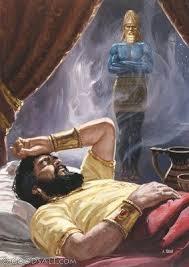
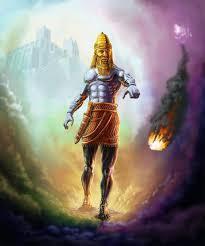
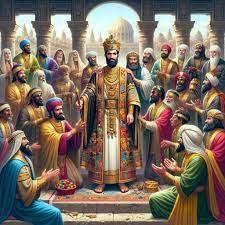
Dani’el 2 gives us the perspective of the times of the Gentiles from a human viewpoint as something majestic. Dani’el then told Nebuchadnezzar his dream, which was precisely what the king’s wise men were unable to do. The dream began with the appearance of an enormous statue. How large it was is not reported, but the statue he built later was patterned after the one in his dream, and it was ninety feet tall and nine feet wide (3:1). “Your Majesty looked, and there before you stood a large statue – an enormous, dazzling statue, awesome in appearance.” The awesomeness of the statue was due to its extraordinary size and dazzling brilliance. It had human form, but it was unclear initially whether it represented a god or a man. The statue was most unusual in its composition. The head of the statue was made of pure gold, its chest and arms of silver, its belly and thighs of bronze, its legs of iron, its feet partly of iron and partly of baked clay (2:31-33). In his dream, the statue stood for the king, with his huge empire that he could scarcely hold, and symbolized his inadequacy in the face of threats from breakaway factions.72

When viewed from head to foot, the various metals decreased in value, but increased in strength. For example gold is more valuable than silver, silver is more valuable than bronze, bronze is more valuable than iron, and iron is more valuable than clay. Second, there is a decrease in position moving from head to feet, with the head being the most important element of the statue. Third, there is a decrease in the specific gravity of the elements. Pure gold has a specific gravity of 19.32; silver has a specific gravity 10.5; bronze has a specific gravity of between 8.7 and 8.4; and iron has a specific gravity 7.7. This shows that the statue was top-heavy and weak at its feet.73

The statue was not the only figure in the dream. While you were watching, a Rock was cut out, but not by human hands, implying divine origin. The verse does not specify where the Rock was taken from. It had always been a Rock, and it came with the purpose of smashing the statue. But with two characters, the statue and the Rock, we now have a plot. It struck the statue on its feet of iron and clay, and smashed them to pieces (2:34). Here, Dani’el depicts spiritual weakness. Prophetically, the dream predicted that the smashing of the statue would occur only in the last stage (see Be – The Ten Kingdoms Stage). Then the iron, the clay, the bronze, the silver and the gold were all broken to pieces and became like chaff on a threshing floor in the summer. This recalls the prophecy of Isaiah in which the nations who oppressed Isra’el are reduced to chaff and blown away by the wind (Isaiah 41:15-16). The entire statue was pulverized, and the dust into which the statue had turned, could not be found. The wind swept it away without leaving a trace (2:35a).

But rather than breaking into pieces itself, the Rock that struck the statue mysteriously grew and became a huge mountain, growing continuously until it filled the whole earth (2:35b). The motif of the mountain that fills the entire earth echoes the vision of Isaiah in which the mountain of ADONAI’s Temple in Jerusalem, it will be raised above the hills, and all nations of the world will stream to it (see the commentary on Isaiah ApThey Will Beat Their Swords into Plowshares).74

Some rabbis teach that the Rock mentioned here represents the Messiah. A midrash may serve as one of the numerous illustrations for this teaching: He (Dani’el) saw the coming of the Messiah (in the king’s dream), as Dani’el said: While you were watching, a Rock was cut out, but not by human hands. It struck the statue on its feet of iron and clay, and smashed them to pieces (2:34). Rabbi Simeon, the son of Lakish, contended, “This verse refers to the Messiah. Smashing the statue refers to all the pagan kingdoms that serve idols. Why is the rule of Messiah likened to a Rock? It is likened to a Rock because of the Torah in which Isra’el labors, as it says: The two tablets of the Testimony, tablets of stone, written by the finger of God” (Exodus 31:18).75

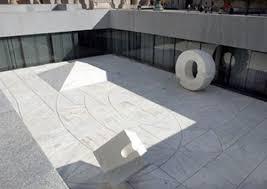
There is an impressive sunken garden in front of the Beinecke Rare Book Library on Yale University’s campus. It is meant to simulate the universe. A large marble pyramid stands on one side, symbolizing time. On another side there is a large doughnut structure standing on its side. It signifies energy. In another part of the sunken garden is a huge die perched on one tip as if ready to topple any which way. It is the symbol of chance. This represents the world view of modern man, a self-existing universe consisting of energy, time and chance. And those who live in Babylon, ancient or modern, don’t know which way the die will fall. Chance is unpredictable. It’s the world of “Whatever!”

However, believers think the Yale garden is a lie. We hold that there is a God who knows and orders the course of history down through the rise and fall of nations until He sets up His Kingdom that will never be destroyed (see BgThe Fifth Empire: The Kingdom of God). This is no brilliant insight. We only believe this because there is a God in heaven who reveals secrets (2:26-28a). And continues to do so. He has revealed this to us in Dani’el 2. But we who hold this Kingdom-view can easily forget how unbearably sad Joe and Jane Pagan might be, for they go out their front door in the morning and have no idea where history is heading, or if it is. Maybe it’s all too cerebral; but I can only say that if I didn’t believe in His future Kingdom, I could find the energy to place one foot in front of another.

To have a God who is the Revealer of Secrets (Romans 2:16), however, does not mean we have a God who reveals everything. He doesn’t show us which stocks are good, or whether we can avoid cancer until we’re ninety, or whether the place where we live will exist twenty years from now. He only reveals what we need to know. And yet, Dani’el’s praise helps us because he assures us that even though God doesn’t tell us everything, He knows what lies in the darkness (2:22). We can walk into the future with a God like that – who shows us that history is marching toward His inevitable Kingdom, and who assures us that even though we have many things that are uncertain in our lives, we follow a God who knows what lies in the darkness. So we can keep going with hope and without fear.76

Dear heavenly Father, praise You for being so wise, who not only knows the future, but also controls world powers. Someday You will set up a kingdom and Your Kingdom will endure forever! Now in the days of those kings, the God of heaven will set up a kingdom that will never be destroyed, nor will this kingdom be left to other people. It will crush and bring to an end all of these kingdoms. But it will endure forever (Dani’el 2:44).

What peace it brings to know that Your Word is totally trustworthy. When You promise, it will come to pass exactly as You said. There is no power that can stand in Your way. You never forget, nor do you ever make a mistake. You never promise what You cannot deliver, for You always fulfill to the smallest detail. The certainty of You setting up Your everlasting Kingdom, is a sure Rock to hold on to in this world of uncertainty with wars and fighting. You are in control. You will do what you have promised.

How wonderful that You, the King of kings, On Your robe and on Your thigh Your Name will be written, “King of kings, and Lord of lords” (Revelation 19:16). You will welcome into Your Kingdom all whom You adopt as Your children – those who trust and believe in You. But whoever did receive Him, those trusting in His name, to these He gave the right to become children of God. In Messiah Yeshua’s holy Name and power of His resurrection. Amen

2025-05-23T11:09:27+00:000 Comments

Av – Dani’el’s Witness 2: 24-30

Dani’el’s Witness
2: 24-30

Dani’el’s witness DIG: How would you summarize Chapter 2 up to this point? Why could Arioch stop the slaughter of the wise men? Compare Dani’el and Nebuchadnezzar to Joseph and Pharaoh in Genesis 41. How are they the same? How are they different? When did the last days begin? When will it end? Does that give you hope or fear? What do you think you’ll be doing?

REFLECT: What keeps us from remembering to praise God for answers to our prayers, as Dani’el did? What kind of magic, myths, and mysticism compete with God’s Word today, as the magicians competed with Dani’el in King Nebuchadnezzar’s court? Do you take credit for the good things you have done in your life? Or do you give the glory to God? What is the Times of the Gentiles?

ADONAI begins to reveal to Dani’el the initial revelation regarding the Times of the Gentiles (see AoThe Times of the Gentiles). He provides an initial overview of the four empires that will govern this period. As the book progresses, God’s revelation becomes increasingly specific, reaching their climax in Chapter 12.

To summarize the events of Chapter 2, Nebuchadnezzar king of Babylon had a dream (2:1). He summoned his wise men to interpret the dream for him, but they admitted that they were incapable of doing so (2:5-6). They declared that the task was impossible because the gods, who give such dreams, do not live among humans (2:11). Furious, Nebuchadnezzar sentenced all of his wise men to death, a fate which included Dani’el and his three friends, Hananiah, Azariah, and Mishael (2:12-13). But when Dani’el learned of the decree, he asked the king for more time and went to the LORD in prayer, seeking the dream and its interpretation (2:16-18). God answered his prayer and gave him both the dream and its meaning; thus, Dani’el responded with praise and thanksgiving (2:19-23).62

As the proverbial saying goes, “When tyrants suffer from bad dreams, ADONAI is at work.” Nebuchadnezzar apparently agrees but does not know how ADONAI is at work. And so this walking paradox of power and fear wonders whether he has had a dream or a nightmare, and he won’t know unless he finds out what it means. However, His dream turns out to be God’s vehicle of communication to the pagan king, and actually describes the LORD’s plan for the world.63 But someone must make sense of it all. So this brings us to the point where Dani’el went to the king to interpret the dream for him.

The picture of the servant of ADONAI standing before the lords of the earth to bear witness to God’s truth is one that can be seen regularly in Scripture. Consider, for example, the stories of Joseph, Moses, Elijah, Isaiah, Jeremiah, John the Baptist, Yeshua, Peter, John, and Paul. Dani’el’s life is similarly set in contrast with the ungodly. This contrast between God’s servants and worldly rulers reveals a pattern in the witness of faithful men and women down through the ages. Although Joseph, John the Baptist, Isaiah, and Peter had very different personalities, we find some characteristics repeatedly emerging in their stories. The reason is simple enough: They were men whose lives were filled and controlled by the Ruach Ha’Kodesh both before and after the Incarnation.64

Once again we see the wisdom and tact of Dani’el as he immediately went to Arioch, whom the king had appointed to execute the magi of Babylon, and said to him, “Do not execute the magi of Babylon” because God had revealed to him both the dream and its interpretation (2:24). Dani’el never heard the Sermon on the Mount (see The Life of Christ, to see link click DaThe Sermon on the Mount), but he knew how to treat his enemies and was willing to rescue the pagan advisers. Since Arioch was the chief executioner (2:14), he had the authority to stop the process and save the lives of all the wise men in the city of Babylon.65

Arioch took Dani’el to the king at once and said, “I have found a man among the exiles from Judah who can tell the king what his dream means” (2:25). Actually, Arioch did nothing of the sort. He was ready to execute Dani’el, along with the rest of the magi. It was Dani’el who found Arioch, not the other way around. However, Arioch was eager to claim at least some of the credit for the stunning turn of events. But Dani’el wasn’t the kind of person who worried about who got the credit as long as ADONAI got the glory.

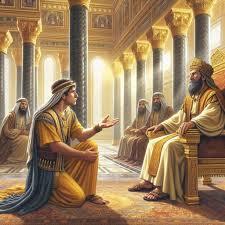
According to royal protocol, Dani’el could not speak until the king addressed him. The king asked Dani’el, also called Belteshazzar (1:6-7), “Are you able to tell me what I saw in my dream and interpret it?” The king’s question was tinged with skepticism. In his reply, Dani’el spoke with great grace and boldness. He had a sense of taste, but he also had a sense of righteousness. He was not afraid to use the kind of language that had previously enraged Nebuchadnezzar.66 Dani’el immediately gave all the glory to ADONAI. Then Dani’el replied, “No wise man, enchanter, magi, or diviner can explain to the king the mystery he has asked about, but there is a God in heaven who reveals secrets (2:26-28a). 

The apostle Paul tells us that at the end of time, during God’s righteous judgment (see the commentary on Revelation FoThe Great White Throne Judgment), He will judge men’s secrets through Yeshua Messiah, as the Gospel declares (Romans 2:16). The Revealer of Secrets is coming. To the righteous, Yeshua will hold you in His arms and explain to you why that darling child of yours died. He will explain why your spouse turned to another. He will explain why you became ill before your time. He will explain why your child turned to a homosexual lifestyle. He will explain why, when you were doing the will of God like Job, your life came crashing down around you. Humanly, you will never be able to understand it. But when the Revealer of Secrets explains it to you, everything will become clear. ADONAI is too wise to make a mistake and too loving to be unkind. To the ungodly, it means every liar will be publicly exposed. Every pedophile will answer for every child he has ever molested. Who killed your family member? The Revealer of Secrets knows. Every abortionist will have to answer to the Revealer of Secrets. No one will be able to bluff their way into heaven.67

Explicit in Dani’el’s witness was the superiority of Ha’Shem’s wisdom over all the “magical arts” practiced by the king’s wise men. Implicit was the supremacy of the God of Abraham, Isaac, and Jacob over the gods of the Babylonian pantheon worshipped by the royal magi.68

Continuing, Dani’el explained: He has shown King Nebuchadnezzar what will happen in the end times, or the far eschatological future (2:28b). The term end times (latter days, last days or days to come) is found frequently in Scripture, beginning in Genesis 49:1 and ending with Second Peter 3:3. Our Lord ushered in the last days with His death, resurrection, and ascension into heaven (Hebrews 1:2 and First Peter 1:20), so we are now living in the period of time when God is “wrapping things up.” YHVH has plans for Isra’el (Genesis 49:1; Deuteronomy 31:29, which will climax with Messiah returning to earth and being received by His people Hosea 3:5; Micah 4;1; Joel 2:28-29). The last days for the invisible Church, made up of Jewish and Gentile believers (Ephesians 2:14), include perilous times (Second Timothy 3:1), the apostasy of many, and the rise of scoffers who deny the truth (Second Peter 3:1ff); and this period will end when Messiah takes His Church to heaven (First Thessalonians 4:13-18).69

Dani’el interpreted the king’s dream and the circumstance by rehearsing for Nebuchadnezzar his troubled mind as he lay in his bed on the night of the dream. Your dream and the visions that passed through your mind as you were lying in bed are these: “As your majesty was lying there, your mind turned to things to come, and the Revealer of Secrets showed you what is going to happen. As for me, this secret has been revealed to me, not because I have greater wisdom than anyone else alive, but so that your majesty may know the interpretation and that you may understand what went through your mind (2:28c-30).

Nebuchadnezzar’s dream covered the prophetic panorama of Gentile history from his time until the future subjugation of Gentile powers during the thousand-year Messianic Kingdom (see AoThe Times of the Gentiles). This dream was given to the king of Babylon, the first of many Gentile rulers who would exert power by divine appointment during the Times of the Gentiles. YHVH was not revealing spiritual truth to Nebuchadnezzar, but facts concerning the political domination that Gentiles would exercise.70 But at the same time, and through the same events, God was dealing with Nebuchadnezzar.

As Ian Duguid relates in his commentary on Dani’el, there is a model here for all of us in our relationships with those who do not know our God. In contrast to the self-promoting way of the world, we should constantly seek occasions to exalt and declare publicly the praises of our God. Whatever gifts and abilities we have, whatever successes we may meet with in all life, all of them are ultimately the work of the One who gave us those gifts and opportunities, along with the diligence and perseverance to pursue them. We are simply ADONAI’s servants, doing the work he has assigned to us, He deserves all of the praise and adoration. The biblical word for this attitude is humility: the perspective that sees our own size rightly in comparison to the surpassing greatness of our God.

One caution is important at this point, we need to look away from ourselves and look towards Yeshua. He shows us genuine humility at work in His constant attitude of dependance upon His heavenly Father. Messiah shows us authentic humbleness of heart that turns away from the spotlight and the position of glory to serve the outcast and the unacceptable, the lepers and shameful sinners. The Lord of all eternity demonstrated that servant’s heart all the way to a humiliating death on the cross, despised and spat upon, abandoned and alone. When I think about His humility, I am humbled at my own feeble attempts. Paradoxically, as I look at the humility of Messiah, only then can I gain a true perspective on my own place in God’s work. When I see the richness of His grace shown to me, a sinner, then real humility can start to grow. This same genuine humility that shone from Dani’el’s life, a humility that enabled him to give all the glory to ADONAI for revealing the dream and its interpretation to the king, and not to take any of the credit for himself.71

Dear Heavenly Father, praise You for always having steadfast love for me. Praise ADONAI, for He is good, for His lovingkindness endures forever (Psalms 136:1). What comfort it is to be able to run to You with any problem and to seek Your wisdom and help. You are always available to listen to and to help me (Psalms 4:3). You don’t get too busy nor do you go away on a trip. For God Himself has said: I will never leave you or forsake you (Hebrews 13:5c). Your wisdom is infinite and even knows the number of the hairs on my head. Aren’t five sparrows being sold for two pennies? Yet not one of them is forgotten before God. Indeed, even the hairs of your head are all numbered. So do not fear; you are more valuable than many sparrows (Luke 12:6-7). Righteousness and justice are the foundation of Your throne. Lovingkindness and truth go before You (Psalms 89:14). How awesome that You rule with complete truth and honesty. Thank You for being so wise, available and loving. It delights me to serve You, even in hard times. Soon earth’s trials and problems will be over, and then there will be an everlasting time of joy and peace living in heaven with You. In Messiah Yeshua’s holy Name and power of His resurrection. Amen

2025-05-16T16:27:59+00:000 Comments

Au – Dani’el’s Prayer 2: 17-23

Dani’el’s Prayer
2: 17-23

Dani’el prayer DIG: Does Dani’el’s personal psalm in verses 2:19b-23 express personal faith? Group prayer? Or God’s special revelation? Why do you think so? What personal gifts did Dani’el praise God for? What does that say about God? About Dani’el? Why did Dani’el particularly praise God’s wisdom and might?

REFLECT: Prayer sustained Dani’el and his three friends while they were exiled in Babylon. In what ways has prayer sustained you when you were in a difficult situation? How does your prayer life reflect Dani’el’s praise and thanksgiving? And His friend’s powerful intercession? Who can you pray for and help this week?

ADONAI begins to reveal to Dani’el the initial revelation regarding the Times of the Gentiles (see Ao – The Times of the Gentiles). He provides an initial overview of the four empires that will govern this period. As the book progresses, God’s revelation becomes increasingly specific, reaching their climax in Chapter 12.

The petition (2:17-18a): Then Dani’el returned to his house and explained the matter to his friends Hananiah (meaning, beloved of the LORD), Mishael (meaning, who is as God) and Azariah (meaning, ADONAI is my help). Here they are given their Hebrew names, rather than the more familiar Babylonian names: Shadrach, Meshach, and Abednego (2:17). Perhaps this is because they will need to remember the grace of ADONAI, uniqueness, and willingness to help His people in distress – attributes to which these names refer.

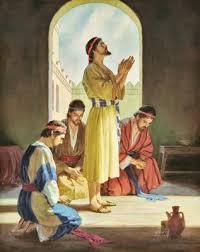
He urged them to plead for mercy from the God of heaven that they might not be executed with the rest of the Babylonian wise men (2:18a), who worshipped the stars (see the commentary on The Life of Christ, to see link click AvThe Visit of the Magi). In making this request, they were echoing Solomon’s prayer at the dedication of the Temple in First Kings 8:50, that in the times to come ADONAI would cause their captors to show His exiled people mercy (rechem, the Hebrew equivalent of the Aramaic word used here). In other words, in their prayer they pleaded with God to be faithful in His Word and to deliver them in their hour of need. If He didn’t reveal the dream to them, then there was nowhere else for them to turn. No mere human wisdom could deliver them from their predicament. It is particularly amazing that they echoed Solomon’s prayer at this point, for the Temple for which Solomon prayed was then in ruins, abandoned by the LORD and destroyed by the Babylonians. Yet even in the complete absence of earthly signs of God’s favor, they nonetheless trusted in His bare word of promise to be their God in the midst of their distress, no matter where they might find themselves.

Trusting in ADONAI alone like this is never a comfortable situation to be in, for by definition it means that all human means of support have been knocked away. It means that we can turn. Yet who could be better to turn to in the time of trial? Who is like Ha’Shem as a Helper and a Deliverer. God is both faithful and able to support us in our hour of need and to deliver us from our great distress. As we will see as we go further in the book of Dani’el, He doesn’t always deliver us from our trials in the way that He delivers Dani’el and his three friends here. Sometimes He delivers us by walking through the fiery trial with us, rather than saving us out of it (Hebrews 11). Yet, the LORD is always faithful to His Word, and whenever we find ourselves at our wit’s end, it is always a good strategy to gather our friends and flee to God, pleading the promises of His Word and trusting in His faithfulness.56

The revelation (2:18b-19): Matters that were hidden from Babylon’s wise men were revealed to Dani’el and his three friends, who continued to pray until God showed them Nebuchadnezzar’s dream. Throughout this book, Dani’el and his friends are seen as men of faith and prayer. They were far from home, but by faith they could “look toward” Jerusalem and the Temple to claim Solomon’s promise of mercy. The God of heaven would hear their prayers and answer them concerning this mystery, so that he and his friends might not be executed with the rest of the wise men of Babylon (2:18b). The word “secret” (raz, the Hebrew equivalent of the Aramaic word used here) is used eight times in this chapter and is the equivalent of the Greek word mysterion, or mystery, which is used twenty-eight times in the B’rit Chadashah. Generally, a mystery is something beyond human comprehension. Dani’el “saw” a vision of what the king had seen in his dream, and realized what it meant.57

The mystery of Nebuchadnezzar’s dream and its interpretation were not revealed to Dani’el when he prayed, but sometime during the night in a vision (2:19a). The verse draws a noteworthy contrast between Nebuchadnezzar and Dani’el. While the Babylonian emperor had a dream, Dani’el received a divine vision. Rabbis like Rashi and the author of the Zohar (a group of books including commentary on the mystical aspects of the Torah) identify the revealer of the dream as Gabriel.58

The praise (2:19b-23): Then Dani’el praised the God of heaven. In this prayer, several things are revealed about ADONAI. He said, “Praise be to the Name of God for ever and ever; wisdom and power are His. He changes times and seasons; he deposes kings and raises up others. He gives wisdom to the wise and knowledge to the discerning. He reveals deep and hidden things; He knows what lies in darkness, and light dwells with Him. I thank and praise you, God of my ancestors: You have given me wisdom and power, You have made known to me what we asked of You, You have made known to us the dream of the king.”

As Ian Duguid relates in his commentary on Dani’el, ADONAI alone possesses the power to control world events. The future does not rest in the hands of the Babylonian gods, to whom the diviners looked. Their gods were empty idols, with no more power to either bless or to curse their followers (see Isaiah IgBel Bows Down, Nebo Stoops Low). They cannot affect the future, for they themselves are blind, dumb, and impotent (Isaiah 44:18). For all the pomp and show of the Babylonian diviners, their claims to anticipate the future were empty and void. YHVH is the One who raises up kings and deposes them. He sets the times and seasons for everything under the sun (see the Life of Solomon: Ecclesiastes CjAll in Good Time).

Yet, Isra’el’s God not only controls the future, He reveals the future to His faithful servants. He gives wisdom to the wise and reveals the mysteries of the future, as He has done in this case with Dani’el. This was exactly what the Babylonian diviners thought was impossible, because, as they put it: the gods do not dwell with men (2:11). However, Isra’el’s God, even though He is superior in every way and exalted high above the heavens, does dwell with the humble and contrite of spirit (Isaiah 57:15). The One who governs the future made it known to Dani’el by revealing both the dream and its interpretation.

This assertion that the God of Abraham, Isaac, and Jacob is the one who possesses all power and wisdom was an important reminder for Dani’el’s hearers. As exiles in Babylon, they were surrounded by false religions that claimed to offer access to the hidden mysteries of the universe. The events of this chapter exposed the emptiness of these claims: there is only one God who reveals the future, because there is only one God who controls the future. However outwardly impressive the “wisdom” and “power” of the world may seem; it has no ultimate influence. Babylon’s gods were a façade and a lie.59

The same message is important in our own day and time. We too are surrounded by the power and wisdom of the world. Sometimes it is seemingly “religious” and promises us enlightenment and deeper experience of life through New Age meditation or practices borrowed from Eastern religions. Sometimes it comes to us in pseudo “Christian” thinking like the “Word of Faith” Movement, which is really the belief in the “force of faith.” It is believed words can be used to manipulate the faith-force, and thus actually create what they believe Scripture promises (health and wealth). Laws supposedly governing the faith-force are said to operate independently of God’s sovereign will and that God Himself is subject to these laws. This is nothing short of idolatry, turning our faith – and by extension ourselves – into god.60

At other times, it comes to us in secular forms, promising power and success through applying its strategies in business and in personal relationships. It often presents impressive credentials and, like the Babylonian diviners, comes to us strongly endorsed by society in which we live. Outwardly, the wisdom of the world looks very impressive, with its qualifications and influence in high places in our society. Yet at the root, the wisdom of the world is always an illusion. It neither understands the true fallen nature of humanity, nor real presence of the Ruach Ha’Kodesh in this world. How can it, when it denies the existence or ignores the relevance of the One true God who created and controls all things? His power works all things according to His will (Romans 8:28). His wisdom is the true source of insight and skillful living: The fear of ADONAI is the beginning of wisdom, and knowledge of the holy One is understanding (Proverbs 9:10).61

Dear heavenly Father, praise You that You are always faithful. When I call You are always listening. You hear and You respond with the best answer. You see the whole situation and the desires of men’s hearts so You know how best to answer. Sometimes You say “Yes,” sometimes “No,” and sometimes You may say “Wait”, but Your answer is always the very best. In Dani’el’s life-or-death situation, you responded by revealing the answer to Dani’el in a dream.

You see and understand things that I can’t see, nor can I understand the big picture of my own request; nevertheless, Your answer is the most loving and wisest answer to each prayer. Your love and wisdom gave a “no” to David’s prayer for the life of his and Bathsheba’s infant son (Samuel 12:20). His response is a good model for me to follow. David trusted in God’s great goodness and steadfast love and he worshiped (Samuel 12:20). He did not become bitter or turn away from the LORD. His response to “no” was deeper worship and surrender. But You answered “Yes,” to many prayers, including Hannah’s prayer for a child (First Samuel 1-2:21) and Joshua’s prayers to help in battles (Joshua 11:16). You always say “yes” when someone is truly sorry for their sin (First John 1:9) and comes humbly in repentance to you (Second Peter 3:9). Paul was given a “yes” when he prayed for forgiveness (Acts 9:10-22). How wonderful that You can always be trusted to listen to me and to give the best and wisest answer. You are a wonderful heavenly Father! In Messiah Yeshua’s holy Name and power of His resurrection. Amen

2025-05-07T14:32:26+00:000 Comments

At – Dani’el’s Plea 2: 14-16

Dani’el’s Plea
2: 14-16

Dani’el plea DIG: How were Arioch and Potiphar similar? Why weren’t Dani’el and his three friends executed? What do the rabbis teach about Arioch? How was Dani’el’s boldness seen here? Why would king Nebuchadnezzar even consider listening to Dani’el? How can the sovereignty of God be seen here?

REFLECT: Have you ever been to court? How did it make you feel? Have you ever been a part of a group that was in trouble? What did you learn from that experience? Does your boldness increase when you feel that the LORD is with you? Why? When have you asked for some time to seek the direction of God?

ADONAI begins to reveal to Dani’el the initial revelation regarding the Times of the Gentiles (see Ao – The Times of the Gentiles). He provides an initial overview of the four empires that will govern this period. As the book progresses, God’s revelation becomes increasingly specific, reaching their climax in Chapter 12.

The second scene of the “court story” recounts the problem of interpreting the king’s dream, reports Dani’el’s intervention on behalf of the condemned wise men (including himself), and ADONAI’s subsequent intervention on behalf of Dani’el. Arioch was apparently in the process of rounding up the king’s magi from different locations in the palace complex for sentencing and then a mass execution.50

When Arioch, the commander of the king’s guard (tabbach, the Hebrew root of the Aramaic equivalent, means to slay; hence, the “king’s guard” consisted of the executioners of the king, and Arioch, much like Potiphar, was apparently the chief executioner),51 came to get Dani’el and his three friends, they were shocked to hear about the king’s decree. As new “graduates” among the royal magi, they hadn’t been invited to the special session about the dream. Arioch had gone out to put to death the wise men of Babylon, and therefore explained the seriousness of the matter to the Hebrew exiles (2:14a). By doing this, and delaying his mission, Arioch was risking his own life. But evidently the officers in the palace had learned that the four Jewish men were trustworthy. Their gracious actions and words during their three years of training were now helping to save their lives.52

Dani’el asked Nebuchadnezzar’s official, “Why did the king issue such an urgent decree?” Arioch then explained the matter to Dani’el (2:15). His boldness in speaking to the king’s royal guard was seen earlier when he declined eating from the king’s table (to see link click AlDani’el’s Devotion to God). In addition to boldness, Dani’el spoke to Arioch with wisdom and tact (2:14b). Now Dani’el displayed similar boldness in approaching the king, no doubt through the mediation of Arioch.53

In rabbinic theology, Arioch was the same as Nebuzaradan, who is called the captain of the guard when Jerusalem fell in Second Kings 25:20. According to the Talmud, he became a Jewish proselyte (see the commentary on Acts BbAn Ethiopian Asks about Isaiah 53: Three Levels of Gentile relationship to Judaism). The rabbis teach that an old man from among the inhabitants of Jerusalem related to Rabbi Yehoshua be Korha: In this valley that lies before you, Nebuzaradan, captain of the guard of the Babylonian king Nebuchadnezzar, killed 2,110,00o people. And in Jerusalem itself he killed 940,000 people on one stone, until the blood of his victims flowed and touched the blood of Zechariah to fulfill what was stated: And bloodshed follows bloodshed (Hosea 4:2b).

In 661 BC, the prophet Zechariah ben Jehoiada chastised the nation for their sins, warning them of the grave punishments that would befall them if they would not change their ways. Rather than accept his rebuke, the nation stoned Zechariah to death in the Temple courtyard (Second Chronicles 24:21). The rabbis teach that this occurred on Yom Kippur, and that rather than allowing Zechariah’s blood to settle into the earth, God caused it to bubble up. The people tried to cover it with earth, but it continued to seethe for the next 252 years, until the destruction of the Temple.

The Gemara, part of the Oral Law (see the commentary on The Life of Christ EiThe Oral Law), clarifies the details of what happened: Nebuzaradan found the blood of Zechariah, and saw it bubbling up from the ground, and he said, “What is this? Those in the Temple said to him, “It is sacrificial blood that had been poured there. So he brought animal blood, compared it to the blood bubbling up from the ground, and saw that it was not similar to it.”

Nebuzaradan said to them, “I will appease Zechariah. He brought the members of the Great Sanhedrin (see The Life of Christ LgThe Great Sanhedrin) and of the lesser Sanhedrin and killed them alongside the bubbling blood, but it still did not settle. At the moment Nebuzaradan contemplated the idea of repentance and said to himself, “If, for the death of one soul, that of Zechariah, God punishes the Jewish people in this manner, then that man, that is to say, I, who has killed all of those souls, all the more so will I be subject to great punishment from God. He fled, sent a document to his house detailing what was to be done with his property, and converted to Judaism.54

Interestingly, Dani’el asked Nebuchadnezzar for time to seek an interpretation for the dream, when previously the king accused the magi of stall tactics (2:8). So Dani’el went in to the king and asked for some time, so that he might interpret the dream for him (2:16). Apparently the king’s rage had subsided and he was willing to make some concessions because he was so desperate for an interpretation of his dream. After all, Dani’el hadn’t been at the original meeting (see AsThe Challenge to the Magi: The Dream), thus he deserved an opportunity to obey the king’s orders. No doubt Nebuchadnezzar recalled that the four Hebrews had been exceptional students and were superior young men. Why kill your four best counselors just because of the incompetence of the other wise men? By faith, Dani’el promised to reveal the interpretation of the king’s dream, for he knew that the God of Abraham, Isaac, and Jacob would answer his prayer.55 Clearly, ADONAI continued to bless Dani’el and his contact with his Babylonian overlords.

Dear heavenly Father, praise You for always watching over me with Your wisdom and steadfast love. How precious is your steadfast love, O God! The children of mankind take refuge in the shadow of your wings (Psalms 36:7). What a comfort and joy it is, in the midst of extremely trying times, for me to be able to call out to You. Both Dani’el and David ran to You and leaned on Your wisdom and love in their trials. David wrote: Deliver me from my enemies, my God! Set me on high, away from those who rise up against me. Deliver me from workers of iniquity. Rescue me from bloodthirsty men (Psalms 59:1-2).

It is a joy to love and to serve You, even in hard trying times.  For I consider the sufferings of this present time not worthy to be compared with the coming glory to be revealed to us (Romans 8:18). Yet a little while, and the wicked will be no more. Yes, You will look at his place, but he will not be there (Psalms 37:9). This world, its trials and those who create the trials will soon pass away. Those who love You will live with You forever (John 14:1-3 and 23) in Your wonderful eternal home of peace. Then I saw a new heaven and a new earth; for the first heaven and the first earth had passed away, and the sea was no more. I also saw the holy city – the New Jerusalem – coming down out of heaven from God, prepared as a bride adorned for her husband. I also heard a loud voice from the throne, saying, “Behold, the dwelling of God is among men, and He shall tabernacle among them. They shall be His people, and God Himself shall be among them and be their God. He shall wipe away every tear from their eyes, and death shall be no more. Nor shall there be mourning or crying or pain any longer, for the former things have passed away (Revelation 21:1-4). In Messiah Yeshua’s holy Name and power of His resurrection. Amen

2025-05-07T13:37:13+00:000 Comments

As – The Challenge to the Magi 2: 1-13

The Challenge to the Magi
2: 1-13

The challenge to the magi DIG: Why was the king troubled? What did the king ask of the magi? What was the difference between the magi, the enchanters, and the sorcerers? Why didn’t Nebuchadnezzar trust the magi with the important interpretation of his dream? What was Nebuchadnezzar’s basic problem?

REFLECT: What is one of the most memorable or unusual dreams you have ever had? Who (or what) drives you up the wall with demands? How do you decide when to give in and when to say no? How does Nebuchadnezzar remind you of people who live their life apart from God? How can we find peace?

ADONAI begins to reveal to Dani’el the initial revelation regarding the Times of the Gentiles (see AoThe Times of the Gentiles). He provides an initial overview of the four empires that will govern this period. As the book progresses, God’s revelation becomes increasingly specific, reaching their climax in Chapter 12.

As we turn from Chapter 1 to Chapter 2, the atmosphere in Nebuchadnezzar’s palace changes dramatically. Chapter 1 closes with recognition and security for Dani’el and his three friends, but Chapter 2 introduces rejection and danger. Because they possessed almost unlimited power and authority, Oriental despots were notoriously temperamental and unpredictable, and here Nebuchadnezzar reveals this side of his character (3:19-20). However, the hero and major character in Chapter 2 is not king Nebuchadnezzar, but ADONAI Elohim who reveals deep and hidden things (2:22a). As you read this chapter, you will witness the God of Abraham, Isaac, and Jacob in complete control of every situation, and accomplishing His purposes even through superstitious pagan Gentiles. Note the divine activities that protected His servants and brought glory to His Name.41

The date (2:1a): The first thirteen verses of Dani’el 2 emphasize the unique challenge Nebuchadnezzar gave his wise men (an umbrella term used to designate the cadre of professional advisors serving in the Babylonian royal court), and verse 1 sets the stage for that challenge. And in the second year of his reign (2:1a). The conjunction and is important here (to see link click AqNebuchadnezzar’s First Dream). A close reading of Dani’el reveals that his training lasted for three years; yet here, Dani’el is among the “condemned” wise men as though he had already graduated and received his appointment as a member of the royal advisers (2:14). This apparent contradiction can be reconciled when we recognize that Nebuchadnezzar’s second year would begin in March/April 603 BC. Hebrew usage, which reckoned fractions of a year as a full year, would have actually been the king’s third year. The first year would have been Nebuchadnezzar’s year of accession to the throne; the second year would have been the king’s first year of his reign; and the third year would have actually been the second year of Nebuchadnezzar’s reign (2:1a). This introduction simply serves to set the stage for the narrative to follow. Specifically, the scene unfolds in the royal court of Nebuchadnezzar, king of Babylon. The setting of the date was the way the ancients recorded their history and served to mark the king’s dream as an actual event.42

According to a proverbial Babylonian saying, “Woe and anxiety create only bad dreams.” Humanly speaking, what was troubling the king so much to cause him bad dreams and sleeplessness? Each year, in the early part of his reign, Nebuchadnezzar’s soldiers went to the far ends of his empire to ensure that the conquered peoples paid their taxes. In 604 BC, the Philistine city of Ashkelon had put up stiff resistance to his taxation policy. In 603 BC an extra-large army, siege towers and heavy equipment are mentioned in the chronicles of the king, and Babylonian troops were in the field for several months. The king probably worried that other conquered peoples would also rebel against his taxation policy.

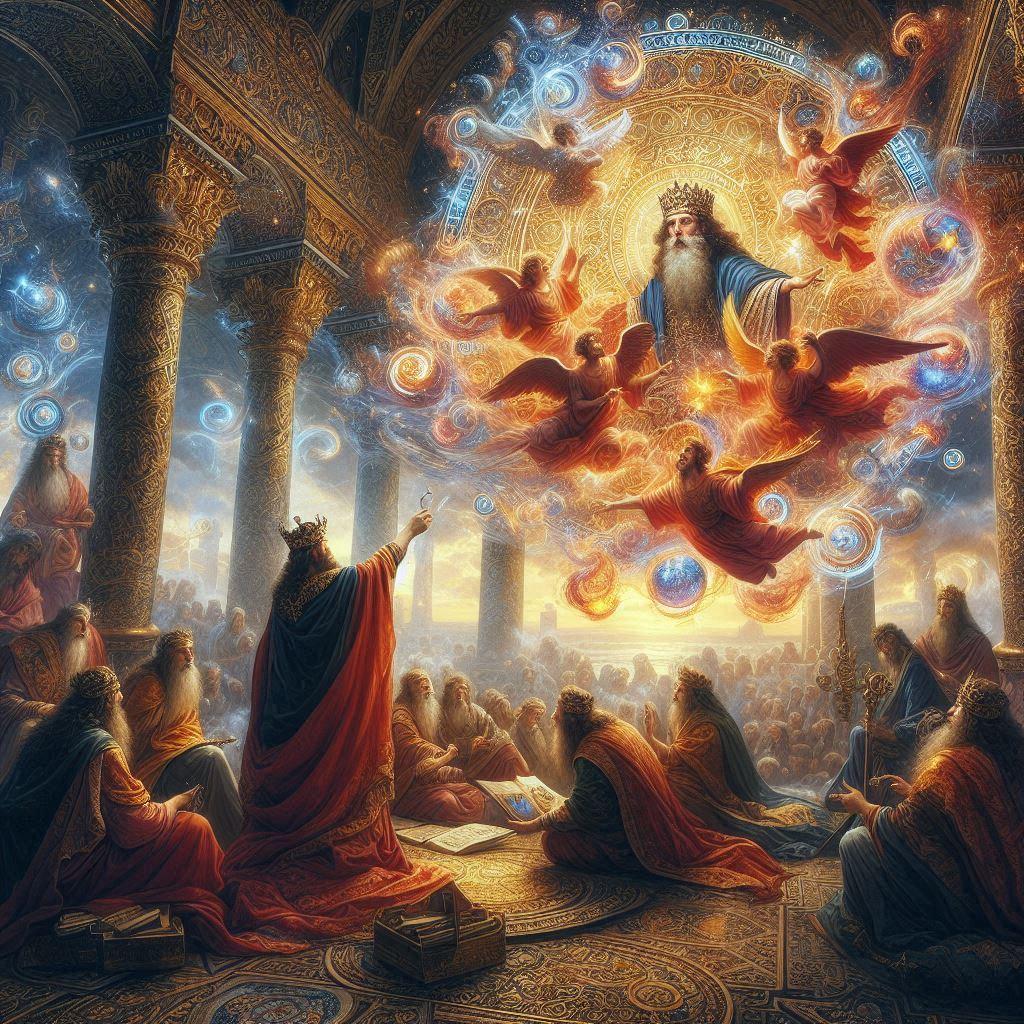
The dream (2:1b-3): Nebuchadnezzar had dreams; but his mind was troubled and he could not sleep (2:1b). However, the king had a group of men in his royal court for just such an emergency as this. So the king summoned the magi (Hebrew: chartom, refers to a magician or wise man, often associated with the practice of interpreting dreams, or performing magic), enchanters (Hebrew: ashshaph, refers to a class or wise men who were often consulted for their ability to interpret dreams, signs, and omens, and as such, were key figures in the king’s advisory team), and sorcerers (Hebrew: kashaph, refers to the use of drugs, potions, or spells and is associated with “sorcery” or “witchcraft”) to tell him what he had dreamed. It must have brought fear and wonder to his heart when he saw a massive metallic image smashed to pieces by a mysterious stone that then grew into a mountain (see AwThe Kings Dream).

At this point, however, Nebuchadnezzar introduced an unreasonable demand. Instead of telling the magi the dream, which they could then seek to interpret, he declared that they would not only have to tell him about the dream itself, but also its interpretation! When they came in and stood before the king, he said to them, “I have had a dream that troubles me and I want to know what it means” (2:2-3). This request was not unusual in ancient times. It was for the king to tell the wise men the content of his dream, and then they would be able to provide the proper interpretation. However, the interpretation of that dream was too important for Nebuchadnezzar to treat it as a routine matter. He wanted to be sure that his wise men would give him the correct meaning, for he must have felt that his future was involved in the dream. He didn’t want to hear misleading and wicked things (2:9) that they made up just to please him. If indeed they had the ability to interpret the dream, then surely they also had the ability to tell him the dream! He wanted the truth. By issuing this impossible challenge, the king was unconsciously following the plan of God and opening the way for Dani’el to do what the wise men could not do.43

Despite Nebuchadnezzar’s power and position as king of Babylon, in his heart of hearts, he was like a lost child in the darkness. His panic was displayed in the way in which he dealt with his wise men. In a spiritual sense, His insecurity reminds us of those who live their lives apart from God. Nebuchadnezzar had everything a person could dream of possessing: power, fame, and influence. He was in the process of creating an empire that would memorialize him in the future and a city whose gardens would be known as one of the wonders of the ancient world. Why, then, should a mere dream fill him with such anxiety?

The answer is that Nebuchadnezzar was a man whose heart was set on goals that would, in the long run, prove to be mirages in the desert. He lived an exclusively pagan life; thus, his future was always tied to the change and decay of this world.

ADONAI, however, made humanity for Himself. “The human heart,” in Augustine’s memorable words, “is restless until it finds its rest in God.” It doesn’t matter whether we are rich or poor, among the haves or the have-nots. In either case, despite the cares of this world, the deceitfulness of riches, and the desires for other things (Mark 4:19), God desires our peace. Those of us who have plenty are anxious because we want to guarantee that there will always be plenty, and those of us who lack what others have, are anxious until we have it too. So, as long as we think like the world – the cravings of the sinful man, the lust of the eyes and the boasting of what we say and do, we can never be delivered from deep-seated insecurity, the profound sense of torment that haunts our lives if we allow it to. The Word of God reminds us that world and its desires will pass away, but the one who does the will of God will live forever (First John 2:15-16).44

From this point through the end of Chapter 7 the text is in Aramaic (see AcIntroduction of Dani’el from a Messianic Jewish Perspective: Languages), the diplomatic language of the empire. This is the longest passage using Aramaic in the TaNaKh. The rabbis teach that Hebrew is the sacred tongue, or language, of the Torah, and that Aramaic is the language of the common people.

The desperation of the magi (2:4:11): Then the sorcerers were horrified at the king’s unreasonable demand and answered him in Aramaic, saying, “May the king live forever! Tell your servants the dream, and we will interpret it” (2:4). After offering the customary Babylonian greeting to the king, they were confident of reaching an understanding of the dream’s meaning because of their training in the mantic arts, and also since they had access to “dream manuals” that documented historical dreams and their result, explained the significance of dream patterns, and decoded the various dream symbols.45

With the reply of the sorcerers there is a language change in this verse from Hebrew to Aramaic (a Semitic language closely related to Hebrew), and the text continues in Aramaic to the end of Chapter 7. This is the longest passage using Aramaic in the TaNaKh, the others being Ezra 4:8 to 6:18, and 7:12-26.

But the king replied to the sorcerers: This is what I have firmly decided: If you do not tell me what my dream was and interpret it, I will have you cut into pieces and your houses turned into piles of rubble, cursed, and never to be used again. But Nebuchadnezzar also wanted to encourage them by offering incentives: If you tell me the dream and explain it, you will receive from me gifts and rewards and great honor. The threat of punishment, or promise of reward, is common in “court contest” texts in the Bible. So tell me the dream and interpret it for me (2:5-6).

Nebuchadnezzar’s request was so unreasonable that it failed to fully register with the magi, thus prompting them to repeat their request for a second time. Once more they replied, “Let the king tell his servants the dream, and we will interpret it. Then the king answered, “I am certain that you are trying to gain time, because you realize that this is what I have firmly decided: If you do not tell me the dream, there is only one penalty for you. You have conspired to tell me misleading and wicked things, hoping the situation will change. So then, tell me the dream, and I will know that you can interpret it for me” (2:7-9). No longer simply accusing the magi of buying time, he claimed that they were plotting to lie to him. In effect, Nebuchadnezzar told his magi that they were doomed if they did not reveal the contents of his dream. The Babylonian king’s character was revealed in his reaction to the magi’s request. It is worth noting that in the cameos of Nebuchadnezzar’s life in Dani’el we learn as much about the king from his reactions as from his actions. This is true of all of us. His reactions are consistently characterized by a spirit of hostility as well as a sense of insecurity because he had no peace within himself.46

The sorcerers answered the king a third time, “There is no one on earth who can do what the king asks! No king, however great and mighty, has ever asked such a thing of any magi or enchanter or sorcerer. What the king asks is too difficult. No one can reveal it to the king except the gods, and they do not dwell with men” (2:10-11). The king was furious for two reasons. First, their accusation of unfairness questioned the king’s sense of justice and hence was seen as an act of insubordination. Second, they claimed that whoever revealed the dream needed to be in touch with the gods. But that was their job description – communication with the spiritual world. So, without realizing it, the magi confessed that they were charlatans . . . deserving of the death penalty for deceiving the king!47

The decree (2:12-13): This made the king so angry and furious that he ordered the execution of all the wise men of Babylon. So the decree was issued to put the wise men to death, and men were sent to look for Dani’el and his friends to put them to death. Nebuchadnezzar’s decree was put in writing and, thus, became official. All of the Babylonian school of magi was about to be wiped out, including Dani’el and his three friends. From the king’s perspective, they were members of that school. Yet, there is no evidence in the book of Dani’el or elsewhere that they engaged in occult practices. All the Bible has to say about the four Jewish exiles is that they were loyal to the Torah.48

Nebuchadnezzar had no peace because of his deep-rooted hostility toward ADONAI. When the magi casually mentioned to him that they were merely human and not gods, he flew into a rage. He was not prepared to allow Ha’Shem to show Himself to be the sovereign LORD of his life as either a king or a man. What haunted him about his dream was that (as we shall see) it was as if God were saying to him, “Nebuchadnezzar, your kingdom may be great, but it will decay and fade away. Only My Kingdom will be eternal. It will crush every other kingdom, and it will itself endure forever (see Bg The Fifth Empire: The Kingdom of God). No wonder Nebuchadnezzar’s spirit grew anxious in reaction to his dream. God, not Nebuchadnezzar, was, and is, Sovereign. Nebuchadnezzar was one of those who exchanged the truth of God for a lie, and worshiped and served the creature rather than the Creator . . . They are guilty of greed, jealousy, murder, dishonesty, arrogance, slander, and disobedience.49 Nevertheless, the sovereignty of God allowed all this to happen for a reason. It allowed Dani’el to come forward and not only interpret the king’s dream, but also to give all the glory to ADONAI (see Av – Dani’el’s Witness).

Dear heavenly Father, praise You for Your wonderful, almighty, all-knowing with steadfast love for me! What a comfort it is when awful trials come upon me and I call out to You, You hear and respond with steadfast love and power. Trials may surprise me, but because You are omniscient, knowing all that happens even in the future, You already know about the trial and have the solution already planned and prepared! Then trials become small and Your glory becomes all there is to live for. For Your lovingkindness is great up to the heavens, and Your truth to the skies. Be exalted, O God, above the heavens. Let Your glory be over all the earth (Psalms 57:10-11)! May I focus on Your steadfast love, wisdom, always looking up to You in praise, even in the midst of trials. In Messiah Yeshua’s holy Name and power of His resurrection. Amen

2025-05-23T11:06:53+00:000 Comments

Ar – The Demand of Nebuchadnezzar 2: 1-35

The Demand of Nebuchadnezzar
2: 1-35

ADONAI begins to reveal to Dani’el the initial revelation regarding the Times of the Gentiles (see AoThe Times of the Gentiles). He provides an initial overview of the four empires that will govern this period. As the book progresses, God’s revelation becomes increasingly specific, reaching their climax in Chapter 12.

The genre of Chapter Two is correctly identified as a “court tale of conquest,” a contest between Dani’el and the Babylonian magi (Hebrew: chartom, refers to a magician or wise man). A conflict was initiated when King Nebuchadnezzar dreamed a dream (2:1). In the ancient world, such dreams were thought to be shadows that the future cast in front of itself, tipping its hand to show what lay ahead. The interpretation of the dream was therefore important, in order that the king might take whatever steps necessary to counteract the events the dream anticipated, or at least be ready for them. In preparation for such eventualities, many kings of the ancient Near East had special dream interpreters in their royal court, and Nebuchadnezzar was no exception. He employed a staff of magi whose job it was to interpret the significance of such dreams.40 However, the tension in this section results from the fact the magi were unable to perform their duties. Thus, opening the door for Dani’el to come forward and not only interpret the king’s dream, but to give all the glory to ADONAI.
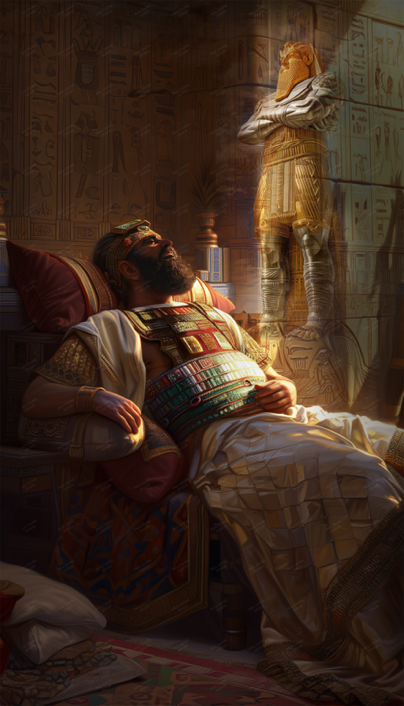

This chapter, verses 1 through 35 can be broken down in chiastic fashion, resulting in a mirror effect as the ideas are “reflected” back in the passage: A to A, B to B, with C being the climax of the chiasm.

A. The Challenge to the Magi – 2:1-13 (As)

B. Dani’el’s Plea – 2:14-16 (At)

C. Dani’el’s Prayer – 2:17-23 (Au)

B. Dani’el’s Witness – 2:24-30 (Av)

A. The King’s Dream – 2:31-35 (Aw)

2025-05-15T17:12:45+00:000 Comments

Aq – Nebuchadnezzar’s First Dream 2: 1-49

Nebuchadnezzar’s First Dream
2: 1-49

ADONAI begins to reveal to Dani’el the initial revelation regarding the Times of the Gentiles (see AoThe Times of the Gentiles). He provides an initial overview of the four empires that will govern this period. As the book progresses, God’s revelation becomes increasingly specific, reaching their climax in Chapter 12.

Most of us probably try to avoid beginning a sentence with a conjunction. And I don’t know why exactly, maybe someone along the way has told us it is bad form. Perhaps that is why our style-conscious modern English translations omit the conjunction at the beginning of 2:1. But it’s there in the Hebrew text, and some translations, like Kings James Bible, the American Standard Version, the English Revised Version, the Literal Standard Version, and the Jewish Publishing Society translation of the TaNaKh in 1917, pick it up. So my commentary reads: And in the second year of his reign, Nebuchadnezzar had dreams; his mind was troubled and he could not sleep (2:1). Not earth-shattering, but the tiny connective hints that Chapter One is not a detached event. It is the spring that gives life to the ongoing story. A little reflection proves this to be true, and quite beyond the simple conjunction linking Chapters 1 and 2. The Temple vessels of 1:2 will form the basis of the demise of Belshazzar in Chapter Five (to see link click CnBelshazzar’s Great Banquet); the here-I-must-draw-a-line-in-the-sand decision of 1:8, will be re-enacted in Chapter Three with the blazing furnace (see BkNebuchadnezzar’s Statue of Gold and the Fiery Furnace), and in Chapter Six with Dani’el in the lion’s den (see DkDani’el Saved in the Lion’s Den); and Dani’el’s skill in understanding dreams and visions (1:7) will be on full display in Chapter Two (see ApDani’el’s Interpretations of Dreams) and in Chapter Seven (see Bz Dani’el’s Vision of Four Beasts). Therefore, every one of the “stories” in the book of Dani’el has its roots in Chapter One. And this usually eliminated and in 2:1 bears its own faint witness to that.39

Composed of forty-nine verses, Chapter Two is the longest chapter in the book, and can be broken down in this chiastic fashion, resulting in a mirror effect as the ideas are “reflected” back and forth in the passage: A to A, B to B, C to C, with D being the climax of the chiasm.

A. The Challenge to the Magi – 2:1-13 (As)

B. Dani’el’s Plea – 2:14-16 (At)

C. Dani’el’s Prayer – 2:17-23 (Au)

D. Dani’el’s Witness – 2:24-30 (Av)

C. The King’s Dream – 2:31-35 (Aw)

B. Dani’el Interprets the King’s Dream – 2:36-45 (Ax)

A. Nebuchadnezzar Promotes Dani’el – 2:46-49 (Bi)

In Chapter 7, Dani’el elaborated on the four Gentile kingdoms that were seen in the statue of Chapter 2. We can compare these chapters in three ways. First, they are visionary. In Chapter 2 the visionary was a pagan king, but in Chapter 7 the visionary was Dani’el himself. Secondly, we can compare the interpreters. Dani’el was the interpreter in Chapter 2, but the angel Gabri’el was the interpreter in Chapter 7. Thirdly, we can compare the two perspectives. Dani’el 2 gives us the perspective of the times of the Gentiles from a human viewpoint as something majestic, but Dani’el 7 gives us the perspective from God’s viewpoint as something dreadful.

2025-07-24T11:36:18+00:000 Comments

Ap – Dani’el’s Interpretations of Dreams 2:1 to 4:27

Dani’el’s Interpretations of Dreams
2:1 to 4:27

ADONAI begins to reveal to Dani’el the initial revelation regarding the Times of the Gentiles (see AoThe Times of the Gentiles). He provides an initial overview of the four empires that will govern this period. As the book progresses, God’s revelation becomes increasingly specific, reaching their climax in Chapter 12.

Only ADONAI’s wisdom can reveal the mysteries of life. In other words, it was not the content of the dream of the future that is primary, what is most important here is the fact that it was only Dani’el’s God that knew the future. And the LORD’s knowledge of the future was particularly important to the Israelites in exile and under some measure of oppression, because it implied that He controls history. Once again, therefore, we are reminded of the overall theme of this book. In spite of present appearances, God is in control. As we read Dani’el’s interpretations of dreams Genesis 41 comes quickly to mind. In Genesis, a pagan king, the Egyptian pharaoh, has an anxiety-producing dream (concerning seven lean and fat cows). When the wise men of Egypt couldn’t interpret the dream for him, his cupbearer (paralleling the role of Arioch in Dani’el Chapter 2) helps him discover a dream-interpreter, who turns out to be the imprisoned Joseph. Through God’s help, Joseph reveals the interpretation of the dream to pharaoh, resulting in his rise in status in the foreign court. Thus, we see that Dani’el is like Joseph, perhaps even a little better than Joseph, since he not only interprets the dream but, with ADONAI’s help, actually tells the king the contents of his dreams (to see link click AxDani’el Interprets the King’s Dream) and (BvInterpretation: The King’s Danger).38

2025-07-30T22:12:34+00:000 Comments

Ao – The Times of the Gentiles 2:1 to 7:28

The Times of the Gentiles
2:1 to 7:28

ADONAI begins to reveal to Dani’el the initial revelation regarding the Times of the Gentiles. He provides an initial overview of the four empires that will govern this period. But as the book progresses, God’s revelation becomes increasingly specific, reaching their climax in Chapter 12.

Understanding prophecy means understanding the times of the Gentiles. A definition of the times of the Gentiles can be gleaned from Luke 21:24 that says: They will fall by the sword and be taken as prisoners to all the nations. Jerusalem will be trampled on by the Gentiles until the times of the Gentiles are fulfilled. The times of the Gentiles can best be described as that long period of time from the Babylonian captivity in 586 BC (see the commentary on Jeremiah, to see link click GuSeventy Years of Imperial Babylonian Rule), to the Second Coming of Messiah at the end of the Great Tribulation, during which time the Gentiles will dominate the City of Jerusalem and the Jews. This does not rule out temporary Jewish control of the city, but all such Jewish control will be temporary until the Second Coming. Such temporary control was exercised during the Maccabean Period (164-163 BC), the First Jewish Revolt against Rome (AD 66-70), the Second Jewish Revolt (the Bar Cochba Revolt) against Rome (AD 132-135), and since 1967 as a result of the Six Day War. This, too, is temporary, as Gentiles will continue to trample Jerusalem down for at least another three-and-a-half years during the Great Tribulation (Revelation 11:1-2). As a result, any Jewish takeover of the city of Jerusalem before Messiah returns must be viewed as temporary and does not mean that the Times of the Gentiles have ended. There is no phasing out, but a sudden end once and for all. Thus, the Times of the Gentiles can only end with the climatic Second Coming of Yeshua Messiah.

To understand the course of the times of the Gentiles there are four passages in the book of Dani’el and two passages in the book of Revelation that need to be studied. In this section we will study Dani’el 2:31-45, 7:1-28, 8:1-25, and 11:3-45. But later, while we study the book of Revelation itself, we will look more closely at Revelation 13:1-10 and 17:7-14. There are several visions in Dani’el, but four visions specifically pertain to the times of the Gentiles. Each one of these visions builds and elaborates on the previous ones.

First, in Daniel 2:31-25, King Nebuchadnezzar had a vision that Dani’el successfully interpreted. Dani’el saw an awesome statue having a head of gold (Babylonian Empire), the breast and arms of silver (Medo-Persian Empire), the belly and thighs of brass (the Greek Empire), legs of iron (the Imperialists), ending with the feet and toes of part iron and clay (the Ten Kingdoms Stage). This passage provides a timeline of all that will follow.

Secondly, in Chapter 7, Dani’el elaborated on the four Gentile kingdoms that were seen in the statue of Chapter 2. We can compare these chapters in three ways. First, they are visionary. In Chapter 2 the visionary was a pagan king, Nebuchadnezzar, but in Chapter 7 the visionary was Dani’el himself. Secondly, we can compare the interpreters. Dani’el was the interpreter in Chapter 2, but an angel was the interpreter in Chapter 7. Thirdly, we can compare the two perspectives. Dani’el 2 gives us the perspective of the times of the Gentiles from a human viewpoint as something majestic, but Dani’el 7 gives us the perspective from God’s viewpoint as something dreadful. There were four kingdoms, pictured as four beasts.

Thirdly, in Chapter 8, Dani’el describes the second vision ADONAI gave him. The vision concerns a portion of the overall period of time symbolized in the first vision; namely, regarding Medo-Persia and Greece. Reference is made also to the antichrist of future time in the interpretation of the vision in this chapter. Once more, animals are used for symbolism, but in place of the bear and leopard that were used in the first vision, a two-horned ram and a one horned goat are used. In this vision also, a little horn appears. He would be a foreshadowing of the antichrist that will follow his pattern in the Great Tribulation of the future.

Lastly, in his third vision, Dani’el first describes the near historical future of the ensuing battle between the Ptolemies of Egypt and the Seleucids of Syria after Alexander’s death (Dani’el 11:5-35). Then he turns to the far eschatological future to give us a more detailed look at the antichrist (Dani’el 11:36-39). Daniel prophesies about the Ten Kingdoms that the antichrist will conquer to establish his absolute imperialism (Dani’el 11:40-44), and then Dani’el even goes on to describe his eventual death (Dani’el 11:45).

Thus, four Gentile Empires will control the times of the Gentiles before it is succeeded by the Messianic Kingdom (Dani’el 7:17-18). First would be the Babylonians (see AyThe First Empire: A Head of Gold), second would be the Medo-Persians (see AzThe Second Empire: Chest and Arms of Silver), third would be the Greeks (see BaThe Third Empire: Belly and Thighs of Bronze), and fourth would be the Imperialists (see BbThe Fourth Empire: Imperialism). But, the last Empire, or more accurately, Kingdom, will crush all those kingdoms, and it will be the Messianic Kingdom (BgThe Fifth Empire: The Kingdom of God).37

2025-07-30T22:11:30+00:000 Comments

An – The Significance of Dani’el Chapter 1 to the Times of the Gentiles

The Significance of Dani’el Chapter 1
to the Times of the Gentiles

Luke describes this period of time when he wrote: They will fall by the sword and will be taken as prisoners to all the nations. Jerusalem will be trampled on by the Gentiles until the times of the Gentiles are fulfilled (to see link click Ao The Times of the Gentiles). This can best be defined as that long period of time from the Babylonian Captivity (see the commentary on Jeremiah GuSeventy Years of Imperial Babylonian Rule) to the Second Coming of Messiah, during which time the Gentiles have complete dominance over Jerusalem. This does not rule out temporary Jewish control of the City until the Second Coming. Such temporary control was exercised during the Maccabbean Period (164-163 BC), the First Jewish Revolt against Rome in 66 AD, and the Second Jewish Revolt (the Bar Cochba Revolt) against Rome (132-135 AD), and since 1967 as a result of the Six Day War. This, too, was temporary, since Gentiles will trample down the holy City for at least another 1,260 days (see the commentary on Revelation BxThe Tribulation Temple). Therefore, any Jewish takeover of the City of Jerusalem before the Second Coming must be viewed as temporary and does not mean that the Times of the Gentiles have ended. The Times of the Gentiles can only end when the Gentiles no longer trample down the City of Jerusalem.36
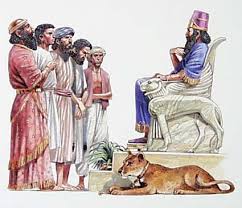
As Arnold Fruchtenbaum teaches in his commentary on Dani’el, each of Dani’el’s historical chapters provides certain lessons for the main theme of the book, the time of the Gentiles. There are two lessons in Chapter 1. The first lesson is that there is always a believing remnant of Isra’el. The concept of a remnant is important when studying eschatological events. It began with Elijah (First Kings 19:18) and was primarily developed by Isaiah (for example, Isaiah 8:9-18, 10:20-23, and 28:5). The principle, however, is seen throughout the Scriptures: ADONAI always had a remnant among the Jewish people who believed in Him and were faithful to Him. Dani’el’s prophecies regarding the future of Isra’el confirm this concept. Today, Messianic Jewish believers in Yeshua Messiah form this remnant. One of the reasons for the Babylonian Captivity was Jewish disobedience to the Torah. The people were involved in the most wicked forms of idolatry. Yet, Dani’el, Hananiah, Mishael, and Azariah were not guilty of this sin, nor did they wish to break any other mitzvot of the Torah. In summary, regardless of how far into sin the nation as a whole has gone, there is always a believing remnant of Isra’el.

The second lesson is that this believing remnant may not be guilty of the sins of the nation, but it still suffers divine punishment. In Jewish history, the only exception to this rule was the destruction of Jerusalem (see the commentary on The Life of Christ MtThe Destruction of Jerusalem and the Temple Remembered on Tisha B’Av in 70 AD). That destruction and the subsequent Diaspora of the Jewish people were physical punishments for the national rejection of the Messiahship of Yeshua. It was a divine judgment. It was inevitable and deadly, but believers in Messiah had a chance to save their physical lives and leave their country before it was destroyed by the Romans during the First Jewish Revolt against Rome from 66 AD to 70 AD, when Jerusalem was destroyed. Consequently, there is not one account of a Jewish believer who died in 70 AD due to the Roman attack. At the same time, Jewish believers today are still living in the Diaspora because of Isra’el’s rejection of the Messiahship of Yeshua. Among the six million Jews who were killed in the Holocaust, an estimated 250,000 were believers. Dani’el, Hananiah, Mishael, Azariah, and Ezeki’el were not guilty of idolatry. Yet, they still went into the Babylonian Captivity. The remnant suffers the fate of the whole nation.36

2025-05-05T18:56:20+00:000 Comments

Am – The Blessing of Dani’el 1: 17-21

The Blessing of Dani’el
1: 17-21

The Blessing of Dani’el DIG: Why did Dani’el and his three friends end up passing their oral examination and deemed to be superior to all the other magi of the kingdom in “wisdom and understanding?” How did Dani’el end up showing his true loyalty to ADONAI, and to his three fellows Israelites?

REFLECT: How has God blessed you this year? When have you realized that God enabled you to achieve far more than you could have humanly expected? How has the Lord shown His faithfulness to you? How do you react when He does? Do you tend to give the credit to Him, or do you tend to take credit for it yourself?

The focus of this chapter is not simply the faithfulness of Dani’el and his friends to God,
it is also points to God’s faithfulness to them.

God’s special blessing (1:17): The unseen hand of ADONAI directed the whole course of events and not only gave physical health to Dani’el and his three friends (to see link click AlDani’el’s Devotion to God), but also intellectual strength to His faithful servants. As ADONAI blessed Dani’el and his friends’ obedience not to defile themselves with unkosher food, He also blessed the education they received in Babylon. To these four young men God gave (Hebrew: nathan, meaning to give) knowledge and understanding of all kinds of literature and learning. And Dani’el could understand visions and dreams of all kinds (1:17). This verse summarizes the development of the four Jewish captives during their three-year training period. Dani’el’s particular gift of understanding visions and dreams was especially appropriate to his need in a land where such was expected of magi, and the God who would be the Source of all knowledge would also give discernment to distinguish the true from the false. Thus, there was no need to fear that the study of the Babylonian or any other culture would result their conversion to an alien religion.

But far more was at stake than their personal reputation or even their personal faith. As representatives of the God of Abraham, Isaac, and Jacob, they needed to prove, in Babylon’s highly competitive setting, that the fear of ADONAI is the beginning of wisdom (Proverbs 9:10). High intelligence and hard work alone did not account for their success, but their wisdom was a gift from ADONAI (Colossians 1:9, 2:9-10). The specific gift given to Dani’el was to make him not only a trusted advisor to king Nebuchadnezzar, but also a channel of revelation, as the next chapter begins to prove.33

The king’s examination (1:18-20): At the end of the three-year training period set by the king to bring them into his service, and Ashpenaz (1:3) presented them to Nebuchadnezzar (1:18). We don’t know how many students went through the entire course of study, but it’s interesting that Nebuchadnezzar himself took the time to examine them. Since the new graduates were to become his personal advisers, the king wanted to be sure he was getting the best. By adding exceptionally intelligent new men to his staff, the king would be assured of getting the best counsel available. He was familiar with the older advisers and possibly not too happy with all of them (2:5-13). Was he suspicious of a palace intrigue? As we shall see later, the addition and the promotion of these four Jewish young men created jealousy and resentment among the advisers and they tried to get rid of Dani’el (see Dm – The Conspiracy of the Royal Administrators). As older men, they resented their youth; as Babylonians, they resented their race; and as experienced servants, they envied their great ability and knowledge.

The king talked with them, and he found none equal to Dani’el, Hananiah, Mishael and Azariah. The king not only questioned the graduates, but he also compared one with another, and in this way ended up with the very best. So they entered the king’s service. In every matter of wisdom and understanding about which the king questioned them. He found them ten times better than all the magi (Hebrew: chartom, refers to a magician or wise man, often associated with the practice of interpreting dreams, or performing magic), and enchanters (Hebrew: ashshaph, refers to a class or wise men who were often consulted for their ability to interpret dreams, signs, and omens, and as such, were key figures in the king’s advisory team) in his whole kingdom (1:19-20). Of course, both of these were forbidden by the Torah (Deuteronomy 18:9-13). Dani’el and his three friends had to work alongside those magi, enchanters, sorcerers (Hebrew: kashaph, refers to the use of drugs, potions, or spells and is associated with “sorcery” or “witchcraft”), and yet they remained pure and gave a powerful testimony for the LORD.34

The extent of Dani’el’s ministry (1:21): And Dani’el remained there until the first year of Cyrus king of Persia (see the commentary on Dani’el AgCyrus and Darius). It is important to note that Dani’el did not die or end his career at that time, but continued on until the Medo-Persian Empire was established. The first year of Cyrus was the year in which the decree was issued that enabled the Jews to return home (see the commentary on Ezra-Nehamiah AiThe Decree of Cyrus), some seventy years after the time when Dani’el and his friends were taken into exile (see the commentary on Jeremiah GuSeventy Years of Imperial Babylonian Rule). Thus, we are remined that the faithfulness of ADONAI proved sufficient for Dani’el throughout the entire time of the exile. Babylonian kings came and went. Indeed, the Babylonians themselves were replaced as the ruling world power by the Medo-Persians in the person of Cyrus (see AzSecond Empire: Chest and Arms of Silver), yet YHVH sustained His faithful servant the whole time. In the same way, He is able to preserve us throughout the trials and tribulations that we face, no matter how intense they may be or how long they may last. When the world does its worst, God does His best, and His faithfulness is enough to see us through.

God’s faithfulness in our own salvation: As Ian Duguid relates in his commentary on Dani’el, there is one final note that we must not miss in all of this. The reality for most of us is that when we look at our lives, we find we are not like Dani’el and his three friends. We are far more like the nameless multitude who were deported along with Dani’el, who adopted foreign names, ate the king’s food, and became thoroughly Babylonian. In many respects, we have been assimilated into the world system in which we live, and our futures are mortgaged to it. Therefore, if the message of this book is simply, “Be like Dani’el and all will turn out OK,” then we might as well stop reading right now. The more we get to know Dani’el, the more we come to realize that we are not like him at all.

The good news of the Gospel, however, is not simply that ADONAI is faithful to those who are faithful to Him. It is that a Savior has come to deliver faithless and compromised people like us. Our salvation rests not on our ability to remain undefiled by the world, but rather on the pure and undefiled offering that Yeshua has provided in our place. Messiah came voluntarily into this world, with all of its pains and trials. He endured far greater temptations and sufferings than Dani’el did, or more than we ever will (Hebrews 4:15). Yet He remained entirely faithful and pure until the very end, without spot or blemish, and has transferred all of His righteousness to the spiritual bank account of those who trust in Him by faith (First Peter 1:19). What is more, Yeshua has already returned from His time in “exile” and now sits at the right hand of the Father in heaven (Psalm 110:1). He has prepared a home for us there, and has given us the Ruach Ha’Kodesh as a downpayment, guaranteeing that one day we will be with Him there as His people (see the commentary on Second Corinthians AnGod’s Seal of Approval). The cross is the means by which Ha’Shem’s faithfulness redeems the unfaithful; the resurrection and ascension are the guarantee of our inheritance in heaven.

Remind yourself often of this Gospel. Fix your eyes on Yeshua Messiah crucified, raised, and exalted. He has not only prepared the route home; He is the route home. Trust in Him and ask Him to work in you a true faithfulness. Ask Him to put you in places where you can be a blessing to your community. Be a breath of heavenly wisdom in your home, your school, your workplace. Be constantly dependent upon His sanctifying work, looking to Him to keep you faithful, not to your best efforts to “Be a Dani’el.” Finally, long for the day when His heavenly Kingdom will invade this earth and bring the fullness of your inheritance.35

Dear heavenly Father, praise You that You are always faithful and Your steadfast love is always watching over me. You are with me, wherever I go (Hebrews 13:5c). It is so comforting that You are never too busy to listen to me, for You abide within those who trust in You (John 14:23). Though sometimes close friends are busy, or sleeping and cannot talk, You are always right there to hear, listen and to guide me. Behold, the Keeper of Isra’el neither slumbers nor sleeps. (Psalms 121:4). What a joy that you are always faithful to your promises! You have promised to live with those who love you. Yeshua answered and said to him: If anyone loves Me, he will keep My word. My Father will love him, and We will come to him and make Our dwelling with him (John 14:23).

To those who receive You as their Lord and Savior (Romans 10:9-11), You promise to give them eternal life. The Father always opens the door wide, and You promise to make those who trust you to be your child. But whoever did receive Him, those trusting in His Name, to these He gave the right to become children of God (John 1:12). What a secure and trustworthy hope it is, for me to look forward to living with You forever and ever in complete joy and peace in Your heavenly kingdom. Though there are many trials and problems here on this earth, someday soon the problems and tears will all be gone.  For I consider the sufferings of this present time not worthy to be compared with the coming glory to be revealed to us (Romans 8:18).

Replacing earth’s trials will be a life so perfect that I cannot really comprehend it. He shall wipe away every tear from their eyes, and death shall be no more. Nor shall there be mourning or crying or pain any longer, for the former things have passed away (Revelation 21:4). Thank You so much for being such a wonderful Father, who promises an eternal life. When trials come, I can follow the example of Dani’el and his three friends and keep my eyes on the eternal and secure future of life in heaven with You. I love You, and You have blessed me so much. In Messiah Yeshua’s holy Name and power of His resurrection. Amen

2025-07-24T11:53:48+00:000 Comments

Al – Dani’el’s Devotion to God 1: 8-16

Dani’el’s Devotion to God
1: 8-16

Dani’el’s devotion to God DIG: Why did Dani’el ask his Babylonian captors for a vegetarian diet? What happened as a result? Why do you think this incident was included in inspires Scripture? Proverbs 4:23 says, “Keep your heart with all diligence?” How does this apply to what Dani’el and his friends faced?

REFLECT: Dani’el proposed in his heart not to defile himself. In other words, he resolved not to compromise his principles. Dani’el and his friends determined which parts of the Babylonian culture they could live with, and which parts they could resist. How do you make that determination in your own culture?

How were Dani’el and his friends to live without being swallowed up by Babylonian culture?

Dani’el and his three friends had to decide how they were willing to adjust to living in an environment unsympathetic to their religious convictions. Like everyone caught in a cross-cultural change, they had to think through all the principles involved in their actions, and decide how they were going to act.26

The request (1:8): Dani’el and his three friends were under intense pressure. Their principles were under attack. No doubt there were others, Jerusalem-born like themselves, who laughed at their sensitivities. What harm would good food do them? Dani’el had accepted his Babylonian schooling and a new name, but drew a line in the sand regarding food supplied from the royal table. The king’s food was of the best quality anywhere in the nation; yet, it did not meet the standards of the Torah. Notice also that Dani’el didn’t leave his actions to a spur-of-the-moment response. So Dani’el purposed in his heart not to defile himself with the royal food and wine, and he asked Ashpenaz, master of the eunuchs (1:3), for permission not to defile himself this way. He made a decision for God.

What made food kosher for Jews was both its origin and its preparation. The royal food might have included meat that was not kosher (see the commentary on Leviticus, to see link click BlRitually Clean and Unclean Beasts). It may also have included kosher meat that was prepared in such a way that would have defiled it. For example, the Torah required that the fat (Leviticus 7:22-25) and the blood (Leviticus 7:26-27, 17:10-13) be removed. In addition, the Torah prohibited eating meat dedicated to false gods (Exodus 34:15; Numbers 25:2). The second problem was drinking the king’s wine. The Torah did not prohibit drinking wine. In Babylon, however, it was part of the ritual of idol worship (5:1-4). First Century believers faced a similar dilemma (see the commentary on First Corinthians BtUsing Freedom for God’s Glory).27 Drinking wine from the king’s table would have defiled Dani’el.

Not only that, but by eastern standards, to share a meal was to commit oneself to friendship . . . and they took it very seriously (Gen 31:54; Ex 24:11; Neh 8:9-12). That meant that if you ate at the king’s table, you were obligated to be loyal to the king. It would seem that, aside from the biblical reasons above, Dani’el rejected this symbol of dependance on the king because he wanted to be free to fulfill his primary loyalty to ADONAI.

The request granted (1:9-14): So, for all those reasons, Dani’el requested permission from Ashpenaz to be excused from the king’s table. But he told Dani’el, “I am afraid of my lord the king, who has assigned your food and drink. Why should he see you looking worse than the other young men your age? The king would then have my head because of you” (1:10). So, Ashpenaz refused to give permission. His reluctance was understandable if Dani’el’s motive was to remain free from commitment to the king. Nebuchadnezzar would have certainly interpreted the motive as treasonable and would have held Ashpenaz responsible.

But like any royal court, the king’s household had different levels of power and authority. Ashpenaz was the most senior official of Nebuchadnezzar’s eunuchs and reported directly to him. Stewards were appointed under him to care for the Jewish captives. Now God had caused (Hebrew: nathan, meaning to give) the steward to show chesed (see Ruth AfThe Concept of Chesed) and mercy to Dani’el (1:9).28 This was an explicit answer to King Solomon’s prayer at the dedication of the Temple. On that occasion, Solomon prayed that when the Israelites ended up in exile, as they would surely do because of their sinfulness, then Ha’Shem would cause their captors to show them mercy (see the commentary on the Life of Solomon BnSolomon’s Prayer of Intercession). And mercy was exactly what the steward showed to Dani’el and his three friends.29

So after his initial request to be excused from the king’s table was rejected, Dani’el tried another approach. A steward served as Dani’el’s immediate supervisor. Assigned by Ashpenaz, he was personally responsible for providing food and drink to Dani’el and his friends. However, unlike Ashpenaz, he did not report directly to Nebuchadnezzar and was, therefore, more willing to attempt a compromise. Dani’el then said to the steward, “Please test your servants for ten days: Give us nothing but vegetables to eat and water to drink. Then compare our appearance with that of the young men who eat the royal food, and treat your servants in accordance with what you see.” After ten days, the steward was to compare the appearance of Dani’el and his friends with the other young Jewish men who continued eating the proposed Babylonian diet. Then he could make a decision. So the steward agreed to this and tested them for ten days (1:11-14).30

The result (1:15-16): At the end of the ten days they looked healthier and better nourished than any of the young men who ate the royal food. However, this positive result cannot be attributed to Dani’el’s proposed vegetarian diet, but to the intervention of God. Vegetables are certainly healthy, but this verse does not prove that a vegetarian diet is preferable to one that includes meat and dairy. Vegetarians tend to lose weight on their diets, not gain weight. Hence, the verse makes another point: Obedience is better than disobedience. Had Dani’el and his friends eaten from the king’s table, they would have broken the mitzvot of the Torah. So the steward took away their choice food and the wine they were to drink and gave them vegetables and water instead. Since the ten-day test was successful, the steward agreed with Dani’el’s suggestion to maintain the vegetarian diet throughout the three years of training (1:5a).31 This is not a diet for us today; Dani’el and his three friends did not prosper because of the food, they prospered in spite of the food.

Why did Dani’el propose such a test to begin with? He had good reason to believe that ADONAI would reward their faithfulness because the issue at stake was God’s Kingdom and glory. Living for His glory produces a spirit of humble confidence that He will act. Such confidence marked the heroes of faith in the TaNaKh (Hebrews 11:1-31), and marks men and women of faith even to this day. Those whose hearts are set on self-glory rather than on God’s glory can never have any confidence that their heart’s desire will be granted. On the other hand, those who strive to align their purposes with His will never be disappointed.

We need such confidence not only for its own sake, but because it is a necessary function of God’s power. One of the many stories about Charles H. Spurgeon (1834-1892), the great Victorian preacher in London, illustrates this rather well. On one occasion a young preacher was lamenting to him about how few people seemed to be converted under his preaching. “What?” said Spurgeon, “You don’t expect people to be converted every time you preach, do you?” Taken aback that he might have appeared presumptuous to the great Spurgeon, the young preacher replied, “No, of course not.” To which Spurgeon responded, “Perhaps, then, that is the very reason you have seen so few converted.”

Is it possible to turn the idea of the confidence of faith into a kind of magic trick: If only you convince yourself that something is going to happen, then it will happen? That is far from the spirit that characterized either Dani’el or Spurgeon. The confidence of faith is an assurance based on what God has the power to perform and what He has promised to do. If we know what He has promised to do, and trust in His power to do it, we can expect that He will hear, and answer, the prayers of our hearts in His timing.32

Dear heavenly Father, praise You that You always hear my prayers. ADONAI will hear when I call to Him (Psalms 4:3c). Praise You also for so wisely and tenderly caring for me. You know the future and what is the best, so you always answer in the wisest and best way – sometimes “Yes,” sometimes No, and sometimes “Wait.” Dani’el requested permission from Ashpenaz to be excused from the king’s table, but he was told No. When Dani’el tried another approach, asking for a test for Dani’el and his friends in their appearance after a vegan diet for ten days, he was told “Yes.” When David prayed for Your help and protection from Sha’ul, You said both “Yes” protection for now but “Wait” till later, which turned out to be several years, until the problem was completely solved.

You do not give in to what Your children prays for when we ask, prompted by selfish motives. You crave and have not. . . You do not have because you do not ask.  You ask and do not receive, because you ask with wrong motives so you may spend it on your passions (James 4:2a, c-3). Dani’el and David were able to live with positive attitudes because, even in the midst of trials and problems, they had already resolved to set their hearts on Your almighty character before the problem even came up. Dani’el resolved not to defile himself (Daniel 1:8) and David wrote My heart is steadfast, O God, my heart is steadfast. I will sing, yes, I will make music (Psalms 57:7). Dani’el and his friends and David were committed to following You, no matter what the cost, for they knew that You are the one who holds the future! It is wise to live trusting and following You, Abba Father, for You are almighty and all-loving and hold the future in the palm of Your hand! In Messiah Yeshua’s holy Name and power of Him who sits at Your right hand. Amen

2025-05-05T17:37:25+00:000 Comments

Ak – Dani’el’s Deportation to Babylon 1: 1-7

Dani’el’s Deportation to Babylon
1: 1-7

Dani’el’s deportation to Babylon DIG: What actions by Hezekiah led to Dani’el’s exile to Babylon? What four areas did Nebuchadnezzar use to brainwash his captives in exile? What purpose did the king have for bringing the young Israelites into his palace? What qualities did the Babylonians look for when selecting candidates from among the Hebrews for potential loyal service? Why did the king change their names?

REFLECT: What’s the most difficult situation you’ve ever had to face? How did you handle it? What did it reveal about your faith? What tests or trials are you facing right now? Are you clinging to God and continuing to faithfully live as He commands? Or are you compromising? Grade yourself and explain why you gave yourself that grade? How does the world try to rename you, and mold you into its image?

The same pattern employed by Satan to draw Dani’el away from God is still used today.

The fate of Dani’el and his friends being dragged off into exile was not merely a fulfillment of the general covenantal curse of the Torah (see the commentary on Leviticus, to see link click EyDiscipline for Disobedience: the sixth stage – exile). It was also the specific fulfillment of the prophecy of Isaiah. Judah’s king Hezekiah had received emissaries and a gift from Merodach-Baladan, king of Babylon. In response, Hezekiah showed them everything that was of value in his storehouses and all of his treasures (Second Kings 20:13). For this, he was severely condemned by the prophet Isaiah (Isaiah 39:5-6).

Why was ADONAI so upset with Hezekiah? What was the problem with giving the emissaries from Babylon a royal tour of the palace? The answer is that in the world of ancient diplomacy, nothing came free. When Merodach-Baladan sent emissaries and a gift to Hezekiah, it wasn’t merely a friendly gesture of goodwill on his recovery from sickness. Rather, he was soliciting Hezekiah’s help and support in his ongoing struggle against Assyria. So, when Hezekiah showed his emissaries around, he was responding to the king of Babylon’s overtures of alliance, seeking to show him that he had the resources to be a useful ally against Assyria. In spite of ADONAI’s miraculous deliverance of Jerusalem from the surrounding armies of Sennacherib and the Assyrians (see the commentary on Isaiah GwThen the Angel of the LORD Put to Death a Hundred and Eighty-Five Thousand Men in the Assyrian Camp), Hezekiah was looking to a political means for solving the Assyrian problem through an alliance with Babylon. Politics had replaced trust in God.

Therefore, far from assuring the security of Hezekiah’s descendants, the foolish alliance with Babylon would only result in some of his own offspring being shipped off to become eunuchs in the palace of the Babylonian king. God’s judgment upon the line of Hezekiah had been faithfully carried out, just as Isaiah had said: And some of your descendants, your own flesh and blood who will be born to you, will be taken away, and they will become eunuchs in the palace of the king of Babylon (Isaiah 39:7). It was this specific word of judgment that was fulfilled in the opening verses of the book of Dani’el.16

The deportation (1:1-2): In the third year of the reign of Jehoiakim king of Judah (see the commentary Jeremiah CaJehoiakim Ruled For 11 Years from 609/608 to 598 BC), Nebuchadnezzar king of Babylon came to Jerusalem and besieged it (1:1). The third year, 606-605 BC, the third year by Babylonian dating, which did not count a king’s initial (accession) year, but began with the following year; so the third year is in harmony with the same year labeled as “fourth” by the Judean system of dating.17

And ADONAI delivered (Hebrew: nathan, meaning to give) Jehoiakim king of Judah into his hand, along with some of the vessels from the Temple of God. These he carried off to the temple of his god Marduk in Babylonia and put in the treasure house of his god side by side with other ornaments used for idol worship (1:2). An analogy is the placement of the Ark of God in the temple of Dagon after the Philistines defeated the Israelites (see the commentary on the Life of King Sha’ul BfThe Ark at Ashdod). To the Philistines, it appeared that Dagon had defeated YHVH, but they soon realized that wasn’t the case and quickly changed their minds. However, the reality of the situation would take much longer to develop in Babylon. The next time we see these vessels in the hands of drunken Babylonians, it will be on the eve of their destruction (see CqDani’el Interpreted the Handwriting on the Wall).18

More often than not, the items carried off were statues of idols. However, when the Babylonians entered the Temple in Jerusalem, there were no idols to be found. YHVH was the invisible God who did not require that images of Him be made by human hands. In fact He prohibited that exact thing (Exodus 20:4). Therefore, the Babylonians had to carry off vessels of brass, gold, and silver. A parallel passage to verse 2 is Second Kings 24:1-2, which states: During Jehoiakim’s reign, Nebuchadnezzar king of Babylon invaded the land, and Jehoiakim became his vassal for three years. But then he turned against Nebuchadnezzar and rebelled. ADONAI sent Babylonian, Aramean, Moabite and Ammonite raiders against him to destroy Judah, in accordance with the word of ADONAI proclaimed by His servants the prophets.

But when Nebuchadnezzar carried off the Temple vessels, he unwittingly sowed the seeds of Babylon’s destruction. His grandson Belshazzar would use those holy vessels as an act of worship before the Babylonian gods. When he did so, God decreed the fall of Babylon (see CoThe Great Banquet of Belshazzar and the Fall of Babylon). After conquering the Babylonian Empire, Cyrus the Great returned the Temple treasures to Jerusalem (Ezra 1:7-11 and 6:5).19

Isolation (1:3): Then the king ordered Ashpenaz, the master of the eunuchs (Hebrew: saris, meaning a man who has been castrated, often employed in royal courts as a trusted official), to bring into the king’s service some of the sons of Isra’el. Therefore, whoever Ashpenaz chose would be castrated. Nebuchadnezzar demanded that the chosen come from the royal family and the nobility (1:3). The royal family was the House of David, and Dani’el was a member of that dynasty. In this context, it is important to note that throughout the book, Dani’el is consistently distinguished from his three friends, who were probably from the nobility of Isra’el. They were isolated from the influences that would mold their lives and characters in the ways of ADONAI. In Babylon they were separated from the regular public worship of God, the teaching of the Torah, from the fellowship and wisdom of the people of God, and from the daily illustration of what it meant to be a citizen of Jerusalem. Separated from the furnace of godliness, Nebuchadnezzar anticipated that the last dying embers of true faithfulness to the LORD would die out.

Indoctrination (1:4): Those young men (Hebrew: yeledim, referring to young men between the ages of fifteen to twenty) were superior in every way, “the best and the brightest,” prepared by God for a strategic ministry far from home. They were without any physical defect, handsome, showing aptitude for every kind of learning (Hebrew: sepher, meaning massive, document, writing, or a book), well informed, quick to understand, qualified, and expected to serve in the king’s palace. Their reprogramming included studies in the language and literature of the Babylonians, who prided itself as the “city of wisdom” (1:4). That might seem harmless enough. After all, there is surely nothing wrong with God’s people studying foreign literature. The aim, of course, was not merely academic.20 Babylon was the center of idolatry. In the case of Dani’el and his friends, the term sepher encompassed both science and the occult. As a result, they were required to study Babylonian theology. Those young men from Jerusalem’s court needed to be secure in their knowledge of YHVH to be able to study this literature objectively without allowing it to undermine their faith. Evidently the work of Jeremiah, Zephaniah, and Habakkuk had not been in vain.21

Compromise (1:5): The king assigned them a daily amount of food and wine from the king’s table. This would have been a luxurious manner of living for these Hebrew young men, quite in contrast to what they had been accustomed to, and to the extremely plain diet that Dani’el requested for himself and his companions (see AlDani’el’s Devotion to God).22 They were to be trained for three years, and after that they were to enter the king’s service (1:5). Young men would generally be more teachable and would be in a position to give more years of fruitful service to the king. The good life that Dani’el was offered was intended by the king to wean him away from the hard life to which God had called him. It would encourage him to focus on himself and on a life of enjoyment. No mention is made of Dani’el having to agree with Babylonian theology or to argue against the teachings of the Torah. The attack was far more subtle than that, and therefore, potentially far more lethal. Somebody in Nebuchadnezzar’s palace knew enough about the human heart to see that most men can be bought, and that in good times, comfort, self-esteem, and a position in society are usually a sufficient price for a soul.23

Confusion (1:6-7): The fourth element in the process of weaning those young men from the truth of the Torah was the changing of their names. Among those who were chosen were some from Judah: Dani’el, Hananiah, Mishael and Azariah (1:6). The chief official gave them new names: to Dani’el (meaning, God is my Judge), the name Belteshazzar (meaning, Bel Protect the King); to Hananiah (meaning, beloved of the LORD), the new name Shadrach (meaning the command of Aku, another Babylonian god); to Mishael (meaning, who is as God), the new name Meshach (meaning, who is what Aky is); and to Azariah (meaning, ADONAI is my help), the new name Abednego (meaning, the servant of Nego, the god of wisdom) (1:7). This tactic illustrates an important principle for us: The way we think – about God, ourselves, others, and the world, determines the way we live. If Nebuchadnezzar could only change those young men to think like Babylonians, then they would live like Babylonians. That principle is still true today. The secret of faithfully living for ADONAI lies in the way we think. We are not to be conformed to the world (First John 2:15-16), but to have our lives transformed by the renewing of our minds (see the commentary on Romans Bq The Background of the Messianic Mikveh: Five ways to win the battle of the mind).

The same pattern employed by the Adversary to draw Dani’el away from YHVH is employed all around us today: isolation from God’s influence to produce holiness in our lives; indoctrination with the worldly ways of thinking; compromise with the riches of this world instead of commitment to God, and confusion about our real identity and purpose in life. Yes, too many of us would have found quite excellent reasons for compromise in Nebuchadnezzar’s court. After all, “How can we sing the Lord’s song in a foreign land?”24

Babylon and Jerusalem represent the two cities, two kingdoms, to which men and women belong. They symbolize the two loyalties of which the Bible speaks in several word pictures: two gates (see the commentary on The Life of Christ DwThe Narrow and Wide Gates), and two masters (see The Life of Christ DrStore Up Treasures in Heaven). How can we learn from these two kingdoms and maintain our dual identity of being in the world but not of the world (John 17:16)? Surely one way is by taking every opportunity that we can to celebrate our heavenly citizenship with others. It is a well-observed phenomenon that exiles are often more profoundly patriotic than those who have never left the mother country. St. Patrick’s Day is certainly celebrated with more enthusiasm in Boston than it ever is in Dublin, and the Fourth of July means more to Americans abroad than it does at home. Exiles desire and need opportunities to celebrate and preserve their true identity. So, as citizens of heaven, we need to take every opportunity to gather with our fellow exiles, so that we can remind one another of “home.” We cannot preserve our heavenly identity on our own: left to ourselves, the pressure of the world will inevitably crush us into its mold. But together we can help one another to keep the memory of heaven strong.25

Dear heavenly Father, praise You for going everywhere with me. You are the God of Isra’el, but You are also the Sovereign Ruler over all the world (Dani’el 7:27). What a comfort it is for me to know that You are everywhere in the world, at the same time. There is nowhere I can go and be alone, for God Himself has said, “I will never leave you or abandon you.” You were with Dani’el and his friends in Babylon and You are with me wherever I go. How wonderful that You never sleep nor slumber (Psalms 121:4). You never leave me to go and do something else. Your power is right there to help, protect and to guide me. In Messiah Yeshua’s holy Name and power of His resurrection. Amen

2025-07-15T11:07:20+00:000 Comments

Aj – The Personal History of Dani’el 1: 1-21

The Personal History of Dani’el
1: 1-21

Elizabeth Elliot, a Christian missionary, author, and speaker, was twice widowed; first by the martyred death of missionary Jim Elliot and then by the death of her second husband, theologian Addison Leitch. She tells of how helpful the Apostles’ Creed was to her as she mourned the loss of Dr. Leitch. She used it to answer the question: What things have not changed even though my husband has died? One might imagine Dani’el and his friends asking a similar question after being hauled off to Babylon in 605 BC, far from Judah and all that was near and dear and clear. They might have wondered, what had not changed even though they had been carted to Babylon? And the text of Dani’el Chapter 1 answers that question. ADONAI has not changed; He is still there, wherever “there” is. Dani’el Chapter 1 hammers this point home three times with the theological note: ADONAI gave, in verses 2, 9, and 17 (Hebrew: nathan, meaning to give). Dani’el will stir our souls in Chapter 2 with his ringing declaration to Nebuchadnezzar, “but there is a God in heaven who reveals mysteries (2:28a).” Indeed, it is the foundation of Dani’el Chapter 2. But in Dani’el Chapter 1 the writer makes a similar, yet different, point. He is saying, “There is a God in Babylon.” How, then, do we recognize His Presence.14

The book of Dani’el is also significant because it bridges the gap between Isra’el’s historical writings and the B’rit Chadashah. It records events in Jewish history during the Babylonian Captivity (see the commentary on Jeremiah, to see link click GuSeventy Years of Imperial Babylonian Rule) that would have otherwise gone unrecorded because no other biblical author covered the topic as extensively as Dani’el. A rabbinic commentary on Dani’el provides the following concise historical background for the book. The declining years of the kingdom of Judah were turbulent and bloody. They marked the end of the glorious period that began with the crossing of the Jordan into Eretz Yisra’el (the Land of Isra’el) and reached its zenith with the reigns of David and Solomon. The decline led to the tragedy of the Temple’s destruction and Isra’el’s exile to Babylon. There, laying the groundwork for the future rebirth of Jewish national greatness, was a boy being groomed for royal ministry in the academy of Nebuchadnezzar’s court. His name was Dani’el.

The book of Jeremiah extensively covers the reasons for the divine punishment of Judah at the hands of the Babylonians. Dani’el records the perspective of those who were already in captivity. The book begins with a description of Dani’el’s life and time in exile. Verses 1-7 provide information about the deportations of Jews to Babylon and the selection of exiles by Nebuchadnezzar (see AkDani’el’s Deportation to Babylon); verses 8-16 describe the testing of Dani’el and his friends (see AlDani’el’s Devotion to God); and verses 17-21 conclude with Dani’el’s blessing (see AmDani’el’s Reputation in Babylon).15

2025-05-05T22:58:52+00:000 Comments

Ai – Ha’Shem

Ha’Shem

And it will come about that whoever calls on the Name of YHVH
will be delivered (Joel 2:32).

What is the “Sacred Name?” It is a term that is widely accepted as the “Personal Name” of God: YHVH, sometimes called the Tetragrammaton. It is the most prolific Name for God, found in Scripture over 6,800 times. In no less than three places, the Torah warns us how to regard this Name (Hebrew: shem). In Exodus 20:7 (and its parallel passage in Deuteronomy 5:11), the Third Commandment is often rendered as follows: You must not take the name of ADONAI your God in vain, for ADONAI will not leave unpunished anyone who takes His Name in vain. The word in vain translates the Hebrew word shav which means emptiness, nothingness or vanity. The NIV uses the word misuse. So the person guilty of rendering the Name null and void is to receive punishment. Leviticus 24:15-16 helps to clarify this command: Tell the people of Isra’el, “Whoever curses his God will bear the consequences of his sin; and whoever blasphemes the name of ADONAI must be put to death; the entire community must stone him. The foreigner as well as the citizen is to be put to death if he blasphemes the Name.” The word blaspheme is the Hebrew nakav, which means to pierce or bore. In tandem with the instructions given in Leviticus 15 about if anyone takes His Name in vain, the idea of blaspheming the Name seems to be something akin to doing violence to it, essentially abusing it, hence rendering it ineffective or useless. Given the seriousness of the mishandling of such a Name and the penalty of death associated with it, this eventually led to the practice within Judaism to greatly limit its use – the practice of avoiding the literal speaking of the Name.

Historical avoidance of pronouncing the Name: The Encyclopedia Judaica concisely tell us that “at least until the destruction of the Temple in 586 BC, this Name was regularly pronounced with its proper vowels, as is clear from the Lachish Letters, written shortly before that date. But at least by the third century BC the pronunciation of the name YHVH was avoided, and ADONAI, The LORD, was substituted for it, as evidenced by the use of the Greek word Kyrios, LORD for YHVH in the Septuagint,” the Greek translation of the Hebrew Scriptures and was presumably made for the Jewish community in Egypt when Greek was the common language throughout the region from the third to the first centuries BC.11

It was this avoidance of pronouncing the Name that led to writing the Name with special vowels by the Jewish scribes, the Masoretes, during the Middle Ages. This written notation of dots and lines in and around the Hebrew letters was developed to enable people who were unfamiliar with the language to read it, much in the same way the phonetic spelling of words in our modern dictionaries accurately depict how English words are to be pronounced. However, when it came to the Sacred Name, the Masoretes deliberately used vowel points, which simply reminded any reader to speak the name ADONAI in place of YHVH in keeping with the tradition. However, after the destruction of the Second Temple (so called Herod’s Temple) there remained no trace of the pronunciation of the Name.12

Is speaking the Name a biblical command? The hot debate over the exact (or approximate) pronunciation of the Name is centered on the idea that the Bible commands us to speak (or do our best to speak) the Name. Such an understanding comes from passages that tell of calling upon or proclaiming the Name of YHVH. This idea of calling upon the Name, proclaiming the Name, praising or blessing the Name or anything like that does not mean that one must pronounce the Name, that is, to speak it audibly. It has to do with making known the Person and works of ADONAI, proclaiming His character, His fame, promoting His great reputation. We see this in Deut 32:3, which says: For I proclaim the name of YHVH; come declare the greatness of our God! where proclaiming the Name is parallel to declaring the greatness of God. Proclaiming or declaring the greatness of God means to rely upon, or declare His attributes as He has revealed to us through His Word.

While many champions for audibly pronouncing the Name will concede to this understanding, the pervading perception is that it fails to address the rudimentary concept of the purpose and use of having a name in the first place. Therefore, it seems incomplete to say that proclaiming or calling upon the Name does not contain the element of pronunciation. Indeed, there are many Torah commands that we don’t know exactly how to do – why should saying the Name be any different? Shouldn’t we simply do the best we can to speak the Name of YHVH? As important as the sacred Name is to God’s redeemed, it was apparently not so vitally important in the lives of some key biblical characters that the pronunciation of YHVH overshadowed the importance of the relationship between the Creator and the created.

For instance, in one of the most dramatic passages of Scripture, ADONAI says to Moshe, “I will make My goodness pass before you, and I will proclaim before you the Name YHVH . . . [then] YHVH descended in a cloud; He stood there with Moses as he called upon the Name of YHVH. YHVH passed before him and proclaimed, YHVH, YHVH God! a God of compassion and gracious, slow to anger and abounding in loving kindness (see the commentary on Ruth,  to see link click Af The Concept of Chesed) and faithfulness, extending kindness to the thousandth generation, forgiving iniquity, transgression, and sin; yet does not permit the guilty to go unpunished, but visits the iniquity of the parents upon their children to the third and fourth generations.” Moses then quickly bowed down low to the ground in worship (Exodus 33:19 and 34:5-8).

ADONAI audibly spoke His Name, YHVH, no less than three times while Moses stood in His presence. Moshe responded quickly to the proclamation of the name of YHVH with worship in reverent fear. When Moses would speak next to ADONAI in one of the most profound, intimate moments of his life, He would surely be with the spirit of the moment to address the Creator according to His Name, now clearly spoken in Moshe’s ears. In the very next verse, Moshe speaks to the Creator and says: If now I have found favor in Your sight YHVH (ADONAI), I pray, let YHVH (ADONAI) go along in our midst . . . (Exodus 34:9). In the presence of the Creator, having audibly heard God Himself pronounce His Name mere seconds before, Moses responded by calling Him YHVH (ADONAI).

Even Yeshua participated in the Jewish tradition of not speaking the Name, and instead used the substitutions. For example, twenty-nine times in Matthew’s Gospel, Messiah is reported as using the substitute word Heaven. From the time Yeshua began to preach and say: Repent, for the kingdom of Heaven is at hand (Matthew 4:17). Perhaps more importantly, when Yeshua would directly address YHVH in prayer, He would speak the name, Father, and even the most intimate term of all, Abba. The Master taught His apostles to pray by addressing the Creator . . . Our Father in heaven, hallowed be Your Name (Matthew 6:9), and in His hour of desperate need, the Son cried out: Abba! Father! All things are possible for You; remove this cup from Me; yet not what I will, but Your will be done (Mark 14:36). Therefore, given the examples of Moses and Yeshua alone, we can state with confidence that neither salvation, nor relationship, nor the ability to fulfill ADONAI’s commands are in any way jeopardized by not pronouncing YHVH. On the contrary, Yeshua may very well have taught us the fullness of revelation in approaching YHVH by calling Him Father.

Is YHVH His only Name? ADONAI does not have many names, He has only one Name – YHVH (Yud Hay Vav Hay). All the other names in the Bible, like ADONAI Elohei-Tzva’ot (the LORD God of heaven’s angelic armies), ADONAI Elohim (LORD God), ADONAI Nissi (the LORD my Banner), ADONAI Tzidkenu (the LORD of Righteousness), or ADONAI Shalom (the LORD of Peace), describe His characteristics and His attributes.13

2025-05-03T11:01:54+00:000 Comments

Ah – The Testimony of Messiah, and Writers of the Gospels

The Testimony of Messiah, and Writers of the Gospels

When examining any issue, whether it is doctrinal or critical in nature, Yeshua’s view is of the greatest importance. Strong evidence for the traditional view of authorship and date comes from the testimony of Messiah Himself. In Matthew 24:15 and Mark 13:14 our Lord stated: So when you see the abomination that causes desolation standing in the Most Holy Place spoken of through the prophet Daniel, let the reader understand. Four very important points concerning Messiah’s assessment of the authorship and date of Dani’el’s prophecy may be observed from this statement. First, Messiah demonstrated His belief that Dani’el was a real, historical person who was an instrument of divine revelation. Second, our Lord held that the prophecies contained in the book of Dani’el came from Dani’el himself, not from a later anonymous person. Third, Yeshua assured us that this prophecy describes future events, for the context shows that the abomination that causes desolation, to which Messiah referred to is in the future (see Revelation, to see link click DrThe Abomination That Causes Desolation). This means that arguments based on the premise that the prophets never foretold the far eschatological future are invalid. Fourth, apparently the only view vogue during the time of Messiah for the setting of the prophet Dani’el was the sixth century BC; thus, Yeshua treated Dani’el as a historical person, so He also assumed the sixth-century date.

In Matthew 26:64 (also see Mark 14:62 and Luke 22:69) Messiah alluded to Dani’el 7:13-14, when He said: I tell you that one day you will see the Son of Man sitting at the right hand of the Powerful One (or Ha’G’vurah, a common substitute for the actual name of God) and coming on the clouds of heaven. Again, Yeshua treated Dani’el as speaking in the far eschatological future by indicating that the passage in Dani’el 7 refers to Himself and His future Second Coming (see Revelation AiLook, He is Coming with the Clouds).10

2025-05-01T19:04:25+00:000 Comments
Go to Top