




We Plan, but God Determines Our Steps
16: 1-15
A proverb is a short and memorable saying designed to be our blueprint for living in the world that ADONAI has created. It is important to note that proverbs are not promises; they are generally true principles, all other things being equal.
From the very beginning God’s people have lived under the authority of the King of kings. We recognize this dual authority of divine sovereignty and human government. Dual authority but not equal authority. We need to understand the difference. We are confronted regularly with the competence or incompetence of monarchs. During Judah’s heyday the Israelites watched the pendulum swing from righteous kings to foolish ones, from rulers who trusted YHVH and those who tested Him. When the Babylonians crushed Jerusalem under Nebuchadnezzar in 586 BC (see the commentary on Jeremiah, to see link click Ga – The Fall of Jerusalem), Judah’s king was dragged off to the banks of the Euphrates, and the political authority was given to a foreign governor. The Persians, after 539 BC, maintained the same system but with more class and less cruelty. Throughout this entire period, the time when Proverbs were part of the curriculum for training government administrators, the young officials had to be submissive to the central authority that regulated their labors. Apparently, they found the proverbs were applicable in almost any political context.
Happily, necessarily, the sages, as true members of the covenant community, had incorporated in the collections of proverbs a whole set of sayings that dealt with the Authority that outranked the rights of the secular kings. Side-by-side with proverbs that taught respect and regard for the earthly sovereign were those focused on the power and glory of the heavenly Sovereign. The checks and balances were thus in place for the leaders of a people that for almost all the time from the Babylonian Exile to the establishment of the modern state of Isra’el in 1948 has lived in the tension between ADONAI and Caesar, the tension of which Yeshua spoke so plainly when He gave His prescription for dealing with dual authority (see the commentary on The Life of Christ Iz – Is It Right for us to Pay Taxes to Caesar of Not?). Proverbs 16, more than any other section of the book, brings together the two types of sayings – those that describe proper royal behavior and correct attitude of the ones who serve the kings and those that depict the King of kings, always to be reckoned with in His ultimate authority and control in human affairs. Isra’el’s young leaders, like all who wield authority in any place or time, lived under the eyes of their LORD and before the face of their king. How they do this is the subject of this chapter.
Dependence on ADONAI (16:1-9): What has bubbled under the surface of this collection of sayings in Proverbs beginning at 10:1 has now erupted with all the power of Yellowstone’s Old Faithful geyser. All along the assumption has been that wisdom can be found because YHVH has built order and purpose into His creation. The sage’s task is to discover it, frame it in memorable words, and set it before their pupils. But until Chapter 16, the divine Presence has been implicit, except to fear Him. The necessity and meaning of that fear will now become clearer than ever before. Fearing ADONAI is necessary because His sovereign Presence hovers over all of life to determine the success or failure of human plans and programs. The eyes of ADONAI are everywhere, watching the evil and the good (15:3). For the eyes of ADONAI range throughout the earth to strengthen those whose hearts are fully committed to him (Second Chronicles 16:9a). The eyes of ADONAI is a shorthand way to express the dependability of His Presence and the versatility of His care.313
We can make our own plans, but ADONAI gives the right answer (16:1 NLT). This proverb makes it clear that, though humans can legitimately make plans, as Today’s English Version puts it, God has the last word. We can strategize about the future, to be sure, but this wise observation would lead us to acknowledge that the future can only be determined by God. Such recognition should produce a proper humility and open us to changes. The purpose of this proverb is not to discourage human planning, but rather to make us aware that our plans will come to nothing without ADONAI’s agreement.
All the ways of a man are pure in his own eyes, but ADONAI weighs the spirit (16:2 NLT). Here human self-perception is judged in the light of God’s perception. The proverb speaks to our ability to deceive ourselves concerning our righteousness. Proverbs often denigrate those who are wise (or pure) in their own eyes (3:7, 12:15, 26:5 and 12, and 30:12). This observation invites profound reflection on our motives, since YHVH is the final judge of whether a path is right or wrong. The need for God’s accurate scrutiny is underscored in 21:2, a proverb almost identical to the one here: A person may think their own ways are right, but ADONAI weighs the heart (21:2).
If you commit all you do to ADONAI, since He already has clear control over them. Then your plans will succeed (16:3 CJB). All of our planning should be done with the recognition that YHVH can indeed overturn it. The thought is not that we simply pray for God to honor our plans. Rather, it is the idea that we submit our entire life to the Lord, so that even if our human plans are upended, we can recognize an even deeper plan at work in our lives. In Second Samuel 7, David approached Nathan with his plan to build the Temple. While Nathan gave a quick approval, that evening Ha’Shem intervened and told the prophet to tell David that He did not want the king to build His Temple (see the commentary on the Life of David Ct – The LORD’s Covenant with David) because as a warrior, he had shed much blood. ADONAI desired a man of peace to build His dwelling place, and instead chose David’s son, Solomon, a man of peace, to build the Temple. As a result, David spent the rest of his life collecting the materials for Solomon to build the Temple (see the Life of David Fd – David Provided Resources for Building the Temple).314
ADONAI has made everything for its purpose (16:4a CJB). More directly, all things were made for man, and man for God. I have created him for my glory, I have formed him; yes, I have made him (Isaiah 43:7).315 As the absolute Creator and Controller of the universe, He determined for which purpose everything that exists was made. There is nothing aimless in the world, even if it appears so to man’s finite intelligence.
Even the wicked for the day of disaster (16:4b CJB). The wicked will not escape their appropriate judgment. ADONAI is in control of their wicked acts of human beings and uses their evil for good. The story of Joseph illustrates this example. ADONAI overrules the evil actions of the brothers and Potiphar’s wife to place Joseph in a position within the Egyptian government so he could provide a haven and life to the righteous of the TaNaKh during a horrific, world-wide, famine. There are many other examples, and believers today may also think of the ultimate good, the blessed Messianic Kingdom, brought about through an act of horrifying evil, the crucifixion of the Son of God on a Roman cross.
Another example of this proverb may also be found in the events that led to the downfall of the Southern Kingdom. As a specific illustration of this general time period, we may think of the early intrusion of Nebuchadnezzar into Judah; In the third year of the reign of Jehoiakim king of Judah Nebuchadnezzar king of Babylon came to Jerusalem and besieged it (Dani’el 1:1). From the perspective of Judah, this was an evil day, resulting in the loss of sacred objects from the Temple and some of the noble young men of the society. From the Babylonian perspective, this victory was a gift from their gods. However, the narrator of the story tells us the divine truth: And ADONAI delivered Jehoiakim king of Judah into his hands (Dani’el 1:2a).
ADONAI uses all things for His good purposes, even evil people and their wicked acts. In the B’rit Chadashah, Peter declares that though Yeshua was put to death by wicked people, this was done by God’s deliberate plan and foreknowledge (Acts 2:23 NIV). And the idea of this proverb also lies behind Paul’s reassurance that in all things God works for the good of those who love him, who have been called according to His purpose (Romans 8:28 NIV). 16:4 is not a statement that God authors evil. The teaching of the verse fits well with the general biblical idea that humans bring about their own wickedness. It’s a statement of ADONAI’s control. God can use the very act of human rebellion and self-sufficiency for His purposes.316
ADONAI detests the proud. Proverbs is consistent in its condemnation of pride. Pride, after all, promotes the self and also leads to a self-defensiveness that does not allow one to hear criticism, an indispensable part of the path to wisdom. Solomon declares that they will surely be punished (16:5 NLT). The haughty will be punished, but exactly how is not specified. Perhaps their punishment will be effected through their own foolish behavior, or perhaps Ha’Shem will intervene. In any case, they will not escape.
Since verse 5 should lead to self-examination, verse 6 provides the way forward. Though unrepentant sin will not go unpunished, ADONAI’s lovingkindness (see the commentary on Ruth Af – The Concept of Chesed) and faithfulness (3:3, 14:22, 20:28) has provided a way for sin to be atoned for. Leviticus describes the atonement for sin (see Leviticus Ah – The Offerings from the People’s Perspective). Once a person’s sin has been atoned for, his fear of the LORD will be the motivation for him to avoid evil (16:6 Hebrew).317
When we are in a right relationship with ADONAI our ways please Him, making even our enemies at peace with us (16:7 CJB). A true disciple is a peacemaker as Yeshua taught His followers to be: Blessed are the peacemakers, for they will be called children of God (Matthew 5:9). Aside from God Himself, shalom, or peace is a concept that is perhaps the most revered among Jewish people. The Hebrew term shalom is very different from the Greek concept of peace. The Greeks used that term to describe the absence of conflict. When a war stopped there was “peace.” In the Jewish culture, however, the term is much broader and deeper. Not only does it describe the absence of conflict, but also a state of completeness, fulfillment, and positive blessing. It should come as no surprise that those who seek shalom will be called children of God. So what does peacemaking look like? Peacemakers are those who turn the other cheek (Matthew 5:39), go the extra mile (Matthew 5:41), and love their enemies while praying for those who persecute them (Matthew 5:43-44). Why should we do this? Because God is a peacemaker, and when we make peace we are called children of God. Peacemaking is a family thing.318
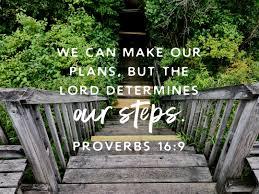
Better to have little, with righteousness, than to be rich and dishonest (16:8 NLT). This is yet another comparative (better-than) proverb (also see 16:19 and 32, 17:1, 19:22, 22:1, 24:5, 27:5, 28:6 and 23), expressing relative value. According to Proverbs there is nothing wrong with being rich, but if one must make a choice, then there is no question that righteousness is more important than dishonest gain.We make our plans, but ADONAI determines our steps (16:9 NLT). This proverb says almost the exact same thing as 16:1: We can make our own plans, but ADONAI gives the right answer (16:1 NLT). Thus, these two verses serve as bookends to the theological themes on divine sovereignty and human freedom. The idea is that human beings can plan, but our plans do not succeed unless YHVH decrees it. Understanding this diminishes human pride.319
The king’s respect (16:10-15): Political protocol was part of the sages’ curriculum. Their pupils had to be familiar with both the duties and the desires of the monarchs whom they served. Much of their counsel in these matters seems very practical. They understood the ways of the kings and the dangers inherent if those ways were treated lightly. Yet fundamental to their proverbial sayings was a conviction of the God-given guidelines for ruling. Part of the Creator’s providence for human society was the responsible exercise of human authority. Kings, whether Israelite or Persian, served His purposes, especially when they exercised their power in ways that aligned with His will. But the limits of their authority were clearly understood as the warnings of both Moshe (see the commentary on Deuteronomy Dh – The King) and Samuel (see the commentary the Life of King Sha’ul Br – Samuel’s Warnings) made clear.
The lips of a king speak as an oracle (Hebrew: qesem, meaning divination). Acting justly was a requirement for the king. Because kings were believed to have special access to ADONAI, the power of divination, or the ability to receive an oracle which helped them shape their political decisions (also see the commentary on Exodus Gb – The Urim and the Thummim: The Means of Making Decisions) and judicial verdicts. They had a special obligation never judge unfairly (16:10 Hebrew).320
ADONAI demands accurate scales and balances; all the weights of the bag are His concern (16:11 Hebrew). This proverb speaks to honest commercial transactions (11:1, 20:10 and 23). Cheating must have been known if not rampant in ancient Isra’el. Scales were used during purchases. It was possible to manipulate the scales to give a reading for the benefit of the seller. The weights of the bag refer to the weights placed on one side of the balance, and if they were falsely represented, then the seller could defraud the customer. YHVH hates all fraud and deception (see Deuteronomy Ev – Honest Weights and Measures).321
The king detests their subject’s doing evil, for his rule is established by righteousness. The reason is clear: righteousness is the only sure support or foundation to establish the throne of the king. Both the divine order in creation and the divine vigilance over history are geared, sooner or later, to the overthrow of unrighteous kings from their royal seat. Enforcing justice is virtually an act of self-preservation. Whatever threatens the stability of his authority will raise the sovereign’s wrath. Kings take delight in righteous lips; he loves those who speak honestly (16:12-13 Hebrew). Righteous lips seem to describe messengers who get the facts straight or ministers of state who grasp the full picture and relate it accurately to the king. It seems such reporting is rare so delight and love convey the king’s appreciation. This helped him create a policy that will succeed, since there may be special reference to those who speak to him in court.322
The king’s wrath is like a messenger of death, but the wise will appease it (16:14 NIV). This proverb appears to be addressed to those who had contact with the king. Obviously, ancient monarchs were powerful individuals, often making life-and-death decisions. In the first colon, if anyone angered the king they ran the risk of ending their own lives (see the commentary on Esther Ba – I Will Go to the King: If I Perish, I Perish). However, in the second colon, the wise know how to anticipate the reaction of the king and say the right word and do the right thing at the right time to avoid bringing his wrath onto them.
Solomon offers similar advice in Ecclesiastes: Obey the king’s command, and don’t be in a hurry to leave his presence and don’t persist in doing what is wrong, for he does whatever he pleases. After all, his word is final; who can challenge him, asking: Why are you doing that (Ecclesiastes 8:2-4)? Moreover, don’t insult the king, not even in your thoughts; and don’t insult the wealthy, not even in your bedroom; for a bird in the air might carry the news, a creature with wings might repeat what you said (Ecclesiastes 10:20).
When the king smiles, there is life; his favor is like a cloud that brings the spring rain (16:15 NLT). This proverb forms a contrasting pair with the previous one. Verse 14 dealt with the king’s wrath, and this one with his delight. The smiles on his face reflect his happiness. This royal disposition leads to life, which implies something more than mere existence: it points to reward. The second colon provides a metaphor that illustrates the first statement. A cloud brings refreshing spring rains. These rains are late in the agricultural cycle, coming in March and April and causing a growth spurt of crops right before the harvest.323
Dear heavenly Father, praise You for directing my steps. You are so loving to tenderly care about me. You not only redeemed me (Titus 2:14), but you live within me, giving You 24/7/365 access to be there to help and to guide me. Yeshua answered and said to him: If anyone loves Me, he will keep My word. My Father will love him, and We will come to him and make Our dwelling with him (John 14:23). How wonderful that though You are Sovereign over the world, You are still always there to help guide me whenever I cry out to You. For God Himself has said, “I will never leave you or forsake you,” (Hebrews 13:5b). When You guide my steps, I can trust You with absolute certainty that you know the entire situation and will guide the best steps. We make our plans, but ADONAI determines our steps (16:9). Thank You that when I am walking close to You, even if I experience hard times, I can trust You, walking with me through the hard times to help me grow stronger in You to the glory of Your Name. For I know the plans that I have in mind for you,” declares ADONAI, “plans for shalom and not calamity – to give you a future and a hope (Jeremiah 29:11). I know that as You guide me, nothing can ever separate me from Your love (Romans 8:37-39). Thank You so very much for all Your love and care. It is a joy to praise and to worship You. In Messiah Yeshua’s holy Name and power of His resurrection. Amen
Leave A Comment