




Dani’el’s Vision of the Seventy Sevens
9: 1-27
The Time of Jacob’s Trouble deals with the people of Isra’el.
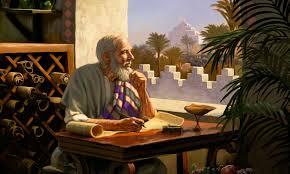
Dani’el is one of the most significant books in the Bible in terms of the chronology of future events because it contains essential information concerning the key figures and time sequences of the far eschatological future. In fact, it is one of the most important keys to understanding the Scriptures as a whole. It is difficult to understand prophetic chronology without consulting the book of Dani’el. There are visions in Dani’el that detail what YHVH would do beginning in the sixth century BC until the Messianic Kingdom. Thus, Dani’el can be seen as the foundation for the key themes of biblical prophecy. Dani’el did not attempt to write history when he wrote his book; rather, he was developing a theme.284 Here is an overview of Dani’el’s prophecies and age when he prophesied in chronological order:
602 BC prophecy of the Great Statue (2:1-45) when Dani’el was 18.
553 BC prophecy of the Four Beasts and the Ancient of Days (7:1-28) when Danie’l was 67.
551 BC prophecy of the Ram and Male Goat (8:1-27) when Dani’el was 69.
539 BC prophecy of the Fall of Babylon (5:1-31) when Dani’el was 81.
539 BC prophecy of the Seventy-Sevens (9:1-27) when Dani’el was 81.
536 BC prophecy of the Future Nations (11:2-45) when Dani’el was 84.
536 BC prophecy of the Future of Isra’el (12:1-13) when Dani’el was 84.
As related in Arnold Fruchtenbaum’s commentary on Dani’el, these verses deal with crucial information regarding the future of Isra’el and a period known as the seventy-sevens of Dani’el. Furthermore, it is the only passage in the TaNaKh that refers to the Messiah as the mashiach, meaning the anointed one (9:25-26). Especially for those who believe that scripture should be taken literally, and to reject Replacement Theology (see the commentary on Galatians, to see link click Ak – The Hebrew Roots Movement: A Different Gospel), it is important to establish a proper understanding of these verses. The central question is whether 9:24-27 reveals a gap between the sixty-ninth and seventieth seven.
The background given (see Cw – ADONAI’s Word), where Dani’el stated that he had been studying the writings of Jeremiah as well as of some other prophets, such as Isaiah. He knew from the study of these scrolls that the Babylonian Captivity would last seventy years (see the commentary on Jeremiah Gu – Seventy Years of Imperial Babylonian Rule). He also knew that the seventy years was nearly up. That much of the prophecy he understood. What he misunderstood was the chronology of prophetic events. After reading the prophecies of Jeremiah, Isaiah, and perhaps others, he thought that the Messianic Kingdom would be set up following the seventy years of captivity. He also knew from these prophets that the prerequisite for the establishment of the Kingdom would be Isra’el’s confession of her sins. Hence, assuming that the Babylonian Captivity would be immediately followed by the Kingdom, Dani’el offered a prayer of confession for Isra’el’s sins (see Cx – Dani’el’s Prayer). Then ADONAI sent Gabri’el to correct Dani’el’s misunderstanding (see Cy – Gabri’el’s Intervention). He revealed to Dani’el the program of God, which would bring in the Messianic Kingdom. In a play on words, Gabri’el informed Dani’el that it was not going to be seventy years but seventy-sevens of years before the Kingdom would be established.285
Leave A Comment