




Shun the Wicked
24: 13-22
A proverb is a short and memorable saying designed to be our blueprint for living in the world that ADONAI has created. It is important to note that proverbs are not promises; they are generally true principles, all other things being equal.
The last section of thirty sayings (to see link click Cy – Thirty Sayings of the Wise), consists of five proverb pairs. The introductory saying contains two encouragements: eat honey because it is desirable, beneficial, and sweet (verse 13), and know wisdom because it has the promise of eternal life (verse 14). The unit’s first prohibition cautions the disciple not to join the ranks of the wicked to take away the house of the righteous by cunning deceit and violence (verses 15-16). The righteous should not envy the temporary prosperity of the wicked because they will be annihilated (verses 19-20). The last pair (verses 21-22) builds on the preceding one, pointing to God and His righteous king as the ones who uphold the principle of retribution (see Bv – Security Through Righteousness).
The twenty-sixth saying (24:13-14): My son, eat honey, for it is good; yes, the honeycomb is sweet to the taste. In the same way, wisdom is sweet to the soul. If you find it, you will have a bright future, and your hopes will not be cut short (24:13-14 NLT). This proverb is yet another encouragement to pursue wisdom. It draws an analogy between eating honey and finding wisdom. Eating honey is pleasurable and can have beneficial results, as in 16:24, where honey is likened to wise words, both having medicinal quality. Moreover, honey has sexual undertones in a context like Song of Solomon 4:11. But the analogy can only be pressed so far since, as the sage warns in 25:16 and 27, eating too much honey can make a person sick. Surely the sage wouldn’t issue the same warning concerning wisdom. The benefit of wisdom is that it provides us with a future. It gives us hope. At the simplest level, this would refer to the fact that living by the principles of wisdom as enunciated in Proverbs would provide the strategy to avoid the problems that might lead to an early death. Furthermore, the pursuit of wisdom implies a relationship with divine Wisdom, which can even lead to life beyond the grave (see Af – Sh’ol).
The twenty-seventh saying (24:15-16): Do not wait in ambush at the home of the righteous, do not raid the house where the godly live. For although the righteous may fall seven times, they will get up again. But one disaster is enough to stumble the wicked (24:15-16 Hebrew). This proverb serves as a warning of the futility of trying to undermine the righteous. The sages understood that the righteous would suffer in this life (John 16:33), but they also had the ability to withstand those attacks. Life may beat them down, but they have hope (see verses 13-14 above) because of wisdom. They see beyond present trials and tribulations. The number seven is not a literal number, but is symbolic of completeness (see Genesis Ae – The Number Seven), meaning that the righteous will always bounce back. On the other hand, the wicked will fall easily. It is important to note that proverbs are not promises; they are generally true principles, all other things being equal.
The twenty-eighth saying (24:17-18): Don’t rejoice when your enemy falls, and don’t let your heart rejoice when he stumbles. For ADONAI will see it and be displeased and turn His anger away from him (24:17-18 Heb). The warning is clear enough. When something bad happens to an enemy, don’t be happy lest Ha’Shem should be angry (see similar ideas expressed in Ps 35:15-16 and Job 31:29). But what type of enemy are we talking about here? Certainly, ADONAI didn’t get angry with Moses and the Israelites as they celebrated the destruction of the Egyptian army at the Sea of Reeds (Ex 15), or with Debra as she sang the victory song over Midian (Judges 5). Hence, the sage must be talking about personal enemies, fellow Israelites.463
Someone might keep the letter of Exodus 23:4-5 without keeping its spirit. That is, seeing a neighbor’s donkey fallen under its load, a person might help grudgingly, but inwardly rejoice at his neighbor’s misfortune. But the sage says: Do not rejoice when your enemy falls. At Pesach Seder, it is customary to remove one drop for each of the ten plagues that fell upon Egypt from the second cup. In keeping with this proverb, according to Isra’el’s sages, one mourns an enemy’s suffering through this tradition. Isra’el is instructed to mourn her enemy’s suffering by stating, “The works of My hands, the creatures to whom I give life, are drowned. When I weep that they are dead, do you sing praises to Me who slew them (Sanhedrin 39b)?464
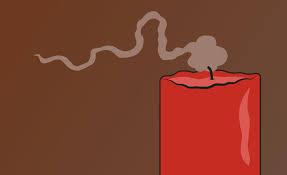
The twenty-ninth saying (24:19-20): Do not get upset because of evildoers or be envious of the wicked. For evil people have no future; the lamp of the wicked will be snuffed out (24:19-20 Hebrew). This passage is the third time within the sayings of the wise where the sage warns against envy toward wicked people (see also 23:17-18 and 24:1-2). It must have been a common temptation for the wise to feel a righteous indignation as they saw godless people prosper in life. In the present passage, the sage warns that the lamp of the wicked will be snuffed out, which certainly implies that the godly indeed have a future. In that regard to the nature of that future envisioned here, one the one hand, it certainly is true that this passage and one’s like it cannot be used to prove a view of the afterlife in Proverbs. But on the other hand, it certainly seems unreasonable to think that the sages were thinking only of this life. After all, if the passage is alluding to physical death in verse 20, the sages were smart enough to know that the wise died too, and some of them even died at a young age. At the very least, then, this passage suggests that there was life beyond the grave.465
The thirtieth saying (24:21-22): My son, fear ADONAI and the king, do not associate with the rebels; for disaster will come upon them quickly, and who knows what calamities will come with them (24:21-22 Hebrew). “Crime doesn’t pay,” the saying goes. In a sense, this “Retribution Principle,” that humility brings wisdom and faithlessness destroys the wicked, is common sense. Dishonest, cruel, or immoral deeds have a way of being found out and of bringing trouble on heads of those who practice them. This is the law of natural consequences, but it goes much deeper. Justice is a part of human nature, built into us by our Creator. As wisdom was the first of God’s great words and built into the fabric of the universe (see Bl – Wisdom’s Existence before Creation), we shouldn’t be surprised by the Retribution Principle. The principle of reward and punishment is fundamental our existence. We are moral beings made in the image of God who is just.
Dear heavenly Father, praise You for Your faithfulness! Wisdom follows Your love and turns from evil, for Your love for Your children is so amazing! You paid a great price of pain and shame (Hebrews 12:2) to rescue and redeem those who love You from sin’s evil grasp. For sin’s payment is death, but God’s gracious gift is eternal life in Messiah Yeshua our Lord. (Romans 6:23). Wisdom shuns wicked ways and wicked people and puts one’s complete hope and trust in You. You are our loving (Psalms 36:5, John 3:16), and the Prince of Peace. For to us a child is born, a son will be given to us, and the government will be upon His shoulder. His Name will be called Wonderful Counselor, Mighty God, My Father of Eternity, Prince of Peace (Isaiah 9:6). He rescued us from the domain of darkness and brought us into the kingdom of the Son whom He loves (Colossians 1:13). In Messiah Yeshua’s holy Name and power of His resurrection. Amen
Leave A Comment