




Dani’el is Promoted
6: 1-3
Dani’el is promoted DIG: How did Darius reorganize the government? What are the stresses and fears that take place during a reorganization of any type? Why was Dani’el promoted? Once promoted, what did government reorganization look like? How does your government reflect Dani’el’s government?
REFLECT: How do you need to be promoted? What qualities do you need to demonstrate to be promoted? How and when have you been persecuted for your faith? When things get discouraging in this world, how hard, or easy, is it for you to remember that this world is not your home and your citizenship is in heaven?
Despite the change in government from the Babylonians to the Persians,
Dani’el continued to enjoy favor.
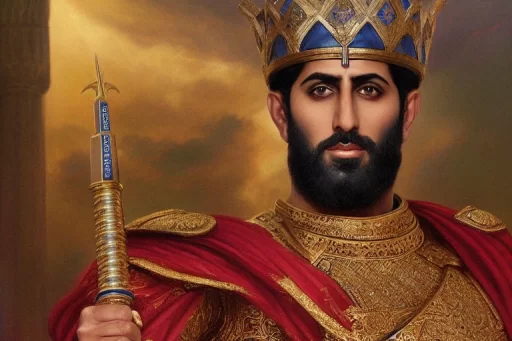
At the height of its power, the Medo-Persian Empire covered an area of 2,100,00 square miles and three continents: Asia, Africa, and Europe. Its control extended from the Indus Valley to the east and Egypt to the west. A model of centralized, bureaucratic government was implemented, and a complex infrastructure was built. The empire consisted of twenty provinces (Babylon being one), each ruled by a satrap. Frequent visits to the satrapies were made by a government official known as “the king’s eye,”325 who reported his observations back to the emperor. Throughout the satrapies, official languages were set up. Each province provided soldiers for the Persian military. Phoenicia, Egypt, and the Greek colonies of Asia Minor also dispatched ships and sailors. The result was a large professional army. In addition, the rulers of each satrap paid an annual tribute to the emperor that was tailored to the presumed economic potential of his province. The Province of Babylon was charged the highest amount of taxes and had to contribute 1,000 silver talents and four months’ worth of food for the soldiers each year. As the granary of the Medo-Persian Empire, Egypt was obligated to supply 120,000 measures of grain. The account of Dani’el’s experience in the lions’ den is told against this backdrop.326
How Darius came to know Dani’el is not stated, but certainly the handwriting on the wall episode was told to the Persians (to see link click Cq – The Handwriting on the Wall). Dani’el had also been an important government official during the reign of one of the greatest kings in history, Nebuchadnezzar, and had demonstrated exceptional wisdom and ability in that capacity. Such qualified personnel from among the local citizens would have been sought out by the new Persian government. This policy would have ingratiated the Persian Empire to the citizens of Babylon. Later, the Romans adopted a similar practice.
Babylon was no longer the capital, but a province of the new world power, the Medo-Persian Empire. Thus, the description of the reorganization that took place at that time pertains only to that province. It pleased Darius (see Ag – Cyrus and Darius) to appoint 120 satraps, the bottom level of the government, to rule throughout the kingdom, with three administrators over them, one of whom was Dani’el. The satraps were made accountable to them so that the king might not suffer loss (6:1-2). Evidently, this means that the administrators watched over the satraps so that all the tax moneys were properly collected and none of the lesser officials could steal from the king.327
Dani’el had proven himself superior to his peers under the Babylonian government in the past. Here again, Darius noticed Dani’el’s extraordinary spirit and put him above the other two administrators and above the 120 satraps as well. In other words, the king set him over the whole province of Babylon (6:3). Darius appointed Dani’el as the Prime Minister like Joseph was to Pharaoh (Genesis 41:37-46a), in which Dani’el would preside over the other two administrators. In this new system, the 120 satraps would report to the two administrators; the two administrators would report to Dani’el; and Dani’el would report directly to Darius.328 However, the king’s good intentions stirred up professional and ethnic jealousies among the two administrators and some of the satraps loyal to them, and this becomes the point of conflict in the story.
As Ian Duguid relates in his commentary on Dani’el, even though Dani’el served the Babylonian and Persian Empires with distinction, he was not shaped by their values. Graft and corruption were widespread in the ancient world, as they are in much of the modern world; how easy it would have been for Dani’el to justify taking a little back of everything the empire had stolen from himself and his people. Yet, Dani’el’s life was so completely free from corruption and negligence that his enemies could find nothing to use against him, even when they searched for it (see Dm – The Conspiracy of the Royal Administrators).
We are familiar in our own government the kind of scrutiny and dirt-digging that take place whenever someone is nominated for high office. Not infrequently, some carefully concealed skeleton comes out of the closet, and embarrassingly disqualifies some person from any consideration. Indeed, how many of us have lives that could bear that kind of scrutiny? If we were the ones under the microscope, would the private investigators come back with empty hands and say, “Sorry. You might as well stop digging for dirt on this person. His or her life is utterly above reproach”? Yet, that was his enemies’ assessment of Dani’el. They recognized that they would never find fault with him unless it was in regard to the Torah of ADONAI! He embodied the words of Yeshua: Let your light shine before others, that they may see your good deeds and glorify your Father in heaven (Matthew 5:16).
Yet, Dani’el’s goodness did not win him any friends in the government. Instead, his faithfulness to God and his duties made him powerful enemies. Some sought to bring him down, probably both because they were jealous of his success and because his incorruptibility was restricting their ability to use the system for their own personal benefit. Isn’t that always the way it is? Ever since Cain killed Abel, there has been hostility between God’s people and those around us, a hostility that sometimes comes to a violent end. The truth is that we live in a hostile world and we need to be prepared for that reality. Paul warned the Thessalonians ahead of time that they would surely suffer persecution (First Thessalonians 3:4), and he told Timothy: Everyone who wants to live a godly life in Messiah Yeshua will be persecuted (Second Timothy) 3:12. We should expect persecution as a routine fact of life.
Believers around the world know this from experience; yet, here in the prosperous and supposedly tolerant West we have come to expect our lives as believers to run smoothly and successfully, at least if we are faithfully following the Lord. We think that the slogan “God loves you and has a wonderful plan for your life” means that our lives should be protected by Him from any form of persecution. This is a false belief, however. Persecution comes to us in a variety of ways and from a variety of directions. Yet this is to be expected in a fallen world. It may come in the form of mockery and isolation at school, or conflict and trouble at work, or simply being regarded as weird. But if we are faithful to Yeshua Messiah, one way or another, we should expect to suffer abuse for His sake.
Pilgrims remember these things. Pilgrims understand that this world is not our home, and therefore we shouldn’t be surprised if our welcome here is less than warm (First Peter 2:11). When Dani’el’s enemies brought the charge against him before the king, they called him, “Dani’el, the exile from Judah” (6:13). They meant that as an insult, a slur that after all his years living in Babylon, he was still viewed as a foreigner, and therefore untrustworthy. His deepest loyalties lay elsewhere. However, this was the highest compliment they could have given him. After all those years, even though Dani’el served the empire faithfully, Babylon was not his home. He was nothing more and nothing less than a pilgrim there. Likewise, we are citizens of heaven, and it is from there that we expect a Deliverer, the Lord Yeshua Messiah (Philippians 3:20 CJB).329
Dear heavenly Father, praise You for Your Word that enables all who trust in You to be able to come to live with You in Your eternal home in heaven! But whoever did receive Him, those trusting in His name, to these He gave the right to become children of God. (John 1:12). You who are so Wonderful in Love and Majesty, also promised to come to be with/live within those who love you/your children! Yeshua answered and said to him: If anyone loves Me, he will keep My word. My Father will love him, and We will come to him and make Our dwelling with him (John 14:23). Thank You for being such a loving and wise Father whose love is everlasting. Yes, I have loved you with an everlasting love. Therefore, I have drawn you with lovingkindness (Jeremiah 31:1). You are always true to Your covenant and Your love is always faithful! Though the mountains depart and the hills be shaken, My love will not depart from you, nor will My covenant of peace be shaken, says ADONAI who has compassion on you. (Isaiah 54:10). Thank You so much for Your love that takes an impossible situation and rescues those who believe in You by promoting them to be Your children and an eternal home in heaven for them. You are a fantastic and wonderful heavenly Father! In Messiah Yeshua’s holy Name and power of His resurrection. Amen
Leave A Comment