





Alexander the Great
11: 2-20
Alexander the Great DIG: How do you respond to the statement, “Fulfilled prophecy is one of the proofs of the inspiration of the Bible?” God’s hand can be seen in Alexander the Great’s conquest paving the way for the Gospel to spread more easily. In what other places in history have you spotted God’s hand at work? From the sounds of it, marriage and politics were never far apart in Dani’el’s day. In your perspective, how does that compare with the political climate today?
REFLECT: What are some of the current signs that show us that people are still interested in telling the future? How often today do you imagine spiritual conflicts are happening in regard to national leaders, as they were in Dani’el’s day? From what you know of secular and religious history, what impresses you about someone’s sudden rise to power and equally precipitous fall from grace? How would Dani’el write the epitaph of such superstars today?
Strangers will consume your wealth, and someone else will enjoy the fruit of your labor (Proverbs 5:10).
Concerning Persia (11:2): The unnamed angel (to see link click Dt – The Arrival of an Angel) began this part of his prophecy by declaring: Now then, I tell you the truth. The truth the angel was proclaiming pertained to what would happen in the future. In other words, the angel began to reveal the actual message, the prophecy itself. The very first element of this prophecy was that three more kings will arise in Persia. In 10:1, Dani’el had made a point to provide a date for Chapters 10-12, stating that the revelation came to him in the third year of Cyrus, king of Persia. So, the three kings were Cyrus’ successors. Historically, Cyrus reigned for nine years, from 539 to 530 BC. Then he was succeeded by Cambyses (530-522 BC), Pseudo-Smerdis (522 BC), and Darius I Hystaspes (522-486 BC).371
Cambyses was the son and successor of Cyrus the Great. His passionate ambition was to invade Egypt and regain the territory that Nebuchadnezzar had gained but that was later lost. Cambyses manufactured an excuse for the war, saying that he had asked for the hand in marriage of one of the Egyptian princesses but had been rejected by her father. He did conquer Egypt, but when he tried to take Ethiopia and Carthage, he failed miserably and had to retreat. He ruled Egypt with an iron hand and gave every evidence of being insane. He married two of his sisters, murdered his brother and heir Smerdis, and then murdered the sister who protested the murder of her brother. One of the leading Persian priests plotted an insurrection and seized the throne, taking the name of the dead prince; historians call him Pseudo-Smerdis. Cambyses died from an accidental wound to his thigh while going home to unseat the new king, who reigned for about one year.372
Then the unnamed angel introduced another ruler, a fourth, who will be far richer than all the others and he gained power because of his wealth. This ruler was Xerxes who reigned from 486 to 464 BC. In the book of Esther, he is called Ahasuerus. Historically, the Achaemenid Empire reached its greatest height during his reign. He amassed great wealth through some lucrative conquests. He also received the benefit of a strong taxation program that was started by his predecessor, Darius I Hystaspes. An example of Ahasuerus’ great wealth is seen in Esther, which records a lavish banquet that lasted for 180 days (see the commentary on Esther Ak – The King Gave a Grand Banquet in Susa, and Displayed the Vast Wealth of His Kingdom). The purpose of the banquet was to stir up everyone against the kingdom of Greece (11:2). In 480 he tried to invade Greece, but his vast fleet was defeated at Salamis and Samos, and his army was defeated at Plataea.373 All this happened between Chapters 1 and 2 of the book of Esther. He came home a bitter and angry man and sought to find relief from his wounded pride by enjoying his harem. It was at this time that Esther entered the picture. Ahasuerus was assassinated in August of 465 BC.
Concerning Greece (11:3-4): From the previous visions, Dani’el already knew the sequence of the great empires. The angel began addressing the Hellenistic Empire, depicted in Chapters 2, 7 and 8 by the belly and thighs of Nebuchadnezzar’s statue (see Ba – The Third Empire: Belly and Thighs of Bronze), the leopard (see Cc – The Kingdoms of This World), and the male goat (see Ck – The Ram and the Male Goat). Therefore, the focus of verses 3 and 4 is on Alexander the Great and the division of his empire.
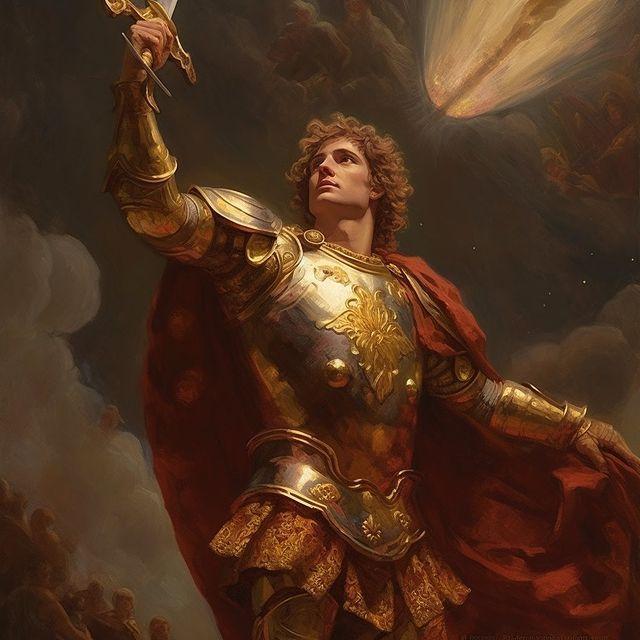
Alexander the Great (11:3): Alexander III of Macedon was born in 356 BC in Pella, the ancient capital of Macedonia. He was the son of King Philip II of Macedonia and Queen Olympia, the daughter of King Neoptolemus. Alexander was tutored by Aristotle at a young age and was exposed to political, philosophical, and cultural ideas that would greatly influence his later life. His reign as king of Macedon began in 336 BC, when his father, King Philip II, was murdered. In his early years, Alexander secured his rule by consolidating power and suppressing rebellions. He then turned his attention to military conquest, leading a series of campaigns that would see him become one of the greatest conquerors in history. Alexander’s first major military campaign was the conquest of the Persian Empire, which began in 334 BC. He was determined to punish the Persians for Ahasuerus’ invasion. Over the next ten years, he and his army marched through Asia Minor, Syria, Egypt, Babylon, and Persia. They defeated Darius III and strengthened Alexander’s control over the huge Achaemenid Empire.
Alexander’s life and reign ended in 323 BC when, at the age of 32, he died suddenly in Babylon. Despite his brief lifespan, he is remembered as one of the greatest military leaders and empire-builders in history. The prophecy of verse 3 revealed three things about Alexander. First he would arise up, indicating that he would have military success; second, he would rule with great authority, and, indeed, his empire would eventually extend from as far west as Egypt to as far east as India; and third, he would do as he pleases, which accurately described Alexander’s personality.374
Alexander’s incredible conquests were part of the sovereign plan of ADONAI. The spread of the Greek language and Greek culture assisted in the eventual spread of the Gospel and the Greek New Testament. Alexander’s goal was not just to conquer territory but to bring people together in a “united empire.” His soldiers married women from the conquered nations, and Alexander’s empire became the “melting pot” for all peoples. This too assisted in the spread of the Gospel centuries later.375
The division of Alexander’s empire (11:4): The unnamed angel revealed that Alexander’s empire would be divided into four parts. After he has arisen, his empire will be broken up and parceled out toward the four winds of heaven. It will not go to his descendants, nor will it have the power he exercised, because his empire will be uprooted and given to others. No sooner did Alexander appear on the scene of world history than he died. His kingdom was broken up and parceled out toward the four winds of heaven.
The holy angel added that Alexander’s empire would not go to his descendants, such as a son or another rightful heir. Alexander the Great only had one son, Alexander IV, who historians consider to be a legitimate offspring of the monarch. He was born shortly after his father’s untimely death in 323 BC as the son of Princess Roxana of Bactria. Roughly fourteen years later in 309 BC, he was assassinated at the order of Alexander’s former general Cassander. The only other possible heir to the throne would have been Alexander’s elder half-brother, Philip II Arrhidaeus, who reigned as king of Macedonia beginning in 323 BC. However, Philip III was also assassinated and died in 317 BC. Thus, no one in the family of Alexander inherited the empire. It was divided by his four generals. The angel revealed that none of Alexander’s successors would be able to have the power he exercised.
The prophecy regarding Alexander concludes with the statement that his empire will be uprooted and given to others. The word others refer to the four generals Cassander, Lysimachus, Seleucus, and Ptolemy. At the time of Alexander’s death, his legitimate son had not yet been born. As a result, the four generals agreed that the boy should rule as co-monarch until he reached the age to assume sole control of the empire. However, the four generals disagreed as to who should make those decisions for the young king. The disagreement led to civil war. During that period of unrest, Alexander’s son was murdered. In the end, the four generals simply divided up the empire among themselves.376
The Conflicts between the Ptolemies and the Seleucids (11:5-20): As the Soncino commentary on Dani’el correctly states in its introduction to verses 5 to 20, “interest is now focused on the two kingdoms which most directly influenced the destiny of Judah . . . the Ptolemies of Egypt in the South and the Seleucids of Syria in the North.377
Ptolemy I and Seleucus I (11:5): Verse 5 and, in fact, the rest of this section is so detailed that many liberal Jewish and Gentile biblical scholars simply could not, and do not, believe that they were written by Dani’el in the fifth century BC. Yet they were, and verse 5 prophetically introduces the conflict between the kings of the South (the Ptolemies in Egypt) and the kings of the North (the Seleucids in Syria). The king of the South will become strong, but one of his commanders will become even stronger than he and will rule his own kingdom with great power. As a reminder, the names of Alexander’s four generals were Antigonus, Cassander, Ptolemy, and Seleucus. In this prophecy, the angel mentioned the king of the South, namely, Ptolemy I Soter. He was the son of the nobleman Lagus, a native of the Macedonian district of Eordaea whose family was undistinguished until Ptolemy’s time. Ptolemy survived the struggles after the death of Alexander and took the title of king when the last of Alexander’s heirs was killed in 309 BC.
The angel foretold that one of his commanders would become even stronger than [the king of the South] and will rule his own kingdom with great power. That commander was Seleucus I Nicator, who, after Alexander’s death was appointed as satrap over Babylonia in 321 BC. However, Antigonus invaded his territory and forced Seleucus to flee to Egypt. Seleucus became a general in Ptolemy’s army and, in that way, became one of Ptolemy’s commanders. In 312 BC, Ptolemy and Seleucus succeeded in defeating Antigonus. Seleucus became the ruler of Syria and took the title of king in 304 BC. This fact fulfilled the prophecy that he would have great power. Over time, Seleucus’s kingdom became stronger than that of Ptolemy I. His kingdom went from Phrygia in Asia Minor to India and included Syria, Babylonia, and Media.378
Ptolemy II and Antiochus II (11:6): Verse 6 reveals the prophecies regarding the successors of Ptolemy I and Seleucus I. The angel began the next section of the prophecy by providing the time: At the end of years. After the Hebrew term end, ketz, refers to the end of a specific period. Historically, the period in question covered roughly fifty years between verses 5 and 6. The angel revealed that at the end of the period, they will become allies. But conflicts eventually arose between the kingdoms of the Ptolemies (Egypt) and the Seleucids (Syria).
From the beginning, conflicts eventually arose between the kingdoms of the Ptolemies (Egypt) and the Seleucids (Syria). Ptolemy I died in 285 BC, and clashes continued under his son Ptolemy II Philadelphus (285-246 BC), who, according to tradition, initiated the translation of the TaNaKh called the Septuagint. Finally, Ptolemy II made a treaty of peace with the Seleucid ruler, Antiochus II Theos (261-246 BC) about 250 BC, the grandson of Seleucus. Under the terms of the treaty, Berenice, Ptolemy’s daughter (the daughter of the king of the South) was to marry Antiochus II (the king of the North) to seal the alliance between the two kingdoms. Her son was then to become heir to the Seleucid throne. However, Antiochus II was already married to a powerful and influential woman named Laodice, who succeeded in murdering Antiochus II, Berenice, and their child. Thus, she did not retain her position of power. The angel prophesied that in those days she will be betrayed, together with her royal escort and her child, as well as the one who supported her in those times. Laodice then ruled as queen regent before her son, Seleucus II Callinicus (246-226 BC) became king.379
Ptolemy III and Seleucus II (11:7-9): One from Berenice’s family line, her brother, Ptolemy III Euergetes (246-221 BC) will arise to take her place. He succeeded his father Philadelphus, to the throne of Egypt. In retaliation for his sister’s murder, Ptolemy III attacked the forces of Syria (the king of the North) and entered his fortress; he will fight against them and be victorious (11:7). This war lasted from 246 to 241 BC during the course of which Ptolemy even captured and looted the Seleucid capital of Antioch. The Egyptian king soundly defeated the Syrian forces and even put the evil Laodice to death. He will also seize their gods, their metal images and their valuable articles of silver and gold and carry them off to Egypt. Then Ptolemy made a peace treaty with Seleucus II in 240 BC in order to pursue his Aegean conquest. Thus, for some years he left the king of the North alone. But not taking his defeat lightly, the king of the North (Seleucus II) broke the peace treaty that same year and counterattacked by invading Egypt. However, just as the angel had revealed to Dani’el, Seleucus II was defeated and had to retreat to his own country empty handed.
Ptolemy IV, Seleucus III, and Antiochus III (11:10-12): Antiochus III was an extremely important person, for during his reign the Promised Land of Abraham, Isaac, and Jacob fell under Seleucid’s control. His conflicts with Egypt, described here, provide an explanation of how this came about. With the Promised Land dominated by the Seleucids, the stage was set for the coming of the tyrant, Antiochus Epiphanes (see Dw – Antiochus Epiphanes).380
Seleucus II died in 226 BC, but his sons, Seleucus III Ceraunus (226-223 BC) and Antiochus III (the Great, 223-187 BC), continued the wars with the Ptolemies. Seleucus III was murdered after a brief three-year reign, and his brother, Antiochus III, came to power. In 217 BC he assembled a great army and faced Ptolemy IV Philopator at Raphia. The battle fulfilled the prophecy that Antiochus III would sweep on like an irresistible flood and carry the battle as far as his fortress. Today Raphia is a border city between Isra’el and the Siani. Then the angel prophetically revealed the details of the battle to Dani’el. Then the king of the South (Ptolemy IV) will march out in a rage and fight against the king of the North. The army of Antiochus III was very large. The Infantry alone consisted of 70,000 soldiers, and the cavalry had 5,000 men and seventy-three elephants. Nevertheless, he was defeated. After the enemy was swept away, Ptolemy IV became filled with pride and slaughtered thousands of Syrian soldiers. In addition, he took 40,000 of Antiochus III’s army into captivity. Syria was left with only a token army. In fact, Antiochus himself was almost captured. Yet, Ptolemy didn’t follow up on his victory. He could have pursued and captured Antiochus, but he didn’t take advantage of the situation. Consequently, the peace with Syria was only temporary.381
Ptolemy V and Antiochus III (11:13-19): After Ptolemy IV’s death in 204 BC, Ptolemy V Epiphanes ascended the throne in Egypt. His reign lasted about twenty-three years, until 181 BC. For the larger part of that period, his adversary in the neighboring Seleucid kingdom was Antiochus III the Great. At this point in the chapter a significant development takes place. The Ptolemies were no longer dominant, and the rest of the chapter (11:13-35) describes the following period of Seleucid dominance.
For the king of the North (Antiochus III) will muster another army, larger than the first. Between 212 and 204 BC, he conducted military campaigns that led him as far east as India and as far north as the Caspian Sea. During that time, he gathered more and more strength. Therefore, after several years, he advanced with a huge army fully equipped against Egypt in 202 BC (11:13).
The prophecy continues to describe the conspiracies that would be directed against Ptolemy V. In those times many will rise against the king of the South. Those who are violent among your own people will rebel. The angel further revealed that there would be Hebrews among the conspirators against Egypt, Dani’el’s own people. The Jews were led by a man named Tobias. They attacked the Egyptian garrison in Jerusalem. It was a small revolt in fulfillment of a vision, which was the freedom of Isra’el. But just as the angel predicted, the victory was without success (11:14). Freedom from the Ptolemies only meant subjugation to the Seleucids, and Isra’el did not become independent.
Historically, Ptolemy V was a child when he ascended to the Egyptian throne in 204 BC. Upon his father’s death, a bloody conflict followed. The regency was transferred from one advisor to another, and the state of the kingdom was close to anarchy. Taking advantage of this unrest, Antiochus III launched an invasion of Egypt. Then the king of the North will come and he will build up siege ramps and capture a fortified city. And the forces of the South will be powerless to resist; even their best troops will not have the strength to stand. The invader will do as he pleases; no one will be able to stand against him. He will establish himself in the Beautiful Land and will have the power to destroy it (11:15-16). Canaan came under the authority of Antiochus III.382
Backed by Antiochus’ army, the Syrians forced terms of peace upon the Egyptian king. The angel then revealed that Antiochus would attempt to control the Egyptian throne by marriage. He will determine to come with the might of his entire kingdom and will make an alliance with the king of the South. To seal the agreement, Antiochus gave his daughter Cleopatra, to Ptolemy V as a wife. (That woman was the first in that royal family to bear the name of Cleopatra. The Cleopatra associated with Julius Cesar and Mark Antony lived much later from 69 to 30 BC). And Antiochus will give Ptolemy a daughter in marriage in order to gain further control over Egypt. But his plans did not succeed, for Cleopatra loved her husband and supported the Ptolemy’s completely (11:17).
Verses 18 and 19 prophesy of Antiochus’ defeat at the hands of Rome and his humiliating death. Having conquered the Egyptians, Antiochus III turned his attention to the coastlands (the islands or countries around the Mediterranean Sea) and will take many of them. But after some initial success, Rome had had enough. They sent a commander, Lucius Cornelius Scipio, otherwise known as Asiaticus, to deal with Antiochus. In 191 BC the Romans, fighting with their Greek allies, routed the Syrians at Thermopylae and forced them to withdraw from Greece and flee to Asia Minor. Then thirty thousand Roman troops pursued Antiochus into Asia and defeated a much larger army of seventy thousand at the Battle of Magnesia near Smyrna (Turkey) in 190 BC.383 Antiochus’ defeat put an end to his disrespect and turned his disrespect back on him (11:18). In the past, Antiochus had treated the Romans disrespectfully. He refused to see their ambassadors, who came to negotiate a truce in Lysimacheia, telling them that Asia didn’t concern them and that he was not subject to their demands. Yet in 188 BC he was forced to accept the Treaty of Apamea which brought an end to Seleucid rule in Asia Minor, abandoning all to Roman rule.
Finally, the angel predicted the death of Antiochus III the Great. After this, he will turn back toward the fortresses of his own country but will stumble and fall, to be seen no more (11:19). Historically, this prophecy was fulfilled when Antiochus returned home in defeat. The peace negotiations forced him to pay a 12,000-talent reparation over a twelve-year period, surrender his elephants and fleet, and provide twenty hostages, including his son Antiochus IV. But he was assassinated in a temple near Susa, when he tried to plunder it in order to generate desperately needed revenue.384
Seleucus IV Philopator (11:20): The son and successor of Antiochus III was Seleucus IV Philopator (187-175 BC). He sent out a tax collector (Heliodorus) to collect the money to pay the thousands of talents demanded by the Romans as part of the Treaty of Apamea. According to Second Maccabees 3:7-40, Seleucus even sent Heliodorus to plunder the Temple in Jerusalem in order to provide the funds for the Syrian treasury, but a terrifying vision of mighty angels prevented him from doing so. The angel’s prophecy stated that within a few years Seleucus IV would be destroyed. In reality, however, the king reigned for twelve years. The term “few” has to be interpreted in comparison to Antiochus III, who reigned for 37 years.385 Yet he was not killed in anger (like his father) or in battle. Heliodorus, his tax collector and prime minister, evidently poisoned the king (possibly assisted by Antiochus IV). Then Heliodorus declared himself regent upon the king’s death and seized control of the government. His reign was also short-lived. The brother of the late king, Antiochus IV Epiphanes, arrived in Antioch with the assistance of the monarch of Pergamum, Eumenes II, and quickly overthrew Heliodorus.386
While Ha’Shem is not responsible for the evil that men and women have done in the name of governments or religion, He is still the Lord of history and continues to work out His plans for humankind. Studying the evil deeds of past rulers could make us cynical, but we must remember that one day the earth will be filled with the knowledge of the glory of ADONAI, as the waters cover the sea (Habakkuk 2:14).387
You can see how unbelieving liberal “scholars” think these prophecies were written after they happened historically because of the amount of exact detail in them.
Dear heavenly Father, praise Your omniscience which knows in exact accurate detail, all that will happen in the future, including who will win each war! Your words of prophecy always come true exactly as You predict. Trials on earth will seem so small, compared to the surpassing joy of living in heaven with our Awesome God and Heavenly Father, the Supreme Almighty Ruler of the Universe forever. For I consider the sufferings of this present time not worthy to be compared with the coming glory to be revealed to us (Romans 8:18). In Messiah Yeshua’s holy Name and power of His resurrection. Amen
Leave A Comment