




The Joshua Generation Dies
2: 6-10
The Joshua generation dies DIG: How are these verses connected with the book of Joshua? What is the purpose of these verses? What three generations are in view here? What did Joshua and the elders share in common? What happened to the third generation? Why didn’t they have the faith of their descendants?
REFLECT: Has a spiritual giant ever died in your family? Have you followed in their footsteps? What great works of God have you seen in your own life? Have you been diligent to teach your own children or grandchildren about our Lord? What hard fought battles are you fighting now to leave to your descendants?
Each generation must establish their own personal relationship with ADONAI.
In the initial section, these verses are nearly identical to the closing verses of Joshua 24:28-31. This passage forms a link between Joshua 24 and Judges 2:11 (to see link click An – Cycles of Rebellion and Retribution), and thus resumes the history of Joshua, which was interrupted by Judges 1:1 to 2:5. The purpose of the interruption was to provide a summary of the results of the wars with the Canaanites, and to make a sharp contrast with the generation that had just passed with the one that was about to come. From the high spiritual content of the book of Joshua, the downward descent into the darkness of apostasy can be clearly seen throughout the book of Judges; from the generation of Joshua and the elders who knew ADONAI, we will encounter a third generation that did not know ADONAI, either in the sense of being righteous, or in the sense of seeing His mighty works.44
After Joshua had dismissed the Israelites, they went to take possession of the Land (2:6a). This verse helps us to understand the nature of the conquest. The united campaigns under Joshua’s leadership had broken the back of the Canaanite resistance, but much of the local campaigning was left to the individual tribes. So after the covenant-renewal ceremony at Shechem, the tribes, having been dismissed by Joshua, set about completing the occupation of their own allotted territory.
The concept of the land as an inheritance suggests the idea of a gift or legacy, something received because of the hard work and goodwill of another person. The reason for viewing Canaan in this way here lies in God’s solemn promise to Isra’el’s ancestors to give this land to their descendants (Exodus 32:13), and the battles already fought by Joshua and the first generation to secure it for those who would follow them. Each tribe’s allotment was understood to be its share of this inheritance (13:6-7). Here, the idea of the inheritance is taken further: each to their own inheritance (2:6b). It is doubtful that this was ever understood in purely personal terms, as it is today, since to be expelled from your family or clan was to lose your share in the inheritance (11:1-3). Nevertheless, there was a sense of sharing in the land as Isra’el’s inheritance did extend, in some cases, right down to each particular member of a family, clan, or tribe (2:9). But against the backdrop of Joshua’s appeals before he died (Joshua 23:1 to 24:27), it also carries the overtones of responsibility. Each tribe, clan, and person must do their part in taking hold of what has been given and sacrificed for; thus, honoring the giver.45
Then, the second generation was the generation of the elders (see the commentary on Numbers Bt – ADONAI’s Response: Spiritual leadership), who outlived Joshua and had seen all the great works that ADONAI had done for Isra’el. They served ADONAI throughout Joshua’s lifetime (2:7 Hebrew). The great works were the deliverance from Egypt, the miracles in the wilderness, and the successful campaigns in the Transjordan as well as in Canaan. They were the guardians of the Torah. Moses received the Torah on Mount Sinai, and handed it down to Joshua, and Joshua handed it down to the elders (Aboth i. 1). This verse clearly focuses on what Joshua and the elders shared in common. They had seen the great works of ADONAI. But it will soon be contrasted with the spiritual adultery of the next generation during the days of the judges.
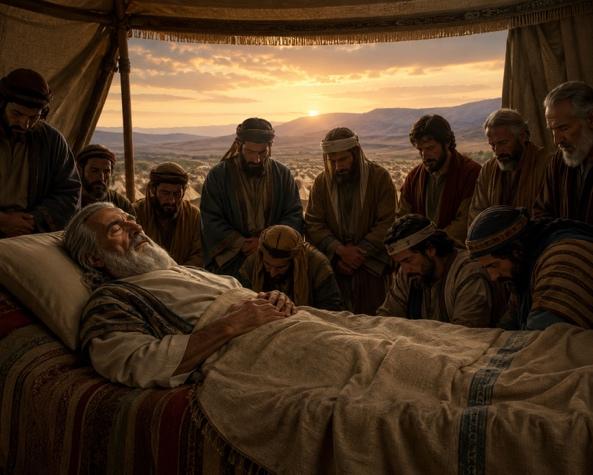
When Joshua the son of Nun, the servant of ADONAI, died, he was 110 years old, which was the same age of Joseph when he died; and they buried him near his property of Timnath-Heres, in the hills of Ephraim, stretching from the north of Jerusalem to the Jezreel Valley, north of Mount Gaash (Judges 2:8-9 CJB), a portion of land that the people had given to Joshua (Joshua 19:49-50). This describes how the Israelites of his generation, as a way of honoring him, had given him a portion of land in the territory of Ephraim (the tribe he belonged to) as his personal inheritance. It also tells how Joshua, when he was free to do so, built up the town and settled there. In this way too, Joshua had been an example to the rest of Isra’el; Joshua himself had “gone to his inheritance, and “taken possession” of it, as he later told his fellow Israelites to do (2:6a).46
Then verse 10 contrasts the two generations. After that whole elder generation, contemporaries of Joshua who had survived him, had died, and another generation grew up who did not know ADONAI or remember the mighty things He had done for Isra’el (2:10 NLT). Not having personally experienced the convincing proofs of God’s power which had won the faith and loyalty of their fathers, they doubted the accounts of the triumphs achieved in days gone by. This new generation abandoned the old paths and succumbed to the pagan Canaanite influences in their midst. Each generation must establish their own personal relationship with ADONAI, it cannot continue in the spiritual strength of its past heroes.47
This third generation did not know ADONAI because they did not know the mighty things He did for Isra’el in the days of Moses and Joshua. This problem is well recognized in Deuteronomy, where the parents are commanded to be diligent to instruct their children in the Torah and to tell them of the mighty things YHVH did when He called Isra’el into existence (see the commentary on Deuteronomy Bt – Teaching the Covenant History). It could be, therefore, that the Joshua generation unintentionally contributed to what happened after their passing by failing to be as diligent as they might have been in teaching their children. But that is hardly where this passage before us lays the blame. Given the shortness of time involved, and the overlap of the generations represented by the elders [such as Caleb] who outlived Joshua, the new generation could hardly plead ignorance. Rather, as the cycles of rebellion clearly show (see Ae – The Cycle of Sin in Judges), their “not knowing” was a choice caused much more by the enticements of Canaanite culture and their own willingness than any failure of their parents.48
This is the perennial peril. One generation can rejoice in a living faith, enjoy intimate communication with ADONAI, revel in the kingship of Yeshua in their daily life, and even delight in teaching their faith to those closest to them; yet the next generation may come along and couldn’t care less. Not that they will formally repudiate everything. It’s just that they will know about the Lord rather than know the Lord. They may remain within the church in their cold, dead, formal way. But there is no fire in their “faith,” no warmth in their love, and no joy in their hope. Just because you sit in the garage doesn’t make you a car. What Paul calls the surpassing value of knowing Messiah Yeshua my Lord (Philippians 3:8) sounds utterly foreign to them. They really don’t care to understand it.49 All we can do is pray.
Altogether then, this file deals with three specific generations. The first generation was throughout Joshua’s lifetime and saw the great works that ADONAI had done for Isra’el (2:7a). The second generation were the elders who outlived Joshua and at least remembered God’s great works so they continued serving ADONAI (2:7b). But then came a third generation, who grew up who did not know ADONAI nor remember the mighty things He had done for Isra’el (2:10). They did not serve God.50
Dear heavenly Father, praise You for being so wise! How wonderful to know You as my Father! To know about you is good, but to actually know You in a personal relationship is such a joy and comfort! The wisest thing anyone can do is to spend time in Your Word, getting to know You by reading, meditating and praying to You. How wonderful it is to be able to totally trust all that You say. And all You say and do is wrapped up in Your righteousness and covered over by Your steadfast love! Your love, Adonai, is in the heavens, Your faithfulness up to the skies. Your righteousness is like the mountains of God. Your judgments are like the great deep (Psalms 36:5-6). How much better and wiser it would have been for the tribes if they learned from the miracles of their deliverance from Egypt; but they forgot about You and lusted after other gods. In the same way, it is so much wiser to trust and worship You at all times, even when the enemy entices with supposed good things, as Israel’s enemies enticed her with their pagan gods. Though life is hard and seems dark, so much wiser to love and follow You and in return receive an eternity of joy in heaven with You! You are a loving Father who cares so passionately for me – giving Your own Son to redeem me – I want to trust You always! In Messiah’s holy Name and power of His resurrection. Amen
Leave A Comment