




Cycles of Rebellion and Retribution
2:11 to 3:6
Cycles of rebellion and retribution DIG: As you read this section, pay close attention to the cycle of rebellion, retribution, restoration. What factors contribute to a person or group abandoning ADONAI? What does God’s providing a deliverer tell you about His character? What was the key to Israelite victory?
REFLECT: What idols or false ideas compete for your loyalty and attention? How is our society like the days of the Judges? How is today’s Church like those days? What temptations do God’s people face today that cause them to serve other gods? When and how has God tested you? How is your faith stronger as a result?
When a generation tolerates sin, the next generation will celebrate it, and the next generation after them won’t even know it’s sin (J. C. Ryle 1816-1900).
Had they remembered Joshua, the Israelites would have remembered his “farewell address” given to the leaders and the people of Isra’el (see the commentary on Joshua, to see link click Cs – Joshua’s Farewell Address). Had they known that speech, they would have known the Torah, for in his final message, Joshua emphasized the covenant ADONAI made with Isra’el and the responsibility to keep it. When you forget about the Word of God, you are in danger of abandoning the God of the Word, which explains why Isra’el turned to the vile and vicious worship of Ba’al.51
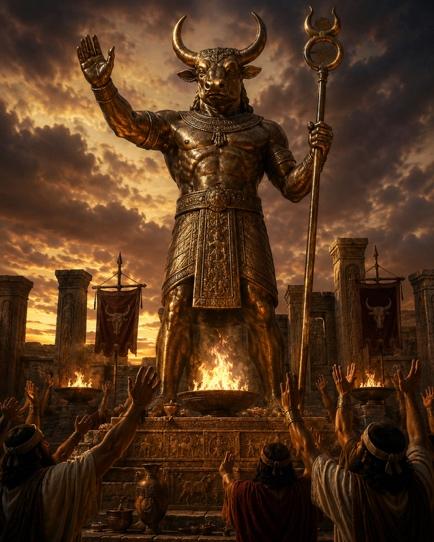
Rebellion: Idolatry (2:11-13): Another generation grew up who did not know ADONAI or remember the mighty things He had done for Isra’el (2:10). The children of Isra’el did evil in the sight of ADONAI and served the images of Ba’al, the sun and fertility god who was responsible for the rains and brought life (2:11 Hebrew). How tragic that the children of such a loving God should sink to idolatry. Isra’el’s loss of historical memory helps to explain their rebellion. It is a heartbreaking report that we read: They abandoned ADONAI, the God of their fathers, who had brought them out of Egypt, and worshiped various gods of the peoples around them (see the commentary on Deuteronomy Bl – Have No Other Gods) (2:12 Hebrew). The sin was twofold. Not only did they abandon God who had been their Protector and given them their new national home, but they adopted the worship of strange gods. The very description reveals Isra’el’s ingratitude. YHVH is called the God of our fathers (First Chronicles 29:18). There is no reason to limit their fathers to the Exodus generation; the term may well be intended to include the patriarchs. All the pre-Exodus stories (beginning with Exodus 12) highlight ADONAI’s faithful preservation of His fragile people (Psalm 105:12-15). Otherwise there would have been no Isra’el. Moreover, YHVH is the One who brought them out of the land of Egypt (Exodus 20:2; Deuteronomy 5:6; Leviticus 22:33). What but the death and resurrection of Messiah could compare with that? That was God’s mighty act on behalf of a hopeless people. Isra’el had abandoned YHVH! And they provoked Ha’Shem to anger because they abandoned Him and served Ba’al and the Ashtoreth, the Canaanite goddess of fertility and war (2:13).
The Bible is clear; spiritual amnesia produces apostasy. That is why the Word of God is so determined that the Church not forget what ADONAI has done for us (4:9-14 and 6:10-19). So Jeremiah diagnosed faithless Isra’el: They didn’t ask: Where is ADONAI, who brought us out of the land of Egypt, who brought us safely out of Egypt and led us through the barren wilderness, through a land of deserts and ravines, a land of drought and utter darkness, a land where no one travels and no one lives (Jer 2:6). When we allow either God’s quiet keeping, or His dramatic rescue of us to slip into oblivion, we are on our way toward Ba’al.52
Retribution: Divine Judgment (2:14-15): The Israelites ignored Joshua’s charge to faithfully worship the LORD. Instead, they broke the commitment they had made at Shechem (see Joshua Ct – The Renewal of the Covenant). It was inconceivable that after everything ADONAI had done for them, they abandoned Him! What the Israelites did was a breach of trust.53 In His anger against Isra’el, Ha’Shem had become Isra’el’s enemy and He handed them over, literally sold them, to raiders who stole their possessions. He turned them over to their enemies all around, and they were no longer able to resist them as they had done in the days of Joshua. Whenever Isra’el went out to fight, Ha’Shem was against them, causing them to be defeated, just as He had warned (2:14-15 NLT). Rather than destroying the Canaanites, they tried to establish a peaceful coexistence with them, thus exposing themselves to Canaanite religious and cultural influences. James reminds us that anyone who chooses to be a friend of the world becomes an enemy of God (James 4:4b).
Restoration: By the Judges (2:16-18): But then ADONAI raised up judges, who rescued (Hebrew: yasha) them from the power of those who were plundering them (2:16 CJB). One would think that when the Israelites witnessed God raise up judges to rescue them, they would have realized the only way to be protected would be to repent. Instead, they didn’t pay attention to their judges, but instead they committed spiritual adultery with other gods and worshiped them only a few years after the death of the elders. Isra’el is the wife of ADONAI (Isaiah 54:5; Jeremiah 31:32; Hosea 2:19-20), and the gods of their new worship were lusty fertility gods, whose worship included erotic, cultic rituals. And Isra’el’s enthusiasm was seen by the fact that they quickly turned away from the path on which their ancestors had walked, and failed to obey ADONAI’s mitzvot. When ADONAI raised up judges for them, He was the judge and rescued them from the hands of their enemies for as long as he judged. For ADONAI was moved to pity by their groaning under those oppressing and crushing them (2:17-18 CJB).
Rebellion: Return to Idolatry (2:19): But when the judge died, the people returned to their corrupt ways, being even more corrupt than those of their ancestors, following other gods, serving and worshiping them. They refused to give up their evil practices and stubborn ways (2:19 NIV). Each generation outdid the previous generation in their Canaanization, spiraling downward into even worse apostasy. There was indeed a cyclical pattern of decline and rise during the period of the judges, but the cycles themselves devolved on a downward pattern. The patterns repeat themselves, but, the behavior of the Israelites intensifies so that each time Isra’el repented, it did not reach the spiritual level of the previous ones. Over the course of time, the apostasy grew worse until judges, such as Jephthah and Samson, became part of the problem, if not the cause of the problem, as with Gideon. The judges, then, represented a stop-gap intervention by YHVH into the repeated process of Canaanization,54 because the apple of His eye acted like they belonged to Ba’al.
Retribution: The Wrath of God (2:20 to 3:6): By repeating verse 14, verse 20 emphasizes how angry YHVH was with Isra’el. Therefore the anger of Ha’Shem burned against Isra’el. This completed the divine judgement that began in verse 14. He accused this nation. Here, Ha’Shem called Isra’el ha’goy-ha’zeh, a term that showed God’s alienation from Isra’el. The word goy (meaning Gentile nation) is seldom used of Isra’el. But when it is, it often (not always) carries with it the concept of reprimand for becoming like a Gentile, and acting as though she doesn’t have a covenant relationship with ADONAI. Basically, YHVH accused Isra’el of violating the Torah. And He declared: Because this nation has violated My Covenant (see the commentary on Exodus Dd – The Mosaic Covenant) that I made with their ancestors and has not obeyed My mitzvot (2:20 NLT).
Next, Ha’Shem declares that He will no longer drive out the nations that Joshua left unconquered when he died (2:21 NLT). God then placed a suspension to His own involvement in His holy war against the Canaanites (see Deuteronomy Ag – The Problem of Holy War in the TaNaKh). As a result, in none of the wars in the book of Judges is there a conquest of totally new territory. When a new territory or oppressor was overthrown, there was merely a regaining of an area that Joshua had already taken. In other words, there was no expansion of Isra’el’s borders anywhere in the entire book. Isra’el has never possessed the land promised by ADONAI in its entirety, but she will when the Messiah returns to set up His Messianic Kingdom (see Revelation Fj – My Chosen People Will Inherit My Mountains).55 This is not a contradiction of Exodus 23:29-30 or Deuteronomy 7:22. There is a difference between not exterminating the Canaanites all in one year and not exterminating them at all. Earlier YHVH said He would not clear the land right away, but step-by-step, so the land would not become ruined. So, one motive has to do with the well-being of the land; but the other has to do with the delivery of divine discipline. All this shows the conditional nature of the Torah.
This is how I will test Isra’el, to see whether or not they will keep the way of ADONAI, living according to it, as their ancestors did (2:22 CJB). This verse states the reason that ADONAI considered it necessary that Joshua should leave some of the Canaanite nations unconquered. Thus, there were two reasons for Ha’Shem not driving out the Canaanites. The first reason was to punish Isra’el for her sin; and secondly, to test Isra’el. Would she reject idolatry and obey the Torah?
Verse 23 gives the result of God’s judgement. So ADONAI allowed those nations to remain where they were and did not drive them out at once. The threat in verse 21 was not the suspension of wrath, but of any further extermination of the Canaanites. The implication here is that Ha’Shem would not exterminate any more Canaanites as long as Isra’el persisted in her spiritual idolatry. However, if Isra’el repented and turned back in obedience to ADONAI, then He would once again empower her to exterminate the Canaanites. It reaffirms the fact that enjoyment of the land was conditional on her obedience (see Leviticus Ex – Blessings for Obedience). Or allow Joshua to conquer them all (2:23 Hebrew). This shows God’s control over the destiny of nations. If Joshua didn’t finish the task of driving out the enemy, it was because YHVH had not allowed it. And the reason for this was given back in verse 22, this is how I will test Isra’el.56
There were two reasons YHVH didn’t destroy all the Gentile nations in Canaan. The first reason was to test Isra’el. These were the nations that Ha’Shem left to test those Israelites who had not experienced any of the wars in Canaan (3:1 NLT). Secondly, it was to learn the art of war. He did this to teach warfare to the generations of Israelites who had no experience in battle (3:2 NLT). Again, the third generation (see Am – The Joshua Generation Dies) occupying the land had not experienced war. So, they had to learn the art of war for the future wars with the Canaanites. During the wars in Canaan, Isra’el, under Joshua, had learned the power to conquer her foes. However, this power didn’t consist in overwhelming numbers or the bravery of the Israelite fighting men, but solely in the strength of their God, which was only available when Isra’el was obedient to the Torah. Joshua was not victorious by his own strength, but by the power of Ha’Shem. But this new generation had forgotten the true basis for victory, and so it was necessary to teach them how to fight a holy war. Disobedience would not only bring defeat, but also subjugation by those same Canaanites.
Then ADONAI names the specific nations, beginning with the five lords of the Philistines that would be left in the land. These are the nations: the Philistines (those living under the five Philistine lords), all the Canaanites, the Sidonians, and the Hivites living in the mountains of Lebanon from Mount Ba’al-Hermon to Lebo-Hamath (3:3 Hebrew). The Hebrew word for lords is seren. It is the only use of the kings of the Philistines, except once. Seren corresponds to the Greek word tyrannos, well known in Greek classical writings. This shows that the Philistines had recaptured the cities that they had lost in 1:18. The divine purpose for the continued presence of these opposing nations is restated in the next verse.
The divine purpose for the continued presence of those Canaanites is then reiterated. They were left to test the Israelites to see whether they would obey ADONAI’s mitzvot, which He had given their ancestors through Moses (3:4 NIV). The test was not for God, Who sees all things, but rather for Isra’el to give them an objective standard that would measure the level of their obedience or depth of their disobedience, which deserved His justice. The test for the new generation of Israelites was whether they would obey the commandments of God given in the Torah. If they were to obey the mitzvot of the Torah, they would, at the same time, learn the art of war successfully.
However, verses 5 and 6 record Isra’el’s failure to do so. Unfortunately, the people of Isra’el continued to disobey the Torah (see Deuteronomy Ca – Warning Against Idolatry), the command to conquer and destroy those enemies. They continued to live among the Canaanites, Hittite, Amorites, Perizzites, Hivites, and Jebusites. The second failure, in 3:6, was intermarriage: and they took the evil daughters of the pagans around them in marriage and gave their own daughters to the evil sons of those same pagans. But even worse, the Israelites served those evil pagan gods (3:5-6 NIV). These two verses provide the theme of the whole book of Judges; the Canaanization of Israelite society in the areas of religion, ethics, and morality.57 Isra’el’s unfaithfulness resulted in the loss of His blessing.
The message of apostasy from God has great contemporary significance. In this regard, the idol of self is rampant today. Selfies are taken everywhere, and the “me” generation is upon us. The self is set at the center of existence as a god, ultimate significance is found in godlike individual autonomy, in self-set goals and boundaries. The sacred is defined in the first instance in relation to the self. Self-expression and self-actualization are important themes in this “religion,” which is evident in our society from the advice of podcasters where the point seems to be no longer to be community or society, but to “find oneself,” and to be the best person that one can be. This narcissistic society constantly promotes self over all others. At every turn it constantly encourages pursuit of personal happiness and gratification. It urges ignoring, and if necessary, dispensing with whoever or whatever stands in our way in the quest for personal satisfaction – whether it be husbands and wives, children, a pregnancy, the aged, the poor, and so on. The idol of the self supports sex as the autonomous individual’s quest for self-fulfillment.
In our narcissistic society, however, the worship of self is a deeply dysfunctional and wicked one. Idols cannot liberate; they can only bring oppression. As believers, ADONAI is the only true God, and He should be at the center of our lives. We must reject the worship of self. But, unfortunately, the old gods are still with us. They have simply changed their clothes so that they can merge more easily into our modern world. They still claim to provide meaning to life, to explain the universe, and to provide the basis for personal security. They still demand wholehearted commitment from their worshippers. We ought to be free of them, for in reality, a God-centered world view provides the only basis for such freedom.
Finally, it is important to note that the gods behind the idols of this world are no less demonic than those of the ancient world. Ultimately it is the god of this world (Second Corinthians 4:4), Satan himself, who stands behind these gods and demands allegiance with all of the oppressive overtones and chains contained in that commitment. What are we to do? The Word of God tells us not to conform to the pattern of this world, but to be transformed by the renewing of our minds. Then we will be able to test and approve of what the will of ADONAI is good, pleasing, and perfect (Romans 12:2).58
Dear heavenly Father, praise You who are eternally wise, almighty in power, totally righteous – yet you came down to earth to bless and forgive by offering the fullness of life to all who choose to love You. Sometimes life seems to get in a downward cycle of problems and then trials, then another issue. There is a solution to downward cycles is to look up to the Lord. It is so much better to have a friend with you during a trial. Then the trial is much easier to bear. God calls His children to draw near. Draw near to God, and He will draw near to you (James 4:8a). Gideon did not understand why Isra’el was having such a hard time with Midian overpowering them and he wondered where God’s love was that had delivered them from Egypt. Then the angel of ADONAI appeared to him and said to him, “ADONAI is with you” (Judges 6:12a-b). What a joy that the cycle of sin can be broken by turning away from sin, drawing near to You, God, and walking in obedience to Your ways! In Messiah’s holy Name and power of His resurrection. Amen
Leave A Comment