




The Incomplete Conquest
1: 1 to 2:5
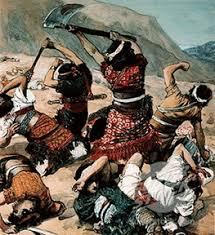
As Michael Hattin relates in his book Judes, the Perils of Possession, the book of Judges follows the book of Joshua seamlessly. In Joshua, the people of Isra’el crossed the Jordan River, entered the Promised Land, and began the process of conquering it (see the commentary on Deuteronomy, to see link click Ag – The Problem of Holy War in the TaNaKh). This involved major battles against coalitions of Canaanite kings, each of whom ruled over a petty city-state. First, the southern hill country was conquered, followed by the northern part of the country. Only then, did the settlement of the Land begin in earnest.
While the actual warfare in the book of Joshua lasted for a relatively short time, the settling of the Land took centuries. Only the initial stages are described in the book of Judges – the allotment of territory to the tribes of Isra’el and their first halting steps in clearing the land and cultivating its slopes. Joshua died with much of the task incomplete.
The book of Judges begins where the book of Joshua ends. With the aged leader no more, the tribes of Isra’el naturally turn inwards, more concerned with their own fate than with a larger vision of the people as a whole. Each tribe must fend for itself; some were more successful in wresting their territory from the grip of the Canaanites, and some less. Joshua may have smashed the Canaanite military coalitions, but the Canaanite people and their culture remained intact. When the tribes of Isra’el fell prey to Canaanite idolatry and its associated values, retribution was swift and harsh. It took the form of Gentile oppressors, regional despots, who overran one or more tribes and imposed tyranny.6
Leave A Comment