




The First Cycle: Othniel
3: 7-11
The first cycle: Othniel DIG: What was so evil about the Ba’al’s and the Asheroth (1 Kings 23-24; 2 Kings 23:4-7)? Who was Cushan-Rish’athayim and how powerful was he? What role does the Ruach play in Othniel’s deliverance from the Arameans? What contrast can be drawn between Othniel and Samson?
REFLECT: When have you burned with rage? Yearned for peace? How was the Lord involved? What cycles have you gone through? Is it easy or hard for you to repent? Is there anything that is keeping you from repenting right now? Do you feel like you have to be an Othniel? Or can you be content with faithfulness?
Othniel’s ability to deliver Isra’el was only the result of the empowerment of the Spirit.
As Warren Wiersbe relates in his commentary on Judges, the weapons we fight are not the weapons of the world. This statement could have been made by a space alien in a science-fiction novel, but it wasn’t. The apostle Paul wrote those words to the believers in Corinth (Second Corinthians 1-:4), reminding them of a principle every believer needs to take to heart: When Ha’Shem goes to war, He usually chooses the most unlikely soldiers, hands them the most unusual weapons, and accomplishes through them the most unpredictable results. For example, Ha’Shem gave Shamgar an ox goad, and with it he killed six-hundred men (3:31); Jael used a hammer and a tent peg to kill the general of Jabin’s army (4:21); Gideon routed the whole Midianite army with only trumpets, jars and torches as weapons (7:19-20); Samson slaughtered a thousand Philistines using the jawbone of a donkey (15:15), and young David killed the giant Goliath with a stone hurled from a shepherd’s sling (First Samuel 17:40b-51a). Though our world has changed dramatically since the days of the judges, the world system is still the same because human nature hasn’t changed (First John 2:15-17). As long as we’re in this world, God’s people are involved in a spiritual battle against Satan and his demons (Ephesians 6:10-19), and our Lord is still looking for men and women who have what it takes to win that spiritual battle: the power of God as seen in Othniel (3:7-11), the effective strategy of Ehud (3:12-30), and the persistent courage of Shamgar (3:31).60
Rebellion (3:7): The first cycle begins with the negative fact that the Israelites did what was evil in the sight of YHVH, and forgot ADONAI their God (3:7 Hebrew). This is a very common phrase, found in many books of the Bible, to express the faithlessness and ingratitude of the Israelites when they abandoned His worship for that of false gods. And served the images of Ba’al and the Asherah poles (3:7c Hebrew). Thanks to archaeological discoveries, we now know that Ba’al was in fact the most important member of the Canaanite pantheon. He was avidly worshiped throughout the land as the god of storms, wind, and rainfall; his weapon of choice was the thunderbolt. Asheroth is the plural of Asherah, both forms indicate a female goddess, the consort of Ba’al and the goddess of fertility (cf. Judges 10:6; First Samuel 7:4 and 12:10).61 Those Asherah groves (Deuteronomy 16:21; Judges 6:26; Second Kings 13:6, 17:10, 23;6, and 23:15) were probably regarded as a dwelling place of the deity. The name was transferred to the deity itself from the idols of this goddess, which consisted of wooden columns called the Asherim, hence Asherah or the Asherah poles – wooden poles, or tree trunks – which were set up beside the pagan altar, and used as an object of worship.62
Of course, Ba’al and Asherah could easily tolerate the inclusion of other gods in the pantheon, even the God of Isra’el. In polytheism, there is always room for more gods. But the reverse was not, and is not, possible (see the commentary on Deuteronomy, to see link click Bw – Sh’ma Isra’el). Since ADONAI is the absolute and transcendent One, neither dependent upon the whims of fate nor subject to its limits, the worship of any other forces – even when these could be understood as being ultimately subject to His authority – is intolerable. But what developed in ancient Isra’el, under the pervasive influence of Canaanite culture, was the combining of His worship with the Canaanite gods, a process known as syncretism.63
Retribution (3:8): The author begins with the cause of Isra’el’s retribution. Then Ha’Shem burned with anger against Isra’el. Are we surprised that God became angry? And He turned them over to Cushan-Rish’athayim (meaning doubly-wicked Cushan), king of Aram. Aram, rendered Syria in the LXX (the Septuagint, the “official” Greek translation of the TaNaKh), is the name given to the area populated primarily by the Arameans, one of the most powerful ethnic groups in the late second and early first millennia. The territory extended from northeast of the Sea of Galilee to the Taurus mountains in the north and eastward beyond the Habur tributary of the upper Euphrates River. Rish’athayim literally means, Syria of Two Rivers, and it refers to the very fertile land that lies between the Orontes River and the Euphrates River, or two rivers. Four times in Judges we’re told that Ha’Shem “sold” His people to the enemy (2:14, 3:8, 4:2, and 10:7; cf. First Samuel 12:9; First Kings 21:20 and 25, Psalm 44:12). The Jews acted like slaves, so YHVH treated them like slaves. Had they been faithful to God, He would have sold their enemies into their hands (Deuteronomy 32:20). For Cushan to have extended his tentacles as far as Judah in southern Canaan meant that he was a world-class emperor, who held the Israelites in his grip for at least eight years (3:8 NIV). He was the most powerful of all the enemies of Isra’el named in the book of Judges.64
Repentance (3:9a): There’s no evidence that the people of Isra’el repented when they cried out to ADONAI (3:9a NIV). It took eight years before Isra’el realized that continuing to worship Ba’al and Asherah was of no benefit to them and wouldn’t free them from oppression. Today, we have an instant remedy for our sin: If we claim to be without sin, we deceive ourselves and the truth is not in us. But if we confess our sins, He is faithful and just to forgive us our sins and purify us from all unrighteousness (First John 1:8-9).
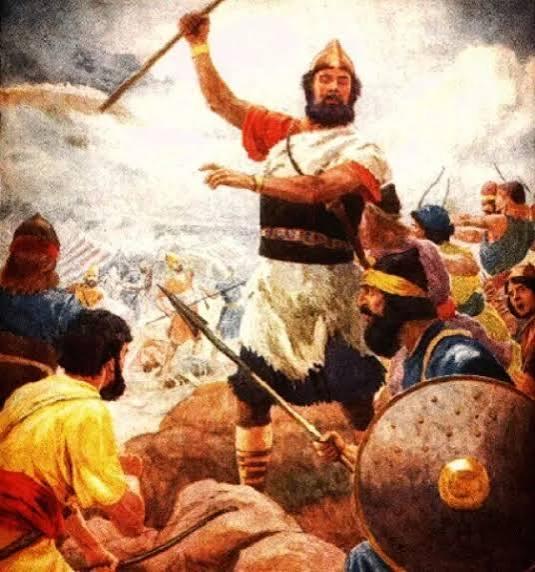
Restoration (3:9b-10): What is the most striking in the cycle is the irony of ADONAI’s response. Even in God’s anger, there is hope for Isra’el, for He will not allow Isra’el to serve Ba’al forever. While Isra’el actively sought appeasement with their Canaanite neighbors, preferring spiritually sinful coexistence, Ha’Shem consistently thwarted any possibility of a long-term relationship by introducing judges, or deliverers. In the scene first seen here, but replayed many times throughout history, the people of Isra’el painfully discover that, try as they might, they cannot abandon their unique mission on the earth (see the commentary on Genesis Dt – I Will Bless Those Who Bless You), neither by passive detachment nor, like Jonah, by actively running away (Psalm 139:7-8).65
The LORD responded to their plight and raised up one who would rescue them (3:9b NIV). It was the Exodus experience all over again: God heard their groaning and He remembered His covenant with Abraham, with Isaac and with Jacob. So God looked on the Israelites and was concerned about them (2:24-25). The Hebrew word for deliverer or savior is movshia, a word used in three different ways. First, in the book of Judges, it is used by heroic men (and Deborah) who save the nation in time of war. Secondly, movshia is used of YHVH (Isaiah 43:11, 45:15 and 21). And finally, it was also used by Isaiah of the Messiah in Isaiah 19:20. The name of the deliverer here was Othniel, a Kenizzite, and a relative of Caleb (3:9b NIV).
When God called Othniel, he was available and the Spirit of ADONAI came upon him (NIV). This is the first time that the supernatural empowering of the judges is revealed. Not by force, and not by power, but by My Spirit, says ADONAI-Tzva’ot (Zechariah 4:6 CJB). This was the secret of Othniel’s strength, as it was with Gideon (6:34), Jephthah (11:29), and Samson (14:6 and 19, 15:14); and it must be the source of our power today: But you will receive power when the Ruach Ha’Kodesh comes on you; and you will be My witnesses in Jerusalem, and in all Judea and Samaria, and to the ends of the earth (Acts 1:8).
Othniel’s ability to deliver Isra’el was the result of the Spirit, but there is no stereotyped formula. It is always used in the context of being empowered to accomplish a specific task or mission. It is noted that the Spirit of ADONAI took possession of Gideon (RSV), and He began to stir, impel, or rush upon Samson (13:25, 14:6, 19, and 15:14). Since Shavu’ot, the Spirit of Truth resides permanently in every believer (see the commentary on Acts Al – The Ruach Ha’Kodesh Comes at Shavu’ot).66 The result of Othniel’s empowerment and mission was twofold: First, he judged Isra’el; and secondly, he went out to war, and ADONAI gave him victory over Cushan-Rishathaim king of Aram (3:10 Hebrew). Just as God gave Isra’el into the hands of their enemy, He then gave Isra’el’s enemy into the hands of their deliverer.
Rest (3:11): So there was rest (peace) in the Land for a generation, about forty years. This round number signifies a generation, during which time the achievements of the judge had the effect of keeping grateful people loyal to ADONAI. What was obvious is that the repentance of this generation failed to transmit to the next generation. Only once did rest last for eighty years, and in that instance, it extended for two generations. Otherwise rest lasted for either forty years or even less: here in 3:11, forty years; Ehud in 3:30 for eighty years; Deborah in 5:31 for forty years; Gideon in 8:28 for forty years; Tola and Jair in 10:2-3, combined had rest for forty-five years; A combination of Jephath, Ibzan, Elon, and Abdon in 12:7-14 had peace for thirty-one years; and Samson in 16:31 had rest for twenty years. Notice the general downward progression. This first cycle lasted until Othniel son of Kenaz died (3:11 Hebrew).
As Michael Hattin relates in his commentary on Judges, Otniel’s successful tenure also points to a popular misconception concerning the political situation during the period of the judges. Unlike his predecessor Joshua, Otniel is most certainly a regional leader. There is no indication whatsoever that he exercised any sort of national rule, and everything that we know about him and his exploits places him within the southern region of the tribe of Judah. In other words, as the first of the judges, Othniel introduces us to a new period in Israelite history, an era during which the tribes act independently and are the objects of external threats that tend to be confirmed to particular areas of the land. Rarely did any judge transcend his tribal affiliation to achieve more widespread rule, certainly not for sustained periods much beyond the immediate necessities of the hour of battle. Though the text invariably speaks of Isra’el straying from God and of oppressors harshly ruling over Isra’el, the dynamics at play were local. Isra’el didn’t stray from ADONAI as a consequence of some sort of widespread movement decided upon in a national poll, but rather because in every region of the land there were Canaanites whose cults attracted the surrounding, local Israelites to their way of life. Therefore, to be more accurate (if less dramatic), it was tribes of Isra’el that strayed from God. Cushan-Rish’athayim and the other oppressors that followed him did not subjugate Isra’el as a nation, but only a tribe or two that were the focus of their oppressive campaign.67
When people think about the book of Judges, most of us have heard of Samson. But only a few, if any, have ever heard of Othniel. It is a great irony that the worst of the judges in moral character and success in delivering Isra’el is the best-known judge, while the ideal judge is virtually unknown. The Bible gives us numerous examples of men and women who walked with God, but Othniel stands out because of his simplicity. In spite of those things that might hold believers back, Othniel serves as an example of one who was not limited by his background as a Kenizzite, a minor, lesser-known clan or nomadic people that eventually blended into the tribe of Judah. Background should not limit our service to Messiah. No matter what our human deficiencies, we can be faithful to God’s calling in our lives. In the book of Judges, besides possibly Joshua (2:8), Othniel is the only man who is pictured so positively, but he is the least known.
In an age when many choose a different path, not uncommonly bringing on themselves oppression that is the result of sin (like a Cushan-Rish’athayim), it is wonderful to see a model like Othniel who simply walks in tandem with ADONAI and overcomes evil. While it is inferential from the text, it is apparent that like any godly believer throughout the ages, Othniel loved his fellow Israelites. He could not stand by and watch them suffer. In other words, his motives were not self-seeking but seeking others. He acted, and this is really important, in accordance with the Lord’s will – YHVH raised up a deliverer, a savior (Hebrew: mosbia). If we walk with ADONAI and our eyes are on the needs of others rather than our own self-interests, we will want to act in accordance with God’s will. The simplicity and faithfulness of Othniel is in radical contrast to the complexity and self-gratification of the final judge of the book of Judges, Samson. The message is not that we “ought to be an Othniel.” Rather, we should demonstrate faithfulness to God’s call for us, whatever it is.
Ultimately, this first cycle serves to bring glory to God. While the human character is Othniel, this passage is not a biography about him. Instead, the human character highlights ADONAI’s involvement in the affairs of His people. In Othniel’s day Ha’Shem punished evil, had compassion on His people, and brought restoration and rest; Othniel was simply God’s tool to accomplish those results. So also today, God still acts to punish evil, and He still has compassion on His people and still brings restoration and rest.68
Dear heavenly Father, praise You for being such an awesome Father. The greatness of Your love and wisdom inspires me to walk closely with You, listening carefully to everything with a joyful heart of love for You. The eyes of the heart of Caleb’s nephew Othniel clearly saw what others did not see. He saw the greatness and power of Isra’el’s almighty ADONAI! His heart was in the right place and he wisely turned away from his ancestry background of worshiping false idols, and turned to follow You, ADONAI, the One and only living God! Knowledge of the Almighty must move into the heart to offer worship and praise to the One and only Living God who works wonders to save His people. Othniel had this faith, like his uncle Caleb’s strong faith. They took knowledge and transferred what he knew to be true into a response of action that trusted You in all circumstances. May this generation living now follow Messiah’s example to believe and to follow you at all costs for you are such a wonderful heavenly Father! In Messiah’s holy Name and power of His resurrection. Amen
Leave A Comment