




Obedient to Death
2: 5-8
Obedient to death DIG: Where do we find the pre-existence of the Messiah in the B’rit Chadashah? Where do we find the death of Messiah in the TaNaKh? What does having the same attitude or mind-set as Messiah Yeshua mean to you? What was a bond-servant? Which of the eight steps seem most important to you personally? What did Messiah give up during His incarnation? Why was death on the cross necessary?
REFLECT: Is there something a friend is facing that makes you uncomfortable? Someone searching for answers you don’t have? Be there. Hold a hand, offer a shoulder to cry on, or child care, or even a meal. Give them what you have, which is Yeshua’s love. In what ways did Yeshua serve others? How do you think this affected what Yeshua thought of Himself? What does His life teach us about demanding our rights?
That old rugged cross is now a tree of life.
Verses 2:5-11 represent a “Messianic Hymn” which tells of the coming of the Messiah into a world as a servant, His death on a Roman cross, and His exaltation to being Lord of all creation. The detailed structure of the hymn itself has been the subject of endless debate. But at a basic level the structure is actually rather clear. After the initial command to have the same attitude as Yeshua (2:5), the first half of the hymn describes what Messiah did (2:6-8). This description is centered on three main verbs with Yeshua as the subject: (1) He did not consider equality withGod something to be used to be possessed by force (2:6b); (2) Rather, He emptied Himself (2:7a); and (3) He humbled Himself (2:8b).
The second half of the hymn describes what ADONAI did. (to see link click Aw – The Exalted Son). He highly exalted Yeshua and gave Him the name above all other names (2:9). Their two-fold purpose is so that every knee will bow (2:10), and every tongue confesses that Yeshua Messiah is Lord (2:11a). The ultimate result of all this is that God the Father is glorified (2:11b). The two key texts from Isaiah form the background to this “Messianic Hymn.” The first is Isaiah 45:14-25, part of which Paul quotes in 2:10-11. In its original context Isaiah 45:14-25 emphasizes that salvation is found in Yeshua, who alone is the true God. By applying this language to Messiah, Paul boldly asserts that Yeshua is YHVH in the flesh, God with us (see the commentary on Isaiah Cb – The LORD Himself Will Give You A Sign). The second text is Isaiah 52:13 to 53:12, which describes the Suffering Servant (see below). Although Paul does not explicitly quote from this passage in 2:6-11, he does allude to and echo its language and themes at several points.
Have this mindset among yourselves, which is yours in Messiah Yeshua (Philippians 2:5). Paul now builds a bridge between the exhortation of 2:1-4 (see Au – To Model the Messiah) and the Messianic hymn of 2:6-11 by repeating the same key verb: have the same mindset (Greek: phroneo) and connecting it with the Person and work of Messiah Yeshua. This mindset must be among yourselves, emphasizing the communal aspect of the shared mindset in Yeshua Messiah which he goes on to describe in 2:6-11. From Paul’s perspective, it is possible for believers to have the mindset that was in Messiah Yeshua because Messiah Yeshua Himself dwells in believers. Therefore, the issue is not simply one of imitation, but imitation supported by imputation (see the commentary on The Life of Christ Fr – Jesus the Bread of Life) and indwelling.
As Paul taught of Yeshua’s flawless example of humility, he also recorded Messiah’s descent from heaven to earth, describing the exalted position that He had left, then presenting a series of eight downward steps from that glory and honor to ever-increasing indignity.
Who, being in the very form of God (Philippians 2:6a; also see Genesis 1:26-27; Second Corinthians 4:4; Colossians 1:15). This verse begins the Messianic hymn that is one of the most well-known sections in the whole letter. The hymn begins with the clause: Who, though He was in the form of God, referring back to Messiah Yeshua in the previous verse. By saying that He was in the very form of God, Paul is indicating that Messiah did something unexpected. His point, then, is that though we might expect that someone who was in the form of God to think that he was equal with God . . . but Yeshua did not. Within Greco-Roman culture (as the Philippian church certainly was) and its prized status and the pursuit of honor, it would be surprising that one who was in the very form of God didn’t regard that status as an opportunity for selfish gain. Immersed in a Greco-Roman culture that cut its teeth on stories of the gods using their powers and privileges for their own selfish gain, the picture of one who was fully divine deliberately not acting in this manner – indeed, laying aside His divine privileges for the everlasting good of His creatures – would have been a startling contrast to what their native world view taught them.71
Step one: Even though Messiah was in the very form of God, He didn’t consider equality with God something to be used to be seized by force (Greek: harpagmos, meaning robbery) (Philippians 2:6b). Why would Paul speak of robbery? It is surely because the attack on the Messiah had already begun. When the Church began, Satan attacked the divinity of the Son of God saying that He’s just a man like every other man. But even the Jews understood His claim of divinity. That’s exactly why they handed Him over to the Romans to be crucified. So, who are the real robbers here? They are those who rob Messiah of His true nature. First John 4:3 tells us that every spirit which does not acknowledge Yeshua is not from God; such a person is the spirit of the antichrist. Nevertheless, from His exalted position as God in heaven, Messiah’s first step downward was not to consider equality with God something to be used to be seized by force. Although He continued to fully exist as God, during His incarnation, He refused to hold on to His divine power and rights. Equality with God is synonymous with the preceding phrase form of God. In repeating the declaration of Messiah’s true nature and essence, Paul emphasizes its absolute and incontestable reality. The term equality refers to exact equivalence. An isosceles triangle has two equal sides. In becoming a man, Yeshua did not forfeit or diminish His absolute equality with God.
During His earthly ministry, Yeshua never denied or minimized His deity. He was very clear in acknowledging His divine sonship and oneness with the Father (John 5:17-18, 10:30 and 38, 14:9, 17:1, 21-22, and 20:28), His authority over all flesh and the power to give eternal life (John 17:2), and His divine glory which [He] had with [the Father] before the creation of the world (John 17:5). Yet, He never used His power or authority for personal advantage, because such rights of His divinity were not something to be seized by force. That was the choice that set the Incarnation into motion. He willingly suffered the worst possible humiliation rather than demand the honor, privilege, and glory that were rightly His. Nor did He use the powers of His undiminished sovereign deity to oppose the purpose and will of His Father because the price was too high.72
This pre-existence of Messiah was a familiar concept in rabbinic Judaism (see The Life of Christ Af – The Memra of God), so it’s unnecessary to resort to the idea that Paul is drawing on pagan notion of a “heavenly man” who descended and carried through a mission of redemption for mankind. The TaNaKh provides more than sufficient ground for this passage in its teaching about Adam (Genesis 2:4 to 3:22) and the Suffering Servant of ADONAI (see the commentary on Isaiah Iy – The Death of the Suffering Servant); there is also no need to resort to explanations that assume Hellenistic or Gnostic influence. More problematic for Judaism is the Messiah’s equality with God (see Aw – The Exalted Son).73
Step two: In the next step downward, Yeshua continued not to cling to His divine privileges. Rather, He emptied Himself (Is 53:12) like the cup of redemption at Passover (see The Life of Christ Kk – The Third Cup of Redemption), by taking the very form of a servant (Phil 2:7a; Is 52:13-14 and 53:11). It must always be kept in mind that Messiah emptied Himself of His prerogatives of deity, not of His deity itself. He was never anything, and will never be anything, but fully and eternally God, as Paul was careful to state in the previous verse. All four Gospels make it abundantly clear that He did not abandon His divine power to perform miracles, to forgive sins, or to know the minds and hearts of people. Had He stopped being God (which is an impossibility), He could not have died for the sins of the world. He would have died on the cross and remained in the grave, with no power to conquer sin or death. The Son of God emptied Himself of five divine rights.
First, He temporarily divested Himself of His divine glory. He forsook the worship of all believers and angels in heaven and submitted to misunderstanding, denials, unbelief, false accusations, and every sort of abuse and persecution by sinful men. It was not that He forfeited His divine glory, but rather that it was veiled, hidden in His humanity (John 7:5 and 24; Second Corinthians 4:4-6). Glimpses of it were seen in His many miracles, in His gracious words, in the humble attitude that Paul calls for His followers to emulate, and certainly in His ultimate sacrifice for sin on the cross. It was briefly and partially shown to Peter, James, and John (see The Life of Christ Gb – Jesus went up a High Mountain and was Transfigured). But it was not witnessed again until His resurrection and ascension, and then, only by those who belonged to Him.
Second, Yeshua emptied Himself of independent divine authority. The operation of the Trinity is, of course, a great mystery. Within the Godhead there is perfect harmony and agreement in every possible way. Yeshua clearly stated His full equality with the Father when He declared: I and the Father are one (John 10:30; cf. 17:11-12). However, He just as clearly affirmed during His incarnation that I can do nothing on My own. I judge only as I hear, and My judgment is just, because I carry out the will of the One who sent Me, not My own will (John 5:30). In the Garden of Gethsemane on the night of His betrayal and arrest, He pleaded three times: My Father, if it is possible, let this cup pass from Me, yet He followed each request with the submissive: Yet not as I will, but as You will (Matthew 26:39-44). The writer to the Hebrews notes that although He was a Son, He learned obedience from the things which He suffered (Hebrews 5:8).
Third, the Son of God emptied Himself of the voluntary exercise of some of His divine attributes, though not the essence of His deity. He did not stop being omniscient (all-knowing), omnipresent (ever-present), or immutable (unchangeable); yet, He chose not to exercise the full extent of those attributes during His earthly life and ministry. He did, however, exercise some of them selectively and partially. Without having met him, Yeshua knew what book Nathanael was meditating on when He said: Here is truly an Israelite in whom there is no deceit (see The Life of Christ Bp – John’s Disciples Follow Jesus).
Fourth, Messiah emptied Himself of His eternal riches. For your sake He became poor, Paul explains, so that through His poverty you might become rich (Second Corinthians 8:9). Although many have interpreted His poverty as a reference to His earthly economic condition, it has nothing to do with that. The point is not that Yeshua gave up earthly riches, but that He gave up heaven’s riches. As already noted, He forsook adoration, worship, and the service of angels and the redeemed in heaven, because the Son of Man did not come to be served, but to serve, and to give His life as a ransom for many (Matthew 20:28).
Fifth, He emptied Himself temporarily of His unique, intimate and face-to-face relationship with His heavenly Father – even to the point of being forsaken by Him. To fulfill the divine plan of redemption, the Father made Him who knew no sin to be sin on our behalf, so that we might become the righteousness of God in Him (Second Corinthians 5;21). That was the Father’s will, which Yeshua came to fulfill and prayed would be done. But even the brief separation from His Father caused Him to cry out with a loud voice: Eli, Eli, lama sabachthani? that is, “My God, My God, why have You forsaken Me?” It was the horrible prospect of being alienated from His Father and bearing the sin of the world that had caused Him earlier to sweat great drops of blood in great agony, being deeply grieved, to the point of death (Luke 22:44 and Matthrew 27:46).
Just as Yeshua did not cease being God when He emptied Himself, neither do we cease being His children when we empty ourselves as He did (Ephesians 5:1-2). Just as Messiah’s serving obedience made Him pleasing to the Father (Matthew 3:17), so does our serving obedience make us pleasing to Him (Matthew 25:21-23). We are obligated to follow our Lord’s example by emptying ourselves of everything that would hinder our obedience and service to Him.
Step three: The next statement of His descent, as He further emptied Himself, Yeshua forsook the full rights of lordship by taking the form of a bond-servant (Phil 2:7b; Is 49:7 and 53:11), the Suffering Servant of ADONAI. Although He had the inherent form of God (2:6), He willingly took upon Himself the form of a bond-servant (see Exodus Dz – If You Buy a Hebrew Servant). He didn’t merely put on a slave’s garment, so to speak; He actually became a slave in the fullest sense. A bond-servant (Greek: doulos) owned nothing. Not even the clothes on His back. Everything He had, including His life, belonged to His Master. Yeshua did own His own clothes, but He owned no house, no gold or jewels. He owned no business, no boat, and no horse. He had to borrow a donkey when He rode into Jerusalem on Palm Sunday, borrow a room for the Last Supper, and was even buried in a borrowed tomb. The King of kings and LORD of lords became a bond-servant.
Through His provision of salvation, Yeshua served others more completely than any other servant or slave who has ever lived. But He was also an example of servanthood for His disciples. He reminded them that a student is no greater than his rabbi, nor a slave is not greater than his master (Matthew 10:24). And that if I, your Lord and Rabbi, have washed your feet, you should also wash each other’s feet. For I have set an example, so that you may do as I have done to you. Yes, indeed! I tell you a slave is not greater than his master, nor is an apostle greater than the one who sent him. If you know these things, you will be blessed for doing them (John 13:14-17). He declared: The greatest among you shall be your servant (Matthew 23:11). Yet after you have done everything you were told to do, you should be saying, “We’re just ordinary slaves, we have only done our duty” (Luke 17:10b).
Step four: Continuing His move downward, Yeshua was born in the likeness (Greek: homoiama) of men (Philippians 2:7c; Isaiah 52:14 and 53:2). Likeness refers to that which is made to be like something else, not just appearance, but in reality. Messiah was not a clone, a disguised alien, or merely some reasonable facsimile of a man. He became exactly like all other human beings, having all the attributes of humanity, a genuine man among men. He was so obviously like other human beings that even His family and apostles would not have known of His deity had not the angels (Matthew 1:20-21; Luke 1:26-35 and 2:9-11), God the Father (Matthew 3:17 and 17:5), and Yeshua Himself revealed it to them. At the incarnation, He took upon Himself all the frailties, limitations, problems, and suffering there were a result of the Fall, enduring all its terrible earthly consequences. He became hungry and thirsty, suffered pain, and felt sadness. Like other men, He became tired and needed sleep, and although He was completely without personal sin, Yeshua nevertheless was tempted in all things as we are (Hebrews 4:15; cf. Matthew 4:1-11).
Because Messiah was born in the likeness of men, He was subject to physical death. In fact, it was only through His death that He could fulfill His divine purpose of redemption. Again, as the writer of Hebrews explains, Yeshua had to be made like His brothers in all things, so that He might become a merciful and faithful high priest in things pertaining to ADONAI, to make propitiation (the work of Messiah that satisfies every claim of God’s holiness and justice so that Ha’Shem is free to act on behalf of sinners) for the sins of the people (Hebrews 2:17). He came to die.74
Step five: And being found in appearance as a man (Philippians 2:8a; Isaiah 52:14 and 53:2-3) . . . except that He was without sin (Romans 8:3; Hebrews 2:7 and 14), the Word became flesh and Tabernacled among us (John 1:14). Apart from His miracles and the Transfiguration, His pre-incarnation glory (John 17:5 and 24) was hidden. As Isaiah had predicted some seven-hundred years earlier, Messiah was despised and forsaken of men, a man of sorrows and acquainted with grief; and like one from whom men hide their face, He was despised, and we did not esteem Him (Isaiah 53:3). And John wrote: He was in the world, and the world was made through Him, but the world did not know Him. He came to His own, and they did not receive Him (John 1:10-11). Sadly, not even His own brothers believed in Him (John 7:5).75 Then, because Yeshua did not believe in the Oral Law (see the Life of Christ Ei – The Oral Law), the Great Sanhedrin (see the Life of Christ Lg – The Great Sanhedrin), accused Him of being demon posed (see the Life of Christ Gt – Jesus Heals a Man Born Blind) and handed Him over to the Romans to die a cruel and merciless death.
Step six: Continuing this profound description of Messiah’s descent, Paul says that Yeshua humbled Himself (Philippians 2:8b; Isaiah 53:3-4 and 7-8). The emphasis here moves from Yeshua’s nature and form to that of His personal attitude. He was not merely humiliated by the nature and circumstances of His incarnation. Humbled Himself translates tapeinoo, which has the idea of laying low. Messiah not only lowered Himself relative to God, but also to other men. The most dramatic and agonizing time of Yeshua’s self-abasement was during His arrest, trial, and crucifixion. He was mocked, falsely accused, spat upon, beaten with fists, scourged, and had part of his beard painfully plucked out. Yet, He was never defensive, never bitter, never demanding, never accusing. He refused to assert His rights as God, or even as a human being.
Step seven: In His stepping downward, Messiah was willing to suffer humiliation and degradation by becoming obedient to death (Philippians 2:8c; Isaiah 53:7-8 and 12). His obedience and its impact on redemption is the theme of Romans 5:12-19, where the key thought is through the obedience of the One of the many will be made righteous (see the commentary on Romans Bo – The Comparison to Adam). Long before His arrest Yeshua had declared: For this reason the Father loves Me, because I lay down My life so that I may take it again (John 10:17). Because Yeshua’s mind was set entirely on God’s interests, not man’s or His own, He will willingly and gladly became obedient to death. While we were still helpless, at the right time, Messiah died for the ungodly (Romans 5:6).
The Father did not force death upon the Son. It was the Son’s will always to perfectly obey the Father. Yeshua had a free choice. Had He not had a choice, He could not have been obedient. No one has taken [My life] away from Me, He declared, but I lay it down of my own free will, and I have the power to take it up again. This is what My Father commanded Me to do (John 10:18). He was commanded by the Father, but not compelled. As love personified, He became the perfect example of the truth He Himself had declared: Greater love has no one than this, that one lay down his life for his friends (John 15:13).
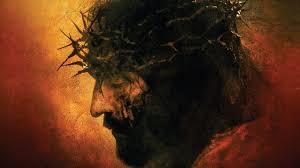
Step eight: In the final feature of His descent and degradation, Yeshua submitted even [to] death on a cross (Phil 2:8d; Is 52:14 and 53:3-8)! There are many ways by which He could have been killed. He could have been beheaded, such as John the Baptist was, or stoned or hanged. But He was destined not for just any kind of death, but for death on a cross. Crucifixion is perhaps the cruelest, excruciatingly painful and shameful form of execution ever conceived (see The Life of Christ Ls – Then They Brought Jesus to Golgotha, the Place of the Skull). It was reserved for slaves, the lowest of criminals, and enemies of the state. No Roman citizen could be crucified, no matter how egregious his crime.76
The Jews considered crucifixion to be a form of hanging and those who were hung to be cursed by God. The Torah demanded that a man’s corpse shall not hang all night on the tree, but you shall surely bury him on the same day (for he who is hanged is cursed by God), so that you do not defile your land which ADONAI your God is giving you to inherit (Deuteronomy 21:23). However, the rabbis recognized the many similarities between Joseph and Yeshua. They believe that Genesis 46:28-29a teaches that there will be two Messiahs. They teach that Joseph would receive the Kingdom before Judah, because Joseph was in Egypt before Judah. They believe that a descendant of Joseph will be the first Messiah, or the suffering Messiah (Isaiah 53), and the second Messiah, a descendant of Judah, and then David, will be the kingly Messiah (Psalm 72). For more details on this Jewish concept, see The Life of Christ Mv – The Jewish Concept of Two Messiah’s.77
But in God’s perfect plan, the crucifixion of His Son not only was acceptable, but mandatory. As Peter declares: He Himself bore our sins in His body on the cross, so that we might die to sin and live to righteousness; for by His wounds you were healed spiritually (First Peter 2:24). In the infinite wisdom of ADONAI, death on a cross was the only way of redemption for fallen, sinful, and condemned mankind. Crucifixion was bloody, as were the Levitical sacrifices that prefigured it. Priests in the service of the Temple were butchers, blood-spattered in their duty. The Lamb of God would also die a bloody death.78
Dear heavenly Father, praise Your awesome love that planned for Your only Son, Messiah Yeshua, to die a painful death on the cross. His death was not an afterthought, for You had planned it from before the creation of the world (First Peter 1:19b-20). Thank You that it was in Your perfect plan the crucifixion of Messiah. It was not only acceptable, but mandatory so that sin’s payment of death (Romans 3:23 and 6:23) would be fully paid. Your grace (Ephesians 2:8-9) offered Messiah’s righteousness in place of mankind’s filthy rags of sin (Isaish 64:6). He made the One who knew no sin to become a sin offering on our behalf, so that in Him we might become the righteousness of God (Second Corinthians 5:21). How wonderful that Your Presence always abides within those who trust in You. You are right there with me to help, guide and to comfort me. No matter how hard the world tries to push against me, Your presence gives me strength no matter the situation. You are such an awesome Father! In Messiah Yeshua’s holy Name and the power of His resurrection. Amen
Leave A Comment