

Di – The Government of the Messianic Kingdom Isaiah 9: 6-7

The Government of the Messianic Kingdom
Isaiah 9: 6-7

The government of the Messianic Kingdom DIG: How does Isaiah define the Messiah? What expectations would this arouse in you if you heard Isaiah pronounce it? What type of Son or Ruler would you expect to arise? How would this be different than in the past? What is the chain of command of the government of the Messianic Kingdom?

REFLECT: Why do you think there are two separate branches of government? How does the B’rit Chadashah interpret what this prophecy means (see Matthew 4:12-17; Luke 1:32; John 8:12)? Of the titles given here, which fit Yeshua as you know Him? How does He reign in your life? Where do you think you will be living during this time?

The chain of command in the Jewish branch of the Messianic government will be from the Messiah,
to King David, to the twelve apostles, to the princes, to the judges and counselors to the nation of Isra’el,
who will rule over the Gentile nations.

For us a Child is born, to us a Son is given, and the government will be on His shoulders. And He will be called Wonderful Counselor, Mighty God, Everlasting Father, Prince of Peace. Of the increase of His government and peace there will be no end. He will reign on David’s throne and over His Kingdom, establishing and upholding it with justice and righteousness from that time on and forever. The zeal of the LORD of heaven’s angelic armies will accomplish this (Isaiah 9:6-7). The Messianic Kingdom will be administered through an absolute monarchy with a definite chain of command and lines of authority. The absolute monarch will be Yeshua Messiah. The delegated authority will be split into two branches: a Jewish branch of government and a Gentile branch, each in turn having a chain of command.

Isaiah 2:2-3 tells us: In the last days, the mountain of ADONAI’s Temple will be established as chief among the mountains; it will be raised above the hills, and all nations will stream to it. Many people will come and say, “Come, let us go up to the mountain of the LORD, to the house of the God of Jacob. He will teach us His ways, so that we may walk in His paths. His rulings will go out from Zion, and the word of ADONAI from Jerusalem” (see my commentary on Isaiah, to see link click ItLook to the Rock from which You Were Cut, and to the Quarry from which You Were Hewn).
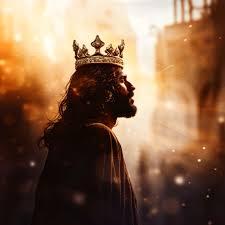
Yeshua the Messiah will rule as King. That Yeshua Messiah will sit upon the throne of David (Jeremiah 23:5-6, 33:14-17) in Jerusalem (Psalm 24:7-10), and rule Isra’el and all the Gentile nations of the world (Isaiah 9:6-7; Zechariah 14:9) is clear from both the TaNaKh (Psalm 2:6-8) and the B’rit Chadashah (Luke 1:30-33). Justice, holiness, and righteousness will characterize His reign so that the innocent will receive justice and the guilty will be condemned (Ps 72:1-19). He will rule as a sovereign monarch with an iron scepter (2:27, 12:5, 19:15), and in the power of the Holy Spirit (Isa 11:1-5). So, Messiah will be both King of Isra’el and King of the world. Under His absolute authority and monarchy there will be two branches of government established, a Gentile branch and a Jewish branch.436

There will be a Gentile branch of government (20:4-6). Both Gentile believers that were raptured before the Great Tribulation and the Tribulation martyrs who were the souls seen under the golden altar of incense in heaven (Revelation 6:9-11), will rule with Messiah during the Messianic Kingdom. The martyrs were beheaded either because they refused to worship the beast or his image, or they refused to take his mark on their forehead or on their right hand. Therefore, the Church and the Tribulation martyrs will co-reign with the Messianic King over the Gentile nations (see the commentary on Revelation FkGentiles in the Messianic Kingdom). They will be Messiah’s representatives and carry out His decrees to the unsaved nations. With Him, they will rule with an iron scepter. Because the Jews are to be regathered in the land of Isra’el and possess it once again, all the Gentile believers will live in the Gentile nations where they will carry out their ministry of ruling with an iron scepter. They will visit Isra’el, visit Jerusalem and worship in the Messianic Temple, but they will live and minister among the unsaved Gentile nations. During the Messianic Kingdom, the different Gentile nations will have kings over them. All kings will bow down to Messiah and all the Gentile nations will serve Him (Psalm 72:11). These kings will have their natural bodies, while the believers ruling over them will have their resurrected bodies. While the kings will have dominion over the various nations, they themselves will be under the authority of the Church and the Tribulation martyrs. Accordingly, in the Gentile branch of government, the chain of command will be from Messiah to the Church and Tribulation martyrs, to the kings of the Gentile nations, and finally, to the Gentile nations themselves.
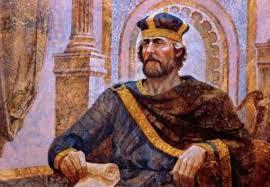
There will be a Jewish branch of government. The absolute monarchy of the Messiah will extend to Isra’el as well as to the Gentile nations. But directly under Yeshua, having authority over all Isra’el, will be the resurrected David, who will be given the dual titles of king and prince. He will be a king because He will rule over Isra’el (Jeremiah 30:9; Ezeki’el 34:23-24, 37:24-25; Hosea 3:5), and he will be a prince because he will be under the authority of Messiah. The Gentile nations will have kings, and Isra’el will have a king. The difference is that the Gentile kings will have their natural bodies, while David will have his resurrected body. On two occasions, Yeshua promised that the twelve apostles would rule over the twelve tribes in the Messianic Kingdom (Mathew 19:28; Luke 22:28-30). We have no idea which apostle will rule over which tribe. The answer to that question will have to wait until the Kingdom comes.

In addition to King David and the twelve apostles, there will be others simply identified as princes. See, the King, the Lord Yeshua Messiah, will reign righteously, and princes will rule justly (Isaiah 32:1 NASB). These princes will be in positions of authority, and their character will be righteous (Ezeki’el 45:8). The resurrected Zerubbabel could very well be among those future princes (see the commentary on Ezra-Nehemiah Ay Haggai: The Strait Talker and AzZechariah: The Visionary).

Judges and counselors will also be appointed in the Messianic Kingdom. ADONAI, says: I will restore your judges as in days of old, your counselors as at the beginning. Afterward you will be called the City of Righteousness, the Faithful City (Isaiah 1:26). This position of authority will be particularly connected to the City of Jerusalem. These judges and counselors will be responsible for ruling justly. There will be no travesty of justice in the Messianic Kingdom.

The final link in the chain of command of the Jewish branch of the messianic government is that Isra’el will rule over the Gentiles. This was part of God’s promise to Isra’el, “For ADONAI your God will bless you, as He promised you – you will lend money to many nations without having to borrow, and you will rule over many nations without their ruling over you” (Deuteronomy 15:6 CJB). Ruling over the Gentiles will be part of Isra’el’s reward for obedience. Moses said: If you listen closely to what the LORD your God says, observing and obeying all his commands which I am giving you today, ADONAI your God will raise you high above all the nations on earth (Deuteronomy 28:1 CJB also see Deuteronomy 28:13 CJB). If Isra’el had been obedient at Yeshua’s First Coming, they would have been able to live in the Land in peace and achieve this goal. But since they were not, God postponed this promise until the Messianic Kingdom.

In addition to the statements found in the Torah, the prophets also describe Isra’el’s future ruling over the Gentile nations. For ADONAI will have compassion on Jacob – He will once again choose Isra’el and resettle them in their own land, where foreigners will join them, attaching themselves to the house of Jacob. Peoples will take and escort them to their homeland, and the house of Isra’el will possess them in the land of the LORD as male and female slaves. They will make their captors captive and rule over their oppressors (Isaiah 14:1-2 CJB also see Isaiah 49:22-23 and 61:6-7).322
2025-07-23T13:12:32+00:000 Comments

Dh – The Seventy-Five Day Interval Dani’el 12: 11-12

The Seventy-Five Day Interval
Dani’el 12: 11-12

The Messianic Kingdom will not begin the day immediately following the last day of the Great Tribulation because there will be a seventy-five day interval. During this time, between the Great Tribulation and the start of the Messianic Kingdom, a number of events will occur. Daniel describes this interval: From the time that the daily sacrifice is abolished and the abomination that causes desolation is set up, there will be 1,290 days. Blessed is the one who waits for and reaches the end of the 1,335 days (Dani’el 12:1-12).

The first half of the Great Tribulation has 1,260 days, which is the same as three-and-a-half years. Sometimes this number refers to the first half of the Great Tribulation, from the signing of the seven-year covenant that the national leaders of Isra’el signs with the antichrist, to the takeover of the Tribulation Temple and the abomination that causes desolation (see the commentary on Revelation, to see link click DrThe Abomination That Causes Desolation). Other times it refers to the second half of the Great Tribulation, from the abomination that causes desolation to the Second Coming, during which time the antichrist will rule the world. The death of the antichrist and the end of the Great Tribulation will come 1,260 days after its midpoint.

However, in this Dani’el passage, two other figures are given. The first is 1,290 days, or an additional thirty days, during which time I believe that the abomination that causes desolation will remain in the Tribulation Temple before it is removed. The second figure is 1,335 days, which is 45 days beyond the 1,290-day period and 75 days beyond the 1,260-day period. A special blessing is pronounced on those who will make it to the 1,335th day. In other words, those who survive the seventy-five-day interval will be blessed by entering the Messianic Kingdom. There will be many who will fail and die during this seventy-five-day interval.321

Nine things will occur during these seventy-five days:

1. The abomination that causes desolation, or the physical Tribulation Temple itself will be destroyed (see Bx – The Tribulation Temple).

2. The antichrist and the false prophet will be thrown alive into the fiery lake of burning sulfur for a thousand years (Revelation 19:20),

3. Satan will be bound in the abyss for a thousand years to keep him from deceiving the nations anymore until the thousand years are ended (Revelation 20:1-3),

4. The sheep Gentiles will be separated from the goat Gentiles (Joel 3:1-3; Matthew 25:31-33).

5. The righteous of the TaNaKh will be resurrected (Isaiah 26:19 and Dani’el 12:2).

6. Tribulation martyrs will also be resurrected (Revelation 20:4).

7. The First Resurrection of believers will take place (Revelation 20:4 and 6 and First Corinthians 15:20-23, and First Thessalonians 4:13-18).

8. The marriage feast of the Lamb will be celebrated (Revelation 19:9; Matthew 22:1-14 and 25:1-13).

9. And the renovation of the heavens and the earth (Isaiah 65:17).

Since it is impossible to determine their sequential order, these events will be dealt with thematically rather than chronologically.

2025-07-22T22:41:50+00:000 Comments

Dg – The Eight Stage Campaign of Armageddon

The Eight Stage Campaign of Armageddon

According to the Bible, great armies from the west and the east will gather and assemble on this plain in the Valley of Armageddon. As the antichrist and his armies approach Jerusalem, God will intervene and Yeshua Messiah will return to rescue His people Isra’el. The Lord and His angelic army will destroy the armies, capture the antichrist and the false prophet, and cast them alive into the fiery lake of burning sulfur (Revelation 19:20). In a sense, Armageddon is a battle that never really takes place. That is, it does not take place in accordance with its original human intent. Its human purpose is to gather the armies of the world to execute the antichrist’s “final solution” to the “Jewish problem.” This is why Yeshua Messiah chooses this moment in history for His return to earth, to thwart the antichrist’s attempted annihilation of the Jews and to destroy the armies of the world. It seems only fitting, in light of mankind’s bloody legacy, that the return of Messiah should be precipitated by a worldwide military conflict against Isra’el. Thus, history is moving toward Armageddon.319 Here, then, are the eight stages of this coming Campaign of Armageddon as written by Arnold Fruchtenbaum’s and his landmark book, Footsteps of the Messiah.

1. The Gathering of the Armies of the Antichrist: This stage will begin with the sixth bowl of judgment recorded in Revelation 16:12-16. With the outpouring of that bowl, the Euphrates River will be dried up. This drying process will be for the purpose of making it easier for the antichrist to assemble his forces for the Armageddon Campaign. Armageddon is a combination of two Hebrew words that mean, the mountain of Megiddo. The city of Megiddo was strategically located on the western end of the Valley of Jezreel (Joshua 17:16). The Bible nowhere refers to this valley as the Valley of Armageddon. So, what is known as the Valley of Armageddon for many believers is actually the biblical Valley of Jezreel. No fighting takes place there. Here the armies of the world will gather for the purpose of destroying all the Jews still living at that time. This will be the program of the counterfeit trinity, but they will unwittingly accomplish the purpose of God.

2. The Destruction of Babylon: Today Babylon is beginning to be rebuilt. One day it will be rebuilt and become the political, economic, and religious capital of the world (Zechariah 5:5-11). With the armies of the antichrist out of Babylon, the sheep Gentiles of the Tribulation (see Revelation, to see link click FcThe Sheep and the Goats) take the opportunity to destroy his capital city. Although there are many more, we will limit ourselves to several important passages in Isaiah and Jeremiah regarding the destruction of Babylon. The prophecies of Chapters 13 and 14, and of Jeremiah 50 and 51 regarding the destruction of Babylon have never been fulfilled in the manner required by the Bible. The Babylon of past history died out slowly and was inhabited again in other generations. But the Babylon of the Great Tribulation will suffer sudden destruction. The means of destruction is explained in 13:1-5. Isaiah saw the gathering of many people in his prophecy against Babylon. The first stage saw the gathering of the forces loyal to the antichrist and Babylon; however, the second stage will see the gathering of those who wish to destroy Babylon. The details of this destruction are given in 13:6 to 14:23. It is extremely important to realize that Babylon has never been destroyed in the manner described in the Bible. For example, the context of 13:6-22 clearly puts the destruction of Babylon during the time of the Great Tribulation. In addition, Babylon’s destruction is connected with the final redemption of Isra’el in 14:1-2. Babylon will be like Sodom and Gomorrah in that it will be uninhabitable for any human (13:19-22). In fact, unlike other nations, Babylon will have no surviving remnant.

Jeremiah 50 and 51 also give clear details regarding the destruction of Babylon. Jeremiah 50:9-10 tells of a gathering army and then in 11-16, the graphic destruction of Babylon. Once again, this annihilation is so final that Babylon will be uninhabitable for any human. According to Jeremiah 50:39-40, it will be like Sodom and Gomorrah. Once again in Jeremiah 50:41-42, the prophet speaks of gathering many people against Babylon and the chapter ends in verses 45-46 with God’s decree against Babylon and the Gentile nations’ distress over the destruction of their world capital. An even more detailed description of the fall of Babylon occurs in Jeremiah 51. Babylon’s negative influence on other nations will cause God to judge her according to Jeremiah 51:7-9, and judgment will be especially severe due to Babylon’s persecution of the people of Isra’el. Because Babylon led the world to ruin, Messiah will now ruin her (Jer 51:25-26). This will bring about rejoicing from the faithful remnant and will be viewed as God’s vengeance against Babylon for her abuse of the Jews in Jeremiah 51:48-49. Jeremiah’s destruction of Babylon closes with the obliteration of Babylon.

There are two indications, both in Jeremiah, that the antichrist will not be present in Babylon when it is destroyed (Jeremiah 50:43 and 51:32). The very fact that he will have to be told that Babylon is destroyed, points to the conclusion that he will not be there when it falls. Otherwise, he would not need to be told. Then, where is he? While he was gathering with the armies of the world in the Valley of Jezreel, his enemies took the opportunity to destroy his capital city.

Before Babylon is destroyed, ADONAI will give five warnings to the Jews still living in Babylon to flee the city before it is too late. All the warnings are in the book of Jeremiah. The first is in Jeremiah 50:6-8, and the second is in Jeremiah 50:28. Those Jews who escape from Babylon will run away to Bozrah. The destruction of Babylon will be God’s vengeance on Babylon for their abuse of His people and His Temple. As the fugitives and refugees arrive from Babylon, they announce the destruction to the Jews living there (Jeremiah 50:10 and 51:45). These are the third and fourth warnings. The fifth and last warning is Jeremiah 51:50. Thus, the Jews living in Babylon will be given warning to flee. They will fervently make their way to Bozrah. The unexpected devastation of the world’s political, economic, and religious capital will cause great anguish on the earth, but not in heaven (Revelation 18:9-24). For when Babylon is destroyed, it means that the Second Coming of Messiah is close at hand, and along with it, the regeneration and restoration of Isra’el.

3. The Fall of Jerusalem: Although his entire army is intact when he receives the news that Babylon has fallen, the antichrist does not move east to demolish his enemies. At this point Satan controls him, and he is fixated on the annihilation of the Jews; the final solution that Hitler was unable to accomplish. So, instead of moving east, the antichrist and his army move south against Jerusalem from the Valley of Jezreel (Zechariah 12:2-3, 14:1-2). All the armies of the world will converge against the Jews in Jerusalem. Once again the City will fall into the hands of Gentiles. Half of the Jews will be made slaves and the other half will remain in the city to await their fate (Zechariah 14:2-4).

Because the LORD will greatly energize the Jews, the antichrist and his army will not have an easy time of it. They will suffer heavy losses. God will make Jerusalem an immovable rock for all the nations. All who try to move it will injure themselves (Zechariah 12:3). The temporary empowerment of the Jews is described in Zechariah 12:4-9 and the battle is further described in Micah 4:11-5:1. Although the Jewish forces prove very formidable, the antichrist, his army, and the armies of the world prevail. After their victory, his soldiers will ransack the houses and rape the women of Jerusalem (Zechariah 14:2). With this, the third stage ends.

4. The Armies of the Antichrist Descend on Bozrah: The main concentration of Jews will be in Bozrah, in the land of Edom, in what today is Jordan. Satan continues to control the antichrist and as far as he is concerned, the main objective of the Campaign of Armageddon is to eradicate the Jews; the armies of the world move from Jerusalem to Bozrah as recorded in Jeremiah 49:13-14. “I swear by Myself,” declares the LORD, “that Bozrah will become a ruin and an object of horror, of reproach and of cursing; and all its towns will be in ruins forever.” I have heard a message from ADONAI: An envoy was sent to the nations to say, “Assemble yourselves to attack it! Rise up for battle!” So the nations of the world gather at Bozrah to destroy the remnant of Isra’el that will be gathered there (Micah 2:12). With the completion of the fourth stage, the last three days of the Campaign of Armageddon, begin the ending of the Great Tribulation.

5. The Regeneration of Isra’el: Because of the rejection of the Messiahship of Yeshua by the nation of Isra’el, there is a condition that must be met before Messiah will return to establish His Kingdom. The Jews and the Jewish leaders must ask Him to come back. There must be a national regeneration and acceptance of the Messiahship of Yeshua Messiah. For this to happen, two conditions must be met. First, there must be a confession of Isra’el’s national sin (Leviticus 26:40-42; Isaiah 53:1-9; Jeremiah 3:11-18; Hosea 5:15), and secondly, a pleading for Messiah to return (Zechariah 12:10; Matthew 23:37-39).

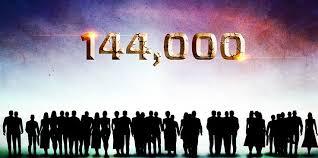
First, there must be a confession of Isra’el’s national sin. With the armies of the antichrist surrounding the city of Bozrah, the Campaign of Armageddon will begin its last three days according to Hosea the prophet: Come, and let us return to the LORD; He has torn us to pieces but He will heal us; He has injured us but He will bind up our wounds. After two days He will revive us; on the third day He will restore us, that we may live in His presence. Let us acknowledge the LORD; let us press on to acknowledge Him. As surely as the sun arises, He will appear; He will come to us like the winter rains, like the spring rains that water the earth (Hosea 6:1-3). It is at that time that the leaders of Isra’el will finally recognize the reason why the Great Tribulation had come upon them. Whether this will be done by the study of the Scriptures, or by the preaching of the 144,000 (Revelation 7:1-8), or by the two witnesses (Rev 11:1-13) is not clearly stated. In reality, it will probably be a combination of these things. But the leaders will come to a realization of the national sin in some way. Just as the Jewish leaders once led the nation to the rejection of the messiahship of Yeshua, they will then lead the nation to the acceptance of His Messiahship by issuing the call of Hosea 6:1-3.

The second facet leading to the Second Coming is the pleading of Isra’el for the Messiah to return and save them from their predicament of having the world’s armies, intent on their destruction, gathered outside of Bozrah. The pleading of the Jews for their Messiah to save them is described in Zechariah 12:10 to 13:1. This pleading will not be confined to the Jews of Bozrah but will include the Jews still in Jerusalem. It will begin with the confession of the national sin, and then they will plead for His return to save them from their plight. They plead for the One they have pierced. This will be the result of the outpouring of the Ruach Ha’Kodesh (Joel 2:28-32). Regeneration is the work of the Spirit of God, and here the nation of Isra’el still alive at that time will be regenerated, creating some dramatic manifestations in their midst (Joel 2:28-29). This will be accompanied by wonders in the heavens as well (Joel 2:30-32). The result of all this is that the Jews of Jerusalem will be delivered and escape as well as the remnant of Bozrah (Isaiah 64:1-12; Psalm 79:1-13; Psalm 80:1-19). In conclusion, during the fifth stage, Isra’el, as a nation, will be regenerated and saved after two days of national confession of sin. On the third day (Hosea 6:1-3) they will plead for the Second Coming of Yeshua Messiah (see Revelation EvThe Basis for the Second Coming of Jesus Christ).

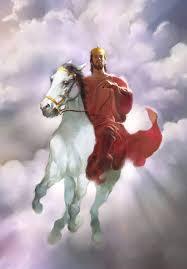
6. The Second Coming of Christ to Bozrah: Yeshua will return at the Jewish request for Him to do so. The initial place of His return will not be the Mount of Olives as is traditionally thought, but the place known as Bozrah (Isaiah 34:1-7, 63:1-6; Habakkuk 3:3; Micah 2:12-13). Zechariah declares that: ADONAI will save the tents of Judah first, so that the glory of the house of David and the glory of the inhabitants of Jerusalem shall not become greater than that of Judah (Zechariah 12:7). With His return to the remnant of Isra’el at Bozrah, Yeshua will indeed save the tents of Judah first before saving the Jews of Jerusalem. The term tents points to temporary dwelling places rather than permanent housing. The fact that Judah is living in tents shows that her home is temporarily elsewhere. The elsewhere is Bozrah. Revelation 19:11-16 describes the manner of His return (see the commentary on Isaiah Kg The Second Coming of Jesus Christ to Bozrah).

7. The End of the Fighting at the Valley of Jehoshaphat: Today the world is uncomfortable with Yeshua Messiah being a righteous warrior. That is why Christmas is more popular than Easter. At Christmas we see a little helpless baby in a manger, but at Easter we are forced to look at the God-man dying for our sins. Before the fall of Jericho, Joshua had an encounter with a theophany, or the preincarnate Yeshua Messiah. Now when Joshua was near Jericho, he looked up and saw a man standing in front of Him with a drawn sword in His hand. Joshua went up to Him and asked, “Are you for us or our enemies?” “Neither,” He replied, “but as Commander of the army of the LORD I have now come.” Then Joshua fell facedown to the ground in reverence, and asked Him, “What message does my lord have for His servant. The Commander of the LORD’s army replied, “Take off your sandals, for the place where you are standing is holy.” And Joshua did so (Joshua 5:13-15). The fact is that Yeshua is the Commander of the army of the LORD. He had the Israelites walk around Jericho seven times, while God fought the battle alone. The same will be true when the Arm of the LORD (Isaiah 51:9, 52:10, 53:1), Messiah Himself, will defeat the armies of the world alone.

Revelation 19:17-20 deals with Messiah as the righteous warrior, for we see Him defeating Satan’s armies in what is often called “the Battle of Armageddon,” but in reality is the War of the Great Day of the LORD of heaven’s angelic armies (Revelation 16:14 CJB). Armageddon means Mount of Slaughter. This war will take place in a single day, and the battle of Armageddon will be just one of the battles of that war. Actually, this war will encompass more than just the Valley of Megiddo (Jezreel), but as we shall see, it will cover practically all of the land of Palestine. The battle starts at Bozrah and will continue all the way back to the eastern walls of Jerusalem which overlook the Kidron Valley, also known as the Valley of Jehoshaphat.

Among the very first casualties of the battle will be the antichrist himself. Having ruled the world with great power and spoken against the true Son of God, the counterfeit son will be powerless before Messiah (Habakkuk 3:13b). The ease with which Messiah will slay the antichrist is described by Paul in Second Thessalonians 2:8, And then the lawless one will be revealed, whom the Lord will consume with the breath of His mouth and destroy with the brightness of His coming. The one who has claimed to be God, the one who has been able to perform all kinds of miracles, signs and wonders, the one who exercised all authority of Satan as he ruled the world, will be quickly dispensed with by the word of the Righteous Warrior. The arrival of the antichrist into hell is described in Revelation 14:3-11. And later Isaiah describes the fate of his dead body on the earth in Revelation 14:16-21. The antichrist and the false prophet will spend a thousand years in the lake of fire (Revelation 20:14-15) together before the end of the Messianic Kingdom. The unsaved that die prior to this time are cast into Hades, a place of torment, but not into the lake of fire, which is reserved for those who have rejected Yeshua Messiah. The rest of the wicked dead will be judged at the Great White Throne Judgment (see the commentary on Revelation FoThe Great White Throne Judgment) and follow the antichrist, the false prophet, and Satan into this eternal torment.

After the death of the antichrist, the slaughter of his army will continue. The Commander of the LORD’s army will continue marching through the Land in indignation, as if treading the winepress of His wrath, causing blood to be sprinkled on His garments. Zechariah 14:12-15 describes the manner in which this massive army will be destroyed. This carnage will continue all the way back to Jerusalem, coming to an end in the Valley of Jehoshaphat as Joel 3:12-13 states. The nations that have gathered against the Jews (Joel 3:9-11) will now find themselves being slaughtered by the King of the Jews. The blood from this encounter with the living God will run about one mile wide and one hundred and eighty miles long, from the Valley of Jezreel in the north of Isra’el, to Bozrah in the south and will literally reach to the horses’ bridles (Rev 14:20). A sea of humanity will become a sea of blood. Because they did not accept the sacrifice of Messiah’s blood on the cross, they became the sacrifice. Their blood will practically cover the length of Isra’el, and when this battle comes to an end in the Valley of Jehoshaphat, so does the seventh stage of the Campaign of Armageddon.

8. The Victory Ascent Upon the Mount of Olives: After the actual fighting is completed, there will be a victory ascent upon the Mount of Olives described in Zechariah 14:3-4a. Then the LORD will go forth and fight against those nations as He fights on the day of battle. And on that day His feet will stand on the Mount of Olives, which faces Jerusalem on the east. Here the Lord is seen fighting against the nations that had gathered against the Jews. It is only after the fighting that His feet will stand on the Mount of Olives.

Along with this victory ascent, a number of cataclysmic events will occur as the Great Tribulation comes to an end. These cataclysmic events will be a result of the seventh bowl of judgment described in Revelation 16:17-21, and the fact that Messiah will physically place His feet upon the Mount of Olives. With the seventh bowl, a voice cries out, “It has happened,” because the seventh bowl brings the Great Tribulation to a definite end. This declaration will be followed by convulsions of nature including the greatest earthquake ever to occur in the history of the earth (Zechariah 14:4b-5). This will cause the city of Jerusalem to split into three divisions, while the city of Babylon will suffer the full wrath of God. Many geographical changes will take place and hail will fall weighing about 100 pounds each. Not only will Jerusalem be split in three divisions, but also the Mount of Olives will be split into two parts creating a valley running east and west. This newly formed valley will provide a way of escape for the Jewish inhabitants of Jerusalem from the earthquake that will destroy the City. In this way the Jews of Jerusalem will be rescued following the deliverance of the Jews in Bozrah.

Another cataclysmic event that will take place at this time is the blackout described in Matthew 24:29. The earthquake and the blackout are both described in Joel 3:14-17. All this will happen on the same day, the multitudes slaughtered in the Day of the LORD in the Valley of Jehoshaphat, the blackout, and the earthquake. But a refuge will be provided for the Jews to escape, by means of the valley cutting through the Mount of Olives spoken of by Zechariah. With these cataclysmic events, the Great Tribulation and the Campaign of Armageddon will come to an end.320

2025-07-22T22:21:48+00:000 Comments

Df – The Second Coming of Yeshua Messiah to Bozrah Isaiah 63: 1-6

The Second Coming of Yeshua Messiah to Bozrah
Isaiah 63: 1-6

The second coming of Yeshua Messiah to Bozrah DIG: Edom (symbolic for God’s enemies) means red. What might the symbols here mean? Whose blood is it? How is this the opposite of the salvation coming to Jerusalem? What does this picture of God as warrior add to the other images of Him in 62:1-12? How does the divine Warrior here in 63:1-6 parallel the divine Warrior in 59:15b-21? What does He mean when He says: The year of My redemption has come?

REFLECT: Does this scene seem harsh or righteous to you? Does it worry you or give you comfort? Why? Where do you think you will be when this scene plays itself out? Why do you think the world rejects this message? How do you feel about Yeshua as a divine Warrior (Joshua 5:1315; Numbers 21:14)? Isaiah 60:1 to 63:6 portrays what the coming Kingdom of God will be like. It will include judgment of those who rebelled against Him. Is this comforting or disturbing to you? Why?

The Lion of the tribe of Judah, the Root of David, has triumphed.

This passage forms an independent oracle on the final triumph of God over Isra’el’s enemies, which is preliminary to the redemption. The image presented is one of the most impressive and awe-inspiring in the TaNaKh and it is difficult to say which is most to be admired, the dramatic vividness of the vision, or the discretion which conceals the actual work of slaughter and concentrates the attention on the Divine Hero as He emerges victorious from the conflict. A solitary and majestic figure, in blood-red clothing, is seen approaching from the direction of Edom. A question of surprise escapes from the prophet’s lips as he sees the singular and startling apprehension; and a brief reply comes from afar. The Hero is none other than the God of Isra’el.

Once again the single-handed aspect of the Messiah’s Second Coming is shown (Isaiah 59:15b-29). A watchman (see 62:6) is standing at some high point in Jerusalem looking to the southeast to Bozrah. It is located about 25 miles southeast of the southern end on the Dead Sea in what is today Jordan. It was an important city in Edom and was a sheep-herding center. The name means grape-gathering.

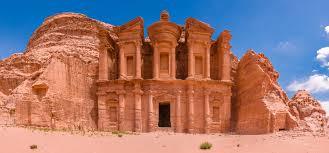
The watchman sees a very graphic figure coming toward him from the land of Edom and the city of Bozrah (in Hebrew) or Petra (in Greek). The origin of the Second Coming is Bozrah (Isaiah 34:1-7). Habakkuk also brings this point out. God came from Teman (Ta-MAUN), The Holy One from Mount Paran (Habakkuk 3:3). Teman is just north of Bozrah towards Jerusalem. So for Yeshua to get to Jerusalem, God would have to come from Teman. Teman and Mount Paran are both in the vicinity of Bozrah and are located in the same Mount Seir. The watchman asks: Who is this coming from Bozrah, from Edom (Isaiah 63:1a)?

The Bible clearly pinpoints the beginning of the Second Coming at the city of Bozrah. But why Bozrah? Because that is where the believing remnant will be hiding in the last days (Micah 2:12-13), which is why the antichrist and the armies of the world are drawn to Bozrah. Satan knows that Isra’el is the apple of His eye (Deuteronomy 32:10) and he knows Scripture (Matthew 4:1-11). So he and his armies are drawn, like a fish with a hook in their mouths, to Bozrah to destroy the Jews once and for all (Jeremiah 49:12-13). But this would not be a permanent home for the believing remnant; it was a temporary home. That is why Zechariah 12:7 to 13:1 says that the LORD will save the tents of Judah first. In other words, when Yeshua Messiah comes back a second time, He will come to Bozrah first, saving the believing remnant, before going to Jerusalem through Teman.

The watchman enters into a discussion with this fast approaching figure. He asks: Who is this coming from Edom, from Bozrah, with His garments stained crimson (Isaiah 63:1b). The Hebrew word for red is of the same root as Edom, therefore red (adom) is a wordplay on Edom (edom). A winepress was usually a shallow pit with a hole on the side leading out to a container. As individuals trampled on grapes in the press, the juice flowed through the hole into the container. Obviously some juice would also splatter on the workers’ clothes. The watchman continues to ask: Who is this, robed in splendor, striding forward in the greatness of His strength (Isaiah 63:1c)?

The divine Warrior answers: It is I, speaking in righteousness, mighty to save (Isaiah 63:1d). Who is this Person? The One whose constant characteristic is speaking what is righteous. The idols cannot do this for they do not know either the past or the future (Isaiah 43:9). Only One has the power that is mighty to save. This is an important point. These verses are ultimately not about judgment or destruction – they are about salvation. Because the enemy is destroyed, His people are delivered (52:7-12). What did the watchman see? He saw the arm of the LORD (Isaiah 59:1), Yeshua Messiah marching toward Jerusalem. The salvation that was announced in Isaiah 62:11 will then be seen.

But now the divine Warrior has approached close enough for the watchman to see more details. He noticed that His clothing, though brilliantly shining with the Sh’khinah glory, is nevertheless stained with blood. That raises the second question. Why are your garments red, like those of one treading the winepress (Isaiah 63:2)? In Isaiah’s day, people would get into the winepress barefooted and trample out the grapes. The red juice would spurt out the ripe grapes and stain their garments. The Hebrew actually reads: Why is there such redness in your garments? In Revelation 19:13 we are also told that He is dressed in a robe dipped in blood. Several commentaries say that the blood Messiah is stained with is His own blood that had been shed for the believing remnant. But this is not His own blood, but that of the enemy!

Next, we learn that He has come from the trampling of the nations, or defeating the antichrist and the armies of the world. He did it all by Himself. The Warrior’s answer to the question above begins here and continues through verse 6. There was no one to help Him in His awful task. Earlier He had said: I saw that there was no one, I was appalled that there was no one to intervene but Me; so My own arm worked salvation for Me and My own righteousness sustained Me (Isaiah 59:16). So Yeshua declared again: I have trodden the winepress alone; from the nations no one in the whole world was with Me (Isaiah 63:3a). Yeshua Messiah was alone on the cross, and He will be alone in His judgment. How would it be possible for the millennial Jerusalem to exist? Only because Messiah made it possible.

The watchman sees that there is blood on His beautiful garments just as if He had trampled the winepress. The word blood here is nesah, meaning squirting blood. We are told clearly that two armies will return with Him. One is an angelic army (Matthew 16:24), the other is the army of believers (Jude 14-15; Revelation 19:14a). But neither the angles nor believers participate in any of the fighting. The image used here is the treading of the winepress. Yeshua Messiah declared: I trampled them in My anger and trod them down in My wrath; their blood spattered My garments and I stained all My clothing (Isaiah 63:3b).

God’s wrath is also pictured as being like a winepress. He attacked the enemies of His people and trampled them under foot like grapes, so that their lifeblood spurted out and spattered His garments. This imagery is used in Haggai 2:16, and also in Revelation 14:19-20 where the final treading of the nations is viewed as the treading of the grapes in the great winepress of God’s wrath. They were trampled in the winepress outside the City, and blood flowed out of the press, rising as high as the horses’ bridles for a distance of 1,600 stadia, or about 180 miles, or 300 kilometers.

Now comes the explanation: For the day of vengeance was in My heart, and the year of My redemption has come (Isaiah 63:4). But doesn’t all this carnage merely suggest a heavenly tyrant out of control? Is this not blood lust? No! But what about the word vengeance? Doesn’t that convey a mean spirit of revenge and bitterness? It might if it were by itself, but the parallelism in the context of the verse speaks volumes. What is the vengeance about? Payback? No, it’s about redemption, about breaking the power of sin and evil so that those who are held captive can go free. The very thing that Isaiah prayed for in Isaiah 62:12 is now being fulfilled when Messiah says: The year of My redemption has come.

I looked, but there was no one to help, I was appalled that no one gave support; so My own arm worked salvation for Me, and My own wrath sustained Me (Isaiah 63:5). This verse reemphasizes that Messiah will fight alone. There was no one else in the world that could help. There is no one else in the world that can save Jerusalem from the invading armies of the antichrist. Therefore, God’s own arm worked salvation for the Jews. This is the ninth and last of nine references to the arm of the LORD in Isaiah (Isaiah 30:30 and 32, 40:10, 50:2, 51:5 and 9, 52:10, 53:1, 59:1 and 16, 62:8). His own wrath sustained Him during this campaign.

The results are seen. Messiah says: I trampled the nations in My anger (Isaiah 63:6a). Paul records a similar thought: and then the end will come, when He hands over the kingdom to God the Father after He has destroyed all dominion, authority, and power. For He must reign until He has put all His enemies under His feet (First Corinthians 15:24-25). After capturing five Amorite kings, Joshua summoned all the men of Isra’el, and he said to the army commanders who had come with him, Come here and put your feet on the necks of these kings. So they came forward and placed their feet on their necks.

This is a form of public humiliation of defeated enemy leaders and was usually the climax of warfare in the ancient Near East. When the statue of Sadam Hussein was brought down in front of an international audience, the people trampled it and hit it with their shoes to show their contempt for him. The monuments of ancient Egypt, Assyria, and Persia give numerous illustrations of the custom of conquerors trampling on the vanquished. In the cave at Beit el Walley in Nubia is a hieroglyphic description of Ramses II trampling on his enemies. It reads, “Kol, the strange land, is beneath your sandals.” At the foot of a wooden mummy case in the British Museum are painted the soles of two shoes, and on each is the figure of a man with his arms and hands tied behind him, and his feet tied at the ankles. In this helpless state he is supposed to be trampled on by the wearer of the shoes. It was a very expressive illustration of mingled triumph and contempt. These customs strikingly illustrate the text and numerous parallel passages (Psalm 8:6, 110:1, 119:118; Isa 14:19, 25:10, 28:3 and 18; Lam 1:15, 3:34; Dan 8:13; Micah 7:10; Malachi 4:3; Luke 21:24; Rom 16:20 and Heb 10:29).318

The Lion of the tribe of Judah, the Root of David, has triumphed (Revelation 5:5). Here Ha’Shem says: In My wrath I made them drunk and poured their blood on the ground (Isaiah 63:6b). The lifeblood shed and therefore His wrath was decisively finished. To those who do not fully understand the true nature of ADONAI, verses like this seem contrary to the character of ADONAI. They believe that the LORD is love, and that is true. The LORD is love. But if a person rejects Messiah, the sacrifice, he or she becomes the sacrifice. On the cross, God the Father poured out His wrath on God the Son as a punishment for sin (Isaiah 53:5). So anyone who rejects His sacrifice is cursed. This is what we see in the Second Coming, a world who has rejected Messiah being held accountable. Those who reject this truth only want to see the LORD as love because they want to be able to sin with no accountability. The truth does not set them free, they choose to believe a lie, and in the end they will spend eternity apart from Messiah and His love. Then He will say to those on His left: Depart from Me, you who are cursed, into the eternal fire prepared for the devil and his angels (Matthew 25:41). Their death is only the result of refusing to avail themselves of His death.

Therefore, Isaiah has given a vision of how his prayer and the angels’ prayer of Isaiah Chapter 62 is going to be fulfilled. These verses describe how salvation will come, how His reward is with Him, how His judgment is with Him, and how He will save His redeemed ones. However, it is a clear teaching of Scripture that the Second Coming cannot occur until the Jewish people ask for it. That is what Isaiah describes next.

Dear heavenly Father, praise you for being such an awesome God of forgiveness when there is repentance. It is so wonderful that You paid the very costly ransom (Second Corinthians 5:21) to redeem your people from their bondage to sin, and all you ask is a heart of love (Matthew 22:37-40) that puts you first and trusts in Messiah as Lord and Savior (Romans 10:9-11). It is reassuring that you have not changed your plan for entrance into heaven. Entrance to Your Holy home in Heaven has always been thru a true faith that loves into Action. Abraham was a great example of faith that acts in Love (Genesis 15:6, Romans 4:3). Love is what you look for in the hearts of both Isra’el and in the church. Love is crucial. Love repents of sin and turns to you in trusting faith. Thank you for including in your holy Word, several passages that show how important repentance was in the past (Jeremiah 15:19, Ezeki’el 18:21-22, Matthew 3:2, Mark 1:15, Luke 13:3, Acts 2:38, 3:19), is now (Second Peter 3:9, First John 1:9), and will be the key that unlocks your return at the end of the Tribulation (Psalm 79:1-13, 80:1-19, Isaiah 53:1-9, 63:7 to 64:12).

Someday every knee will bow before Messiah Yeshua. It is wise to bow now before him in love and repentance. Have this attitude in yourselves, which also was in Messiah Yeshua, who, though existing in the form of God, did not consider being equal to God a thing to be grasped. But He emptied Himself – taking on the form of a slave, becoming the likeness of men and being found in appearance as a man. He humbled Himself – becoming obedient to the point of death, even death on a cross. For this reason God highly exalted Him and gave Him the name that is above every name, that at the name of Yeshua every knee should bow, in heaven and on the earth and under the earth, and every tongue profess that Yeshua the Messiah is Lord – to the glory of God the Father (Philippians 2:5-11). Thank you for your great love, kindness and gracious offer (Ephesians 2:8-9) of forgiveness to all who repent and turn to Messiah Yeshua (John 14:23) in love. In Messiah Yeshua’s holy name and power of His resurrection. Amen

2025-07-21T22:34:07+00:000 Comments

De – The Basis for the Second Coming of Yeshua Messiah Zechariah 12:10

The Basis for the Second Coming of Yeshua Messiah
Zechariah 12:10

Just as the Jewish leadership once led the nation into rejecting Yeshua as their Messiah,
they must one day lead the nation to accepting Yeshua as their Messiah.

The rabbis teach that the Messiah will return when every single Jew in the world keeps the same Sabbath. Once again, they use human works as a basis for a relationship with ADONAI. He, however, desires repentance and faith, because without faith it is impossible to please God (Hebrews 11:6).

The Rapture of the Church (see the commentary on Revelation, to see link click ByThe Rapture of the Church) has no requirements and can come at any moment. But the Second Coming of Yeshua Messiah has an enormous requirement. However, before we can understand the basis for His return, we must understand His rejection. Long before the birth of Yeshua, the ancient rabbis separated miracles into two categories. Those miracles that anyone could do if they were empowered by the Ruach Ha’Kodesh, and secondly, miracles that only the Messiah could perform. These Messianic miracles were taken from Isaiah 35:5-6 (see my commentary on Isaiah GlThree Messianic Miracles). The purpose of these Messianic miracles was to serve a sign to the nation of Isra’el to force them to come to a decision about them. Unfortunately, because of their belief in the Oral Law (see The Life of Christ EiThe Oral Law), the Jewish leadership led the nation into rejecting Yeshua on the basis of demon possession (see The Life of Christ EkIt is only by Beelzebub, the Prince of Demons, That This Fellow Drives Out Demons).

Therefore, just as the Jewish leadership once led the nation into rejecting Yeshua as their Messiah, they must one day lead the nation to accepting Yeshua as their Messiah. This explains the devil’s war against the Jews throughout history in general, and during the Great Tribulation in particular. The Adversary knows that when Messiah returns, his freedom will end. Satan also knows that Yeshua will not come back until the Jewish leaders ask Him to come back. So if Satan can succeed in destroying the Jews once and for all before they come to national repentance, then Yeshua will not come back and Satan’s free reign will be eternally secure. That is why once Satan is confined to the earth (12:7-12), during the second half of the Great Tribulation, he knows his time is short and he expends all his satanic energies to try and destroy the Jews once and for all. Anti-Semitism in any form, whether it is active or passive, racial, ethnic, national, economic, political, religious or theological, it is all part of the satanic strategy to avoid the Second Coming.316

The two-fold basis, then, for the Second Coming of Yeshua Messiah is first, Isra’el must confess her national sin (Isaiah 53:1-9), and secondly, she must plead for Him to return. There are seven passages that reveal the basis for the Second Coming.

Through the acceptance of the third sign of Jonah to the nation, the resurrection of the Two Witnesses (see Revelation DmThe Resurrection of the Two Witnesses), the Jews in Jerusalem will become believers. They, along with the preaching of the 144,000 Jews (see Revelation CrThen I Heard the Number of Those Who Were Sealed), will evangelize the leaders of Isra’el with the Gospel. These leaders will then lead the nation to confession of their national sin of the rejection of the Messiah and then plead for His return.

First, they must confess their national sin and the national sin of their fathers (Leviticus 26:40-42). Moses predicted the Jews would be scattered all over the world because of their rejection of Yeshua. But here in Leviticus, ADONAI, says that He has every intention of giving Isra’el all the blessings of the Abrahamic Covenant during the Messianic Kingdom if only they will confess their national sin and the national sin of their fathers when they rejected Yeshua as the Anointed One.

Secondly, Jeremiah 3:11-18 the prophet begins to describe the blessings that God has in store for Isra’el during the messianic Kingdom. It will be a time of tremendous blessing and restoration for the Jewish people when Messiah establishes His Kingdom. But all of the blessings mentioned will be conditional. Only acknowledge your guilt – you have rebelled against ADONAI your God, you have scattered your favors to foreign gods under every spreading tree, and have not obeyed Me, declares ADONAI.

Thirdly, God’s prophet Hosea declares: Then I will go back to My place until they acknowledge their offense and admit their guilt. And they will seek My face; in their misery they will earnestly seek Me (Hosea 5:15). Yeshua went back to heaven after His ascension. Because of that one specific offense (the word is singular) committed against Him, He returned to heaven from the Mount of Olives (Acts 1:9). Hosea tells us that Yeshua will not return until the offense that caused Him to leave is acknowledged. That offense was His rejection by the Jewish leadership and the nation of Isra’el as a whole. In addition, Hosea is the only prophet that tells us how long this national confession will last: After two days He will revive us; on the third day He will restore us (Hosea 6:1-3). So he prophesies that Isra’el will confess her sins and plead for Messiah to return for two days, and then on the third day all Isra’el will be saved (Romans 11:26a).

Fourthly, Zechariah Chapters 12, 13 and 14 are one prophetic revelation, a unit of thought that develops one theme. Chapter 13 speaks of the national cleansing of Isra’el from their sin. Chapter 14 describes the Second Coming and the establishment of the messianic Kingdom. But the cleansing of Isra’el and the Second Coming are all conditional on one verse: And I will pour out on the house of David and the inhabitants of Jerusalem a spirit of grace and supplication. They will look to Me, the One they have pierced, and they will mourn for Him as one mourns for an only child, and grieve bitterly for Him as one grieves for a firstborn son (Zechariah 12:10). It is important to understand that the Jews will say: They will look to Me, not look upon Me. These are two separate Hebrew words. The Hebrew word alay means to look upon or to see; however, the Hebrew word elay means to look to in faith. The Jews will not merely see Messiah like the rest of the unbelieving world, but they will look to Him in faith. Before Isra’el can receive the cleansing of her national sin and before Messiah will return to establish His Kingdom, Isra’el must first look to the One they have pierced in faith and plead for Him to return. Once they do this, and only then, will they receive their cleansing and begin to enjoy the blessings of the Kingdom.

Fifthly, in Isaiah 59:1-15a, at the end of the Tribulation, when the antichrist and the armies of the world tighten the noose around the neck of the Jews in Jerusalem and Bozrah, the spiritual scales will fall from their eyes and the one-third of the Jews still alive confess their national sin in general terms. One of the three purposes of the Great Tribulation is to break the stubbornness of the Jewish nation (Dani’el 11-12; Ezeki’el 20:34-38). It is through the crucible of the Great Tribulation that Isra’el will be brought to repentance.

Sixthly, in Isaiah 53:1-9, we see the death of the Servant on the cross and as a result, Isra’el’s national confession at the end of the Great Tribulation. These verses contain Isra’el’s prayer in more specific terms at the end to the Great Tribulation that brings about the Second Coming of Messiah. The actual words of this prayer are found in four key passages of Scripture, first, in Psalm 79:1-13, secondly in Psalm 80:1-19, thirdly here in Isaiah 53:1-9, and lastly in Isaiah 63:7 to 64:12. All tenses are prophetic perfects, or future events looked upon as already taken place.

Lastly, Matthew records Yeshua’s condemnation of the Scribes and Pharisees, the Jewish leadership of that day, for leading the nation in the rejection of the Messiah. Yeshua said: O Jerusalem, Jerusalem, you who kill the prophets and stone those sent to you, how often I have longed to gather your children together, as a hen gathers her chicks under her wings, but you were not willing. Look, your house is left to you desolate. For I tell you, you will not see Me again until you say, “Blessed is he who comes in the name of the Lord” (Matthew 23:37-39). Speaking directly to the Jewish leadership, and repeats His desire to gather them if they would only accept Him. But because they had rejected Him, instead of being gathered they would be scattered. Their house, the Jewish Temple, will be left desolate and will be destroyed, with nothing remaining. Then He announces that they will not see Him again until they say the messianic blessing: Blessed is he who comes in the name of the Lord. When they speak those words, they will have accepted Yeshua Messiah as their Lord and Savior.317

Thus, at the end of the Great Tribulation, as the armies of the antichrist are closing in on Petra, and as the Jews in Jerusalem await execution for refusing the mark of the beast, the spiritual scales will fall from their eyes and they finally realize that Yeshua is the Messiah. At that time they will confess their national sin and plead for Him to return. Two-thirds of the Jews that entered the Great Tribulation will be struck down and perish; yet the one-third will be left. Yeshua says: This third I will bring into the fire of the Great Tribulation; I will refine them like silver and test them like gold. They will call on My name and I will answer them. I will say, “They are My people,” and they will say, “ADONAI is our God” (Zechariah 13:8-9). And so all Isra’el will be saved (Romans 11:26a).

Dear heavenly Father, praise You for being such an awesome God of forgiveness when there is repentance. It is so wonderful that You paid the very costly ransom to redeem Your people from their bondage to sin, and all you ask is a heart of love that puts You first and trusts in Messiah as Lord and Savior. It is reassuring that you have not changed Your plan of salvation. It has always been thru a faith/trust/belief that loves into action. Like the prodigal son, Isra’el will return to You in faith and be saved. You have loved Your people with an everlasting love. Someday every knee will bow before Messiah Yeshua. In Messiah Yeshua’s holy Name and power of His resurrection. Amen

2025-07-21T15:35:21+00:000 Comments

Dd – The Events in the Second Half of the Great Tribulation Revelation 15:1 to 18:24

The Events in the Second Half of the Great Tribulation
Revelation 15:1 to 18:24

Obviously, the events beginning in the middle of the Great Tribulation continue into the second half, for it will take the full seven years for God’s purposes to be revealed. But once the second half of the Great Tribulation begins, world events will rapidly come to their climax at the return of Yeshua Messiah, the defeat of the unholy trinity and the institution of His thousand-year reign. The second half of the Great Tribulation will last for three and a half years, 42 months (13:5), or 1,260 days (a prophetic year in the Bible is 360 days, not 365).

The Seven Angels with Seven Last Plagues – Revelation 15:1-8 (Dz)

The Seven Bowls of God’s Wrath – Revelation 16:1-21 (to see link click Ea)

Ugly and Painful Sores Broke Out – Revelation 16:1-2 (Eb)

The Sea Turned into Blood – Revelation 16:3 (Ec)

The Rivers and Springs of Water Became Blood – Revelation 16:4-7 (Ed)

The Sun, Scorching People with Fire – Revelation 16:8-9 (Ee)

The Throne of the Beast, Plunged into Darkness – Revelation 16:10-11 (Ef)

I Saw Three Evil Spirits That Looked Like Frogs – Revelation 16:12-16 (Eg)

God said, “It is Done!” – Revelation 16:17-21 (Eh)

The Woman Who Sits on the Beast – Revelation 17:6b to 18:24 (Ei)

They Will Make War Against the Lamb, But He Will Overcome – Revelation 17:6b-14 (Ej)

The Beast Will Hate the Prostitute and Bring Her to Ruin – Revelation 17:16-17 (Ek)

The Fall of Commercial and Political Babylon – Revelation 18:1-24 (El)

Fallen is Babylon! She Has Become a Home for Demons – Revelation 18:1-3 (Em)

Come Out of Her, So That You Will Not Share in Her Sins – Revelation 18:4-5 (En)

In One Day Her Plagues Will Overtake Her – Revelation 18:6-8 (Eo)

Woe! In One Hour She Has Been Brought to Ruin – Revelation 18:9-19 (Ep)

God Has Judged Her for the Way She Treated You – Revelation 18:20 (Eq)

Babylon Will Never Be Found Again – Revelation 18:21-23a (Er)

By Your Magic Spell All Nations Were Led Astray – Revelation 18:23b-24 (Es)

2025-07-21T11:18:55+00:000 Comments

Dc – The Events in the Middle of the Great Tribulation Revelation 10:1 to 14:20 and 17:1

The Events in the Middle of the Great Tribulation
Revelation 10:1 to 14:20 and 17:1

The sixth trumpet judgment concludes the first half of the Great Tribulation and is followed by a temporary lull in the judgments being poured out of heaven. But it does not mean that the earth is at peace. As soon as the antichrist has his image set up in the Most Holy Place of the tribulation temple by the false prophet and declares himself to be God, he will start a systematic genocide of the Jewish race as seen in Chapters 12 and 13. The nations will be in chaos as the antichrist continues to gradually take over the political, economic and religious systems of the entire world. So many things will happen at this point it is impossible to put them in any chronological order. Therefore, the following is more of a logical order. The length of the first half of the Great Tribulation and the length of the second half are exact. Each has 1,260 days or 42 months (11:2-3). So technically, there is no middle. But here, the Tribulation enters into the proverbial eye of the hurricane. Like the battle of Gettysburg in the Civil War, or the battle of Midway in World War II, this will be a turning point. Some of these events may leak from the end of the first half, and some may bleed into the beginning of the second half, we cannot be sure of the exact time frame. But one thing we can be certain of, is that all these events will happen somewhere in the middle of the Great Tribulation, Chapters 10:1 to 14:20, and 17:16.315

This whole section is parenthetical. Chapters 10 through 14 add some necessary details about the events in the middle of the Great Tribulation, and they also show why the bowl judgments will be so necessary.

Another Mighty Angel and the Little Scroll – Revelation 10:1-11 (to see link click Df)

There Was War in Heaven, and Satan was Hurled Down – Revelation 12:7-12 (Di)

The Destruction of Religious Babylon – Revelation 17:16 (Dl)

The Resurrection of the Two Witnesses – Revelation 11:7-13 (Dm)

All the Inhabitants of the Earth Worship the Beast – Revelation 13:3-10 (Dn)

The Beast Out of the Earth: False Prophet – Revelation 13:11-15 (Do)

The Mark is the Name of the Beast – Revelation 13:16-18 (Dp)

The Abomination That Causes Desolation – Matthew 24:15 (Dr)

The Woman and the Dragon – Revelation 12:1-6, 13-17, and Matthew 24:15-28 (Ds)

And They Sang a New Song Before the Throne – Revelation 14:1-5 (Dt)

The Hour of His Judgment Has Come – Revelation 14:6-11 (Du)

Blessed Are the Dead Who Die in the Lord – Revelation 14:12-13 (Dv)

The Blood Flowed as High as the Horses Bridles – Revelation 14:14-20 (Dw)

The Seventh Trumpet: God’s Temple in Heaven – Revelation 11 verses 14-19 (Dx)

2025-07-21T11:16:35+00:000 Comments

Db – The Events in the First Half of the Great Tribulation 6:1 to 9:21 and 17:1-6

The Events in the First Half of the Great Tribulation
6:1 to 9:21 and 17:1-6

The first half of the Great Tribulation will last for three and a half years, or 42 months (13:5), or 1,260 days (a prophetic year in the Bible is 360 days, not 365). Two things should be noted about the events during this period. First, some events occur in chronological sequence, with one event following the other in order. The seal judgments of Chapter 6 and the trumpet judgments of Chapters 8 and 9 fall into that category. Second, other events occur throughout the first half simultaneously with the sequential events. There are five such events occurring throughout the first half. Two of these events actually begin before the Great Tribulation but continue on into and through the first half. One is the ministry of Elijah the Prophet. The other is the rule of the ten kings and ten kingdoms. As stated earlier, after the fall of the one world government before the Great Tribulation, the world will be divided into ten kingdoms. This Ten Kingdom stage will continue into and during the first half of the seven-year Tribulation period. The other three events are the ministry of the 144,000 and the worldwide revival (Chapter 7), the ministry of the two witnesses (Chapter 11) and the rule of religious Babylon (Chapter 17:1-6).314

The Seven Seals of the Lamb – Revelation 6:1-17 (to see link click Ck)

The First Seal: A White Horse – Revelation 6:1-2 (Cl)

The Second Seal: A Red Horse – Revelation 6:3-4 (Cm)

The Third Seal: A Black Horse – Revelation 6:5-6 (Cn)

The Fourth Seal: A Pale Horse – Revelation 6:7-8 (Co)

The Fifth Seal: I Saw Those Who Had Been Slain – Revelation 6:9-11 (Cp)

The Sixth Seal: The Sun Turned Black Like Sackcloth – Revelation 6:12-17 (Cq)

Then I Heard the Number of Those Who Were Sealed – Revelation 7:1-8 (Cr)

God Will Wipe Away Every Tear from Their Eyes – Revelation 7:9-17 (Cs)

The Seventh Seal: Silence in Heaven – 8:1 Revelation (Ct)

The Seven Trumpets – 8:2 to 9:21 Revelation (Cu)

The Angel Took the Censer and Hurled It on the Earth – Revelation 8:2-5 (Cv)

The First Trumpet: Hail and Fire Mixed with Blood – Revelation 8:6-7 (Cw)

Second Trumpet: A Third of the Sea Turned into Blood – Revelation 8:8-9 (Cx)

Third Trumpet: The Name of the Star is Wormwood – Revelation 8:10-11 (Cy)

Fourth Trumpet: The Lights Darkened – Revelation 8:12-13 (Cz)

The Fifth Trumpet: Locusts Like Scorpions – Revelation 9:1-12 (Da)

Sixth Trumpet: A Third of Mankind Killed – Revelation 9:13-21 (Db)

I Will Give Power to My Two Witnesses to Prophesy – Revelation 11:1-6 (Dc)

I Saw a Woman Holding a Golden Cup – Revelation 17:1-6a, 15 and 18 (Dd)

2025-07-21T11:16:00+00:000 Comments

Da – The Seventy Sevens Dani’el 9:24-27 and Isaiah 28:14-22

The Seventy Sevens
Dani’el 9:24-27 and Isaiah 28:14-22

The seventy sevens DIG: What do the 7 sevens, the 62 sevens and the 1 seven mean? What is the abomination that causes desolation (see Mattityahu 24:15)? What is the covenant of death? In contrast to lies and falsehood, what is the sure foundation of God’s Kingdom? What promise is given to those who will trust in that chief cornerstone? What is the warning given to those who do not?

REFLECT: In a number from one to ten, what difference do these verses make in your life? For Dani’el and Yeshua, what is the emphasis on what the future holds? Or on who holds the future? In what things (money, relationships, power, and so on) do people try to find refuge today? In your opinion, what is the Gospel in these passages? Do these passages give you hope or despair? Why?

Four Gentile Empires will control the times of the Gentiles before it is succeeded by God’s Kingdom.

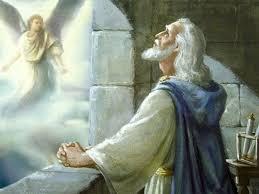
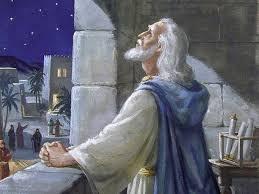
Dani’el 9:1-23 provides the introduction to the Seventy Sevens prophecy found here in verses 24-27. The background is given in verses 1-2. Dani’el had been studying Jeremiah as well as other prophets, such as Isaiah. He realized that the seventy-years of Babylonian Captivity was nearly finished (see my commentary on Jeremiah, to see link click GuSeventy Years of Imperial Babylonian Rule). That much of the prophecy he clearly understood. But what he misunderstood about the prophecies was that he thought the Messianic Kingdom would be set up following the seventy-years of captivity. He also knew from the prophets that the prerequisite for setting up the Messianic Kingdom would be the nation of Isra’el confessing her sins. Assuming that the Babylonian Captivity would be immediately followed by the Messianic Kingdom, Dani’el prayed a prayer of confession for Isra’el’s sins (see CxDani’el’s Prayer). So the angel Gabri’el was sent to correct Dani’el’s misunderstanding about the Kingdom’s being set up at the end of the Babylonian Captivity. He informed Dani’el that it was not going to be seventy years, but Seventy Sevens of years before the Messianic Kingdom would be established (see CyGabri’el’s Intervention).301

The Decree of the Seventy Sevens (9:24a): Seventy Sevens are decreed for your people and your holy City. The Hebrew word for sevens is shavuim and could refer to “seven” of anything, just like the English word “dozen” simply means “twelve” and could be twelve of anything. In this context it meant sevens of years because Dani’el had been calculating the seventy years of the Babylonian Captivity. Are decreed for your people and your holy City. Dani’el was told that it was not seventy years that needed to pass before the Messianic Kingdom would be set up, but Seventy Sevens of years, or a period of 490 years had been decreed. Throughout his book, Dani’el had been dealing with the Times of the Gentiles (see Ao The Times of the Gentiles). It began with the Babylonian destruction of Jerusalem in 586 BC and will end with the Second Coming of Messiah. This period of Seventy Sevens would concern the Jewish people and the holy city of Zion during that time. It would have nothing to do with the Church.302 The 490-year period that YHVH has decreed on the Jewish people is meant to accomplish six things. The first group of three are negative aspects of this period, while the second group of three are positive.

The Purposes: To finish the transgression, to put an end to sin, to make atonement for iniquity, to bring in everlasting righteousness, to seal up vision and prophecy, and to anoint the most holy. The purposes listed by Gabri’el can be divided into two categories. The initial three components are all negative. According to the prophecy, the Seventy Sevens would eliminate these undesirable elements. The second group consists of three positive objectives. These elements are desirable, and Gabri’el prophesied that the Seventy Sevens would bring them to fulfilment.

1. To finish the transgression (9:24b): The Hebrew word for finish means restrain completely or bring to an end. Transgression is a very strong word for sin coming from the Hebrew avar. It literally means to rebel or to go beyond a set limit. In the Hebrew text, it has the definite article. So it does not mean merely to finish rebellion, but to finish the rebellion. It refers to one specific act of rebellion and to bring it to an end. In this context, the one specific sin is the rejection of Messiah. In the last three days of the Great Tribulation (Hosea 6:1-3), Isra’el will pray a national prayer of confession (see the commentary on Revelation Ev The Basis of the Second Coming of Jesus Christ). This will mark the end of the transgression mentioned in 9:24b. Isra’el will repent of her rejection of Yeshua’s Messiahship, and when the nation does, the transgression will be permanently abolished (Isaiah 59:20; Romans 11:26).

2. To put an end to sin (9:24c): The Hebrew word for to put an end, chatam, means to seal up or to be locked up. It derives from a root that means to shut up or to restrain. It refers to the act of locking someone up securely with the result that the person is not permitted to roam at will. The modern Hebrew word for “prison” or “jail” comes from this old Hebrew term. To put an end to sin. Hence, Gabri’el used a strong word to describe the decisive restraining of sin that the Seventy Sevens would accomplish. The Hebrew word for sin here means to miss the mark of a set standard. The unsaved Gentiles who survive the Great Tribulation will continue to sin during the Messianic Kingdom. But the daily sins of Isra’el will be put to an end at Messiah’s Second Coming (Isaiah 27:9; Jeremiah 31:31-34; Ezeki’el 36:25-27, 37:23; and Romans 11:20-27). It will not be necessary in the Kingdom for one Jew to say to another Jew, “Know ADONAI,” for they will all know Him, from the least to the greatest. In summary, the first two purposes of the Seventy Sevens will result in the abolition of a specific Jewish national transgression as well as the cessation of the sins of daily life.303

3. To make atonement for iniquity (9:24d): The verb to atone, the Hebrew word kapar, means to cover. The word for iniquity, from the Hebrew awal, means failure to fulfill the standard of righteousness or lack of integrity. Kapar is the main word for atonement in the TaNaKh. Yom Kippur is in view here (see my commentary on Exodus Go – The Day of Atonement). On that day ADONAI provided a just basis on which He could deal with guilty people. The mercy seat was the place of propitiation. The word propitiation means to satisfy. And it was at the mercy seat that God’s wrath against sin was atoned for, or satisfied. At that time the high priest would sprinkle the blood of a goat over the mercy seat, when this was done then ADONAI’s wrath against the iniquity of the nation was satisfied. The means by which Isra’el’s national and daily sins of rejecting the Messiah will be removed is by the atonement. The word iniquity refers to the sin nature. Therefore, the program of the Seventy Sevens is a cleansing of Isra’el that will include the removal of three things: first, the national sin of rejecting Yeshua’s Messiahship; second, daily sins; and third, dealing with the sin nature itself.304

4. To bring in everlasting righteousness (9:24e): The next three accomplishments deal with the positive aspects of God’s program as a result of the Great Tribulation. Being satisfied with the atoning death of Messiah, ADONAI will bring in everlasting righteousness. The Hebrew term for everlasting, olam, means long duration. The English translation implies the sense of eternity, but that’s not what the Hebrew term means. Rather, olam refers to an age. So, the purpose of the Seventy Sevens is to bring in an age of righteousness. This is a prophecy that the Lord will establish an age characterized by righteousness. Several passages in Isaiah and Jeremiah show this age of righteousness in the Messianic Kingdom (Isaiah 1:26, 11:2-5, 32:17; Jeremiah 23:5-6, 33:15-18). Dani’el thought the Kingdom would be set up immediately after the seventy-years of captivity; now he is told that this will not occur after seventy-years, but after Seventy Sevens, or 490 years.305

5. To seal up vision and prophecy (9:24f): All that YHVH said through the prophets about what He would do in fulfilling His covenant with Isra’el will be fully realized in the Messianic Kingdom. The Hebrew word to seal up, chatam, means to enclose something authoritatively, hiding it from view and showing that its functions are completed.306 It is used to show that both the vision and the prophecy will completely cease. The Hebrew term for vision, chazon, refers to divine communication in a vision or through an oracle. In other words, it refers to an oral prophecy. The Hebrew term for prophecy, navi, means spokesman, speaker, or prophet. In other words, it refers to written prophecy. Gabri’el declared that there would be an end to both oral and written prophecy. When the Messianic Kingdom comes, then all the prophecies concerning the nation of Isra’el will be completed.307

6. And to anoint the most holy (9:24g): The Hebrew actually reads: And to anoint the most holy place. It does not point to a most holy Person, Messiah, but a most (kodesh, singular) holy (kadashim, plural) place. In Hebrew, there is a repetition for the term kodesh, meaning apartness or sacredness. Thus, the phrase reads holy holies. Yet this is not a reference to the Most Holy place of the Temple, where the phrase is slightly different. There it is written as kodesh ha’kodashim, as seen in Exodus 26:33. Therefore, the most holy mentioned by Gabri’el does not refer to the Most Holy Place, but more generally to a holy place, namely, the Temple. We must remember that the context of Dani’el’s prophecy is the Messianic Kingdom. So this Temple would not be the First Temple of Solomon, nor the Second Temple of Zerubbabel, and surely not the Third Temple of the Tribulation (see the commentary on Revelation Bx The Tribulation Temple). More specifically, it is the Fourth Temple, the Messianic Kingdom Temple, built by the Lord Himself (see the commentary on Jeremiah GsGod Shows a Vision of the Messianic Temple). At the return of Messiah and the establishment of the Messianic Kingdom, all six purposes of the Seventy Sevens will have been accomplished.308

The starting point of the Seventy Sevens (9:25): Know and understand that from the issuing of the decree to restore and rebuild Jerusalem until the Anointed One (Hebrew: mashiach), the ruler (Hebrew: nagid), comes, there will be 7 sevens, and 62 sevens. The Messiah is the One who is expected to come in fulfillment of the Davidic Covenant (see the commentary on the Life of David CtThe LORD’s Covenant with David), which guaranteed this ruler an eternal Kingdom to David through a Seed who Himself would be eternal. This promise was confirmed by Dani’el 7:13-14. Therefore, the 490-year period, or Seventy Sevens, is then divided into three units: 7 sevens, 62 sevens, which run concurrently and make up the first 69 sevens (or 483 years), and then, finally, 1 seven (for a total of 490 years), leading up to the coming of Messiah.

The first 69 sevens: Know and understand that from the issuing of the decree to restore and rebuild Jerusalem (9:25a): This begins the starting point to the Seventy Sevens period. The first unit, the 7 sevens, a total of 49 years, refers to the time it took to restore and rebuild Jerusalem. On March 14, 445 BC King Artakh’shasta gave permission to Nehemiah to rebuild the walls of Jerusalem, which restored the Holy City (see the commentary on Ezra-Nehemiah BwThe Decree to Rebuild Jerusalem). As far as the coming of the Messiah, the Julian date of the tenth of Nisan was Sunday April 6th, 32 AD (see the commentary on The Life of Christ ItJesus’ Triumphal Entry into Jerusalem as the Passover Lamb). The interval between the decree of King Artakh’shasta and Palm Sunday contained exactly, to the very day, 173,880 days, or 7 times 69 prophetic years of 360 days, the first 69 sevens, or 483 years of Dani’el’s prophecy.309

Until the Anointed One, the Ruler, comes there will be 7 sevens and 62 sevens for a total of 70 Sevens (9:25b): The end or goal of the prophecy was the appearance of the Anointed One, the Ruler. Yeshua Messiah will be anointed as Ruler of His Messianic Kingdom (see the commentary on Revelation FiThe Government of the Messianic Kingdom). The prophecy of the Seventy Sevens does not end with Yeshua’s First Coming, but with His Second Coming and the establishment of His thousand-year Messianic Kingdom.

It will be rebuilt with streets and a trench (9:25c): Though Nehemiah’s wall construction project took only 52 days, many years may have been needed to remove the City’s debris after being left desolate for so many decades. They needed to rebuild adequate housing, and rebuild the streets and a trench, probably for Yerushalayim’s fortification.

But in times of trouble (9:25d): This continued construction was carried out in the face of trouble and opposition. Ezra’s trouble in building holiness in the people are seen in Ezra 9 and 10, and Nehemiah’s opposition to building the walls is presented in Nehemiah 4:1-23, 6:1-14, 9:36-37. Nehemiah also experienced trouble in building up the people spiritually in Nehemiah 13.310

After saying exactly how many years would transpire before the Messiah’s First Coming in Verse 25, Dani’el now told of the events coming between His First Coming (the 69th Seven), and His Second Coming (the 70th Seven) in verse 26. During this gap of time, three events will take place.

First, The Anointed One will be cut off (9:26a): According to Gabri’el, the first event in the time gap between the 69th and 70th seven would be the murder of the Messiah. The Hebrew term for be cut off, karat, means to cut down. It is used in Genesis 15:18 to describe the formation of a covenant. The sacrificed animals were cut into pieces, and the parties of the covenant walked between them. As a result of this action, the covenant was signed. The word karat is used for the death penalty in Leviticus 7:20. In passages such as Psalm 109:13 and Nahum 3:15, the term has the connotation of a violent death. This is also the meaning here in Dani’el, where the term refers to the murder of Yeshua. Next, Gabri’el stated that the Messiah would have nothing. The Hebrew term for nothing, ayin, means nothingness, which highlights Messiah’s condition. After His death, He had no earthly kingdom or a throne. He had nothing. The significance of Gabri’el’s first point here should not be missed. The book of Dani’el was written in the sixth century BC, and predicted not only the exact time of Messiah’s First Coming, but also the nature of His death.311

Second, The people of the ruler, the antichrist, will come and destroy the City and the Sanctuary (9:26b). The word people in the Hebrew text has the definite article. It is the people, the specific people, who are the subject of the action. In other words, it is not the ruler who will destroy the city and the sanctuary, but rather the people of the ruler. The point here is that the nationality of the people and the ruler are the same. The ruler who will come, in this context is the antichrist of whom Dani’el has already spoken of in Chapters 7 and 8. After Messiah was cut off the Romans destroyed the city and the sanctuary in AD 70. Since the antichrist must be of the same nationality as the people who destroyed the city and the people, the Bible teaches that the antichrist will be a Gentile. The people of the ruler were not all Romans. Certainly in the years of the Roman Republic and the early years of the Roman Empire, most of the officers and soldiers in the Roman army were Romans, if not Roman citizens. But as the Empire grew in size, the city of Rome and its citizenry could not supply enough men to make up the whole of the Roman army. Rome would allow citizens of conquered nations to join the Roman army, but simply being in the Roman army did not make one a Roman. Then Dani’el states that the end will come like a flood (9:26c). When the figure of a flood is used symbolically in the Bible, it always is a symbol of a military invasion. Jerusalem was destroyed by a Roman military invasion, first under Vespasian and then under Titus.312

And third, War will continue until the end, and desolations have been decreed (9:26d): For the remainder of the gap of time between the 69th seven and the 70th seven, the Land will be characterized by war. This prophecy has certainly been true throughout the history of the Middle East. As a result of these wars, desolations have occurred as decreed, or determined, by YHVH. The third unit of the 70 sevens will be the last seven-year period, the Great Tribulation, or the end.

And the antichrist will confirm a covenant with many for 1 seven. The signing of the seven-year covenant between the antichrist and the nation of Isra’el will start the Great Tribulation. In the middle of that 1 seven he will put an end to sacrifice and offering. And on the wings he will set up an abomination that causes desolation, until the end that is decreed is poured out on him (9:27). The 70th seven is the seven years of the Great Tribulation. In verse 27 these seven years are subdivided into two equal halves of three-and-a-half years. They are described differently in the books of Dani’el and Revelation. Sometimes each half is referred to as 1,260 days (Revelation 12:6); sometimes as 42 months (Revelation 11:2); and also a time, times and half a time (Dani’el 7:25). Since there will be a period of time between the 69th seven and the 70th seven, what will be the sign that will begin the last seven-year period?

And he (9:27a): The pronoun he goes back to its nearest antecedent, or the ruler who will come, in verse 26. He is the antichrist, who was identified as the little horn (Dani’el 7:8, 19-25, 8:23-25). Since Dani’el has described the antichrist twice before and will again (Dani’el 11:36-45), it is not surprising that he would be brought back into the picture here.189 The antichrist will confirm a covenant with many for 1 seven (9:27b): This will be the sign that the Great Tribulation has begun. The ruler who will come will confirm a covenant with many. The Hebrew word confirm does not mean to renew an existing covenant, but to make a new agreement with firm guarantees. It will be a firm commitment. The Hebrew word many has a definite article, meaning the many. The specific many, the Jews who will enter into a firm covenant with the antichrist that will begin the last seven years of Dani’el’s 70th seven. Two-thirds of the nation of Isra’el will die in the worldwide persecution during the Time of Jacob’s Trouble.190 The Bible teaches that the Rapture will happen before the Great Tribulation, but it never teaches that the Rapture starts it.

In the middle of the seven he will put an end to sacrifice and offering (9:27c): After the first three-and-a-half years the antichrist will break his covenant with Isra’el. He will forcibly put an end to the ongoing sacrificial system in the Tribulation Temple (Revelation 11:1-2).

And on the wings he will set up an abomination that causes desolation (9:27d, also see 11:31b): The phrase on the wings is taken from the Hebrew root word kanap, which means to cover over, and as in Isaiah 8:8 definitely has the idea of overspreading in a destructive sense. Therefore, in the middle of the Great Tribulation, the false prophet will set up an image of the antichrist (Revelation 13:14b). The false prophet will be given power by Satan to give apparent life to the image of the antichrist, so that it could speak, deceiving many. Where the One True God dwelt between the overspreading wings of the cherubim on the mercy seat, Satan will foolishly try to take His place. The antichrist will cause desolation because for the next 42 months he will attempt to destroy the Jews. He will attempt to finish what Hitler could not accomplish: genocide of the nation of Isra’el. It will be his final solution to the thorn that has always been on the side of the Adversary, the Jewish people.

Until the end that is decreed is poured out on him (9:27e): God has determined that these things will come about long ago (Isaiah 10:23 and 28:22). The end of the 70th seven will not go one single day beyond its predetermined duration (Mattityahu 24:22). At the end of the Great Tribulation, on the last day of the campaign of Armageddon, Yeshua Himself will kill the antichrist (Habakkuk 3:13b; Second Thessalonians 2:8). The judgment that has been decreed upon him will be poured out on that day.

While Dani’el 9:27 presents the covenant that begins the Great Tribulation from man’s perspective, Isaiah 28:14-22 presents the same covenant from God’s perspective. So, hear the word of ADONAI, you scoffers who rule these people in Jerusalem (Isaiah 28:14). Ha’Shem calls the Jewish leadership scoffers and considers them mockers rather than godly leaders. The next verse explains why.

You boast mightily: We have entered into a covenant with death, with the grave we have made an agreement. When an overwhelming scourge sweeps by, it cannot touch us, for we have made a lie our refuge and falsehood our hiding place (Isaiah 28:15). The leaders of Isra’el think that by entering into this agreement with the antichrist they will escape the coming overwhelming scourge. Whenever used symbolically, the figure of a flood is always a symbol of a military invasion. So they think by entering into this covenant, they will be free from any further military invasions. But YHVH states that it will not be a covenant of life, but a covenant of death. It will not be a covenant from heaven, but a covenant from sh’ol. Rather than obtaining security, they will only gain insecurity. There is a common misconception that Isra’el will accept the antichrist as Messiah. The Bible does not teach that. Instead, Isra’el will make a covenant with him and place their security in that agreement. But there will be a believing remnant, faithful Isra’el, that will refuse to place their security anywhere but in ADONAI. But Isra’el will never accept him as the Messiah.

So this is what Adonai ELOHIM says: I am laying in Zion a tested stone, a costly cornerstone, a firm foundation-stone; the one who trusts will never be dismayed (Isaiah 28:16). This verse assures us that there will be a believing remnant of Jews who refuse to have anything to do with the covenant of death. This remnant’s security is not in a covenant, but its security is in a costly cornerstone for a sure foundation. According to Romans 9:33 and First Peter 2:6-8, this stone is Christ. Jesus states that He is the costly cornerstone that the Church would be built upon (see my commentary on The Life of Christ FxOn This Rock I Will Build My Church). And the gates of Sh’ol, the Jewish expression for death, could not overcome it. If you put your faith in Yeshua, you will never be disappointed.

Then in Isaiah 28:17-22, the same three results are found as in Dani’el 9:27. The first result will be the breaking of the covenant by the antichrist in Isaiah, followed by the military invasions they had hoped to escape. I will make justice the measuring line and righteousness the plumb line; hail will sweep away your refuge, and water will overflow your hiding place. Your covenant with death will be annulled; your agreement with the grave will not stand. When the overwhelming scourge sweeps by, you will be beaten down by it (Isaiah 28:17-18).

In the second result, sheer terror will fall upon the Jewish people. Isaiah 28:15 teaches that they entered the covenant because of security, but in Isaiah 28:19, there will be invasion, and in Isaiah 28:20, there will be a lack of preparedness both militarily and spiritually. As often as it comes it will carry you away; morning after morning, by day and by night, it will sweep through. The understanding of this message will bring sheer terror. The bed is too short to stretch out on, the blanket too narrow to wrap around you (Isaiah 28:19-20). Instead of security, they will have insecurity.

The third result is the wrath of Ha’Shem. ADONAI will rise up as he did at Mount Perazim, He will rouse himself as in the Valley of Gibeon – to do His work, His strange work, and perform His task, His alien task. Now stop your mocking, or your chains will become heavier; for I have heard from Adonai ELOHIM-Tzvaot that destruction is decreed for the whole land (Isaiah 28:21-22). Of the many names that we have in Scripture for the Great Tribulation, Isaiah gives us two of them in Isaiah 28:21. They are ADONAI’s strange work, and ADONAI’s strange act (KJV). The reason it is a strange work and a strange act is seen in Isaiah 28:22; it is a decree of destruction against the whole world. As a result, of the making of the covenant back in Isaiah 14-15, as in Dani’el 9:27, an announcement of destruction is contained in the sealed scroll of Revelation (see Revelation Ck – The Seven Seals of the Lamb). Once those seven seals are broken, one by one, the judgment of the earth begins. By the time the Great Tribulation ends, the earth will be in total chaos and despair. Therefore, once the covenant is signed, the Great Tribulation and the destruction will begin.313

Dear heavenly Father, all praise and honor belong to You, loving and wise almighty Sovereign Ruler of the Universe, who so graciously paid by Messiah’s blood, the great price to redeem the earth back from under Satan’s control. Thank You for the mercy shown in the Great Tribulation; for even in the midst of the trials, You are always there and You never leave people without a witness that calls people to trust in You: 144,000 sealed servants from every tribe, the Two Witnesses, and the messages of the three angels. Repentance is what You look for in each heart. Even in the midst of the Great Tribulation You hold open the door of repentance to all who will choose to follow You as their Lord and Savior.

Thank You so much for paying the price to redeem earth thru Messiah’s blood. Thank you also for your purifying work during the Tribulation. Messiah will open the seals of the scroll of redemption to purify the earth, reign for 1,000 years, and then create a fantastic new heaven and earth. Then I saw a new heaven and a new earth; for the first heaven and the first earth had passed away, and the sea was no more. “Behold, the dwelling of God is among men, and He shall tabernacle among them. They shall be His people, and God Himself shall be among them and be their God. He shall wipe away every tear from their eyes, and death shall be no more. Nor shall there be mourning or crying or pain any longer, for the former things have passed away.” (Revelation 21:1, 3b-4). You are such a wise and loving heavenly Father! In Messiah’s holy Name and the power of His resurrection. Amen

2025-07-19T15:54:28+00:000 Comments

Cz – The Great Tribulation and the Second Coming

The Great Tribulation and the Second Coming

Chapter Nine introduces us to the Seventy Sevens of Dani’el (to see link click CvDani’el’s Vision of the Seventy Sevens) when he was 81. Gabri’el (see Cy Gabri’el’s Intervention) was speaking about seventy periods of seven years, or 490 years. Four Gentile Empires will control the times of the Gentiles (see AoThe Times of the Gentiles). The Fourth Empire (see BeThe One World Government Stage) will include the seven-year period of the Great Tribulation. When those seven years are over, Yeshua Messiah will return to start His thousand-year Messianic Kingdom. We know this is true because all the feasts of Isra’el point to Messiah. The first four feasts point to His First Coming: Pesach was fulfilled by the death of Messiah, Hag ha’Matzah points to the sinlessness of His sacrifice; Rasheet points to His resurrection, and Shavu’ot points to the birth of His Church.

Then between the first cycle and the second cycle there is a four-month interval that is symbolic of the New Covenant Age that interrupts the program of the feasts of Isra’el (see Leviticus EdThe Four-Month Interval). Then comes the second cycle of holy festivals. Rosh ha’Shanah will be fulfilled by the Rapture of the Body of Messiah, Yom Kippur will be fulfilled by the Great Tribulation, and Sukkot will be fulfilled by the Messianic Kingdom.300 Therefore, we can be confident that the Rapture will come before the Great Tribulation because Rosh ha’Shanah comes before Yom Kippur.

In the TaNaKh, the most common name for the Great Tribulation is the Day of ADONAI found in various passages. In every passage of the Scriptures that the term the Day of ADONAI is found, it is always, without exception, a reference to the Great Tribulation period. Even though this is the most common name for this period in the TaNaKh, it has many names and it is also found in various passages of the B’rit Chadashah. These names are found in the New International Version (NIV). According to the sages, the Messiah will come after a tumultuous seven-year-period called the footsteps of Messiah. The Talmud refers to the seven years preceding the redemption as the Shavua she Ben David, “Seven of the Sons of David.”

Names in the TaNaKh:

  • A Time of Trouble for Jacob (Jeremiah 30:7)
  • The Seventieth Week of Daniel (Dani’el 9:27)
  • The Lord’s Strange Work (Isaiah 28:21)
  • The Lord’s Alien Task (Isaiah 28:21)
  • The Day of Israel’s Disaster (Deuteronomy 32:35; Obadiah 12-14)
  • The Distress or Tribulation (Deuteronomy 4:30)
  • The Overwhelming Scourge (Isaiah 28:15, 18)
  • The Day of Vengeance (Isaiah 34:8, 35:4, 61:2)
  • The Year of Retribution (Isaiah 34:8)
  • The Time of Distress (Daniel 12:1; Zephaniah 1:15)
  • The Day of Wrath (Zephaniah 1:15)
  • The Day of Trouble and Ruin (Zephaniah 1:15)
  • The Day of Darkness (Zephaniah 1:15; Amos 5:18 and 20; Joel 2:2)
  • The Day of Gloominess (Zephaniah 1:15; Joel 2:2)
  • The Day of Clouds (Zephaniah 1:15; Joel 2:2)
  • The Day of Blackness (Zephaniah 1:15; Joel 2:2)
  • The Day of the Trumpet (Zephaniah 1:16)
  • The Day of the Battle Cry (Zephaniah 1:16)
  • The Day of the Lord Almighty (Isaiah 2:12-21)

Names in the B’rit Chadashah:

  • The Day of the Lord (First Thessalonians 5:2)
  • The Wrath of God (Revelation 15:1 and 7; 14:10 and 19; 16:1)
  • The Hour of Trial (Revelation 3:10)
  • The Great Day of the Wrath of the Lamb of God (Revelation 6:16-17)
  • The Coming Wrath (First Thessalonians 1:10)
  • The Wrath (First Thessalonians 5:9; Revelation 11:18)
  • The Great Tribulation or Distress (Matthew 24:21; Revelation 7:14)
  • The Distress or Tribulation (Matthew 24:29)
  • The Hour of Judgment (Revelation 14:7)
2025-07-30T22:15:47+00:000 Comments

Cy – Gabri’el’s Intervention 9: 20-23

Gabri’el’s Intervention
9: 20-23

Gabri’el’s Intervention DIG: Where had Dani’el seen Gabri’el before? How did he appear to Dani’el? Why had the angel come to him a second time? What did Dani’el need to be corrected about? What was impressive about Dani’el praying about the time of the evening sacrifice? Why was Gabri’el exhausted?

REFLECT: How would you rate your prayer life? If the spirit is willing, but the flesh is weak, what can you do to improve it? What prayer do you need answered immediately? What do you need insight? Have you ever tried to do a puzzle with missing pieces? That’s what Dani’el was attempting to do.

Gabri’el came to correct Dani’el’s misunderstanding regarding the establishment of God’s Kingdom.

Dani’el’s prayer (to see link click CxDani’el’s Prayer) was answered in a remarkable fashion. Very often, we pray and wonder whether anyone was listening, or whether our prayer simply bounced off the ceiling. In this case, though, ADONAI sent an angel to address Dani’el’s concerns while he was still praying! We shall look in detail at the answer Dani’el received below. However, in general terms, we can say that Dani’el’s prayer received both an immediate and an ultimate answer. God’s immediate answer was to raise up Cyrus, the Persian king (see AgCyrus and Darius), who issued the decree allowing the Jews to return to their home. But that was only a partial fulfillment of YHVH’s plans. The problem of Isra’el’s rebellious heart that caused the exile in the first place would not be dealt with by merely bringing them back to the Land. That would require a greater demonstration of God’s greatness and grace, which would only be accomplished by the coming of Yeshua.295

Since Dani’el did not recognize his misunderstanding of the chronology of prophetic events, he didn’t realize that he needed to be enlightened further. But God did. So Gabri’el was sent to give Dani’el the proper prophetic understanding. Dani’el was in the middle of confessing his sins and the sins of his people Isra’el, thinking that this confession would prevail in the Messianic Kingdom. Dani’el would have kept on praying had he not been interrupted. While I was speaking and praying, confessing my sin and the sin of my people Isra’el and making my request to ADONAI my God for his holy hill, Jerusalem – while I was still in prayer, Gabriel, the man I had seen in the earlier vision. He came to me in swift flight about the time of the evening sacrifice (9:20-21).296 The Hebrew term for in swift flight, mu’aph, comes from the root yaeph, meaning to be weary or to be faint. This term appears twice in verse 21, once as a verb (mu’aph) and once as a noun (bi’aph). So, the most literal rendering would be weary of weariness. However, a more understandable reading is being very tired. It seems to me that Gabri’el had to fight his way through satanic opposition to get to Dani’el in a big hurry, and he was exhausted from the battle.297

He had lived in Babylon for some seventy years, but Dani’el was still using Torah time. His body was in Babylon, but his heart was in Jerusalem. Had the Temple been standing and the priests still officiating, this would have been the ninth hour, when the lamb was offered as a burnt offering (see the commentary on Leviticus AiThe Burnt Offering: Accepted by God). It was one of the three times during the day when Dani’el set aside time to offer prayer to ADONAI (Dani’el 6:10 and Psalm 55:17). This was also the time when Ezra prayed for YHVH to forgive the sins of the Jewish remnant that had returned to the Land (Ezra 9:5). There is a sense in which prayer is seen by God as a spiritual sacrifice to Him (Psalm 141:1-2).298

Gabri’el is an angel, but he appeared to Dani’el in the form of a man. Dani’el had met Gabri’el before after seeing the vision of the ram and the goat (see CkThe Ram and the Male Goat), and Dani’el explained its meaning to him (see ClLiving in the Valley of Darkness). Now, the angel had come to explain to Dani’el what YHVH had planned for the Temple, Jerusalem, and the Jewish people.

Then Gabri’el revealed the purpose of his arrival: He instructed me and said to me, “Dani’el, I have now come to give you insight and understanding” (9:22). Gabri’el came to correct the prophet’s misunderstanding regarding the establishment of the Messianic Kingdom after seventy years of captivity, and to reveal the true timing of the Kingdom to him. As soon as you began to pray, a word went out, which I have come to tell you. Gabri’el had arrived even before Dani’el had finished praying! The angel had been sent because Dani’el was highly esteemed, an assurance that he was indeed favored by YHVH. Therefore, consider the word (Hebrew: davar, meaning speech or message, however another translation would be command in the sense of a decree) and understand the vision (9:23). As will be demonstrated shortly (see DaThe Seventy-Sevens), that vision was actually both a decree of YHVH (9:24a) and a message of that which would transpire during that period of time (9:24b-27).299

2025-07-19T13:02:29+00:000 Comments

Cx – Dani’el’s Prayer 9: 3-19

Dani’el’s Prayer
9: 3-19

Dani’el’s prayer DIG: What moves Dani’el to pray as he did? How did Dani’el prepare himself for his prayer? What was Dani’el’s attitude during his prayer? What had the exiles not done? How do you think it made God feel? What, specifically, had the Israelites failed to do? What was their punishment? On what basis did Dani’el make his appeal to ADONAI? What happened?

REFLECT: In Dani’el’s day, the hope of the Israelites was getting back to their home-land. How would you describe the hope of believers today? When Babylon fell, Dani’el turned back to the prophecies. What part of God’s Word do you turn to when you need to get your balance in the midst of transition? What is your response to this prayer, one of the greatest prayers in the Bible?

Dani’el’s prayer began with a confession of Isra’el’s national sin, and concluded with a strong plea for God to have mercy on His people despite their failure.

Dani’el correctly understood that the Babylonian Captivity would last exactly seventy years (to see link see CwADONAI’s Word) and that it would, therefore, end soon. Throughout 9:3:19, Dani’el acted as if the Kingdom was about to be established. That assumption was made based on the information he had from reading Jeremiah and Isaiah. But that assumption was incomplete; he needed more information. He mistakenly believed that the Messianic Kingdom would be established at the conclusion of the seventy-seven year period. As a result, ADONAI sent His angel (see Cy Gabri’el’s Intervention) to make things clear. This is an example of the LORD’s progressive revelation. The fulfillment of God’s Word is contingent upon prayer, so Dani’el prayed.

Acknowledgement of national sin and guilt (9:3-10): So Dani’el turned his face to ADONAI Elohim, emphasizing the God of the covenant, and pleaded with him in prayer and petition, in fasting, and in sackcloth and ashes (9:3). Three outward preparations for his prayer. All the three actions are symbols of remorse and mourning in the TaNaKh (Joshua 7:6; Second Samuel 1:2 and 3:31; Esther 4:1-3; Job 2:12 and 42:6; Ezeki’el 27:30). I prayed to ADONAI Elohim and confessed: “ADONAI, the great and awesome God, who keeps His covenant of lovingkindness (see Ruth AfThe Concept of Chesed) with those who love him and keep His mitzvot (9:4). That fact assured Dani’el that Isra’el would be restored. The same hope is mentioned in Nehemiah 1:5 and 9:32. Anyone who loves God and keeps His mitzvot will receive His chesed. The keeping of God’s commandments is the external manifestation of a believer’s love for God. Yeshua Messiah made a similar statement in John 14:15: If you love Me, you will keep My commandments.

We have all sinned, acted disobediently and wickedly, and as a result, rebelled. We have turned away from Your statutes (Hebrew: hachukkim, meaning to write into law permanently) and ordinances (Hebrew: hammishpatim, meaning a judgment of the court) (9:5). In four different ways, Dani’el acknowledged the sin and guilt of his people, while including himself (we). First, he confessed that all had sinned using the Hebrew word chata (see the commentary on Leviticus AqThe Chatta’th Offering: Communicating God’s Forgiveness). This word refers to missing the mark. All of Isra’el had fallen short of God’s righteousness. Second, all had acted disobediently. Here Dani’el used the Hebrew word avah, meaning to bend or to twist. Hence, the Israelites acted disobediently when they turned from the right path of righteousness. Third, all had acted wickedly. Dani’el used the Hebrew word rasha, meaning to be wicked or to act wickedly as a result of having lost one’s relationship with ADONAI. Fourth, all the people had rebelled. The Hebrew term is marad. It refers to deviating from the Torah. In context, the Israelites had rebelled against the Torah; they had turned from God’s statutes and ordinances. In using the three terms chata, rasha, and avah, Dani’el made an indirect reference to First Kings 8:47, which states: But in the land of exile, they might turn to You in repentance and pray, “We have sinned (chata), acted disobediently (avah) and wickedly (rasha).” And another verse that contains all three terms is Psalm 106:6, where it says: Like our ancestors, we have sinned (chata); we have acted disobediently (avah) and wickedly (rasha).288

The Israelites were not only disobedient to the Torah of God, but also to the prophets of God. We have not listened to your servants the prophets, who spoke in Your Name to our kings, our princes and our ancestors, and to all the people of the land, but rebelled instead (9:6). The prophets were like the lawyers of the covenant. When the covenant was broken, they appeared in order to accuse the people with the ultimate intention of restoring their love and faithfulness to YHVH. Isaiah, Jeremiah, Ezeki’el, and many others were used by ADONAI to carry the message of warning and repentance, but they were largely unheeded. Isra’el’s persistent rejection of the prophets brought on the Babylonian Captivity (see Jeremiah Gu Seventy Years of Imperial Babylonian Rule), as Second Chronicles 36:15-16 and Jeremiah 26:4-6 point out.

A covenant is similar to a treaty (see the commentary on Deuteronomy AhTreaty of the Great King). In simple terms, Ha’Shem made certain promises to the people, and in response they were to obey the Torah. Essential to the covenant were blessings and curses: If ADONAI’s people obeyed the Torah, He would bless them with security, fertility, and prosperity (see Deuteronomy FeBlessings for Obedience). But if they disobeyed the Torah, especially if they committed spiritual adultery, then they would be cursed with oppression from their enemies and exile.

Typical is the curse seen in Deuteronomy 28:64-68, a passage that clearly anticipates the Babylonian Captivity. ADONAI will scatter you among all peoples from one end of the earth to the other, and there you will serve other gods, made of wood and stone, which neither you nor your ancestors have known. Among these nations you will not find repose, and there will be no rest for the sole of your foot; rather ADONAI will give you there anguish of heart, dimness of eyes and apathy of spirit. Your life will hang in doubt before you; you will be afraid night and day and have no assurance that you will stay alive. In the morning you will say, “Oh, how I wish it were evening!” and in the evening you will say, “Oh, how I wish it were morning!” — because of the fear overwhelming your heart and the sights your eyes will see. Finally, ADONAI will bring you back in ships to Egypt, the place of which I said to you, “You will never ever see it again;” and there you will try to sell yourselves as slaves to your enemies, but no one will buy you. From Dani’el’s perspective, centuries after Moshe wrote Deuteronomy, Isra’el was suffering for having broken the covenant, and were experiencing the curses of the Torah.289

Thus, Dani’el cried out: ADONAI, you are righteous, but this day we are covered with shame – the people of Judah and the inhabitants of Jerusalem and all Isra’el, both near and far, in all the countries where you have scattered us because of our unfaithfulness to you (9:7). A distinction is made between that which belongs to God, namely righteousness, and that which belongs to Isra’el, namely shame. It is used in this sense in Second Chronicles 32:21. Isra’el was required to pay for her sins. She had become the scorn of the pagan Gentile nations. The result of her disgrace was the destruction of the Temple and her captivity in Babylon. At that time, the Jews were driven not only to Babylon, but also to Assyria and to Egypt. We and our kings, our princes and our ancestors are covered with shame, LORD, because we have sinned against you (9:8). Their land was overrun by the enemy, their great city of Jerusalem was destroyed, and their holy Temple was desecrated, robbed, and burned. No wonder the Jews were ashamed! But it was their own sins that had brought those disasters, because they had disobeyed the Torah and refused to obey God’s prophets.290

Dani’el spelled out Isra’el’s need for forgiveness, beginning with His attributes: ADONAI our God is merciful and forgiving (9:9a). The rabbis used this statement to elaborate on the extent of God’s compassion. They said that He is merciful, but He is more than merely merciful (4:34-35), for ADONAI is merciful and compassionate, slow to anger and rich in grace (Psalm 103:8), and ADONAI is good to all (Psalm 145:9a). The Hebrew word for mercies is rachamaw, which also means compassions. It appears in Lamentations 3:22, where Jeremiah declared: It is a result of ADONAI’s lovingkindness (Hebrew: chesed), that never ends; for His compassions never fail. In this passage, Jeremiah recalled God’s covenantal love for the people of Isra’el, and it gave him hope. Throughout the history of the Jewish people, a remnant has always survived because of ADONAI’s chesed. They have not been consumed by divine punishment, Replacement Theology (see the commentary on Galatians AkThe Hebrew Roots Movement: A Different Gospel), or anti-Semitic attacks by either Hitler and Haman (see the commentary on Esther AuHaman’s Plan to Annihilate All the Jews), because of ADONAI’s covenantal love. Regarding God’s forgiveness, Psalm 130:4 provides a result: But with You there is forgiveness, so that You will be feared (also see Exodus 34:6-7 and Nehemiah 9:17).

After reminding ADONAI of His attributes, Dani’el presented the reason for his plea. For we have rebelled against You. We have not obeyed ADONAI our God or kept the Torah He gave us through His servants the prophets (9:9b-10). In summary, Dani’el confessed eight specific sins that the people of Isra’el had committed: (1) they had sinned (9:5a); (2) they had acted disobediently (9:5b); (3) they had acted wickedly (9:5c); (4) they had rebelled (9:5d); (5) they had turned away from God’s statutes and ordinances (9:5e); (6) they had not listened to God’s servants the prophets (9:6); (7) they had been unfaithful to God (9:7); and (8) they had not obeyed ADONAI our God or kept His Torah (9:10).291

The punishment for sin and guilt (9:11-14): As Arnold Fruchtenbaum relates in his commentary on Dani’el, these next verses deal with the punishment for Isra’el’s national sin and guilt. In verse 11, Dani’el provided a summary of what had just been acknowledged in verses 3-10. Yes, All Isra’el has transgressed your Torah and turned away, refusing to obey You. Therefore the curses and sworn judgments written in the Law of Moses, the servant of God, have been poured out on us, because we have sinned against you (9:11). Because the chosen people had not obeyed ADONAI or kept His Torah, they received the curses of the Torah (Leviticus 26:14-39; Deuteronomy 28:15-68 and 29:20). Moses explained what would happen if Isra’el rebelled, including the threat of captivity. Everything Moses predicted came true because we have sinned against God. Dani’el included himself among the guilty.

Next, Dani’el showed that not only Moshe’s words, but also those of the prophets had been fulfilled. You have fulfilled the words spoken against us and against our kings by bringing on us great disaster. Under the whole heaven nothing has ever been done like what has been done to Jerusalem (9:12). Just as in the previous verse, the idea here is that the Torah proved to be true. The judgment of Isra’el confirmed the words of Moshe. It also confirmed the words of the prophets who spoke to the kings of Judah and Isra’el. They, too, predicted the Babylonian Captivity. The evidence is the great disaster that was brought upon Judah and Isra’el. That great disaster was the Babylonian Captivity and the barren state of the holy city of Jerusalem (see Jeremiah Ga The Fall of Jerusalem).

The judgment of the nation was also confirmed by the Torah. Just as it is written in the Torah of Moses, all this evil has come on us, yet we have not sought the favor of ADONAI our God by turning from our sins and giving attention to Your truth (9:13). This verse contains both a confirmation and a proof. The phrase “all this evil has come on us” proves that these prophecies have been fulfilled. The Hebrew word for evil, ra, can refer to either sin or disaster. YHVH does not sin. Therefore, in this verse, the reference is to a disaster that Ha’Shem brought upon His people. He did so because of Isra’el’s failure. Yet, even while suffering the judgment, the people did not seek the favor of their God! In brutal honesty, Dani’el confessed the failure of the Israelites to plead for God’s mercy and grace even during the seventy-years of exile. Furthermore, he confessed that they didn’t turn away from their sins or seek out God’s instruction of His truth. That truth is found in the Scriptures, and the Torah laid out, in detail, what the consequences of sin would be, especially the sin of idolatry. Yet, Isra’el continually refused to obey. This led Dani’el to pray, and intervene for his people. ADONAI did not hesitate to bring the disaster on us, for ADONAI our God is righteous in everything he does; yet we have not obeyed him (9:14). Because of His righteousness, God must punish sin.292

The plea for mercy and grace (9:15-19): Dani’el’s prayer began with a confession of Isra’el’s national sin (9:3-14) and concluded with a strong plea for YHVH to have mercy (not getting what you deserve) on His people despite their failure. He started by remembering God’s past dealings with Isra’el. Now, ADONAI Eloheinu, you brought lasting honor to Your Name when You brought Your people out of Egypt with a mighty hand. Dani’el addressed YHVH as ADONAI Eloheinu. Dani’el was appealing to the God of the Exodus who had brought His people out of Egypt. The reference to Ha’Shem’s mighty hand emphasizes the miracles He wrought on behalf of His people. God made a name for Himself through the miracles of the Exodus (Nehemiah 9:9-10). Then Dani’el, again, admitted Isra’el’s failure: But we have sinned (chata), and are full of wickedness (rasha) (9:15).

Then, Daniel proceeded to plead for mercy on the basis of YHVH’s righteousness. ADONAI Eloheinu, in keeping with all your righteous acts, turn away your anger and your wrath from Jerusalem, your City, your holy Temple Mount (9:16a). It was God’s righteousness that required Isra’el’s punishment for sin. On the basis of that same righteousness, God should consider letting His anger and wrath be turned away.

Once again, Dani’el acknowledged Isra’el’s responsibility for the barrenness of Jerusalem. Our sins and the iniquities of our ancestors have made Jerusalem and your people an object of scorn to all those around us (9:16b). Babylon was merely a tool in the hands of God. It was the Jewish people who were responsible for the destruction of Jerusalem, not Nebuchadnezzar. The phrase “the iniquities of our ancestors” points to the Jewish generation that lived seventy years earlier. The punishment came because of their sins. However, the sin issue continued with Dani’el’s present generation. As a result, both Jerusalem and the Jewish people had become a source of embarrassment to all the surrounding Gentile nations. Dani’el’s point was that since God’s Name was linked with Jerusalem (First Kings 11:36 and 14:21; Second Kings 21:4 and 7; Second Chronicles 6:6 and 33:4; Ezra 6:12), and the Jewish people, that disgrace would also affect His reputation.

Therefore, Dani’el pleaded for grace (getting what you don’t deserve): Now, our God, hear the prayers and petitions of Your servant. This time, Dani’el addressed YHVH as Eloheinu, the One true God, and asked Him not only to hear his prayer, but also to respond to it. For Your sake, ADONAI, cause Your face to shine on Your deserted Sanctuary (9:17). Let your face shine is an everyday expression referring to God’s favor. In Numbers 6:25, it appears as a priestly blessing. In Psalm 80:3, it appears alongside restoration. In the context of the destroyed Temple, Dani’el was asking Ha’Shem to permit the rebuilding of His deserted Sanctuary (see DaThe Seventy Sevens: The decree of Cyrus). The basis of this request was ADONAI Himself. Through earlier prophecies, God had promised that the Temple would be rebuilt. Dani’el now encouraged YHVH to act on those promises.

Then Dani’el presented his request in 9:18: Give ear, O my God and hear; open your eyes and see the barrenness of the City that bears Your Name. There was only one city that was called by His Name: Jerusalem. We do not make requests of You because we are righteous, but because of Your great mercy (see 9:9a). If God’s response to Dani’el’s prayer depended on the Jewish people, it would not have been answered. Therefore, Dani’el appealed to the covenant-keeping God and asked Him, on the basis of His loyal lovekindness and mercies, to remember His promises.

ADONAI, shemah (Hebrew: listen)! ADONAI, selachah (Hebrew: forgive)! ADONAI ha’kashivah (Hebrew: hear) and va’aseh (Hebrew: act)! For Your sake, my Elohai, do not delay, because your City and Your people bear Your Name (9:19). The petition not to delay the fulfillment of the seventy years of the Babylonian Captivity may be an indication of concern that Dani’el had. He may have feared that YHVH might decide to begin the counting of the seventy years not from the first deportation, but from the second or third deportation (see Jeremiah GtIn the Thirty-Seventh Year, Jehoiachin Released from Prison). If He did that, the captivity would be prolonged. Therefore, Dani’el prayed, “Elohi, please don’t delay!” Then he spelled out the basis for the plea and repeated it was for God’s own sake. This time, however, Dani’el added two other reasons. Because God’s City and people were linked with God’s Name, He should act for the sake of His own glory.293

ADONAI answered Dani’el’s prayer. The next year, Cyrus issued a decree that permitted the Jews to return to Judah, take the Temple vessels with them and rebuild the Temple (see AgCyrus and Darius). What a remarkable ministry Dani’el had in Babylon! He was counselor to four kings (Nebuchadnezzar and Belshazzar of Babylon; Cyrus and Darius of Persia), intercessor for the people of Isra’el, a faithful witness to the God of Abraham Isaac, and Jacob, and author to one of the basic books of prophecy in the TaNaKh.294

Dear heavenly Father, praise You, the almighty Sovereign Ruler of the universe and the Omniscient God who always was, is now, and is the future. Holy, holy, holy is the Lord God of Hosts who was and who is and who is to come (Revelation 4:8b-c)! Thank You for being such a gracious God to be willing to act on the prayers of Your children who are interceding for others. How merciful you are to listen to humble prayers that plead for your mercy. Please show me how to draw closer to You and open the eyes and minds of those in my nation, and my friends. Please give them a moment of spiritual clarity, so that they may decide to accept You as their Lord and Savior. Please help them to know that trials here on earth will soon be over, and heaven’s joy will be forever! For I consider the sufferings of this present time not worthy to be compared with the coming glory to be revealed to us (Romans 8:18). In Messiah Yeshua’s holy Name and the power of His resurrection Amen.

2025-07-19T13:00:35+00:000 Comments

Cw – ADONAI’s Word 9: 1-2

ADONAI’s Word
9: 1-2

ADONAI’s Word DIG: Who was Darius? Who was Cyrus? Who was Ahasuerus? How many other visions did Dani’el have? How old was Dani’el when he had this vision? What would Dani’el have learned from other books in the TaNaKh? Why was he studying? How did Dani’el calculate the end of the Babylonian Captivity?

REFLECT: How does God’s Word impact your life? Have you read through the whole Bible at some point in your life? How did Yeshua combat the lies of the Adversary when He was tempted in the wilderness? What is your favorite book? What are you studying right now? What are some of your favorite verses?

Although Jeremiah was written only one generation prior to the events in Chapter 9,
Dani’el recognized it as the inspired Word of ADONAI.

In the first year of Darius (to see link click Ag – Cyrus and Darius), son of Ahasuerus, a Mede by descent (see the commentary on Esther AkThe King Gave a Grand Banquet in Susa, and Displayed the Vast Wealth), who was made ruler over the Babylonian kingdom (9:1). Dani’el received his vision (see CvDani’el’s Vision of the Seventy Sevens) in 539/538 BC, the first year of his reign. Roughly sixty-seven years had passed since the Babylonian Captivity had begun (see the commentary on Jeremiah GuSeventy Years of Imperial Babylonian Rule). Dani’el was about eighty-one years old and had thus far received the following visions: the 602 BC prophecy of the Great Statue (2:1-45) when Dani’el was 18; the 553 BC prophecy of the Four Beasts and the Ancient of Days (7:1-28) when Danie’l was 67; the 551 BC prophecy of the Ram and Male Goat (8:1-27) when Dani’el was 69; and the 539 BC prophecy of the Fall of Babylon (5:1-31) when Dani’el was 81. But now in 539 BC, he was about to receive another prophecy.

I, Dani’el, understood from the Scriptures. The Hebrew term for Scriptures, sepharim, plural, meaning that Dani’el studied more than merely the scroll of Jeremiah. Most likely, he also studied Leviticus, First Kings, Isaiah, and Hosea. From Jeremiah, Dani’el would have learned about the figure of seventy years because the prophet twice predicted that the Babylonian Captivity would last seven decades (Jeremiah 25:10-14 and 29:10-14). From Isaiah, Dani’el would have learned about Cyrus, whom the prophet named twice (Isaiah 44:28 and 45:1). From Leviticus, First Kings, Jeremiah, and Hosea, Dani’el would have learned that repentance was a prerequisite for the establishment of the Messianic Kingdom (Leviticus 26:40-43; First Kings 8:46-53; Jeremiah 3:12-18; and Hosea 5:15 to 6:3).

A whole generation had passed since Jeremiah had written his scroll; nevertheless, Dani’el considered the writings of Jeremiah the prophet to be the inspired word of ADONAI. This is the first time Dani’el used God’s personal name YHVH. This is known as the Tetragrammaton, meaning the Name, the four-letter name of God. Therefore, God does not have many names, He has only one name – YHVH (Yud Hay Vav Hay). All the other names in the Bible describe His characteristics and His attributes. This is the first time Dani’el used God’s personal Name. There is a good reason why Dani’el used the name YHVH in this particular chapter.286

It was the first year of the rule of Darius the Mede. Belshazzar was gone (see CtBelshazzar was Killed). It was a time of transition, and Dani’el was diligently studying the Scriptures. He was looking for the answer that the Israelites could continually ask in exile: How long, ADONAI (8:13)? Dani’el wrote that the desolation of Jerusalem would last seventy years (9:2). Dani’el calculated that the seventy years were nearing completion because Dani’el and the first captives had been taken to Babylon in 605 BC (see Jeremiah GtIn the Thirty-Seventh Year, Jehoiachin Released from Prison), and at the time of Dani’el’s writing it was 539 BC, sixty-seven after that event. As he read Jeremiah’s prophecies to find the answer, and he found this: This whole country will become a desolate wasteland, and these nations will serve the king of Babylon seventy years. “But when the seventy years are fulfilled, I will punish the king of Babylon and his nation, the land of the Babylonians, for their guilt,” declares ADONAI, “and will make it desolate forever” (Jeremiah 25:11-12). John Calvin (1509 to 1564) observed, “Although Dani’el was an interpreter of dreams, he was not so elated with the confidence or pride as to despise the teaching delivered by other prophets.” He was seeking to have his mind informed and his heart dominated by whatever God had said about his current situation. Now he felt that he understood the significance of those seventy years in the desolation of Jerusalem.

Dani’el’s reaction is of great significance. It reveals his practical sensitivity to the biblical teaching on divine sovereignty and human responsibility. He knew what ADONAI foreordained. Jeremiah’s prophecy was not conditional in character. It was an unconditional and specific statement of intention. Yet rather than say, “Well, if God is going to do it, there is no need for me to do anything,” Dani’el devoted himself to prayer (see CxDani’el’s Prayer).287

Dear heavenly Father, praise You for giving the Living Word, the Scriptures which can judge even hidden motives of the heart and can foretell future events with complete 100% accuracy!. For the word of God is living and active and sharper than any two-edged sword – piercing right through to a separation of soul and spirit, joints and marrow, and able to judge the thoughts and intentions of the heart (Hebrews 4:12). Yes, hope of deliverance from the evil of this world, is again assured for those who trust in You. Hallelujah! For ADONAI Elohei-Tzva’ot reigns! Let us rejoice and be glad and give the glory to Him! For the wedding of the Lamb has come, and His bride has made herself ready (Revelation 19:6b-7). May Your Bride rejoice in Your soon return. May she live courageously for you while still on earth, and bring You much glory by praising You for how wonderful You are! In Messiah Yeshua’s holy Name and power of His resurrection. Amen

2025-07-16T12:13:37+00:000 Comments

Cv – Dani’el’s Vision of the Seventy Sevens 9: 1-27

Dani’el’s Vision of the Seventy Sevens
9: 1-27

The Time of Jacob’s Trouble deals with the people of Isra’el.

Dani’el is one of the most significant books in the Bible in terms of the chronology of future events because it contains essential information concerning the key figures and time sequences of the far eschatological future. In fact, it is one of the most important keys to understanding the Scriptures as a whole. It is difficult to understand prophetic chronology without consulting the book of Dani’el. There are visions in Dani’el that detail what YHVH would do beginning in the sixth century BC until the Messianic Kingdom. Thus, Dani’el can be seen as the foundation for the key themes of biblical prophecy. Dani’el did not attempt to write history when he wrote his book; rather, he was developing a theme.284 Here is an overview of Dani’el’s prophecies and age when he prophesied in chronological order:

602 BC prophecy of the Great Statue (2:1-45) when Dani’el was 18.

553 BC prophecy of the Four Beasts and the Ancient of Days (7:1-28) when Danie’l was 67.

551 BC prophecy of the Ram and Male Goat (8:1-27) when Dani’el was 69.

539 BC prophecy of the Fall of Babylon (5:1-31) when Dani’el was 81.

539 BC prophecy of the Seventy-Sevens (9:1-27) when Dani’el was 81.

536 BC prophecy of the Future Nations (11:2-45) when Dani’el was 84.

536 BC prophecy of the Future of Isra’el (12:1-13) when Dani’el was 84.

As related in Arnold Fruchtenbaum’s commentary on Dani’el, these verses deal with crucial information regarding the future of Isra’el and a period known as the seventy-sevens of Dani’el. Furthermore, it is the only passage in the TaNaKh that refers to the Messiah as the mashiach, meaning the anointed one (9:25-26). Especially for those who believe that scripture should be taken literally, and to reject Replacement Theology (see the commentary on Galatians, to see link click AkThe Hebrew Roots Movement: A Different Gospel), it is important to establish a proper understanding of these verses. The central question is whether 9:24-27 reveals a gap between the sixty-ninth and seventieth seven.

The background given (see Cw – ADONAI’s Word), where Dani’el stated that he had been studying the writings of Jeremiah as well as of some other prophets, such as Isaiah. He knew from the study of these scrolls that the Babylonian Captivity would last seventy years (see the commentary on Jeremiah GuSeventy Years of Imperial Babylonian Rule). He also knew that the seventy years was nearly up. That much of the prophecy he understood. What he misunderstood was the chronology of prophetic events. After reading the prophecies of Jeremiah, Isaiah, and perhaps others, he thought that the Messianic Kingdom would be set up following the seventy years of captivity. He also knew from these prophets that the prerequisite for the establishment of the Kingdom would be Isra’el’s confession of her sins. Hence, assuming that the Babylonian Captivity would be immediately followed by the Kingdom, Dani’el offered a prayer of confession for Isra’el’s sins (see CxDani’el’s Prayer). Then ADONAI sent Gabri’el to correct Dani’el’s misunderstanding (see CyGabri’el’s Intervention). He revealed to Dani’el the program of God, which would bring in the Messianic Kingdom. In a play on words, Gabri’el informed Dani’el that it was not going to be seventy years but seventy-sevens of years before the Kingdom would be established.285

2025-07-30T22:14:50+00:000 Comments

Cu – The Significance of Dani’el Chapter 5 to the Times of the Gentiles

The Significance of Dani’el Chapter 5 to the Times of the Gentiles

Luke describes this period of time when he wrote: They will fall by the sword and will be taken as prisoners to all the nations. Jerusalem will be trampled on by the Gentiles until the times of the Gentiles are fulfilled (to see link click Ao The Times of the Gentiles). This can best be defined as that long period of time from the Babylonian Captivity (see the commentary on Jeremiah GuSeventy Years of Imperial Babylonian Rule) to the Second Coming of Messiah, during which time the Gentiles have complete dominance over Jerusalem. This does not rule out temporary Jewish control of the City until the Second Coming. Such temporary control was exercised during the Maccabean Period (164-163 BC), the First Jewish Revolt against Rome in 66 AD, and the Second Jewish Revolt (the Bar Cochba Revolt) against Rome (132-135 AD), and since 1967 as a result of the Six Day War. This, too, was temporary, since Gentiles will trample down the holy City for at least another 1,260 days (see the commentary on Revelation BxThe Tribulation Temple). Therefore, any Jewish takeover of the City of Jerusalem before the Second Coming must be viewed as temporary and does not mean that the Times of the Gentiles have ended. The Times of the Gentiles can only end when the Gentiles no longer trample down the City of Jerusalem.281

The lesson in Chapter 5 in the context of Dani’el’s primary theme, the times of the Gentiles, is that all Gentile kingdoms are destined to fall. In previous chapters, Dani’el predicted the rise of four Gentile empires, each succeeding the previous in turn. He predicted the eventual fall of Babylon at the hand of the second Gentile empire (see Az The Second Empire: Chest and Arms of Silver), and in Chapter 5, this prophecy was fulfilled.282 Thus, Chapter 5 illustrates that ADONAI is sovereign and moves according to His predetermined plans. Those events also anticipate the final overthrow of all Gentile world powers that rebel against YHVH and are characterized by moral and spiritual corruption. Such a judgment, anticipated in Psalm 2:4-6 and Revelation 19:15-16, will be fulfilled at the Second Coming of Yeshua Messiah (see the commentary on Isaiah Kg – The Second Coming of Jesus Christ to Bozrah).283

2025-07-15T12:44:19+00:000 Comments

Ct – Belshazzar was Killed 5: 29-31

Belshazzar was Killed
5: 29-31

Belshazzar was killed DIG: What lessons from history do you think stand as particularly relevant reminders to us today? What fatal mistake did Belshazzar make? How did the Persian soldiers get inside Babylon if the walls were so high and thick?

REFLECT: What contemporary examples come to mind of people mocking God by demeaning sacred things, as Belshazzar did the Temple vessels? Then and now, does it seem that ADONAI is quick, or slow, to judge such irreverent behavior?

King Belshazzar was killed and Darius, viceroy to Cyrus, was appointed to rule over Babylon, a small portion of the vast Medo-Persian Empire.

Did King Belshazzar believe Dani’el’s interpretation of the writing on the wall (to see link click Cs Dani’el Interpreted the Handwriting on the Wall)? We will never know for sure. In 5:17, Dani’el told the king that his services were not for sale. Nevertheless, at Belshazzar’s command, Dani’el accepted the empty gift, was clothed in purple, a gold chain was placed around his neck, and he was proclaimed the third highest ruler in the empire behind the king himself and his coregent father Nabonidus (5:29). The Babylonian Empire would collapse that very night (October 12, 539 BC). Belshazzar made the fatal error of withdrawing the watchmen from their positions on the city wall. Therefore, when the final attack came, no one was there to defend the city. Because the Euphrates River encircled the city, the majority of the residents thought Babylon’s massive walls, being 320 feet tall and 80 feet thick, were impenetrable. However, the Persian army devised an ingenious plan to redirect the river further upstream, thereby reducing the water to a more manageable level. The Persian soldiers were able to cross the river and enter the city by wading into the riverbed underneath the wall during Belshazzar’s banquet.277

Therefore, Dani’el occupied his new position for only a few hours. Nonetheless, his appointment was anything but meaningless. As Chapter 6 will show, it paved the way for Dani’el’s significance to the Persians. When they captured the city, they left it intact. Those who held important positions in the Babylonian government were given equally high positions of authority under the Medes and the Persians. And because of his promotion in the final hours of the Babylonian Empire, Dani’el was among them. At this point he was 81 years old. And it is very likely that his position of authority in the Medo-Persian Empire enabled him to later influence Darius to issue the decree that allowed the Jews to return to their homeland (Ezra 1:1-4 and 6:3-5).

Dani’el described Belshazzar’s banquet, the king’s emotional response to the miraculous handwriting on the wall, and his own interpretation in twenty-nine verses. In contrast, the conclusion of the story is very abrupt. The fall of the Babylonian Empire is summarized in just two verses. For that very night, while the citizens of Babylon were occupied with dancing and feasting, Darius entered the city. King Belshazzar was killed and Darius (see AgCyrus and Darius), viceroy to Cyrus, was appointed to rule over Babylon at the age of sixty-two (5:30-31).278 Darius ruled over the province of Babylon, while Cyrus ruled over the entire Medo-Persian Empire. Dani’el served in his role of governor of the province of Babylon at least until he was about eighty-five years old.

Belshazzar’s party is thus exposed as the ultimate act of folly: he was feasting on the brink of the grave and celebrating on the edge of extinction . . . and he never even knew it. With Belshazzar’s death, Babylon’s Empire was itself brought crashing to the ground. Like the sequence of weights in the oracle (see AwThe King’s Dream), the once mighty Babylonian Empire became weak and was ultimately blown away by the judgment of Ha’Shem.279 The rule of the Medes and the Persians was the second phase of the times of the Gentiles (see AoThe Times of the Gentiles), and was represented by the chest and arms of silver of Nebuchadnezzar’s statue (see Az The Second Empire: Chest and Arms of Silver). These events in Chapter 5 illustrate that ADONAI is sovereign and moves according to His predetermined plans. Those events also anticipate the final overthrow of all Gentile world powers that rebel against YHVH and are characterized by moral and spiritual corruption. Such a judgment, anticipated in Psalm 2:4-6 and Revelation 19:15-16, will be fulfilled at the Second Coming of  Messiah (see Isaiah KgThe Second Coming of Jesus Christ to Bozrah).280

Dear heavenly Father, praise You that those who have faith in You can look to death with a joy at being with You eternally in Your perfect home in heaven. We do not need to fear death as Belshazzar feared. And if the Ruach of the One who raised Yeshua from the dead dwells in you, the One who raised Messiah Yeshua from the dead will also give life to your mortal bodies through His Ruach who dwells in you (Romans 8:11). Yes, an invitation to Your special party brings joy. When we receive death’s invitation to leave this land for our eternal destiny, it will be like receiving an invitation to an eternal party in heaven. He shall wipe away every tear from their eyes, and death shall be no more. Nor shall there be mourning or crying or pain any longer, for the former things have passed away.” And the One seated upon the throne said, “Behold, I am making all things new!” Then He said, “Write, for these words are trustworthy and true” (Revelation 21:4-5). Thank You so very much for paying the costly price to redeem for yourself a people (Second Corinthians 5:21; Ephesians 2:16). I love You dearly and can’t wait to spend eternity with You, praising and exalting You forever! In Messiah Yeshua’s holy Name and power of His resurrection. Amen

2025-07-15T12:30:00+00:000 Comments

Cs – Dani’el Interpreted the Handwriting on the Wall 5: 13-29

Dani’el Interpreted the Handwriting on the Wall
5: 13-29

Dani’el interpreted the Handwriting on the wall DIG: In what ways do you see the king’s spiritual values pass down (or not) through generations? What was Belshazzar’s attitude toward Dani’el; what was Dani’el’s attitude toward the king? What does his rejection of the king’s gift say about him? What did mene, mene, tekel, upharsin mean?

REFLECT: What lessons from history do you think stand as particularly relevant reminders to us today? Then and now, does it seem that God is quick or slow to judge such blasphemous behavior? What handwriting from God on your wall do you need to read and heed? Why do people fail, like Belshazzar, to learn from the past?

ADONAI had numbered the days of Belshazzar’s kingdom and brought it to an end because King Belshazzar had been weighed in the balance and found wanting. As a result, his former kingdom would be divided and given to the Medes and the Persians.

So far, most of the main characters – Belshazzar, the hand of God, the queen mother – have appeared suddenly and without introduction. In contrast, the author prepares us for Dani’el’s entrance. This is the third time that Dani’el intervened and succeeded where the Babylonian wise men had failed; in Chapter 2 (to see link click AsThe Challenge to the Magi) when Dani’el was 18, and in Chapter 4 (see BuAgitation: The King’s Dream), when Dani’el was 67. But, when Dani’el appears this time, he reveals a new attitude, now that he is much older and wiser at 81 (see CoThe Feast of Belshazzar and the Fall of Babylon).

The king’s offer (5:13-16): So Dani’el was brought before Belshazzar. But the king didn’t address him as the man who Nebuchadnezzar made ruler over the entire province of Babylon and in charge of all its wise men (2:48), but as a slave who was brought in exile from Jerusalem. He wanted to remind Dani’el of his place: Belshazzar was king; Dani’el was captive. Then the king said to him, “Are you Dani’el, one of the exiles my grandfather the king brought from Judah (see the commentary on Jeremiah GtIn the 37th Year, Jehoiachin Released from Prison)? What’s more, he twice begins his words with “I have heard,” showing that the king himself did not endorse the reports. He thus interrogated Dani’el as if he were a prisoner, saying, “I have heard” that the spirit of the gods [or God] is in you and that you have insight, intelligence and outstanding wisdom.” Now wise men were brought before me to read this writing and tell me what it means, but they could not explain it. Now I have heard that you are able to give interpretations and to solve difficult problems. Contrast this with what Nebuchadnezzar had earlier asserted: I know that the spirit of the gods [or God] is in you, and no mystery is too difficult for you. Here is my dream; interpret it for me (4:9). Belshazzar’s flattery was more temporary and his request for an interpretation more conditional, when he said: If you can read this writing and tell me what it means, you will be clothed in purple and have a gold chain placed around your neck, and you will be made the third highest ruler in the kingdom. Belshazzar’s speech revealed that his expectations were not that high, but he offered the same reward to the aged Israelite that he did earlier to the hapless Babylonian magi.272

Dani’el’s response (5:17): Dani’el didn’t miss the slight. The abruptness, and the way he was spoken to indicates the prophet’s annoyance and dislike for the second-rate monarch. Sixty-three years earlier, when Dani’el was a young man, he spoke to Nebuchadnezzar very respectively about his dream. No wise man, enchanter, magi, or diviner can explain to the king the mystery he has asked about, but there is a God in heaven who reveals secrets and He has shown King Nebuchadnezzar what will happen in the end times. As for me, this secret has been revealed to me, not because I have greater wisdom than anyone else alive, but so that your majesty may know the interpretation and that you may understand what went through your mind (2:26-30).

But, Dani’el answered Belshazzar, “You may keep your gifts for yourself and give your rewards to someone else. Nevertheless, I will read the writing for the king and tell him what it means (5:17). Dani’el begins by refusing the gift. He will interpret the writing on the wall free of charge. We will return to this topic again soon because, as it turns out, Dani’el reluctantly accepted the gift (5:29). However, for now he alerts the king that his primary motivation is not worldly reward. Indeed, perhaps having read the inscription already, Dani’el knew that the gift meant nothing. The king actually had nothing to give.

However, before giving the interpretation, Dani’el delivered a stinging rebuke to the king. Beginning with Samuel in his relation with Sha’ul (First Samuel Chapters 13 and 15), a major role of the prophet of God has been to serve as the conscience of the king. True, this role was primarily directed toward the Israelite king. When the latter fell to temptation of power and forgot who the ultimate King was, the prophet was there to remind him (also see Nathan’s relationship with David in Second Samuel 12, Elijah’s with Ahab in First Kings 18, and Jeremiah’s with Jehoiakim in Jeremiah 36). Now Belshazzar hears Dani’el.273 He begins his indictment of Belshazzar with the rehearsal of God’s humiliation of King Nebuchadnezzar for his sin of pride.

The sin of Nebuchadnezzar (5:18-21): The prophet began his interpretation: Your Majesty, the Most High God gave your father Nebuchadnezzar sovereignty and greatness and glory and splendor. Because of the high position he gave him, all the nations and peoples of every language dreaded and feared him. Those the king wanted to put to death, he put to death; those he wanted to spare, he spared; those he wanted to promote, he promoted; and those he wanted to humble, he humbled. But when his heart became arrogant and hardened with pride, he was deposed from his royal throne and stripped of his glory. He was driven away from people and given the mind of an animal; he lived with the wild donkeys and ate grass like the ox; and his body was drenched with the dew of heaven, until he acknowledged that the Most High God is sovereign over all kingdoms on earth and sets over them anyone he wishes.

The point of Dani’el’s speech was clear: King Nebuchadnezzar had had something to be proud about, yet ADONAI had humbled him. Belshazzar, who certainly fell short of his grandfather’s achievements, should have learned from his experience and humbled himself as well. Instead, although Belshazzar knew full well what had happened to Nebuchadnezzar (5:22), he still exalted himself against YHVH, wickedly desecrating the Temple vessels from Jerusalem by using them in an idolatrous act of worship (see CpBelshazzar’s Great Banquet). He had praised powerless idols, while neglecting the one true God who gave him his very life. Dani’el brought this charge against him with his interpretation.274

The sin of Belshazzar (5:22-24): But you, Belshazzar, his grandson, have not humbled yourself, though you knew all this. Instead, you have set yourself up against the LORD of heaven. You had the goblets from his temple brought to you, and you and your nobles, your wives and your concubines drank wine from them. You praised the gods of silver and gold, of bronze, iron, wood and stone, which cannot see or hear or understand. But you did not honor the God who holds in his hand your life and all your ways. Therefore, he sent the hand that wrote the inscription.

The interpretation of the writing on the wall (5:25-28): Then, on October 12, 539 BC, Dani’el read God’s message: This is the inscription that was written: mene, mene, tekel, upharsin (5:25). All three Aramaic words (see AcDani’el from a Messianic Jewish Perspective: Languages) are measures of weight, decreasing from a mina (mene), to a skekel (1/60th of a mina), to a half-shekel (parsin). Dani’el interpreted what those words meant:

Mene (Hebrew: mina) numbered: God has numbered the days of your reign and brought it to an end (5:26). The term mene corresponds to the Hebrew word mina, which comes from the root manah. This root has two meanings: to number or to appoint. Dani’el told Belshazzar that God had numbered his kingdom. In other words, YHVH had counted the number of years allotted to the Babylonian Kingdom and to the rule of Belshazzar. He had fixed a limit as to how long it would last, and the time had come for it to end.

Tekel (Hebrew: shekel) weighed: You have been weighed on the scales and found wanting (5:27). The application to King Belshazzar is that he was evaluated according to ADONAI’s standard of righteousness and failed to meet it.

Upharsin (Hebrew: half-shekel) – meaning divided: Then the second meaning of meme comes into play. God had appointed those through whom the end would come: Your kingdom is divided and given to the Medes and Persians (5:28). In fact, a specific king, Cyrus, had been appointed to bring the Babylonian Empire to an end. His arrival was prophesied more than 150 years earlier by Isaiah, long before Cyrus was born (see the commentary on Isaiah IaThe Deliverance by Cyrus the Great). While the handwriting itself had the plural pharsin, Dani’el decided to explain the singular form, peres. The Aramaic term corresponds to the Hebrew verb paras, meaning to divide or to break in two. Yet, it is also the root of the Hebrew noun paras, meaning Persia. Belshazzar’s kingdom would be divided and given to the Medes and the Persians was also prophesied by Isaiah (see the commentary on Isaiah EiThe Oracle Concerning Babylon).275

Read with a different vocalization of the Aramaic letters, the sequence becomes a series of verbs: Numbered, numbered, weighed, divided. As Dani’el himself explained it, ADONAI had numbered the days of Belshazzar’s kingdom and brought it to an end because the king had been weighed in the balance and found wanting. As a result, his former kingdom would be divided and given to the Medes and the Persians.276

Dear heavenly Father, praise You that You are a God of steadfast love and that You judge sin. Those who plant injustice will harvest disaster, and their reign of terror will come to an end (22:8 NLT). And Belshazzar’s reign of terror would come to an end that very night (5:30). Sometimes it seems like the wicked always prosper (Psalm 37 and 73), but You promise to right all the wrongs in this life because You are righteous and holy. To the One who sits at Your right hand. Amen

2025-07-15T10:55:08+00:000 Comments

Cr – The Advice of the Queen Mother 5: 10-12

The Advice of the Queen Mother
5: 10-12

The advice of the queen mother DIG: Who was the queen mother? Why was she so confident? Who were the magi, enchanters, sorcerers and diviners? How did the queen mother know about Dani’el? What six characteristics did Dani’el possess?

REFLECT: What do you think it takes for a believer to achieve the kind of reputation Dani’el had? What does the world see when they look at your life? Does your reputation precede you? When they look at you, do they see the Messiah? How so?

The queen mother sensed that Dani’el knew God (October 12, 539 BC).

Just as he was not present when Nebuchadnezzar had his dreams, Dani’el was not present when the miraculous writing appeared at Belshazzar’s banquet. The rest of the palace heard about the crisis in the banquet hall (to see link click CqThe Handwriting on the Wall), and when the news came to the queen mother, she immediately went to her son to offer counsel and encouragement.268 Everything in the story depends on her intrusion. Without her counsel Belshazzar would have been left staring at the wall or watching his body quiver. The role of the queen mother here is like Nabal’s unnamed servant in First Samuel 25:14-17 and of Mrs Naaman’s Israelite servant girl in Second Kings 5:2-3. These are all minor, unnamed characters, and yet the whole sequence of events in each case depends on their words.269 The queen mother, hearing the voices of the king and his nobles, came into the banquet hall. Her first words were: “May the king live forever!” she said. “Don’t be alarmed! Don’t look so pale (5:10)! Things aren’t as bad as they seem to be! She was optimistic about the whole situation and certain that, once the handwriting was accurately interpreted, everything would be fine.

The queen mother was most likely the wife of his father, the famous Nitocris. On this occasion the queen mother took the liberty of entering the king’s presence without being called for (Esther 4:11). Her attitude didn’t match the gravity of the situation, but she reminded Belshazzar that Dani’el could solve the king’s problem. She said: There is a man in your kingdom who has the spirit of the holy gods in him. In the time of your grandfather he was found to have insight and intelligence and wisdom like that of the gods (5:11a). Often overlooked is the fact that women were the keepers of family stories in the ancient biblical world, and the queen mother admirably filled that role.

Then, she added: Your grandfather, Nebuchadnezzar, appointed him chief of the magi, enchanters, sorcerers and diviners (5:11b). Magi (Hebrew: chartom, refers to a magician or wise man, often associated with the practice of interpreting dreams, or performing magic), enchanters (Hebrew: ashshaph, refers to a class or wise men who were often consulted for their ability to interpret dreams, signs, and omens, and as such, were key figures in the king’s advisory team), sorcerers (Hebrew: kashaph, refers to the use of drugs, potions, or spells and is associated with “sorcery” or “witchcraft”) and diviners (Hebrew: gezar, primarily conveys a sense of separation or determination, often implying authority or finality in a decision being made. They were important in a theocratic society that was shaped by divine and royal decrees).

So Belshazzar was not entirely ignorant of Dani’el, for he knew something of Dani’el’s life before coming to Babylon (5:13), something the queen mother didn’t explicitly mention. Moreover, 8:27 implies that Dani’el was serving in some bureaucratic capacity as recently as the third year of Belshazzar (8:1). He may have been relegated to a minor role under the new regime; apparently not among the movers and shakers in the Babylonian government at that time. Therefore, Belshazzar knew something of Dani’el; but it seems that what he didn’t know, or had forgotten, was Dani’el’s indispensable service to his grandfather by interpreting his dream (see AqNebuchadnezzar’s First Dream).270

Finally, after referring to Dani’el by his Hebrew name, the queen mother mentioned that the man in question was renamed Belteshazzar by King Nebuchadnezzar. The king did this because Dani’el, whom the king called Belteshazzar, was found to have an excellent spirit, knowledge, understanding, and also the ability to interpret dreams, explain riddles and solve difficult problems. This description reminds us of the prophetic description Isaiah gave of the Messiah: The Spirit of ADONAI will rest on Him, the Spirit of wisdom and understanding, the Spirit of counsel and power, the Spirit of knowledge and the fear of ADONAI – His delight is the fear of ADONAI, He will not judge by what His eyes see or decide by what His ears hear (Isaiah 11:2-3).

How did she know this? Her father-in-law, Nebuchadnezzar, had confessed it (4:8-9 and 18). However, there was still another reason: Dani’el’s own holiness, which was the obvious driving force in his life since his first days in Babylon (1:8). He was a wonderful illustration of the principle that ADONAI’s character is known by others through our own character and lifestyle. Dani’el had a share of the Spirit of Messiah (without the permanent indwelling) just as surely as what believers now experience is a share of the Spirit of Messiah (with the permanent indwelling). No wonder there were so many ways that Dani’el resembled Messiah. This was what the queen mother was trying to express; Dani’el was in fellowship with ADONAI. She sensed that he knew God and his reputation preceded him.271

Here was information to act upon, even if it was a last resort. Normally, it would have been extremely humiliating for a woman to solve a king’s dilemma, but desperate times call for desperate measures, and Belshazzar was desperate. The king not only had to rely on the help of a woman, but he needed the help of a Jewish exile whose God he had defied! Nevertheless, for the reasons above, the queen mother had the utmost confidence in Dani’el’s ability to explain the riddle of the handwriting on the wall. Her directive to the king was this: Call for Dani’el, and he will tell you what the writing means (5:12). Thus, the scene was set for Dani’el’s dramatic entrance onto the scene (see CsDani’el Interpreted the Handwriting on the Wall).

Dear heavenly Father, praise You for Your omniscient wisdom that knows and foretells with complete accuracy, events that are yet in the future! You wisely had the queen mother tell about Dani’el’s ability to interpret dreams, explain riddles and solve difficult problems. But he had to humble himself to take the advice of a woman who sensed that Dani’el knew God and could solve the riddle. Thank You for always bringing the right people to come forward at the right time to fulfill Your will. Please continue to do so today. In Messiah Yeshua’s holy Name and power of His resurrection. Amen.

2025-07-15T11:02:48+00:000 Comments

Cq – The Handwriting on the Wall 5: 5-9

The Handwriting on the Wall
5: 5-9

The handwriting on the wall DIG: God stopped the party in its tracks with the miracle of the handwriting on the wall. What kinds of things have you experienced from God that stopped you (or someone you know) in your tracks? Why was this not a vision, but a miracle? Where else do we see the finger of God at work?

REFLECT: When you feel ADONAI step into your life as the king did, how do you usually respond? What have you learned from your parents or grandparents? Why do people often fail, as does Belshazzar, to learn from the past? What, do you have available to help you learn from the past and to guide you in the future?

This hand was surely the hand of God; not a vision, but a miracle (October 12, 539 BC).

Look at the wall (5:5): The raucous crowd didn’t have to wait very long for God to crash the party. Suddenly, at the height of Belshazzar’s blasphemy, drunkenness, and immorality (to see link click CpBelshazzar’s Great Banquet), everything ceased; and a deathly silence swept over those gathered. Belshazzar and his guests quickly sobered up as the fingers of a human hand appeared and wrote on the plaster of the wall, near the lampstand in the royal palace. The king watched and saw the palm and fingers of the hand that did the writing. The reference to the fingers of God should not surprise us. Though ADONAI has no body, His actions are frequently described metaphorically as the acts of His hand. Indeed, there are three other notable Scripture references, God’s finger is at work. In response to the plagues, the Egyptian magicians remarked: This is the finger of God (Exodus 8:19). Exodus also describes the commandments as written by God’s finger on the stone tablets (Exodus 31:18). Finally, the heavens themselves are the work of His fingers (Psalm 8:3).261

During his extensive excavation of the ancient city of Babylon in the early twentieth century, the German archaeologist Robert Johann Koldewey (1855 to 1925) uncovered the banquet hall. It was fifty-five feet wide and over 170 feet long.262 A room that size would have had darker corners and other areas that were lit by torches and lampstands. The fact that the fingers began writing directly in front of a lampstand indicates that most, if not all, of the guests would have been able to see what was going on. During his excavations of this palace, Koldewey observed that the walls of the throne room “were washed over with white gypsum.” Again, archaeology confirms the biblical account.263 Along one of the long walls was a niche opposite the entrance in which Koldewey suggests the king’s throne stood.

Look at the king (5:6-7): When the Hand appeared and began writing its ominous message, Belshazzar was so terrified that his face turned pale. The meaning of the Aramaic term for face (see Ac Introduction of Dani’el from a Messianic Jewish Perspective: Languages), can mean radiance or brightness. In 4:36 it refers to the splendor that was given back to Nebuchadnezzar after his humiliation (see ByRestoration: The King’s Deliverance). Belshazzar’s face was likely flushed and red from the wine prior to seeing the Hand of God. It then lost its brightness. Furthermore, the king found himself alarmed by his own thoughts. And he was so frightened that his legs became weak and his knees were knocking (5:6). Ha’Shem had turned the banquet hall into a courtroom and the king was about to be declared guilty.

In an effort to understand the message the king summoned the enchanters (Hebrew: ashshaph, refers to a class or wise men who were often consulted for their ability to interpret dreams, signs, and omens, and as such, were key figures in the king’s advisory team), sorcerers (Hebrew: kashaph, refers to the use of drugs, potions, or spells and is associated with “sorcery” or “witchcraft”) and diviners (Hebrew: gezar, primarily means to cut or divide. The term conveys a sense of separation or determination, often implying authority or finality in a decision being made. They were important in a theocratic society that was shaped by divine and royal decrees). Belshazzar said to these wise men of Babylon, “Whoever reads this writing and tells me what it means will be clothed in purple and have a gold chain placed around his neck, and he will be made the third highest ruler in the kingdom” (5:7). By now the reader of Dani’el cannot help but picture those men as incompetent fools, and they don’t disappoint our expectations. The king enticed them with the promise of great reward, virtually offering them royalty. To be third in the kingdom meant to rank only after himself and his father Nabonidus. That a coregency is intended is underlined by the purple garment and the necklace, surely pointing to royalty.264

Look at the wise men (5:8-9): History repeats itself. The wise men couldn’t interpret Nebuchadnezzars’ dream of either the enormous statue (see AsThe Challenge of the Magi), or the enormous tree (see BuAgitation: The King’s Dream), and now they couldn’t interpret Belshazzar’s message on the wall. Then all the king’s wise men came in, but they couldn’t read the writing or tell the king what it meant (5:8). The message was written in Aramaic as Dani’el would soon make clear (see CsDani’el Interpreted the Handwriting on the Wall). The fact that the wise men couldn’t read the writing did not mean that they could not make out the letters. It means that they could not read the words in the sense of giving them any meaning. Thus, they could not interpret what was written.265 So the king became even more terrified and his face grew more pale. His nobles were baffled (5:9).

The helplessness of the wise men, and therefore the helplessness of the king, forms a stark contrast with the brash confidence of the opening scene. The mirth had come to a sudden end. Once again, ADONAI had exposed the ignorance of the world and futility of human wisdom to discover or even to explain the mind and will of God (see First Corinthians AnThe Foolishness of Worldly Wisdom).266 Belshazzar was about to hear the first strains of the death march of Babylon that would eventually erupt in the closing chapters of the Bible. For her sins are piled as high as heaven, and God remembers her evil deeds. Do to her as she has done to others. Double her penalty for all her evil deeds. She brewed a cup of terror for others, so brew twice as much for her. She glorified herself and lived in luxury, so match it now with torment and sorrow. She boasted in her heart, “I am queen on my throne. I am no helpless widow, and I have no reason to mourn” . . . for ADONAI Elohim is mighty that judges her . . . “The fancy things you loved so much are gone,” they cry. “All your luxuries and splendor are gone forever, never to be yours again” (Revelation 18:5-7, 8, and 14). But Jerusalem remains, the glorious City on the hill. And Dani’el, the keeper of the City of God, emerged from obscurity and became, once again, the symbol of God’s sovereign providence.267

Dear heavenly Father, Praise You for being the almighty Sovereign of the universe. No one can mock you and get away with it. Do not be deceived – God is not mocked. For whatever a man sows, that he also shall reap.  For the one who sows in the flesh will reap corruption from the flesh. But the one who sows in the Ruach will reap from the Ruach eternal life (Galatians 6:7-8). The heart attitude behind deeds follows a person. A life of faith may bring blessing into a hard life. Ruth had a rough beginning but trusted ADONAI. But King Belshazzar only mocked God and met his unexpected death on the night of his great banquet. You are so worthy of all our love! May our hearts be full of faith like Abraham and like Ruth, then may our lives be full of deeds sown in love for You. In Messiah Yeshua’s holy Name and power of His resurrection. Amen

2025-07-15T11:00:47+00:000 Comments

Cp – Belshazzar’s Great Banquet 5: 1-4

Belshazzar’s Great Banquet
5: 1-4

Belshazzar’s great banquet DIG: Who was Belshazzar the king? Why did he have such a great banquet? Why was he so unconcerned with the enemy camped outside the city gates? What was so wrong about using the sacred vessels from the Temple? How was Belshazzar similar to the rich fool in Yeshua’s parable?

REFLECT: What contemporary examples come to mind of people mocking God? Then and now, does it seem that ADONAI is quick, or slow, to judge such sacrilegious behavior? How could understanding the past (his grandfather’s encounters with God) have helped Belshazzar understand the present more clearly?

Belshazzar’s heart was a factory of rebellion against God (October 12, 539 BC).

King Belshazzar (to see link click CoThe Great Banquet of Belshazzar and the Fall of Babylon) gave a great banquet for a thousand of his nobles (5:1a). The extravagance of the banquet described here is not without parallels. The description of this boisterous party reminds us of the opening of the book of Esther (see the commentary on Esther AkThe King Gave a Grand Banquet in Susa, and Displayed the Vast Wealth). Greek historians like Herodotus recorded many such lavish feasts on the part of the Babylonians, and this was one of the best. Everyone was dressed in their finest clothes and the tables were set with the most ornate silverware. Yet, by focusing our attention on this elaborate feast as the sole event worth mentioning in his account, the writer subtly underlines for us the emptiness at the end of Belshazzar’s life. Unlike his famous grandfather, King Nebuchadnezzar, who destroyed cities and carried off plunder (1:2), made statues (3:1-7), and built the wonders of royal Babylon (4:30), the only thing that Belshazzar could make was a banquet. The former built an empire, the latter planned a party.252

The timing of the banquet seemed to be sheer chutzpah. According to the Nabonidus Chronicle (preserved on a single clay tablet now kept at the British Museum in London), the Babylonians had suffered a crushing defeat just days before at the hands of the Medes and Persians. Belshazzar knew that the enemy was camped outside the city walls. Only the great city of Babylon itself remained unconquered, and the situation looked pretty bleak. Perhaps the celebration was meant to build morale and encourage his citizens. But the king was so confident of the city’s massive walls, being 320 feet tall and 80 feet thick, that he literally let down his guard. In an attempt to quiet any fears that his subjects may have had, Belshazzar made the fatal decision to remove the guards from the walls of the city. As a result, no one was watching what was happening outside the city on that fateful night.253

As a result, Belshazzar’s wives, concubines, and a thousand nobles were feasting and drinking, Darius, king of the Medes and Persians advanced outside the city gates, ready to invade. The Euphrates River ran through Babylon so there was an ample supply of water, and within the city were supplies that would sustain it for twenty years! Therefore, the king felt he had little cause for concern. And Belshazzar drank wine before them (5:1b). Normally, the king was hidden from the sight of his guests, but here he deliberately sat in full view of his subjects and took the lead in drinking himself under the table as a demonstration of his bravado. Drank is a rendering of an Aramaic participle (see AcDani’el from a Messianic Jewish Perspective: languages) that, in this context, probably carries the idea of continuous drinking. The king’s actions encouraged those attending the party to drink, and drink, and drink. And probably within a short amount of time, the king and his guests were well on their way to a drunken orgy.254 This feast was a microcosm of the world focused on the lust of the flesh, the lust of the eyes, and the pride of life (First John 2:16). Why worry about the enemy when you have security and plenty to eat?

Belshazzar was doubtless ignorant of Isaiah’s words concerning Babylon’s ultimate humiliation. But even had he known, there is little doubt that he would have acted any differently: You have trusted in your wickedness and have said, ‘No one sees me.’ Your wisdom and knowledge mislead you when you say to yourself, “I am, and there is none besides me.” Disaster will come upon you, and you will not know how to conjure it away. A calamity will fall upon you that you cannot ward off with a ransom; a catastrophe you cannot foresee will suddenly come upon you (see Isaiah IhGo Down, in the Dust, Virgin Daughter of Babylon). Belshazzar is perhaps the supreme parallel in the TaNaKh to the rich fool in Yeshua’s parable (see Hd – The Parable of the Rich Fool). Having already given expression to their lust for more (in the case of the rich fools his lust for more money), they would never be satisfied without more. Blinded by the pursuit of that lust, they were oblivious to the possibility that this very night your life will be demanded from you (Luke 12:20).255

While Belshazzar was drinking his wine, he gave orders to bring in the gold and silver vessels that Nebuchadnezzar, his “father”, had taken from the Temple in Jerusalem. The Aramaic term for “father,” av, literally means just that, “father.” However it can also refer to one’s ancestors (Dani’el 2:23; Ezra 4:14 and 5:12).256 Nebuchadnezzar had decreed that all peoples were to give respect to the God of the Jews (3:29), and he himself praised ADONAI for His sovereignty and greatness (see ByRedemption: The King’s Deliverance). Evidently, he considered the vessels too precious to actually use. But as the years passed, the great king’s words were forgotten, and his drunken grandson Belshazzar had no problem treating the God of Isra’el disrespectfully. So they brought in the gold vessels that had been taken from the Temple of God in Jerusalem, and the king and his nobles, his wives and his concubines drank from them (5:2-3). Both the men and women at the drunken orgy brazenly used those holy vessels like common drinking cups. But Belshazzar went even further in his sacrilege. He not only committed blasphemy; he combined it with idolatry. Here is where his profanity surpassed even that of Nebuchadnezzar. Belshazzar used God’s holy vessels to toast the lifeless idols of his own religion. As they drank the wine, they praised the false gods of gold and silver, of bronze, iron, wood and stone (5:4).257 He spits in God’s face, as it were, and then goes over to an idol that he himself has created and expected that lifeless statue to protect him from what was to come.258

But, why did Belshazzar choose to challenge and blaspheme the God of Abraham, Isaac, and Jacob rather than one of the countless other foreign deities? Most likely, Belshazzar also desecrated the holy objects of other nations as well as those of Isra’el in an attempt to demonstrate the superiority of the gods of Babylon over the deities of other nations. This would have been an act of propaganda intended to bolster the confidence of his citizens in light of the presence of the Medo-Persian army outside the city walls.

But he didn’t stop there, 5:22-24 indicates that this was a deliberate act of defiance against God’s authority and power. Belshazzar knew that YHVH had humbled his grandfather (see Bx Humiliation: The King’s Discipline), yet he deliberately defiled the God of Isra’el. By his blasphemous actions the king was saying, “God, you may have humbled Nebuchadnezzar, but you will never conquer me!”259 Belshazzar’s heart was a factory of rebellion against God. Now he cast off all restraint and showed it. What Nebuchadnezzar had not dared to contemplate even in his worst moments, Belshazzar easily did on that fateful night. He knew exactly what those vessels were and where they were from. He did not sin in ignorance, but with full knowledge. Paul’s words provide all we need to know about the evil king, “Since they have not considered God worth knowing, God has given them up, literally, God handed them over, to worthless (Greek: adokimos, meaning depraved) ways of thinking; so that they do improper things . . . who, knowing God’s righteous decree that people who do such things deserve to die, they not only continue to do these very things but also approve of those who practice them (Romans 1:28 and 32). Belshazzar sought to mock God, but the lesson for us today is this: Do not be deceived: God cannot be mocked, for whatever one sows, that will he also reap. Those who live only to satisfy their own sinful nature will harvest decay and death from that sinful nature. But those who live to please the Spirit will harvest everlasting life from the Spirit (Galatians 6:7-8).260

Dear heavenly Father, praise You that You are always in control, no matter how bleak and dark the situation looks. You are the almighty Sovereign of the world and You absolutely will defeat all evil, in Your perfect timing (Revelation 19:20 and 20:10). You judge and You reward (1 Cor 3:12-14), not by the size of the good deed done for you, but You judge by faith. If faith is the motive behind why the deed was done, then You are pleased; but if the deed was done out of pride, it is a worthless deed. No one can fool You by the number of deeds they have done, nor by how big a deed they have done for You can see clearly into each person’s heart. For man looks at the outward appearance, but ADONAI looks into the heart (First Samuel 16:7c). What false security money and fame provides. Sometimes wealthy people look so happy, doing whatever they want and spending lots of money on whatever seems to fit their fancy at the moment; but their time will be cut short, as Belshazzar’s time was cut short. Eternity is of far more value than living for any momentary pleasure. Eternity goes on forever and ever; life now will be over in a moment and this life’s earthly pleasures will soon be forgotten. In Messiah Yeshua’s holy Name and power of His resurrection. Amen

2025-07-12T21:23:59+00:000 Comments
Go to Top