

Dm – About Friends and Friendship 27: 1-22

About Friends and Friendship
27: 1-22

A proverb is a short and memorable saying designed to be our blueprint for living in the world that ADONAI has created. It is important to note that proverbs are not promises; they are generally true principles, all other things being equal.

First Instructions on Friends and Friendship (27:1-10): Hezekiah’s men copied and compiled 22 proverbs into one literary unit. The word praise forms two bookends, it being the first word in verse 1 and the last word in verse 21. Verse 22 is a janus, a transition saying, looking backward and forward. The unit falls into two balanced halves of ten verses each (verses 1-10 and 11-21). Both haves begin and end with either explicit warnings directed to the son, “you” (verses 1-2 and 10, 11 and 22), and both conclude with an extended proverb. The first half consists of five couplets.507

The first couplet (27:1-2): Don’t boast (Hebrew: halal, meaning to praise) about tomorrow, for you don’t know what the day may bring (27:1 CJB). Warning against bragging unites these two proverbs. The first proverb warns against overconfidence concerning the future. One may think of the bragging done by Ben-hadad, king of Aram, that he would defeat Samaria. At this point the unnamed king of Isra’el (probably Ahab) responds with what looks like a proverb: One who puts on his armor should not boast like one who takes it off (First Kings 20:11). Indeed, thanks to divine intervention, the Israelite army repulsed the army of Aram. Of course, our present proverb extends beyond a military context. Boasting in the future would assume one’s control over the future, and as we have already learned in Proverbs, though one can plan the future, the future is ultimately in the hands of God (to see link click CnWe Plan, but God Determines Our Steps).

The second proverb also warns against improper boasting, but here it does not concern certainty about the future, but rather one’s character or accomplishments. Let someone else praise you, not your own mouth, a stranger and not your own lips (27:2 CJB). The sages tell their students not to boast about themselves, but rather to let someone else do it. Such teaching shows that the praise of others is something to be desired. In the B’rit Chadashsh, Paul has extensive teaching about boasting, and the most important point that he makes is that God’s people should boast in the Lord. He deflects any praise that might come his way back toward ADONAI (First Corinthians 1:31, Second Corinthians 10:17), just as Jeremiah does (Jeremiah 9:23-24).508

The second couplet (27:3-4): These proverbs are united by their common comments on anger/resentment, though the vocabulary differs between them. Stone is heavy and sand a dead weight, but the resentment caused by a fool is even heavier (27:3 NLT). This implicitly “better-than” proverb shows the heaviness of the resentment of a fool is more than that of stone and sand. Even today we talk about a “heavy mood” when feeling oppressed. We even talk about how a mood “weighs heavily” on people and those around them. The lesson of Solomon to his son is this: Stay far away from fools because they aim to seduce you to join them (see AlBad Company Corrupts Good Character).509

Anger is cruel and wrath is like a flood, but jealousy is even more dangerous (27:4 NLT). Anger can be violent, but jealousy is worse. Here’s why. Anger at its best is reacting against something that is right and good. If you wrong someone they might forgive you. But if you’re better than someone they might never forgive you. Jealousy is that bad. Cain did not murder Abel because his brother had wronged him: Why did he murder him? Because his own deeds were evil and his brothers righteous. Do not be surprised, brothers, that the world hates you (First John 3:12-13). The Bible says it was out of envy that the enemies of Messiah passed him over to the Romans to be crucified (Matthew 27:18). And the early Church was persecuted because of jealousy (see the commentary on Acts AuThe Apostles are Persecuted). Who can stand before jealousy? It will keep coming after you relentlessly, until you come down to its level. If you refuse to knuckle under, it will punish you – and blame you for all of it. This is one of the reasons we admire Paul so much. When he was put in prison and had to cancel his preaching plans, other preachers in the early Church were glad. With Paul out of the way, they finally got the limelight. Was Paul jealous or resentful? No. He was happy, because Messiah was being preached, even out of bad motives (see the commentary on Philippians An – Proclaiming Messiah Out of Jealousy). When Yeshua, not self, is who matters most to us, that frees us to be happy even when we are shoved aside, overlooked, or passed over.510

The third couplet (27:5-6): Dealing with the mystery of friendship and correction, this proverb is very helpful. It compares open rebuke on the one hand, and hidden love on the other. Better is open rebuke than hidden love (27:5 CJB). What is going on here is that Solomon has done some thinking behind the scenes that is not apparent on the surface. The terms are alike yet opposite. Open is the opposite of hidden. Rebuke is similar to love, if you understand that people who love each other correct each other. To those who have not thought this through, an open rebuke seems like a bad thing. On the other hand, hidden love sounds like a good thing though not as good as open love. In reality, however, an open rebuke is giving something beneficial and hidden love is withholding something beneficial.

Thus, properly understood, the two terms are really opposite. It is better to give something beneficial, even if it hurts, than to withhold something beneficial, even if it’s sweet. Thus, Solomon can also say: Trustworthy are the bruises caused by the wounding of one who loves you; deceitful is the flattery of one who hates you (27:6 Hebrew). There is a relationship between love and rebuke (correction). But it’s important to realize that not only does friendship involve rebuke, but also that flattery can be the action of an enemy. An enemy’s kisses are insincere. We judge a compliment of a criticism by the relationship we have to the speaker. An enemy’s compliments are usually insincere, but a friend’s rebuke is motivated by love. Here is the key to successfully being able to correct those whom we love: getting them to trust that we love them and desire their best interest.

Being willing to correct others, especially with love, is not easy. People tend to resent correction. But if we befriend someone and demonstrate our commitment to them, they are more likely to hear us. In other words, we have earned the right to be heard. Also, if we learn to speak with gentleness and grace, we are more likely to be heard. In the end, people appreciate frankness far more than flattery (28:23). If we keep on loving someone, that person will eventually see that we are more valuable to them than others who just want to tell them what they want to hear.

In fact, just as iron sharpens iron, so one man sharpens another (27:17). The type of relationship with others in which there is mutual accountability, in which there is freedom for loving correction, is greatly desired. A file made from lead would never be used to sharpen an iron blade. So, too, it is difficult for a person to accept correction from people who are not well known or trusted. Truthfully, we ought to receive and think about correction. But there is a special relationship, iron sharpening iron – that gives us a regular source of correction.511

The fourth couplet (27:7-8): A person who is full refuses honey (27:7a NLT). In the book of Proverbs, the right course of action or saying the right thing depends on circumstances, or timing. Honey is a delicacy, sweet to the taste and providing all kinds of energy. However, for those who are full, it may cause vomiting (25:16). But even bitter food tastes sweet to the hungry (27:7b NLT). On the other hand, anything tastes good to someone who is hungry. Something naturally sweet like honey is spurned by someone with a full stomach; yet even something sour tastes sweet (like honey) to someone whose stomach is empty. The message articulated by this proverb is that it is important to know the situation.

Like a bird that strays from its nest is a man who strays from his home (27:8 ESV). This comparative proverb likens a man who willingly flees his home to a fluttering bird that flies away from the security of its nest. This is compared to a man leaving his home. Cut off from the security of his family he opened himself up to danger. The proverb is thus a warning to those who might think that “the grass is greener on the other side of the fence,” and be grateful for what they have.512

The fifth couplet (27:9-10): Both of these proverbs praise friendship and encourage the cultivation of deep and loyal friendships. Oil and perfume make the heart glad, so a man’s counsel is sweet to his friend (27:9a Hebrew). The first proverb begins by talking about two expensive luxuries that make people very happy. But the second colon celebrates the sweetness of friendship over one’s own advice. The second of the pair turns from the friend’s counsel to his support. The proverb envisions a situation where the son suffers sudden destruction and he asks for the help of a trusted friend of the family rather than a blood relative (27:10b). Such a friend is indispensable at those times. Never abandon a friend – either yours or your father’s. When disaster strikes, you won’t have to ask your brother for assistance. Such a friend is better in a crisis than a relative who is far off (18:24). It’s better to go to a neighbor than to a brother who lives far away (27:10 NLT).

Second Instructions of Friends and Friendship (27:11-21): The unit falls into two balanced halves of ten verses each (verses 1-10 and 11-21). The second half begins with a proverb pair that pertains to education. Be wise, my son (verse 11) is followed by an implied warning to be prudent, not gullible (verse 12). Both haves begin and end with either explicit or explicit warnings directed to the son, “you” (verses 1-2 and 10, 11 and 22), and both conclude with an extended proverb.

Be wise, my son, and make my heart glad. Then I will be able to answer my critics (27:11 NLT). The teaching of the father to his son reminds us of the dynamic of Chapters 1-9 (see AjProverbs to the Youth). The same is true for the nature of the advice, which is a general call to seek wisdom. The motivation given for the son to seek wisdom is the benefit that comes to his parents. They are happy because they have an answer to any criticism of their son’s reputation. If the son pursues wisdom and not foolishness, then the father’s critics won’t have any basis for their verbal attacks on the family (10:1). The second proverb of the pair implicitly defines “being wise” in verse 11 as being prudent and not gullible. The prudent person (1:4a) foresees danger and takes precautions; the gullible blindly goes on and suffers the consequences (27:12 Hebrew). The difference between the prudent and the gullible is based on their ability to navigate life, which really gets at the heart of wisdom. It’s easy to take precautions if you see danger coming. The prudent have that sense, and this allows them to work around the problems. On the other hand, the gullible just plunge ahead and suffer the consequences of their foolish actions. This proverb repeats 22:3 with only minor variations.

Get security from someone who guarantees a stranger’s debt. Get a deposit if he does it for foreigners (27:13 NLT). This verse essentially repeats 20:16.

Whoever greets his neighbor in a loud voice at dawn might just as well have cursed him (27:14 Hebrew). This proverb picks up the file’s key word neighbor, but now within the context of a “bad neighbor.” The flamboyant manner in which he rises at the crack of dawn to pronounce a “blessing” on his neighbor is deceitful. His unnatural voice and timing betray him as a hypocrite. The neighbor will not be fooled and will regard the act as a curse, not a “blessing.” Instead of receiving the phony “blessing,” he will curse the hypocrite. The innocent neighbor, however, has nothing to fear, for an undeserved curse will not land (26:2). Real friendship is expressed in actions and truth, not in flashy words. Dear children, let’s not merely say that we love each other; let us show the truth by our actions (First John 3:18 NLT).513

A nagging wife is as annoying as constant dripping on a rainy day. The language of verse 15 is similar to 19:13b, which proclaims that a nagging wife is like dripping water that just won’t quit (19:13). Here the language of 19:13b is divided into two parts and distributed in the two colas of the verse, and the dripping is placed into the context of a rainy day. The metaphor highlights just how annoying and depressing a nagging wife can be. Stopping her complaints is like trying to stop a storm or trying to hold something with greased hands (27:15-16 NLT). The home should have provided her and her husband shelter from the storm, but, ironically, she brings the storm, and chaos, into it.

Just as iron sharpens iron, so one man sharpens another (27:17 Hebrew). The topic shifts from false “friendship” back to true friendship. This proverb is one of the best-known and often-quoted verses in the book. It is often exclusively cited in connection with male friendship, but there is really no reason to think it does not also apply to women. The rubbing of iron against iron produces a sharp edge, so the only real question has to do with what sharpening a person implies. It means that friends help each other prepare for the ups and downs of life. In the context of the book of Proverbs, this means instruction in matters of wisdom, which would help a person navigate successfully. It would certainly include receiving and giving correction to foolish behavior and speech. In this way, the friends could avoid making the same mistake in the future.

As workers who tend a fig tree are allowed to eat the fruit, so workers who protect their employer’s interest will be rewarded (27:18 NLT). This proverb encourages the wise to take good care of those who employ them for their professional services. It pivots on the use of fruit for consequences or rewards. Just as those who tend (or possibly protect) a fig tree will have the benefit of its fruit, so will those who take care of their employer’s interest will also be rewarded.514

As a face is reflected in water like a mirror, so that heart reflects the real person (27:19 NLT). On the one hand, your heart reveals the real you – what you really are, not what others think or what circumstances force you to be. Your heart determines why you say the things you say, feel the way you feel, and do the things you do. Another word for heart is passion. There are certain things you feel passionate about and others you couldn’t care less. Some experiences turn you on and capture your attention while others turn you off or bore you to tears. These reveal the nature of your heart. On the other hand, the heart reveals you to others. So, it is not so much self-revelation, but rather revelation to others.515

Sh’ol and Abaddon are never satisfied, and neither are human eyes (27:20 Hebrew). Fire tests the purity of silver and gold, but a person is tested by [his reaction] to being praised (27:21 NLT). Praise is dangerous because it can produce pride. Praise is often flattery, and at other times it may simply be courtesy or for encouragement. Because of his insecurity, a person can also take praise to be an affirmation of his own importance. The Torah warns against pride since that often results in forgetting about ADONAI (Deuteronomy 8:14).516

Janus (27:22): This verse is a janus, named after the Roman god of endings and beginnings, symbolized by having two faces – one looking back toward the past and one looking forward toward the future. Looking back, you can’t do much with foolish people. You cannot separate fools from their foolishness, even though you grind them like grain with mortar (a vessel in which substances are crushed or ground with a pestle) (27:22 NLT). Looking forward, caring for flocks and herds (see Dn – Caring for Flocks and Herds) is the wise thing to do.

Dear heavenly Father, praise You for being the very best friend and Father that ever could be! Bragging about something that we do is foolish, for our achievements are only temporary and very minimal compared to Your greatness. For Hannah, with a grateful heart, boasted in You, for You are all-knowing and wise. You see the intentions of the heart (First Samuel 16:7) and weigh the attitude behind why deeds are done. Then Hannah prayed and said, “My heart exults in ADONAI, my horn is lifted high in ADONAI. I smile wide over my enemies, for I rejoice in Your salvation. Friends are also important. How wonderful to have such a wise and understanding friend as You dear God, for You are full of lovingkindness, and judge with righteousness. But let one who boasts boast in this: that he understands and knows Me. For I am ADONAI who exercises lovingkindness, justice and righteousness on earth. For in these things I delight.” It is a declaration of ADONAI (Jeremiah 9:23-24). Your righteousness is like the mountains of God. Your judgments are like the great deep. You preserve man and beast, ADONAI. How precious is Your love, O God (Psalms 36:6-7a)! Thank You for always being such a loving and caring heavenly Father. It is a joy to boast about You and praise You. In Messiah Yeshua’s holy Name and power of His resurrection. Amen


2026-02-20T12:37:46+00:000 Comments

Dl – Four Kinds of Troublemakers 26: 17-28

Four Kinds of Troublemakers
26: 17-28

A proverb is a short and memorable saying designed to be our blueprint for living in the world that ADONAI has created. It is important to note that proverbs are not promises; they are generally true principles, all other things being equal.

1. The busybody (26:17): Interfering in someone else’s argument is as foolish as yanking a dog’s ears (26:17 NLT). The least dangerous of the antisocial troublemakers is the busybody, for she only hurts herself. This first proverb ridicules those who get involved in a dispute or fight in which they have no business. In the south they would say that such a person “has no dog in the hunt.” It is obviously stupid to yank a dog’s ears. Because of the Jews belief that dogs were unclean, most dogs in Isra’el were considered wild, something like a jackal. Yanking a jackal by its ears implies the inevitability of getting bit by getting involved in somebody else’s dispute. Not even Sampson yanked the foxes by their ears (Judges 15:4). Thus, the busybody should leave the wild dog alone, and the son, who is the object of Solomon’s teaching, should walk away from a dispute in which he has no business.501

2. The deceiver (26:18-19): Just as damaging as a madman shooting a deadly weapon is someone who lies to a friend and then says, “I was only joking” (26:18-19 NLT). The second proverb considers yet another situation: when people deceive those who are close to them and then claim that it was a joke. From the context it is unclear whether the claim that it was a joke. From the context it is unclear whether the claim that they were kidding comes before or after the deception is discovered. Certainly, if the admission comes afterward, the claim to be joking would be even weaker. In this case, their words start a war. One may as well shoot at neighbors with deadly flaming arrows. Undoubtedly, it will result in the death of any kind of relationship they may have had with their friends or neighbors.502 The comparison of the treacherous clown with the armed berserk warrior is a double. Both cannot distinguish between right and wrong and both inflict horrible tragedy on the community. However, the difference is that the madman is out of his mind and cannot plot evil, while the deceiver is cunning, showing that he is intellectually capable of carrying out a crime. His problem is not intellectual but spiritual.

3. The slanderer (26:20-22): Hezekiah’s collectors (to see link click DfProverbs of Solomon Copied by Hezekiah’s Men) now ratchet up the section on antisocial types to the slanderer, who destroys the community by inflaming strife (16:28 and 18:8). Slander involves speaking to third parties about a person with the intention of harm, not help. Fire goes out without wood, and quarrels disappear when gossip stops. But then, a quarrelsome person starts fights as easily as hot embers light charcoal or fire lights wood. Rumors are dainty morsels that sink deep into one’s heart (26:20-22 NLT). Verses 20-21 present two sides of the same coin. The inflammatory speech of the slanderer burns the community down (verse 21), but his absence gives it an opportunity to restore its peace (verse 20). His words are so destructive to the community’s well-being because people swallow his inflammatory slanders like dainty morsels (verses 22a). But the community that tolerates his slander is also guilty for the conflicts that tear it apart.503

A deceiver stirs up strife, and a slanderer can separate even close friends (16:28 CJB). Slander always causes hurt and divisions, and it destroys fellowship, and ADONAI is very clear that we are to confront those who cause division among the congregations of God. They may get mad and leave your small group or place of worship if you confront them about their divisive actions, but the fellowship of the Body of Messiah is more important than any one person.504 The Word of God is very clear about this: There are six things that ADONAI hates, yes, seven that are detestable to Him (6:16 Hebrew). This verse is known as a numerical saying; a typical wisdom form found prominently in Proverbs (see Proverbs 30:15, 18, 21, 24, and 29; Job 5:19; Ecclesiastes 11:2; Amos 1:6, 9, 13 and 2:1, 4, and 6; Micah 5:5). The clue to reading numerical sayings is that the focus of the message is often on the last item mentioned. The seventh example here: the person who stirs up descension in the congregation, draws together the remainder of the other descriptions.505

4. The hater (26:23-28): Finally, the compilers narrow the troublemakers down to the son’s hateful enemy. The imperative “do not trust him” shows that the son is the hater’s target and states the aim of the partial subunit. The first of its triplet sayings depicts the enemy’s deception. Like a clay vessel overlaid with silver dross, are the burning lips of a wicked heart. This first proverb begins by describing how silver can cover clay in order to produce a beautiful vase. However, the silver is only paper thin, and once penetrated, you can see that the silver gives way to ordinary clay. The surface gives the illusion of a completely silver vessel, but that isn’t the reality. The same is true of smooth speech of someone with a wicked heart. They hide their intentions. They say nice things, but inside their hatred burns. He may cover his hatred with smooth speech, but he’s deceiving you. The third proverb moves from observation to advice. Always be looking for signs that others are not honestly reflecting their true feelings. He pretends to be kind, but don’t trust him, for there are seven abominations in his heart (26:23-25 Hebrew). Seven is a symbolic number representing completion (see the commentary on Genesis AeThe Number Seven). Hence, they are totally abominable. The term an abomination has been used frequently so far in the expression an abomination to ADOANI (3:32, 11:20, 12:22, 15:8-9, and 26, 16:5, 17:15, 20:10 and 23). This indicates the utmost divine censure against something or someone, the cherem judgment of Ha’Shem (see Leviticus FfThe Cherem).

The second triplet depicts the hater’s destruction. While their hatred may be concealed deceit, their wickedness will be exposed in public. Although people can hide their true thoughts and intentions for a while, they will eventually come out. They just wait until they have enough harmful ammunition to attack their intended victim. But unwittingly, he who digs a pit will fall into it. The idea that the wicked will be hurt by their own actions aimed at others appears frequently in the book (Proverbs 1:18-19; also see Psalm 7:4-5; Ecclesiastes 10:8). And he who rolls a stone down onto others, it will crush you instead. The first colon is clear enough, falling into a pit dug as a trap for another person. But the second colon only makes sense if provided with a bit of narrative. We might imagine the wicked pushing a stone to the top of a hill, planning to drop it on the head of a passerby. Instead, as he rolls it up the height, its weight proves to be too much, and it rolls back, crushing the wicked. Lastly, a lying tongue hates its victims, and flattering words cause ruin (26:26-28 Hebrew). The first colon simply states that the wicked who lie about others hate those people that they are trying to harm. The second colon makes the point that flattering words also cause destruction. Flattery can be a certain way of lying. Without conviction or reality, it exaggerates the positive points of another person. Flattery may be used to set a person up to be taken advantage of. Flattery may also cause those who are flattered to think too highly of themselves, and thus, to act in a way that is detrimental.506

Dear heavenly Father, praise You that Your love and power is greater than any problems that troublemakers can make. To be connected to You and to please You brings great joy, no matter what the circumstances. Your heart is a heart of love for God is love (First John 4:8). You never slander, nor are You ever deceitful. Your words are always pure and wise. Even in discipline Your words and actions are couched in love so that the fruit of righteousness is produced from the discipline (Hebrews 12:11). When slandered or put down by a busybody, I can take comfort in Your abiding love. Thank You that You are not a father who is far off, but rather a Father who is always near me, watching over me to care and to protect me when others gossip about me. O God, You are my God, earnestly I seek You. My soul thirsts for You. My flesh longs for You in a dry and weary land, where there is no water (Hebrews 13:5c). Thank you that when others gossip or slander me, I can always run into Your loving arms, knowing that in You I am accepted, blessed and connected to You. In Messiah Yeshua’s holy Name and power of His resurrection. Amen

 

2026-02-20T12:13:25+00:000 Comments

Dj – How to Deal with the Fool 25:28 to 26:12

How to Deal with the Fool
25:28 to 26:12

A proverb is a short and memorable saying designed to be our blueprint for living in the world that ADONAI has created. It is important to note that proverbs are not promises; they are generally true principles, all other things being equal.

Janus (25:28): A person with no self-control is like a city with broken-down walls (25:28 NLT). This verse is a janus, named after the Roman god of endings and beginnings, symbolized by having two faces – one looking back toward the past and one looking forward toward the future. Looking back, this proverb is connected with 25:27 by presenting a person prone to excess and a lack of self-control: Just as it’s not good to eat too much honey, it’s also not good to seek out honors for yourself. But looking forward, this proverb points to a collection of proverbs about the fool who is characterized by a lack of self-control (12:16).

Introduction (26:1-3): Verse 1 summarizes the negative of the theme: Honor is not fitting for a fool. Verse 2 functions as a comparison and a contrast with verse 1. Verse 3 is the climax to the introduction and tells us that what is fitting for the fool is a rod to his back.485

Honor is no more fitting for a fool than snow with summer or rain with harvest (26:1 Hebrew). In other words, a fool with honor is impossible. The summers in Judea are hot and dry. Harvest time is a time of no rain. Fools have no honor, or at least no honor that they deserve. Indeed, the comparison may imply that on the chance that snow came in the summer or rain at harvest, it would do great damage. After all, the only time in the Bible that rain came during harvest was through divine intervention, and when it came, it was a sign of divine judgment (First Samuel 12:17-15).

Like a fluttering sparrow or a flying swallow, an undeserved curse will not land on its intended victim (26:2 NLT). The ancient Near East knew curses that took on formal and ritualistic patterns. Even some in Isra’el may have been convinced that a curse worked merely because of the power of the words. This proverb would have been reassuring to a person that undeserved curses would really have no effect.486

Guide a horse with a whip, a donkey with a bridle, and a fool with a rod to his back (26:3 NLT)! The introduction now turns from what is not fitting to what is fitting. The object of the teaching is that a fool must be controlled by physical force. The point is that the fool is as difficult to manage as a horse or a donkey. Elsewhere, however, even the rod for discipline is seen to be fruitless when applied to fools. They are simply hell-bent on going in the wrong direction. By implication, then, the fool is a stupid animal. Neither the fool nor these animals respond to reason; therefore, they must be driven by the whip, the bridle, or the rod.487

Body (26:4-10): The composition’s seven-verse body consists of two partial subunits: two statements that advocate correction as fitting for the fool (verses 4-5), and five sayings, in the form of a chiasm, prohibiting honor for the fool because he is unfit (verses 6-10).

Don’t answer the foolish arguments of fools, or you will become as foolish as they are (26:4 NLT)! Be sure to answer the foolish arguments of fools, or they will become wise in their own estimation (26:5 NLT). Looking at the opening phrase of each verse, we see that there is a direct contradiction: don’t answer versus answer. Liberal scholars see this as another example of the Bible contradicting itself. They suggest that Proverbs, gathered over many generations by men, is a mixture of wisdom sayings that reflect human wisdom, rather than godly wisdom. However, ADONAI was behind the process of inclusion of wisdom sayings in Proverbs, and the Ruach Ha’Kodesh inspired Solomon to put all his human wisdom in the context of faith and service to Ha’Shem. The Bible teaches that all Scripture is God-breathed and is useful for teaching, rebuking, correcting and training in righteousness, so the servant of God may be thoroughly equipped for every good work (Second Timothy 3:16-17).

A shallow interpretation that only sees a contradiction here misses the subtlety of wisdom. Wisdom sayings are just part of wisdom. Experience and insight are necessary to know how and when to apply different wisdom principles. For example, Solomon says: A proverb in the mouth of a fool is like a thorny branch in the hand of a drunk (26:9 NLT).488 The wise person must discern when it is appropriate to answer fools according to their folly and when it would be harmful to do so. In this passage, Solomon shows both sides of the problem of answering a fool at all.489

When a fool boasts, says something in anger, or speaks as a know-it-all, the wise person has a choice to make. One response is to humble the boastful fool by boasting of greater qualifications. Anger from a fool could be answered with righteous anger in return. And a know-it-all might need a response that would put him to shame. Sometimes, one must answer in this way to keep the fool from thinking otherwise. Sometimes, wise people must do this either for themselves or for the sake of the fool.

Yet, the circumstances could change. If one were to respond to a fool on his own level, then one might look foolish to others. This would result in vindicating the fool in his own action. Key factors in deciding which course is wiser would include the relationship between the wise person and the fool, whether there are onlookers or not, and whether the fool in question might have any hope of learning from being humiliated.

One lesson we learn from the complexity of these wisdom principles is that we ought to be careful how we answer people. It is wise to become a student of people and learn how they might respond to us. We ought to think of justice, and also of their welfare in deciding how to answer. For like apples of gold in a silver basket is a word appropriately spoken (25:11).490

Hezekiah’s editors outlined this chiasm by exactly repeating in its inner core: A proverb in the mouth of a fool, on either side of the pivot (C). Its outer core relates to hiring the fool for a job, one of which is asking him to send a message. The pivot is also the center verse of the chiasm and its conclusion, as if shouting out the big idea: to honor a fool is unfitting.491

A. Committing important business to a fool: Trusting a fool to convey a message is like cutting off one’s feet or drinking poison (26:6 NLT)! Sending a message by the hand of a fool is as bizarre as chopping off one’s own feet and as deadly as drinking poison. Cutting off one’s feet suggests that the message will never be delivered. Drinking poison may suggest that the one who sent the message will be harmed due to the incompetence of the fool. One can compare this warning about foolish behavior to 10:26: Lazy people irritate their employers, like vinegar to the teeth or smoke in the eyes.492

B. A proverb in a fool’s mouth: A proverb in the mouth of a fool is as useless as a paralyzed leg (26:7 NLT). Just as a person with paralyzed legs cannot use them, so a moral proverb in the mouth of a fool carries no authority and gets him nowhere. The proverb teaches us that it is inappropriate to educate the fool by putting proverbs in his mouth. Why would a fool wish to pay for wisdom when he has no desire to learn (17:16). The proverb’s good message in the mouth of the flawed messenger falls flat on its face and makes no impact at all.

C. Honoring a fool: Honoring a fool is as foolish as tying a stone [boulder] to a sling (26:8 NLT). The pivot pokes fun at anyone who gives honor to a fool by explicitly comparing him to putting a large boulder in a sling. A sling was made of leather that had been broadened in the middle and into which a stone was placed (see the commentary on the Life of David, to see link click AlDavid Kills Goliath). The person held the ends of the strip together and swung it until he let go of one of the ends so that the stone could fly against its intended target. Whoever gives honor to a fool looks as ridiculous (and is just as effective) as if he tried to sling a boulder from his sling.493

B. A proverb in a fool’s mouth: A proverb in the mouth of a fool is like a thorny branch in the hand of a drunk (26:9 NLT). We are asked how a thorny branch in the hand of a drunk is like a proverb in the mouth of a fool. As we contemplate the comparison, we conclude that it is saying something similar to 26:7. Thus, a fool may be able to learn a proverb, but won’t be able to apply it to the right circumstance. While 26:7 points out that such a situation renders the proverb ineffective, this one points out that it can actually be dangerous.494 A thorny branch in the hands of a person who doesn’t know where he is going or what he is doing is like the proverbial gun in the hands of a child. A proverb in the mouth of the wise brings healing, but in the mouth of a fool only brings destruction.

A. Committing important business to a fool: Whereas verses 7 and 9 reveal that the fool is unfit to utter any proverb, this verse shows him unfit for any kind of work. An employer who hires a fool or a bystander is like an archer who shoots at random (26:10 NLT). Both in word (verse 7) and deed (verse 9), he inflicts damage. Anyone who hires him hires one who is as crazy and dangerous as a mass terrorist.

Conclusion (26:11-12): Verse 11 ridicules the fool as being incapable of saving himself, but verse 12 speaks of the hope of his salvation. According to verses 3-5, his hope lies in physical punishment and wise answers. The catchphrase wise in his own estimation and the use of a direct address to the son in verse 5 and 12 also point to the connection between these two verses. The conclusion matches the introduction (verses 1-2) and the pivot (verse 8), and poetically by returning to negative animal images: fluttering sparrow and flying swallow (verse 2), horse and donkey (verse3), with the dog of verse 11.495

Like a dog that returns to his vomit is a fool who repeats his foolishness (26:11 ESV). One of the characteristics of fools is their unwillingness to listen to corrections. They make mistakes, but since they will not listen to criticism, they are doomed to repeat those same mistakes over and over again. For this reason, they are compared to a dog that throws up and then returns and eats its vomit. The presumption is that the dog threw up because the food it ate didn’t agree with it. In spite of that, however, the dog eats it again! Second Peter 2:22 makes use of the first colon to refer to false teachers within the early Messianic community. They knew the right way to live (2:21) but then rejected it, thus returning to their old sinful, worldly lifestyle.

There is more hope for fools than for people who think they are wise (26:12 NLT). Proverbs make it clear from the start that the only true wisdom is wisdom from God (see AiThe Fear of ADONAI is the Beginning of Wisdom). Human beings are not inherently wise, so it is the height of arrogance to think of oneself as being wise (3:5 and 7, 27:1, 28:11 and 26). Humility, not pride, is the quality of wise people. The sad nature of this “pseudo-wisdom” is that there is less hope for such people than for a fool. Now, one may well respond that those who think they are wise in their own estimation are fools; but here, the proverb is saying they are even worse than fools. See the similar structure in the proverb found in 29:20.496

Dear heavenly Father, praise You for Your infinite perfect wisdom that allows us to know how to deal with a fool. But first, Lord, help me to know Your Word and learn how not to act foolish. Also ADONAI, please give me wisdom when dealing with a fool. Help me to act appropriately in every situation, with kindness if possible, while setting clear boundaries. Thank you for being such a wise and wonderful heavenly Father! In Messiah Yeshua’s holy Name and power of His resurrection. Amen

2026-02-19T12:09:05+00:000 Comments

Di – Resolving Conflicts 25: 15-27

Resolving Conflicts
25: 15-27

A proverb is a short and memorable saying designed to be our blueprint for living in the world that ADONAI has created. It is important to note that proverbs are not promises; they are generally true principles, all other things being equal.

Introduction (25:15): Patience can persuade a ruler, and tender speech can break bones (25:15 NLT). This proverb tells the reader that tough things are won over not by force or a show of force, but by patience and tenderness. This is the exact opposite of what might be expected. A military commander is presumably a tough individual, one who is accustomed to dealing with confrontation. The unexpected, “patience” wins him over. In the second colon, one might expect the best results from a harsh word, but here it is the tender speech. Following this introduction, there are four proverb pairs and one triad.

The first proverb pair (25:16-17): Do you like honey? Don’t eat too much, or it will make you sick; so don’t visit your neighbors too often, or you will wear out your welcome (25:16-17 NLT). These two proverbs are joined by their second cola, each warning against overdoing good things and the bad consequences that follow such behavior. The first warning has to do with eating too much of a good thing. Honey tastes deliciously sweet, to be sure, but those who eat too much of it will find that their stomachs can’t keep it down. It will make them sick. This principle is not tied just to honey, but also applies to any food. Overeating or overdrinking will sicken, not energize. The second colon has to do with the relationship with one’s neighbors. Again, it is not that the sage recommends having nothing to do with one’s neighbors. It is a matter of overdoing it and, as our own expression states it: you will wear out your welcome. A person who does so will become a nuisance rather than a friend or a help. While both of these proverbs have their applications in a particular aspect of life (eating and social relationships), they still raise the question of application even more generally. Too much of almost any good thing will have negative consequences.479

The proverb triad (25:18-20): Giving false testimony is as harmful as hitting them with a club, wounding them with a sword, or shooting them with a sharp arrow. Putting confidence in an unreliable person in times of crisis is like chewing with a broken tooth or walking with a lame foot (25:18-19 Hebrew). These two proverbs are united by their form more than their content. They both begin with a list of items that will be implicitly compared, thus forming a metaphor, with something in their second colon. It’s the item in the second colon that is the object of the teaching.

Verse 18 lists three weapons: club, sword, and arrow. These may be used to hurt, or even kill, another person. They are compared to someone who gives false testimony against their neighbor. The language in Proverbs 25:18b is similar to that in the ninth commandment (see the commentary on Exodus, to see link click DsYou Shall Not Give False Testimony Against Your Neighbor). The teaching against bearing false witness is pervasive throughout Proverbs (14:5 and 25, etc). It is likely that the primary setting of the teaching is in the courtroom. False testimony could result in penalties against the neighbors that would really hurt them. In an extreme case, where capital punishment might be called for, it is conceivable that it could even result in someone’s death. The story of the trumped-up case against Naboth is a good example of the latter (see the commentary on Elijah and Elisha Az – King Ahab and Naboth’s Vineyard), not to speak of the false witnesses brought to testify falsely against Yeshua.

Verse 19 presents a list of two items, body parts, that are disabling and producing pain. The proverb points out that an unreliable or unfaithful person is just like that when trouble arises. Just as a broken tooth will let you down and hurt when you are trying to eat, or a lame foot lets you down and hurts when you are trying to walk, so will such a person who gives false testimony. The comparison invites us to think about the character of the people we associate with and assess whether they will help or hurt when trouble arises.

Singing cheerful songs to a person with a heavy heart is like removing someone’s coat in cold weather or pouring vinegar in an open wound (25:20 NLT). The proverb sets up a comparison that functions as a metaphor. The intention is to explain the effects of trying to be cheerful in the midst of trouble. It makes things worse to sing a cheerful song when someone is down and depressed. Removing someone’s coat certainly doesn’t help to warm a cold person. Vinegar also reacts violently when mixed with soda. Cheerfulness just aggravates a troubled heart. The sage instructs us how to approach a depressed person.

Our natural inclination is to want to hurt those who hurt us. We want revenge against our enemies. Ancient tribal society tended to be extreme in its methods of revenge. Indeed, institutions like the cities of refuge (see the commentary Numbers GkCities of Refuge), and even the principle of an eye for an eye (see the commentary on Exodus EaA Life for a Life, an Eye for an Eye), were attempts to curb excessive vengeance. But this proverb presents a remarkable statement of compassion toward enemies that works against this natural inclination. Instead of harming opponents when their weakness presents an opportunity we are to help them! Other proverbs suggest kindness toward enemies (14:29, 19:11, 20:22, 24:17 and 29), but this one takes the idea the furthest. This proverb is quoted by Paul in Romans 12:20 to discourage taking revenge against enemies (see Romans DdWalking in Love). Yeshua cites the eye for an eye teaching of the Torah and presents an even more radical idea about retaliation: Love your enemies (Matthew 5:38-38).480

Forgiveness is not forgetting. People who try to forget, find that they cannot. ADONAI says He will remember no more of our sins (Hebrews 10:17), but YHVH, being omniscient, cannot forget. Remember no more means that God will never use our past against us (Psalm 103:12). Forgetting may be a result of forgiveness, but it is never the means of forgiveness. When we bring up the past against others, we haven’t forgiven them (see the commentary on First Corinthians DdLove Keeps No Record of Wrongs). Forgiveness is a choice, a crisis of the will. Since God requires us to forgive, it is something we can do. God would never require us to do something we cannot do. Forgiveness is agreeing to live with the consequences of another person’s sin. Forgiveness is costly; we pay the price for evil we forgive. Yet you’re willing to live with those consequences whether you want to or not; your only choice is whether you will do so in the bitterness of unforgiveness or the freedom of forgiveness.

The second proverb pair (25:21-22): Grace is simply kindness extended to another person regardless of merit . . . or lack of it. Grace is showing kindness without first considering whether or not that person deserves it. Hezekiah’s men who copied Solomon’s proverbs urge us: If your enemy is hungry, give him food to eat, and if he is thirsty, give him water to drink (25:21 NIV). In the ancient Near-East, it was customary to extend hospitality to travelers, to friends and strangers alike. ADONAI, however, called His people to extend the same courtesy to enemies, to those who have harmed you without repenting and/or would take every opportunity to harm you again. Ha’Shem is not asking us to be fools. We need to protect ourselves from any further harm. But we can still be kind. We can still give grace. In the words of the Master: Love your enemies, do good to those who hate you, bless those who curse you, pray for those who mistreat you (Luke 6:27-28).

The following proverb suggests a potential result of extending unmerited kindness to our enemy, which is expressed in a curious figure of speech: In doing this, you will heap burning coals on his head, and ADONAI will reward you (25:22 NIV). The rabbis interpreted this to say, “ADONAI will cause him to make peace with you.” No one knows for certain the origin of this odd and ancient metaphor. Some suggest it points to an ancient Egyptian practice of carrying a pan of coals on one’s head as a sign of contrition. But I believe the phrase is merely an idiom describing humility, not unlike our expression, “He came to me with his hat in his hand.” In ancient times, allowing a fire to go out was seen as the epitome of irresponsibility. The humiliating experience of walking home from a neighbor’s house with a pan of coals probably gave rise to this word picture for humility. Following Solomon’s advice can literally melt the hardest of hearts and turn enemies into friends. It is important to note that proverbs are not promises; they are generally true principles, all other things being equal. However, nothing can rival unmerited kindness for its ability to disarm our enemies. Hopefully, our godly conduct and our humility will bring about humility and repentance in return.481 Our Lord exemplified and established this principle. Through His life and death for His enemies, He reconciled them to God (see the commentary on Second Corinthians BeThe Ministry of Reconciliation).

The third proverb pair (25:23-24): As surely as a north wind brings rain, and so a gossiping tongue causes anger (25:23 NLT). This proverb teaches us about the effects of gossip, which Proverbs has much to say (11:13, 16:28, 18:8, 20:19, 26:20 and 26:22). Once gossip is discovered, it produces anger in those toward whom it is directed. The implicit warning of the proverb, then, is to inform people that gossip may well result in the gossiper being the object of some rather intense anger.482 It is better to live alone in the corner of an attic than in a house shared with a nagging wife (25:24 HCSB). This proverb about the nagging wife is identical to 21:9 (see Cw Justice is a Joy to the Righteous: Janus: the nagging wife). Nagging from one’s wife is as unwelcome as rain from a north wind or words of gossip. The nagging wife presents a striking contrast to the sexually satisfying wife (see BcBe Faithful to Your Spouse).483

The fourth proverb pair (25:25-26): These proverbs compare the perseverance of a weary person, to the wavering righteous person’s lack of perseverance. Good news from far away is like cold water to the thirsty (25:25 NLT). If one is far away from family and friends, one will normally have a great desire. Receiving good news is really comforting. The metaphor that begins the proverb shows that the intense desire for good news and the comfort upon hearing the good news are the object of the proverb. What a relief! It’s like a drink of cold water on a hot, and dry, day. Not only that, this proverb could be used as a motivation to send good news to a loved one far away. But if the righteous give in to the wicked, it’s like polluting a fountain or muddying a clear spring (25:26 Hebrew). According to 10:30: The righteous will never be moved, but the wicked will not remain in the Land. And 12:3 says: Wickedness never brings stability, but the godly have deep roots. But this verse envisions the righteous giving in to the wicked. This is not the way things are supposed to work! However, it is important to note that proverbs are not guaranteed. This proverb acknowledges that sometimes the righteous will be treated poorly in favor of the godless. Yet, that doesn’t make it right. It’s like a poisoned water source.484

Conclusion (25:27): Just as it’s not good to eat too much honey (or it will make you sick), it’s also not good to seek out honors for yourself (25:27 NLT). Here learn that excess, seeking out honors for yourself, as well as eating too much honey, both lead to problems. This verse brings the whole unit to a close (see DfProverbs of Solomon Copied by Hezekiah’s Men).

2026-02-19T11:44:09+00:000 Comments

Dh – Apples of Gold 25: 11-14

Apples of Gold
25: 11-14

A proverb is a short and memorable saying designed to be our blueprint for living in the world that ADONAI has created. It is important to note that proverbs are not promises; they are generally true principles, all other things being equal.

What lessons and insights have you learned about ADONAI, relationships, problems, temptations, and other aspects of life. David prayed: God, teach me lessons for living so I can stay the course (Psalm 119:33 Msg). Sadly, many times we don’t learn from our mistakes. Of the Israelites, the Bible says: Over and over God rescued them, but they, never learned – until their sins finally destroyed them (Psalm 106:43 Msg). You have probably met people like that. Maybe it’s us! While it is wise to learn from experience, it is wiser to learn from the experiences of others. There isn’t enough time to learn everything in life by trial and error. We must learn from the life lessons of one another. The Bible says: Like apples of golden in a silver basket is a word appropriately spoken. To one who listens, valid criticism is like a gold earring or other gold jewelry (Proverbs 25:11-12 Hebrew); also see Philippians 4:11-13; Second Corinthians 1:4-10; Psalm 40 and 119:71; Genesis 50:20).

It would be helpful for you to write down the major lessons you have learned in your life so you can share them with others. We should be so grateful to Solomon who gave us the books of Proverbs and Ecclesiastes, which are filled with practical lessons on living. Imagine how much needless frustration could be avoided if we learned from each other’s life lessons. Mature people develop the habit of extracting life lessons from everyday experiences.476

Like the cold of snow at harvest time is the faithful messenger to those who send him, for he refreshes the soul of his masters (25:13 Hebrew). Effective communication over distances in the ancient Near East typically depended on messengers. Business transactions, political decisions, not to speak of personal communication – all depended on the reliability of those who were appointed to carry the message. Without question this verse doesn’t refer to snow in the summer heat of harvest, for that would be unreasonable, but rather to ice cold water from mountain snow. The Lebanon Mountains run for approximately 100 miles and rise to an elevation of 10,131 feet. Consequently, they normally have snow at their highest elevations, and since much of the snow melts during the summer heat, the waters running down from it into the various streams are ice cold.477

Like clouds and wind without rain is a man who boasts falsely about his gifts (25:14 Hebrew). Like the previous proverb, this one also contains a metaphor that begins with the comparison. Clouds and wind are usually a sign of a coming downpour of rain (First Kings 18:45). Not to get rain could be disastrous, especially for farmers. This helps us understand the false or deceptive gifts of the second colon. It refers to those who say they will do something, or perform some service, brag about it, but never produce anything.478 Jude warns us that at the end times, false teachers will act like this, making great claims, but are only full of empty words (see Jude, to see link click As They are Autumn Trees without Fruit, Wild Waves of the Sea Foaming Up Their Shame, Wandering Stars). As they say in Texas, “Big hat, no cattle.” The proverb then serves as a warning to watch out for these false claims, and not to get sucked in over mere promises. Look for results.

Dear heavenly Father, praise You for offering so many “apples of gold/lessons” in Your Word. You are such a wise and loving Father. One big “apple of gold/lesson” is: God can always be trusted! Even when there are trials and problems and life seems so dark and hard. These trials are so that the true metal of your faith (far more valuable than gold, which perishes though refined by fire) may come to light in praise and glory and honor at the revelation of Messiah Yeshua (First Peter 1:7). Faith holds tight the apple of gold of Your righteousness and trusts even when the future is unknown. But the righteous will live by his trust (Habakkuk 2:4b). A very special “apple of gold” is that: “All You say and do is wrapped in Your tender love. Your love, ADONAI, is in the heavens, Your faithfulness up to the skies. Your righteousness is like the mountains of God. Your judgments are like the great deep (Psalms 36:5-6). In Messiah Yeshua’s holy Name and power of His resurrection. Amen

2026-02-19T11:12:07+00:000 Comments

Dg – Advice for the King 25: 1-10

Advice for the King
25: 1-10

A proverb is a short and memorable saying designed to be our blueprint for living in the world that ADONAI has created. It is important to note that proverbs are not promises; they are generally true principles, all other things being equal.

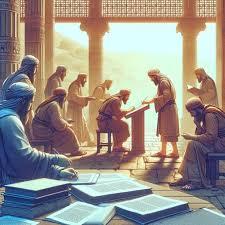
These are more Proverbs of Solomon, which were copied by the men of Hezekiah, king of Judah (25:1 BSB). As Tremper Longman III relates in his commentary on Proverbs, this is the fifth superscription of the book (see 1:1, 10:1, 22:17-21, and 24:23). It begins another section of the proverbs of Solomon, and will continue through the end of Chapter 29, but this time others are involved. The mystery of the verse has to do with the nature of the men of Hezekiah. However, first of all, we should mention that Hezekiah was king of Judah from 715 to 687 BCE (see the commentary on Isaiah, to see the link click GqIn the Fourteenth Year of Hezekiah’s Reign). Though he had lapses in good judgment, he was essentially a king known for his devotion to God (Second Kings Chapters 18-20; Second Chronicles Chapters 29-32; and Isaiah Chapters 36-39). It is likely that along with other acts of reform and renewal of worship following the destruction of the Northern Kingdom in 722 BCE, he also initiated more care in the transmission of sacred literature.

The tradition represented here, that people associated with Hezekiah had something to do with the composition and transmission of Proverbs, certainly is in keeping with what we know about this king from these other biblical sources above. Yet, the rather general reference to the men of Hezekiah does not enable us to be more specific in identifying exactly who they were: sages employed by the court? Priests charged with the transmission of the text, which may already have been considered sacred and authoritative? We can’t tell for sure. But it seems that these proverbs were also recognized as being authoritative and needed to be added to the growing collection that up to this point had been transmitted separately.471

These two proverbs are linked by their common reference to the “king” as well as the repetition of the verb “examine.” It’s God’s privilege to conceal things and it’s the king’s privilege to examine them (25:2 NLT). The first proverb sounds like a case of hide-and-seek. ADONAI hides something (Deuteronomy 29:29), and the kings try to search it out. God’s world is full of problems and puzzles beyond the capacity of ordinary people to understand them, but the king is there to unravel them and lead people to serve Him. The heavens are so high and the earth so deep, and there is no examining the heart of a king (25:3 Hebrew)! The second proverb teaches about the king’s profound thinking, motives, and emotions – his whole inner life. This is compared to other grand matters like the heavens and the earth. This proverb is addressed primarily to the sages who would work with the king, perhaps instilling within them proper respect.

This proverb fits in with those that speak to the dangers of associating with wickedness. Proverbs operate on the principle that people will become like those with whom they associate (see AlBad Company Corrupts Good Character). Here the stakes are high, because the person in view is the king, the most influential person in the kingdom. An analogy is drawn between the two verses of the passage. In the first, the process of refining silver is described in general terms. Lead ore contained some silver, and to get in a pure form, it was necessary to heat it and to melt off the lead oxide (dross). To get the good metal, one had to separate it from the worthless metal. In the same way, one should remove wicked people from the presence of the king, which is probably a reference to the king’s associates and advisors. Remove the impurities from the silver, and the sterling will be ready for the silversmith (25:4 NLT). Likewise, remove the wicked from the king’s court, and his reign will be established in righteousness (25:5 Hebrew). This proverb is addressed to the king’s righteous advisors, who needed to keep their king from bad influences.

Proverbs constantly warn us against arrogance as well as boasting. In general, the book warns against pride and promotes humility. How much more important these principles are when in the presence of nobility. After all, these are people who are due honor themselves, and they will find it difficult to tolerate people who try to bestow honor to themselves. Don’t demand an audience with the king or request to stand in the place of great men (25:6 Heb). The next verse makes it clear that it is not the honor itself that is bad. Rather, it is self-honor. It’s better to wait for an invitation to the head of the table than to be sent away in public disgrace (25:7b NLT). The hope is that the king will initiate honor to a person on his own. The primary audience for this warning is the slave who serves the court, though the principle may have a wider application.

The warning delivered by these verses is similar, and perhaps even the background, to the advice given by Yeshua: When someone invites you to a wedding banquet, do not recline in the place of honor, for a person more distinguished than you may have been invited. If so, the host who invited both of you will come and say to you, “Give this person your seat.” Then, humiliated, you will have to take the least important place. But when you are invited, take the lowest place, so that when your host comes, he will say to you, “Friend, move up to a better place.” Then you will be honored in the presence of all the other guests. Messiah said that when they arrive at a great banquet they should take the lowest place so that when the host arrives he might assign them a position of prominence. The person who honors oneself will not be honored, but the one whom the host (meaning God) honors will be honored indeed. For at the last judgment all those who exalt themselves will be humbled, and those who humble themselves will be exalted (Luke 14:7-11).

Whatever you have seen (25:7c NLT), don’t be in a hurry to go to court. For what will you do in the end if your neighbor humiliates you (25:8 NLT)? When arguing with your neighbor, don’t betray another person’s confidence. This proverb warns against an overtly accusation of some kind of wrongdoing. The language makes it sound like a legal “accusation,” but again, the principle is relevant for an informal accusation toward a neighbor or even toward a third party (thus making the situation a form of gossip, also utterly condemned by Proverbs). Eyes can be deceptive, so one must reflect on a situation before making an accusation. It could also be that what one saw was truthful, but couldn’t prove it, and so one’s accusation looks like a trumped-up charge. If the charge is false or unproven, then the neighbor can make the one making the charges appear to be a gossip at best, or unethical at worst.472

This proverb suggests that we keep all secrets, not just disputes. The principle is the same: keep private matters private. As the sage suggests, “Discuss your dispute with your neighbor.” In this discussion, however, the object should be the preservation of the relationship and reconciliation. It is for this reason that Pirqu Avot 2:15 reads, “Let the honor of your fellow be as precious as your own.”473

Argue your case with your neighbor, but do not reveal your secret to another (25:9 Hebrew). Others may accuse you of gossip, and you will never regain your good reputation (25:10 NLT). This proverbial saying follows nicely on the heels of the one preceding it. They both give godly wisdom about how to deal with perceived problems with a neighbor. Here, the advice is to criticize one’s neighbor directly without going public. The secret is the criticism that one has of a neighbor. The fear is that criticism may be overheard by a third party, perhaps sympathetic to the neighbor, and then the accuser will have the reputation of being a gossip, something severely criticized by the book of Proverbs (11:13, 17:4 and 18:8). This advice is echoed in the B’rit Chadashah by Yeshua Messiah Himself (see the commentary on The Life of Christ GiIf Brother of Sister Sins, Go and Point Out Their Fault).474

Refuse to listen to gossip. Gossip is the passing on information when you are neither part of the problem nor part of the solution. You know spreading gossip is wrong, but you should not listen to it, either, if you want to protect yourself and your place of worship. Listening to gossip is like accepting stolen property, and it makes you just as guilty of the crime. When someone begins to gossip to you, have the courage to say, “Please stop. I don’t need to know this. Have you talked directly with that person? People who gossip to you will gossip about you. They cannot be trusted. If you listen to gossip, God says you are a troublemaker because troublemakers listen to troublemakers (17:4 CEV). These are the ones who split [the congregations of God], thinking only of themselves Jude 1:19 (Msg). It is sad that in God’s flock, the greatest wounds usually come from other sheep, not wolves. Paul warned about “cannibal believers” who devour one another destroying fellowship. If you are always biting and devouring others, watch out! Beware of destroying yourself (Gal 5:15).475

Dear heavenly Father, praise You for the joy of giving You all honor. It is such a pleasure to honor You as the King of our lives, for You are so wise, loving and holy. Your love, ADONAI, is in the heavens, Your faithfulness up to the skies (Psalms 36:5). Your rule as King of kings (Revelation 19:16) is always done with righteous judgements. Your righteousness is like the mountains of God. Your judgments are like the great deep. (Psalm 36:6). Your rule is always done lovingly and with complete truth! Righteousness and justice are the foundation of Your throne. Lovingkindness and truth go before You (Psalm 89:14)

The four living creatures in heaven give an excellent example to follow as they worship You day and night. The four living creatures, each having six wings, were full of eyes all around and within. They do not rest day or night, chanting, “Kadosh, kadosh, Kadosh Adonai Elohei-Tzva’ot, asher haya v’hoveh v’yavo! Holy, holy, holy is the Lord God of Hosts, who was and who is and who is to come!” And whenever the living creatures give glory and honor and thanks to the One seated on the throne, who lives forever and ever, (Revelation 4:8-9).

You are worthy of our total adoration in honoring You for how awesome and excellent You are in every situation at all times! More worship comes from the twenty-four elders who fall down before the One seated on the throne and worship Him who lives forever and ever. And they throw their crowns down before the throne, chanting, “Worthy are You, our Lord and God, to receive glory and honor and power, For You created all things, and because of Your will they existed and were created” (Revelation 4:10-11)! To seek honor for oneself is so fleeting, but to honor You is a great joy that will last throughout all eternity! In Messiah Yeshua’s holy Name and power of His resurrection. Amen
 

2026-02-17T23:16:40+00:000 Comments

Df – Proverbs of Solomon Copied by Hezekiah’s Men 25:1 to 29:27

Proverbs of Solomon Copied by Hezekiah’s Men
25:1 to 29:27

Hezekiah’s men (see the commentary on Isaiah, to see link click GqIn the Fourteenth Year of Hezekiah’s Reign), perhaps royal scribes, copied more than 100 of Solomon’s proverbs. This was about 250 years after Solomon wrote them. Hezekiah’s men grouped many of these proverbs into units of similar thoughts.469 Men of literary ability were employed by the king who was himself interested in literature. During his reign, Shebna the scribe evidently copied a prominent position (Second Kings 18:18 and 37). In Second Kings 19:3, a message from Hezekiah to the prophet Isaiah displays fine literary style, and in Isaiah 38:10-20 a poem composed by the king on his recovery from illness is preserved. The proverbs in these chapters differ somewhat from Solomon’s original proverbs in that there are more multiple-line sayings and more similes; Chapters 28 and 29 are similar to Chapters 10 through 16, but Chapters 25 through 27 differ in having few references to ADONAI.470

2026-02-19T11:00:22+00:000 Comments

De – Further Sayings of the Wise 24: 23-34

Further Sayings of the Wise
24: 23-34

A proverb is a short and memorable saying designed to be our blueprint for living in the world that ADONAI has created. It is important to note that proverbs are not promises; they are generally true principles, all other things being equal.

These verses present an additional six sayings of the sages, the wise men of Isra’el (see 22:17). They discuss justice and injustice in the courts, honesty, priorities, bearing false witness, revenge, and laziness.

The first saying (24:23-25): In the addendum to the sayings of the wise, the first proverbial passage has to do with judging fairly, and its primary setting is in the court of law. It begins by clearly stating the principle behind the rest and condemns favoritism in judgments. Here are some further sayings of the wise: It is wrong to show favoritism when passing judgment (24:23 NLT). Verse 24 spells this out by citing an instance where the guilty party is declared innocent and presumably let go. A judge who says to the wicked, “You are innocent,” will be cursed by many people and denounced by the nations (24:24 NLT). No reasons are given for this immoral judgment, but since it probably assumes that the judges know better, it may envision a bribe and the possibility that the defendant is a friend of the judge. While verse 24 provides a negative motivation for judges to observe strict rules of justice, verse 25 describes the positive motivation. Those who judge fairly will be rewarded. But it will go well for those who convict the guilty; rich blessings will be showered on them (24:25 NLT). It is not explained how, but we see the contrast between the curse on those who twist justice and the blessing of those who render fair judgment. While the primary focus on this passage is the courtroom, the principle could be applied to honesty in all areas of life.466

The second saying (24:26): An honest answer is like a kiss of friendship (24:26 NLT). Cultivating a community takes honesty. You have to care enough to lovingly speak the truth, even when you would rather gloss over the problem or ignore an issue entirely (to see link click Ck Caring Enough to Rebuke). While it is much easier to remain silent when others around us are harming themselves or others are entrenched in a sinful pattern, it is not the loving thing to do. Most people have no one in their lives who loves them enough to tell them the truth (especially when it’s painful), so they continue in their self-destructive ways. We often know what needs to be said to someone, but our fears prevent us from saying anything. Many fellowships have been sabotaged by fear: No one had the courage to speak up in the group while a member’s life fell apart.

The Bible tells us to speak the truth in love (Ephesians 4:15) because we can’t have community without candor. The sage said: An honest answer is like a kiss of friendship (24:26 NLT). Sometimes this means caring enough to lovingly confront one who is sinning or is being tempted to sin. Paul says: Brothers and sisters, if someone in your group does something wrong, you who are spiritual should go to that person and gently help make him right again (Galatians 6:1-2 NCV

Many fellowships and small groups remain superficial because they are afraid of conflict. Whenever an issue pops up that might cause tension or discomfort, it is immediately glossed over to preserve a false sense of peace. Mr. “Don’t rock the boat” jumps up and tries to smooth everyone’s ruffled feathers, the issue is never resolved, and everyone lives with an underlying frustration. Everyone knows the problem, but no one talks about it openly. This creates an environment of secrets where gossip thrives. Paul’s solution is straightforward: No more lies, no more pretense. Tell your neighbor the truth. In Messiah’s body we’re all connected to each other, after all. When you lie to others, you end up lying to yourself (Eph 4:25 Msg).

Real fellowship, whether in a marriage, a friendship, or your place of worship, depends on frankness. In fact, the tunnel of conflict is the passageway to intimacy in any relationship. Until you care enough to confront and resolve the underlying barriers, you will never grow close to each other. When conflict is handled correctly, we grow closer to each other by facing and resolving our differences. The sage says: In the end, people appreciate frankness far more than flattery (28:23 NLT).467

The third saying (24:27): Prepare your work outside and make it ready for yourself in the field; afterwards, then, build your house (24:27 Hebrew). This proverb warns against establishing one’s internal needs before getting things in order in public. The reference to the field may be a reference to getting one’s source of income in order first, presuming that is, an agrarian setting of the proverb. The general principle is expressed this way: Don’t undertake anything hastily without due preparation.

The fourth saying (24:28): Don’t testify against your neighbor without cause; don’t lie about them (24:28 NLT). This is a common warning against bearing false witness (14:5 and 25). In this case, the focus is on false testimony about a neighbor. Though the language of false witness suggests a formal legal setting, the principle certainly applies also to gossip and rumor. To speak against a neighbor, there needs to be a reason; otherwise, the speaker is deceptive and creates discord in the community.

The fifth saying (24:29): And don’t say, “Now I can take revenge for what they’ve done to me! I’ll get even with them” (24:29 Hebrew). This proverb warns against seeking revenge. Somewhat connected to the previous proverb, a person might feel justified in seeking revenge if they felt their neighbor had harmed them earlier. Once again, the principle of this proverb can be applied generally as a warning against seeking revenge plain and simple. Yet it is also possible that this warning is from Ha’Shem, who says, in the spirit of Romans 12:19, that human beings don’t need to seek revenge because YHVH Himself will take care of the situation. Dear friends, never take revenge. Leave that to the righteous anger of God. For the Scriptures say, “I will take revenge; I will pay them back,” says the LORD (Romans 12:19 (citing Proverbs 25:21-22).

The sixth saying (24:30-34): I walked by the field of a lazy person, the vineyard of one with no common sense (24:30 NLT). Thorns had come up everywhere, the ground was covered with weeds, and its stone wall was broken down (24:31 BSB). Then, as I looked and thought about it, I learned this lesson: A little sleep, a little slumber, a little folding of the hands to rest – and poverty will come on you like a thief, and scarcity will attack you like an armed robber (24:32-34 Hebrew). This passage is an extended satire on lazy people. This topic is one of the most extensively commented upon throughout the book of Proverbs (see BeDon’t be Lazy). Laziness is the height of foolish behavior and deserves to be ridiculed. After all, it leads to difficult consequences for both the individual and the community, and it is easily corrected. The antidote is simple: hard work. Here a lazy farmer whose fields are in sad shape due to neglect. Thorns and weeds are everywhere, presumably crowding out the crop. Not only that, but the stone walls of the field are crumbling. The lesson is simple and obvious: neglect caused by laziness leads to unproductive fields, which leads to poverty.468

Dear heavenly Father, praise You for being so patient with me! Relationship with You is so important to cultivate. Neglecting one’s garden is not a good thing, but neglecting one’s relationship with You is extremely foolish. Your friendship is more valuable than any other treasure in the whole world because it brings real peace and true rest.  Come to Me, all who are weary and burdened, and I will give you rest. Take My yoke upon you and learn from Me, for I am gentle and humble in heart, and You will find rest for your souls (Matthew 11:28-30). Friendship with You takes time to develop, and every moment of that time is well worth the effort to push aside daily tasks and to sit in Your presence, meditating on how special You are and reading Your Word to know You better. How graciously You give me wisdom when I seek it. But if any of you lacks wisdom, let him ask of God, who gives to all without hesitation and without reproach; and it will be given to him (James 1:5).  We have a Kohen Gadol over God’s household. So let us draw near (Hebrews 10:19-22a). May we draw near to You our awesome and loving God, whom we love to praise now and thru all eternity! In Messiah Yeshua’s holy Name and power of His resurrection. Amen

2026-02-17T13:40:10+00:000 Comments

Dd – Shun the Wicked 24: 13-22

Shun the Wicked
24: 13-22

A proverb is a short and memorable saying designed to be our blueprint for living in the world that ADONAI has created. It is important to note that proverbs are not promises; they are generally true principles, all other things being equal.

The last section of thirty sayings (to see link click Cy Thirty Sayings of the Wise), consists of five proverb pairs. The introductory saying contains two encouragements: eat honey because it is desirable, beneficial, and sweet (verse 13), and know wisdom because it has the promise of eternal life (verse 14). The unit’s first prohibition cautions the disciple not to join the ranks of the wicked to take away the house of the righteous by cunning deceit and violence (verses 15-16). The righteous should not envy the temporary prosperity of the wicked because they will be annihilated (verses 19-20). The last pair (verses 21-22) builds on the preceding one, pointing to God and His righteous king as the ones who uphold the principle of retribution (see BvSecurity Through Righteousness).

The twenty-sixth saying (24:13-14): My son, eat honey, for it is good; yes, the honeycomb is sweet to the taste. In the same way, wisdom is sweet to the soul. If you find it, you will have a bright future, and your hopes will not be cut short (24:13-14 NLT). This proverb is yet another encouragement to pursue wisdom. It draws an analogy between eating honey and finding wisdom. Eating honey is pleasurable and can have beneficial results, as in 16:24, where honey is likened to wise words, both having medicinal quality. Moreover, honey has sexual undertones in a context like Song of Solomon 4:11. But the analogy can only be pressed so far since, as the sage warns in 25:16 and 27, eating too much honey can make a person sick. Surely the sage wouldn’t issue the same warning concerning wisdom. The benefit of wisdom is that it provides us with a future. It gives us hope. At the simplest level, this would refer to the fact that living by the principles of wisdom as enunciated in Proverbs would provide the strategy to avoid the problems that might lead to an early death. Furthermore, the pursuit of wisdom implies a relationship with divine Wisdom, which can even lead to life beyond the grave (see AfSh’ol).

The twenty-seventh saying (24:15-16): Do not wait in ambush at the home of the righteous, do not raid the house where the godly live. For although the righteous may fall seven times, they will get up again. But one disaster is enough to stumble the wicked (24:15-16 Hebrew). This proverb serves as a warning of the futility of trying to undermine the righteous. The sages understood that the righteous would suffer in this life (John 16:33), but they also had the ability to withstand those attacks. Life may beat them down, but they have hope (see verses 13-14 above) because of wisdom. They see beyond present trials and tribulations. The number seven is not a literal number, but is symbolic of completeness (see Genesis AeThe Number Seven), meaning that the righteous will always bounce back. On the other hand, the wicked will fall easily. It is important to note that proverbs are not promises; they are generally true principles, all other things being equal.

The twenty-eighth saying (24:17-18): Don’t rejoice when your enemy falls, and don’t let your heart rejoice when he stumbles. For ADONAI will see it and be displeased and turn His anger away from him (24:17-18 Heb). The warning is clear enough. When something bad happens to an enemy, don’t be happy lest Ha’Shem should be angry (see similar ideas expressed in Ps 35:15-16 and Job 31:29). But what type of enemy are we talking about here? Certainly, ADONAI didn’t get angry with Moses and the Israelites as they celebrated the destruction of the Egyptian army at the Sea of Reeds (Ex 15), or with Debra as she sang the victory song over Midian (Judges 5). Hence, the sage must be talking about personal enemies, fellow Israelites.463

Someone might keep the letter of Exodus 23:4-5 without keeping its spirit. That is, seeing a neighbor’s donkey fallen under its load, a person might help grudgingly, but inwardly rejoice at his neighbor’s misfortune. But the sage says: Do not rejoice when your enemy falls. At Pesach Seder, it is customary to remove one drop for each of the ten plagues that fell upon Egypt from the second cup. In keeping with this proverb, according to Isra’el’s sages, one mourns an enemy’s suffering through this tradition. Isra’el is instructed to mourn her enemy’s suffering by stating, “The works of My hands, the creatures to whom I give life, are drowned. When I weep that they are dead, do you sing praises to Me who slew them (Sanhedrin 39b)?464

The twenty-ninth saying (24:19-20): Do not get upset because of evildoers or be envious of the wicked. For evil people have no future; the lamp of the wicked will be snuffed out (24:19-20 Hebrew). This passage is the third time within the sayings of the wise where the sage warns against envy toward wicked people (see also 23:17-18 and 24:1-2). It must have been a common temptation for the wise to feel a righteous indignation as they saw godless people prosper in life. In the present passage, the sage warns that the lamp of the wicked will be snuffed out, which certainly implies that the godly indeed have a future. In that regard to the nature of that future envisioned here, one the one hand, it certainly is true that this passage and one’s like it cannot be used to prove a view of the afterlife in Proverbs. But on the other hand, it certainly seems unreasonable to think that the sages were thinking only of this life. After all, if the passage is alluding to physical death in verse 20, the sages were smart enough to know that the wise died too, and some of them even died at a young age. At the very least, then, this passage suggests that there was life beyond the grave.465

The thirtieth saying (24:21-22): My son, fear ADONAI and the king, do not associate with the rebels; for disaster will come upon them quickly, and who knows what calamities will come with them (24:21-22 Hebrew). “Crime doesn’t pay,” the saying goes. In a sense, this “Retribution Principle,” that humility brings wisdom and faithlessness destroys the wicked, is common sense. Dishonest, cruel, or immoral deeds have a way of being found out and of bringing trouble on heads of those who practice them. This is the law of natural consequences, but it goes much deeper. Justice is a part of human nature, built into us by our Creator. As wisdom was the first of God’s great words and built into the fabric of the universe (see BlWisdom’s Existence before Creation), we shouldn’t be surprised by the Retribution Principle. The principle of reward and punishment is fundamental our existence. We are moral beings made in the image of God who is just.

Dear heavenly Father, praise You for Your faithfulness! Wisdom follows Your love and turns from evil, for Your love for Your children is so amazing! You paid a great price of pain and shame (Hebrews 12:2) to rescue and redeem those who love You from sin’s evil grasp. For sin’s payment is death, but God’s gracious gift is eternal life in Messiah Yeshua our Lord. (Romans 6:23). Wisdom shuns wicked ways and wicked people and puts one’s complete hope and trust in You. You are our loving (Psalms 36:5, John 3:16), and the Prince of Peace. For to us a child is born, a son will be given to us, and the government will be upon His shoulder. His Name will be called Wonderful Counselor, Mighty God, My Father of Eternity, Prince of Peace (Isaiah 9:6). He rescued us from the domain of darkness and brought us into the kingdom of the Son whom He loves (Colossians 1:13). In Messiah Yeshua’s holy Name and power of His resurrection. Amen
2026-02-17T13:46:15+00:000 Comments

Dc – Standing Strong in the Storm 24: 3-12

Standing Strong in the Storm
24: 3-12

A proverb is a short and memorable saying designed to be our blueprint for living in the world that ADONAI has created. It is important to note that proverbs are not promises; they are generally true principles, all other things being equal.

The fourth unit of the Thirty Sayings of the Wise: (Cz) 22:17-21, (Da) 22:22 to 23:11, (Db) 23:12 to 24:2, and here in (Dc) 24:3-12, motivates the son to take hold of the wisdom that will give him strength when the storms of life come. After the typical initial educational saying in 24:3-4, the next saying introduces the theme in 24:5-6. He is encouraged to strategize wisely, discounting the ability of fools to do likewise (24:7-9), and 24:10 reveals when toughness and character can be tried. Those who fail to act righteously for those who are unjustly sentenced to die, will be judged. They can’t say they didn’t know (24:11-12).456

The twentieth saying (24:3-4): By wisdom a house is built, and by understanding it is established, and by knowledge all its rooms are filled with all sorts of precious riches and valuables (24:3-4 Hebrew). Elsewhere the sage has made a similar connection between wisdom and house building. Here the house is not just the physical structure, but would include it. Wise living would bring the resources and smooth the way for the construction of a fine house building. However, the deeper meaning is more relevant, and that has to do with family relationships. Wisdom implies the ability to say the right thing and act in the right way to build up community and not destroy it. We should also remember that ADONAI constructed the universe by means of His wisdom (3:19-20, 8:22-31). We also think the virtuous and capable wife builds her house through wisdom (see Dy – Wisdom for Women).

The twenty-first saying (24:5-6): The wise are mightier than the strong, and those with knowledge grow stronger and stronger (24:5 NLT). Surely you need guidance to wage war, and victory is won through many advisers (24:6 NIV). In this “better-than” proverb, we learn that wisdom is more important than strength. Again, as is the case with “better-than” proverbs, it is not a matter of strength being wrong or bad, but that wisdom is so much better. Indeed, the value of wisdom is not that it necessarily avoids war; but that it can provide the strategy through which strength can find its most efficient expression and thus lead to victory. Ecclesiastes provides statements and stories that back this up, and yet also acknowledge that ultimately even wisdom itself has limits (Ecclesiastes 7:19; 9:13-16).457

The twenty-second saying (24:7): Wisdom is too lofty for fools. Among the leaders at the city gate, they have nothing to say (24:7 NLT). Fools can be smart, but they cannot be wise. In Chapters 1-9 those who choose the path of wisdom reject the way of foolishness and build their lives on the fear of ADONAI (see AiThe Fear of ADONAI is the Beginning of Wisdom). One practical application of this occurs at the city gate, the place where public and legal decisions were made in a community.458 The second colon is the consequence. Since he is not willing to be corrected, he never attains the maturity to speak constructively to anyone else. If he had any prudence (1:4a), which he does not, he would keep his mouth shut. For even fools seem wise when they keep silent; with their mouths shut, they seem pretty intelligent (17:28 NLT).459

The twenty-third saying (24:8-9): Whoever plots evil will be known as a schemer (24:8 NIV). The schemes of a fool are sinful; everyone detests a mocker (24:9 NLT). The general public detests a wicked person who plots evil things. The picture of the wicked person is graphic: he devises evil and is a schemer, a sinner, and a mocker. Scheme (Hebrew: zimmah), elsewhere, describes outrageous and lewd behavior (Leviticus 18:17 and Judges 20:6). Here, the description of a schemer portrays him as a cold, calculating person. He is capable of intense mental activity, but it all adds up to sin. This type of person flouts all morality, and sooner or later the public will have had enough of him.460

The twenty-fourth saying (24:10): If you fail in the time of crisis, your strength is too small (24:10 Hebrew). “If” represents the hypothetical condition of being discouraged, entailing cowardice, fear, laziness and/or carelessness, a lack of resolute strength. In 25:19, in time of crisis points to disappointed confidence. A person reveals the degree and extent of his strength by his conduct in crisis. It is then, that toughness and character can be judged.461

The twenty-fifth saying (24:11-12): Rescue those who are unjustly sentenced to die; save them as they stagger to their death (24:11 NLT). Don’t excuse yourself by saying, “Look, we didn’t know.” For God understands all hearts, and He sees you. He who guards your soul knows you knew. He will repay all people as their actions deserve (24:12 NLT). God holds us responsible to be our brother’s keeper. Who is suffering among the people you know, someone you can help, and what are you doing about it? Or are you merely talking about it, or worse, even looking the other way? When action is required, words are empty, and ADONAI is not fooled. Here is another limitation. Your words cannot protect you, and they can expose you. In fact, they might give your enemies ammunition against you. Those who control their tongue will have a long life, but those who speak rashly will come to ruin (13:3 Hebrew).

Yeshua was the only person in all of history who never spoke an unguarded, self-indulgent word. He never spoke in a wrong way, not once, ever. In a way, Yeshua disproved Proverbs 13:3. His words were perfectly wise, and we felt outclassed, we felt threatened, we felt ashamed, so we killed Him – and He took it. Why? What happened at the cross? On the cross, Yeshua loved us so much that His sacrifice deleted the damning record before YHVH of every foolish word you and I have ever spoken. He took the divine condemnation for our lies, insults, gossip, put-downs, bragging, false promises, and griping, as well as our guilty silence when we should have spoken up. He took it all onto Himself and hit the delete button. Look at Him on the cross, dying for what you and I have said and left unsaid. See Him there, trust Him, and you are finally free of it forever.

As we consider these proverbs about the use of the tongue, every one of us is responding right now in either one of two ways. Perhaps you are saying, “Thank you. Now I know what to do. And I can do this. These proverbs are so practical. They give me the wisdom I need. So here I go.” Or perhaps your response is, “Oh no, now I see how stupid I’ve been. I’ve alienated my wife. I’ve injured my children. I’ve lost friends. I’ve been a fool, and I’m so defeated. What’s the point of even trying.” In other words, every one of us is either on the front end of foolish, disobedient words, and we don’t see it coming, or we are on the back end of foolish, disobedient words, and we are suffering for it. But here is the Word of God for all of us who are trusting in the Lord: So now there is no condemnation for those who are in union with Messiah Yeshua (Romans 8:1). If you are willing to believe that, can you let Yeshua be your speechwriter from now on? The Bible calls Him the Word (John 1:1, 14), everything that needs to be said, the only thing that needs to be said.462

Dear heavenly Father, praise You for Your infinite and perfect wisdom in all things. Please guide me with Your love and wisdom to speak only the words that would bring honor to Your holy Name. Since the heart is the source of one’s words and actions, help me strengthen my heart by meditating on how wonderful You are. As Messiah Yeshua explained, words are a reflection of the heart’s true nature. For from the overflow of the heart the mouth speaks.  The good man from his good treasury brings forth good, and the evil man from his evil treasury brings forth evil (Matthew 12:34b-35). You can see clearly into the heart. ADONAI said to Samuel, “Do not look at his appearance or his stature, because I have already refused him. For He does not see a man as man sees, for man looks at the outward appearance, but ADONAI looks into the heart” (First Samuel 16:7). May the words of my mouth and the meditation of my heart be acceptable before You, ADONAI, my Rock and my Redeemer. Thank You for always being with me and never leaving me. In Messiah’s holy Name and power of His resurrection. Amen

2026-02-16T12:13:19+00:000 Comments

Db – An Obedient Son 23:12 to 24:2

An Obedient Son
23:12 to 24:2

A proverb is a short and memorable saying designed to be our blueprint for living in the world that ADONAI has created. It is important to note that proverbs are not promises; they are generally true principles, all other things being equal.

An education that sounds very much like the prologues to the book (to see link click Aj – Proverbs to the Youth) and to the Thirty Sayings of the Wise (see CzPrologue to Thirty Sayings of the Wise) marks off the next seven sayings. They share the same theme and are entitled “An Obedient Son.” Heart is a key word that runs through the sayings. These sayings follow a chronological order, spanning one’s entire lifetime, from childhood (23:13-14) to a mother grown old (23:22). Sayings 17 and 18 implicitly contrast the wise and the foolish woman, resembling Lady Wisdom (see BnLady Wisdom’s Invitation to Life) and Madam Folly (see BoMadam Folly’s Invitation to Death). Thus, the verbal links, structure, and other literary features bind this subunit together and almost function as a prologue to the rest of the sayings.451

Introduction to sayings eleven to thirty (23:12): My son, apply your heart to instruction and your ears to words of knowledge (23:12 CJB). Verse 12 has all the markings of beginning a new unit, strongly resembling 22:17, and every word is identical in terms of the father’s introductory warnings to his lectures from 1:8 to 9:18. After an initial warning to apply oneself to instruction through words of knowledge, the text turns to the topic of children.

The eleventh saying (23:13-14): Don’t fail to discipline your children; the rod of punishment won’t kill them. Punish them with the rod and save them from sh’ol (see AfSh’ol) (23:13-14 Hebrew). This passage fits with others that also speak of the need to discipline children. The fact that the rod is mentioned indicates that the sages had no illusions about children. It is not a matter of trying to bring the best out of children. Wisdom had to be drummed into them, sometimes literally. To withhold discipline, even physical discipline, is a matter of neglect. Forcing them to instruction is a lifesaving act. The sage is not talking about rigorous beating, but something equivalent to appropriate spanking. This may be inferred from the matter-of-fact statement: save them from death, as well as the book’s general emphasis on moderation, kindness, and gentleness.

The twelfth saying (23:15-16): My son, if your heart is wise, my own heart will rejoice, everything in me will celebrate when you speak what is right (23:15-16 NLT). A teacher’s joy is contingent on the student’s demonstration of wisdom. After all, this is the purpose behind the teacher’s efforts at instruction. These two verses demonstrate again (16:23 as well) the connection between the inner person and speech. A wise heart will lead to words of integrity, and from words of integrity, the hearer can deduce a wise heart. The desire is that the son will seek out and speak like Lady Wisdom.

The thirteenth saying (23:17-18): A prohibition not to be jealous of sinners now complements the parent’s teaching of wisdom. Don’t let your heart be jealous of sinners, but always live in the fear of ADONAI. You will be rewarded for this, and your hope will not be cut off (23:17-18 NLT). Psalm 73 and psalm 37 are classic examples of a person who struggled with jealousy toward sinners and may serve to give a solid example to the principle expressed here. The psalmist looked at the wicked and saw that they seemed to live a much more pleasant life than he, a godly person, enjoyed. He saw them prosper despite their wickedness (Psalm 73:3 NLT). They seemed rich, healthy, and happy, while he was struggling. As a result, he began to question ADONAI. The psalm, however, was written after the struggle. He had come to see that the prosperity of sinners was only short-lived. They were actually on a slippery path . . . sliding over the cliff to destruction (Psalm 73:18 NLT). He saw that his reasoning up to this point would have led him to his own destruction. In other words, it would have taken away his hope for the future. He came to realize that my health may fail, and my spirit may grow weak, but God remains the strength of my heart; He is mine forever (Psalm 73:26 NLT). Thus, he began his poem with: Truly God is good to Isra’el, to those whose hearts are pure (Psalm 73:1 NLT). Thus, the teacher hopes the student will adopt the same perspective.452

The fourteenth saying (23:19-21): Listen, my son, and be wise, and set your heart (the seat of intellect and controls actions) on the right path (23:19 NIV). This passage begins with the encouragement to be wise. It is followed by another command warning the son to set his heart on a godly path. What is surprising about this is that elsewhere in Proverbs that the natural inclination of the heart is always towards evil. I think the best understanding of the dynamics of this verse is that it assumes that the son has made a commitment to stay on the path of wisdom. Once the decision to follow the godly path has been made, the father is encouraging the son to stay on the right path. At this point the passage turns into a prohibition of excess in terms of alcohol and food. Do not join those who drink too much or gorge themselves with meat, for drunkards and gluttons become poor, and too much sleep clothes them in rags (23:20-21 NIV). Drunkenness and gluttony are criticized. Elsewhere, the rationale for criticizing drunkenness has to do with affecting one’s ability to make decisions (20:1, 23:29-35, and 31:1-9). In other words, it disrupts one’s ability to act wisely. The same thing can be said about overeating, which would lead to sluggish behavior, not the kind of diligent work so frequently encouraged in the book. However, the clear motive given here is specifically against drunkenness since such excess would lead to poverty. Spending too much money on alcohol would be foolish. Because wine is a mocker and beer is a brawler, whoever is led astray by them is not wise (20:1 NIV).

The fifteenth saying (23:22-23): Listen to your father who gave you life, and do not despise your mother when she is old (23:22 NIV). This passage reminds us of the warnings of the first part of Proverbs, where we read: A wise son brings joy to his father, but a foolish son brings grief to his mother (10:1b NIV). It all begins with the child’s willingness to pay attention to instruction that the wise parents teach their children. After all, the very life of the child is the result of the union of the father and the mother. Besides the appeal to birth, we also see the advanced age of the mother. This reference to age is not an appeal to pity, but highlights the mother as a source of great wisdom. Therefore, the child should buy the truth [of the parents] and never sell it; buy wisdom, instruction, and understanding (23:23 Hebrew). Basically, as we have seen in so many places in Proverbs, there is no amount of wealth that would be worth parting company with wisdom.453

The sixteenth saying (23:24-25): The father of a righteous child has cause for joy. What a pleasure it is to have children who are wise (23:24 NLT). This verse is about parental joy, a father of a righteous or wise child experiences great happiness and delight in him, emphasizing the reward of raising children to follow God’s path and wisdom, contrasting with foolishness and worldliness. So give your father and mother joy! May she who gave you birth rejoice (23:25 NLT). Every one of us has a dad and a mom. So ADONAI is speaking to all of us here. How can we grow in wisdom toward our parents? The key words in Proverbs 15:20 and 20:20 are despises and curses. Those words are the opposite of wisdom. The fifth commandment says: Honor your father and your mother (see the commentary on Deuteronomy BpHonor Your Parents). And that command not to despise, not to curse, but to honor our parents. And that command applies to us all of our lives, even after we grow up and leave home.454

The seventeenth saying (23:26-28): Again, the father appeals to his son to pay attention to his teaching. He desires that his son follow his instruction and thus stay on the right path. The path is a metaphor for the course of one’s life and derives from the idea that life is a journey. This metaphor is extensively used throughout Proverbs, especially in Chapters 1-9. My son, give me your heart and let your eyes delight in my ways, for a harlot is a deep pit and an adulterous woman is a narrow well (23:26-27 NIV). The image of a deep pit is used for the mouth of an adulterous woman in 22:14. On the surface, a deep pit and a narrow well are metaphors of danger. If one falls into a deep pit or a narrow well, then injury or even death would be likely. The reference to sexual danger, however, cannot be missed. Like a bandit she lies in wait, and increases the faithlessness among men (23:28 NIV). She ambushes like a robber (Job 9:12). It’s not to say that the young man who falls for her allure is guiltless, but the sage sees the woman initiating the advance. The proverb only provides a snapshot. The proverb is a warning, not to just any young man, but to those who are on the right path. Not young men out looking for prostitutes, who would be described as fools. The proverb, then, may recognize that illicit sexual relations are an especially difficult temptation, even for young men who have their eyes on the right path.

The eighteenth saying (23:29-35): This proverb warns against the dangers of excess drinking by providing a frightening picture of the grip of addiction. The passage begins with a series of questions that can be easily answered by reading the rest of the text. Who has anguish? Who has sorrow? Who is always fighting? Who is always complaining? Who has unnecessary bruises? Who has bloodshot eyes. It is the one who spends long hours in the taverns, trying out new drinks and then ends up gazing at the wine when it is red (23:29-30 NLT)? They are in anguish because of the pain and distress their compulsion brings to their lives. They get into fights when someone says, “Shut up,” but because they are so drunk, they hear, “Stand up!” They say the wrong thing at the wrong time and don’t see clearly, think clearly, or act appropriately under the influence.

The Bible doesn’t condemn drinking alcohol, the Bible condemns getting drunk (see Ephesians BtBe Filled with the Ruach). Earlier in Proverbs, vats overflowing with good wine were mentioned as a result of honoring ADONAI (3:10). Indeed, Lady Wisdom’s banquet presents mixed wine (9:2 and 5). But as with many good things, there is a danger for addiction; thus the warnings in Proverbs must be seen as highlighting the dangers of excessive drinking. For other passages that warn against this see 20:1, 21:17, 31:4 and 6.

The warning comes in the next verse as the sage warns young men to stay far away from excessive drinking. Don’t look at it when it sparkles in the cup and goes down so smoothly (23:31 Hebrew). Don’t even look at it! Like the adulterous woman (see Chapters 5-7), it looks so enticing, and the drink goes down the throat so smoothly, but the consequences are disastrous. But in the end it bites and stings like a poisonous snake (23:32 CJB). So before it kills, it disorients. Your eyes will see strange things. Strong drink blurs the vision, so the drunk sees that they are not there. How can one act with wisdom if one cannot know the reality of the situation? Also, the mouth starts saying things that are offensive, and your mind will say crazy things (23:33 Hebrew). The metaphors of verse 34 capture the sickening lack of balance of a drunk. You will stagger like a sailor tossed at sea, clinging to a swaying mast (23:34 NLT). And you will say, “They hit me, but I’m not hurt. They beat me, but I didn’t feel a thing. When will I wake up so I can have another drink” (23:35 NIV)? Drink softens pain in a way that isn’t helpful; there will be plenty of pain when the booze wears off. And if casual drinking turns into an addiction, the drunk will be in a frantic search for the next drink.

The nineteenth saying (24:1-2): Don’t envy the wicked or desire their company, for their hearts plot violence (24:1 NIV). This passage is similar to 23:17-18 and 24:19-20, and especially the comments about jealousy of the wicked as explained in Psalms 37 and 73. In this proverb, association with the wicked is prohibited because the sages understood the power of influence (see AlBad Company Corrupts Good Character). If one envies and associates with evil people, then it is more likely that they will become evil themselves. And their lips always stir up trouble (24:2 NIV). The second colon reminds us of the nature of evil people, once again showing the connection between the heart and the lips. Their heart, representing their inner character, desires violence, so their lips speak trouble that will lead to wickedness.455

Dear heavenly Father, praise You for being so wonderful! How important it is to listen to Your words and to follow them, for by following You, then I will be on the right path. I want to please you so much. How important it is to meditate on all that Messiah Yeshua has said, for all the treasures of wisdom and knowledge are hidden. And You give wisdom to the wise and knowledge to the discerning. May those who believe in You, be conformed into Your image (Romans 8:29a). May I call on You for wisdom (James 1:5) and train up my children to be wise and obedient, living to please you! In Messiah Yeshua’s holy Name and power of His resurrection. Amen

2026-02-16T12:02:36+00:000 Comments

Da – Ten Sayings about Wealth 22:22 to 23:11

Ten Sayings about Wealth
22:22 to 23:11

A proverb is a short and memorable saying designed to be our blueprint for living in the world that ADONAI has created. It is important to note that proverbs are not promises; they are generally true principles, all other things being equal.

In his book Jesus and Proverbs, Reconciling the teachings of Jesus and Proverbs regarding money and business, Gary Miller states: If we are honest, we must admit there are major differences between Proverbs and the teachings of Yeshua. The overriding message in Proverbs is that a wise man works hard, plans ahead, saves for the future, is honest in his business dealings, and, over time discovers that the ways of ADONAI work. A man who continues down this path will eventually enjoy material prosperity, which is evidence that he is following God’s common-sense instructions.

In contrast, Yeshua repeatedly teaches the blessing of being poor and the foolishness of focusing on material things. He reminds us that material wealth is a great snare, and emphasizes the superiority of eternal and unseen treasures compared to temporal material wealth. If we do accumulate earthly wealth, we are to sell it and give it to the poor. In other words, we need to exchange earthly treasure for eternal wealth. Biblical financial counselors and business planners use both the teachings of Yeshua and the book of Proverbs. There is nothing wrong with this. But they (and we) need to be careful in reconciling their differences.

Although Yeshua’s perspective on wealth is different from Proverbs, notice that He never suggested that the truths in Proverbs are no longer valid. He didn’t say, “You have heard it said that he that plows the ground will have plenty of bread, but I say to you: Don’t get up early to work in the field. Relax, God knows you need food and will bring it to you.” The Master didn’t say it was impossible to accumulate earthly wealth by heeding Proverbs. He just taught that earthly wealth wasn’t worth accumulating.

A central theme runs throughout Messiah’s teaching regarding money and possessions: everything around us will soon be gone. And since that day is quickly approaching, a wise man will view life, money, and possessions from an eternal perspective. Yeshua wasn’t saying that having a good work ethic, saving for known expenses, or being diligent in our financial decisions isn’t beneficial. But He is saying that a man can do all of this and still be bankrupt at the end of his life. Actually, Solomon also hinted at the foolishness of focusing only on material wealth: A pretentious, showy life is an empty life; a plain and simple life is a full life (13:7 MSG). Even in the TaNaKh there was a basic understanding that earthly wealth alone was insufficient, and Yeshua continually emphasized the folly of having an earth-bound vision.

Many of us have grown up reading and listening to the Sermon on the Mount. We hear what Yeshua said, we discuss and try to understand what He really meant, and we memorize many of the passages. But remember, the Master was talking to people who had been raised on the book of Proverbs and the Torah. I don’t think we can comprehend the powerful impact that His teachings had when they were first spoken. Imagine growing up in a time when you were taught that ADONAI materially blesses those who are faithful to Him. And then Yeshua comes along saying: It is easier for a camel to go through the eye of a needle, than for a rich man to enter the Kingdom of God. No wonder the masses were astonished.446 So what are we to do with the differences in focus and message? Although Proverbs and the teachings of Yeshua have a different purpose and focus, they do not contradict each other. In fact, both are necessary. Let’s look at how both messages have powerful roles to play in our lives today (to see link click Do – Torah and Wealth).

The first saying (22:22-23): Do not rob the poor just because you can, or exploit the needy at the gate. For ADONAI will plead their case and take the life of those who rob them (22:22-23 Hebrew). To rob anyone is a crime, but to rob the poor, who are already in a difficult situation, is especially evil (Exodus 22:21-23 and 23:6; Deuteronomy 24:14-15). The same is true about the oppression of those who are already suffering. To do so publicly is especially humiliating. The reference to the gate points to a legal setting in court.

The second saying (22:24-25): Do not make friends with a hot-tempered person, do not associate with one easily angered, or you will learn to be like them and endanger your soul (22:24-25 NLT). The book of Proverbs teaches that we should associate with people of wisdom and avoid those who practice foolish behavior. Otherwise, as this passage states, their bad behavior will rub off on us and so will the negative consequences due them (see AlBad Company Corrupts Good Character). In this case, angry behavior is specifically named as something to be avoided. This passage is not talking about just an occasional outburst of anger, but rather about people characterized by their anger. This shows a lack of self-discipline and an absence of emotional intelligence.

The third saying (22:26-27): Don’t agree to guarantee another person’s debt or put up security for someone else. If you can’t pay it, even your bed will be snatched from under you (22:26-27 NLT). Proverbs makes it clear that the wise are generous. However, to be generous means giving money to the poor without the expectation of return. Here and elsewhere, however, we have a different situation. There is an expectation of return. Whatever the circumstance, giving a loan is a mistake, but it is even more of a mistake to cosign another person’s loan. Such people may lose everything (see below). This proverb not only gives good advice, but other proverbs provide an “out” if someone should pressure us to do so. We have Scripture to back us up (6:1-5, 11:15, 17:18, 29:16 and 27:13).447

This consequence of this teaching is especially painful for my family. In 1927 my grandfather foolishly cosigned a loan to enable a relative to buy a farm. But in 1929 the stock market crashed and America entered the Great Depression. My grandfather couldn’t pay the bank for the loan that he cosigned and lost the thousand-acre farm that had been in our family for 110 years, the land deed being signed by President James Monroe. My grandparents and my mother, a child at the time, were economically ruined as a result.

The fourth saying (22:28): Don’t move an ancient boundary stone set up by your ancestors (22:28 CJB). Land was absolutely for ancient Israelites. After all, their society was predominately agricultural for much of their history. Not only that, but their land was distributed by divine choice to the tribes and then to individual families after settlement. The land was God’s gift in fulfillment of His promise to Abraham (see the commentary on Genesis DtI Will Bless Those Who Bless You and Whoever Curses You I Will Curse). Indeed, if for any reason a family was separated from its ancestral lands (perhaps for reasons of debt), their property would be returned to them during the Year of Jubilee, which occurred every fifty years (see the commentary on Leviticus EmThe Year of Jubilee).

The removal of a boundary stone would be an attempt to encroach upon, or even totally possess, the land of another person (see the commentary on Deuteronomy DnMoving a Boundary Stone). Not even a king could take the land of another person (see the commentary on Elijah and Elisha Az – King Ahab and Naboth’s Vineyard). Other passages that have to do with the ban of the removal of a boundary stone include Job 24:2; Proverbs 23:10; Hosea 5:10.

The fifth saying (22:29): Do you see anyone truly skilled at their work? They will serve kings rather than working for ordinary people (22:29 Hebrew). This proverb states that those who work hard and are skilled will succeed in their careers. They will work for the most powerful people in the society, while those who are not diligent will spend their careers working for people on the lower end of the social order. As always, it is important to note that proverbs are not promises; they are generally true principles, all other things being equal.

The sixth saying (23:1-3): When you sit down to dine with a ruler, think carefully about who is before you (23:1 CJB). Put a knife to your throat if you are given to gluttony. Do not crave his delicacies, for that food is deceptive (23:2-3 NIV). This proverbial saying is composed of three related warnings and seems to be the most relevant for those who are in service, or at least have access, to a powerful ruler. Nonetheless, broader application may be derived from this teaching. This particular proverb helps to counsel an adviser for table manners. It may seem a trite thing, but dining is actually an opportunity for people to demonstrate the type of self-control they need to have. Just as the wise are able to control their emotions and their speech, they also need to control their appetites. And there would be no greater temptation than at the splendid table of a ruler. If he saw a potential adviser’s appetite get the better of him, then how could the ruler trust him to control himself in other matters. In this way, the food could be deceptive: it was a potential trap that could cause a prospective adviser to lose an opportunity. The image of a knife at the throat suggests that it would be better to slice one’s own throat than to overeat in the presence of the ruler.

The seventh saying (23:4-5): Don’t wear yourself out trying to get rich. Be wise enough to know when to quit. Because in the blink of an eye, wealth disappears, for it will sprout wings and fly away like an eagle (23:4-5 NLT). This proverb within the context of Proverbs is quite striking. After all, there are a considerable number of proverbs that support hard work and imply that wealth will come to those who are wise (3:9-10, 10:22, 14:24). But these proverbs do not tell the whole truth. There are times and circumstances where people can work hard and are still poor. There comes a time when enough wealth is enough, according to this proverb. And in any case, when wealth does come, it often doesn’t stay for long. Thus, this proverb helps us put riches in their proper perspective. As with poverty, being rich also poses dangers (Proverbs 30:7-9 and Ecclesiastes 5:13-17). Believers will recognize a similar statement toward fleeting riches in Matthew 6:19: Don’t store up treasures here on earth, where moths eat them and rust destroys them, and where thieves break in and steal.448 The Art Scroll translates this as, “Do not weary yourself to become rich; withhold from your own understanding. You cast your eyes upon [wealth] and it is gone, for it makes wings for itself.” Pirqe Avot 28 therefore notes, “The more flesh, the more worms. The more possessions, the more worries.”449

The eighth saying (23:6-8): Don’t eat with people who are stingy; don’t desire their delicacies. For they are always thinking about how much it costs. “Eat and drink,” they say, but they don’t mean it. You will throw up what little you’ve eaten, and your compliments will be wasted (23:6-8 NLT). Whereas 23:1-3 gave advice about table manners with a king, here we have advice about dining with a stingy person. A specific connection can be seen in the warning in both passages not to desire their delicacies. In both cases, though the food is tempting on the surface, it should be resisted. Stingy (literally evil eye) people are those who may seem to encourage you to eat, but are really not interested in your well-being or enjoyment. The delicacies are really a sham. The hosts are, after all, stingy, so the food that they serve will really be low quality. The food really tastes horrible, and like a hair in the throat, it will be vomited up. So any compliments will be wasted on them.

The ninth saying (23:9): Don’t waste your breath on fools, for they will despise the wisest advice (23:9 NLT). The wisest advice will bounce off the ears of fools. Even worse, it will bring on their hostility. Fools are set against wisdom, especially if that wisdom involves any kind of criticism of their favorite sin. Yeshua made a similar comment to His disciples: Do not throw your pearls to pigs. If you do, they may trample them under their feet, and turn and tear you to pieces (Mattityahu 7:6).

The tenth saying (23:10-11): Don’t cheat your neighbor by moving the ancient boundary stone or take the land of defenseless orphans, for their Redeemer (see the commentary on Ruth AxRuth and Bo’az on the Threshing Floor) is strong and He Himself will bring their charges against you (23:10-11 Hebrew). This proverb has to do with social justice. The first colon is identical to that of 22:28, and the discussion of land and boundaries there should be checked. The second colon applies the ban against raiding the property of others to orphans. Along with widows, orphans are a group that is socially powerless, not having parents to take care of them. This proverb lends the authority of wisdom teaching behind the charge not to take advantage of the weakness of orphans.450

Dear heavenly Father, praise You for being so wise! You so perfectly put together all the books in Your Word to complement each other. Both Proverbs and Messiah speak wise instructions about wealth. Messiah Yeshua spoke with a perspective for how wealth was to be used in His coming eternal Kingdom (Dani’el 7:13-14). Messiah told of how important it was to use money/talents for God (Matthew 25:14-30). How time and money is used, is a reflection of who the heart loves. Thank You for giving Your children Your Word with books such as Proverbs and the Gospels. To the One who sits at God’s right hand. Amen

2026-02-13T12:39:01+00:000 Comments

Cz – Prologue to Thirty Sayings of the Wise 22: 17-21

Prologue to Thirty Sayings of the Wise
22: 17-21

A proverb is a short and memorable saying designed to be our blueprint for living in the world that ADONAI has created. It is important to note that proverbs are not promises; they are generally true principles, all other things being equal.

This passage serves as an introduction to a new section of thirty sayings of the wise, which conclude with 24:22. As an introduction to a major section of the book of Proverbs, these verses serve essentially the same function as the introduction to the whole book (to see link click AiThe Fear of ADONAI is the Beginning of Wisdom), giving insight into intentions of the composer/compilers of the material.

Motivating the son to hear (22:17-18): The introduction begins with an appeal to pay attention to the material that follows. We can be confident that the instruction is directed from a wisdom teacher to a pupil. However, anyone would be wise to pay attention. Listen to the sayings of the wise, and apply your heart to knowledge (22:17 NLT). The reference to the sayings of the wise attributes the following thirty sayings to a group of unnamed sages. Proverbs were often passed down anonymously, and so it is not likely that the writer of the prologue had specific people in mind. It is a way of saying that the following teaching had its origin in the wisdom tradition. If some proverbs happen to come to Isra’el by way of Egypt (as some propose), then we are not even to restrict the “wise” to a collection of Israelite wisdom teachers. However, even if their origin is foreign, their content is perfectly in keeping with native Israelite wisdom, and inspired by the Ruach Ha’Kodesh, for ADONAI can even make a donkey speak truth (Numbers 22:21-40). Verse 18 begins to give the motive why the students should be receptive to the teaching. For it is good to keep these sayings in your innermost being and always have them ready on your lips (22:18 Hebrew). Their lives will go better if these sayings are internalized. The term innermost being is literally “stomach.” To keep them in your stomach is a picture of integrating them into the innermost part of a person’s being. The integration of the sage’s wisdom needs to come before it can be used in the student’s own life. In other words, appropriation into the student’s character is then followed by their own ability to express wisdom: have them ready on your lips.444

Janus (22:19): I am teaching you today, yes, you, so that you will trust in ADONAI (22:19 NLT). The center line functions as a janus, named after the Roman god of endings and beginnings, symbolized by having two faces – one looking back toward the past and one looking forward toward the future. Thus, this verse looks back its focus on the son in 22:19a and looks forward its focus on the father in 22:19b.

The father’s purpose (22:20-21): I have certainly written thirty sayings for you, filled with advice and knowledge. In this way, you will know the truth. These sayings are trustworthy, unshakable advice, having insight into the morality of the students. In sum, the sages aim through these thirty sayings to ground the character and social structure of Isra’el by teaching these sayings that demand trust in ADONAI into the belly of Isra’el’s covenant sons and placing them on their lips, so that they may accurately answer those whom they serve (22:20-21 NLT). Through these sayings, the king ensures that the entire chain of within his administration will be honest, making decisions on the basis of truth, not lies.445

2026-02-13T10:16:35+00:000 Comments

Cy – Thirty Sayings of the Wise 22:17 to 24:34

Thirty Sayings of the Wise
22:17 to 24:34

Proverbs 22:17-21 provides an introduction to the next main division to the book (to see link click CzPrologue to Thirty Sayings of the Wise). This section falls into two parts. The first part (22:17 to 24:22) is introduced as the sayings of the wise (22:17). It resembles the first nine chapters, being directly addressed to a disciple who is called a son, and in its style as a moral sermon. The sages exhort their hearers to listen to the words of the wise (22:17), comprising thirty (22:20) sayings (through 24:22). The second part is introduced by the statement: These are further sayings of the wise (24:23-34). These thirty sayings were written by various sages, with Solomon compiling and editing many of them.

In style, this section includes at least twenty instances in which two verses express a complete thought, rather than one verse, as in 10:1 to 22:16. Also, seven verses have three lines rather than the normal two lines (22:29, 23:5, 29, and 31, 24:14, 27, and 31), and two verses have four lines (23:7 and 24:12). My son occurs five times (23;15, 19, and 26, 24:13 and 21) whereas it occurs fifteen times in Chapters 1-9, and only once (19:27) in 10:1 to 22:16 and only twice (27:11 and 31:2) in the rest of the book. A wise son occurs once (23:24) in 22:17 to 24:34 compared with five times in 10:1 to 22:16.

Many sayings of the wise are warnings, using the words: do not (see 22:22, 24, 26, 28, 23:3-4, 6, 9-10, 13, 17, 20, 22-23 and 31, 24:1, 15, 17, 19, 21, and 28-29). Interestingly each of the thirty sayings in 22:22 to 24:22 includes a reason for the warning or other advice and several of the sayings in 24:23-34 include reasons. The sayings in 22:17 to 24:34 were written by wise men other than Solomon, and were compiled either during his lifetime or shortly thereafter. As stated in 22:20, the first portion (22:17 to 24:22) includes thirty sayings. For example 22:22-23, the first saying; and 22:24-25, the second saying.443

2026-02-19T10:59:47+00:000 Comments

Cx – Train Up a Child in the Way He Should Go 22: 1-16

Train Up a Child in the Way He Should Go
22: 1-16

A proverb is a short and memorable saying designed to be our blueprint for living in the world that ADONAI has created. It is important to note that proverbs are not promises; they are generally true principles, all other things being equal.

ADONAI’s sovereignty and wealth (22:1-9): The key root (Hebrew: osher) occurs as riches in verses 1 and 4, and as the rich (Hebrew: ashir) in verses 2 and 7. Its antonym poor (Hebrew: rush) occurs in verses 2 and 7, and its synonym the poor (Hebrew: dal) occurs in verse 9. Since the generous in verse 9 suggests that the metaphor points to the oppressive rich in verse 7, most verses in this subset (except verses 5-6) contain terms pertaining to wealth. This subunit teaches that ADONAI pays back virtue and punishes vice. Isra’el’s Sovereign is mentioned explicitly in verses 2 and 4 and implicitly by “blessed” in verse 9. Thus, the subunit aims to sober the rich, console the poor, warn the oppressor, and comfort the oppressed.432

Introduction: a good name is better than wealth (22:1): A good name is more desirable than great riches; graciousness (Hebrew: chen) is better than silver or gold (22:1 Hebrew). This proverb is in the form of a “better-than” parallelism that compares relative values. Wealth is indeed a good thing, but something even better is a good name. The second colon makes it clear that this reputation is one of graciousness. People who show grace to others are indeed those who have a wonderful reputation with those with whom they come into contact. A good name is better than perfumed oil (Ecclesiastes 7:1a). It is better to be in a healthy relationship with other people than it is to have an abundance of impersonal material possessions. If one has to choose between the two, and that is not always the case, it is better to choose the things that bring us into a more intimate relationship with other people.

ADONAI’s sovereignty over wealth and human accountability (22:2-4): The rich and poor have this in common – ADONAI made them both (22:2 CJB). On the surface, those who are rich and those who are poor have plenty of differences. In most societies, ancient Isra’el as well as modern, the two keep a healthy distance between themselves. Even in Proverbs, the two social classes are discussed separately, and, all things being equal, the wise devise living strategies that will bring them material blessings, while the poor often, but not always (13:23), are poor because of poor life choices. However, this proverb reminds us all, probably especially the rich, that the poor are human beings, formed by the same Creator. This observation should lead the rich to avoid oppressing those who have less than they do.

A prudent (1:4a) person foresees danger and takes precautions; the simpleminded goes blindly ahead and suffers the consequences (22:3 NLT). This is an observation on a basic principle of living that separates the wise (here prudent) from the foolish (here simpleminded). While one recoils from evil and its possibility, the other goes out of his way to get involved with evil. In Proverbs 7, we get a picture of a simple-minded man who, seeing the promiscuous woman, does not run like Joseph from Potiphar’s wife (see the commentary on Genesis, to see link click JiPotiphar’s Wife said: Come to Bed with Me! But Joseph Ran), but rather goes to her house (see BiAvoid the Seductress) and would pay dearly for his sin. See the virtually identical proverb in 27:12; also see 14:15 and 18.433

The reward for humility is the fear of ADONAI, along with wealth, honor, and life (22:4 CJB). The fear of ADONAI is not the spirit of our times. Self-esteem is the spirit of our times. Now, the Bible is not saying there is no place for a sense of personal growth. But that doesn’t come first. The fear of ADONAI is the beginning of wisdom (???). He comes first, not self, but Messiah. He is our most urgent need and the key to our future. That is what the Bible is saying, and for us, that is an adjustment.434 Those who fear ADONAI, and thus know their place in the world, are by definition humbled. They know they are not the center of the universe. The proverb describes the rewards to those who are truly wise as wealth, honor, and life. As always, it is important to note that proverbs are not promises; they are generally true principles, all other things being equal.

Center: Educating youth the right way (22:5-6): Corrupt people walk a thorny, treacherous path; whoever values life will avoid it (22:5 NLT). The idea behind this proverb is fairly clear. It is simply that the lives (here represented by the path) of corrupt people are overcome with all kinds of obstacles. Therefore, those who care about the course of their lives should stay far away from those people. This proverb fits in with those that encourage people to associate only with the wise and avoid the foolish.435

Train up a child in the way he should go, and when he is old, he will not depart from it (22:6 Hebrew). Your few years with your children are a life-shaping opportunity. It might feel like, right now, as though these high-commitment, child-rearing years will never end. But they will, and soon. Right now is your moment for lifelong impact. There is more at stake for your children than getting into the best schools and best sports team or the best jobs. Your child has an eternal destiny. ADONAI has called you to train up your child to go to heaven. That is ultimately the way he should go. The question for you is this: How do you help him get there?

The word translated train up means dedicate. Dedicate your child to Messiah. Do not raise your child for a worldly dream. Warn your child against the world (First John 2:15-16). It is an easy way to hell. Your parental role is to model a love for Yeshua. The Hebrew word translated train up is related to an Arabic verb that is used of rubbing the palate of a newborn child with a date mixture, to get the child to suck. It means to accustom a child to a test and to motivate a child to take it in. And the best way for you to influence your child in that way is for you to be dedicated to Messiah yourself. Children can sense hypocrisy immediately. They also know sincerity. If you want your children to be passionate for Messiah, let them see that passion in you, so your child tastes how good it is and wants more.436

It is important to note that proverbs are not promises; they are generally true principles, all other things being equal. Solomon recognized that there are strategic opportunities for positive training and instruction during the childhood years. The lessons learned during these formative years will serve as guideposts for later adult life.

ADONAI punishes the rich and rewards the generous (22:7-9): Just as the rich rule the poor, so the borrower becomes a slave to the lender (22:7 NLT). Financial decisions have the power to preserve life or enslave. The contrast between the two is clearly displayed in Proverbs. Those who borrow money become enslaved to those who have lent it to them. Yet, those who save for hard times may preserve their lives. The difference between the two outcomes depends on our attitudes toward possessions and money. That is not to say that it’s wrong under any and all circumstances to take on debt. Loans for the purchase of homes and vehicles are often necessary. However, the person who gets a mortgage or a car loan should be aware of the ramifications of the debt, and should pay it off as quickly as possible. In addition, he should be prepared for difficulties and have a plan to be able to continue paying the debt as much as possible in hard times.

The other side of the financial coin is saving. In 27:23-27 there is a short wisdom poem that presents saving from the point of view of a farmer. Wealth doesn’t last forever (27:24). Saving is not only a necessary protection for those of modest means, but even for those who are wealthy. To summarize, this saving principle says, “When your income runs out, you can live on your savings.” Financial wisdom is not in having more than we can afford now (borrowing), but in having less than we can afford now, so that we will have extra later when we need it. In other words, live for the future and not for the present.437

Those who plant injustice will harvest disaster, and their reign of terror will come to an end (22:8 NLT). This proverb expresses the simple idea of the “Retribution Principle.” The wicked are trapped by their own wicked desires (11:5b and 11:6b Hebrew). Dishonest, cruel, or immoral deeds have a way of being found out and of bringing trouble on heads of those who practice them. This is the law of natural consequences, but it goes much deeper. Justice is a part of human nature, built into us by our Creator. As wisdom was the first of God’s great words and built into the fabric of the universe (see BlWisdom’s Existence before Creation), we shouldn’t be surprised by the “Retribution Principle.” The principle of reward and punishment is fundamental to existence in this universe. We are moral beings made in the image of God who is just. However, understood as a general principle and not as a guarantee, one can recognize the truth of this “live by the sword, die by the sword” principle (Matthew 26:52). Indeed, in light of the B’rit Chadashah’s fuller teaching about the fate of the righteous and the wicked in the afterlife, it may be correct to speak of this as an “ultimately true principle.”

He who is generous is blessed, because he shares his food with the poor (22:9 CJB). This proverb observes that those who are generous will be blessed. Thus, it fits in with a broad teaching in the book that encourages generosity (11:24, 29:7 and 14). This proverb does not specify the nature of the blessing or even who will do the blessing. In terms of the latter, we may be right to understand that this is an unspoken reference to God. It seems less likely that it is a reference to the thanks of the poor, who have not even been named yet. In terms of the latter, other proverbs specify that the blessing may even include material prosperity that rebounds on the giver (28:27).438

Wealth and moral instruction (22:10-16): The second subunit consists of three proverb pairs: an introduction regarding the king’s friends (verses 10-11), a body containing warnings against the deceptive speech of the lazybones and of the adulterous wife (verses 12-14), and a conclusion pertaining to wealth and moral instruction (verses 15-16). Verse 12 functions as a janus between the introduction and the body. The conclusion contrasts the one who gets ahead by oppressing the poor and showering gifts on the rich (verse 16) with ADONAI’s blessing of the generous, the one who shares his food with the poor (verse 9).

The subunit’s introduction indirectly motivates the young men to accept the parent’s teaching by commanding rulers to evict mockers and by asserting that the pure and understanding have the king for a friend. Verse 12 links the introduction with the warnings against easy money and easy sex by asserting that ADONAI always protects the moral order upheld by the ideal king (verse 12a) by frustrating treacherous words (verse 12b) such as those of the lazy person (verse 13) and the adulterous wife (verse 14). The subunit is drawn to a close by implicitly instructing the father to drive foolishness, such as laziness and promiscuity, from the son’s sin nature by the rod of discipline.

Introduction: the king’s friends (22:10-11): This first proverb compares the mocker, whom the king throws out, with the pure of heart and the gracious whom he welcomes. Throw out the mocker, and fighting goes too; quarrels and insults will disappear (22:10 NLT). Mockers are those who pick fights. Thus, the solution to a conflict may be to get rid of the troublemaker. In other words, this proverb is saying that it is often not the situation but rather the people involved in a situation who cause the problem. Although verse 10 is probably addressed to the king, it concerns the young men who want the king’s friendship. Whoever loves a pure heart and gracious speech will have the king as a friend (22:11 NLT). The king evicts mockers because they disrupt the kingdom’s peace, but welcomes the pure of heart because they promote peace.

Janus (22:12): The eyes of ADONAI protect those with knowledge, but He frustrates the treacherous words of the unfaithful (22:12 Hebrew). As elsewhere in Proverbs, this verse functions as a janus, named after the Roman god of endings and beginnings, symbolized by having two faces – one looking back toward the past and one looking forward toward the future. Looking back, by supporting His king, ADONAI protects knowledge (verse 12a). At the same time, by asserting that He throws out the mocker with his treacherous words (verse 12b), it provides a transition to the treacherous words of the lazy man and adulterous woman.

Body: ADONAI upholds truth and subverts treacherous words (22:13-14): The second proverb pair of the subunit illustrate two kinds of words by the treacherous, namely, the lazybones (see BeDon’t be Lazy) and the harlot. By his refusal to work, the lazy man undermines his righteousness (10:4-5). He says, “There’s a lion outside! I’ll be killed if I go out into the street” (22:13 CJB). By absurdly claiming that there is a lion in the street that will kill him, he excuses himself from leaving his mother’s basement and having to go out into the world, stand on his own two feet, and work for a living. His life and that of the community are not in danger from his phantom lion in the streets, but from his lazy lifestyle.439 The mouth of an adulterous woman is a deep pit; the man who is under ADONAI’s wrath falls into it (22:14 CJB). The woman’s mouth is particularly attractive to young men, not simply because of her kisses, but even more because of the flattery that appeals to their vanity (5:3, 6:24, and 7:5). But though attractive on the surface, her mouth is a source of great danger, into those who succumb to temptation will fall. Here, the young men are not described as fools, but those who suffer the wrath of Ha’Shem.440

Conclusion: moral instruction and wealth (22:15-16): Foolishness fills the heart of a child, but the rod of discipline will drive it far away (22:15 Hebrew). Let’s be honest about the word folly, it means the willful refusal to make moral choices. This folly is your child’s natural heart that doesn’t want to grow up and enter adulthood with its moral demands. That foolishness is deep within a child’s heart. But in our world today we no longer object to it. It used to be that boys became men by the age of eighteen to twenty-one. But today we have a new understanding of the transition from boyhood to manhood, it is a prolonged adolescence. More men in their twenties and thirties are still living with their parents. These “men” are still boys. They don’t know what they want, they don’t make any money playing video games in their parent’s basement, thus they don’t buy their own house. They don’t know what they believe and they don’t contribute to society. But ADONAI calls boys into adulthood, maybe even before they feel ready:

Joshua was Moshe’s assistant from his youth (Numbers 11:28).

God called Samuel into the ministry when was only a boy (First Samuel 3).

Josiah, the reformed king, was eight years old when he began to rule (2 Kings 22-23).

Dani’el was a young man when he stood up to Babylonian culture (Dani’el 1).

Timothy was young enough to be called my child by Paul but was entrusted with the responsibility to lead the church into the post-apostolic era (First Timothy 4:12 and Second Timothy 2:1).

John Quincy Adams was appointed by Congress as a diplomatic secretary to the Court of Catherine the Great of Russia when he was only fourteen years old. A year later he traveled unaccompanied for six months from Saint Petersburg to Paris, stopping along the way in Stockholm to negotiate a trade agreement between America and Sweden.

David Farragut went to sea at the age of ten, fought in the War of 1812 at the age of eleven, and by twelve rose to the rank of captain and commanded a captured British ship.

Charles Haddon Spurgeon preached his first sermon at the age of fifteen, pastored a church at sixteen, and at nineteen was preaching to crowds of 5,000 people in London.

Our children have immaturity in their hearts, but they also have the potential of greatness in Messiah. We need to help them out of immaturity and into greatness with the rod of discipline. It’s hard to read the Bible and get the impression that children should never be spanked. You have to figure out how it works best in your own home; some children need only a stare to melt their hearts. But every child needs punishments and rewards, that help them grow up and become godly men and women.441

A person who gets ahead by oppressing the poor or by showing-off by bribing the rich, likely with the intention of getting more in return, will end in poverty (22:16 NLT). The unit’s key word rich (Hebrew: ashir), here, serves as a bookend with 22:1. And the catchword poor (Hebrew: dal) binds this conclusion of the second subunit with that of the first in 22:9.442 The two strategies above will fail. After all, if someone tries to multiply their riches on the backs of the poor, it’s like trying to squeeze water from a rock. The right way to live is to give generously to the poor; the one who does that will get a good return for their money (28:27). However, the one oppressing the poor and the one bribing the rich will not only end up in poverty, but will lose their place at Abraham’s side in paradise (see the commentary on The Life of Christ Hx – The Parable of the Rich Man and Lazarus). This unit makes it very clear that the paradoxical outcome of the oppressor and the briber is due to the sovereignty of ADONAI.

Dear heavenly Father, praise You for how wisely You train Your children. Thank You for being the perfect parent in all ways – in lovingkindness and in discipline. My son, do not take lightly the discipline of Adonai or lose heart when you are corrected by Him, because Adonai disciplines the one He loves and punishes every son He accepts (Hebrews 12:5b-6). Please guide parents who love you to discipline their children wisely, as You discipline, so that righteousness is produced. Now all discipline seems painful at the moment – not joyful. But later it yields the peaceful fruit of righteousness to those who have been trained by it (Hebrews 12:11). Thank You for always being with your children so they can call on you for wisdom how to teach/train up their children. In Messiah Yeshua’s holy Name and power of His resurrection. Amen

2026-02-12T23:05:15+00:000 Comments

Cw – Justice is a Joy to the Righteous 20:29 to 21:31

Justice is a Joy to the Righteous
20:29 to 21:31

A proverb is a short and memorable saying designed to be our blueprint for living in the world that ADONAI has created. It is important to note that proverbs are not promises; they are generally true principles, all other things being equal.

Introduction (20:29 to 21:2): The educational introduction focuses on the instructive relationship of the older generation (the wise) to the younger generation (strong young men), implying that the wise need to educate the youth, who are basically hormones with legs. Hard blows, their teaching method, rather than verbal rebukes, may be featured here because the main body pertains mostly to the wicked types who need hard blows in their youth to save them from death.413

The pride of the young men is their strength; the dignity of the old is gray hair (20:29 CJB). Here we find the mutual dependence of the generations on each other by featuring their splendors, the strength of the youth and the wisdom of the aged. Youthful vigor has been replaced with something that, certainly within the context of the book of Proverbs, is considered more important: wisdom. The latter is indicated by the reference to gray hair. The reason it was respected in antiquity was that, all things being equal, it meant that a person had matured and was wiser than a youth. Experience would have led to advanced knowledge, and the very fact of surviving to old age meant that life strategies were successful. That all things are not always equal was certainly known in biblical times, as demonstrated by the three friends of Job. They are advanced in years and indeed often bolster their arguments by bragging about their age (Job 15:7-10), offering foolish arguments. Since the second colon intensifies the first, we can understand the proverb as saying something good (young men in their strength) is being replaced by something better (gray hair and wisdom).

Physical punishment cleanses away evil; such discipline purifies the heart (20:30 NLT). Proverbs does not shrink from physical punishment to support gaining wisdom and the related avoidance of evil (to see link click CfSpare the Rod and Spoil the Child). Though the proverb may be considered harsh, it does not imply that a person would be seriously hurt. Indeed, it is obvious that evil flourishes among a generation raised on the advice to avoid physical punishment, like spanking, calls into question whether child-rearing strategies today are more beneficial than biblical wisdom. The proverb claims that physical punishment does more than produce outward conformity; it also purifies the heart.

The king’s heart in ADONAI’s hand is a canal of water, He turns it wherever He pleases (21:1 Hebrew). The king was a powerful person in ancient Israelite society., but this proverb teaches us that even this powerful figure is subservient to the will of YHVH. The modern equivalent to the image of a stream of water in ADONAI’s hand would be to say that the king is putty in the hands of God. That Ha’Shem does not always incline the king in the direction of righteousness can be illustrated by the case of Pharaoh in the book of Exodus. There, ADONAI hardens his heart (see the commentary on Exodus BiThrow Your Staff Before Pharaoh and It Will Become a Snake). This is not to be understood as making Pharaoh do evil; rather, it confirms an attitude that was already there. Yet, since water brought fertility, this image may mean that God predisposes the king in good directions. In support of this, chaotic waters are representative of chaos and hostility, so channeled water means bringing those chaotic forces under control.414

Every man’s path is right in his own eyes, but ADONAI weighs the hearts (21:2 Hebrew). This proverb is a variant of 16:2: All the ways of a man are pure in his own eyes, but ADONAI weighs the spirits. Right (or upright) means about the same thing as pure, and hearts is synonymous with spirits in this context. The act of weighing, found in both sayings, is often compared with Egyptian hieroglyphics that picture the human heart being weighed on one scale of the balance against the feather of truth on the other (see the commentary on Exodus BcPharaoh as god and upholder of Ma’at). The Hebrew concept is less mechanical and more personal.415 Human beings are not the final judges of the righteousness of their own actions: ADONAI is; human beings do not define standards of virtue: ADONAI does. The path metaphor stands for one’s life direction here and is pervasive throughout the book of Proverbs.


The main body: Justice is a joy to the righteous (21:3-29): The main body consists of a janus introduction stating the unit’s main theme (verse 3), followed by three subunits (verses 4-8, 10-18, and 20-29) separated by the catchphrase about the nagging wife in verses 9 and 19 (also see CsCloser than a Brother: Wisdom in the home). The first subunit focuses on the defeat of the wicked; the middle subunit, on the triumph of the righteous over them; and the last subunit focuses on the lasting establishment of the righteous and the demise of the wicked. The key word wicked acts like bookends (21:4b and 21:29a).416

Janus: ADONAI’s desire for righteousness and justice: To do what is right and just is more desired by ADONAI than sacrifice (21:3 Hebrew). This verse is a janus, named after the Roman god of endings and beginnings, symbolized by having two faces – one looking back toward the past and one looking forward toward the future. Thus, verse 3 forms a janus between the introduction and the main body in verses 4-20. Like “better-than” proverbs (among others see 16:19 and 32, 17:1, 19:22, 22:1, 24:5, 27:5, 28:6 and 23), this proverb presents relative values. To be sure, YHVH loves sacrifice, but more so righteousness and justice. Indeed, it might be argued from this proverb and elsewhere (Isaiah 1:11-17; Hosea 6:6; Micah 6:6-8; and First Samuel 15:22) that sacrifice without righteousness without justice is worthless. The proverb does not define righteousness and justice, but since both concepts are closely connected to wisdom, the book may be said to define it.417

(1) An analysis of the wicked person’s pursuit of wealth (21:4-8): Haughty eyes and a proud heart, pride is the lamp of the wicked, that is, it is x very life (21:4 Hebrew). Certainly, there is nothing obscure about the connection between pride, on the one hand, and wickedness and sin, on the other. Pride, putting itself first, leads to sin and, as John Calvin (1509-1564) would state, is the fertile ground for all other sins. In contrast to the description of the wicked as those with haughty eyes and prideful hearts, we think of the psalmist’s cry: ADONAI, my heart is not proud, nor my eyes haughty (Psalm 131:1a).

Good planning and hard work lead to prosperity, but hasty shortcuts lead to poverty (21:5 NLT). When those who are determined have their eyes on a goal; they are able to make decisions and devise plans. This can be contrasted with those who take hasty shortcuts, which in this context must mean something like being impulsive. Proverbs frequently criticizes those who make quick decisions, not thinking about the future. The results of these two courses of action are contrasted in terms of prosperity and poverty.

A fortune gained by a lying tongue is meaningless and a deadly snare (21:6 NIV). Proverbs is not against acquiring wealth, but it must be done with honesty and hard work (see BeDon’t be Lazy). Lying to get rich (6:16-19, 25:18) is consistently condemned (22:16). Here the proverb cuts to the reality of the situation. Liars think they are going after material possessions, but what they will gain is merely a meaningless life and ultimately death.

The violence of the wicked will drag them away, for they refuse to act with justice (21:7 NIV). Wicked people do not act with justice and thus harm those who are innocent. They act this way to get the advantage over others, but this proverb points out that they themselves will meet a tragic end. Violence produces violence. This proverb can serve as a warning against violent behavior without cause or comfort those who are victims of their violence.418

The guilty walk a crooked path; but the upright travel a straight path (21:8 NIV). This verse brings the first subunit to its conclusion, contrasting the proud (verse 4), the hasty (verse 5), the liar (verse 6), and the violent (verse 7) with God’s evaluation, guilty, demanding their judgment. They are recognized by their crooked path (Isaiah 53:6); indeed, a straight path is an abomination to them (29:27b). The conduct of the innocent is upright; this is the antithesis of the deceitfulness of the wicked.419

Janus: the nagging wife (21:9): It’s better to live alone in the corner of an attic than with a nagging wife (21:9 CJB). Thus, verse 9 forms a janus between the analysis of the wicked person’s pursuit of wealth and the righteous triumph over the wicked in verses 10-18. By the dramatic switch from wicked types of men to the nagging wife, a sharp division is formed between the body’s subunits.

(2) The righteous triumph over the wicked (21:10-18): Evil people desire evil; they get no mercy from them (21:10 NLT). This proverb helps us understand the psychology of the wicked. These are not people who occasionally do bad things; they habitually act in bad ways. Thus, the second colon is not surprising. They do not give their neighbors any mercy. If their neighbors stand in the way of the fulfillment of their wickedness, to which they are addicted, then the neighbors will suffer their wrath.

When a mocker is punished, the simple gain wisdom; but when the wise are instructed, they receive knowledge (21:11 Hebrew). The point of this proverb is both clear and interesting. It basically makes the point that the punishment of a mocker – though it will do no good for the mocker, who by definition does not respond to criticism or punishment – may help a third party, the immature or simpleminded, who sees it and responds. In the second colon, it is a bit unclear exactly whose knowledge increases, whether otherwise people, the simpleminded, or both. If you punish a mocker, the simpleminded will learn a lesson; if you correct the wise, they will be all the wiser (19:25 NLT).

The Righteous One observes the house of the wicked and brings them to ruin (21:12 Hebrew). One of the most important questions to ask concerning this proverb is the identity of the “righteous.” Most commentators believe that the reference is to ADONAI, who is “the Righteous One,” and this may well be true. However, there is nothing in the proverb that makes this interpretation certain, and it could refer to a “righteous” person. After all, both God and righteous people might keep their eye on the wicked and do their best to bring their plans to ruin. But, it is true that such a picture of the righteous as scheming gossips is not too flattering, so perhaps it is best to think of the actor as God Himself.

Those who shut their ears to the cries of the poor will be ignored in their time of need (21:13 NLT). In a reversal of the biblical verse: Treat others how you want them to treat you (Matthew 7:12a; Luke 6:31a NCV), this proverb basically says, “Others will treat you like you treat them.” If people do not respond to calls for help, then when they are in trouble, no one will help them. This proverb is a call to be sensitive to the cries of the poor. It fits with others that show a concern for those in need (22:2; 28:27; 29:7 and 14).

A secret gift calms anger; a bribe under the table pacifies fury (21:14 NLT). The teaching on gifts/bribes is hard to synthesize in the book of Proverbs. Here, both the gift and the bribe are most naturally understood in a positive manner; elsewhere the idea of the bribe is frowned upon as distorting justice (also see Exodus 23:8; Deuteronomy 16:19, 27:25; Psalm 15:5; Ecclesiastes 7:7; Isaiah 1:23 and 5:23; Ezeki’el 22:12). It may be a matter of right time and right place for a “bribe.” Perhaps if the motive is good and it does not pervert justice, a “bribe” might be considered the right thing to do. Indeed, one can imagine scenarios where a “bribe” might actually allow justice to be carried out.420

Justice is a joy to the righteous, but terror to those who do evil (21:15 Hebrew). After the two negative proverbs about injustice; that is, refusing to hear the cry of the poor (verse 13) but being pacified by a bribe (verse 14), verse 15 returns to the positive theme of the subunit. Justice will be done, bringing joy to the righteous and terror to the wicked. After all, justice implies reward for the righteous and punishment as the consequence of evil deeds. Their use of violence and deception against society’s weaker members results in their own destruction, a process that they themselves had begun. In the final analysis, it has to be said that justice comes from ADONAI (29:26b NLT).421

The one who wanders from the path of prudence (1:4a) will end up in the company of the dead (21:16 Hebrew). Throughout Proverbs, but especially in the first nine chapters, the metaphor of the path is widespread. There are essentially two paths. First, the path of wisdom (see AmLady Wisdom’s Rebuke of the Foolish) is straight and protected by ADONAI; the second is the crooked path of folly (see BoMadam Folly’s Invitation to Death). One might respond by saying that everyone, wise and foolish, ends up dead. At a minimum, this proverb suggests that fools are more likely to die early as a result of their foolish decisions. However, the proverb may imply more, though a doctrine of the afterlife is not fully developed here.

Those who love pleasure become poor; those who love wine and oil will never be rich (21:17 Hebrew). Proverbs identifies a number of causes of poverty. Certainly, the most common cause is laziness, but here another reason is given: living above their means. The first colon is a general statement about the pursuit of pleasure leading to poverty. The second colon refers to celebrations or feasts, what today we might call “parties.” The oil would be used to lubricate the skin of the guests, while the wine would be used to lubricate their throats. The Bible is not opposed to drinking wine, but condemns drunkenness and its effects (see DbAn Obedient Son: Regarding too much wine).422

The wicked become a ransom for the righteous, and the treacherous for the upright (21:18 Hebrew). The synonymous lines of the proverb put across a single point: What wicked or treacherous plots for a righteous and upright person returns as his own fate. He, in fact, becomes a ransom, that is, a substitute (Hebrew: kopher, meaning atonement as in Exodus 21:30) for his intended victim. So turn the wheels of divine justice, as when Haman learned his fate (see the commentary on Esther Bf So They Impaled Haman on the Pole He Had Set Up for Mordecai). Rashi first used Esther 7:10 as an illustration of this proverb.423

Janus: the nagging wife (21:19): Better to live in the desert than with a nagging, angry wife (21:19 Hebrew). The “better-than” structure of this proverb – its thought of a nagging wife destroying the marriage, and its function of dividing subunits – repeats verse 9. This subunit contrasts the long-life of the righteous with the death of the wicked. Thus, verse 19 forms a janus between the righteous triumph over the wicked and the endurance of the righteous versus the death of the wicked in verses 20-29.

(3) The long-life of the righteous versus the death of the wicked (21:20-29): The wise store up choice food and olive oil, but fools gulp theirs down (21:20 NIV). The catchword “oil,” the symbol of wealth and luxury, links verse 20 with verse 17, contrasting respectively the wicked person’s loss with the wise person’s gain. The proverb is also connected with verse 19 by comparing and contrasting living in a desert with living in a “pasture.” Its opposing parallels, contrasting the wise person’s continual abundance (3:16, 8:18 and 21, 10:4, 12:11, 24:4, and 28:19) with the fool’s desire for instant gratification.

He who pursues righteousness and lovingkindness, finds life, prosperity and honor (21:21 CJB). It is important to note that proverbs are not promises, they are generally true principles. All things being equal, those who pursue righteousness and kindness will find life. Righteousness and lovingkindness (see the commentary on Ruth AfThe Concept of Chesed) are closely related to wisdom, so pursuit of these qualities are at least a part of following the path of wisdom that is laid out in this book. This is why the wise person’s home is continually filled with grain and oil, prosperity and social honor (Proverbs 3:2-10, 8:18; Matthew 5:6 and 10:42; Luke 6:38; and Hebrews 6;10).424

Paul may have had Proverbs 21:21 in mind when he said: To those who seek glory, honor, and immortality by perseverance in doing good, ADONAI will pay back [with] eternal life (Romans 2:7 CJB). Some might misunderstand Paul to mean that eternal life (see the commentary on The Life of Christ MsThe Eternal Security of the Believer) is obtained on the condition of perseverance in doing good. In reality, Paul is describing the kind of people who are rewarded with eternal life. Believers, though still having their old sin nature, are changed in such a way that they seek glory and immortality in a life lived for Yeshua Messiah. Good deeds are the proof of salvation, not the means to it.425

One who is wise can go up against the city of the mighty and pull down the stronghold in which they trust (21:22 NIV). Wisdom is better than strength. How could this be? Most likely this proverb is thinking of strategies devised by those who brilliantly lead to the defeat of a strong city. All the brute force in the world is fruitless unless guided in the right direction by wisdom.426 October 12, 539 BC, king Belshazzar of Babylon made the fatal error of withdrawing the watchmen from their positions on the city wall. Therefore, when the Medo-Persian king Darius attacked, no one was there to defend the city. Because the Euphrates River encircled the city, the majority of the residents thought Babylon’s massive walls, being 320 feet tall and 80 feet thick, were impenetrable. However, the Persian army devised an ingenious plan to redirect the river further upstream, thereby reducing the water to a more manageable level. The Persian soldiers were able to cross the river and enter the city by wading into the riverbed underneath the wall during Belshazzar’s banquet (see the commentary on Dani’el CtBelshazzar was Killed).427

Whoever guards his mouth and tongue keeps himself out of trouble (21:23 CJB). The tongue is a powerful force for good or evil. The misuse of the tongue can set the whole course of one’s life on fire (James 3:6b). Additionally, there are hidden dangers of the tongue that do not come from evil intentions. Speaking the truth at an inappropriate time can be just as harmful as telling a lie. This verse reminds us that most of our opinions don’t need to be expressed, and that criticism is not always valuable. Even with good intentions, we may harm others or ourselves by what we say.428

Mockers are proud and haughty; they act with excessive pride (21:24 Hebrew). This proverb defines what makes a mocker a mocker: pride. Pride causes mockers to look at others and make fun of them. Specifically, when they themselves are criticized, rather than taking an inward look and changing for the better, they defend themselves by ridiculing those who are pointing out their weaknesses.429

A lazy person’s desire will kill them, because they refuse to work (21:25 Hebrew). The longings of a lazy person do not include work (see Dk – The Lazy Person). But without work there is no home, no crops, nothing to eat. Therefore, the desire of the lazy will kill them. This proverb is true, all things being equal. But all things are not always equal. Sometimes people will help out the lazy so they survive. However, according to Paul’s advice to the Thessalonians 3:10: If you will not work, you will not eat.

All day long they crave for more, but the righteous do not hold back (21:26 Hebrew). The point of the proverb seems to be that everyone has cravings for things for themselves; more and more food, possessions, luxuries, and a better place to live. However, what distinguishes the righteous person from others is that these longings can be redirected, and a self-centered person may become an other-directed person. The righteous of the TaNaKh do not hesitate to share their wealth. It is not a matter of meeting one’s own personal desires (which will never end), but becoming more generous. It is interesting to read verses 25 and 26 together. Verse 25 points out that longings are necessary for survival, but verse 26 warns us that uncontrolled longings are harmful.

The sacrifice of the wicked is detestable. It is important to understand that there was no permanent atonement for sin in the Dispensation of Torah (see the commentary on Exodus, to see link click DaThe Dispensation of Torah), only a temporary covering offered in faith. In Psalm 32:1, David said: How blessed are those whose offense is forgiven, those whose sin is covered. A sacrifice offered while just going through the motions was detestable to ADONAI, just like going through the motions of going to church would be today (sitting in the garage doesn’t make you a car; therefore, sitting in a Messianic congregation on Saturday, or sitting in church on Sunday, doesn’t make you a believer). How much more so when brought with evil intent (21:27 NIV).

A false witness will be cut off, but a credible witness will be allowed to speak forever (21:28 NLT). The proverb fits in with the pervasive theme in the book of Proverbs that condemns the false witness and promotes telling the truth in legal proceedings (19:28, 24:28-29, 25:8 and 18, 29:24). The contrast seems to be between the silencing of the false witness, but listening to the one who listens, pays attention, and reports the truth.

The wicked put on a brazen face, but the upright establish their path (21:29 Hebrew). The phrase brazen face (Hebrew: azaz) is also used in 7:13-14a for the adulterous woman when she seduces a man who is not her husband, even in the context of making a peace offering. It is also used as fierce-looking (Hebrew: az) in Dani’el 8:23-24 in reference to a future king, usually identified as Antiochus Epiphanes, who will fight against the people of Isra’el and against God Himself. It is clear that these phrases are associated with horrible evil. In contrast to this, the upright have a clear path, a metaphor that is used extensively in Proverbs, standing for the journey of life.430

Conclusion: ADONAI’s sovereignty over people and kingdoms (21:30-31): To be sure, the wicked brazenly defy ADONAI and His wisdom (verse 29), but no human power can stand before the LORD (verses 30-31). This proverb is linked by the word ADONAI, by the soundplays between wisdom and battle, and between plan (Hebrew: etsah) and victory (Hebrew: teshuah). Together with the introduction (21:1-2), this conclusion acts as two bookends framing Ha’Shem’s sovereignty over humanity in general (verses 2 and 30), and over kings and their armies in particular (verses 1 and 31). Behind the victory of the righteous/wise over the wicked/fools stands the invincible God of Abraham, Isaac, and Jacob.

No human wisdom, understanding, or plan can succeed against ADONAI (21:30 Hebrew). This verse protects against misinterpreting 21:29b to mean that a human being, even the upright, has the power to live his life apart from the LORD. ADONAI always has the final word; everything in this proverb stops with the divine Name. As in 1:7 (see Ai The Fear of ADONAI is the Beginning of Wisdom), this proverb seems to be saying essentially the same thing, but from a negative view point. Wisdom flows from ADONAI; therefore, anything spoken that is contrary to ADONAI is not really wisdom at all. The proverb pair of verses 30-31 does not negate human wisdom, but puts it into perspective. Before the LORD, who is infinite in His omniscience and omnipotence, human ability fails to even raise its head above the plain of human folly (Proverbs 16:1 and 9, 19:21, 20:24, 24:5-6, 27:1; Deuteronomy 32:30; Job 5:13; Psalm 33:10-11; Isaiah 8:10, 14:27, 24:29, 46:10; Matthew 2:8 and 16, Acts 2:23, 4:27-28; First Corinthians 1:18-25 and 3:19).431

A horse may be prepared for the day of battle, but victory comes from ADONAI (21:31 CJB). In the TaNaKh, as far as Isra’el was concerned, there was a difference between going to war, and a holy war. ADONAI might allow Isra’el to defeat a certain nation, but a holy war was when ADONAI Himself would lead the people into battle (see the commentary on Deuteronomy Ag – The Problem of Holy War in the TaNaKh). The Ark of the Covenant and the priesthood would lead the way. Isra’el was not supposed to actually fight because the battle belonged to ADONAI. The conquest of Canaan, notably the complete destruction of Jericho (see the commentary on Joshua Ba – The Destruction of Jericho) and Ai (see Joshua Bg – The Destruction of Ai) are examples of holy war. In both of these cases, ADONAI had declared those cities to be cherem, or devoted to destruction (see the commentary on Leviticus Ff – Cherem), and therefore, nothing in them could be touched.

Dear heavenly Father, praise You for being such a wonderful Father to me. What a comfort to know that You are the almighty King of kings over the entire universe. No group of kings/rulers can ever dethrone You. You are so powerful that You do not even have to fight – but can defeat an enemy by the sword of Your mouth (Revelation 19:15-16)! It brings me such peace to know that someday You will set up your eternal Kingdom. His dominion is an everlasting dominion that will never pass away, and His Kingdom is one that will not be destroyed (Daniel 7:14b-c). Thank you for being the perfect balance of steadfast love and righteously ruling Sovereign of the universe. Your love, ADONAI, is in the heavens, Your faithfulness up to the skies. Your righteousness is like the mountains of God. Your judgments are like the great deep (Psalms36:5-6b). In Messiah Yeshua’s holy Name and the power of His resurrection. Amen
2026-02-19T10:48:34+00:000 Comments

Cv – Trusting in ADONAI to Avenge Wrongs 20: 20-28

Trusting in ADONAI to Avenge Wrongs
20: 20-28

A proverb is a short and memorable saying designed to be our blueprint for living in the world that ADONAI has created. It is important to note that proverbs are not promises; they are generally true principles, all other things being equal.

Introduction: Honoring parents (20:20-21): Whoever curses their father or mother – their lamp will be snuffed out in total darkness (20:20 NIV). This introductory proverb describes respecting parents in negative terms (not to curse them) in order to forge a link with the theme of bad words in the proceeding subunit (to see link click CuWords of Wisdom are More Valuable than Gold). The second colon declares that the dire consequences of cursing one’s parents is an untimely death. By publicly defaming his parents, the fool, trying to harm him, perhaps to win his inheritance prematurely (19:26 and 20:21), only harms himself.409 As he cursed his parents, Ha’Shem curses him. Anyone who curses their father or mother is to be put to death. Because they have cursed their father or mother, their blood will be on their own head, literally by stoning (Leviticus 20:9). The proverb expresses the reverse of the fifth commandment, where children had duty to honor [their] father and mother just as ADONAI your God commanded you, so that your days may be long and it may go well with you in the land of ADONAI your God is giving you (see the commentary on Deuteronomy BpHonor Your Parents).

Trusting in ADONAI to avenge wrongs (20:22-25): An inheritance obtained too soon in life will not be a blessing in the end (20:21 NLT). This proverb connects the hasty son in this verse with the cursing son in the previous one. This proverb may well fit in with the extensive teaching on the dangers of quick wealth (11:18 and 13:11). It may envision a young, immature person coming into an inheritance because of the untimely early death of his parents. Without the wisdom needed to manage his new found prosperity, it will not be a blessing but a curse that will vanish rather quickly like sand through his fingers.

Don’t say, “I’ll pay you back evil for evil.” Wait for Ha’Shem to avenge you (20:22 Hebrew). The wise do not look for revenge. Rather, they can expect Ha’Shem to act on their behalf. Believers will recognize the same idea behind Paul’s teaching in Romans: Do not take revenge, my dear friends . . . but leave room for God’s wrath, for it is written, “Vengeance is mine; I will repay,” says Ha’Shem (Romans 12:17, 19-20 Hebrew). The wisdom in this advice is that it is often frustrating to try to get back at the person who has harmed you. In the end, revenge provides the opportunity for the wrongdoer to harm the victim even further. Solace is taken in the idea that Ha’Shem will carry out the revenge and take care of the victim.

It is important to note, however, that proverbs are not promises; they are generally true principles, all other things being equal. This proverb should not be understood as applying to sins punishable by the standards of the Torah. Rather, these are offenses for which there are no prescribed punishments or where the wrongdoer is somehow beyond the power of the law.410 It is comforting to know that, ultimately, no one is getting away with anything (see the commentary on Revelation FoThe Great White Throne Judgment).

Unequal weights are an abomination to ADONAI, and false scales are not good (20:23 ESV). This is yet another in the list of proverbs that condemn deceptive business practices (11:1, 16:11, and 20:10). This is about dishonesty. Unequal weights are any kind of dishonesty, any kind of cheating, cutting corners, or false advertising. That is an abomination to ADONAI. Strong language. An abomination in the TaNaKh included sexual sin (see Leviticus DeHomosexuality). But here the Bible says that dishonest business practices are an abomination. They are moral corruption. You might be sexually pure, but if you cheat people for money, your life is still an abomination in the sight of Ha’Shem. Do you owe any money you are not paying? Do you have the relationship with God that you think you have? The Bible says: If you are a thief, quit stealing. Indeed, use your hands for hard work, then give generously to others in need (Ephesians 4:28 ).411

A person’s steps are directed by ADONAI. How can anyone understand their own way (20:24). The teaching of this proverb is similar to that found earlier in the book (see Cn We Plan, but God Determines Our Steps: Dependence on ADONAI). The path of a person, representing one’s life journey, is enigmatic. Indeed, to claim to know where one is heading is presumptuous and dangerous. Proverbs certainly do not denigrate planning; just the opposite is true. Yet, planning must be done with the awareness that ADONAI can intervene and change one’s future. This proverb is a call to recognize God’s sovereignty over one’s life.

Don’t trap yourself by making a rash vow to God, and only later count the cost (20:25 NLT). This proverb warns us about the danger of speaking before thinking. Here the stakes are especially high since rash promises are made in terms of one’s relationship to God. A vow (Leviticus 7:16-17 and 22:18-23) is a commitment made to God if He sees fit to answer one’s request. This commitment could take the form of money or some other possession that would be turned over to the Sanctuary upon the answer to the prayer. Jephthah, for instance, made a rash vow without thinking of the consequences, which almost killed his daughter (see Judges Bw – Jephthah Makes a Rash Vow). Ecclesiastes issues a similar warning in what might be a more estranged relationship with ADONAI, whom Qoheleth considered Him distant (see the Life of Solomon CoThe Bitterness of Disappointment: Pious talk). Proverbs doesn’t reflect on the Teacher’s sense of alienation from God but knows that Ha’Shem is powerful and therefore dangerous.

Conclusion: the king judges the wicked and protects the needy (20:26-28): A wise king scatters the wicked like wheat, then runs his threshing wheel over them (20:26 NLT). A wise king is set against evildoers, and he will use his considerable power to destroy them. Wickedness in the kingdom will destroy it, so before that happens, the king should destroy it! When a king sits in judgment, he weighs all the evidence, and disperses all evil with his eyes (20:8 Hebrew). The image of scattering or winnowing evokes the idea of separating the wheat from the chaff. The metaphor of the second colon is perhaps that of the chariot or even of an instrument of torture, but it simply may be that of a wheel that he used to winnow the grain and thus be consistent with the first colon.

The human spirit is the lamp of ADONAI; exposing every hidden motive (20:27 NLT). Spirit (Hebrew: neshamah) is a reference to the breath of life which ADONAI breathed into man’s nostrils (see Genesis AuGod Formed the Man from the Dust of the Ground). It is the Divine spark that connects us to the Creator, allowing for spiritual awareness, intuition, and worship, and is distinct from the soul (the seat of our personality and emotions, who you are) and body. It receives revelation from the Ruach Ha’Kodesh, enabling relationship and guidance from God. It is the vital element in human beings that is different from animals. For man, life is more than existence, because he is endowed with the ability to aspire to higher levels of thinking. This interpretation is preferable to understanding the verse as alluding to human conscience. The lamp image makes more sense in connection with the second colon. In essence, nothing is hidden from the lamp like the illumination of YHVH, who knows us inside and out (Proverbs 15:11 and Psalm 139).

A covenant of lovingkindness (see the commentary on Ruth AfThe Concept of Chesed) and faithfulness preserve the king, and righteousness upholds his throne (20:28 Hebrew). Lovingkindness and faithfulness form a frequent word pair (see 3:3, 14:22, 16:6, etc) and refer to ADONAI’s attitude toward those He loves. It is not clear that the love and faithfulness mentioned here in the first colon specifically refer to that divine attitude toward the king, but it might. More likely, it refers to the king’s own attitude toward his subjects or the covenant love the king directs toward his subjects, or to both. The second colon makes more sense if “the covenant love” is what he expresses, but the whole saying may refer to “covenant love” all around. It is through that kind of constant faithfulness between all the parties involved that productive government can take place and the king himself can avoid a coup or even assassination.412

Dear heavenly Father, praise You for being both so very wise! I can always count on You to be there with him to help and guide me. It is such a comfort to know that when someone hurts me, you feel it too and you will avenge the wrong. With confidence I can rest the entire situation in Your powerful hands, asking You to judge the entire situation righteously, avenging the wrong. Do not take revenge, my dear friends . . . but leave room for God’s wrath, for it is written, “Vengeance is mine; I will repay,” says Ha’Shem (Romans 12:17-20). In Messiah Yeshua’s holy Name and power of His resurrection. Amen

2026-02-11T00:16:58+00:000 Comments

Cu – Words of Wisdom are More Valuable than Gold 20: 12-19

Words of Wisdom are More Valuable than Gold
20: 12-19

A proverb is a short and memorable saying designed to be our blueprint for living in the world that ADONAI has created. It is important to note that proverbs are not promises; they are generally true principles, all other things being equal.

Ears to hear and eyes to see are both gifts from ADONAI (20:12 Hebrew). So much of the wisdom of proverbs is based on experience that arises out of observation. This is what makes wisdom seem so practical as a result of the fear of ADONAI (to see link click AiThe Fear of ADONAI is the Beginning of Wisdom), describing the relationship with Lady Wisdom (see Am Lady Wisdom’s Rebuke of the Foolish). But this simple proverb brings additional insight: there is no seeing or hearing apart from ADONAI.401 Though human perception is no match for divine wisdom, it can be relied on in many situations, not because of human ingenuity, but because ADONAI has made both gifts.402

If you love to sleep, you will become poor; keep your eyes open, and you’ll have plenty to eat (20:13 CJB). This proverb is yet another that warns about the negative consequences of laziness (see BeDon’t be Lazy). The implication seems to be that whoever prefers sleep to work may anger the father enough to be cut out of the family will. The opposite expressed in the second colon is that an alert person will not lack for food.

The buyer haggles over the price, saying, “This is worthless,” then brags about getting a bargain (20:14)! What we have here is the case of “seller beware!” Ancient Near Eastern commercial transactions, as in some places even today, were done by barter and negotiation. Here, the shrewd buyer makes it seem as if there is something wrong with the merchandise; when the seller agrees with a lower price, the buyer goes to his friends and brags about his negotiating skills. The purpose of the proverb seems to be a warning against the deception of appearances. Proverbs is often concerned that commercial transactions are fair. Typically, the warning is directed at the shrewd seller (11:1, 16:11, 20:10), but here it is the shrewd buyer.403

Words of wisdom are more valuable than much gold and many jewels (20:15 NLT). The deceptive words of verse 14 give way to a proverb commending wise words in general, and in part to protect verse 14 from the common misinterpretation that because lies and bragging are so common in the oriental bazaar they are acceptable. It’s as if Solomon is saying, “That which is most valuable cannot be obtained ‘over the counter’ or through sleazy deals.” Unlike the “better-than” proverbs that compare something bad with something worse (16:8), this one compares that which is good with something better. It doesn’t aim to criticize possessing wealth, but to simply state that if a choice must be made, wisdom is “better-than” gold and many jewels. It puts wealth in its proper perspective. After all, wealth often comes through wisdom, so better to get that. One can be wise and rich! Though wisdom comes through due diligence, and requires the long, hard work of education, it is finally superior to any treasure because, as 3:15 makes clear, it brings riches, honor, long life, and peace (see AvHappy is the One who Find Wisdom).404

Get security from someone who guarantees a stranger’s debt. Get a deposit if he does it for foreigners (20:16 NLT). This proverb is another warning against providing loans or supporting loans for another person, especially for a stranger (also see 6:1-5 and 11-15, 17:18, 22:26, and 27:13). This proverb is addressed to those who are thinking about making a loan, and it says that no mercy should be shown to foolish people who stick their necks out in such a way. Better to be generous to someone in need (11:24, 28:27, 29:7 and 14) than to expect to get paid back for such a loan.405

In granting a loan to strangers, Solomon’s principle is to not take unwanted risks, and he suggests that a person’s credibility should be examined. Interestingly, the rabbis suggest that compared to 6:1 and 16 draws a distinction between misfortune and when a person willfully neglects sound advice. As Rabbi Eliezer Ginsburg wrote concerning Rabbi Yonah’s understanding of this passage, “How foolish a person is when he forgets the natural consequences of indulging his passions. Were he to keep the painful results in mind, he would subdue his divine of material gratification.406

Bread obtained by fraud may taste sweet; but afterward the mouth will be filled with gravel (20:17 Hebrew). Bread, considered the staple of food, may stand for any kind of material possession, and like any kind of material possession, be obtained by fraud. At first it may seem enjoyable and beneficial, but afterward it leaves a bad taste in the mouth. In other words, what appears to be bread in the mouth is actually gravel to be spit out. This can be seen in the stolen water that Madam Folly offers to the young men, saying that it is sweet (see BoMadam Folly’s Invitation to Death). In reality, however, drinking that water leads to death. Thus, the proverb is a warning against pursuing gain through false means.

Plans succeed through good counsel; don’t go to war without wise advice (20:18 NLT). The wise person does not act on impulse, but only after careful reflection (15:28, 19:2, 20:18 and 25, 21:5). This proverb encourages thoughtful preparation for action, and then applies this principle particularly to war. Bad things will happen if one enters into a war without thinking. The thought is similar to 24:6, where it says: Surely you need guidance to wage war, and victory is won through many advisers. The general principle, though, allows the reader to apply the idea to other aspects of life. On the other hand, it seems odd to conclude that the second colon is only figurative language and does not have reference to actual warfare. Since the proverb applies the principle to warfare, this may well be a proverb that finds its primary setting in the royal court.407

A gossip goes around revealing secrets, so don’t get involved with a talkative person (20:19 CJB). Gossip takes private information and makes it public so as to embarrass people. As believers in the congregations of God, we need to refuse to listen to gossip, passing on information when we are neither part of the problem nor part of the solution. You may know that spreading gossip is wrong, but you shouldn’t listen to it either, if you want to protect the Body of Messiah. Listening to gossip is like accepting stolen property, and it makes you just as guilty as the person who stole it.

When someone begins to gossip to you, have the courage to say, “Please stop. I don’t need to know this. Have you talked to that person directly?” People who gossip to you will also gossip about you. They cannot be trusted. If you listen to gossip, God says you are a troublemaker. Troublemakers listen to troublemakers (17:4 CEV). These are the people who cause divisions. They are controlled by their impulses, because they don’t have the Spirit (Jude 19).

It is sad that in God’s flock, the greatest wounds usually come from other sheep, not wolves. Paul warned about “cannibals in the pews” who devour one another and destroy fellowship (Galatians 5:15 AMP). A gossip reveals secrets; therefore do not associate with a babbler (20:19 NRSV). The fastest way to end conflict in the congregation is to lovingly confront those who are gossiping and insist they stop it.408 As Solomon points out: There are six things that ADONAI hates, yes, seven that are detestable to Him, and the seventh is the person who stirs up dissension in the congregation (6:16 and 19b Hebrew).

Dear heavenly Father, praise You that Your words of wisdom are so much more valuable than gold. Wisdom. What you God can see and hear everything. That is amazing! You see into the secrets of the heart and You can discern the motive behind why something was done. What a great joy and comfort it is to know that You have a deep and steadfast love for me. Your love, ADONAI, is in the heavens, Your faithfulness up to the skies. Your righteousness is like the mountains of God. Your judgments are like the great deep (Psalms 36:6-7b). Thank You also that in Your wisdom, You have already prepared beforehand, deeds for me to do for Your honor. For we are His workmanship – created in Messiah Yeshua for good deeds, which God prepared beforehand so we might walk in them (Ephesians 2:10). You are such a wise Father! What a joy to listen to Your wisdom, and to live to please You! In Messiah Yeshua’s holy Name and power of His resurrection. Amen

2026-02-10T14:36:04+00:000 Comments

Ct – The King’s Fury is Like a Lion’s Roar 19:23 to 20:11

The King’s Fury is Like a Lion’s Roar
19:23 to 20:11

A proverb is a short and memorable saying designed to be our blueprint for living in the world that ADONAI has created. It is important to note that proverbs are not promises; they are generally true principles, all other things being equal.

Janus (19:23): The fear of ADONAI leads to life; one who has it is satisfied and rests untouched by evil (19:23 CJB). This verse functions as a janus, named after the Roman god of endings and beginnings, symbolized by having two faces – one looking back toward the past and one looking forward toward the future. Looking back, this educational proverb functions like a bookend with 19:16: He who keeps the mitzvot (guidelines) keeps his life, but he who doesn’t care how he lives will die, and its connection with the preceding unit (18:22 to 19:23), suggesting that the one who cares for the needy will himself be fully satisfied and protected by ADONAI. But looking forward, this educational proverb also introduces a new unit.

Fools and their punishment (19:24 to 20:1): This seven-verse subunit after the introduction follows an alternating pattern of foolish actions with the appropriate punishment. This pattern of foolishness escalates from the lazy person (19:24), to the mocker (19:25), to the shameful son who destroys the family (19:26-27), to the corrupt witness (19:28), to the brawling drunkard who endangers everyone (20:1 and 26:9).395

The lazy person buries his hand in the dish, but doesn’t even bother to bring it to his mouth (19:24 CJB). Some people are too lazy to eat. This humorous portrayal is certainly an exaggeration. It probably was meant more widely for anyone who starts a project but lacks the energy to finish the job by lifting food to his mouth (to see link click Dk – The Lazy Person).

If you punish a mocker, the simpleminded will learn a lesson; if you correct the wise, they will be all the wiser (19:25 NLT). The vocabulary of this proverb reminds us of the mocker and the simpleminded in Chapters 1-9. This proverb helps us to understand the difficult work of education. Mockers cannot learn because they become defensive concerning their mistakes. They make fun of those who try to teach them. However, this proverb points out that the effect to teach them through the kind of physical punishment often associated with learning in Proverbs may not help them; yet such punishment will teach a lesson to an immature person, whose defenses ae not so high for the simpleminded (1:4). The second colon reminds us that those who already are on the side of wisdom can continue to learn, and so correction directed toward them will lead to an increase in their knowledge.

One who mistreats his father and evicts his mother is a son who brings them shame and disgrace (19:26 CJB). Children are to honor their parents (see the commentary on Deuteronomy BpHonor Your Parents), when they not only do not honor but also shame them, they are worthy of utter contempt. The proverb is an observation that serves as a warning against improper behavior toward one’s parents.

My son, if you stop listening to instruction, you will turn your back on knowledge (19:27 NLT). It is not enough to heed wise advice one time; it is a continual process. Solomon warns the son not to think that he will reach a point where no more instruction is necessary. Gathering wisdom is a lifelong process. The father ironically instructs the son to stop listening to instruction. The negative consequences expressed in the second colon make it clear that he really doesn’t want his son to follow through on this particular instruction.

A corrupt witness mocks justice, and the mouth of the wicked swallow’s wrongdoing (19:28 CJB). Yet another proverb that condemns corrupt witnesses, particularly in court (see the commentary on Deuteronomy BtDo Not Give False Testimony), but the principle was surely understood more broadly than that. The second line may be taken to specifically mean the wicked say that their guilt is not justified.

Judgments are prepared for mockers, and beatings for the backs of fools (19:29 BSB). There is a natural fit between punishment and fools. They deserve it. This observation could serve as a motivation for avoiding such behavior. This verse may be an answer to the one immediately preceding it, which suggests that mockers make fun of justice.396

Wine is a mocker and strong drink is a brawler, and whoever is led astray by them is not wise (20:1 Hebrew). Alcohol and other mind-altering drugs are the epitome of foolishness. The wise person desires a clear and healthy mind. Excessive drinking can fog the mind, changing perception and affecting reasoning and reaction skills. People have been known to commit really stupid and immoral acts under the influence of alcohol. Solomon illustrates this vividly: Who has misery? Who has regret? Who fights and complains all the time? Who gets bruised for no good reason? Who has bloodshot eyes? Those who spend their time over wine, those always trying out mixed drinks. Don’t gaze at the red wine as it gives its color to the cup. It may glide down smoothly now; but in the end, it bites like a serpent – yes, it strikes like a poisonous snake. Your eyes will see peculiar things, your mind will utter nonsense. You will feel as if lying on the waves of the sea or sprawled on top of the mast – “They hit me, but I didn’t feel it! They beat me up, and I didn’t even know it! When will I wake up, I’ll go get another drink” (23:29-35).397

The righteous king roots out all evil (20:2-11): Sandwiched within the royal framework (20:2 and 8) is the second list of fools, who are now contrasted with the wise (20:2, 5, and 6); the quarreling fool (20:3), the deluded sluggard (20:4), the manipulator (20:5), and the hypocritical masses (20:6). 20:7 both qualifies 20:6 and contrasts ADONAI’s favor to the diligent person’s descendants with the king who roots out the future offspring of evildoers (20:8). The discerning person in 20:5 finds an expression of the discerning king (20:5).

The king’s fury is like a lion’s roar, to rouse his anger is to risk your life (20:2 NLT). The brawling drunkard, along with the other types of fools from 19:24 to 20:1, is now handed over to the king. This royal proverb sets forth the fatal and imminent danger of incurring the king’s wrath. A lion’s roar is like a king’s rage, terrifying his victim (19:12a). The young lion claimed its prey by roaring (Psalm 104:21), and no one can deliver it (Isaiah 5:29). The dreadful roar is not an empty threat. Other royal proverbs suggest that the lion’s roar is in fact Ha’Shem’s roar against fools that threaten His Kingdom (16:10-15, 19:12, 20:8 and 28). The king’s wrath is like a messenger of death, but the wise will appease it (16:14).398

Avoiding a fight is a mark of honor, only fools insist on quarreling (20:3 NLT). Proverbs frequently advocates conflict avoidance. Often fights, even if based on a real offense, create more trouble than they are worth. The wise person lets things lie, while the stupid person doesn’t hesitate to enter the fray. It is the pride of the foolish person and the humility of the wise person that motivate their respective behaviors.

During winter, the lazy do not plow; at harvest, they will ask, but nothing (20:4 Hebrew). Winter (October to March) was the time for plowing in Palestine. The Lazy person cannot bet themselves to do such a tiring task. But, actions – or in this case a lack of actions – have consequences. If one doesn’t do the work at the beginning of the agricultural season, then how can one expect to reap (literally) the benefits? Colon 2 indicates that he asks a question after the harvest, and the answer is there is nothing in the field. Lazy people do not do the work necessary to have adequate food when they need it (see BeDon’t be Lazy).

Though good advice is deep waters within the heart, a person with understanding will draw it out (20:5 Hebrew). Advice is what the sages offer to others in order to give them guidance to navigate the troubles of life. The metaphor of deep waters was used in 18:4 to indicate thoughts that are profound and sometimes mysterious, requiring reflection and interpretation. Colon 2 indicates that sometimes it takes a sage to understand a sage.

Many will say they are loyal friends, but who can find one who is truly reliable (20:6 NLT). The proverb may be roughly understood as saying, “Talk is cheap.” People are willing to claim they are loyal, but when the chips are down, will they really come through? The word translated say (Hebrew: qara) is more literally, call out, pointing to a kind of public declaration. The term loyal (Hebrew: chesed) expresses the kind of love that flows between two covenant partners (see the commentary on Ruth AfThe Concept of Chesed). In other words, these people will say that they are bound by love, with the implication that they will assist when threats emerge, but the question of the second colon implies that these are often false claims. The proverb puts the wise on notice not to accept all claims of friendship at face value.

The righteous live a life of integrity; blessed are their children after them (20:7 CJB). The first colon defines righteousness in moral terms: they are innocent. Perhaps we should go to Job to get an example of an innocent man (Job 1:1). Too quickly believers balk at the idea of someone who is “innocent.” Paul, after all, makes it very clear, even quoting passages in the TaNaKh, that there is not one who is righteous (see the commentary on Romans Aw The Religious Jew’s Lack of Understanding). However, an innocent person is not someone who never sins (Job 9:1-2), but rather a person who strives to be obedient and pleasing to ADONAI. The point of the proverb seems to be found in the second colon, which expresses the influence of the righteous on those who observe them closely, especially their children (descendants). The righteous are good role models to those who watch their lifestyle.

When a king sits in judgment, he weighs all the evidence, and disperses all evil with his eyes (20:8 Hebrew). This is the picture of the just and wise king, who scatters evil through his deliberate application of law in his kingdom. Because of his application of civil law and principles in the Torah, criminal elements are unable to get a foothold. The reference to the kings’ eyes may reflect the idea that nothing escapes his notice. Wisdom is a quality especially required for the exercise of proper legal judgements. The history of the monarchy gives us a few concrete examples of this proverb. David in Second Samuel Chapters 8 and 9 demonstrates this kind of justice, both in terms of external enemies as well as in the practice of judgments internal to the kingdom. We also see the wisdom of Solomon (see the commentary on the Life of Solomon AtA Wise Ruling).

Who can say, “I have cleansed my heart, I am pure and free from my sin (20:9 Hebrew). This proverb seeks to bring self-awareness to the wise, who are also righteous, but may be tempted to become self-righteous. Even the wise must be aware that they are not perfect. They too need to grapple with sin. Even the “innocent” Job (20:7) recognizes that he too had faults (Job 9:2). To be unaware of this would lead to a wrong assessment and then to sin. Even so, a number of proverbs implicitly recognize that some people are righteous while others are wicked. This proverb tempers this otherwise fairly strict contrast.399

False weights and false measures, ADONAI detests them both (20:10 CJB), based on the Torah (see the commentary on Deuteronomy EvHonest Weights and Measures). This proverb puts the full weight of ADONAI’s morality and justice behind the king’s throne, and keeps the compassion of the preceding proverb from being abused. False weights and measures, which represent all forms of fraud and deceit, are concrete expressions of the generalizations of evil in verse 8 and sin in verse 9. Since ADONAI detests them both, the king will rid his kingdom of false weights and measures and those who used them. In practice, the king (Second Samuel 14:26) and the priests (Exodus 30:13) set the standard.

Even children make themselves known by their actions, so is their conduct really pure and upright (20:11 NIV)? As noted above, ADONAI detests deceit, but now is tempered by the reality that human beings are deceitful from their youth (Genesis 8:21). But if even a child can practice fraud and deception (verse 10), how much more a grown person (verse 9)? Thus, the proverb again instructs us to both abhor sin and to show mercy to the sinner when he commits evil, as he certainly will. Upon the realization of his sin, the sinner should enter through the inner veil and figuratively throw himself on the Mercy Seat of ADONAI (see Exodus FsThe Mercy Seat in the Most Holy Place: Christ at the Throne of Grace).401

Dear Messiah, You are the Lion of the tribe of Judah (Revelation 5:5b-c). Though You are merciful when it comes to disciplining Your children, You will ultimately deal with those who reject You (Revelation 19:15-16). As Aslan in Narnia, You are a Great and Powerful Lion, before whom no one can appear before without their knees knocking. King Belshazzar became pale and his knees knocked together when he merely saw the hand of God writing a message on his palace wall. You are far greater than handwriting on a wall (Dani’el 5:6). You have given a clear warning that those who don’t trust in Messiah Yeshua will incur Your wrath. So I said: It is a people whose heart goes astray, who do not know My ways. Therefore I swore in My anger, “They shall never enter into My rest” (Hebrews 3:11). Thank You for being such a righteous King. In Messiah Yeshua’s holy Name and power of His resurrection. Amen

2026-02-09T09:13:25+00:000 Comments

Cs – Closer than a Brother 18:22 to 19:23

Closer than a Brother
18:22 to 19:23

A proverb is a short and memorable saying designed to be our blueprint for living in the world that ADONAI has created. It is important to note that proverbs are not promises; they are generally true principles, all other things being equal.

A. Poverty, wealth, and friends (18:22 to 19:7): After an introductory proverb about the man and his wife, 18:23 to 19:7 are about the moral uncertainties of wealth. The rich attract friends, but the poor person loses them. Words for the poor person occur as bookends of this unit in 18:23 and 19:7, as well as 9:1 that introduces the subunit of 9:1-3, and 19:4, that introduces the subunit of 19:4-7. The other key word is “friends,” meaning people who pretend to be a friend, but actually are not. The connection of these three sub-units suggests that the “friend” in view is not wise; they can be bought (18:23, 19:1-3, and 4-7), and it is foolish to depend on them (18:24). The poor person’s only hope is to find a true friend who sticks closer than a brother among the wise. The reference to seeking favors of a nobleman in verse 6 prepares the way to wisdom in the court and in the home (19:8-15).371

Introduction (18:22): He who finds a wife finds a good thing and receives favor from ADONAI (18:22 CJB). The book of Proverbs as a whole has much to say about the right woman, though much of the teaching is about avoiding the wrong woman, and is primarily found in Chapters 5-7. This particular verse underlines the importance of a good wife by claiming that she is a divine gift. The difference between a good wife and a seductress reflects the difference between the figurative language of Lady Wisdom and Madam Folly (to see link click Br Lady Wisdom and Madam Folly). Finding a good woman anticipates the final pages of the book (see Dy – Wisdom for Women).

Wealth and pseudo-friends (18:23-24): The poor plead for mercy; the rich answer with insults (18:23 NLT). One’s social status determines the tone of one’s voice. The contrast is between the poor and the rich man. The poor man pleads for mercy because he has no choice but to ask. The rich man, however, often spews insults as he has hardened himself against such appeals because of relentless demands.372 Other proverbs condemn the rich man for making wealth his fortress. For example: The rich man’s wealth is his fortress, but the poverty of the poor is their ruin (10:15). These are not unrelated. Since the rich man’s own security depends on his wealth, not on ADONAI, he must defend his fortress against their cries. The poor have no choice but to speak pleadingly, but the rich have an option how to answer and so are held accountable. By contrast, God hears the pleas of the needy (Psalm 28:2 and 6, 34:6 and 15, 116:1), and the B’rit Chadashah teaches: Blessed are the merciful, for they will be shown mercy (Matthew 5:7).373

Some “friends” pretend to be friends, but a true friend sticks closer than a brother (18:24 CJB). You might have many “pseudo-friends” who will let you down, even when everything is on the line. But you can also have one Super-Friend who sticks closer than a brother. When Paul was put on trial before Caesar, all of his so-called “friends” abandoned him. But that was okay with the apostle. He was not even angry. Why? ADONAI stood by me and strengthened me (Second Timothy 4:17). Proverbs 18:24 is saying, true friends are not found in quantity but in quality. And no one offers us higher quality friendship than Yeshua Messiah. C. S. Lewis, in his essay on friendship, says that a new friendship starts out like this, “What? You too? I thought I was the only one.” Friends do not need to be alike. They just discover how much they have in common. Guess what you have in common with Messiah? Everything you care about the most. He cares about you. He cares about your sin. He cares about your future. He thinks about you. He understands you. He loves you. You are not alone. He is here. You can talk to Him right now. Will you let the eternal friendship begin for you today?374

The Bible says that Messiah died for our sins according to the Scriptures, that He was buried, that He was raised on the third day according to the Scriptures (First Corinthians 15:3b-4). If you believe that and have never asked Yeshua to be your Lord and Savior would you pray this simple prayer today: God, I admit that I have sinned. I believe Jesus Christ died for my sins, and I want to trust Him to save me right now. It is important that you understand that repeating this prayer does not save you. It is only faith in Messiah as your Lord and Savior that saves you. Now you need to find a good messianic synagogue or church that teaches the Word of God faithfully so you can grow in your faith and have fellowship with other believers. Why should ADONAI let you into His heaven? That’s right. Messiah died for all your sins . . . past, present and future!

Wealth and ethics (19:1-3): The unit now turns from the friendless poor to the spiritually worse-off wealthy, escalating the latter’s unethical behavior against his neighbor. His lies (verse 1) and his greed (verse 2), to his own downfall and continued anger against God (verse 3). Verses 1 and 2 form a proverb pair connected by the theme of what is not good, involving the catchword tob, meaning pleasant, agreeable, or good, by characterizing the wealthy sinner by his misuse of his lips and feet.375

This proverb continues the topic of the poor man and his speech (18:23), but turns from his failed social relationships to his successful ethics. Better (Hebrew: tob) to be poor and honest than one whose lips are crooked and is a fool (19:1 Hebrew). “Better-than” proverbs communicate relative values. The sages would certainly say that it was better to have some wealth, if not be rich, than to be poor. However, ethical qualities are more important than material possessions. This proverb affirms the principle that folly is an ethical concept. Fools are not only dull minded and do stupid things, they are also evil people. Specifically, according to this proverb, they tell lies (whose lips are crooked)

Also, it is not good (Hebrew: tob) for a person to be without knowledge; how much more will the one who hurries [with his feet going] down the wrong path (19:2 Hebrew). This proverb reminds us of the well-known English saying, “Haste makes waste.” If one is impulsive, not thinking before acting then one is going to commit errors.376 To hurry down the wrong path means to miss the way or the goal (Judges 20:16; Job 5:24; Proverb 1:10). This points to a lifestyle that fails the standard of conduct demanded of Ha’Shem, a crime that deserves His punishment (11:31, 13:6, 14:22). Proverbs 20:2 declares: The king’s fury is like a lion’s roar, to rouse his anger is to risk your life. In that light, how much better is the poor person who walks in total dedication to ADONAI and His teachings than a condemned sinner who enriches himself through lies.377

The foolishness of a man ruins (Hebrew: tesallef, meaning to twist, pervert, or overturn) his path, but then he gets angry at God (19:3 Hebrew). The fool gets it backward. Instead of repeating the sins that caused his own ruin, the fool is so convinced that his sinful way of life is right that he gets angry at God, holding Him accountable for not getting what he foolishly wanted. The feet that were made to go straight, walks so crookedly that his tracks can only be traced with a corkscrew. ADONAI missed none of this and will see that justice is done.378

Wealth and friends in court (19:4-7): The final subunit in section A. Poverty, wealth, and friends, returns to the moral uncertainty of “friends” and wealth, with a particular focus on the king’s court and noblemen. Verse 6 elaborates on the notion of 18;24 that wealth attracts “pseudo-friends,” and verse 7 develops the idea of 19:4b that the poor lose even their close friends.379

Wealth makes many “friends,” but the poor drive them away (19:4 NLT). Everyone wants to be a friend of the rich, but no one wants to associate with the poor. The poor, after all, have problems and may need help or even generous gifts to survive, whereas the wealthy at least give the appearance of being able to help. Indeed, Qoheleth, the Teacher of Ecclesiastes, understood that wealth attracts people, but also made it clear that these “friends” were leeches. The more you have, the more people come to help you spend it. So what good is wealth – except perhaps to watch it slip through your fingers (Ecclesiastes 5:11 NLT)!

A false witness will not go unpunished (see the commentary on Deuteronomy BtDo Not Give False Testimony), whoever breathes out lies will not escape (19:5 CJB). The teaching in Proverbs on lying in court is extensive (especially see 6:19, 12:17, 14:5 and 25, 19:9, and 21:28) and clear. This particular verse emphasizes the certain negative fate of those who engage in such speech. Though the primary setting is clearly legal, the principle applies to all speech.

Many seek favors from a nobleman; everyone is a friend who gives gifts (19:6 Hebrew). The proverb is in the form of an observation. People present themselves positively to those from whom they expect to gain favors. Noblemen are usually wealthy and have positions of influence, and thus people are nice to them, at least to their faces, hoping to gain favor. The same is true with anyone else known to bring gifts. This verse makes a similar point to 19:4: Wealth makes many “friends,” but the poor drive them away.

The relatives of the poor despise them; how much more will their “friends” hate them! The first two cola are quite clear in meaning and in keeping with the message of 19:4. No one likes to be around poor people, not their relatives nor their “friends.” Though the poor plead with them, their friends are gone (19:7 NLT). The poor are too much trouble, and they are no help to others. Neither their relatives nor their friends are there when the poor try to speak to them about their problems.380 It is important to note that proverbs are not promises; they are generally true principles, all other things being equal.

B. Wisdom in the court and in the home (19:8-15): The addition to the noted links between the first two subunits (18:22 and 19:7) the repetition of 19:5 and 19:9, the contrasting of hate at the end of the first (19:7) and of love in the second (19:8) also ties them together. Although the poor is hated by everybody and not presently experiencing “good,” yet by keeping these teachings, he will preserve his life and is better off than the fool.381

Introduction (19:8): Those who acquire “heart” love themselves; those who guard competence find good (19:8 Hebrew). This observation serves as motivation to work at acquiring wisdom. “Heart” implies character, in my opinion. Many scholars believe that “heart” points specifically to one’s mind, and certainly parallel with competence, a word formed from the verb to understand would help support this idea. However, the second colon does not provide an exact parallel to the first colon but, rather, more carefully details the meaning. Thus, I understand the first colon as saying that those who want to improve their character want the best for themselves, and the second colon as more specifically talking about one aspect of character: competence, practical knowledge.382

Wisdom in the court (19:9-12): These verses pertain to the public arena, beginning with the punishment of the false witness (verse 9) and ending with the king’s wrath and favor toward all (verse 12). Verses 11 and 12 are a proverb pair commending patience and restraint with wrath. Verses 9 and 10 are linked by lo (Hebrew: not) and pertain three things that are not appropriate: false witnesses are not acquitted (verse 9), fools do not live in luxury (verse 10a), and indentured slaves do not rule over princes (verse 10b).

A false witness will not go unpunished, whoever breathes out lies will perish (19:9 CJB). Perjury is the first folly that must not be tolerated to acquire good. This is emphasized by repeating 19:5: A false witness will not go unpunished, whoever breathes out lies will not escape. The only difference is that it replaces the positive: will perish (see 10:28), with the negative: will not escape. The contexts of the subunits probably assume that YHVH is the ultimate Sovereign who upholds justice through His proxy king (verse 12). Repeating the sequence of 16:1-9: Dependence on ADONAI, and 10-15: The king’s respect.383

It isn’t fitting for a fool to live in luxury, and even less for a slave to rule over princes (19:10 CJB). Solomon had a definite sense of what was appropriate in terms of social arrangements. From the perspective of wisdom, the first colon is obviously true. It is not fitting for a fool to live in luxury. However, that such a comment needed to be made alerts us to the fact that he knew that sometimes fools did live in luxury. The second colon seems to indicate a certain rigid idea of social stratification. Slaves serve. They do not rule, and if they did, it wouldn’t turn out very well. This teaching is similar to that found in Ecclesiastes 10:5-7, which also comments negatively on the reverse situation – kings, nobles, and the wealthy having low social positions.384

People with good sense are slow to anger (patience), and it is their glory to overlook (show restraint) an offense (19:11 CJB). Church father Augustine of Hippo (354 to 430 AD), said, “Anger is the seed; hate is the tree.” Anger is a dangerous emotion that is easy to start and hard to stop. In many ways, anger is the opposite of love. Paul says love is patient, love is kind. It does not envy, it does not boast, it is not proud. It does not dishonor others, it is not self-seeking, it is not easily angered, it keeps no record of wrongs (First Corinthians 13:4-5). But anger is impatient and unkind. It is exceedingly jealous and proud. Angry people are often very rude. Anger stems from selfishness and keeps a strict record of wrongs.385 Those with wisdom avoid conflict. Here they do so by controlling their emotions. Sometimes when responding to an annoying offense, people make more trouble for themselves than is necessary. The phrase, “Making a mountain out of a mole hill” comes to mind. Therefore, the wise are not quick to respond angrily to someone. ADONAI Himself is slow to take offense (Exodus 34:6 and Micah 7:18).386

The king’s rage is as terrifying as a lion’s roar, but his favor is like dew on the grass (19:12 Hebrew). Amos found the height of uncontrollable fear in the sudden roar of a lion (Amos 3:8). Lions were at home in Palestine from earliest times to the end of the Crusades, about 1200 AD. Samson (Judges 14:5), David (First Samuel 17:34-35), and Benaiah (Second Samuel 23:20) all fought with them. The second colon of this proverb doesn’t contrast the animal world, but from weather. The king’s favor is compared to the dew that refreshes the grass and all other vegetation. Between the rainy seasons, the impact of dew in Palestine is absolutely essential to the growth of grass for grazing animals and leafy vegetables for the people. Oh, how good, how pleasant it is for brothers to live together in harmony. It is like the dew of Mount Hemon that settles on the mountains of Tziyon. For it was there that ADONAI ordained the blessing of everlasting life (Psalm 133:1 and 3).387

Wisdom in the home (19:13-15): The setting now shifts from the public arena (19:9-12) to the private home. Verses 13-14 pertain strictly to the home: son and wife (verse 13) and wealth and wife (verse 14). Verse 13 presents a dysfunctional home; a foolish son, a man’s closest male companion (10:1, 12:1, 15:20 17:21 and 25), and a nagging wife (21:9 and 19, 25:24, and 27:15), a man’s closest female companion. Verse 14 presents a functional home; his household and property and prudent wife. The son who squanders the family inheritance (verse 13a) and the contentious wife (verse 13b) stand in contrast to the father’s inheritance and prudent wife (verse 14b).388

A son who is a fool, is his father’s ruin; and a nagging wife is like dripping water that just won’t quit (19:13 Hebrew). This proverb combines two concerns individually addressed in other proverbs. The perspective is that a father deals with two important relationships. On the one hand, a son who makes foolish decisions is a disaster to the father (10:1). After all, a foolish son ends up in all kinds of trouble that affects the father greatly because of his love for his child. The second intimate relationship that can be the source of annoyance is his wife (21:9 and 19, 25:24). Nagging here likened to the torture of dripping water. It is not an overwhelming force, but it can wear one down.

A house and wealth are inherited from ancestors, but a prudent (1:14) wife is from ADONAI (19:14 CJB). Good things (a house and wealth) come from ancestors, but this is nothing compared to the gift that can only come from ADONAI: a wise wife. This proverb balances the previous one, which speaks of a nagging wife. Proverbs do not pick on women as women, only on those who disrupt social harmony in the family. Proverbs reserves its highest praise for virtuous women (see Dy – Wisdom for Women).

Lazy people sleep soundly, but idleness leaves them hungry (19:15 NLT). This proverb is one of a series of sarcastic statements about laziness (see Dk – The Lazy Person). Solomon believes that the lazy person has adopted a foolish strategy for living, which will lead to their own demise. Here, the lazy person would rather sleep than work. Not even their hunger will motivate them to go out and work. They’d rather starve to death.389

C. Educating the son to show kindness to the needy (19:16-23): The educational proverbs in verses 16 and 23 frame the third subunit. Both mention the reward of life (verses 16a and 23a), but 23b enhances the father’s command (16a) to fear ADONAI. The subunits’ core, verses 18-21 consists of two pairs of child rearing proverbs. To reach the educational goal it requires hard discipline (verses 18-19). The unit is punctuated with sayings about ADONAI (verses 17, 21, and 23), who upholds a moral order that rewards the kind with abundant life (verses 17 and 23) and that punished the ruthless with death.390

Introduction: keep the father’s commandment to live (19:16): He who keeps the mitzvot (guidelines) keeps his life, but he who doesn’t care how he lives will die (19:16 Hebrew). The mitzvot of ADONAI are protective. Whether in the TaNaKh or in the B’rit Chadashah, the guidelines of ADONAI are intended to keep us safe.391 Keeping the mitzvot of the Torah as well as keeping the advice of the father allows one to live life in a way that minimizes the possibilities of premature death. However, death will come to those who ignore the strategy of wisdom living.

ADONAI will reward kindness to the poor (19:17): If you are gracious to the poor, it’s as if you lent (whatever you gave them) to ADONAI, and He will repay you for your good deed (19:17 Hebrew). This proverb uses the metaphor of credit to commend generous behavior to the poor. To give to the poor is like a loan to God Himself, who will reward those who do it. It suggests that the main type of gracious behavior in mind is in terms of material goods. Those who give food to the poor will find their own material possessions increase, though it is possible that other nonmaterial rewards are also included (see the commentary on Deuteronomy CyThe Year of Release).

Warnings to the father to discipline his son and the hothead (19:18-19): Discipline your child while there is hope, but don’t lose your head and get so angry that you kill him (19:18 CJB). Discipline, a term that implies physical punishment, is the key to wisdom. Children are not naturally wise but must be trained in wisdom. The sages put a lot of emphasis on the urgency of instructing the young in the ways of wisdom. If they are allowed to grow old without being influenced by wisdom, then they will end up being fools, and folly leads to death.

A hothead must pay the penalty. If you rescue them once, you will have to do it again (19:19 NLT). This proverb makes an observation about people who are normally angry. They grow angry and bring people’s resentment on themselves. The observation is actually addressed not to those who cannot control their anger, but to those who try and help them get out of their arguments/fights. It is a reminder that the problem is habitual. Perhaps the implicit message is not to try to rescue such people; like the fool who does not deserve a response (26:4), the angry person should not be helped.

Warnings to the son to accept his father’s discipline and counsel (19:20-21): Listen to advice, and accept discipline, so that in the end you will be wise (19:20 CJB). Becoming wise is not an overnight or an automatic thing. One must listen to other wise people and accept their correcting instruction. Over time, then, a person grows in wisdom. This proverb may seem most naturally addressed to the young men and women at the beginning of their life-long sanctification process, but it can be followed by even the most mature.392

You can make many plans, but ADONAI’s purpose will prevail (19:21 NLT). This thought is similar to that in Chapter 16 (see CnWe Plan, but God Determines Our Steps). This discourages the idea that human strategy can lead to success. We must depend on God. Nevertheless, ADONAI has given us free will, so, to that end, we should develop a purpose statement, or a statement that summarizes God’s purpose for your life. As Rick Warren describes in his book, The Purpose Driven Life, it’s not a list of goals. Goals are temporary, purposes are eternal. His plans endure forever; His purposes last eternally (Psalm 33:11 TEV). It’s a statement that points the direction of your life. Writing down your purposes on paper will force you to think specifically about the path of your life. Know where you are headed, and you will stay on solid ground (Proverbs 4:26 CEV). It’s a statement that defines “success” for you. It states what you believe is important, not what the world says is important. It clarifies your value. Paul said: I want you to understand what really matters (Philippians 1:10 NLT). It’s a statement that clarifies your roles. You will have different roles at different stages in life, but your purposes will never change. They are greater than any role you will ever have. It’s a statement that reflects the unique ways God made you to serve Him.

Take your time writing out your life purpose statement. Don’t try to complete it in a single setting, and don’t aim for perfection in your first draft. Just write down your thoughts as fast as they come to you. It’s easier to edit than to create. Also write down any scriptures that come to mind as you are writing Here are five questions you should consider as you prepare your statement.

1. What will be the center of my life? This is a question of worship. Who are you going to live for? What are you going to build your life around? You can center your life around your career, your family, a sport or hobby, money, having fun, or many other activities. These are all good things, but they don’t belong in the center of your life. None are strong enough to hold you together when life starts breaking apart. You need an unshakable center. You need to put Messiah at the center of your life.

2. What will be the character of my life? This is the question of discipleship. What kind of person will you be? God is far more interested in what you are than what you do. Remember, you will take your character into eternity, but not your career. Make a list of the character qualities you want to work on and develop in your life.

3. What will be the contribution of my life? This is a question of service. What will be your ministry in the Body of Messiah? Knowing your combination of spiritual gifts, heart, abilities, personality, and experiences, what would be your best role in the family of God? How can you make a difference? Is there a specific group that I’m supposed to serve?

4. What will be the communication of my life? This is the question of your mission to unbelievers. You should include your commitment to share your testimony and the Good News with others. If you are a parent, part of your mission is to raise your children to know Messiah, to help them understand His purposes for their lives.

5. What will be the community of my life? This is the question of fellowship. How will you demonstrate your commitment to other believers and connection to God’s family? Where will you practice the “one another” commands with other believers (see the commentary on Romans AfThe List of “one another” Commands)? To which church family will you join and function as a member.393

The poor desire unfailing kindness, not selfishness (19:22): Sandwiched between ADONAI proverbs (verses 21 and 23), this proverb instructs the son specifically to show unfailing kindness to the needy, and not to be selfish. What a person desires is unfailing love; better to be poor than a liar (19:22 NIV). The first colon states that people desire kindness (see the commentary on Ruth AfThe Concept of Chesed), a term that describes the heart of the covenant relationship. Chesed can refer to either the divine-human or human-human relationship, and it is likely that the latter is meant here. The second colon gives a “better-than” proverb that favors integrity over wealth. Again, it does not demean wealth but just presents relative values. The connection with the first colon would then be a matter of sharpening the focus of covenant love. Chesed entails many virtues, one of which is integrity, faithfulness in the area of relationships. Those in a covenant relationship must stay true to their word. Lying is a fundamental breach of trust, often spoken against in Proverbs (6:16-19, 13:5, 14:5, 25:18).

Conclusion (19:23): The fear of ADONAI leads to life (see Ai The Fear of ADONAI is the Beginning of Wisdom); one who has it is satisfied and rests untouched by evil (19:23 CJB). It drives out all other fears and leads to life (also see colon 1 of 14:27) and not to death. The specific fear in view in colon 2 seems odd but may be illustrated by a couple of well-known stories in the TaNaKh. In Genesis 9 and in Judges 19, we have stories of travelers who lodge for the evening in a strange town and face incredible evil, even though they have sought refuge in someone’s home. These stories inform us that travel in the ancient world was not a secure matter, and only sure recourse was ADONAI.394

2026-02-08T10:05:52+00:000 Comments
Go to Top