

Cn – We Plan, but God Determines Our Steps 16: 1-15

We Plan, but God Determines Our Steps
16: 1-15

A proverb is a short and memorable saying designed to be our blueprint for living in the world that ADONAI has created. It is important to note that proverbs are not promises; they are generally true principles, all other things being equal.

From the very beginning God’s people have lived under the authority of the King of kings. We recognize this dual authority of divine sovereignty and human government. Dual authority but not equal authority. We need to understand the difference. We are confronted regularly with the competence or incompetence of monarchs. During Judah’s heyday the Israelites watched the pendulum swing from righteous kings to foolish ones, from rulers who trusted YHVH and those who tested Him. When the Babylonians crushed Jerusalem under Nebuchadnezzar in 586 BC (see the commentary on Jeremiah, to see link click GaThe Fall of Jerusalem), Judah’s king was dragged off to the banks of the Euphrates, and the political authority was given to a foreign governor. The Persians, after 539 BC, maintained the same system but with more class and less cruelty. Throughout this entire period, the time when Proverbs were part of the curriculum for training government administrators, the young officials had to be submissive to the central authority that regulated their labors. Apparently, they found the proverbs were applicable in almost any political context.

Happily, necessarily, the sages, as true members of the covenant community, had incorporated in the collections of proverbs a whole set of sayings that dealt with the Authority that outranked the rights of the secular kings. Side-by-side with proverbs that taught respect and regard for the earthly sovereign were those focused on the power and glory of the heavenly Sovereign. The checks and balances were thus in place for the leaders of a people that for almost all the time from the Babylonian Exile to the establishment of the modern state of Isra’el in 1948 has lived in the tension between ADONAI and Caesar, the tension of which Yeshua spoke so plainly when He gave His prescription for dealing with dual authority (see the commentary on The Life of Christ IzIs It Right for us to Pay Taxes to Caesar of Not?). Proverbs 16, more than any other section of the book, brings together the two types of sayings – those that describe proper royal behavior and correct attitude of the ones who serve the kings and those that depict the King of kings, always to be reckoned with in His ultimate authority and control in human affairs. Isra’el’s young leaders, like all who wield authority in any place or time, lived under the eyes of their LORD and before the face of their king. How they do this is the subject of this chapter.

Dependence on ADONAI (16:1-9): What has bubbled under the surface of this collection of sayings in Proverbs beginning at 10:1 has now erupted with all the power of Yellowstone’s Old Faithful geyser. All along the assumption has been that wisdom can be found because YHVH has built order and purpose into His creation. The sage’s task is to discover it, frame it in memorable words, and set it before their pupils. But until Chapter 16, the divine Presence has been implicit, except to fear Him. The necessity and meaning of that fear will now become clearer than ever before. Fearing ADONAI is necessary because His sovereign Presence hovers over all of life to determine the success or failure of human plans and programs. The eyes of ADONAI are everywhere, watching the evil and the good (15:3). For the eyes of ADONAI range throughout the earth to strengthen those whose hearts are fully committed to him (Second Chronicles 16:9a). The eyes of ADONAI is a shorthand way to express the dependability of His Presence and the versatility of His care.313

We can make our own plans, but ADONAI gives the right answer (16:1 NLT). This proverb makes it clear that, though humans can legitimately make plans, as Today’s English Version puts it, God has the last word. We can strategize about the future, to be sure, but this wise observation would lead us to acknowledge that the future can only be determined by God. Such recognition should produce a proper humility and open us to changes. The purpose of this proverb is not to discourage human planning, but rather to make us aware that our plans will come to nothing without ADONAI’s agreement.

All the ways of a man are pure in his own eyes, but ADONAI weighs the spirit (16:2 NLT). Here human self-perception is judged in the light of God’s perception. The proverb speaks to our ability to deceive ourselves concerning our righteousness. Proverbs often denigrate those who are wise (or pure) in their own eyes (3:7, 12:15, 26:5 and 12, and 30:12). This observation invites profound reflection on our motives, since YHVH is the final judge of whether a path is right or wrong. The need for God’s accurate scrutiny is underscored in 21:2, a proverb almost identical to the one here: A person may think their own ways are right, but ADONAI weighs the heart (21:2).

If you commit all you do to ADONAI, since He already has clear control over them. Then your plans will succeed (16:3 CJB). All of our planning should be done with the recognition that YHVH can indeed overturn it. The thought is not that we simply pray for God to honor our plans. Rather, it is the idea that we submit our entire life to the Lord, so that even if our human plans are upended, we can recognize an even deeper plan at work in our lives. In Second Samuel 7, David approached Nathan with his plan to build the Temple. While Nathan gave a quick approval, that evening Ha’Shem intervened and told the prophet to tell David that He did not want the king to build His Temple (see the commentary on the Life of David CtThe LORD’s Covenant with David) because as a warrior, he had shed much blood. ADONAI desired a man of peace to build His dwelling place, and instead chose David’s son, Solomon, a man of peace, to build the Temple. As a result, David spent the rest of his life collecting the materials for Solomon to build the Temple (see the Life of David FdDavid Provided Resources for Building the Temple).314

ADONAI has made everything for its purpose (16:4a CJB). More directly, all things were made for man, and man for God. I have created him for my glory, I have formed him; yes, I have made him (Isaiah 43:7).315 As the absolute Creator and Controller of the universe, He determined for which purpose everything that exists was made. There is nothing aimless in the world, even if it appears so to man’s finite intelligence.

Even the wicked for the day of disaster (16:4b CJB). The wicked will not escape their appropriate judgment. ADONAI is in control of their wicked acts of human beings and uses their evil for good. The story of Joseph illustrates this example. ADONAI overrules the evil actions of the brothers and Potiphar’s wife to place Joseph in a position within the Egyptian government so he could provide a haven and life to the righteous of the TaNaKh during a horrific, world-wide, famine. There are many other examples, and believers today may also think of the ultimate good, the blessed Messianic Kingdom, brought about through an act of horrifying evil, the crucifixion of the Son of God on a Roman cross.

Another example of this proverb may also be found in the events that led to the downfall of the Southern Kingdom. As a specific illustration of this general time period, we may think of the early intrusion of Nebuchadnezzar into Judah; In the third year of the reign of Jehoiakim king of Judah Nebuchadnezzar king of Babylon came to Jerusalem and besieged it (Dani’el 1:1). From the perspective of Judah, this was an evil day, resulting in the loss of sacred objects from the Temple and some of the noble young men of the society. From the Babylonian perspective, this victory was a gift from their gods. However, the narrator of the story tells us the divine truth: And ADONAI delivered Jehoiakim king of Judah into his hands (Dani’el 1:2a).

ADONAI uses all things for His good purposes, even evil people and their wicked acts. In the B’rit Chadashah, Peter declares that though Yeshua was put to death by wicked people, this was done by God’s deliberate plan and foreknowledge (Acts 2:23 NIV). And the idea of this proverb also lies behind Paul’s reassurance that in all things God works for the good of those who love him, who have been called according to His purpose (Romans 8:28 NIV). 16:4 is not a statement that God authors evil. The teaching of the verse fits well with the general biblical idea that humans bring about their own wickedness. It’s a statement of ADONAI’s control. God can use the very act of human rebellion and self-sufficiency for His purposes.316

ADONAI detests the proud. Proverbs is consistent in its condemnation of pride. Pride, after all, promotes the self and also leads to a self-defensiveness that does not allow one to hear criticism, an indispensable part of the path to wisdom. Solomon declares that they will surely be punished (16:5 NLT). The haughty will be punished, but exactly how is not specified. Perhaps their punishment will be effected through their own foolish behavior, or perhaps Ha’Shem will intervene. In any case, they will not escape.

Since verse 5 should lead to self-examination, verse 6 provides the way forward. Though unrepentant sin will not go unpunished, ADONAI’s lovingkindness (see the commentary on Ruth AfThe Concept of Chesed) and faithfulness (3:3, 14:22, 20:28) has provided a way for sin to be atoned for. Leviticus describes the atonement for sin (see Leviticus AhThe Offerings from the People’s Perspective). Once a person’s sin has been atoned for, his fear of the LORD will be the motivation for him to avoid evil (16:6 Hebrew).317

When we are in a right relationship with ADONAI our ways please Him, making even our enemies at peace with us (16:7 CJB). A true disciple is a peacemaker as Yeshua taught His followers to be: Blessed are the peacemakers, for they will be called children of God (Matthew 5:9). Aside from God Himself, shalom, or peace is a concept that is perhaps the most revered among Jewish people. The Hebrew term shalom is very different from the Greek concept of peace. The Greeks used that term to describe the absence of conflict. When a war stopped there was “peace.” In the Jewish culture, however, the term is much broader and deeper. Not only does it describe the absence of conflict, but also a state of completeness, fulfillment, and positive blessing. It should come as no surprise that those who seek shalom will be called children of God. So what does peacemaking look like? Peacemakers are those who turn the other cheek (Matthew 5:39), go the extra mile (Matthew 5:41), and love their enemies while praying for those who persecute them (Matthew 5:43-44). Why should we do this? Because God is a peacemaker, and when we make peace we are called children of God. Peacemaking is a family thing.318
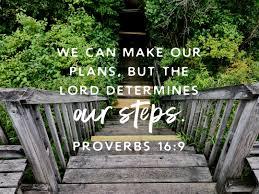
Better to have little, with righteousness, than to be rich and dishonest (16:8 NLT). This is yet another comparative (better-than) proverb (also see 16:19 and 32, 17:1, 19:22, 22:1, 24:5, 27:5, 28:6 and 23), expressing relative value. According to Proverbs there is nothing wrong with being rich, but if one must make a choice, then there is no question that righteousness is more important than dishonest gain.We make our plans, but ADONAI determines our steps (16:9 NLT). This proverb says almost the exact same thing as 16:1: We can make our own plans, but ADONAI gives the right answer (16:1 NLT). Thus, these two verses serve as bookends to the theological themes on divine sovereignty and human freedom. The idea is that human beings can plan, but our plans do not succeed unless YHVH decrees it. Understanding this diminishes human pride.319

The king’s respect (16:10-15): Political protocol was part of the sages’ curriculum. Their pupils had to be familiar with both the duties and the desires of the monarchs whom they served. Much of their counsel in these matters seems very practical. They understood the ways of the kings and the dangers inherent if those ways were treated lightly. Yet fundamental to their proverbial sayings was a conviction of the God-given guidelines for ruling. Part of the Creator’s providence for human society was the responsible exercise of human authority. Kings, whether Israelite or Persian, served His purposes, especially when they exercised their power in ways that aligned with His will. But the limits of their authority were clearly understood as the warnings of both Moshe (see the commentary on Deuteronomy DhThe King) and Samuel (see the commentary the Life of King Sha’ul BrSamuel’s Warnings) made clear.

The lips of a king speak as an oracle (Hebrew: qesem, meaning divination). Acting justly was a requirement for the king. Because kings were believed to have special access to ADONAI, the power of divination, or the ability to receive an oracle which helped them shape their political decisions (also see the commentary on Exodus GbThe Urim and the Thummim: The Means of Making Decisions) and judicial verdicts. They had a special obligation never judge unfairly (16:10 Hebrew).320

ADONAI demands accurate scales and balances; all the weights of the bag are His concern (16:11 Hebrew). This proverb speaks to honest commercial transactions (11:1, 20:10 and 23). Cheating must have been known if not rampant in ancient Isra’el. Scales were used during purchases. It was possible to manipulate the scales to give a reading for the benefit of the seller. The weights of the bag refer to the weights placed on one side of the balance, and if they were falsely represented, then the seller could defraud the customer. YHVH hates all fraud and deception (see Deuteronomy Ev Honest Weights and Measures).321

The king detests their subject’s doing evil, for his rule is established by righteousness. The reason is clear: righteousness is the only sure support or foundation to establish the throne of the king. Both the divine order in creation and the divine vigilance over history are geared, sooner or later, to the overthrow of unrighteous kings from their royal seat. Enforcing justice is virtually an act of self-preservation. Whatever threatens the stability of his authority will raise the sovereign’s wrath. Kings take delight in righteous lips; he loves those who speak honestly (16:12-13 Hebrew). Righteous lips seem to describe messengers who get the facts straight or ministers of state who grasp the full picture and relate it accurately to the king. It seems such reporting is rare so delight and love convey the king’s appreciation. This helped him create a policy that will succeed, since there may be special reference to those who speak to him in court.322

The king’s wrath is like a messenger of death, but the wise will appease it (16:14 NIV). This proverb appears to be addressed to those who had contact with the king. Obviously, ancient monarchs were powerful individuals, often making life-and-death decisions. In the first colon, if anyone angered the king they ran the risk of ending their own lives (see the commentary on Esther BaI Will Go to the King: If I Perish, I Perish). However, in the second colon, the wise know how to anticipate the reaction of the king and say the right word and do the right thing at the right time to avoid bringing his wrath onto them.

Solomon offers similar advice in Ecclesiastes: Obey the king’s command, and don’t be in a hurry to leave his presence and don’t persist in doing what is wrong, for he does whatever he pleases. After all, his word is final; who can challenge him, asking: Why are you doing that (Ecclesiastes 8:2-4)? Moreover, don’t insult the king, not even in your thoughts; and don’t insult the wealthy, not even in your bedroom; for a bird in the air might carry the news, a creature with wings might repeat what you said (Ecclesiastes 10:20).

When the king smiles, there is life; his favor is like a cloud that brings the spring rain (16:15 NLT). This proverb forms a contrasting pair with the previous one. Verse 14 dealt with the king’s wrath, and this one with his delight. The smiles on his face reflect his happiness. This royal disposition leads to life, which implies something more than mere existence: it points to reward. The second colon provides a metaphor that illustrates the first statement. A cloud brings refreshing spring rains. These rains are late in the agricultural cycle, coming in March and April and causing a growth spurt of crops right before the harvest.323

Dear heavenly Father, praise You for directing my steps. You are so loving to tenderly care about me. You not only redeemed me (Titus 2:14), but you live within me, giving You 24/7/365 access to be there to help and to guide me. Yeshua answered and said to him: If anyone loves Me, he will keep My word. My Father will love him, and We will come to him and make Our dwelling with him (John 14:23). How wonderful that though You are Sovereign over the world, You are still always there to help guide me whenever I cry out to You. For God Himself has said, “I will never leave you or forsake you,” (Hebrews 13:5b). When You guide my steps, I can trust You with absolute certainty that you know the entire situation and will guide the best steps. We make our plans, but ADONAI determines our steps (16:9). Thank You that when I am walking close to You, even if I experience hard times, I can trust You, walking with me through the hard times to help me grow stronger in You to the glory of Your Name. For I know the plans that I have in mind for you,” declares ADONAI, “plans for shalom and not calamity – to give you a future and a hope (Jeremiah 29:11). I know that as You guide me, nothing can ever separate me from Your love (Romans 8:37-39). Thank You so very much for all Your love and care. It is a joy to praise and to worship You. In Messiah Yeshua’s holy Name and power of His resurrection. Amen


2026-02-04T13:14:36+00:000 Comments

Cm – The Second Collection of Solomon’s Proverbs 16:1 to 22:16

The Second Collection of Solomon’s Proverbs
16:1 to 22:16

The second part of this collection, 16:1 to 22:16, has 190 sayings, with sayings and proverbs from ADONAI with the king and the court being prominent themes. Only a few of the verses in this second section are contrasts; most of the verses are either comparisons (in synonymous parallelism) or completions (in synthetic parallelism), with the conjunction “and” introducing the second line in many of the verses (to see link click AcProverbs from a Messianic Perspective: Parallelism). The frequent change of subject from one verse to another may be intentional to force readers to grapple with and meditate on the thoughts in one verse before moving on to the next. However, occasionally, two or more consecutive verses are linked by a common subject or word.


2025-12-15T11:17:01+00:000 Comments

Cl – Consequences of Righteousness and Wickedness 15: 20-33

Consequences of Righteousness and Wickedness
15: 20-33

A proverb is a short and memorable saying designed to be our blueprint for living in the world that ADONAI has created. It is important to note that proverbs are not promises; they are generally true principles, all other things being equal.

A wise son is a joy to his father, but a foolish man despises his mother (15:20 NIV); a wise son brings joy to his father (10:1a). Not only is the first colon virtually identical to 10:1a, the thought of the two proverbs is also very close. Thus, the commentary at that verse should be seen. The difference between the second colon has to do with the fact that it comments on the son’s sorry attitude toward his mother, as demonstrated by his foolishness. In 10:1b the emphasis is on the grief that such a son brings to his mother.306

Family can be a great blessing. In spite of all our technology and advancement, we still are fundamentally family creatures. We came from the womb of a nurturing mother. In the best of all possible worlds, we were raised by a mother and/or a father who desired to place in us some level of wisdom and success. We seek a man or a woman with whom to spend a lifetime of companionship. These desires and realities affect us at the core of our being. No career can take the place of our basic human needs.

As with many wisdom principles, we are confronted here with a choice between an easy way and a hard way. The easy and peaceful path is that of love and family joy. This is easy in the sense that it makes our lives easier, not easy in the sense that family love and joy are easy to come by. The hard path is that of the loner. Ignoring spouse, parents, siblings, and grandparents, the loner tries to make their way as an island in the world. Perhaps the loner seeks to replace family with friends. Because family is a part of the fabric of the created order, the loner will experience emptiness, like a ship sailing into the wind. To this person, Lady Wisdom (to see link click AmLady Wisdom’s Rebuke of the Foolish) says: Like a bird that strays from a nest is a man who strays from his home (27:8). In between these two, lies the average person, who has some family love and joy, but also experiences disharmony and keeps a distance between himself and his family. To that average person, Lady Wisdom is calling out, “You have the silver but you could have the gold and precious gems.”307

Foolishness brings pleasure to those with no sense. The perverse, self-willed fool finds pleasure in going down the crooked path of evil. But a man of understanding keeps on a straight path (15:21 Hebrew). On the other hand, contrary to stupid people, those with wisdom and understanding have a straight path ahead. A lazy person’s way is blocked with a hedge of thorns, but the path of the upright is a level highway (15:19).

Plans fail for lack of counsel, but with a multitude of advisers they succeed (15:22 NIV). Yet no matter how many advisers there are, they must be truly wise in order to prove this to be true. All we have to do is read First Kings 12, where two groups are advising King Rehoboam of Judah immediately after his ascension to the throne (see the commentary on the Life of Solomon DcA House Divided). Again, this proverb is only true in a general sense.308 It is important to note that proverbs are not promises; they are generally true principles, all other things being equal.

Everyone enjoys a fitting reply; it is wonderful to say the right thing at the right time (15:23 NLT). Words of encouragement are always welcomed. By encouragement I mean sincere expressions of affirmation and gratitude given honestly to another person. – in public whenever appropriate, in private if that is wiser. Moreover, it is a joy to give a helpful answer to a problem, but it must be spoken in a timely manner.

The path of life leads upward for the wise; they leave the grave (see AfSh’ol) behind (15:24 NLT). There are consequences for both righteousness and wickedness. The unstated opposite of sh’ol must be heaven, the very place of eternal life and beyond the grave. ADONAI tears down the house of the proud, but He protects the property of widows (15:25 Hebrew). The proud are those who put themselves first, above ADONAI and other people. Therefore, Ha’Shem will see to their eventual downfall (Psalm 73). On the other hand, the widow is the epitome of social vulnerability in Ancient Near East culture. In a predominantly patriarchal society, a widow had no one to represent her in court, so she was often a victim of cruel people. If anyone could be certain of a dismal future, it was the widow. So, ADONAI declares that He will step in to protect and support them.

Evil plans are an abomination to ADONAI, but gracious words are pure in His sight (15:26 Hebrew). For abomination to ADONAI, see the comments at 11:1, where the phrase is explained as indicating something that offends God’s sense of moral order. Thus, it is not surprising that here it is seen in contrasting parallelism with pure, a word indicating what is appropriate in His sight. The proverb thus provides a strong reproof of evil plans, which presumably refers to those who strategize concerning the downfall of others.

Greed brings grief to the whole family. In the first colon we learn that although one may be tempted to ignore morality in order to get ahead, or to support one’s family (no matter how they might try to justify themselves), such shortcuts normally do not end well. The second colon gives us a contrasting positive example of how the godly will conduct themselves. But those who hate bribes will live (15:27 NLT).

The heart of the righteous thinks before speaking, but the mouth of the wicked pours out evil words (15:28 NLT). The proverb points to the reflective nature of the wise, while fools are impulsive in all that they do, including taking advice. This proverb is a call to think before speaking and also serves as a warning against listening to those who are too quick to give their opinion. Other proverbs that advocate reflection before speaking include 19:2, 20:18 and 25, 21:5, and 29:20.

ADONAI is far from the wicked, but He hears the prayers of the righteous (15:29 CJB). This proverb is a rare, but not unique, statement about prayer (also see 15:8 and 28:9). The question is this, “Who can approach ADONAI in prayer?” The answer is, the righteous (Psalms 1, 15 and 24), but not the wicked. It’s not that YHVH is unaware of the prayers of the wicked. The proverb does not mean that God only listens to the prayers of the righteous and does not even hear the prayers of the wicked. The verb hear in Hebrew often implies a response. In other words, the LORD does something in response to the prayers of the righteous. Conversely, God does not act on the prayers of the wicked.309

A cheerful glance brings joy to the heart; good news gives health to the bones (15:30 Hebrew). Whatever is good – whatever is sound truth and wisdom – stirs the heart by relieving anxiety and producing a cheerful spirit.310 Here “heart,” which in general refers to the core of one’s personality. The second colon also begins with something external, good news, in this case a matter of hearing rather than seeing. The effects of this news are also felt internally. Good news makes people feel good to their very bones.

If you listen to correction, you will be at home among the wise (15:31 NLT). Once again, acquiring wisdom requires a teachable spirit and listening to correction (see AuDo Not Despise ADONAI’s Discipline). Only the wise are willing to admit mistakes, change behavior, and improve their lives. In this way, correction enhances life. Wise people are much less likely to make the same mistake twice. The proverb, in effect, suggests that wisdom is defined by one’s willingness to listen to correction.

If you reject discipline, you only harm yourself. This subject is similar to the previous proverb, but here the teaching is achieved by contrasting those who ignore discipline with those who pay attention to it. In other words, again the advice is to improve one’s character. Those who reject discipline blacken their lives because they run the risk of getting into trouble over and over again since they don’t allow themselves to be aware of their mistakes. On the other hand, those who do listen to correction grow in understanding (15:32 NLT). In other words, they become people of substance; there is something to their internal makeup.

The fear of ADONAI is the discipline leading to wisdom. In the first colon, this proverb begins by combining two important concepts in the book: The fear of ADONAI (see AiThe Fear of ADONAI is the Beginning of Wisdom) and discipline leading to wisdom. Discipline relates this proverb to the previous two and refers to recognizing the importance of identifying mistakes one has made and making the necessary corrections. And humility comes before glory 15:33 Hebrew). The second colon appropriately relates to the first by observing that humility is a crucial component of correction. If one does this, then one’s ability to navigate life will improve and in this way, will lead to glory. Humility is often contrasted with pride specifically in the area of being open to correction (3:5, 6:17, 11:2).311

2025-12-14T11:59:26+00:000 Comments

Ck – Caring Enough to Rebuke 15: 5-19

Caring Enough to Rebuke
15: 5-19

A proverb is a short and memorable saying designed to be our blueprint for living in the world that ADONAI has created. It is important to note that proverbs are not promises; they are generally true principles, all other things being equal.

Only a fool despises a parent’s rebuke; whoever learns from correction is wise (15:5 NLT). Rebuke. How rare, yet how important! To rebuke is to speak seriously to someone as a warning, or to correct someone in order to prevent a bad/sinful action, or bring it to an end. Although the word sounds intimidating, rebuking is not synonymous with harshness. Pause and think of a time when someone wisely, yet firmly, rebuked your behavior, your thinking, or your attitude, and you became a better person as a result? Trustworthy are the bruises caused by the wounding of one who loves you; deceitful is the flattery of one who hates you (27:6). This tells us several things: (1) the one who does the rebuking should be someone who loves the person they are rebuking, (2) a bruise tends to linger long after the wounding, it is not forgotten soon, (3) friendship should allow freedom to offer constructive criticism, and (4) not all compliments are offered with the right motive. We all need to listen to the words that Solomon spoke to his son: Do not despise ADONAI’s discipline, or be weary of His rebuke, for the LORD rebukes those whom He loves (3:11-12a).

So much of this matter of rebuking has to do with discernment and discretion. There is a right way and a right time (not to mention the right motive) for rebuking someone. If your friend’s motive is to help you, those wounds will make the best use of timing, be done privately, focus on a specific issue, lead to long-term improvement, and include lots of affirmation and encouragement. Consider what Solomon wrote: Timely advice is lovely, like golden apples in a silver basket. To one who listens, valid criticism is like a gold earring or other gold jewelry (25:11-12).295

How does ADONAI rebuke us? In the B’rit Chadashah, Yeshua rebukes everything from the wind to unclean spirits. At various times, He rebuked His apostles’ unbelief, pride, ambition, and their inability to understand his coming death as being according to His Father’s will. God finds ways to reach us when we need correction. Often, the Ruach Ha’Kodesh will work through our own consciences to convict us. If we surround ourselves with others who are also aspiring to holiness, we have faithful friends accompanying us on that path. To rebuke a friend, or to be rebuked by one, is a sign of obedience and love.

When Yeshua rebukes in the Scriptures, it does not always appear gentle. Sometimes He displayed anger, frustration, or sorrow. His delivery suited the circumstances. His goal was to help His children make a course-correction that would lead them to Himself and His Father’s will. When Messiah’s devoted servant Martha complained about her sister Mary not helping her serve and clean up, the Master told her gently, but matter-of-factly: Martha, Martha, you are anxious and worried about many things. There is a need for only one thing. Mary has chosen the better part, and it will not be taken from her (Luke 10:41-42). Messiah left Martha to contemplate her priorities, but He did not deal harshly with her. He invited her to consider what was truly important.

When the Lord encountered the Samaritan woman at the well, He taught gently and compassionately about Himself as the Living Water, because He wanted this daughter of His to receive what He had come to give. Then He gradually led her to see her failings, face them, and take accountability. Yeshua’s approach was an invitation for her to change her life.

The rebuke that stands out to me to be the starkest in Scripture is when Messiah exclaimed to Peter, “Get behind me, Satan. You are an obstacle to me. You are not thinking as God does, but as human beings do!” This was a wake-up call to Peter to remember the will of ADONAI, not human love, must be his priority. Peter had lost sight of the divine. In his zeal, he swore to protect his Master, he threatened to obstruct the Divine Will. We know they loved one another deeply. The stark reprimand was a warning and rebuke against Peter’s way of thinking in the moment. Yeshua knew Peter’s flaws and weaknesses. But He also knew that much would be required of Peter to accomplish the will of God in and for the Church. And Peter is our example in how he handled this rebuke, when he wrote: So humble yourselves under the mighty hand of God, that He may lift you up in due time. Cast all your worries upon Him, because He cares for You (1 Peter 5:6-7).

The Lord doesn’t delight in crushing us under the weight of our own faults. He doesn’t want to humiliate or destroy us and He doesn’t want others to do so either. But if we see the need to offer rebuke, we should first examine our own motives and intentions. Do we truly want the best for the person in question? We cannot know someone else’s heart. Only God can. But there are times when we can see by the outcome of a situation or by a specific behavior that gentle correction would be an act of mercy. It can be difficult to judge. Some relationships are better suited to rebukes than others. And some people are better suited to receive them than others. Some relationships are more accommodating of rebukes than others. After examining our intentions and considering these points, we can pray and ask the Ruach for the right words and right opening if there is enough time to wait. Finally, we must be sure that our rebuke is filled with as much love as possible.

The Bible also has much to say about being rebuked. God admonishes those He loves, and asks us to do likewise with our brothers and sisters in love. Preach the word; be prepared in season and out of season; correct, rebuke, and encourage with great patience and careful instruction (Second Timothy 4:2); If your brother sins, rebuke him, and if he repents, forgive him (Luke 17:30); These then, are the things you should teach. Encourage and rebuke with all authority. Do not let anyone despise you (Titus 2:15); My son, do not make light of the Lord’s discipline, and do not lose heart when he rebukes you (Hebrews 12:5); Those whom I love I rebuke and discipline, so be earnest and repent (Revelation 3:19).296

There is treasure in the house of the godly, but the earnings of the wicked bring trouble (15:6 NLT). The proverb describes the effects of the efforts of the righteous and the wicked, the first being positive and the second being negative. The first colon speaks to the fact that righteousness has effects beyond the individual. The great treasure does not have to be understood exclusively in terms of material goods; it may be the joy of living. However, due to the frequent connection drawn between wisdom and material benefits, this would not be excluded either. On the other hand, these positive effects of righteousness are contrasted with the harm that comes from the efforts of the wicked person.

The lips of the wise spread good advice, but the heart of a fool has none to give (15:7 Hebrew). The parallel between lips and heart is found elsewhere in proverbs and indicates Solomon’s belief that the lips normally reveal what is going on inside a person. Since the wise are wise, when they speak, it’s worth listening to. However, there is nothing inside fools, so when they speak, one expects stupidity. The tongue of the wise makes knowledge appealing, but the mouth of a fool only belches out foolishness (15:2).

The sacrifices of the wicked are an abomination to ADONAI, but He delights in the prayers of the upright (15:8 Hebrew). The contrast in Chapter 15 is between the wicked and the upright. It is the sacrifice, not the sacrifice, that is the issue. The first colon really underlines God’s dislike of wickedness because it can ruin something as otherwise God-pleasing as sacrifices. On the other hand, even the prayers of the upright win His favor. The path of the wicked is an abomination to ADONAI, but He loves anyone who pursues righteousness (15:9 CJB). This verse is connected to the previous by the phrase abomination to ADONAI, but here the lifestyles of the wicked are contrasted. This is a general statement that needs to be understood in light of the book’s entire teaching on folly/wickedness and wisdom/righteousness. This verse and the following one remind us of the two-path metaphor that is especially prominent in Chapters 1-9.297

Stern discipline awaits anyone who leaves the path; the one who hates correction will die (15:10 NIV). Having led himself astray (10:17), the unteachable person turns from the path of wisdom, not only resulting in stern discipline but in death! According to Isra’el’s sages, such a person is worse than he who rejects the right path. In the end, YHVH will correct this man and cause him to repent of his evil ways. Moreover, the one who hates ADONAI’s rebuke will find his way to death because there is no way to correct him. On the other hand, wisdom’s path is smooth and easy to travel, while the road of folly is filled with potholes.298

Even Sh’ol and the Abyss hold no secrets from ADONAI; how much more does He know the human heart (15:11 NLT)! Here Sh’ol and the Abyss are personified, the expression in colon 1 suggests that even Sh’ol and the Abyss are controlled by YHVH. The implication drawn from the second colon is that neither are human beings independent or superior to ADONAI.299 Sh’ol (to see link click AfSh’ol) was the place of departed spirits. It had two subdivisions. The first was called Abraham’s side (a place of comfort and peace), or Paradise (Luke 23:43), and the second section was a place of torment (see The Life of Christ HxThe Parable of the Rich Man and Lazarus). At the end of the Great Tribulation, Satan will be thrown into the Abyss (see the commentary on Revelation FbHe Seized the Dragon, or Satan, and Bound Him for a Thousand Years).

Mockers resent correction, so they avoid the wise (15:12 NIV). The proverb here and 15:10 reveal a theme that mockers do not appreciate correction. The term mocker is a strong term describing the fool as one who mocks those who try to point out a weakness. By being defensive about it, mockers ultimately undermine themselves. One way they avoid correction is by not associating with the wise, who can see their mistakes and are willing to offer advice. On the other hand, the wise really appreciate insightful correction because it helps them to live life better and more productively.300

A joyful heart makes the face cheerful, but a broken heart crushes the spirit (15:13 Hebrew). There are times when a sense of humor is needed. By a sense of humor, I am not referring to crass, foolish, distasteful talk, or ill-timed jesting. By humor I mean carefully chosen, well-timed expressions of wit and amusing, fun-loving statements.301 The next proverb explains the source of the joy that enlivens and the hurt that depresses. For the despondent, every day brings trouble. The implication of this is that the daily life of the afflicted or oppressed is difficult because of their life choices, which suggests that it refers only to those whose heart has chosen the path of folly, rather than diagnosing everyone in the world who is depressed.302 But for the cheerful of heart, life is a continual feast (15:15 NLT).

The discerning heart seeks knowledge, but the mouth of a fool feeds on foolishness (15:14 Hebrew). This proverb talks about the basic motivations of those who are discerning, and of those who are fools. As might be expected, the former pursue what will make them wiser, and the latter what will make them more foolish. The contrast between heart and mouth may contrast the depth of the wise over against the shallowness of the foolish. The contrast between seeks and feeds may imply that knowledge requires effort, while foolishness just takes the easy route and consumes whatever is before them.

Better to have little, with the fear of ADONAI, than to have great wealth with inner turmoil (15:16 Hebrew). The better-than proverbs express relative values. In other words, Proverbs affirms both the value of the fear of ADONAI and the value of wealth (1:7 and 10:22). But if the choice must be made, then there is no question that the fear of ADONAI is much more valuable. In other words, though the book often suggests that wealth is the reward of the wise, it also makes it clear that sometimes one must choose between the fear of ADONAI and wealth. The proverb also implies a contrast between fear of ADONAI and turmoil. The assumption being that the fear of ADONAI brings calmness of mind as well.303

Better a small serving of vegetables with someone you love, than a steak with someone you hate (15:17 NLT). In the ancient world oxen were rarely slaughtered for meat because they were far more valuable alive. When plowing a field, a single ox could accomplish more in one day than three men laboring for a week. Consequently, the owner of an ox typically hired out the services of his animal once his own plowing, threshing, or harvesting had been done. It was not uncommon for an entire village to use the same team of oxen for farm labor. So killing an ox for food in ancient, agrarian societies was a lavish luxury, not unlike a farmer today selling off a tractor and using the proceeds to buy the most expensive caviar and serve the finest gourmet cuisine at a single dinner party. Yet, Solomon placed such value on love and harmony that he would rather eat a meager portion of veggies than attend a lavish dinner marred by a hateful attitude and strife. He was content with the intangibles of life.304

A hot-tempered person starts fights, but a cool-tempered person stops them (15:18 NLT). This proverb speaks of the emotional intelligence of the wise. Fools respond to an attack by attacking back, only making things much worse. On the other hand, the wise are coolheaded and patient; thus in the end, fending off the harsh accusations directed toward them.

A lazy person’s way is blocked with a hedge of thorns, but the path of the upright is a level highway (15:19 Hebrew). This proverb uses the two-path analogy throughout the book to talk about the hazards of one form foolish behavior, laziness, and contrasting it with wisdom. For lazy people, their path is hard to navigate and filled with pain, while the righteous find their path smooth and unimpeded. This observation is a subtle encouragement to avoid laziness.305

Dear heavenly Father, praise You for being perfect in Your love – neither too harsh nor too soft. You are always perfect in Your tender caring for each of Your children! What a peace and joy it brings, that when troubles and trials come into my life, calling on You is the wisest thing I can do. Then you will call on Me, and come and pray to Me, and I will listen to you (Jeremiah 29:12). However, sometimes You use trials as discipline to remove imperfections in my life, as a silversmith uses the fire to perfect and remove the dross from the metal. These trials are so that the true metal of your faith (far more valuable than gold, which perishes though refined by fire) may come to light in praise and glory and honor at the revelation of Messiah Yeshua (First Peter 1:7).

Even though my trail may seem to go on for a long time, You time how long I should remain in the fire. You know when the right length of time to purify me, to teach me. My son, do not take lightly the discipline of ADONAI or lose heart when you are corrected by Him, because ADONAI disciplines the one He loves and punishes every son He accepts (Hebrews 12:5b-6). Joy comes from discipline that is learned, for it produces the peaceful fruit of righteousness. Now all discipline seems painful at the moment – not joyful. But later it yields the peaceful fruit of righteousness to those who have been trained by it (Hebrews 12:11). Thank You for caring enough to discipline/rebuke me when I need it. I know You love me and I can trust You. In Messiah Yeshua’s holy Name and Power of His resurrection. Amen

2025-12-15T11:44:28+00:000 Comments

Cj – A Soothing Tongue is a Tree of Life 14:33 to 15:4

A Soothing Tongue is a Tree of Life
14:33 to 15:4

A proverb is a short and memorable saying designed to be our blueprint for living in the world that ADONAI has created. It is important to note that proverbs are not promises; they are generally true principles, all other things being equal.

Lady Wisdom (to see link click AmLady Wisdom’s Rebuke of the Foolish) comes to rest in the heart of one who has discernment. Wisdom is an inner quality. Those who are wise are wise from the core of their being and choose life. And in the midst of fools she reveals herself (14:33 Hebrew). However, fools contrast their response to her. They choose Madam Folly and death (see Bo Madam Folly’s Invitation to Death). Even though Lady Wisdom has revealed herself among the masses of fools at the city gate, they have no heart for her. The teaching point of this proverb instructs young men to move beyond Solomon’s mere revelation of Lady Wisdom, to giving her a final resting place in their hearts.289

Righteousness makes a nation great, but sin is a disgrace to any people (14:34 Hebrew). A characteristic doctrine in the Bible is that true greatness of a nation rests upon the exercise of justice and the pursuit of worthy aims, not merely upon military strength or imperial expansion. Righteousness, the behavior associated with wisdom, helps a nation. The proverb is ambiguous and could be applied equally to the righteous acts of an individual or to societal righteousness. As defined throughout Proverbs, this quality entails promoting the interests of others, particularly the vulnerable, and so one can naturally see how it would help the broader society. On the other hand, sin harms others and causes disgrace. Thus, it is easy to see how it could cause the downfall of a nation.

The king delights in a wise servant, but a shameful servant arouses his fury (14:35 NIV). This proverb promotes wisdom over folly. Prudence (1:4a) is a quality of the wise, and shame is the consequence of being a fool. To say that the king finds the former acceptable indicates his favorable attitude toward wisdom. After all, a person with wisdom will be helpful to the king as he tries to resolve complex issues. A servant who is a fool, and therefore shameful, will be the object of his wrath since the servant will not be able to help resolve the problems of the realm, and indeed might even make them worse. This proverb implies a righteous king. There are plenty of examples from biblical history where kings have, to their own detriment, listened and acted upon to shameful advice, such as King Ahab listening to his wife Jezebel (First Kings 16:29-33).290

A gentile answer turns away wrath, but a harsh, sarcastic word, stirs up anger (15:1 NIV). We can use words both to build up or tear down. We can never fix a problem if we are consumed with fixing the blame. We must choose between the two. We will never get our point across by being angry, so we need to choose our words wisely.291 A gentle answer, which comes from a heart of love, can stop a war before it even begins. Yeshua said: agree with your adversary quickly (Matthew 5:25). When we do this, it can defuse any anger that exists. But harsh words can actually create anger where none existed before.

In Proverbs we see a few other principles for avoiding conflict. He who conceals an offense promotes love (17:9a). Another way to say this is, “Don’t be so sensitive.” Let trivial insults slide. Understand that other people make mistakes and have anger problems – we all do. Another principle is stated this way: Starting a quarrel is like opening a floodgate, so stop before a dispute breaks out (17:14). If a potential argument looms on the horizon, don’t let it get started. Emotions can be like water held behind a dam. If you let the quarrel start, then it can be very difficult to stop.

The principle to self-control is to control the tongue. The tongue of the wise makes knowledge appealing, but the mouth of a fool only belches out foolishness (15:2 NLT). And a knowledgeable person controls his tongue; a discerning person controls his temper (17:27 CJB). We don’t have to speak the first words that come to mind. We need a filter. Thus, controlling the tongue will help in many areas. James, the half-brother of Yeshua, has much to say about this. If we put a bit into a horse’s mouth to make it obey us, we control its whole body as well. And think of a ship – although it is huge and is driven by strong winds, yet the pilot can steer it wherever he wants with just a small rudder. So too the tongue is a tiny part of the body, yet it boasts great things. See how a little fire sets a whole forest ablaze! Yes, the tongue is a fire, a world of wickedness. The tongue is so placed in our body that it defiles every part of it, setting ablaze the whole of our life; and it is set on fire by Gei-Hinnom itself. For people have tamed and continue to tame all kinds of animals, birds, reptiles and sea creatures; but no one can tame the tongue – it is an unstable and evil thing, full of death-dealing poison (James 3:3-8 CJB)!

Finally, stay out of other people’s disagreements. Interfering in someone else’s argument is as foolish as yanking a dog’s ears (26:17 NLT). Why get involved in someone else’s fight? If you get involved, one or both of the combatants will, at best, resent you, and, at worst, attack you, one, for taking his opponent’s side, and the other for implying that he cannot handle the fight on his own. These few principles can save you a lot of stress. But knowing the truth about Messiah can also help. Remember that we must bear with each other and forgive one another if any of you has a grievance against someone. Forgive as the Lord forgave you (Colossians 3:12 NIV).292

It is important to know there is a right way and a wrong way to use knowledge. ADONAI gives us knowledge, understanding, and wisdom so we may become more like Messiah and help others become more like Him as well. The right way to use knowledge, therefore, is to apply it to ourselves first and then gently help others move toward godliness. It is wrong to use knowledge for self-aggrandizement or for browbeating others. The temptation to use knowledge wrongly is perhaps why Paul said that knowledge puffs us, but love edifies (First Corinthians 8:1).

The eyes of ADONAI are everywhere (Second Chronicles 16:9a), watching the evil and the good (15:3 CJB). This proverb supports the idea that God is omnipresent and omniscient. It is clear enough, but perhaps somewhat unexpected in a wisdom context. There are other religious proverbs (16:1-7, 9, and 33), but this one implies the LORD’s moral governance. Many other proverbs that mention consequences don’t specify who does the ultimate judgment or how that judgment is assured. However, this proverb helps us to understand that YHVH is in control. The idea that God watches good and evil implies that He is the One who distinguishes between them. ADONAI looks out from heaven; He sees every human being; from the place where He lives He watches everyone living on earth, He who fashioned the hearts of them all and understands all they do (Psalm 33:13-15).293

A soothing tongue is a tree of life in that it speaks words that nurture and bring healing. ADONAI-God planted the Tree of Life in the Garden of Eden to bring eternal life to whoever would eat from it (see the commentary on Genesis AvGod Planted a Garden in the East, in Eden), and He will use our wise words to lead people toward eternal life (see The Life of Christ Ms – The Eternal Security of the Believer). But a wicked tongue crushes the spirit (15:4 NIV). When we speak as fools, we bring as much deceit into our conversation, as the serpent did when he lied to Adam and Eve leading them both astray. Our words can either lead people toward Messiah or away from Him – there’s no middle ground.294

Dear heavenly Father, praise You that Your words are always wise and perfect. Feeding on Your Word is like feeding on fruit from the Tree of Life (Rev 22:2)! Bearing good fruit is crucial for every believer. Yeshua likens those who follow Him to be like trees bearing good fruit. Every tree that does not produce good fruit is chopped down and thrown into the fire.  So then, you will recognize them by their fruit (Mt 7:19-20). Only by abiding in Messiah can good fruit be produced. I am the vine; you are the branches. The one who abides in Me, and I in him, bears much fruit; for apart from Me, you can do nothing (John 15:5). Refreshment for the soul comes by meditating on Your Word and on Your Godly attributes. That is similar to a tree being nourished by its roots which go down deep into the stream it is planted by. On His Torah he meditates day and night. He will be like a planted tree over streams of water, producing its fruit during its season. Its leaf never droops – but in all he does, he succeeds (Ps 1:2b-3). Thank You for being such a great example of how to use words wisely. May I follow Your example and speak with wise and loving words as though the words were fruit from the Tree of Life. In the Name of Him who sits at Your right hand. Amen

2026-02-07T23:32:35+00:000 Comments

Ci – Life or Death 14: 15-32

Life or Death
14: 15-32

A proverb is a short and memorable saying designed to be our blueprint for living in the world that ADONAI has created. It is important to note that proverbs are not promises; they are generally true principles, all other things being equal.

The wise fear evil (14:15-18): Verse 15 is a literary pivot point, serving as a transition. It has two meanings. The first colon relates to the lines preceding it (to see link click ChThere is a Way that Appears Right). The simpleminded (1:4b) believes everything they’re told (14:15a Hebrew). They have a lack of critical thinking skills. By not reflecting on the matter, they may well speak or act on the basis of a misunderstanding and thus say or do the wrong thing, with horrible consequences. But the second colon relates to the verses that follow: the prudent (1:4a) carefully considers their steps (14:15b Hebrew). This proverb basically contrasts the simpleminded over the prudent, with the intention of encouraging the attentive reader to choose the latter. Lady Wisdom herself (see AmLady Wisdom’s Rebuke of the Foolish) advocates for this line of action in 9:6.

The main point of the first subset is that the wise fear ADONAI and turn away from evil, but a fool gets angry [against ADONAI] and yet feels secure (14:16 Hebrew). Here the wise are again compared favorably with fools. Their fear of ADONAI (1:7 and 29, 2:5, 3:7, 8:13, 9:10, 10:27, 14:27, 15:16 and 33, 16:6, 19:23, 22:4, 23:17 and 24:21) keeps them from committing evil acts. Everything in the world, the desires of the flesh, the lust of the eyes, and the pride of life (John 2:16a) are all very tempting, so it takes an emotion as strong as love or fear to keep us from yielding to its lure. The second colon marks fools as hotheads. A quick-tempered person does foolish things, and the one who devises evil schemes is hated (14:17 NIV).283 The rabbis say that when the kettle boils over, it overflows on both sides. In other words, when a fool gets angry, his wrath destroys his own house.

The simpleminded inherit foolishness, but the prudent are crowned with knowledge (14:18 Hebrew). Here the contrast is between the simpleminded and the prudent. The verse begins by claiming that the former inherits foolishness. The statement is somewhat ambiguous in terms of the origin of the foolishness that the simpleminded inherits. The parallel column doesn’t really help. I think the best understanding is to recognize that foolishness is an inheritance from simplemindedness. In other words, simplemindedness produces foolishness. On the other hand, like the simpleminded, the prudent also have a possession, but in their case it is a crown, something that points to their knowledge. Verse 18, like verse 15, is a literary pivot point, concluding verses 15-18 and introducing verses 19-24.

Good or evil (14:19-24): The next subset warns young men to embrace righteousness and reject evil because ultimately ADONAI will reward the former and punish the latter. Evildoers will bow down (have bowed down) in the presence of good people, and the wicked bow down at the gates of a righteous person (14:19 NIV). In acknowledgment of their defeat. The verb is in the perfect tense, “have bowed.” According to a common Hebrew idiom, what is yet to take place is pictured as already having happened, an expression of the certainty that it will be so. The conviction that in the end goodness prevails over evil is deep-rooted in Hebraic thought.

This optimistic proverb states that good/righteous people are much better off than evil/wicked people. Indeed, the latter find themselves bowing down to the former. One would have to believe that Solomon had lost his mind to believe that this principle was always true. But this is obviously true in the long run. The TaNaKh supports this concept. For instance, Joseph was godly but was actually abused by his brothers and thrown into prison for his righteous behavior. However, by the end of the story, Joseph is in a position of influence so that he can save the family of the covenant of promise. Likewise, at the beginning of the book of Esther, Mordecai finds himself persecuted by Haman, which seems the exact opposite of the claim of this proverb. But, by the end a reversal takes place so that the wicked Haman finds himself at the mercy of the godly Mordecai.284 In the B’rit Chadashah the same is true of the rich man and Lazarus (see the commentary on The Life of Christ HxThe Parable of the Rich Man and Lazarus). This is the ultimate fulfillment found in Philippians 2:10-11: At the name of Yeshua, every knee will bow down . . . and every tongue confesses that Yeshua Messiah is Lord, to the glory of God the Father.

The poor are hated by their neighbors, while the rich have many “friends” (14:20 Hebrew). This proverb provides the necessary perspective to verse 19 by implying that evil people are rich only for a time. In contrast to the rich person who has sufficient financial possessions but is morally deficient, the poor person is materially deficient but is never pictured as morally deficient.285 It is a principle of human nature that most people would rather be in the company of the rich than the poor. The latter typically have needs that require attention, while the former have resources that may prove beneficial to others. Thus, the poor are avoided and the rich have many “friends.”

Whoever despises his neighbor is a sinner, but blessed is he who is generous to the poor (14:21 ESV). This verse puts a negative spin on the observation of the previous verse. Those who despise their neighbors, whether rich or poor, sin. Indeed, the second colon encourages generous actions toward those neighbors and friends who are needed, especially the poor.

Won’t those who plot evil wander aimlessly? But those who do plan good things find chesed and truth (14:22 Hebrew). This proverb is about consequences. It contrasts the end result of planning evil and planning good. Evil planners are not rooted in anything but, rather, wander aimlessly. The verb wander aimlessly (Hebrew: ta’ah) points to the theme of the right or wrong path spoken of throughout the book (see CcThe Path of Righteousness). The rhetorical question assumes a positive power. On the other hand, those who plan good things receive chesed (see the commentary on Ruth AfThe Concept of Chesed). Chesed and truth are a frequent word pair describing ADONAI’s relationship toward His children. But they are also characteristics of the community of congregations of God.

Work brings profit, but mere talk leads to poverty. This proverb contrasts hard work with longwindedness. Certainly, there are words that are profitable, but this proverb assumes empty words. If someone talks all the time and does not work, they will end up sleeping in a tent at the park. Wealth is a crown for the wise, but the effort of fools yields only foolishness (14:22-24 NLT). This proverb is not about the “health and wealth” gospel, but it contrasts wisdom and foolishness by pitting the reward of the former with the emptiness of the latter. The metaphor of the crown is appropriate for the material reward that comes to the wise. On the other hand, you play stupid games and you win stupid prizes. Stupidity only yields stupidity, nothing more. This observation serves the purpose of motivating us to ask for wisdom. James 1:5 says: If any of you lacks wisdom, you should ask God, who gives generously to all without finding fault, and it will be given to you. The young king Solomon illustrates the truth of the first colon of this proverb. He asked for wisdom, and God was so pleased that He also gave him power and wealth (see the commentary on the Life of Solomon AsSolomon’s Wish).286 It is important to note that proverbs are not promises; they are generally true principles, all other things being equal.

Life or death (14:25-32): A truthful witness saves lives, but a false witness is deceitful (14:25 NIV). This is one of many proverbs that contrast those who tell the truth in court and those who tell lies. Here we can see how the contrast is a matter of life and death. There are a number of proverbs concerning the witness (14:5, 19:28, 21:28, 24:28-29, 25:7c-8 and 18, 29:24). The truthfulness of witnesses is a major concern not only in Proverbs; it is also a major issue in the Torah (Exodus 20:16, 23:1-2; Deuteronomy 5:20, 17:6, 19:16-19).

Those who fear ADONAI are secure. By placing themselves in their proper subservient position to ADONAI, such people are under His protection. In the second colon, the promises of protection are extended to their children. He will be a refuge for their children. If one fears YHVH, then they don’t need to fear anything or anyone else. The fear of ADONAI is the fountain of life, enabling one to avoid deadly traps (13:14, 14:26-27 Hebrew). The identity of these deadly traps is not specifically made, but throughout the book foolishness is associated with death (see BoMadam Folly’s Invitation to Death). It leads to life (19:23), it gives security (14:26), hope (23:17-18), and the promise of long life (10:27). When you fear ADONAI, you keep your priorities straight. Better to have little, with the fear of ADONAI, than to have great wealth with inner turmoil (15:16). Lovingkindness and faithfulness make atonement for sin, but the fear of ADONAI keeps one from evil (16:6 Hebrew).

A growing population is a king’s glory, but a prince without subjects has nothing (14:28 NLT). A king with no subjects is not much of a king. Perhaps the intention of the proverb is to encourage the king to promote humane policies to his kingdom. Too often kings attack their own people out of insecurity or simply in the interests of their own power. Kings with large populations are able to amass more powerful armies and achieve more influence in their world. Here a royal proverb follows two ADONAI proverbs (14:26-27), an association that occurs elsewhere in Proverbs and may reflect some intentional structuring.

He who is slow to anger has great understanding, but he who is quick-tempered promotes stupidity (14:29 Hebrew). Solomon knows that a cool-headed person will get further ahead in life than a hothead. He is not ruffled or goaded into overreacting to avenge himself, or to seek revenge rather than trusting God. The ability to control one’s emotions and express them at the right time and to an appropriate degree is an important aspect of wisdom. To act impulsively, without reflection leads to stupidity, a close companion of foolishness.

That a person’s emotions affect his physical condition is well known (15:13 and 30, 17:22, and 18:14). A heart at peace (a healthy disposition) gives life to the body. The first colon states that an emotionally healthy person enjoys physical well-being. On the other hand, jealousy is an emotion that can destroy one’s inner peace and have a negative effect. But jealousy, which cares only for itself and gets worked up, is like cancer in the bones because it eats away at the person (14:30 Hebrew).

There is a difference between being jealous and being zealous. Jealousy is a negative trait, with something that is not yours, while zealousness can be a positive trait toward something that is yours. For example, a husband should be zealous for his wife if another man approached her romantically. But the same principle applies to our relationship with the LORD. When Balaam sent Midianite and Moabite women into the camp of Isra’el to entice them into sin and idolatry. One of the Israelite men, Zimri the son of Palu, the prince of the tribe of Simeon, and a Midianite woman, Cozbi the daughter of Zur, a princess of Midian (Numbers 25:14-15), were having sex right before the eyes of Moshe and the elders of Isra’el, as they were praying and weeping at the gate to the Tabernacle. But when Phinehas, the son of Eleazar and grandson of Aaron the high priest, saw it, he jumped up and left the congregation, took a spear in his hand, and pursued the Israelite right into the inner part of his vaulted canopy, where, taking the law into his own hands, he thrust his spear all the way through both of them – right through the Israelite and into the woman’s stomach. He was zealous for ADONAI (see the commentary on Numbers EaTaking a Stand for God).

Those who oppress the poor insult their Maker, but He that is gracious the poor honors Him (14:31 Hebrew). Proverbs teaches that God blesses the wise with riches and afflicts the foolish with poverty (14:24). Without context, one could falsely come to the conclusion that the book of Proverbs is callous towards the needs of the poor. However, this view does not take into account the sensitivity and protections offered to the poor through the compassionate teaching of Solomon (11:24, 28:27, 29:7 and 14). After all, Proverbs also shows awareness that there are other reasons besides foolish behavior, including laziness and indulgence, that lead to poverty (13:23). The point is made that to oppress the poor is not just an attack on them but also on God, who made them (22:2). On the positive side, to honor the poor is to honor God. The word gracious is significant. Not only is the poor person to be helped, but in a gracious manner so they don’t feel humiliated.287

The wicked are brought down by their own evil deeds, but the righteous have a refuge even at the time of death (14:32 Hebrew). Although evil is occasionally on top, in the long run, the righteous are victorious and the wicked are defeated. The teaching of this proverb is elaborated in Psalm 73. With the first colon, mirroring verse 19: How suddenly they are destroyed, completely swept away by terrors, and the second colon reflected in verse 24: You guide me with your counsel, and afterwards You take me to glory. The thought is that the righteous person, filled with the trust in God, does not abandon hope though at the point of death. This is a proverb about ultimate consequences. Problems can be disastrous for the wicked (6:15) because they have no hope in the Lord. On the other hand, when the righteous face death they have a refuge, namely ADONAI.288

Dear heavenly Father, praise You that loving and serving You is the wisest thing that anyone can do! You are so loving, powerful and totally wonderful! There are many voices in this world that call out saying they are the answer to life; but there is only one true way to lasting joy and peace forever. Thank you that thru Messiah You have provided the only way to steadfast and eternal life. Your love is such a comfort to have, both in this life and in the life to come. The thief comes only to steal, slaughter, and destroy. I have come that they might have life, and have it abundantly (John 10:10). In Messiah Yeshua’s holy Name and the power of His resurrection. Amen

2025-12-11T15:20:32+00:000 Comments

Ch – There is a Way that Appears Right 14: 8-14

There is a Way that Appears Right
14: 8-14

A proverb is a short and memorable saying designed to be our blueprint for living in the world that ADONAI has created. It is important to note that proverbs are not promises; they are generally true principles, all other things being equal.

The prudent (1:4a) understand where they are going (14:8a NLT). This verse introduces the unit on deception by contrasting the wisdom of the prudent with the foolishness of fools who deceive themselves and others.278 The first colon informs us that if we want to know how to live our lives, and stay on the straight path (1:15), then wisdom is the answer. The prudent man does not walk on blindly but carefully notes the various paths before him and deliberately chooses the one he believes to be right. But fools deceive themselves (14:8b NLT). The opposite of the wisdom of the prudent is the stupidity of fools. Not possessing the wisdom of the prudent, and urged on by foolishness, the fools deceive themselves and stray from the right path. In what way is the stupidity of fools a fraud. The answer is probably evident by comparing the second colon to the first. Folly may hold out the promise to be the solution to life’s issues; but in reality, folly fails people and is therefore a fraud. Rather than guiding people on the straight path, it misleads them (11:1, 12:5, 17, and 20, 14:8 and 25, 20:23, 26:24).279

Fools make fun of guilt (Hebrew: asham), but the godly acknowledge it and seek reconciliation (14:9 NLT). This is a rare, but not exceptional reference to the Guilt Offering (see the commentary Leviticus, to see link click AmThe Guilt Offering: Evidence of Repentance). It indicates an obligation to discharge their guilt by means of an atoning sacrifice. According to Jeremiah 51:5, asham will bring punishment when Messiah returns (for example, see Jeremiah FeJudgment Against Babylon). And according to Psalm 68:21, those who continue in their asham will certainly perish. Fools are those who disdain Guilt Offerings. After all, fools will not admit their guilt; and therefore, would never agree that a Guilt Offering is necessary. Today, our guilt is atoned for by the sacrifice of Messiah, who offered His life as a guilt offering (Isaiah 53:10).280

Verse 14:10-14 is a loose cluster of proverbs around the twin concepts of the heart and the idea of retribution. The heart is linked with joy in verses 10 and 13, while retribution is clearly stated in verse 11. Verse 14 draws the two together with the description of the faithless in heart and the mention of a good man and faithless receiving appropriate consequences.281

Each heart knows its own bitterness, and no one else can fully share its joy (14:10 CJB). The proverb makes the observation that no one can really know what is going on emotionally inside another person. It looks at this from the opposing perspectives of bitterness and joy, a merism, representing the full range of emotion. This can be clearly seen in Hannah’s prayer to the compassionate High Priest (see the commentary on the Life of King Sha’ul AjHannah’s Prayer), who knows us better than we know ourselves (First Kings 8:38; John 14:16-17; Hebrews 4:15-16).

The house of the wicked will be destroyed, but the tent of the upright will flourish (14:11 CJB). The house, inhabited by the wicked, is a substantial building where they can afford to erect and occupy on their dishonest gains; but the upright, who adhere to honesty, live in a humble tent. Yet the former will be destroyed and the latter will flourish. Paradoxically, the wicked’s house is less secure than the upright’s tent because it is built on sand (see the commentary on The Life of Christ DyThe Wise and Foolish Builders). The house connotes more security and splendor than a tent, as seen in David’s desire to replace the Tabernacle with a House, in other words, the Temple (Second Samuel 7:4-6).

There is a path that seems right to a man, but it ends in death (14:12 Hebrew). The image is that of a journey, in which the traveler imagines that he is pursuing a right path that will lead him to his desired goal or success and happiness, but finds, too late, that it leads to an early death, that is, to the destruction of happiness. This proverb is the heart of the subunit warning the young man not to walk by sight, and pointedly gives the reason. The safety and destiny of a path are not always as they appear (Matthew 7:13-14). The deceptive path leads as certainly to death as the plainly marked one. Only an all-knowing, all-powerful God knows the true path that leads to life, and we must accept that revelation by faith.282

Even in laughter the heart can be sad, and joy may end in sorrow (14:13 CJB). This verse is repeated in 16:25. A day which begins with bright sunshine may grow cloudy, so it is with the happiness of man because this life is full of uncertainty. This exceptionally pessimistic proverb must be interpreted in light of the book’s dominant optimism that the expectation of the righteous is joy (10:28), life (10:16-17, 11:19, 13:12 and 14), and a future hope (23:17-18), in contrast to the wicked, who have none (24:19-20). Yeshua said: In this world you will have trouble (John 16:33b), as this proverb affirms and as experience validates. But the positive statement of the next proverb protects this one from being misunderstood as being totally pessimistic. The faithless will receive what they have earned, or eternal death, and the good will be rewarded for their faithfulness, or eternal life (14:14 Hebrew). In spite of the present heartache and the grief that follows joy in this life, we must press on in faith, fully expecting ADONAI to reward the good and to punish the faithless (see the commentary on Revelation FoThe Great White Throne Judgment).

Dear awesome heavenly Father, I am so full of joy and peace to have You as my Father! Praise You for being so full of love, mercy and holy righteousness. Your love, ADONAI, is in the heavens, Your faithfulness up to the skies (Psalm 36:5). You are not a soft cushy father; but rather the Almighty King of Kings and Lord of Lords. On His robe and on His thigh He has a name written, “King of kings, and Lord of lords” (Revelation 19:16). Your wisdom is so extremely vast and infinite! You are all-knowing. There are many voices in this world that cry out that they are the right path to take, or that each may choose the path of their own making; but that is pure folly. The wise do not walk on blindly; but carefully discerns the various paths and wisely selects the path that has proof for an eternal life of joy and peace. True and lasting joy in life can only be found by following your path. I have come that they might have life, and have it abundantly (John 10:10c)! Your path, though it may lead to pain and suffering now on earth, is still the wisest choice. Life on this earth will be over in a blink and life afterwards will be full of glory and continue forever.  For I consider the sufferings of this present time not worthy to be compared with the coming glory to be revealed to us (Romans 8:18). In Messiah Yeshua’s holy name and power of His resurrection. Amen
2025-12-09T12:16:24+00:000 Comments

Cg – A Wise Woman Builds Up Her Home 14: 1-7

A Wise Woman Builds Up Her Home
14: 1-7

A proverb is a short and memorable saying designed to be our blueprint for living
in the world that ADONAI has created. It is important to note that proverbs are not promises; they are generally true principles, all other things being equal.

A wise woman builds up her home (to see link click DzWisdom for Women), but a foolish one tears it down with her own hands (14:1 CJB). The proverb contrasts wise and foolish women. The intention of this observation is to warn young men (the implied reader of these proverbs) from associating and marrying foolish women. The contrast between wise and foolish women runs throughout the book (especially Chapter 5-7) and constitutes one of its most important teachings. After all, there is no more important decision that a young man has to make than his lifelong partner.275

Family can be a great blessing. But one look at the trends in modern society would convince anyone that family is a source of deep pain for many. Divorce rates, spousal and child abuse, sexual abuse, adultery (see the commentary on Deuteronomy BrDo Not Commit Adultery) raising children in daycare centers, lack of education of our children, and many other trends reveal a deep and abiding wound on our society. No wonder Malachi says the following in describing the coming of the forerunner of the Messiah. “He will turn the hearts of the fathers to the children and the hearts of the children to the fathers; otherwise I will come and strike the land with complete destruction” (Malachi 4:6).

The relationship of children to parents is a vital indicator of family health. Solomon speaks of a son who mistreats his father and evicts his mother (19:26). Judging from the fact that the son is said to have the ability to evict his mother, this is probably an adult child. Extended families often live together in the ancient world, and the bond between adult children and their parents was much closer than in most similar relationships today. The son also said to mistreat his father. The description is of a child who uses his adult strength to reject both father and mother. One would expect the proverb to read that such a child is cursed, doomed, or an abomination. Instead, Solomon says this adult child is a shame to his parents. The shame perhaps results from a failure in child raising. Understanding that there are always exceptions, generally that adult child who rejects parents was not well nurtured in a home of love, respect, and sound moral education.

The relationship between husband and wife is also addressed in the wisdom of Proverbs. Some aspects of spousal problems are not covered, such as violence. In the Torah, any injury done to another was punishable by having the same injury inflicted upon the offender (Leviticus 24:19-20). Adultery is an obvious exception to this rule. But there are more commonplace and everyday marital problems than abuse and adultery.

Some of the more common problems are detachment of the father, arguing between spouses, and general disharmony. It’s better [for a man] to live on the corner of a roof than to share the house with a nagging wife (25:24 Hebrew). The word translated nagging is medon, a general adjective meaning quarrelsome. Quarrels and nagging are the way people attempt to address different problems. But there are two types of quarrelsome people; those who have something legitimate to quarrel about and those who would quarrel about anything. Thus, the disharmony that would cause a man to think about living on the corner of his roof may simply reflect a problem with his wife, but more likely a larger problem in the home.

The detached father is a common problem. Like a bird that strays from its nest is a man who strays from his home (27:8 ESV). Some men do, in fact, leave, via divorce. Many women are left to raise their children alone. Other fathers stay physically but leave in spirit, becoming detached and distant. The hopes, joys, and fears of the wife and children mean little to them. But whatever the dysfunction is in a home, be it poor child raising, marital conflicts, bitter arguments, abuse, neglect, or infidelity, a tremendous blessing is being forfeited. Some dysfunction is minor and can be overlooked. But these smaller problems are equally serious, because they may become major problems later on.276 It is vitally important to deal with anger and conflict in a timely manner, rather than letting it fester and potentially lead to sin. The Bible teaches: Don’t let the sun go down while you are still angry and do not give the devil a foothold (Ephesians 4:26-27). We all look forward to the Rapture (see the commentary on Revelation ByThe Rapture of the Church) and the Second Coming. The rabbis taught that before the Messiah came, Elijah would return to herald His coming and to prepare Isra’el for the Messianic Kingdom. The last verses of Malachi read: Look, I will send to you Elijah the prophet before the coming of the great and terrible Day of ADONAI. He will turn the hearts of the fathers to the children and the hearts of the children to their fathers; otherwise I will come and strike the land with complete destruction (Malachi 4:4-6 CJB).

Whoever fears ADONAI walks uprightly, but those who go on the wrong path despise Him (14:2 Hebrew). The fear of ADONAI is a basic concept in the book of Proverbs (1:7, 9:10, 10:27, 31:30). From these passages, we see that there is an intimate connection between one’s basic religious attitude (fear of ADONAI), ethics (walking honorably) and wisdom. Walking uprightly indicates a moral lifestyle. The verb walks implies a path that becomes explicit in the second colon. As typical in the part of Proverbs, the second colon creates a contrasting parallelism. The word upright in colon 1 can have the meaning of straight, so the opposite would be to wander off the path, taking a crooked route. Those that take the wrong path, implying unethical behavior, show that they despise ADONAI.

From the mouth of the foolish is a branch (Hebrew: choter) producing pride; but the lips of the wise shall preserve them (14:3 Hebrew). The word branch is found only in Isaiah 11:1, where it signifies a new branch growing from the trunk of a tree. If the word rod was intended, as a symbol of punishment, another Hebrew word, shebet, would have been more appropriate. It is better, therefore, to translate: a branch producing pride. From the fool’s mouth produces haughty speech which has the effect of getting him into trouble. The speech of a fool reveals what is in his heart; thus, pride is revealed in his speech. But, while the speech of fools leads to their downfall, the words of the wise can keep them out of trouble. It is important to remember that proverbs are not promises; they are generally true principles, all other things being equal.

Without oxen a stable stays clean, but you need a strong ox for a large harvest (14:4 NLT). The meaning of this verse is that a productive life is messy. One desires a neat and tidy life, just as the ideal stable would be clean. However, a clean stable by the nature of things would mean an empty stable since oxen don’t have to be in a stable very long before it’s messy. But without oxen there is no productivity. After all, as colon 2 points out, a large harvest doesn’t appear magically out of thin air, but rather as a result of much work.

A truthful witness does not lie, but a false witness proclaims lies (14:5 WEB). As in 12:17, the primary setting seems to be a court scene, but the observation has implications beyond this. That statement is simple enough. Who lies? False, not truthful witnesses. The verb proclaims (Hebrew: pauch) means more specifically a blow or a blast. To use an archaicism, the meaning can be clearly expressed by the word broadcasts. The liar broadcasts his lies, and is therefore, not subtle. There are a number of proverbs concerning the witness (19:28, 21:28, 24:28-29, 25:7c-8 and 18, 29:24, etc).

A mocker searches for wisdom and finds none, but knowledge comes easily to the discerning (14:6 NIV). Solomon doesn’t tell us how mockers search for wisdom. But since they remain mockers, they must be doing it on their own terms. Mockers reject advice and correction of mistakes (12:2). They are proud (6:16-19) and certainly don’t have the fear of ADONAI. If they search for wisdom on these terms, no wonder they are left empty in the process. On the other hand, the discerning are open to correction, display humility, and fear ADONAI. Again, it is no wonder that knowledge comes easily and quickly to them. Therefore, this proverb teaches that one’s ability to learn is related to one’s spiritual attitude.

Stay away from a fool, you won’t find knowledge on his lips (14:7 NLT). In 13:20 we learn that those who associate with fools will become foolish themselves, and those who associate with wise people will be wise, all things being equal. Walk with the wise and become wise, but the companion of fools will suffer harm. The idea is that one who searches for knowledge will not find it with a fool, so don’t associate with such a one.277

Dear heavenly Father, praise You that You are not like so many earthly fathers who detach themselves from their family. You have so kindly promised to come and to live within those who obey in You. Yeshua answered and said to him: If anyone loves Me, he will keep My word. My Father will love him, and We will come to him and make Our dwelling with him (John 14:23). Mere head knowledge of You is not enough, Your children need to have a vital relationship with You. Going to church is very good (Hebrews 10:25) but more important than that is to go to You in prayer and obey Your Word. Pride is like a branch growing from the mouths of fools. Who the branch is connected to, is what gives the branch its life. Being connected to Yeshua is being connected to true heavenly life and joy; but where there is no connection – there is no life. If anyone does not abide in Me, he is thrown away like a branch and is dried up. Such branches are picked up and thrown into the fire and burned (John 14:6). You are also holy and pure and will not allow anyone who is full of their own selfish pride, living to please themselves as their first love, to enter into your holy heaven. He who trusts in the Son has eternal life. He who does not obey the Son will not see life, but the wrath of God remains on him (John 3:36). In Messiah Yeshua’s holy Name and power of His resurrection. Amen

2026-03-14T11:42:12+00:000 Comments

Cf – Spare the Rod and Spoil the Child 13: 20-25

Spare the Rod and Spoil the Child
13: 20-25

A proverb is a short and memorable saying designed to be our blueprint for living in the world that ADONAI has created. It is important to note that proverbs are not promises; they are generally true principles, all other things being equal.

Walk with the wise and become wise, but the companion of fools will suffer harm (13:20 NIV). As Tremper Longman III relates in his commentary on Proverbs, this proverb observes that one will be like the company that he or she keeps. Those who associate with the wise will be wise, and those who associate with fools will be foolish and have a disastrous end. The most natural way of understanding this verse is that the virtues or vices of those whom one associates with will rub off on that person. But perhaps people are attracted to those who are like them, so then this observation is simply on the natural order of things. Like attracts like. Lady Wisdom (to see link click Am – Lady Wisdom’s Rebuke of the Foolish) herself keeps company with virtues like prudence (1:4), knowledge, and discretion; she avoids contact with pride, arrogance, evil, and perverse speech. Paul reminds us: Don’t be fooled. “Bad company ruins good character” (First Corinthians 15:33). The influence of good and bad associations is a common theme in Proverbs (1:10-11, 2:12, 4:14-17, 16:29, 22:24-25, 23:20-21, and 28:7).

Calamity pursues sinners, but prosperity will reward the righteous (13:21 Hebrew). In the final analysis, this proverb is about consequences. Evil (calamity) pursues sinners like an animal chasing him. He can’t escape. On the other hand, the righteous get a good reward. They do not have to pursue a good reward; it comes naturally to them as a result of their righteousness. This is another frequent theme in Proverbs (3:2, 8:18, 10:6 and 22, 21:21, 29:25). It is important to remember that proverbs are not promises; they are generally true principles, all other things being equal.

A good person leaves an inheritance for their children, but a sinner’s wealth is stored up for the righteous (13:22 NIV). This is one way in which Solomon understood how the bad person, whether characterized as being foolish or wicked, could have any material wealth. After all, it is the wise who should have wealth, and the fool should be poor (14:24), though there are proverbs that show an awareness of the fool having wealth. One way of resolving the tension was by understanding that the wealth of the fool is only temporary. Here, the idea is that the good man’s wealth doesn’t only last for their lifetime, but into future generations. But, sinners’ wealth will also get handed down, not to their family line but from sinners to the righteous. Though the Teacher in Ecclesiastes 6:1-2 seems to share this perspective about the good person, he also points out that the sinners’ wealth may get passed down to a stranger: I have seen another evil under the sun, and it weighs heavily on mankind. God gives a man wealth, possessions and honor, so that his heart lacks nothing at all, but God does not grant them the ability to enjoy them, and strangers enjoy them instead.

A poor person’s farm may produce much food; but injustice, figuratively sweeps it all away (13:23 NLT). Typically, Proverbs attributes poverty to some form of foolishness. While according to Proverbs, the foolish behavior most commonly resulting in poverty is laziness (see Be – Don’t be Lazy), other reasons for poverty are also given, including living in luxury. But, here, foolishness is not in view at all; but rather, poverty is a result of some form of injustice committed against the poor. The assumption is that someone has worked hard and done the ethical things necessary to gain material wealth only to have forces beyond their control rob them of it. This verse doesn’t go into any specifics because injustice can come in so many different forms. This verse is notable because it acknowledges that it is not only the godless fool who can suffer poverty.270

Those who spare the rod spoil the child, but those who love their children care enough to discipline them (13:24 Hebrew). The word discipline (Hebrew: musar, sometimes translated instruction) and its frequent word pair correction (Hebrew: tokahat) may at times imply physical force in the service of education or growth in wisdom; but here, we are looking at those passages that explicitly mention physical discipline (3:11-12, 10:13, 13:24, 17:10, 19:18 and 25, 20:30, 22:15, 23:13-14, 26:3, 29:15, 17 and 19). And this is signaled by the Hebrew word sebet, which translates as rod. The rod is not to be taken metaphorically in Proverbs, but rather as a tool of physical discipline. However, there are passages that do not specifically mention the rod and yet also clearly have to do with physical punishment (19:18).

Discipline was critically important to the sages, and people who didn’t want discipline for themselves were immediately suspected of being fools. The wise want to be corrected no matter what the cost. The alternative would be to live in ignorance and continue wrong behavior and mistaken beliefs. Yet one can imagine how a parent who understood the importance of discipline for oneself might yet hesitate to apply it to their child. After all, it’s difficult to inflict pain of any kind on a child that one loves. However, this warning points out that more harm is done to a child by withholding discipline than by applying it. Solomon would understand the reluctance to apply discipline, whether physical or verbal, to be child neglect or child abuse.271

In this case, since the rod is mentioned, the discipline in mind must be physical. However, one should not think that the Bible is condoning severe beatings. Just as the parents’ words were kind and merciful, so were the blows they administered. In this day of appropriate concern for destructive and hateful physical abuse of children, there is an understandable hesitation about proverbs like this one that advocate physical discipline. Still, as is typical in such instances, there has been an equally harmful decision to refrain from any kind of verbal or physical correction for bad behavior, which is arguably not helping children either.272

Two groups are mentioned as the legitimate recipients of the rod; children and fools. Yet, there is more hope for the former than the latter. Foolishness fills the heart of a child, but the rod of discipline will drive it far away (22:15). Lady Wisdom is found on the lips of the discerning, but the rod is found on the back of those who lack understanding (10:13). The use of discipline is for the positive end of teaching the person wisdom. To discipline a child produces wisdom, but a mother is disgraced by an undisciplined child (29:15). Such physical punishment is not to be severe, and these passages should never be used to legitimize any form of child abuse. Don’t fail to discipline your children; the rod of punishment won’t kill them. Punish them with the rod and save them from death (23:13-14). And again, it must be kept in mind that the application of any proverb depends on the people involved as well as the situation. These proverbs do not imply that parents MUST apply physical punishment when a simple verbal reprimand will do. Discipline is never to be done out of anger or hate or a desire to harm, but out of love and a desire that the child improve behavior. In this way, the parent follows the model of ADONAI (see the commentary on Hebrews Cz – God Disciplines His Children).273 Lastly, we need to remember that this instruction is God’s Word and those who chose to ignore it, like ignoring any other part of God’s Word, will do so at their own peril.

The righteous eat to their heart’s content, but the stomach of the wicked goes hungry (13:25 NIV). This proverb has some similarity with the bold statement in 10:3, where we read: ADONAI will not let the godly go hungry, but He refuses to satisfy the cravings of the wicked. All things being equal, God will satisfy the hunger of the righteous of the TaNaKh, but the wicked (a common variation of the fool) will go hungry. The fool is lazy or easygoing: Those who love pleasure become poor; those who love wine and luxury will never be rich (21:17). As a result, they lack the means necessary to grow or acquire food. However, all things are not always equal. One may be poor and not have anything to eat not because of their own wickedness, but because of someone else’s wicked actions (see 13:23 above).274

Dear heavenly Father, praise You that You are so wise and kind in Your discipline. My son, do not take lightly the discipline of Adonai or lose heart when you are corrected by Him, because ADONAI disciplines the one He loves and punishes every son He accepts.” (Hebrews 12:5-6). You wisely match the severity of your discipline with the results of the heart. If the heart listens to You, softens and repents- then discipline has completed its work; but if the heart hardens and resists Your correction then Your discipline gets harsher. Now if in spite of these things you will not be chastened by Me, but walk contrary to Me instead, then I will also walk contrary to you. Then I will strike you, I Myself, seven times for your sins (Leviticus 26:23-24). Parents who love and care for their children, desiring them to grow wise, will not ignore wrongs but will discipline in a manner that follows Your example.

No one ever likes discipline; but the results of learning from it make the correction well worth it. Now all discipline seems painful at the moment – not joyful. But later it yields the peaceful fruit of righteousness to those who have been trained by it (Hebrews 12:11). Sometimes You use discipline to make those who are abiding in You to be even more fruitful. Sometimes You have to cut away selfishness/unfruitfulness in my life so I can produce more fruit. Yeshua said: Abide in Me, and I will abide in you. The branch cannot itself produce fruit, unless it abides on the vine. Likewise, you cannot produce fruit unless you abide in Me (John 15:4). Thank You for being such a wonderful heavenly Father, who disciplines wisely out of love for me, with the goal to produce the fruit of righteousness. In Messiah Yeshua’s Name and power of His resurrection. Amen

2025-12-07T12:10:17+00:000 Comments

Ce – Wisdom is a Fountain of Life 13: 12-19

Wisdom is a Fountain of Life
13: 12-19

A proverb is a short and memorable saying designed to be our blueprint for living in the world that ADONAI has created. It is important to note that proverbs are not promises; they are generally true principles, all other things being equal.

Hope deferred makes the heart sick, but desire fulfilled is a tree of life (13:12 CJB). This illustrates how the sages were indeed interested in what today we would call psychology. It is an observation with no explicit caution or prohibition, but as an observation it provides insight into how the human spirit typically functions. This knowledge will help the wise read others as well as themselves. The idea is that anticipation or delay in the fulfillment of a desire leads to frustration, disappointment, or depression. The heart stands for the core personality of a person and here seems to connect specifically with one’s emotions (3:1). The fulfillment of a desire is compared to the tree of life, a very positive metaphor that points not just to physical life, but also to the enjoyment of it. The metaphor of the tree of life is on the Garden of Eden account (Genesis Chapters 2 and 3, Proverbs 3:18, 11:30, 15:4, as well as Revelation 2:7, 22:2, 14, and 19).

People who despise the Word are asking for trouble, but those who revere the Torah (Hebrew: mitzvah meaning a commandment or directive given by ADONAI) will be rewarded (13:13 Hebrew). This proverb fits into the general theme of openness to instruction. Fools do not listen to advice, while the wise pay close attention to those who guide and offer correction (3:11-12, 9:7-9, 12:1 and 15, 27:5, etc). The Word of the first colon is unspecified, but it should be read in light of the Torah in the second colon. Any advice or correction of the father would be in line with God’s Word, the Torah. The son will be blessed or cursed depending on his obedience to Torah (see Deuteronomy, to see link click FdBlessings and the Curses).267

The teaching of a wise man is a fountain of life, enabling one to avoid deadly traps (13:14 CJB). Wisdom has a two-edged benefit for those who will follow its teaching. Wisdom prevents disaster and it creates prosperity. Solomon says that the teaching of a wise man is a fountain of life, enabling one to avoid deadly traps (13:14 CJB). The word for fountain actually doesn’t refer to a fountain in a city square, but to a spring of water. Springs were of immeasurable value in the Ancient Near East, where water supply was always an issue. Springs not only provided water, but the best water.

Thus, to follow wisdom is to love oneself (19:8). The unstated opposite is that following the way of folly leads to death (see BoMadam Folly’s Invitation to Death). There is a destructive bent to folly. Young people are especially prone to foolish actions that risk life. And grown men and women are not having their “mid-life crises” in which they begin acting in foolish and self-destructive ways. Substance abuse and sexual promiscuity stand out as common, yet tragic, examples of foolish and self-destructive behavior. To avoid these obvious destructive lifestyles is to love oneself. But also, to practice other aspects of wisdom – in relationships, in finances, in our occupation, and in our attitudes – will extend and prosper our lives as well.

Foresight is one aspect of wisdom that tends to extend and improve life. Solomon says that the wise see trouble coming. The prudent person foresees danger and takes precautions; the thoughtless goes blindly on and suffers the consequences (27:12a). This is because the wise understand human nature and understand the biblical principles of life. Therefore, at times they see danger coming and take the necessary precautions. The wise see an employer who is struggling and takes steps either to secure another job or to be a part of the solution and avoid a layoff. The wise sense political trouble brewing and avoid becoming victims. The wise see financial downfalls coming and prepare for them. The wise see fractures developing in a relationship and repair those fractures before the relationship is broken.

Many die young due to foolishness. Death may come in the form of a drunken car crash, a fatal disease brought on by immorality, or stress-induced heart disease. Others pay for their folly with poverty in the golden years of retirement, or with loneliness, having alienated all loved ones. Others are alone despite the illusion of success. And some live lives with no hope. Even believers, though their eternity is secure (see the commentary on The Life of Christ MsThe Eternal Security of the Believer), may face the prospect of a bleak existence if the teachings of wisdom, which are part of God’s instruction, are not followed.

But wisdom is a path of life, and God’s full wisdom includes the foolishness of Messiah crucified. God’s full wisdom is more than just principles of relationships and finances. It includes a message of foolishness to the world (see the commentary on First Corinthians AnThe Foolishness of Worldly Wisdom). ADONAI declares that He will destroy the wisdom of the [worldly] wise and frustrate the intelligence of the [worldly] intelligent (Isaiah 29:14). When the totality of God’s wisdom is embraced, then Proverbs 15:24 can be understood in a fuller sense than Solomon knew when he wrote: The path of life leads upward for the wise; they leave the grave behind (15:24).268

Good common sense produces favor, but the way of the treacherous is hard (13:15 Hebrew). The proverb contrasts common sense with treachery. Those with the former are rewarded with favor in life. The Hebrew does not actually specify a negative contrast with favor, but just speaks of the permanence of wisdom. It may be that by this point, the way of the treacherous would be obvious: it ends in death rather than life (see CiLife or Death).

Prudent people think before they act (13:16a Hebrew). The prudent are those who act with a cool head. They take into consideration the situation in life (compare 1:4, 12:16 and 23). It is a repetition to say that the prudent act with wisdom, since otherwise they would not be prudent; but the statement places emphasis on the connection. It is true that the prudent conceal their wisdom (12:23); that is, they do not talk about it. But at the same time their actions show that they are wise. But fools act stupidly, a synonym of foolishly (13:16 Hebrews). While the prudent and wise back up their words with actions, fools show their stupidity by their own actions and also by their words. This observation has the intention of encouraging prudent actions and discouraging foolish behavior.

A wicked messenger falls into evil, but a faithful envoy brings healing (13:17 CJB). Messengers played an important role in human relationships in an age long before email. They might be given a letter or perhaps an oral message to deliver. A reliable messenger would be one who delivered the message in a timely and accurate way. A wicked messenger could fail to deliver the message, delay it, or garble its content. Yet, according to the proverb, these wicked messengers could bring trouble on themselves by their actions, even conceivably as a direct result of their bad actions. On the other hand, their reliable envoy becomes a vehicle of healing, presumably for both the sender and the recipient of the message.

Those who neglect discipline will end up in poverty and disgrace, but whoever accepts correction will be honored (13:18 Hebrew). Discipline (1:2) and its close synonym correction (3:11) refer to the ability to control oneself and focus on the important tasks at hand, even if other behaviors would be more pleasurable. Those who stay focused get the reward of honor, while those who let things go will end up poor and disgraced. As its purpose, this observation encourages discipline by pointing out the consequences of pursuing or neglecting it.

Solomon observed that hope deferred makes the heart sick, but desire fulfilled is a tree of life (13:12). And the first colon in 13:19a NIV expresses a similar statement: A longing fulfilled is sweet to the soul. The second colon, however, is different from 13:12, but fools detest turning from evil (13:19b NIV). The most direct contrast in the verse is between the pleasure of the fulfilled longing and the disdain felt by fools at the ideas of forgoing an evil act or thought. Perhaps the implication is that evil is pleasant to fools or, rather, that fools cannot experience desire fulfilled, for they will not turn from evil.269

Dear heavenly Father, praise You for Your wisdom is the fountain of life the water that satisfies bringing peace and joy on earth and eternal peace and joy in heaven! The fear of ADONAI is also the fountain of life enabling one to avoid deadly traps (14:27). It leads to life (19:23), it gives security (14:26), hope (23:17-18), and the promise of long life (10:27). When I fear You, You keep my priorities straight. Better to have little, with the fear of ADONAI, than to have great wealth with inner turmoil (15:16). You also help me steer clear of evil (8:13, 16:6, and 14:2). In Messiah Yeshua’s holy Name and power of His resurrection. Amen

2026-03-12T19:39:57+00:000 Comments

Cd – The Light of the Righteous 13: 7-11

The Light of the Righteous
13: 7-11

A proverb is a short and memorable saying designed to be our blueprint for living in the world that ADONAI has created. It is important to note that proverbs are not promises; they are generally true principles, all other things being equal.

Wealth is a theme of a number of proverbs (3:9-10, 22:22 to 23:11, 28:1-11, and 28:12-28), but each makes a different observation about money. What emerges here, is an admission that wealth has value, but also some mention of its downside and a reminder of the need to combine it with righteousness and wisdom.263

Knowing your purpose in life simplifies your life. It defines what you do and what you don’t do. Your purpose becomes the standard you use to evaluate which activities are essential and which aren’t. You simply ask, “Does this activity help me fulfill one of God’s purposes for my life?” Without a clear purpose you have no foundation on which you base your decisions, allocate your time, and use your resources. You tend to make choices based on circumstances, pressures, and your mood at the moment. People who don’t know their purpose in life try to do too much. – and that causes stress, fatigue, and conflict.

It is impossible to do everything people want you to do. You barely have enough time to do God’s will. If you can’t get it all done, it means you’re trying to do more than ADONAI intended for you to do (or possibly, you’re on the internet too much). The purpose driven life leads to a simpler lifestyle and a saner schedule. The Bible says: A pretentious, showy life is an empty life; a plain and simple life is a full life (13:7 MSG).264 The principle of this verse is to be careful not to allow appearances to deceive. One may look at a person and be amazed at how well-off that person is. If that person is a wicked fool, questions concerning God’s fairness might arise. On the other hand, the reverse is true as well. One may observe a person who, perhaps through the quality of possessions, seems poor but is really rich. The wise need to be aware of this so they can see through appearances to reality. I don’t believe that this proverb is a comment on the relative value of material versus spiritual wealth, saying that some are materially rich but spiritually poor.

The rich man may have to ransom his life, but a poor man gets no threats (13:8 CJB). This proverb is about the relative, but limited, value of wealth. The scenario is kidnapping. If a rich person is kidnapped (or perhaps blackmailed), his or her family can probably pay the ransom and perhaps free the kidnapped person. While this seems to be an argument in favor of the power of riches, the second colon undermines it. If the person were poor, there would be no reason to kidnap them in the first place. What would be the use? In the final analysis, wealth is not really the protector that it seems to be.

The life of the godly is full of light and joy, but the light of the wicked will be snuffed out (13:9 NLT). A contrasting proverb expressing the contrary consequences of righteousness and wickedness (the ethical reflex of the bipolar contrast between wisdom and folly). Light here appears to be a metaphor for life energy (see the commentary on The Life of Christ, to see link click GrI am the Light of the Word), and when the lamp of the wicked is extinguished, it signifies at least removal of well-being if not death itself. This metaphor is used elsewhere (Job 18:6, 21:17, Proverbs 20:20 and 24:20 [where the second colon is word-for-word what we have here]). As in many other proverbs, it is important to note that proverbs are not promises; they are generally true principles, all other things being equal.

Pride leads to quarrels; those who take advice are wise (13:10 NLT). Pride here is contrasted with taking advice. It will not listen to other people, especially criticism of behavior or thought. On the other side are those who are open to correction. The latter is the path of wisdom, and the implication is that the path of wisdom avoids quarrels. The way of fools seems right to them, but the wise listen to advice (12:15).265

Wealth from get-rich-quick schemes quickly disappears; wealth from hard work grows over time (13:11 NLT). One way of gaining wealth is criticized. Steady and wise investment produces wealth, not wild speculation. The image of hard work stresses the diligent and the gradual growth of one’s investment. But if the riches come quickly through some unfounded means, one could lose them just as easily.266

Dear Messiah, praise You for You are the Light of the World.  Yeshua spoke to them again, saying: I am the light of the world. The one who follows Me will no longer walk in darkness, but will have the light of life (John 8:12). Thank You that I don’t have to fumble around on my own to figure things out. By reading Your Word and seeking Your wisdom, I can know the best path to follow. You graciously promise to give wisdom to those who seek You. But if any of you lacks wisdom, let him ask of God, who gives to all without hesitation and without reproach; and it will be given to him (James 1:5). Your wisdom is always perfect and trustworthy. You guide with such infinite wisdom and tender mercy that I can trust in Your ways. Trust in ADONAI with all your heart, lean not on your own understanding. In all your ways acknowledge Him, and He will make your paths straight (Proverbs 3:5-6). In Messiah Yeshua’s holy Name and power of His resurrection. Amen

2025-12-05T10:25:34+00:000 Comments

Cc – The Path of Righteousness 13: 1-6

The Path of Righteousness
13: 1-6

A proverb is a short and memorable saying designed to be our blueprint for living in the world that ADONAI has created. It is important to note that proverbs are not promises; they are generally true principles, all other things being equal.

There are two paths that we can take in this life, the path of wisdom and righteousness, or the path of folly and rebellion. A wise son accepts his father’s discipline; but a mocker refuses to listen to rebuke (13:1 Hebrew). This proverb provides a comparison between wisdom and foolishness, here represented by one its more extreme forms, the mocker. There is no verb in the first colon, but the idea is certainly that the son is wise because he is open to his father’s discipline. Thus, he is not likely to repeat the same sinful behavior. However, a mocker is someone who resists correction. Indeed, the very act of mocking is a way of attacking those who might offer advice. The mocker refuses to admit wrongdoing; and as a result, cannot tolerate the rebuke that points out his mistakes. Accordingly, the mocker cannot make any corrections.

The proverb begins by commenting on the consequences of speech. From the fruit of their mouth people enjoy good things. A similar statement is made in 12:14: From the fruit of their lips people are filled with good things, and the work of their hands brings them reward (12:14). The assumption is that the speech is wise and helpful, and as a result the speaker enjoys good things. Good advice brings rewards to the one who gives it. The second colon contrasts negative with positive but the desire of the treacherous is violence (13:2 Hebrew). Here, the treacherous would prefer to hurt others with their words.260

Those who control their tongue will have a long life (13:3a Hebrew). Being careful about what one says helps keep him out of trouble (14:3 and 21:23). So, this proverb fits in with the teaching on using words sparingly (10;14, 12:18, 13:16, and 17:27-28). It makes a comparison between infrequent speech with longwindedness. It is not that wise people never speak, but they choose their words very carefully. James, the half-brother of Yeshua, has much to say about the tongue (James 3:1-12). But those who speak rashly will come to ruin (13:3b Hebrew). Talking too much leads to all kinds of problems. By his reckless words, he makes promises he cannot keep, divulges private information, offends or misrepresents. People learn not to depend on what he says and do not want to be around him.261

Lazy people want much but get little, but those who work hard will prosper (13:4 NLT). The contrast drawn between laziness and hard work is one of the best attested in the book of Proverbs (to see link click Be Don’t be Lazy). Both the lazybones and the hard worker have desires, but the desires of the lazy person go unfulfilled, presumably because they are unwilling to work toward their goals. On the other hand, hardworking people have their desires met. It is important to note that proverbs are not promises; they are generally true principles, all other things being equal. Solomon would certainly be thinking of legitimate, godly desires since hardworking people are those who are wise, while laziness is the epitome of folly.

The righteous hate a false word, which would be a word that misrepresents reality in some fashion (13:5a). For instance, a false word could misrepresent some past event, or it could make a promise that was never intended to keep. But the wicked, then, would bring disgrace and shame by destroying the reputations of others by uttering false words (13:5b Hebrew).

Godliness protects the path of the righteous of the TaNaKh, but wickedness undermines the sinner (13:6 Hebrew). Again, we have a proverb that contrasts two distinct paths, the path of righteousness and the path of wickedness. There is a further contrast between the innocent, obviously on the path of the wise and sinners, obviously on the path of fools. The verbs contrast the consequences in store for those traveling on the two different paths. The righteous are protected, and the sinners are misled. The proverb thus expresses a general principle that needs to be filled out, based on the broader teaching of the book.262

Dear heavenly Father, praise You that the wisest path to follow in life is Your narrow path. Your path will bring great joy and peace for all eternity (John 10:10b-c). There are only two pathways in life. Enter through the narrow gate; for the gate is wide and the way is broad that leads to destruction, and those who enter through it are many.  How narrow is the gate and difficult the way that leads to life, and those who find it are few (Matthew 7:13-14). As we set our feet on the right path, prayer is like the guard rails that will keep our feet moving forward. Reverent praise sets our worship in the right direction. When we sit in God’s presence, meditating on His attributes, God lifts our hearts above our fears and in love He invites us to cast our burdens on HimThe right path includes to humble ourselves by confessing our sins, grounding ourselves in Scripture and clinging to the character of Messiah. Then when we passionately plead for God’s help and wisdom He will answer, giving wisdom and comfort. In Messiah’s holy Name and power of His resurrection. Amen
2025-12-05T09:48:13+00:000 Comments

Cb – Wise and Foolish Speech 12: 15-28

Wise and Foolish Speech
12: 15-28

A proverb is a short and memorable saying designed to be our blueprint for living in the world that ADONAI has created. It is important to note that proverbs are not promises; they are generally true principles, all other things being equal.

The wise: Lady Wisdom shouts in the streets, she lifts her voice in the square. She calls to the crowds along the main street, to those gathered at the city gate. How long will you mockers delight in your mocking? How long will you fools hate knowledge (1:20-23)?

The foolish: They hated knowledge and did not choose to fear ADONAI. They would not accept my counsel, and spurned my rebuke. So they will eat the bitter fruit of living their own way, choking on their own schemes. For the simple turn away from Me to their own demise. Fools are destroyed by their own complacency (1:29-32).

I am amazed at the difference among believers when it comes to accepting instruction. Some never seem to learn. Many believers remain keenly aware of God’s leading, submitting to every nuance of His internal prompting, but many other followers of Messiah insist on learning the hard way. They are exposed to the same truths year after year, but wisdom fails to soak in. Multiple warnings from family and friends go unheeded. Brushes with disaster fail to alter their course. Even as they sit in the rubble of sin’s consequences, they typically ask, “How did this happen? Why am I suffering?” When we look at the three types of people in Scripture, we can understand these people struggle with a common problem. They are people of opposition; they oppose God’s instruction. These rebels come in three varieties, each described in Proverbs by Solomon and his fellow wise men.

The simple minded: They are insensitive to danger or evil (7:6-9 and 22); they do not foresee or even consider the consequences of their decisions (9:16-18); they are gullible and lack discernment (14:15); they fail to learn, repeating the same mistakes time and again (22:3).

The fool: They are absolutely convinced that they can get along without God. Appearing to be rational, they participate in nothing more than modern day idolatry. They create an idol for themselves and then convince themselves it has supernatural power (Isaiah 44:16-17).

The mocker: They won’t listen to words of correction because they don’t believe in God. They mock because they refuse to acknowledge God’s sovereignty. This character trait rejects all submission to authority and affects all of their relationships (9:7-8, 13:1, 22:10). 256

The way of fools seems right to them (12:15a NIV) and are not sensitive enough to realize the problem with their lives. They are self-opinionated and reject advice. Wisdom teachers were suspicious of those who thought themselves wise in their own eyes and were not open to outside criticism and just kept marching forward to their own destruction. But the wise listen to advice (12:15b NIV). They are willing to pay attention to advice gathered along the way. The proverb is about remaining open to the counsel of other people, which involves humility and lack of pride.

A fool is quick tempered, but a wise person stays calm when insulted (12:16 NLT). Doing this in the heat of anger, he arouses contention. This proverb values staying calm over impulsive displays of emotion. Thus, it is similar to those proverbs that value silence over much speech (10:14, 13:3 and 16, 17:27-28). Prudence (1:4) is the ability to regulate one’s emotional display for one’s own advantage. The wise person depends on the integrity of his life and it does not fail him. This verse expresses a thought common in Proverbs: the instability of the fool and the security of the righteous of the TaNaKh. The wicked die and disappear, but the family of the godly stands firm (12:7).

An honest witness tells the truth, but a false witness tells lies (12:17 NIV). The setting seems most natural in a court of law, though the principle may be applied outside the courtroom, the consequences of lying in a legal setting make the contrast even more dramatic. This theme is so important that it is often repeated throughout the book (6:19, 14:5 and 25, 19:5 and 9, 21:28). The point may be summarized by saying, on the one hand, the wise speak the truth and therefore their speech is just. On the other hand, false witnesses are deceitful and thus their words twist the truth.257

Idle talk can pierce like a sword, but the tongue of the wise can heal (12:18 CJB). Reckless words cause damage, here depicted in a vivid image of piercing like a sword. Truthful words endure forever, but a lying tongue lasts only for a moment (12:19 NIV). The tongue, or idle talk, harms through insults and negative comments. It can demean people and, like a sword, injure others. Boasting is ultimately a self-injuring form of speech. Solomon says that fools spout pride, but the wise protect themselves from this danger (14:3). Comparable to the sin of the evil tongue (gossip), reckless talk slashes the heart of another like a sword. In contrast, the tongue of the wise heals relationships. According to Rashi, unlike idle talk, truthful words will endure, as the Talmud (Shabbat 104a) says, “Truth stands while falsehood does not stand.” And because of his glory and excellence, he has given us great and precious promises. These are the promises that enable you to share his divine nature and escape the world’s corruption caused by human desires (2 Peter 1:4).258

Deceit fills the heart of those plotting evil; joy fills the heart of those planning peace (12:20 Hebrew). Deceit in the hearts of those who plan evil is also the topic of 11:1, 12:5 and 17. They don’t care for the truth; they are happy to deceive others or even themselves. On the other hand, joy comes to the peacemakers. The difference between plotting evil and planning peace seems to be that the former leads to social chaos, while the counselors of peace work for a harmonious society, and their endeavors bring them a feeling of joy.

No harm can come to the righteous, but the wicked are overwhelmed with evil (12:21 CJB). This statement taken alone is quite bold. It simply says that the righteous person will avoid the pitfalls of life, but the wicked person will not escape trouble. However, anyone with a little life experience realizes that this cannot be taken as an ironclad promise. Nor can it be used as a kind of barometer of righteousness of other people in the way that Job’s three friends did. As stated above, it is important to note that proverbs are not promises; they are generally true principles, all other things being equal. It is more likely that life will be easier for the righteous (who has Torah as his blueprint for living), than it is for the wicked, following the desires of his sin nature. This verse deals with the issue of retribution (to see link click BvSecurity Through Righteousness). The intention behind this principle is to encourage righteous behavior rather than wicked behavior.

Lying words are an abomination to ADONAI, but He delights in those who tell the truth (12:22 Hebrew). Many times in the book of Proverbs we hear that lies are evil and truth is godly. It is a fundamental principle of the book that words ought to reflect reality of the heart (16:23 and 18:4) as well as the reality in the world. Here, the principle is stated with great force by using the phrase an abomination to ADONAI. The opposite of this is the phrase His favor as seen in 11:1.

A prudent person doesn’t make a show of their knowledge, but fools broadcast their foolishness (12:23 NLT). This proverb draws a contrast between a prudent person and a fool. Prudence is a word associated with wisdom (1:4). The prudent person conceals their knowledge, while the fool proclaims their stupidity. We would expect the opposite! But the idea fits the humility/pride theme of the book (3:5 and 7, 21:4, 25:6-7, etc). It’s not that prudent people don’t act on their knowledge; they just don’t make a big deal about it. But, by proclaiming their stupidity, fools let everyone realize just how stupid they are. The idea expressed by this proverb is similar to another important theme in the book, the contrast between the silence of the wise person and the chattiness of the fool (10:14, 12:18 etc).

Those who work hard become leaders, while those who are lazy become slaves (12:24 Hebrew). We have already learned in 10:4 that idle hands bring poverty, but diligent hands bring wealth. The contrasts in these two verses support the larger teaching in Proverbs that pits a negative view of laziness over a positive picture of hard work (see BeDon’t be Lazy). Here, the one who works hard, will be in charge, while the lazy person will be forced to work.

Anxiety weighs down the heart, but a kind word cheers it up (12:25 NIV). The Hebrew word anxiety (de’agah) refers to one’s emotional response to a threat to one’s well being. Anxiety rises because of uncertainty about the future. Persistent anxiety leads to depression. This proverb provides an observation of life that suggests an antidote to depression: kind words. The truth of this proverb is rather self-evident, but it nevertheless reminds the reader of it. This proverb fits in with the general teaching of the book about the impact that speech has on people. It also catalogues Solomon’s concern for people’s psychological state.

The godly give good advice to their friends; but the wicked lead them astray (12:26 NLT). This proverb contrasts one who knows where they are going (with the ability to lead others in the right direction) and being lost. Thus, righteous people benefit not only themselves but also others. They lead their neighbors on the right path. On the other hand, while the righteous and those they influence move in the right direction, the wicked have no certain guide and thus wander aimlessly. This encourages people to righteous behavior.

Lazy people don’t even cook the game they catch. All proverbs with reference to the lazy seem to have more or less of a humorous character, and this one means either that the man is too lazy to cook what he has caught, or to catch his own game at all. But the diligent make use of everything they find (12:27 NLT). The obvious intention here is to encourage determination and diligence so as to discourage laziness.

The way of the righteous leads to life, and in its pathway there is no death (12:28 Hebrew). Since death is the penalty for sin. Life is prolonged for the righteous – a basic teaching of this book. This is another example of the contrast between two paths, the path of wisdom (connected with righteousness) and the path of foolishness (or the path of abomination). By naming the positive ultimate consequences of the former and the negative consequences of the latter, the proverb intends to guide people toward godly behavior.259

Dear heavenly Father, praise You for Your perfect holy wisdom wrapped in your awesome steadfast love! Life in this world will be over in a blink. The only thing that really counts, is to believe in You and serve You. The words that we say reflect on You because we are Your children. Sadly, many are fools, simple minded or mockers, and they do not think with wisdom, but instead they choose to say and to do whatever pleases them and makes them happy for the moment. May we, like King David, seek to please You in all we say, and in our heart meditations. May the words of my mouth and the meditation of my heart be acceptable before You, ADONAI, my Rock and my Redeemer. (Psalms 19:15). In Messiah Yeshua’s holy Name and power of His resurrection. Amen

2025-12-03T12:31:22+00:000 Comments

Ca – The Ways of the Wise 12: 1-14

The Ways of the Wise
12: 1-14

A proverb is a short and memorable saying designed to be our blueprint for living in the world that ADONAI has created. It is important to note that proverbs are not promises; they are generally true principles, all other things being equal.

There are three kinds of people; those who have made mistakes, those who are making mistakes, and those who will make mistakes. Actually, we all fit into all three categories. People who never need correction, discipline, or rebuke, are generally people who don’t take risks. Either that or they made their mistakes in the past, learned from them, and make a lot fewer now.

Whoever loves knowledge loves discipline; but he who hates correction is stupid (12:1 Hebrew). Every time we are disciplined or corrected, we have an opportunity. So often, people who are successful first went through a period of failure. Thomas Edison failed a thousand times before inventing the light bulb, although he contended that the light bulb was an invention with a thousand steps. This failure is part of the learning process.

Farmers who raise grapes prune them back every year. The grapevines are pruned back to mere stumps. To the casual observer, the stump looks dead. However, the farmers know that the most fruit comes from the new wood. Old wood, left unpruned, does not produce. Like a grapevine, we need pruning at times. Solomon says: When a mocker is punished, the simple gain wisdom; but when the wise are instructed, they receive knowledge (21:11 Hebrew). The converse of this is that a mocker who goes unpunished remains a fool. Lady Wisdom (to see link click AmLady Wisdom’s Rebuke of the Foolish) is the vinedresser who prunes us back so that we will bear much fruit.

Not all correction is painful. There is a progression from severe correction for the mocker to the instruction of the wise. The word used for correction is from the root ‘anas, meaning to charge a fine. The correction of the mocker is costly. However, for the wise there is no fine, but rather haskiyl, meaning being made to understand. This word choice is interesting because sekhel, a noun from the same root, means insight or wisdom. Whereas the mocker needs correction that is costly, the wise simply needs to be made to have insight and wisdom. This could be done merely with words.

Here, then, is the advantage of learning from correction. The more we learn from our mistakes, the less often we will make them. Furthermore, when we do make them, those who know us will understand that we simply need to be told. They know that we will recognize wisdom when we hear it. A child who usually improves behavior after corrective wisdom will find spanking a rarity.

Thus, in contrast to our usual attitude, Solomon notes that whoever loves knowledge loves discipline (12:1a). But usually we hate being corrected. Pride wells up in us and says, “Who do you think you are correcting me?” But employers and authority figures who don’t correct us do us a disservice. They enable us to remain in our ignorance. In the same way friends who don’t gently correct us are not doing us any favors. Even ADONAI disciplines us because He loves us (see Hebrews CzGod Disciplines His Children).

In this fallen world, we are going to find that correction is despised more often than not. If someone is not a friend or one under authority, then “advice most needed will be least headed.” But we do not have to participate in this prideful attitude. In fact, as our friends, family, colleagues, and authorities discover that we are teachable, they will correct us more often and more gently. We will become like the wise, who learn sekhel easily: When a mocker is punished, the simple gain wisdom; but when the wise are instructed, they receive knowledge (21:11). Sooner or later, we will even be at home among the wise (15:31).254

ADONAI favors those who do good, but He condemns those who plan wickedness (12:2 Hebrew). This contrasting parable reveals two kinds of people. On the one hand are those who do good, whom YHVH favors; and on the other are those who plan wickedness, whom God will condemn. The result is that wickedness never brings stability, but the godly have deep roots (12:3 NLT). We may presume that the lives of the righteous of the TaNaKh are not upended by troubles and setbacks as envisioned for the wicked. There seems to be a paradox here. People perform wicked acts to get ahead in life (steal money, cheat others, lie to cover their tracks), but according to Solomon, these acts do not lead to stability, but trouble. Wickedness complicates life by making it tumultuous. The proverb is an observation that serves to motivate its hearers toward righteousness.

A wife of noble character is a crown for her husband (see DzWisdom for Women), but a disgraceful woman is like cancer in his bones (12:4 NLT). The contrast between the right and the wrong woman is a major theme in the book of Proverbs, because the subject is of such monumental importance to the young men to whom the book is primarily addressed in its ancient setting. The purpose was to motivate them to avoid a bad marital choice. A wife of noble character enhances the godly man’s life and is a reward for his wise choice, whereas a disgraceful wife brings suffering to his life. The fact that such a wife is likened to cancer in his bones shows just how deeply a bad marital choice affects the husband’s life.

The plans of the righteous are just, but the advice of the wicked is deceitful (12:5 NIV). Again, this proverb contains a general observation, in this case to serve as a warning when listening to the advice of others. The righteous of the TaNaKh help people navigate life not just for their own benefit, but also for the benefit of others. Instead, there are hidden motives behind the advice that the wicked give a person about the future.

The words of the wicked are a deadly ambush, but the speech of the upright rescues them (12:6 CJB). This proverb is an observation on the consequences that flow from the speech of the wicked and the upright. As we might expect, the words of the wicked lead to a negative end, even violent death. Also, the words of the upright rescues them or saves those who listen to their advice. Solomon would affirm both results. Like the previous verse, this proverb serves to warn its hearers to be discerning as they listen to the words of others.

The wicked die and disappear, but the family of the godly stands firm (12:7 NLT). This proverb expresses a similar sentiment to that of 10:25 and 12:3. The wicked lack stability, but the righteous have it. In typical proverb fashion, details are not given. How do the wicked die and disappear, and who assures their downfall?

Because of his insight, a person is praised, but a distressed mind leads to shame (12:8 Hebrew). Isra’el was an honor-and-shame culture. The word insight (Hebrew: sekel) is closely connected to wisdom (1:3) and refers to the ability to recognize the true nature of a situation. Such recognition allows one to act in a way that allows one to navigate the difficulties of life, which would bring praise. Instead, the distressed mind (leb), literally heart, is a term that points to one’s core personality (3:1), but at times will emphasize one’s cognitive abilities. A distressed mind would not think clearly and thus would not arrive at the same helpful insight expected to come from the person in the first colon. Thus, instead of praise, this person would receive shame.

Better to be despised and have a servant than to boast of one’s status and have nothing to eat (12:9 CJB). According to Solomon, reality is more important than appearances. The form is a “better-than” proverb, giving relative values. In this case, actually having wealth is more important than the illusion of wealth. As in the case with “better-than” proverbs, it is not that the reputation is unimportant to Solomon, it just is not as important as reality.

The godly care for their animals, but the wicked are always cruel (12:10 NLT). The righteous of the TaNaKh are not only sensitive to other people, they are also sensitive to animals. Since that is the case, one can only imagine just how carefully they would treat their fellow human beings. On the other hand, even the so-called compassion of the wicked is cruel. That is, even their best efforts are dangerous (11:17).

A hard worker has plenty of food, but a person who chases fantasies has no sense (12:11 NLT). This proverb fits in with others that criticize laziness and promote hard work. A wise son gathers in the summer, but he who sleeps during the harvest is a disgrace (10:5, 6:6-11). A difference, however, may be noted in the fact that the emphasis here is not so much on the lack of effort, but rather his energy is misdirected (28:19).

The wicked are jealous of each other’s loot, but the godly are well rooted and bear their own fruit (12:12 NLT). The idea is that those who love wickedness are going to find evil or trouble and thus their lives will be unstable. This is contrasted with the lives of the righteous of the TaNaKh, whose lifestyle leads to stability.

The wicked are trapped by their own speech, but the godly escape such trouble (12:13 NLT). If one offends with their own speech, then it will be like a trap. The trap is not so much in the words they speak, but in the speaker of those words. Perhaps the offense is gossip or slander (10;18, 11:13, 18:8, 20:19) or simply saying the wrong thing at the wrong time. In any case, saying something offensive will bring harm to the speaker.

From the fruit of their lips people are filled with good things, and the work of their hands brings them reward (12:14 NIV). This verse deals with consequences or retribution (see BvSecurity Through Righteousness) in both speech and action. The fruit of the mouth is the consequence that flows from the words one utters. Since the words are wise, they bring good and satisfying results to the situation as well as to the one who utters them. The second colon says the same is true in the realm of actions. In other words, the second colon furthers the thought of the first by applying the principle to another realm of meaning. Whatever one does will have consequences for that person. Presumably, if the actions are good, then the consequences will be good. The same reciprocal action is true if the words are bad. If they are, then the consequences will be bad. Like many other proverbs, this serves to warn its hearers to be discerning as to what they say and how they act.255

Dear heavenly Father, praise You for Your steadfast love. For Your lovingkindness is great up to the heavens, and Your truth to the skies (Psalm 57:10). Even in discipline you are full of love. My son, do not take lightly the discipline of ADONAI or lose heart when you are corrected by Him, because ADONAI disciplines the one He loves and punishes every son He accepts (Hebrews 12:5c-6). Discipline is one of Your tools, O God, that You use to purify Your children. Your heart is tender toward Your children and You desire them to be pure, more like You are- filled with the fruit of righteousness (Hebrews 12:10c-11).

Sometimes discipline feels like being in the tongs of a silversmith in a hot fire. God, you are the perfect Silversmith. As the silversmith works his object which is being heated in the hot fire, the silversmith never takes his eye off the object. He knows when to pull it from the fire at just the perfect timing – when he can see his own reflection in the fire! When You can see Your reflection in Your child’s heart, then You know it’s time to remove Your child from that fire. The fire will have done its purifying work. These trials are so that the true metal of your faith (far more valuable than gold, which perishes though refined by fire) may come to light in praise and glory and honor at the revelation of Messiah Yeshua (First Peter 1:7). May I be wise and learn quickly from Your discipline and from trials that come my way. In Messiah’s holy Name and power of His resurrection. Amen
2026-03-14T11:40:54+00:000 Comments

Bz – Certain Gain or Loss 11: 28-31

Certain Gain or Loss
11: 28-31

A proverb is a short and memorable saying designed to be our blueprint for living in the world that ADONAI has created. It is important to note that proverbs are not promises; they are generally true principles, all other things being equal.

Solomon presents another paradoxical statement. He who trusts in worldly riches will fall, but the righteous will flourish like leaves in spring (11:28 CJB). One might expect wealth to lead to prosperity and success, but this proverb states that wealth cannot be relied upon to come through in dire circumstances. Riches won’t help you on the day of wrath, but righteousness can save you from death (11:4). The two parts of the proverb are stated in such a way that it pits wealth with righteousness, not with poverty. In this way, righteousness is seen to be the most valuable asset. Such a thought likely lies behind Yeshua’s shocking statement to His apostles: How hard it is to enter the kingdom of God! It is easier for a camel to pass through the eye of a needle than for a rich man to enter the kingdom of God.

The problem is not with wealth; indeed, Proverbs recognizes the value of wealth and the fact that it can often be a blessing of God (to see link click AtHonor ADONAI from Your Wealth). The issue is one’s attitude toward it. Trust is something that should only be placed in YHVH. Wealth is a poor substitute. Righteousness implies godliness, in that one cannot be righteous without being godly. So it is one’s relationship with God that leads to prosperity. The metaphor of the righteous blooming like leaves in spring is like the righteous person in Jeremiah 17:7-8: Blessed is the one who trusts in ADONAI, whose confidence is in Him. He is like a tree planted by water, that sends out its roots by the river, and does not fear when heat comes, for its leaves remain green, and is not anxious in the year of drought, for it never fails to bear fruit.

Whoever brings ruin to their family will inherit the wind (see the commentary on the Life of Solomon CcThe Failure of Earthly Things), and the fool will be a slave to the wise (11:29 NIV). The chief obstacle in interpreting this proverb has to do with the relationship between the two colons. The first colon is clear enough and conforms with the teaching that anyone who harms his own family will reap the consequences. The idea of inheriting the wind is equivalent to saying that one receives nothing of substance. This may mean that the troublemaker is cut off, or perhaps the family will lose assets because of foolish actions. The second colon confirms that the fool will be a financial slave to the wise. He toils hard to accumulate money, the fruits of which he will not enjoy. So he is practically a slave, working for those who will inherit his wealth.

The fruit of righteousness is a tree of life. As Tremper Longman III relates in his commentary on Proverbs, the first colon uses the tree of life as a metaphor, considers the righteous to be its fruit, and reminds us of Psalm 1:1-3. Blessed is the one who does not walk in the counsel of the wicked, or stand in the way of sinners, or sit in the seat of mockers. But his delight is in the Torah of ADONAI, and in His Torah he meditates day and night. That person will be like a tree planted by streams of water, which yields its fruit in season, and whose leaf does not wither, whatever he does prospers. According to the Hebrew text, the second colon says: the wise gather lives (11:30 NIV). There is a question around the phrase translated tentatively gathering lives. If this is the correct translation, there are at least two possible understandings. First, it may be that those who gather lives are those who make friends easily. If so, then this verse fits in with the theme of friendship in the book. The second interpretation suggests that the actions and advice of the wise preserve and enhance the lives of others. This interpretation is the one I lean toward. The third interpretation is that presented by the NIV, which spiritualizes the text. It seems to be misled by the modern expression “winning souls,” but this interpretation seems quite foreign to the TaNaKh. The difficulty with the phrase does lead many to adopt the changing of wise Hebrew: chakam) to violence, leading to an interpretation rendered something like the NRSV (supported by the Septuagint): The fruit of the righteous is a tree of life, but violence takes lives away.

If the righteous are rewarded here on earth, what will happen to wicked sinners (11:31 NLT)? This verse addresses the issue of retribution. The rhetorical question format of the verse may assume that there was some question about this, as surely there must have been as the books of Ecclesiastes (8:15-18) and Job seem to confirm. Proverbs suggest that if all things are equal, retribution will happen on the earth. However, one might misunderstand this verse to say that the righteous are paid back with blessing and the wicked with punishment. Ha’Shem will not overlook the deeds of the wicked, and will exact the full penalty. The verse may actually suggest that even the righteous are paid back for their less heinous offense (see Ecc 7:20 for the admission that the righteous also commit offenses). If so, how much more will those who are worse get what is coming to them? This seems to be the understanding of 1 Peter 4:18, which quotes the Greek version: And, “If it is hard for the righteous to be saved, what will become of the ungodly and the sinner?”253

Dear heavenly Father, praise you for being so loving and so wise. Your love gave the greatest gift that could ever be given-the gift of adoption into Your family (John 1:12). Adoption as sons through Messiah Yeshua, in keeping with the good pleasure of His will (Ephesians 1:5b). It is very wise and great gain to have trusted God and so have Messiah’s indwelling, and be welcomed into Your holy heaven for an eternal life of peace and joy with You forever. His good pleasure that He planned in Messiah. The plan of the fullness of times is to bring all things together in the Messiah – both things in heaven and things on earth, all in Him (Ephesians 1:9c-10). What a great gain it is to be “in Messiah.” Living with eyes focused on eternity by believing in Messiah as our Lord and Savior, is very wise and a great gain! In Messiah Yeshua’s holy Name and power of His resurrection. Amen

2025-11-14T11:59:54+00:000 Comments

By – Generosity and Blessing 11: 23-27

Generosity and Blessing
11: 23-27

A proverb is a short and memorable saying designed to be our blueprint for living in the world that ADONAI has created. It is important to note that proverbs are not promises; they are generally true principles, all other things being equal.

The righteous desire only good, but what the wicked hope for brings wrath (11:23 CJB). Earlier, proverbs have spoken of the hopes of the godly (10:24) as well as the hope of the righteous (10:28). In the first, the hopes of the godly will be granted as are the horrors of the wicked. In the second, the expectation of the wicked comes to nothing, while the hope of the righteous brings joy. All three of these proverbs talk about the consequences of righteous and wicked behavior; consequences for the righteous are consistently positive and consequences for the wicked, as would be expected, are negative. In either case, this observation should lead the hearer to godly behavior.250

There is something about wealth and finances that makes them a window into the human heart. Yeshua said: For where your wealth is, there your heart will be also (Matthew 6:21). At the core of human sinfulness is the desire to have more – more attention, more power, more pleasure, more security, more comfort, and more money. People will lie, steal, betray, and kill for these things. How odd then, is this proverb: Give freely and become wealthier; be stingy and lose everything (11:24 NLT)! People who are givers seem to have more than takers, who try to hoard the world’s goods for themselves. There is no other explanation for this principle than God’s unseen justice. That ADONAI has power over our financial well-being is a logical deduction from the fact that He is all-powerful. Furthermore, this truth is also clearly taught in the pages of the Bible.

The story of Job is a powerful illustration of YHVH’s control of the realm of financial success. Job was wealthy and a very righteous man, the wealthiest in the east (Job 1:3). However, through the testing that ADONAI had given to the Adversary, he lost all of his fortune and property – even his children. Yet, following Job’s repentance, we read this about his life: When Job prayed for his friends, ADONAI restored his fortunes; ADONAI gave Job twice as much as he had before (Job 42:10).

A further illustration of this principle can be seen in the book of Haggai. Haggai was a prophet to the Israelites who had returned from exile in Babylon (see Ezra-Nehemiah, to see link click AyHaggai: The Strait Talker). In the second year of King Darius, in the sixth month, on the first day of the month, the word of ADONAI came through Haggai the prophet to Zerubbabel son of Shealtiel, governor of Judah, and to Jeshua son of Jehozadak (Ezra 3:2), kohen gadol: “Thus says ADONAI-Tzva’ot: ‘This people say the time has not come – the time for the House of ADONAI to be rebuilt.’ (Haggai 1:1-2).” The people of God had been procrastinating, unwilling to build, choosing to build their own luxury houses, while the Temple lay in ruins. For sixteen years they had ignored the LORD’s house. But now He says, “Set your heart on your ways! You sowed much but brought in little. You eat but are never satisfied. You drink but not enough to get filled. You put on clothes but no one is warm. And whoever earns wages works for a bag full of holes” (Haggai 1:5-6).

ADONAI can multiply our little or make our abundance come to nothing. The generous person will prosper; those who refresh others will themselves be refreshed (11:25 NLT). God takes the issue of generosity and our attitude toward the poor very seriously. When we give to the poor, we are lending to the LORD. If you are kind to the poor, it’s as if you lent (whatever you gave them) to God, and He will repay you for your good deed (19:17 Hebrew). This proverb bears a tremendous similarity to the saying of Yeshua: Yes! I tell you that whenever you did these things for one of the least important of these brothers of mine, you did them to Me! But when we fail to help others, we are refusing to help Messiah: I tell you the truth, when you refused to help the least of these my brothers and sisters, you were refusing to help Me (Matthew 25:40 and 45).

A few words of balance are helpful to round out this principle. First, God’s plan is to bless the generous with prosperity. But there are exceptions. Generosity is not a tool that we can use for financial gain. We ought to be generous out of love, not a desire to obtain the LORD’s blessing. Second, ADONAI gives different levels and kinds of prosperity to different people. Your generosity may find a different reward than someone else’s generosity does.251 And third, we are most generous when we give sacrificially (see the commentary on The Life of Christ JeThe Widow’s Offering).

People curse the one who hoards grain, but they pray God’s blessing on the one who is willing to sell (11:26 NIV). As with the previous two verses, this proverb encourages generosity, or at least giving over hoarding. The principle again is that good benefits accrue to those who have the interests of the community in mind. However, it is not a matter of self-sacrifice since generosity leads to positive results for the one who practices it. The reality of this verse is provided by an agrarian example, though this does not mean that society as a whole is an agrarian rather than an urban one. In fact, it may show the latter since nonfarmers would stand to be harmed by the withholding of grain to drive up the prices. This verse does not state why grain is being withheld, but the idea of getting a higher price for a scarce commodity seems a reasonable possibility.

Whoever seeks good finds favor, but evil comes to the one who searches for it (11:27 NIV). This verse also refers to consequences, but no longer are they the consequences of a generous or giving person. Here it has to do with the object of one’s actions. The objects are stated in general terms. Good and evil are undefined in this proverb, but since the book of Proverbs provides the context, good should be understood to entail wisdom, and evil those things that pertain to folly (see BrLady Wisdom and Madam Folly). The second part of the proverb repeats the truth that those who seek evil, will have evil rebound on themselves.252

Dear heavenly Father, praise You for being so wonderful and generous! It is a joy to please You by being generous in giving. Your sacrificial love is a wonderful role model to inspire me to be generous like You. Giving is such a privilege! As the Macedonians gave even when they were poor – so may I follow their example and find joy in giving, out of the love for You in their hearts (Second Corinthians 8:1c-5). Wisdom says live with a focus on eternity and store up treasure in heaven, not in earthly saving accounts that will disappear because “you can’t take with you.” As Yeshua told the rich fool: And I’ll say to myself, “O my soul, you have plenty of goods saved up for many years! So take it easy! Eat, drink, and be merry.” But God said to him, “You fool! Tonight your soul is being demanded back from you! And what you have prepared, whose will that be?’  So it is with the one who stores up treasure for himself and is not rich in God” (Luke 12:19-21). Life on this earth will be over in a flash – along with any earthly wealth that has been stored up. What joy there will be for those who, like the Macedonians, who gave even out of their poverty – for their hearts were full of love for You. They will receive an eternal reward (First Corinthians 3:14). In Messiah Yeshua’s holy Name and power of His resurrection. Amen
2025-11-14T11:34:22+00:000 Comments

Bx – Honesty and Justice 11: 16-22

Honesty and Justice
11: 16-22

A proverb is a short and memorable saying designed to be our blueprint for living in the world that ADONAI has created. It is important to note that proverbs are not promises; they are generally true principles, all other things being equal.

A gracious woman takes hold of honor (11:16a Hebrew). This is a contrasting proverb. The first contrast between the two cola is found in the subject of the verb: gracious, which is clearly contrasted with violent. Someone who is characterized by grace; thus, someone who acts for the benefit of others, not expecting anything in return. She is respected and loved by others for her actions. Her reward will be honor. But violent men will only take hold of wealth (11:16b Hebrew). On the other hand, violence implies a willingness to take what is wanted, by force if necessary. The reward for such violence is wealth (Ps 73), which sounds good on the surface, but at the end of his life, his wealth will only slip through his fingers like dry sand (see The Life of Solomon, to see link click CoThe Bitterness of Disappointment). That is, wealth without honor. To be sure, Proverbs does not regard wealth as bad in and of itself, and in the right context it indeed signifies a blessing from ADONAI (3:9-10, 8:17-21). But Proverbs also recognizes that evil people can obtain wealth (13:11) and that such wealth will often harm those who have it (21:6).

A faithful (Hebrew: chesed) man will be rewarded, but a cruel man only does harm to himself (11:17 Hebrew). Two classes of people are contrasted in this proverb. It offers itself as an observation, but as such, it also clearly intends to give implicit advice. After all, one course of action leads to reward, while the other to harm. In the first cola, a faithful man is characterized by chesed. This is the kind of love that ADONAI shows to those who are bound in a covenant relationship with Him (see Ruth AfThe Concept of Chesed). It is a love where the interests of the other person are supreme. One who loves another in such a way protects and does not harm the other person. This would be contrasted to cruel people, who harm others for their own gain. The paradox of the proverb is that those who look out for others because of covenant love find that their lives are better. On the other hand, those who are cruel to others only end up hurting themselves.

The profits of the wicked are illusory; but those who sow righteousness gain true reward (11:18 Hebrew). Here we have another observation of how different actions lead to different consequences. By making this observation, Solomon is interested in influencing people’s behavior. After all, it is clear which is preferable: illusory prophets or righteous true reward. The point of the parable is to encourage righteous deeds leading to true reward. Just what constitutes wicked and righteous deeds are not detailed, but are made obvious throughout Proverbs as it describes the actions of the wise/righteous over those of the foolish/wicked. The prophets of the wicked are illusory because they don’t last that long. Proverbs is aware that the wicked may have wealth, but either it will not last (13:11), or else it will actually harm the one who has it (21:6).

Genuine righteousness leads to life, but the pursuit of evil brings death (11:19 BSB). This observation, like the previous two, clearly describes opposite actions that lead to opposite conclusions. Once again, the consequences are such that they are intended to influence behavior. The nature of genuine righteousness and the pursuit of evil are not specified, but the rest of the book fills out the picture.247

For two and a half years, the House of Shammai and the House of Hillel disputed. The House of Shammai argued that it would have been better [alternatively, easier] for man had he not been created, and the House of Hillel argued that it was better for mankind to have been created. In the end, a vote was taken, and it was decided, “It would have been better for man not to have been created, but now that he has been created, let him examine his deeds.” Others say, “Let him consider his future actions” (Babylonian Talmud, Eruvin 13b, cited in Telushkin, page 216). The sages Shammai and Hillel, who lived just before the time of Yeshua, knew the biblical view of the human heart. For all of us have become like one who is unclean, and all our righteousness is like a filthy garment, and all of us wither like a leaf, and our iniquities carry us away like the wind (Isa 64:6). As a result, there is none that does good, no not one (Ps 14:3). Yet, by using wisdom, people could choose what path to take. In other words, people could override their crooked hearts.

There are two paths presented to us in this proverb. The crooked heart is an abomination to ADONAI, but He delights in those who are blameless (11:20 Hebrew). The first was an abomination to ADONAI. This is a frequent term in Proverbs and describes the ones whose ways are repulsive to God. The second way is a delight to Him. This word is used in ADONAI’s favor. For believers, who are empowered by the Ruach Ha’Kodesh, this is a choice. It is not merely a warning to unbelievers. Paul speaks of this when he says: Those who identify with the old sin nature set their minds on the things of the old sin nature (Romans 8:5). So, Paul’s teaching and Solomon’s are similar. Those who follow the worldly desires that are universal in human hearts will commit abominable acts before God.

On the other side of the coin are those who accept no compromise. Their way is blameless. This description does not necessarily refer to perfection, for it is used of mortal humans such as Job, who was said to be blameless and upright (Job 1:1). In the book of Job we see him as sinning by doubting ADONAI, so we know that blameless isn’t the same as “perfect.” Rather, it means not subject to judgment. We should follow the path that is blameless or innocent. Whenever we speak, our words should be truthful and from pure motives.

Proverbs 12:22 gives a contrast identical to that of 11:20. ADONAI detests lying words, but He delights in those who tell the truth (12:22). Lying lips or dealing faithfully – that is the choice between being repugnant to Ha’Shem and being acceptable to Him. When Isaiah stood before God he realized that his lips were unclean (Isaiah 6:5). He may have meant that he had some sin issue, such a lying, to deal with. Or it may have been that dishonest lips represented the general sinful condition of mankind. Whatever the case may have been, we ought to take seriously the need to be honest in everything we say. The Lord will reward those who deal faithfully, and with honesty and justice.

The converse is that Ha’Shem will judge those who lie and deceive. One way He does this is through natural consequences, as Solomon recognized. Godliness guards the path of the righteous, but wickedness undermines the sinner (13:6). The person who is honest is protected when something goes wrong. But the one who is dishonest will often be found out. His own dishonesty will ruin him. As stated above, it is important to note that proverbs are not promises; they are generally true principles, all other things being equal.

Believers in Messiah are called to a high standard of honesty. Not only did Solomon recognize that honesty is essential in our relationship with YHVH, but Yeshua also thought so. He called on believers to be so known for their honesty, that their taking oaths would be unnecessary. Rather, our Lord said: Just let your “Yes” be a simple “Yes,” and your “No” be a simple “No;” anything more that comes from the evil one (Matthew 5:37). The next time you consider using a little lie to get something you want, remember how ADONAI views it.248

You can be assured that the wicked will not go unpunished, but the descendants of the righteous will be delivered (11:21 Hebrew). In the first colon, punishment of the wicked is stated, though not specified. Based on the fact that this phrase occurs in the revelation of the name of YHVH (Exodus 34:6-7), this verse implies that Ha’Shem stands behind the proper punishment of the wicked. The second colon shows the benefits of righteousness. After all, the benefits not only go to the righteous but are also extended to their children.

Like a gold ring in a pig’s snout, is a beautiful woman who lacks discretion (11:22 Hebrew). The picture this proverb conjures up in our minds is striking, powerful, and memorable. The gold ring is small, but expensive and attractive to look at. The pig is ugly and dirty, but there is more here for the Jewish audience. The pig is considered unclean, according to Leviticus 11:7 and Deuteronomy 14:8. In fact, the pig is considered the apex of all animals and foods that are unclean. But, the emphasis here is on the pig as the personification of indiscretion. After all, the pig rolls in the mud and feces, eats scraps, and is generally a mess. Solomon, though, is writing from the perspective of the man. As one looks at the pig and only sees the gold ring, so is a man who is so enamored by a woman’s physical beauty that he doesn’t recognize her lack of discretion. The sage is warning those who will listen that her beauty is not worth all the problems that her indiscretion will inflict on him. Later, in the acrostic poem concerning the virtuous wife (see DzWisdom for Women), Solomon will affirm that what is really important is not charm or beauty, but rather her fear of ADONAI.249

Dear Heavenly Father, praise You that You are totally righteous and just. Righteousness and justice are the foundation of Your throne. Lovingkindness and truth go before You (Psalm 89:14). Someday everyone will stand before You and want to enter Your holy heaven. With righteousness and justice You will allow only those who are clothed in Messiah’s righteousness. He made the One who knew no sin to become a sin offering on our behalf, so that in Him we might become the righteousness of God (Second Corinthians 5:21).

How comforting it is that it is not the wealthy who will get into heaven, nor those who are the best dressed, not the wealthiest, but only those who believe in You as their Lord and Savior. For if you confess with your mouth that Yeshua is Lord, and believe in your heart that God raised Him from the dead, you will be saved. For with the heart it is believed for righteousness, and with the mouth it is confessed for salvation. For the Scripture says, “Whoever trusts in Him will not be put to shame” (Romans 10:9-11).

Thank you for opening heaven’s doors to all who love you. For you are all sons of God through trusting in Messiah Yeshua.  For all of you who were immersed in Messiah have clothed yourselves with Messiah.  There is neither Jew nor Greek, there is neither slave nor free, there is neither male nor female – for you are all one in Messiah Yeshua (Galatians 3:26-28). 

You will look into the hearts and you will see who really loves you. Only those whose hearts have been made holy by washing in the blood of the Lamb- Messiah Yeshua’s blood will be able to enter heaven. They overcame him by the blood of the Lamb and by the word of their testimony, and they did not love their lives even in the face of death. (Revelation 12:11). You will welcome into heaven all whom You have made Your children because they trust in You (John 1:12). In Yeshua Messiah’s holy Name and power of His resurrection. Amen

2026-03-14T11:39:17+00:000 Comments

Bw – Security in Wisdom 11: 10-15

Security in Wisdom
11: 10-15

A proverb is a short and memorable saying designed to be our blueprint for living in the world that ADONAI has created. It is important to note that proverbs are not promises; they are generally true principles, all other things being equal.

The whole city celebrates when the godly succeed; they shout for joy when the wicked die (11:10 NLT). While it is people who are righteous or wicked, the influence of their character goes far beyond themselves. This proverb makes this observation by saying that the presence and prosperity of the righteous and destruction of the wicked are good for the whole city. What would that look like? The flourishing of the righteous means that they would hold positions of influence and authority. Occupying governmental positions where righteous behavior would lead to security in the community and the alleviation of oppression. On the other hand, the wicked encourage injustice and oppression. Therefore, their absence benefits the community as a whole.

By the blessing of the upright, a city is raised up; but the words of the wicked tear it down (11:11 CJB). We can see the obvious relationship between verses 10 and 11. The first colon is especially close to the first colon of verse 10. However, here the positive elements of society are referred to as the upright; that is, those with integrity reflecting in godly actions. We could also call them the righteous of the TaNaKh. As they are blessed, the whole city benefits. That blessing may come through an increase in material prosperity, through better health, through a good reputation, or through advancement through positions of influence. The blessing is unspecified, allowing us to fill in all of these other possible tangible expressions.

Whoever despises his neighbor lacks heart, but the one who has understanding (2:2) keeps silent (11:12 Hebrew). The contrast in this proverb is between one who despises his neighbor and one who remains silent. Reading the second colon in light of the first leads us to believe that the silence points to the despising neighbor. In other words, the fool (here described as the one who lacks heart) verbally abuses the neighbor while the wise (here described as the one with understanding) does not respond. The characterization of the fool as the one who lacks heart is interesting. The heart is the core of our personality. Earlier the godly father had encouraged his son to: store my commands in your heart (3:1). Fools have nothing inside to share with others or even sustain themselves. In this context, the expression may more specifically point to a lack of discernment or judgment. We have already seen this phrase in 6:32, and 10:13 and 21. On the other hand, the wise are characterized by using few words (13:3, 15:4, and 17:28).

A gossip betrays a confidence, but a trustworthy person keeps a secret (11:13 NIV). Again, we can see a connection with the previous proverb. One way of despising a neighbor is by gossip and revealing a secret (Proverbs 16:28, 18:8, 20:19, 26:20, 26:22; Romans 1:29 and Second Corinthians 12:20). The wise person, though, knows better and keeps silent. Slander, closely associated with gossip, is also connected with the foolish, “He who covers up hate has lips that lie, and anyone who slanders is a fool.” Slander involves speaking to third parties about a person with the intention of harm, not help. The wise, here called a trustworthy person (which implies someone who is true to their word), does not engage in such sinful behavior. The wise person might rebuke someone, but it would be done with the intention of helping that person, not hurting them (24:25; 25:12, and 27:5).

For lack of guidance a nation falls, but victory is won through many advisors (11:14 NIV). The point of this observation is clear. Planning is pivotal for the survival of a city. In this, we seem to be getting back to the topic of verses 10 and 11, where it is the wise who are good for society. Without guidance a city falls, but with counsel the city will have victory. The language suggests a military situation and reminds us of Solomon’s anecdote: Here is something else I have seen as wisdom under the sun, and it seemed important to me: there was a small town with few people in it; and a great king came to attack it; he surrounded it and built massive siege-works against it. Now there was found in it a man who was poor but wise, and by his wisdom he saved the city (Ecclesiastes 9:13-15a).

Guidance and counsel come only from those with wisdom after all. So it is the wise who are needed at times of crisis. Guidance may have the specific sense of military strategy here in 20:18 as well as 24:6 (the latter is very close to 11:14 in thought as well as wording). Solomon’s anecdote goes on to show the limitations of wisdom, at least for the one who possesses it: Yet afterwards, nobody remembered that poor man. So, although I say that wisdom is better than strength, nevertheless the poor man’s wisdom is despised; nobody pays attention to what he says (Ecclesiastes 9:15b-16). Proverbs, though, are not concerned about the ultimate value of wisdom in and of itself. It simply makes the point that military planning by those who possess wisdom is a valuable, indeed lifesaving service.

Whoever puts up security for another will surely suffer, but whoever refuses to shake hands in a pledge is safe (11:15 NIV). The book of Proverbs calls on people of means to be generous toward those in need (29:7 and 14). However, it frequently warns against helping others make loans. In the first place, the Torah is against loans with interest to fellow Israelites (see the commentary on Leviticus, to see link click EtThe Poor and Interest). My people among you who is needy, do not be like a moneylender and charge him interest. If you take your neighbor’s cloak as a pledge, return it to him by sunset, because his cloak is the only covering he has for his body. What else will he sleep in? When he cries out to Me, I will hear, for I am compassionate (Exodus 22:25-27).245

Today, this would be analogous to cosigning for a loan. Isra’el’s sages urge that the theme of 6:1-19 is not to discourage people from lending money or performing acts of loving-kindness. Lending was intended as a means of helping a fellow Israelite, not as a money-making transaction as it is today. Interest could be applied to a loan to Gentiles, but even then, an unreasonably high interest rate was illegal. Exorbitant interest often resulted in injustice (Second Kings 4:1; Nehemiah 5:1-11) which the Torah sought to prevent. The warning of 6:1 is not so much against borrowing or lending but against being held accountable for another person’s high-interest loan. The tenor of the proverb seems to be that a person could lose money from securing a loan for a Gentile. Putting up security is referred to frequently in Proverbs 11:15, 17:18, 20:16, 22:26-27, 27:13.246

The consequence of this teaching is especially painful for my family. In 1928 my grandfather foolishly cosigned a loan to enable a relative to buy a farm. But in 1929 the stock market crashed and America entered the Great Depression. My grandfather couldn’t pay the bank for the loan that he cosigned and lost the thousand-acre farm that had been in our family for 110 years, the land deed being signed by President James Monroe. My grandparents and my mother, a child at the time, were economically ruined as a result (see BdAvoid Foolish Financial Entanglements).

Dear heavenly Father, praise You for graciously giving wisdom to all who seek it from You. But if any of you lacks wisdom, let him ask of God, who gives to all without hesitation and without reproach; and it will be given to him (Ja 1:5). Your wisdom is amazing! You created the entire universe by Your Word! You hold together the atoms of the universe together! For by Him all things were created – in heaven and on earth . . . All was created through Him and for Him. He exists before everything, and in Him all holds together (Col 1:16a and 17). Thank You for being gracious in giving wisdom to those who ask for it. In Messiah Yeshua’s holy Name and power of His resurrection. Amen
2025-11-14T10:23:47+00:000 Comments

Bv – Security Through Righteousness 11: 1-9

Security Through Righteousness
11: 1-9

A proverb is a short and memorable saying designed to be our blueprint for living in the world that ADONAI has created. It is important to note that proverbs are not promises; they are generally true principles, all other things being equal.

False scales (11:1a CJB): The necessity of honest trading is stressed in Hebrew ethics (see the commentary on Deuteronomy, to see link click EvHonest Weights and Measures). This book refers to the subject again in 26:11 and 20:10 and 23. Prophetical denunciations of the use of false weights and measures are found in Amos 8:5 and Micah 6:11. The Talmud includes several regulations to ensure honest dealing between seller and buyer, “The shopkeeper must wipe his measures twice a week, his weights once a week, and his scales after every weighing.” This proverb applies the book’s teaching on honesty and deception to business practices. The point is very clear: ADONAI hates cheats and loves those who charge what is fair. The term false (Hebrew: mirmah, meaning deceit, guile or treachery) is used elsewhere in Proverbs (12:5, 17 and 20, 14:8 and 25, 20:23).

Are an abomination to ADONAI (11:1b CJB). The phrase abomination to ADONAI is used a number of times in the book (3:32, 11:20, 12:22, 15:8-9 and 26, 16:5, 17:15, 20:10 and 23) to indicate the utmost divine censure against something. It offends God’s moral order. The list of abominable things includes depravity, corruption, deceit, hypocrisy, wickedness, and pride. But accurate weights please Him (11:1c CJB). Whatever Ha’Shem hates must be avoided. So, to be accepted by God in one’s transactions, one must deal honestly.

Pride (Hebrew: zadovn) leads to disgrace (11:2a CJB). In a number of places in Proverbs (3:5 and 7, 6:17, 11:114, 25:6-7, and so on), fools are associated with pride and the wise with humility. This proverb fits that pattern. Pride does not allow fools to listen to advice or learn from their mistakes. The consequence is, therefore, unavoidable. They are doomed to repeat their foolish behavior, and this brings disgrace on them. In 13:10 we learn that those showing pride get themselves in arguments, probably because they would rather fight than listen to those who would criticize them. In that verse, the prideful are contrasted with those who would listen to advice (also see 21:24).

But with humility comes wisdom (11:2b CJB). Those who are humble do not put up defenses and thus allow themselves to hear criticism and change their behavior in a positive manner. This is reflected in Micah 6:8 where we read: He has told you, O man, what is good and what does the LORD require of you but to act justly, and to love mercy, and to walk humbly with your God? It, along with acting justly and loving mercy is a characteristic of a person who obeys the mitzvot of ADONAI. The whole principle is paradoxical. When people hold themselves in high estimation, they will be vilified; but the more they are aware of their weaknesses, the more they will achieve a success that will bring them glory.

Honesty guides the upright, but the crookedness of the faithless destroys them (11:3 Hebrew). Their integrity is their standard conduct and proves a reliable safeguard against error and danger. Again, this is another version of the contrast drawn between the wise and the foolish. Specifically, it highlights innocence and dishonesty as their respective traits. Innocence implies a kind of transparency that is completely missing from the faithless. What one hears and sees honestly reflects those with integrity. After all, they have nothing to hide. Yet, the faithless conceal, which ultimately leads to their destruction.

Riches won’t help you on the day of wrath, but righteousness can save you from death. The day of wrath does not refer to an end-time judgment (not a focus in the wisdom books), but rather to a future time of disaster such as military invasion, famine or other crisis that can sweep away carefully gathered wealth.240 The righteous are directed by honesty (11:4-5a Hebrew). Rabbi Abraham Cohen states, Righteousness leads him along the safest route to his desired goal, removing all obstacles from his path (3:6). Proverbs has nothing against riches. In fact, the book suggests that wealth can be a blessing from God for wise behavior (3:9-10 and 15-16, and 10:22). Indeed, 10:15 suggests that the wealth of the rich can protect someone against the troubles of this world. The present proverb, however, makes it clear that such protection is limited and certainly not as helpful as righteousness.241 But the wicked are trapped by their own wicked desires (11:5b and 11:6b Hebrew). Like a dog returns to its vomit, the wicked will repeat their own evil deeds.242

Very few of the blatantly wicked get away with their crimes forever. Even Mafia types – famous gangsters like Al Capone – have their day of wrath, their judgement day. Some pay in ways that we never see. Perhaps they escape jail, but they live in their own prison, outcasts because of their crimes. Many a womanizer dies a lonely death, with no woman to love and care for him because he did not love and care for any woman. Many a cheat ends up poor, because no one would trust him to do business with him. The consequences of evil, though there are exceptions, eventually catch up with most of us.

“Crime doesn’t pay,” the saying goes. In a sense, this “Retribution Principle,” that humility brings wisdom and faithlessness destroys the wicked, is common sense. Dishonest, cruel, or immoral deeds have a way of being found out and of bringing trouble to those who practice them. This is the law of natural consequences, but it goes much deeper. Justice is a part of human nature, built into us by our Creator. As wisdom was the first of God’s great words and built into the fabric of the universe (see BlWisdom’s Existence before Creation), we shouldn’t be surprised by the Retribution Principle. The principle of reward and punishment is fundamental to existence in this universe. We are moral beings made in the image of God who is just.

Opposed to the wicked, the righteous walk on a level, straight path. That is, life’s bumps and curves are smoothed out before them, making life easier to live. In fact, the righteousness (Hebrew: tsedaqah) of the upright will deliver them from perils (11:6a BSB). The word translated deliver has the sense of being snatched out of danger. When danger comes upon them, the upright (Hebrew: tamim) often find themselves snatched out of danger (see Revelation ByThe Rapture of the Church). Perhaps a financial shortfall comes to them, but ADONAI meets their needs. Perhaps they experience loss, but they do not add to their grief the guilt that the loss might be a judgment for sin. The way of innocence is smooth and straight.

There is certainly a sense in which divine providence will bring blessing to the righteous and curses to the wicked. As 17:13 says: If you repay good with evil, evil will never leave your house. However, there is also a fundamental law of the universe – requiring no special act of divine providence – by which the wicked will be hurt by their own deeds. As the apostle Paul says so eloquently: Do not be deceived – God is not mocked. For whatever a man sows, that he also shall reap. For the one who sows to the flesh will reap corruption from the flesh. But the one who sows to the Ruach will reap from the Ruach eternal life (Galatians 6:7-8). The righteous, in the sense now of the redeemed, are not saved by their good deeds, but they are characterized by them. As a result, let us not live according to our old sin nature and reap its curses, but surrender to the Ruach Ha’Kodesh and receive His rewards.243

When the wicked die, their hopes die with them, for they rely on their own feeble strength (11:7 NLT). The finality of death is an important reminder, as death puts an end to any future plans and money-making schemes. The wicked have no hope beyond the grave, but that is not the point being made here. This optimistic proverb suggests that in the end people get what they deserve. The righteous are delivered from trouble, but the wicked come to take his place (11:8 CJB). It implies that the righteous sometimes find themselves in distress, trouble of some sort that arouses anxiety. But, eventually they will be delivered from that distress. Even more encouraging to those who desire to see things work out so that the righteous get their reward and the wicked get their just punishment.

Such teaching would help the righteous get through their struggles. We see this developed in Psalm 73. Asaph confesses that at one point he was confused and even angry as he struggled in life but saw his wicked neighbors living what seemed to be carefree lives. I envied the arrogant when I saw the prosperity of the wicked (Psalm 73:3). Finally, through what seems to amount to a divine revelation of sorts, he recognized that present realities obscured the real nature of things. When I tried to understand all this, it was too hard for me, that is until I entered the sanctuary of God; then I understood their final destiny (Psalm 73:16-17). Ultimately, everyone gets what they deserve (see the commentary on Revelation FoThe Great White Throne Judgment). It is important to understand that proverbs are not promises; they are generally true principles, all other things being equal.

With his mouth the godless man destroys his neighbor, but through knowledge the righteous are delivered (11:9 BSB). This proverb contrasts the effects of fools (here described as godless) and the wise (here named the righteous). The contrast is between the mouth of the godless and the knowledge of the righteous. In the first colon, we are likely to understand this to mean that the speech (advice, counsel) of the godless leads to harm to those who listen to them because it lacks knowledge. And in the second colon, the knowledge of the righteous, when spoken, allows not only the righteous but also their neighbors to navigate life’s difficulties. This theme will continue in the next few proverbs.244

Dear heavenly Father, praise You for always being perfectly just and fair. Righteousness and justice are the foundation of Your throne. Lovingkindness and truth go before You (Psalm 89:14). Though things may look unfair when we see a wicked person prospering, For I envied the arrogant, when I saw the prosperity of the wicked (Psalms 73:3). Yet in the end – for all eternity, the wicked will only endure pain and torment and the righteous will rejoice with you forever in your eternal home. They do not have any wisdom to point their compass towards heaven. So they say: “How does God know? And does Elyon have knowledge?” (Psalms 73:11).

Yet, when I place the situation in Your hands, and think of how long eternity is, then I know their time of false happiness will be over in a blink and in its place, they will come to ruin and destruction. Until I entered the Sanctuary of God, and perceived their end. Surely You put them in slippery places. You hurled them down to destruction. How suddenly they became a ruin – terminated, consumed by terrors. Like a dream when one awakes, thus when You arise, my Lord, You will despise their form (Psalms 73:17-20)

The only way to have security for all eternity is to trust God and believe in Him.  But whoever did receive Him, those trusting in His name, to these He gave the right to become children of God (John 1:12). God will give His children Messiah’s righteousness and clothed in His righteousness; they will be able to live in heaven. He made the One who knew no sin to become a sin offering on our behalf, so that in Him we might become the righteousness of God (Second Corinthians 5:21). In Messiah’s holy Name and power of His resurrection. Amen

2025-11-15T13:30:41+00:000 Comments

Bu – Wise Words on Wise Speech 10: 27-32

Wise Words on Wise Speech
10: 27-32

A proverb is a short and memorable saying designed to be our blueprint for living in the world that ADONAI has created. It is important to note that proverbs are not promises; they are generally true principles, all other things being equal.

Wise Words on Wise Speech

The fear of ADONAI is at the heart of wisdom according to 1:7 (also see 14:26-27, 15:16 and 33, 16:6, 19:23, and 22:4). So again, this proverb contrasts the fate of the wise, who are righteous, with that of the foolish, who are wicked. One who fears ADONAI will act in a way that conforms to His will. Later Yeshua would say: If you love Me, you will keep My commands (John 14:15). But those who do not (the wicked) will ignore His commands. Everything being equal, living in a way that conforms to God’s will adds length to life. After all, such a one lives in conformity with the way YHVH set up the world at creation. To take one example, the mitzvah and wisdom of Proverbs insist that it is Ha’Shem’s desire that sex be enjoyed within the commitment of marriage. The rebels who ignore this command bring great danger upon their lives, whether from sexually transmitted diseases (known in antiquity) or from the revenge of the other woman’s husband (6:30-35). Though not specified by this proverb, it is possible that the years of the wicked are cut short by Ha’Shem Himself, either through human means or divine intervention (10:27 CJB). The purpose of this proverb is to motivate people toward fear of ADONAI. But since all things are not always equal, sometimes the righteous of the TaNaKh die young.

Both the righteous and the wicked have hope for the future, but when the future comes, the wicked’s hope is dashed, while the righteous experience joy. The hope of the righteous brings joy, but the expectation of the wicked comes to nothing (10:28 NIV). This may be seen as a general statement, with the previous verse serving as an illustration. Proverbs are not promises; they are generally true principles, all other things being equal. Both the righteous and the wicked hope for long lives, but the years of the wicked can be cut short, thus, their hope is destroyed. On the other hand, the days of those who fear ADONAI, who are righteous, are lengthened, and therefore their hope leads to happiness. Again, the purpose of the book of Proverbs is to motivate toward righteousness and away from wicked actions. We see a similar idea in 10:24.

The path of ADONAI is a stronghold to the upright, but destruction awaits those who do evil (10:29 Hebrew). This proverb picks up on the path metaphor that is frequently encountered in Chapters 1-9. Typically, there is a contrast drawn between two paths: the straight and narrow path, provided by ADONAI, leads to life; and the other, a wide and crooked path, leads to death (see The Life of Christ DwThe Narrow and Wide Gates). Reading this proverb in light of the previous descriptions of the path, we would have to say that the reason the path of ADONAI is a ruin for those who do evil is that they avoid it by choice. On the other hand, the upright used here is another term to refer to the godly wise, who find that they are protected, presumably from life’s problems, including those perpetrated by doers of evil (Psalm 27 ).

This is the fourth and last proverb in a row that contemplates the fate of the righteous of the TaNaKh and the wicked. The righteous will never be moved, but the wicked will not remain in the Land (10:30 CJB). Here we have the question of relative stability. While the righteous will never be moved, or shaken, the wicked will be expelled from the Land. When one is shaken, it is the result of great trouble. Therefore, the wicked will live lives of great instability. In particular, they will not be allowed to grow roots in the Promised Land. We have seen this threat leveled against the wicked already in 2:21-22 (also see 10:25). This proverb draws a relatively rare explicit connection between proverbial wisdom and land theology. The principle behind this proverb is developed further in the Psalms (see Psalms BqDelight Yourself in ADONAI).

Here we have a contrast drawn between the wise and the foolish (here called the corrupt tongue, which we also see in 2:12 and 14). The mouth of the righteous brings forth wisdom, but the corrupt tongue will be cut off (10:31 CJB). The focus is on their respective speech, here represented by the mouth and the tongue (paired also in 15:2, 21:23, 26:28, and 31:26). The righteous are praised because their speech is wise and thus has the effect of wisdom in general . . . promoting life and avoiding death. However, the corrupt tongue meets its appropriate fate when it is cut off (Psalm 12:3).237 The term cut off means to be severely separated from the community and God’s covenant, which could involve physical death, loss of inheritance, or excommunication. Being cut off from Isra’el is a recurring theme in the TaNaKh, appearing as a divine sanction against those who are unfaithful to God.238

The lips of the righteous find favor, but the mouth of the wicked only knows deceit (10:32 Hebrew). Solomon had a lot to say about what we say. In fact, tongue, mouth, lips, and words occur almost 150 times in Proverbs. On average, a reference to speech appears five times in each of the thirty-one chapters. A key statement on the subject appears in Proverbs 15:2: The tongue of the wise makes knowledge appealing, but the mouth of a fool only belches out foolishness. Again, the wise is contrasted to the foolish. Interestingly, both types of people reveal themselves to others by how they use their tongue/mouth. But  you and I realize that the root problem is not the mouth, but the heart. The lips of the wise spread good advice, but the heart of a fool has none to give (15:7 Hebrew). Yeshua would later expound on Solomon’s words when He taught: The good man out of the good treasure of his heart brings forth what is good; and the evil man out of the evil treasure brings forth evil; for his mouth speaks from that which fills his heart (Luke 6:45). Just as a bucket draws water from a well, so the tongue dips down and draws up whatever fills the heart. If the source is clean, that is what the tongue communicates. If it is contaminated, the tongue will expose it.

All of us, at some time or another, struggled to keep our tongue under control. Because we are fallen, selfish creatures, we naturally use words to serve our own interests – often at the expense of others. And, of course, all of us have suffered the cuts of another’s verbal barbs. In his book of Proverbs, Charles Swindoll relates four unhealthy ways an uncontrolled tongue reveals a depraved heart. We all need to pay attention to them.

1. Deceitful flattery: Food obtained by fraud may taste good, but later the mouth is full of gravel (20:17). In the end, people appreciate honest criticism far more than flattery (28:23).

What is flattery? Nothing more than insincere compliments spoken with deceitful motives. It is excessive praise verbalized in hopes of gaining favor in the eyes of another. The difference between affirmation and flattery is motive. If we hope to say something to another that will ultimately benefit ourselves, it’s flattery. If we speak for the ultimate benefit of the hearer, we either affirm or rebuke, whichever the situation demands.

2. Gossip and slander: A worthless person, a wicked man, goes about spewing crooked speech. Signaling their deceit with a wink of an eye, a nudge of the foot, or the wiggle of their fingers. Their perverted hearts plot evil, and they constantly stir up trouble (6:12-14). A fool’s mouth is his ruin; his lips are the snare of his soul. Rumors are choice morsels that sink deep into one’s heart (18:7-8).

Who hasn’t been hurt by the wagging tongue of a gossip? By gossip, I mean any talking that causes people to divide into camps. Usually this speech reduces someone in the estimation of the hearer. Gossip almost always conveys false or exaggerated information maliciously. Throughout Scripture, ADONAI reserves some of His harshest remarks for gossip. He hates this sin. When you receive information that could defame or harm another, consider these questions and responses:

Does this information involve you or affect you directly?
If not, let the chain of gossip end with you.
If so, discuss the matter only with the people directly involved.

What is the motive of the person who conveyed this information?
If it is not love, either rebuke that individual or remove yourself from the conversation. If the motive is misguided love, offer to facilitate a constructive
discussion between the gossip and the victim.

Above are two kinds of destructive speech that use ulterior motives. When we flatter someone, we deceive that person in order to gain an advantage for ourselves. When we gossip, we lower people in the eyes of others. Both involve deception. Now, let’s consider destructive confrontation. While it is direct and open, unlike the cowardly ways of flattery and gossip, the effect is nonetheless harmful.

3. Arguments, striving, and angry words: Take the time now and read Proverbs 14:16-17, 15:4, 17:14, 18:6, 25:15, and 29:11. You will also profit from a careful examination of the following: Do not make friends with a hot-tempered person, do not associate with one easily angered, or you will learn to be like them and endanger your soul (22:24-25). By arguments and striving I don’t mean expressions of differing opinions or even constructive confrontation. Intelligent thinking and unguarded, open conversation must leave room for everyone to express themselves freely and without fear. Naturally this will lead to occasional differences of opinion. Arguments and striving, however, have to do with negative attitudes such as stubbornness and rigidity. This person responds to virtually every negative experience with venom because he or she remains angry with everyone about everything. Because anger begets anger, and strife follows this person like a dark cloud. Solomon warns us that this kind of anger can be a learned trait. Associate with a habitually angry person and you will soon become like him or her.

That said, we must recognize anger as a natural, healthy response when someone harms or offends us. Nowhere does ADONAI condemn anger as a sin in itself. He warns us that unresolved anger can lead to transgression: An angry person starts fights; a hot-tempered person commits all kinds of sin (29:22), and may give the Adversary an opportunity to destroy relationships. Be angry, but don’t sin; do not let the sun go down before you have dealt with the cause of your anger (Ephesians 4:26-27). Therefore, God urges us to candidly confront our offenders in order to resolve the issue face-to-face. If that person apologizes, you have won them over (see the commentary on The Life of Christ Gi If a Brother or Sisters Sins, Go and Point Out Their Fault).

4. Boasting: One who promises a gift but doesn’t deliver is like clouds and wind that bring no rain (25:14). There is more hope for fools than for people who think they are wise (26:12). Don’t boast about tomorrow, for you don’t know what the day may bring. Let someone else praise you, not your own mouth, a stranger and not your own lips (27:2).

Boasting most often occurs when we speak too highly of ourselves or our own achievements, but it’s actually possible to boast without saying a single word. Some luxury cars are marketed as status symbols, as are some upscale neighborhoods and certain brands of clothing. ADONAI has nothing against people acquiring nice things if the purpose is to enjoy their use. But when someone buys them to advertise personal success, that person has become guilty of boasting.

Boasting is really a symptom of a much deeper problem known as pride, a condition of the heart that craves attention and loves to take center stage. Our Lord hates pride and considers our personal self-exaltation a personal affront. In fact, He places haughty eyes, that is, a superior attitude, at the head of a list of what He hates, a list that includes lying, murder, rebellion, and slander (see BfWhat God Hates). As the proverb warns us: Pride goes before destruction, a haughty spirit before a fall (16:18 NIV). Beware of boasting, both our own boasting and the boasting of those around you. Even if you’re not headed for a fall yourself, be careful that someone else’s pride doesn’t take you down with them.239

Dear heavenly Father, praise You for Yeshua, Your Word, the Light and life of the world (John 1:1 and 4-5). Words are important. Words reveal what is in the heart. God promises to live in the hearts of those who love him. Yeshua answered and said to him: If anyone loves Me, he will keep My word. My Father will love him, and We will come to him and make Our dwelling with him (John 14:23). Holy Father God, You are always pure and spotless and cannot tolerate any sin, so it is important to be careful about the words we use. I want the words that come out of the mouth to encourage others, reflecting the wisdom and love of God. In Yeshua Messiah’s holy Name and power of His resurrection. Amen

2025-11-14T01:19:55+00:000 Comments
Go to Top