

Aq – To Live is Messiah, to Die is Gain 1: 21-26

To Live is Messiah, to Die is Gain
1: 21-26

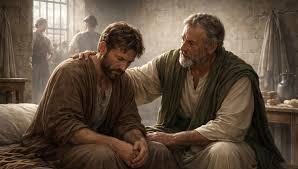
To live is Messiah, to die is gain DIG: What is Paul’s dilemma in these verses? What does it mean in verse 21? Why was Paul unsure of his desire to stay in this life or go to be with the Lord? Who was Paul dedicated to ministering to? Who are you ministering to this week?

REFLECT: “For me to live is ________?” Given your priorities and schedule this week, how would you honestly fill in the blank? What would change for you to fill it in with “Messiah?” Do you sometimes struggle between your personal feelings and your commitment to ministry?

Because Paul was not sure of the Lord’s will in the matter, he was not sure of his own will.

With the well-known words of verse 21, Paul’s reflection on his current situation (to see link click AoPaul’s Chains) takes a considerable turn. Up to this point, his primary concern has been with the advancement of the Gospel through his imprisonment and Messiah being glorified through his trial. Now he turns to purely personal reflection, but reflection of a different kind from what one might expect following verses 19-20 (see ApPaul’s Critics). Although the apostle assumed he would go free, the final words of verse 20 raised the possibility of execution. What he sets out to explain is his desire for Messiah to be glorified even if the verdict were to go against him. Picking up on the final words of verse 20, whether through life or through death, he vows that since Messiah is the passion for life, he wins in either case, whether released or executed.48

The Greek phrase rendered to live is Messiah and to die is gain (1:21 Greek) contains no verb. It literally reads to live as Messiah, to die gain. Paul knew the living is Messiah, because he would continue to serve Him while he lived. As he explained to the congregations throughout Galatia: My old self has been crucified with Messiah. It is no longer I who live, but Messiah lives in me. So I live in this earthly body by trusting in the Son of God, who loved me and gave himself for me (Galatians 2:20 NLT). But he also knew that dying would be gain because then he would be in the presence of ADONAI, able to worship Him in holy perfection (see verses 23). The apostle fully understood that wealth, power, influence, possessions, prestige, social standing, good health, business or professional success, and all other such things are fleeting. Many acknowledge that truth, but not many live as if it is true. Few can say with Paul’s complete sincerity: For to me, to live is Messiah, to die is gain.

But if I live, I can do more ministry for Messiah (1:22a NLT). Adoniram Johnson was the first overseas missionary sent out from America. In the early nineteenth century, he and his first wife went to India and, a short while later, to Burma, where he labored for nearly four decades. After fourteen years, he had a handful of converts and managed to write a Burmese grammar. During that time he suffered a horrible imprisonment for a year-and-a-half and lost his wife and children to disease. Like Paul, he longed to be with the Lord, but, also like the apostle, he considered his work for God to be much more important than his personal longings. He therefore prayed that the Lord would allow him to live long enough to translate the entire Bible into Burmese and to establish a church there of at least one-hundred believers. God granted that request and also allowed him to compile Burmese-English and English-Burmese dictionaries, which became invaluable to the Christian workers, both foreign and Burmese, who followed him. He wrote, “If I had not felt certain that every trial was ordered by infinite love and mercy, I could not have survived my many sufferings.”

Part of spiritual greatness is to know Messiah intimately and long to be with Him. But spiritual greatness also includes being totally committed to the advancement of the Kingdom of God and serving Yeshua on earth. Every believer lives with this tension. But Paul did not escape that dilemma, which he expressed so honestly.

So I really don’t know which is better (1:22b NLT). The word know (Greek: gnorizo) is used twenty-seven times in the New Testament, over half of those times by Paul. It is used of revealing something that was previously unknown, whether by the Lord to men (as in Luke 2:15; John 15:15; Romans 9:22-23), or by men to other men (as in Acts 7:13; Second Corinthians 8:1; Ephesians 6:19 and 21). Paul’s point seems to be that he had not yet decided which was better because ADONAI had not yet revealed to him which was better. Because he was not sure of the Lord’s will in the matter, he was not sure of his own will.49

Here, Paul is laying bare his soul and frankly admitting that I am torn between the two desires: I long to go and be with Messiah, which would be far better for me (1:23 NLT). He acknowledges feeling a tension – a trying, and perhaps an almost unbearable tension – between his personal desire and his duty as an apostle. The phrase: I am torn between (Greek: synechomai), is used of personal feelings, and indicates at the very least the idea of constraint (Second Corinthians 5:14), and at worst that of torment: in Luke 4:38 of suffering from a fever; in Luke 8:37 of being overcome by terror; in Luke 12:50 of Yeshua’s distress as he anticipates His suffering on the cross. Although we cannot import the meaning of these references to Philippians, we surely miss the real importance of this passage if we fail to see it as an echo of Paul’s mental state. The nature of Paul’s tension is described most briefly and powerfully in verse 21, words that have been spoken from the lips of the faithful down through the centuries: to live is Messiah and to die is gain.50

But to remain in the flesh is more necessary for Your sake (1:24 Greek). Paul’s choice is to remain alive because the Philippians need him. The apostle doesn’t ignore the needs of this world, but in recognizing the benefits to himself of the ‘olam haba (the world to come), he chooses to minister to others here in the ‘olam hazeh (this present age).51 Convinced of this, I know that I will remain alive so I can continue to help all of you [Philippians] grow and experience the joy of your faith (1:25). The apostle knew that the Philippians still needed him. It was not that he considered himself indispensable, but rather that he was convinced that his ministry to them was not yet complete. Because he had just expressed uncertainty about whether he would live or die, it seems that his being convinced reflected his personal conviction rather than a revelation from YHVH. Had God told him that he would not die until he had finished his work in the Philippian church, his living or dying would not have been an issue in his life.

As John MacArthur relates in his commentary on Philippians, Paul was convinced that the church still needed his teaching and leadership. Despite their maturity, love, and gentleness of spirit, the Philippians needed to exemplify more of their Lord’s humility (2:1-18). They needed to be on guard against false teachers (see Bf – Paul’s Opponents), to observe Paul’s example, and to oppose the cross of Messiah (3:18). At least two members of the congregation needed to learn to settle their disagreement (see Bl – Live in Harmony). Some, perhaps many, were troubled by anxiety, so Paul had told them: Don’t be anxious about anything, but in every situation, by prayer and petition, with thanksgiving, present your requests to God (4:6). In addition to those things, they needed to continually keep their focus on whatever is true, whatever is noble, whatever is right, whatever is pure, whatever is lovely, whatever is admirable – if anything is excellent or praiseworthy – think about such things (4:8).52

So that when I come to you again, you will have even more reason to boast in Messiah Yeshua because of what He is doing through me (1:26 Greek). Paul looked forward to physically returning to Philippi to personally teach and disciple believers to grow more mature in faith. The apostle spoke earlier about how lives were changed by his imprisonment, with the result that the believers in Rome were being strengthened in their faith through the witness of Paul’s life and his willingness to suffer for Messiah. Essentially, Paul argues that his return to Philippi would demonstrate God’s power, build up their faith, and give them reason for boasting in ADONAI’s ability to answer prayer.53 No circumstances, however severe, could steal Paul’s joy. Nothing could diminish his enthusiasm for the ministry. Nothing could keep him from always doing the Lord’s work as vigorously as [he could], [because he knew] that united with the Lord [his] effort [was] not in vain (15:58). May you find the joy and freedom of serving the great cause of Messiah’s glory, so that you can truthfully say in your own heart: to live is Messiah and to die is gain.

Dear heavenly Father, praise You that when life gets hard, I can trust You with absolute certainty that death will be gain! What comfort to know that trusting in Messiah as Lord and Savior will not bring shame but will bring joy and peace – that is, the word of faith that we are proclaiming: For if you confess with your mouth that Yeshua is Lord, and believe in your heart that God raised Him from the dead, you will be saved. For with the heart it is believed for righteousness, and with the mouth it is confessed for salvation. For the Scripture says, “Whoever trusts in Him will not be put to shame” (Romans 10:8b-11). You not only redeemed for Yourself a people at a great cost (Hebrews 12:2); but You also have promised to reward those who believe in You. When focused on the joy of eternity with You, it makes death into a stepping stone to joy, not to be dreaded because it is swallowed up in victory (First Corinthians 15:54c). In Messiah Yeshua’s holy Name and the power of His resurrection. Amen

2026-05-14T11:06:19+00:000 Comments

Ap – Paul’s Critics 1: 15-20

Paul’s Critics
1: 15-20

Paul’s critics DIG: Who were Paul’s critics? From verses 15-16 what possible motives might they have for preaching? What did Paul think about them? Was he jealous? What did he conclude? What was Paul’s ultimate goal for his ministry?

REFLECT: How do you tell the difference between true and false preachers or teachers? Do you care if someone is communicating the true Gospel out of selfish ambition rather than pure motives? What is the ultimate goal in your life?

It is the Gospel that saves, not the preacher.

One of the critical themes of this letter is humility. This theme reaches a zenith in Chapter 2 where Paul gives us the example of Yeshua and the humility that led Him to death on a Roman cross. In verses 15 and 16, the apostle contrasts those who share the Good News of Messiah out of selfish-ambition and for their own fame with those who share the Gospel humbly. He is not criticizing their message like he did the Judaizers (see Galatians, to see link click AjNo Other Gospel); but rather, their spirit of self-ambition. Paul even commends the word of Yeshua that was being delivered, even if done by unworthy messengers (1:18a).41

It is true that some preach Messiah out of envy and strife, but others out of good will (1:15 NIV). Like the Lord during His earthly ministry, Paul had more than his share of critics, most of them from the Jewish and pagan religious establishments. The Church soon came to have critics within its own ranks who maligned their leaders, more often than not those who were the most godly and effective. The apostle’s critics in Philippi were not heretics like the Judaizers, but were biblically on solid ground. They preached and taught the true Gospel of Yeshua Messiah. Nor were they false apostles, deceitful workers, disguising themselves as apostles of Messiah (Second Corinthians 11:13), or part of those who demanded Gentile circumcision for salvation mentioned later in the present letter (3:2).

As John MacArthur relates in his commentary on Philippians, envy (Greek: phthonos) is the desire to deprive others of what is rightfully theirs. It was because of envy that the Jewish multitude (Matthew 27:18) and the Sadducees handed Yeshua over to Pilate for crucifixion. Envy, wishing others did not have what they have, is closely related to jealousy, which is wishing to have what someone else possesses. From the context, it seems likely that the apostle’s critics were both envious and jealous of the apostle. They envied Paul’s giftedness, his blessings, his intellect, his effectiveness in ministry, and, perhaps especially, his being highly respected and beloved by the Philippians. As a result, like all those motivated by envy and jealousy, they considered the apostle to be a threat to their own influence in the church.

Strife (Greek: eris) refers to contention, especially with a spirit of hostility. As it is used here, it is frequently associated with envy and jealousy, as well as with other sinful passions, such as greed and malice. Envy leads to competition, hostility, and conflict. Paul’s purpose in confronting this issue was not to gain sympathy for himself, much less to retaliate against his critics. He was rather pointing out that faithfulness in ministry includes right motives as well as right doctrine. There have always been those whose service in the Church is to a large degree motivated by a desire to make a name for themselves. That makes them resentful of those who are respected and whose ministries are fruitful. They inevitably breed envy and strife and therefore do great harm to the congregations of God. Exactly what was being said about the apostles to hurt him and destroy his reputation is not revealed. But because the charges were false, the details are not important.42

Unlike Paul’s critics, the latter (those of good will) preached Messiah out of love. In context, those believers motivated by good will doubtless loved the Lord and each other but the emphasis here is on their love for the apostle. They cared deeply for him and were concerned for his personal welfare as well as for the impact of his ministry. From their perspective, the Gospel itself was on trial.43 Only a few years earlier, in his first letter to the bickering and divisive church in Corinth, he wrote: If I speak with the tongues of angels, but do not have love, I have become a noisy gong or a clanging cymbal. If I have the gift of prophecy, and know all mysteries and all knowledge; and if I have faith, so as to remove mountains, but do not have love, I am nothing. And if I give all my possessions to feed the poor, and if I surrender my body to be burned, but do not have love, it prophets me nothing . . . Now faith, hope, love, live by these three, but the greatest of these is love (First Corinthians 13:1-3 and 13).

Those believers knew that Paul was divinely appointed for the defense of the Gospel (1:16 NKJV), and were grateful for his faithful obedience to that call – an obedience that had brought them such rich spiritual blessings. Yeshua had declared to the apostle on the road to Damascus that he was to carry [His] name before Gentile nations and kings and the sons of Isra’el (Acts 9:15; cf. Galatians 1:15-16; Ephesians 3:6-7). His imprisonment in Rome was neither an accident of fate nor primarily the decision of men, not even of Paul’s decision to appeal to Caesar (Acts 25:11). Above all else, it was an integral part of his divine mission to defend the Gospel. And in this case, he was destined to do so in Rome.

The former (Paul’s critics) proclaim Messiah out of selfish ambition rather than from pure motives (1:17a Greek). Selfish ambition did not originally have a bad connotation, but simply referred to working for hire. Eventually, however, it acquired the meaning of looking out solely for one’s own interests, regardless of the consequences to others. It was used by career professionals who ruthlessly tried to claw their way to the top of their fields anyway they could, and by politicians who sought office at any expense. Not only did the apostles’ critics not preach from pure motives, even worse, they thought that they could stir up trouble for him while he was in chains (1:17b Greek). They exhibited incredible cruelty born of jealousy, using the apostle’s imprisonment to discredit him and to promote themselves.44

But, in the final analysis, Paul concluded that it didn’t matter. Whether their motives are false or genuine, the message of Messiah is being preached either way. And because of this I rejoice (1:18 Greek). Paul here doesn’t excuse those who share the Good News for impure motives but focuses on the sharing of the Good News. Where there is a false presentation of the Gospel, he would speak out forcefully, as he did with the Judaizers. But here, the message is right, even though the messenger has the wrong motives. Nevertheless, Paul rejoiced that the Word of God was being preached. It is the Gospel that saves, not the preacher. The insincere evangelist is storing up for himself judgment, but those who have come to Yeshua Messiah because of his words have entered eternal life (see the commentary on The Life of Christ MsThe Eternal Security of the Believer).45

Yes, and I will continue to rejoice, for I know that this will work out for my deliverance (Greek: soteria, which is commonly rendered salvation) (1:19a Greek). The apostle quotes directly from the Septuagint (The Greek translation of the TaNaKh), citing Job’s reply to Zophar: Indeed, this might work out for my deliverance (13:16a). Some therefore believe Paul was referring to his deliverance from sin and death through faith in Yeshua Messiah. The idea then would be that he was confident in his eternal security. Others take this deliverance to refer to his vindication before Caesar and his consequent release from prison and deliverance from execution. The primary deliverance of which he was speaking could not have been from execution, however, because in verse 20 he qualifies his expectation by saying: whether by life or death. In any case, Paul knew that his present circumstances were temporary. One way or another, by life or death, he would be delivered from them. However, verses 21-25 indicate his confident anticipation that he would live. His salvation would be perfected when he was ushered into his Lord’s presence (1:23). Again, like Job, he could declare: As for me, I know that my Redeemer lives, and at last He will take His stand on the earth. Even after my skin is destroyed, yet from my flesh I shall see God (Job 19:25-26).

Through your prayers (1:19b Greek). Paul believed in the limitless sovereignty of ADONAI and had perfect confidence that God’s Word would be fulfilled and His purpose carried out. He also knew that God’s sovereign plan includes the prayers of His people. He especially appreciated the prayers of the beloved congregation at Philippi and he expressed to them his deepest convictions and personal longings. Before Paul visited the church at Rome, he had appealed to those believers: Now I urge you, brothers, by our Lord Yeshua Messiah and by the love of the Spirit, to strive together with me in your prayers to God for me (Romans 15:30). Nothing is more encouraging to those in ministry than to know that fellow believers are holding them up before the Lord in prayer.

And the help I get from the Spirit of Yeshua Messiah (1:19c Greek). The Word of God, the prayers of believers, and the power of the Ruach Ha’Kodesh always work together for the benefit of the servants of God. Yeshua promised: I will ask the Father, and He will give you another Helper, that He may be with you forever; that is the Spirit of Truth, whom the world cannot receive, because it does not see Him or know Him, but you know Him because He lives with you and will be in you (John 14:16-17; cf. 15:26; Mark 13:11; Luke 12:12; Romans 8:9). The Spirit helps believers to pray. When we are weak and do not know how to pray as we should . . . the Spirit Himself intercedes for us with groanings too deep for words (Romans 8:26). The Spirit is the source of our power: You will receive power when the Ruach Ha’Kodesh has come upon you (Acts 1:8). And the Spirit produces in the believer’s life an abundant harvest of spiritual fruit: love, joy, peace, patience, kindness, goodness, faithfulness, gentleness, and self-control (Galatians 5:22-23).

For I fully expect and hope that I will never be put to shame (1:20a NIV). Paul was certain that, in the eyes of ADONAI, he would never truly be put to shame, whether before Caesar, the world, or the Church. Ultimately, he would be vindicated. The apostle expressed his supreme joy when he wrote that, with all boldness, now, as always, Messiah will be exalted in my body. Knowing that the believer’s body is the temple of the Ruach Ha’Kodesh (First Corinthians 6:19), he had presented his body as a living and holy sacrifice, acceptable to God, which [was his] spiritual service of worship (Romans 12:1). Whether by life or by death (1:20b Greek). Paul was not certain what the Lord’s plan was for him, whether he would continue to serve Him through his life and ministry or through the final praise of death. To the elders from Ephesus, who met him near Miletus, Paul declared: I do not consider my life of any account as dear to myself, so that I may finish my course and the ministry which I have received from the Lord Yeshua, to testify solemnly of the Gospel of the grace of God (Acts 20:24). Either way he would be victorious and Messiah would be glorified.46

What is your ultimate goal in life, your eager expectation and hope? Paul expressed his supreme goal – to promote the glory of Yeshua, whatever the cost or benefit to himself – in order to wet the Philippians and our appetites for the same heart-satisfying aim. He was not setting himself apart from the rest of us as some ascetic monk, to be admired from a distance by people whose devotion didn’t match his. Rather, he wanted to make us all feel his thrill at the privilege of glorifying Messiah. This privilege, and nothing less, is what you and I were made for. Asaf, the author of Psalm 73 once envied those who enjoyed attractive, but fleeting rewards. But when ADONAI brought him to his senses, he realized that nothing could compare to the priceless treasure he already possessed: Whom have I in heaven but You? On earth there is none I desire besides You. My flesh and my heart may fail, but God is the strength of my heart and my portion forever (73:25-26).

Just as the heavens declare the glory of God (Psalm 19:1) and the trees clap their hands and sing for joy before ADONAI at His coming (Isaiah 55:12 and Psalm 96:12-13), so we, who bear the very image of the Creator, are designed to be the praise of His glory (Ephesians 1: 12 and 14). So a question begs for an answer: What passion fills your thoughts in your waking hours and sleepless night? Are you pursuing academic achievement, career success, health and fitness, a fulfilling marriage, respectful and accomplished children, financial stability, popularity, or community recognition? These are all good goals, but none is big enough to be your ultimate goal, the goal for which your Creator designed you. Now, they might be consistent with His sovereign design for you, but if your sights are set no higher than these earthbound accomplishments, sooner or later your hopes will be dashed.

Or, to use Paul’s other way of speaking, from what evil, above all, do you need salvation? Do you long to escape poverty, illness, abuse, injustice, violence, loneliness, failure, obscurity, or shame? Any sane person would want to escape such miseries. Yet no sane person would expect a life free of pain and adversity in this world. Yeshua Himself said: In this world you will have trouble (John 16:33b). ADONAI has not promised complete deliverance from the world’s woes short of Messiah’s return at the end of history. On that great day, when the Savior for whom we wait appears from heaven, not only will He transform our lowly body to be like His glorious body (3:20-21), but He will also create a new heaven and a new earth, from which every form of evil and misery will be defeated (Revelation 21:1-4). In the meanwhile, the salvation that YHVH gives now is the deliverance from selfish ambition. And God’s grace will free you, too, enabling you to embrace the ultimate goal that was Paul’s eager expectation and hope, and that gave him confident joy in the face of an uncertain future: seeing Messiah glorified through you, whether through life or death, plenty or want, health or disease, admiration or rejection. Don’t settle for less than the best!47

Dear heavenly Father, praise You for making an eternal home in heaven for me where I will live with You forever! Critics may complain, but I can be full of joy and feel secure when my hope is in You. Critics may complain, but the inheritance of the promised Ruach Ha’Kodesh as a seal of ownership is so great that it silences their weak voices. What a joy and a comfort it is, to know that what the critics say does not matter. What You say matters for all eternity! You have promised to prepare a wonderful eternal home for those who love You. Thank You for the strength of Your steadfast love that satisfies and is greater than the voice of any critic. Since Your lovingkindness is better than life, my lips will praise You. So I will bless You as long as I live. In Your name I lift up my hands. My soul is satisfied with fat and oil, so my mouth praises You with joyful lips (Psalm 63:3-5). In Messiah Yeshua’s holy Name and power of His resurrection. Amen

2026-05-13T12:14:03+00:000 Comments

Ao – Paul’s Chains 1: 12-14

Paul’s Chains
1: 12-14

Paul’s chains DIG: How does Paul decide if an event like  jail is good or bad? How did Paul’s circumstances open up new areas of ministry for him rather than restrain him? How did ADONAI use Paul’s chains to advance the Gospel? How did Paul’s circumstances encourage many of the believers in Rome?

REFLECT: What kinds of “chains” has ADONAI used in your life? How can I be set free from the petty pursuit of my own comfort, to devote my life to a cause bigger than myself, the cause of Yeshua the King? How can I be set free from the fear of what others may do to me, to lay my life on the line for Messiah?

The Good News meant that for both Jews and Gentiles, Torah is a blueprint for living.

Paul now transitions to current news on himself and the work of ministry. Though it may seem counter to what we would understand today, Paul shares that his imprisonment was an excellent opportunity for him to share the Gospel. Empowered by his faith in Yeshua, Paul looks beyond his own needs and suffering to encourage the work of the Good News. Verses 12 through 14 are a single sentence in the Greek.

Now, brothers, I want you to know that what has happened to me has helped in advancing the Good News (1:12 CJB). Paul’s imprisonment brought the Good News of Yeshua, a Jewish message, to the heart of the pagan Roman Empire.33 The apostle did not merely say that the Gospel had continued to make progress in spite of adversity; rather, the adversity itself had resulted in the advancement of the Gospel. Far from trying to evoke sympathy from his readers by expressing resignation, Paul went out of his way to make sure that the Philippians were not overly concerned about him; indeed, he gave a glowing report of his ministry intended to bring joy to their hearts (verse 18). However, we should note that implicit in this statement is a recognition of the sovereign workings of ADONAI in human affairs, though the point may seem veiled when Paul says: what has happened to me.34

Paul could say to his persecutors what Joseph said to his brothers after they sold him into slavery: It was not you who sent me here, but God; and He has made me a father to Pharaoh and lord of all his household and ruler over all the land of Egypt . . . As for you, you meant to do me harm, but God meant it for good (Genesis 45:8 and 50:20a). Countless numbers of believers have been able to echo that truth. Job could have expressed it to his three “comforters,” Esther to Haman, Jeremiah to the false prophets and rulers of Judah, and the apostle John to those who exiled him to Patmos. As always, our Lord can turn efforts to thwart His Kingdom into means of advancing it. ADONAI’s supreme act of using the Adversary’s schemes to accomplish His purposes was, of course, His Son’s work of redemption on the cross. By His death and resurrection, Yeshua Messiah conquered sin and death, defeated Satan, and provided redemption for all in every age who trust in Him.

Paul made it clear in Rome that the source of eternal life (see The Life of Christ, to see link click MsThe Eternal Security of the Believer) was only available to both Jew and Gentile because of the work and acceptance of the Jewish God, the Jewish Messiah, and the guidance of the Jewish Scriptures.35 It meant that for both Jews and Gentiles, Torah was a blueprint for living (see Deuteronomy BkThe Ten Words).

As a result, it has become clear throughout the whole praetorian (palace) guard (1:13a NIV). The praetorian guard was originally composed of some ten thousand handpicked soldiers. It had been established by Caesar Augustus, who was emperor at the time of Yeshua’s birth (Luke 2:1). These men were dispersed strategically throughout the city of Rome to keep the general peace and especially to protect the emperor. Later emperors greatly increased their numbers, and Tiberius built them a conspicuous fortified camp to make sure they had a high-profile presence in Rome. Members of the palace guard served for twelve (later sixteen) years, after which they were granted the highest honors and privileges, including a very generous severance pay. Eventually, they became so powerful that they were considered “king-makers,” who not only protected but also chose Rome’s emperors.

And to everyone else that I am in chains for Messiah (1:13b NIV). Paul was guarded by a Roman soldier all the time. Paul’s chain was somewhat longer than a modern handcuff, about eighteen inches long. One end was attached to the prisoner’s wrist, the other to the guards. The chain was not removed from the prisoner as long as he was in custody, making both escape and privacy impossible. Although the apostle was allowed to live in his own rented quarters, he was chained in that manner to a series of soldiers for a period of two years.36

Over those years, it’s possible that several dozen different soldiers were assigned to guard Paul, each one becoming his captive audience. At times his rented room would be filled with people, to whom the apostle would evangelize. And after they left the Roman guard would sit beside him, probably filled with many questions as to the meaning of the Good News which the strange prisoner spoke. At other times, when all had gone, and especially at night, when the moonlight shone on the distant slopes of Mount Soracte, the soldier and the apostle were left to talk, and in those lonely hours John would tell soldier after soldier the story of his own proud career in early life, of his opposition to Messiah, and his ultimate conversion. He would make it clear that he was being held as a prisoner, not for any crime, not because he incited rebellion against Rome, but because he believed in Him whom Roman soldiers had crucified, under Pontus Pilate, was the Son of God and the Savior of the world. And as his testimony spread, and the soldiers talked to one another, the whole praetorian guard sympathized with the meek and gentle apostle, who always showed himself to be so kind to the men as they shared, however involuntarily, his imprisonment.37

Trusting in Yeshua Messiah gave Paul such strength (Colossians 1:26) and comfort (Second Corinthians 1:3ff) that, far from needing these from others, he, from his house arrest, could strengthen other believers who were free, and comfort those worrying about him that despite his circumstance, the Good News was advancing.38 And because of my chains most of the believers here have for more courage to speak the Word of God without fear (1:14 Greek). His strength became their strength, as his example touched them. The apostle’s fellow believers discovered that, like the cowardice they once experienced, courage is contagious. Although influential and disruptive, those who criticized and slandered Paul (see ApPaul’s Critics), were in the minority.

Sometimes ADONAI has to put “chains” on His people to get them to accomplish things that could never happen any other way. Young mothers may feel chained to the home as they care for their children. But God can use those chains to reach people with the message of salvation. Susannah Wesley was the mother of nineteen children, before the days of labor-saving devices and disposable diapers. Out of the large family came John and Charles Wesley, whose combined ministries shook the British Isles. At six weeks of age, Fanny Crosby was blinded, but even as a youngster she was determined not to be confined by the chains of darkness. In time, she became a mighty force for God through her hymns and Gospel songs.39

If you are a believer who has been taken captive by God’s grace in Messiah, how has the mercy that you received influenced the way that you view life’s frustrations and setbacks? When your agenda is thwarted as Paul’s plans to reach Spain were, do you follow his lead in looking around in the situation that you would never have chosen for yourself, eager to see and seize unexpected opportunities to show the kindness of Yeshua, and speak about His grace to people whom you would not have met otherwise?40

Dear heavenly Father, praise You for Your infinite wisdom and love that is able to turn hard and difficult situations to both mature me and bring glory to Your holy Name! Now to the King eternal, immortal, invisible, the only God, be honor and glory forever and ever (First Timothy 1:17). It brings comfort that when trials come to me, that the trials did not miss Your attention. You were not busy, nor did You look away for a minute; but You use trials to mature and grow me for Your glory. These trials are so that the true metal of your faith (far more valuable than gold, which perishes though refined by fire) may come to light in praise and glory and honor at the revelation of Messiah Yeshua (First Peter 1:7).

And for Paul, imprisonment was not a slip or an afterthought, but it was carefully integrated into how to mature believers throughout the centuries to come. Paul’s time in Rome was very useful to him to have time to stay put in one place and write encouraging messages about Your truth to the several churches. When times get hard, it is so important to look into Scripture and see how very often You take hard situations and turn them to glorify You, for Joseph, David, Paul and others. Thank You that I can always count on You, even when times are difficult, You are always with me. To the one who sits at Your right hand. Amen

2026-05-13T12:28:48+00:000 Comments

An – Paul’s Affairs 1: 12-26

Paul’s Affairs
1: 12-26

What follows Paul’s introductory words (to see link click AjPaul’s Introductory Matters) is commonplace in letters of friendship. The writer informs the recipient(s) about his or her own situation – often with the very words the apostle uses here. This material is usually brief, but in Paul’s case it is quite long (verses 12-26), and as with so many of Paul’s letters, he focuses on the Good News. What begins, typically for such material, as a word to relieve the Philippians of any anxiety (see AoPaul in Chains) thus evolves into a word about the current spread of the Gospel (see ApPaul’s Critics), followed by a reflection on his desires and expectations regarding his long-awaited appeal to Caesar (see AqLife is in Messiah, to Die is Gain). If it were to result in his death, that would mean that he had reached the goal of his life – Yeshua Himself – and if the choice were his, he would choose that route. But whatever happens Paul encouraged the Philippians to conduct themselves in a manner worthy of the Gospel of Messiah (see Ar – Walking Worthy Lives).32

2026-05-14T11:09:32+00:000 Comments

Am – Paul’s Prayer for the Philippians 1: 9-11

Paul’s Prayer for the Philippians
1: 9-11

The prayer for the Philippians DIG: What five specific spiritual attributes did Paul pray for on behalf of the Philippians? What kind of love did Paul envision? What does it mean to discern the things that are excellent? What does it mean to live a sincere and blameless life? What is the evidence of our salvation? What is Paul’s ultimate goal here?

REFLECT: How would you rate your prayer life from 1 to 10 (with 10 being passionate and 1 being nonexistent). How much do you pray for yourself and how much do you pray for others? Take five minutes to put Paul’s prayer into your own words. In what ways are you showing the fruit of the Spirit in your life today? How do you glorify God in your life?

The truest longings of the heart are revealed in prayer.

At the beginning of his letter, Paul told the Philippians that he prayed for them on a regular basis, and that he made those prayers with joy: Whenever I pray for you I always pray with joy (1:4). Now, flowing directly out of his own longing for them with the tender affection of Messiah Yeshua (1:8),23 Paul’s prayer reveals five specific attributes that he tirelessly prayed for on their behalf; their spiritual growth in love, excellence, integrity, good works, and in glorifying ADONAI. These are the God-ordained spiritual essentials for which all believers should pray for themselves and others. As several other texts demonstrate (Romans 5:3 to 4:2; and Second Peter 1:5-7), these spiritual attributes that Paul mentions here in verses 9-11 are sequential, each building on the foundation of the previous one. Abounding in love produces spiritual excellence, which produces personal integrity, which produces good works. Together, they attain the supreme objective of ADONAI’s praise and glory.24

1. Love: And this is my prayer: that your love may overflow more and more. Many years earlier, where an existing love also needed some further prodding, Paul prayed similarly for the Thessalonians that their love might increase and overflow (First Thessalonians 3:12). In that case he specified the direction of the love for which he prayed: for each other and for everyone else. The context of these prayers suggest their love for one another overflows more and more. This is a concern that the apostle will raise in 2:2 when he says: Then make my joy complete by being like-minded, having the same love. But love should be more than sentimental; it should be with full knowledge and discernment (1:9 NLT).25

Knowledge is from the Greek word speaking of gained by experience, as contrasted with intuitive knowledge, which is from another word. A prefixed preposition intensifies the word, so it should be read with full knowledge. The full knowledge which the Philippians needed to gain by experience was a better understanding of God’s Word. A believer can have an “understanding” of the Word, that is, be able to explain its meaning to others, without having an experiential knowledge of the same. But when that believer has put the Word of God into practice in his life, then he has what Paul is talking about here. This is the difference between a young convert and a matured believer. The former has not had time to live long enough to live out the Word in his life, the latter has. The former, if his life is wholly yielded, is a delight to look upon, as one who would enjoy the vigor and enthusiasm of a new believer. The latter, however, has life experience, is mellowed, and mature in the faith. This was what the Philippians needed, but it would take time for it to be realized. This maturity would put guardrails around their overflowing love and would insure its proper application and wise outreach.26

Discernment (Greek: aesthesis) is the source of the English world aesthetic. But the meaning of aesthetic is almost the opposite of “aesthetic,” which has to do with personal taste and preference. Paul calls believers to put aside personal tastes and preferences, and rather, to focus on achieving mature insight and understanding. It refers to a high level of biblical, theological, moral, and spiritual perception. In the B’rit Chadashah it is a spiritual gift given to the Church (see the commentary on First Corinthians to see link click CqThe Distinguishing of Spirits). It is a biblically knowledgeable and discriminating love that is under control of a Spirit-controlled mind and heart. It is the kind of love that can fulfill Paul’s warning to the Thessalonians: Examine everything carefully; hold fast to that which is good and abstain from every kind of evil (First Thessalonians 5:21-22). This abounding in love produces spiritual excellence.

2. Excellence: Having laid down the priority of love in verse 9, Paul continues his discussion of the elements of spiritual growth by looking at the second attribute: excellence. So that you may approve (Greek: dokimazo, can be translated discern) the things that are excellent (1:10a NASB). The phrase so that indicates that the first spiritual attribute is the foundation of the second. The progression is from love, which incorporates knowledge of God’s truth and spiritual discernment to excellence, that is, to thinking and living biblically. When a believer is dominated and controlled by the love of ADONAI, there will be a corresponding desire to live according to His will as fully and as faithfully as humanly possible. To discern the things that are excellent means to assess, determine, and carefully identify whatever is best. It is much like Paul’s later command: Finally, brothers and sisters, whatever is true, whatever is noble, whatever is right, whatever is pure, whatever is lovely, whatever is admirable – if anything is excellent or praiseworthy – think about such things (4:8). The excellent spiritual attributes are all the truths, thoughts, words and good works that are expressions of God’s will for the believer. This excellence produces integrity.

3. Integrity: A third essential for growth in godliness is personal and relational integrity (see the commentary on Proverbs CcThe Path of Righteousness). So that you may live sincere (Greek: eilikrines, carries the ideas of cohesiveness, oneness, and unity) and blameless lives (1:10a Greek). Blameless expresses the extent of and goal of integrity. It has the idea of not falling into sinful conduct and not causing others to fall into sin. This is not a call to the perfection of holiness that is true only of YHVH and those believers in heaven. It calls for us to do all we can to give the glory to ADONAI and to live honorably before Him and others. Believers are to live lives of integrity as Paul did (Acts 23:1; 24:16; Second Corinthians 1:12; and Second Timothy 1:3).

In ancient Rome fine pottery was relatively thin and fragile and often developed cracks while being fired. Unscrupulous merchants would fill the cracks with a hard, dark wax, which would be concealed when the object was painted or glazed, but would melt when the pottery was filled with something hot. In ordinary light, the deception was usually undetectable, but when held up to the sunlight it was clearly exposed, because the wax appeared darker. Reputable dealers would often stamp their products sine cera (without wax) as a guarantee of high quality.

Just as such pottery was held up to the sunlight to reveal cracks or other defects, the obedient, faithful believer makes sure to expose his or her life to the sunlight of Scripture. As the writer to the Hebrews has declared: See, the Word of God, that which offers rest to the believer, is alive! It is at work and is sharper than any double-edged sword (Greek: machairan meaning a short dagger) – it cuts right through to where soul meets spirit and joints meet marrow, and it is quick to judge the inner reflections and attitudes of the heart (Hebrews 4:12). Sadly, many people try to cover their faults in various ways in order to appear less spiritually flawed than they really are. They use such things as regular church attendance, generous giving, activity in church functions, and spiritual lingo to give the appearance of spiritual integrity. But when they are severely tempted for their faith, the cracks show.

To have integrity also means to stand against the world. James made it clear that pure and undefiled religion in the sight of our God and Father is this: to visit orphans and widows in their distress, and to keep oneself unstained by the world (James 1:27). John warned: Do not love the world or anything in the world. If anyone loves the world, love for the Father is not in them (First John 2:15). And Paul pleaded: Do not be conformed to this world, but be transformed by the renewing of your mind, so that you may prove what the will of God is, that which is good and acceptable and perfect (Romans 12:2).27

Until the day of Messiah’s return (1:10b NLT). This reminds us of verse 6. It was He who began a good work in you will perfect it until the day when Messiah Yeshua returns. Then we will receive our crowns (see the commentary on Revelation CcWe Must All Appear Before the Bema Seat of Christ). Here are two good tests for us to follow as we exercise our spiritual discernment: First, will it stumble others? and secondly, will I be blameless when Messiah’s returns?28 This integrity produces good works.

4. Good works: Having been filled with the fruit of righteousness that comes through Yeshua Messiah (1:11a NIV). The fourth essential for spiritual growth is good works, which Paul refers to as the fruit of righteousness. The progression continues. Godly love produces spiritual excellence, which produces integrity, which produces good works. Having been filled translates a perfect passive participle in the Greek text, referring to something that happened in the past and has continuing results. In other words, when believers stand before the Lord at the Bema Seat of Messiah, they would have already been filled with the fruit of righteousness. That refers to a divinely complete state, or condition, of righteousness that is based on the love, excellence and integrity that Paul has just explained.29

Good works are not the means of salvation, but they are the evidence of our salvation. Therefore, the fruit of righteousness is the good works that ADONAI desires to see in our lives. Such good works always begin with godly attitudes, some of which the apostle details in his letter to the churches in Galatia: The fruit of the Spirit is love, joy peace, patience, kindness, goodness, faithfulness, gentleness, and self-control (Galatians 5:21-22). Not only that, but Paul compared winning souls to Messiah as bearing fruit (Romans 1:13), and he also names holiness as spiritual fruit (Romans 6:22). He urged us to be fruitful in every good work (Colossians 1:10), and the writer to the Hebrews reminded us that our praise is the fruit of our lips (Hebrews 13:15). These good works glorify ADONAI.30

5. The glory of ADONAI: The fifth essential attribute for spiritual growth that Paul mentions is by far the most important. For this will bring much glory and praise to God (1:11b NLT). Yeshua said: My Father is glorified by this, that you bear much fruit and so prove to be My disciples (John 15:8). ADONAI makes believers fruitful for the sake of His glory. So Paul commanded: Whether, then, you eat or drink or whatever you do, do all to the glory of God (First Corinthians 10:31). And in another letter explains that we have obtained an inheritance . . . to the end that we who were the first to hope in Messiah would be to the praise of His glory. In Him, you also . . . were sealed in Him with the Ruach of promise . . . to the praise of His glory (Ephesians 1:11-14). In the middle of Ephesians, as if overwhelmed by the wonderful truths he had just spoken of, he rejoiced: Now to Him who is able to do far more abundantly beyond all that we ask or think, according to the power that works within us, to Him be the glory in the Church and in Messiah Yeshua to all generations forever and ever. Amen (Ephesians 3:20-21). Therefore, the supreme objective and result of the life of godly love, excellence, integrity, and good works is to glorify and praise ADONAI.31

Dear heavenly Father, praise You for being so very wonderful! How Awesome that the relationship with You is a living union where You abide in those who love You (John 14:23). Love is the foundation to all the decisions that we make. Loving and trusting in You as the number one priority in life, is what helps and guides me to maturity and to be able to live sincere and blameless life (Philippians 1:10a). Father help me to grow in my love and trust in You. Shine Your love on me in good times, send down rain showers to water me in grey times and strong winds in hard and difficult times to cause me to look up to You for Your protection and guidance.These trials are so that the true metal of your faith (far more valuable than gold, which perishes though refined by fire) may come to light in praise and glory and honor at the revelation of Messiah Yeshua (First Peter 1:7). You are such an awesome God! What a joy it is to mature in my faith and to grow more and more like You. In Messiah Yeshua’s holy Name and power of His resurrection. Amen

2026-03-24T11:09:35+00:000 Comments

Al – The Elements of Joy 1: 3-8

The Elements of Joy
1: 3-8

The elements of joy DIG: How does Paul feel about the church in Philippi? What does that show about his leadership style? How long had it been since Paul had ministered in Philippi? What had Paul remembered about them? Who is the object of intercessory prayer? How had the Philippians participated in Paul’s ministry? What are the eight aspects of fellowship? What are the ten ways believers lose their joy?

REFLECT: Who do you have a fond recollection of in the Lord? Did they lead you to Messiah? Did they disciple you? Who are your prayer partners? Who do you pray for on a daily basis? What is your spiritual gift? How are you using it? What are you confident about in the Lord? What other believers do you share unity? How is the unity expressed? How much joy do you think the Lord feels towards your church?

Since we can do no works to gain our salvation, we can do no works to lose our salvation.

Paul’s circumstances at the time he wrote his letter to the believers at Philippi were dire. He was imprisoned in Rome, possibly facing execution. As it turned out, he was released from this imprisonment, but he was not certain that would be the case when he wrote Philippians. He was under house arrest (Acts 28:23 and 30), chained to a Roman soldier (Acts 28:16) to prevent any possibility of escape. The apostle languished there, unable to do the ministry he loved, while others, taking advantage of his situation, were proclaiming Messiah out of jealousy and rivalry (to see link click Ap – Paul’s Critics). However, his heart overflowed with joy (1:18). If anything, those horrendous circumstances made Paul’s joy all the greater, because he trusted the sovereign purpose of his Lord and turned to him even more to Him for strength and comfort.

True joy is an unwavering constant in a Spirit-filled life (Romans 14:17), not a transient emotional feeling that comes and goes depending on circumstances. Because Paul was constantly near to God, he was constantly joyful. He experienced an inexpressible peace (4:7) and contentment (4:11) provided by the Ruach Ha’Kodesh deep within his heart and soul because he had a conscience that was clear of offense against ADONAI (Acts 23:1, 24:16; Second Corinthians 1:12; Second Timothy 1:3).15

The joy of recollection (1:3): I thank my God every time I think of you (1:3 CJB). It must have brought great joy to the Philippians’ hearts as they read how the apostle often thanked God for them. Here was a letter of commendation from one who was in Roman chains some 800 miles away. About ten years had passed since Paul had first ministered among them. Every time Paul thought of them, he thanked ADONAI for them.16 The phrase my God reflected Paul’s deep intimacy and communion with the Lord, to whom he belonged and served (Acts 27:23). His thankfulness for the Philippians was to God, emphasizing both that the Lord is the ultimate source of all joy and that it was the Philippians’ relationship to Him through Messiah that caused Paul to thank God.

Paul’s recollection of the Philippians began with his Second Missionary Journey when the apostle came to Philippi (see Acts BuPaul’s Second Missionary Journey). He was specifically directed by the Ruach Ha’Kodesh to go to Macedonia rather than Bithynia, as he and Silas had planned (Acts 16:7-10). On Shabbat they went outside the city to the riverside, where they expected to find Jewish worshipers. The only ones present were a group of women in prayer. One of them, Lydia, was a “God-fearer,” that is, a Gentile proselyte to Judaism (see Acts BbAn Ethiopian Asks about Isaiah 53: God-fearers). She accepted Yeshua as her Messiah, was baptized that day along with her newly believing household, and became the nucleus of the Philippian church. She then prevailed on Paul and those with him to be her guests at her home (Acts 16:13-15). The generosity and hospitality that she exhibited, characterized that congregation for years to come.

The joy of intercession (1:4): Another indispensable element of joy for believers is interceding before ADONAI on behalf of others. Those who are obedient to the Ruach Ha’Kodesh will delight in the privilege of intercessory prayer. Faithful and sincere intercession is much more than an obligation; it is a joy. Whenever I pray for you I always pray with joy (1:4 CJB). Faithful intercessors are more preoccupied with the needs and welfare of others than their own and ask ADONAI to pour out His divine blessing on them. Do not merely look out for your own personal interests, but also the interests of others (2:4). Intercessory prayer sometimes involves disappointment and pain. Nevertheless, Paul’s prayers for the Philippians were offered with great appreciation and joy. Neither the unbelieving false teachers, nor the squabbling of believers such as Euodia and Syntyche (4:2), could rob Paul of his joyful remembrance of that cherished congregation.17

The joy of participation (1:5): The Philippians had supported Paul with their prayers and finances (Phil 4:14-19; 2 Cor 8:1-5; Rom 15:26) while he went about his missionary ministry. In view of your participation (Greek: koinonia, meaning fellowship) the Gospel from the very first day until now (1:5 Greek). In the broadest sense, the apostle rejoiced that the Philippians were saved and thus partnered with him in spreading the Gospel. That participation included their generous financial support (4:15-16). The joint ministry of the Gospel had gone on from the first day when Lydia had opened her home to the preaching of the Word (Acts 16:15), until now, the moment when Paul was writing this letter, he was grateful for their help.18

In his commentary on Philippians, William Hendriksen lists eight elements, or types, of koinonia. First and foremost is the fellowship of grace. This is not a natural, man-made fellowship, but one sovereignly designed and achieved by YHVH through the Ruach Ha’Kodesh (Ephesians 2:8; Acts 15:11; Romans 4:5).

Second is the fellowship of faith. On the human level, it is faith alone that brings sinners to salvation. Paul and Silas told the jailer in Philippi: Trust in the Lord Yeshua, and you will be saved – you and your household (Acts 16:31 cf. Romans 10:9-10). Yet, as noted above, even human faith has a divine origin. For it is by grace you have been saved through faith, and this is not from yourselves, it is the gift of God (Ephesians 2:8).

Third is the fellowship of prayer and thanksgiving. Nothing binds believers together more closely than worshiping ADONAI in corporate praise and thanksgiving. Believers are always [to be] giving thanks for all things in the name of our Lord Yeshua Messiah to God, even the Father (Ephesians 5:20); and they are to rejoice always, pray without ceasing, and in everything give thanks, for this is God’s will for them in Messiah Yeshua (First Thessalonians 5:15-18).

Fourth is the fellowship of love, the supreme virtue that encompasses all other virtues (see the commentary on First Corinthians CuThe Necessity of Love). Paul went on to say that love is patient, love is kind and does not envy, love does not brag and is not proud, is not rude or selfish, it is not selfish or easily angered, does not keep a record of wrongs, rejoices in the truth, love covers all things, believes all things, hopes all things, and endures all things . . . the greatest of these is love (First Corinthians 13:4-8 and 13).

Fifth is the fellowship of contributing to the needs of others. While we have the opportunity, Paul warned, let us do good to all people, and especially to those who are of the household of the faith (Galatians 6:10). Even under the Dispensation of Torah (see the commentary on Exodus DaThe Dispensation of the Torah), believers were commanded: Do not withhold good from those to whom it is due, when it is in your power to do it (Deuteronomy 3:27).

Sixth is the fellowship of sharing the Gospel. That is done through preaching, teaching, witnessing, and supporting those whom the Lord has specifically called to those ministries. This fellowship is clearly the fulfillment of Messiah’s Great Commissions. The first Great Commission was in Genesis 12:3: I will bless those who bless you, and curse those who curse you, and by you all the families of the earth will be blessed; and the restatement of the Great Commission in Matthew 28:19-20: Make disciples of all the nations, baptizing them in the name of the Father and the Son and the Ruach Ha’Kodesh, teaching them to observe all that I have commanded you.

Seventh is the fellowship of separation from the world. In His Upper Room discourse shortly before His arrest, Yeshua told the remaining eleven apostles: You are not of this world, but I chose you out of the world (John 15:19). A negative, but extremely important part of fellowship to keep oneself from being contaminated by the world (James 1:27). John encouraged believers: Do not love the world or the things in the world. If anyone loves the world, the love of the Father is not in them. For everything in the world – the lust of the flesh, the lust of the eyes, and the pride of life – comes not from the Father, but from the world (First John 2:15-16).19

Eight is the fellowship of spiritual gifts. Every believer receives a spiritual gift at the moment of salvation. Our spiritual gifts help to build unity within the Body of Messiah. Messiah has generously divided out his gift to us (Ephesians 4:7 CEV). Neither do you get to choose which gifts you’d like to have; the Spirit of God determines that. Paul explained: It is the one and only Ruach Ha’Kodesh who distributes these gifts. He alone decides which gift each person should have (First Corinthians 12:11). Most people have one dominant spiritual gift and a lesser, or secondary spiritual gift. Because God loves variety and He wants us to be special, no single gift is given to everyone (First Corinthians 12:29-30). Also, no individual receives all the gifts. If you had them all, you’d have no need for anyone else, and that would defeat one of God’s purposes – to teach us to love and depend on each other. But a believer who willingly forsakes fellowship with other believers will inevitably be without genuine, Spirit-driven joy. There are no “lone-ranger” believers (Hebrews (10:25).

The joy of anticipation (1:6). And Paul was confident of their future help. And I am confident (Greek: pepoithos) of this very thing. The perfect tense of the Greek word translated being confident indicates that Paul had come to a settled conviction earlier and that he was still confident that it was true. What was he so confident about? It was that He who began a good work in you will perfect it until the day when Messiah Yeshua returns (1:6 Greek). That good work was their salvation. The day when Messiah Yeshua returns clearly refers to the time when believers will be glorified, when our salvation will be completed and made perfect (First Corinthians 3:10-15; Second Corinthians 5:10). Believers are predestined to be conformed into the image of the Son (Romans 8:29). We know that when Messiah appears, we will be like Him, because we will see Him just as He is (First John 3:2). When ADONAI saves, He saves completely and eternally (see the commentary on The Life of Christ MsThe Eternal Security of the Believer). He has no unfinished works.

The joy of affection (1:7-8). So it is right that I should feel as I do about all of you, for you have a special place in my heart. The Greek allows for the phrase since you have me in your heart. Certainly both Paul and the Philippians were in each other’s hearts. But since Paul made a specific reference to himself in verse 7, it is better to take the NLT rendering. His affection for the believers in Philippi is also stated in 1:8 and 4:16.20. You share with me the special favor of God, both in my chains and in defending and confirming the truth of the Good News (1:7 NLT).

For God is my witness, I love you and long (Greek: epipotho) for you with the tender affection of Messiah Yeshua (1:8 Hebrew). The word witness (Greek: martus) is where we get the word martyr. What a miracle of divine grace for the former proud Pharisee to have such tender affection for these former pagan Greeks! But that is not all. He tells them that this longing is in the bowels of Messiah Yeshua. The inner organs, here designated by the word affection (Greek: splanchnois), were regarded by the ancients as the seat of tender affection. We would say the heart. As a result, Paul describes his longing, not as an individual emotion, but as Messiah’s longing, as if the very heart of Messiah lived in Paul.21

In his commentary on Philippians, John MacArthur lists eight ways that believers lose their biblical joy. First, believers lose their joy by focusing on difficult circumstances. Despite the abundant blessings all believers have in the Lord, many become dissatisfied because of their circumstances. They are unhappy with their appearance, the opportunities that come their way, or with the countless other things that they do not have, but think they deserve. Yeshua promised: I am leaving you with a gift – peace of mind and heart. And the peace I give is a gift the world cannot give. So don’t let your hearts be troubled and do not be afraid (John 14:27 Greek). Paul kept that promise constantly in mind, his attitude toward temporary, non-eternal things was therefore clear: I have learned to be content in whatever circumstances I find myself in. I have learned the secret of living in every circumstance, whether it is with a full stomach or empty, with plenty or little (4:11-12 NLT).

A second factor that hinders joy is the influence of Satan and his demons (see The Screwtape Letters by C. S. Lewis). Stay alert! Watch out for your great enemy, the devil. He prowls around like a roaring lion, looking for someone to devour (First Peter 5:8 NLT ). In many ways, including false teachers, the wicked one attempts to deceive believers. Although he cannot rob them of their salvation, he can rob them of their joy.

A third cause of the lack of joy is an inadequate understanding of ADONAI’S sovereignty. For believers to worry about their circumstances, and to fear what the future may bring is equivalent to doubting God’s sovereignty, as well as His power and love. In the Sermon on the Mount, Messiah commanded His followers not to be anxious about anything (Matthew 6:25). And perhaps the most cherished promise of all, He said: Do not let your heart be troubled; believe in God and also in Me (John 14:1). For believers, God’s sovereignty is the over-arching, all-encompassing reality that keeps everything in perspective (Psalm 55:22).

A fourth negative element that can steal our joy is lack of prayer. Believers who fail to pray inevitably lose sight of God’s sovereignty, and His love and care for us. When believers fail to pray they either give up hope or try to fix the circumstance that they find themselves in. There are times when it’s appropriate to call on the elders of your congregation for help (James 5:14-16). But that can never take the place of a believer’s own prayers. As Paul makes clear in this letter: Do not be anxious about anything, but in every situation, by prayer and petition, with thanksgiving, present your requests to God (4:6 NIV).

A fifth factor that robs believers of their joy is ingratitude. Few things are more distasteful than ingratitude. Paul commanded that our prayers and appeals to YHVH be made with thanksgiving (4:6). In First Thessalonians 5:18, the apostle urged us to give thanks in everything, for this is God’s will for you in Messiah Yeshua. Rebellious sinners are indicted and sentenced to divine judgment because of their ingratitude (see the commentary on Romans AnThe Depraved Mind of the Gentile Pagan).

The sixth cause of lack of joy is forgetting the Lord. Forgetfulness is not a mark of innocence, but of faithlessness and sin. David reminded himself and all believers: Bless ADONAI, O my soul, and forget none of His benefits (Psalm 103:2 CJB). The spiritual chaos that causes division in the congregations of God today is not incited by new converts, but by those who have left their first love. The Lord warned the orthodox, hardworking, and persevering believers in Ephesus: But I hold this against you . . . You have left your first love. Therefore, remember from where you have fallen, and repent and do the deeds you did at first; or else I will come and remove your menorah from its place (2:4).

A seventh factor in the loss of joy is living in the flesh instead of living in the Spirit. Paul argues that the surrender of our own fleshly desires to the personal control of the indwelling Ruach Ha’Kodesh is the secret of victory over sin and of living a life in which divine love is the motivating impulse. The Ruach will suppress the activities of our sin nature as we trust Him to do so, and cooperate with Him in the process of being conformed into the image of Messiah as seen in the fruit of the Ruach (see the commentary on Galatians Bv Walk by the Ruach, and Not the Desires of the Flesh).

The eighth and final reason for a lack of joy is unwillingness to accept forgiveness. On the surface, that attitude can appear to reflect humility, but it is the furthest thing from that. It is, in fact, an insult to ADONAI’s righteous character and the clear teaching of His Word. Our Lord made it plain that if [believers] forgive others for their transgressions, [their] heavenly Father will also forgive [them]. But if [they] do not forgive others, then [their] Father will not forgive [their] transgressions (Matthew 6:14-15). David declared that as far as the east is from the west, so far has [ADONAI] removed our transgressions from us (Psalm 103:12), and John wrote that if we confess our sins, He is faithful and just to forgive us our sins and to cleanse us from all unrighteousness (First John 1:9 cf. 2:12). That basic truth alone is enough for the believer never to be joyless. The fellowship of God’s people should be a fellowship of joy! The unbeliever’s joy must come from the outside; however, the believer’s joy comes from within. Despite the inevitable sorrows, disappointments, and pain of life, believers can always be joyful! Biblical joy is not built on circumstances, because it is a gift of the Ruach Ha’Kodesh (Galatians 5:22).22

Dear heavenly Father, praise You that You are so very wonderful! Living with You at the center of my life brings me such joy which comes from my very special relationship with You. It gives me such joy to know that You have said: If anyone loves Me, he will keep My word. My Father will love him, and We will come to him and make Our dwelling with him (John 14:23). I also find joy in interceding for others (Philippians 1:4). I know I can trust You with absolute certainty that when I seek You, I will find You, provided I seek You with all my heart (Jer 29:12). I can be filled with Your joy, even in the midst of painful circumstances. In Messiah’s holy Name and power of His resurrection. Amen

2026-05-13T12:20:55+00:000 Comments

Ak – Bond Servants of Messiah Yeshua 1: 1-2

Bond Servants of Messiah Yeshua
1: 1-2

Bond servants of Messiah Yeshua DIG: Why did Paul have two names? When did the change come? Did Paul abandon his Jewish roots? What examples can you give? Paul often starts his letters with the words grace and peace, how does that sum up the Gospel? How does your life illustrate grace or peace? Why was Timothy circumcised? What is a bond-servant? Why is service essential in the life of a believer?

REFLECT: How would you rate your single-minded devotion to Messiah? Who are you following? Do you have two masters? Would “grace and peace” or “guilt and pressure” be a better description of your experience with Messiah right now? What does grace and peace mean to you? How has God shown you grace in your life? How have you shown grace to others? Why is it dangerous for you to declare Yeshua as Lord?

Paul’s imprisonment by Rome symbolized his bondage to Yeshua Messiah.

This letter is from Paul and Timothy, bond-servants of Messiah Yeshua (1:1a Greek). The writer of this letter to the Philippians had two names, Sha’ul, which means to ask or pray, his Hebrew name, and Paul, coming from the Latin, meaning little, his Gentile name. There are indications that Paul was small in stature, hence his Latin name; he was also a man of prayer, and thus he lived up to his Hebrew name.8 Starting in Acts 13:9 we encounter Paul’s two names: Then Sha’ul, also known as Paul, filled with the Ruach Ha’Kodesh, fixed his gaze upon him. Here the one sent to the Goyim is called both Sha’ul and Paul. This decisive shift from the name Sha’ul to Paul happens only after Paul sets off on his first missionary journey among the Gentiles (see the commentary on Acts, to see link click BmPaul’s First Missionary Journey: Paul is Sha’ul and Sha’ul is Paul). From now on, Luke will call him Sha’ul only in regards to his past (Acts 22:7 and 26:14). The name Paul appears 132 times in Acts Chapters 13-28. This did not mean that Paul had abandoned his Jewish roots, as he would later declare in his testimony: I was circumcised when I was eight days old. I am a pure-blooded citizen of Isra’el and a member of the tribe of Benjamin – a real Hebrew if there ever was one! I was a member of the Pharisees, who demand the strictest obedience to the Torah (3:5 NLT). Not only that, but Paul made it his practice to visit the local synagogue when he entered a new city to evangelize (see Acts BoPaul’s Message in Pisidian Antioch).

Timothy was a fellow bond-servant of Messiah Yeshua, sharing the same single-minded focus on pleasing the Master. He was Paul’s son in the faith (First Timothy 1:2), not only an apprentice, but also a cherished companion, to whom the apostle would pass on a remarkable spiritual legacy and ministry. Paul names Timothy side by side with himself because he intended to send Timothy to Philippi soon. Paul’s two inspired letters to Timothy were written several years later, the first after the apostle had been released from his first imprisonment in Rome and the second during his second imprisonment there (see the commentary on Galatians AeDates of Books in the B’rit Chadashah). Timothy was so captivated by Messiah that he cared more about the believers in the church at Philippi than his own comfort or safety (2:19-24). In Timothy’s coming they will experience Paul’s love, for Timothy is Paul’s spiritual son, and sons resemble their fathers.9

As a loyal coworker with Paul, Timothy is introduced to us as the apostle who began his second missionary journey (see Acts Bu – Paul’s Second Missionary Journey) to the Asia Minor Messianic congregations. The purpose of the journey was to share the rulings of the Jerusalem Council (see Acts BsThe Council at Jerusalem) announcing that Gentiles could become members of the Messianic Community without first converting to Judaism. Timothy is introduced in Acts 16:1-4: Paul traveled to Derbe and Lystra, where he recruited Timothy, a reputable young believer with a Jewish mother and a Greek father. To facilitate ministry among the local Jews, Paul circumcised Timothy, and they proceeded to deliver the decisions of the Jerusalem council to the Messianic congregations, strengthening their faith.

In this introduction, we learn that Timothy was the son of a Greek father and a Jewish mother who had become a believer in Yeshua (and we learn in Second Timothy 1:5 that his grandmother, Eunice, was also a Messianic Jew, making Timothy a third-generation Messianic Jew). Though we don’t know for sure why Timothy wasn’t circumcised, it appears that his Greek father may have objected to having his son circumcised, possibly because of the Greek visual ideal of not desecrating the perfect human form by removing the foreskin. But then, it could be that his father rejected what circumcision could represent for his son’s identity: separation from the Gentile society and inclusion with the people of Isra’el. However, Paul didn’t want Timothy’s possibly ambiguous Jewish identity to be a roadblock to the work of sharing their message among the Jewish population of Asia Minor.10

Bond-servants translates the plural of the often-used Greek word doulos, which describes a person owned by someone else and thus subservient to and dependent on that person. When used in the B’rit Chadshah, doulos describes willing, determined, and devoted service. It reflects the attitude of a slave during the Dispensation of Torah (see Exodus DaThe Dispensation of Torah) who refused the opportunity for freedom and voluntarily resubmitted himself to his master for life. The Torah provided that if the slave plainly says, “I love my master, my wife and my children; I will not go out as a free man,” then his master shall bring him to God, then he shall bring him to the door or the doorpost. And his master shall pierce his ear with an awl; and he shall serve him permanently (Exodus 21:5-6). Speaking of all faithful believers, Paul declared: Now we have been released from the Torah, having died to that by which we were bound, so that we serve in the new way provided by the Spirit and not in the old way of outwardly following the letter of the Torah (Romans 7:6). To the Corinthians he explained: For a person who was a slave when he was called is the Lord’s freeman; likewise, someone who was a free man when he was called is a slave to Messiah (First Corinthians 7:22).

In that spirit, Paul and Timothy did not think of being bond-servants of Messiah Yeshua in anything but positive terms. Nor did they think of themselves as bond-servants of the Church of Rome, or any other person or institution, but exclusively of Messiah Yeshua. Paul reminded the elders from the Ephesian church of that single-minded devotion when he met with them near Miletus: I do not consider my life of any account as dear to myself, so that I may finish my course and ministry which I received from the Lord Yeshua, to testify solemnly of the Gospel of the grace of God (Acts 20:24). That devotion is required of every believer, but especially of those called to the ministry.

Paul’s physical bonds were not really marks of his bondage to Rome but to his Lord. His imprisonment by Rome symbolized his bondage to Yeshua Messiah. My imprisonment in the cause of Messiah, he explained, has become well known throughout the whole praetorian guard and to everyone else, and . . . most of the brethren, trusting in the Lord because of my imprisonment, have much more courage to speak the word of God without fear (1:13-14). It was Yeshua who would assign all his duties and meet all his needs. The Lord declared very clearly that no one can serve two masters; for either he will hate the one and love the other, or he will be devoted to one and despise the other (Matthew 6:24a). And because the Lord is such a loving Master, His bond-servants can testify with Paul: He told me: My grace is sufficient for you, for My power is brought to perfection in weakness. Therefore, I am very happy to boast about my weakness, in order that Messiah’s power will rest on me (Second Corinthians 12:9).

To all God’s people (Hebrew: kedoshim, meaning holy ones or set apart ones) in Messiah Yeshua. All God’s people are holy and set apart, not because they are themselves righteous, but because they are in Messiah Yeshua, whose righteousness is imputed to them. That means that all of the righteousness of Messiah is transferred to our spiritual bank account, so there is union with Messiah, and what is true of Him is true of us, minus His deity. A Buddhist does not speak of himself as being in Buddha, nor does a Muslim speak of himself as being in Mohammed. A Christian Scientist is not in Mary Baker Eddy or a Mormon in Joseph Smith. They may faithfully follow the teaching and example of those religious leaders, but they are not in them. Only believers can claim to be in their Lord, because they have been made spiritually one with Him (see the commentary on Romans BpThe Messianic Mikveh). To the Galatians Paul declared: I have been crucified with Messiah; and it is no longer I who live, but Messiah who lives in me (Galatians 2:20). So, being in Messiah Yeshua, and therefore being acceptable in His sight, is the believer’s supreme source of joy.11

Living in Philippi: Paul wrote the letter to the people in Philippi, a city in what is now in Greece. It was an important Roman colony city, in fact, the only such colony that Luke actually describes as such. It lay on the Via Egnatia, the main east-west route across Macedonia, connecting Rome with its eastern provinces. While the city was originally built, fortified and named after Philip of Macedonia, father of Alexander the Great in 358 BC, the Philippi that Luke and Paul knew was a metropolis run on Roman principles and Roman law. This is a very important fact as the story develops. Roman citizenship was highly valued in such a place. The city prospered not only because it was in a very fertile region, but because there were still active mines in the area, especially gold mines.

Philippi was a military city. When Antony was defeated by Octavian in 31 BC, he not only made the city a Roman colony, but he even gave Philippi the ius italicum, the legal character of a part of Italy, even though it was outside Italy. This was the highest honor that could be given to a provincial city, for it meant that the Philippians were self-governing, exempt from poll and land taxes, and they could purchase or sell land and engage in civil lawsuits. It was, in short, a microcosm of Roman life at that time.12 Philippi had a small Jewish population (see Acts ByLydia’s Conversion at Philippi), so Paul was writing to a mostly Gentile community.

Along with the Overseers and deacons (1:1b Greek): Paul made a point to include in his opening words a greeting to the elders and deacons. In doing so, he was showing that there was established leadership over the church in Philippi. As is clear from Acts 20:17, 28 and Titus 1:5,7, overseer is another term for elder, the most common name for the office in the B’rit Chadashah (Acts 11:30, 14:23, 15:2, 4 and 6; James 5:14). Elders are also referred to as pastors (or shepherds in Acts 20:28 and First Peter 5:1-2), pastor-teachers (Ephesians 4:11), and bishops (Acts 20:28; First Timothy 3:2). Their high qualifications are set forth in First Timothy 3:1-7 and Titus 1:6-9. Overseers, or Elders, are first mentioned in relation to the famine relief money sent by the church of Antioch to the elders in Judea by the hands of Sha’ul and Barnabas (Acts 11:30). They oversee in the local churches by preaching, teaching (Titus 1:9), setting godly examples, and generally leading by the guidance of the Ruach Ha’Kodesh. As far as deacons are concerned, their role is primarily one of practical service (see Acts AvDeacons Anointed for Service), rather than preaching or teaching. They are required to meet the same high moral and spiritual standards as the elders (First Timothy 3: 8-13).

Grace and peace to you: Paul used this common greeting in several of his letters to churches (Romans 1:7; First Corinthians 1:3; Second Corinthians 1:2; Ephesians 1:2; Colossians 1:2-3; Second Thessalonians 1:2), as well as in one letter to an individual (Philemon 3). It is an expression of the apostle’s deep love for fellow believers, even the immature ones in Corinth who caused him much grief. But he must have felt an especially deep sense of joy and gratitude for the believers at Philippi who, in stark contrast to those in Corinth, had brought him immeasurable satisfaction and comfort.13

Grace: The Greek word grace (charis) is a wonderful word. It has been said, “It is hardly too much to say that the Greek mind has no word uttered itself and all that was at its heart more distinctly than in this.” When this word is brought over into the New Testament one can substitute the word “God” for “Greek.” It is hardly too much to say that God has no word in His heart more important than this. In its use among the pagan Greeks it referred to a favor done by one Greek to another out of pure generosity of his heart, and with no hope of reward. When it is used in the New Testament, it refers to that favor which God did on the cross when He stepped down from His judgment throne to take upon Himself the guilt and penalty of human sin. In the case of the Greek, the favor was done to a friend, never an enemy. In the case of God it was an enemy, the sinner, bitter in his hatred of God, for whom the favor was done. God has no strings tied to the salvation He procured for mankind at the cross. Salvation is given to the believing sinner out of the pure generosity of God’s heart. The Greek word referred to an action that was beyond the ordinary course of what might be expected, and was therefore commendable. What a description of what took place at the cross! The grace spoken of here is sanctifying grace, that part of salvation given the believer in which God causes him or her to be conformed into the image of Messiah through the ministry of the Ruach Ha’Kodesh. The Hebrew word for grace is chen, defined as favor, grace, charm, or acceptance. It signifies kindness, beauty, or a gracious attitude, often used to describe finding favor in the eyes of others of God. It appears 69 times in the TaNaKh.

Peace: The word peace (Greek: eirene) in classical Greek means to bind together, in the New Testament, the operation of God’s grace is binding the believing sinner to God and His life. Paul drew on the deep meaning of shalom, meaning peace, wholeness, or security in the TaNaKh. By using grace and peace together, Paul sent the Philippians both a common Greek and Jewish greeting to begin his letter to this church.

From God our Father and the Lord Yeshua the Messiah (1:2 CJB). Paul completes his greeting, making clear to the Philippians that grace and shalom came from God the Father and the Lord Yeshua. In light of other writings of Paul, including the early Messianic hymn in Philippians 2:6-11, the apostle acknowledges the divine nature of Yeshua and His eternal unity with God the Father and elsewhere with the Spirit of God to form the Triune God. Paul saw no problem in greeting the Philippians with a word that united Yeshua with the One God of Isra’el, here designated as the Father. It is the divine Son working in the world with the Father to fulfill the divine plan and bring grace and peace, that Paul has in mind here, entrusting this knowledge to the Philippians. Beyond making an important theological point about the lordship and divine nature of Yeshua, Paul begins his letter with a significant and dangerous political declaration – that Yeshua is Lord, which was in contrast to the expected acknowledgement of Caesar as Lord.14

Dear heavenly Father, praise You for the riches of Your grace that enables all who trust in You to be “in Messiah,” which brings every spiritual blessing! Blessed be the God and Father of our Lord Yeshua the Messiah, who has blessed us with every spiritual blessing in the heavenly places in Messiah (Ephesians 1:3). The benefits of being “in Messiah” extend thru all eternity for it promises the seal of inheritance of the promised Ruach Ha’Kodesh, which enables access to the Father. To serve You now on earth as a bond-servant is a joy, for Messiah dwelling in our hearts gives believers strength to grasp the love of God! I pray that from His glorious riches He would grant you to be strengthened in your inner being with power through His Ruach, so that Messiah may dwell in your hearts through faith. I pray that you, being rooted and grounded in love, may have strength to grasp with all the kedoshim what is the width and length and height and depth, and to know the love of Messiah which surpasses knowledge, so you may be filled up with all the fullness of God (Ephesians 3:16-19). In the Name of Messiah Yeshua, and the power of His resurrection. Amen

2026-03-21T21:44:45+00:000 Comments

Aj – Paul’s Introductory Matters 1: 1-11

Paul’s Introductory Matters
1: 1-11

Almost all letters from the Greco-Roman period begin with a threefold salutation: The Writer, to the Addressee, Greetings. Very often the next item in the letter would be a wish (sometimes a prayer) for the health or well-being of the addressee. Paul’s letters, which generally follow this standard form, usually include a thanksgiving; in some of these cases, as here, he also includes a prayer report, as in Second Thessalonians 1:11-12 and Colossians 1:9-11. But in contrast to most of the ancient letters, which tend to be stereotyped, Paul tends to elaborate these formal items; and in doing so, everything Paul’s hands touches comes under the influence of the Gospel. In contrast to most extant letters from the Greco-Roman world, Paul’s introductory matters are quite long, usually made so because they are full of items that foreshadow the concerns of the letter itself. In this regard the apostle’s introductory comments are typical of him. All sorts of motifs and concerns within the letter surface initially here: the central focus of Yeshua and the Gospel, the language of servanthood and fellowship, the relational basis of this fellowship, Paul’s chains (and thus the motif of suffering), the future orientation of present life in Messiah, and the need for love and fruitful living in the present. In this introduction we will see: Bond Servants of Messiah Yeshua – 1:1-2 (to see link click Ak), The Elements of Joy – 1:3-8 (Al), and Paul’s Prayer for the Philippians – 1:9-11 (Am).

2026-03-22T11:01:56+00:000 Comments

Ai – Philippians Chapter One

Philippians Chapter One

In his commentary on Philippians: Be Joyful, Warren Wiersbe relates: A double minded person is unstable in all their ways (James 1:8). Or, to use the old Latin proverb, “When the pilot doesn’t know what port he is heading for, no wind is the right wind.” The reason so many believers are upset by circumstances is because they don’t cultivate a single mind. The apostle Paul expresses this attitude of single-hearted devotion to Messiah like this: For to me, life is the Messiah, and death is gain (1:21 CJB).

In Chapter 1, Paul discusses his difficult circumstances and faces them honestly. But his circumstances cannot rob him of his joy because he is not living to enjoy circumstances; he is living to serve Yeshua Messiah. He is a man with purpose, saying: This one thing I do (3:13). He does not look at circumstances in themselves, but rather in relationship to Yeshua Messiah. He was not a prisoner of Rome; he was the prisoner of Yeshua Messiah (Ephesians 3:1). The chains he wore were his chains for Messiah (1:13). He was not facing a civil trial; he was appointed for the defense of the Gospel (1:17 NKJV). He did not look at Messiah through his circumstances; rather, he looked at his circumstances through Messiah . . . and this changed everything.

When a believer is single-minded, he is concerned about the fellowship of the Gospel (1:1-11), the furtherance of the Gospel (1:12-26), and the faith of the Gospel (1:27-30). Paul rejoiced in his difficult circumstances because they helped him strengthen his fellowship with other believers, gave him an opportunity to lead others to Yeshua, and enabled him to defend the Gospel before the courts of Rome. When you have the single mind, your circumstances will work for you, not against you.7

2026-03-21T16:55:28+00:000 Comments

Ah – Background to the Letter to the Philippians

Background to the Letter to the Philippians

In his commentary on Philippians, R. Sean Emslie starts by saying: You will receive power when the Ruach Ha’Kodesh comes upon you; you will be my witnesses both in Jerusalem and Judea, indeed to the ends of the earth (Acts 1:8). With these words, the mission to reach the world with the message of Yeshua began. Starting with Jerusalem and Judea, the message of Messiah spread among the Jews of the Land. The earliest Messianic Community was a movement of Jews. Then the Good News of Yeshua moved to the ends of the earth, and the doors were opened to the Gentile world.

The earliest followers of the Messianic Jewish faith understood themselves as a form of Judaism. The Jewish scholar Jacob Neusner (Judaisms 139) even described such faith as one of the “Judaisms” of the Second Temple era. Early on, a debate arose over Gentiles coming to faith in Yeshua and their relationship to the Torah and Jewish practices, especially circumcision for men. This issue of debate in the early Messianic Community became crucial in Acts 15:1 when men from Judah went to Antioch to teach the Gentile believers: You can’t be saved unless you undergo circumcision in the manner prescribed by Moses. 

This teaching conflicted with Paul and Barnabas’ teachings to Gentiles and led to an important decision by the early Messianic Jewish leadership group, which later became known as the Jerusalem Counsel (see the commentary on Actsto see link click BsThe Council at Jerusalem). After hearing debate from both sides, James, Yeshua’s half-brother and the leader of the Messianic Community in Jerusalem, said: Therefore, my opinion is that we should not put obstacles in the way of the Gentiles who are turning to God. Instead, we should write them a letter telling them to abstain from things polluted by idols, from fornication, from what is strangled and from blood (Acts 15:19-20). James’ ruling about eliminating obstacles such as circumcision and substituting less stringent practices resulted in the council’s unanimous ruling, which then sent a letter to be read to all the Gentile churches declaring that they didn’t need to convert to Judaism nor undergo male circumcision before becoming full members of the Messianic Community and disciples of Messiah.

This ruling supported two important truths that can be missed by modern scholars – be they Christian or JewishFirst, the fact that the Judaizers (see the commentary on Galatians AgWho are the Judaizers?) taught that Gentiles had to become Jews before they could believe in Messiah, as the Hebrew Roots Movement today demands (see the commentary on Galatians AkThe Hebrew Roots Movement: A Different Gospel) is not true. This ruling ended the legalistic burden of observing all 613 mitzvot for all followers of Yeshua, both Messianic Jews and Gentiles. If the Messianic Jews themselves had decided to abandon that legalistic observance, it seems pointless, and even cruel, to require the Gentiles to do so.

Therefore, for both Messianic Jews and Gentiles, the Torah reveals the heart of God in three ways. First, the Torah is still a moral guide by revealing sin (Romans 7:7). Secondly, we know that all Scripture is God-breathed and is useful for teaching, rebuking, correcting and training in righteousness (2 Timothy 3:16). Therefore, the Torah can be used as a teaching tool to show ADONAI’s standard of righteousness, so that we can know Him better and love Him more. And thirdly, it can also be used to point others to Yeshua. ADONAI had told Abram that all the peoples on the earth would be blessed through his spiritual descendants (Genesis 12:3b; also see Galatians 3:24-25 and Mt 28:19). Therefore, you could say the Torah is God’s blueprint for living. The closer we follow the Torah, the smoother our life will be. This is true for unbelievers as well. If they unwittingly follow Torah, their lives will go much smoother. But for those who violate the teachings of the Torah, your life will collapse into chaos, this is true for both believers and unbelievers.

Secondly, the Jerusalem Council asserted that Gentiles coming to Yeshua could, and should, come to Him as Gentiles. This is the mystery of the Gospel that through Yeshua, the way was open for the Gentiles to be grafted into the Righteous of the TaNaKh, but remain Gentiles (see the commentary on Dani’el DxThe Mystery of the Olive Tree). No longer would Gentiles need to convert to Judaism. Instead, Gentiles could become part of the people of God, the Jewish people, as Gentiles. The only requirement was faith alone in the crucified and risen Yeshua. Together, they followed the God of Abraham, Isaac, and Jacob, and opened up the message of ADONAI to the whole world.6

2026-03-21T14:39:40+00:000 Comments

Ag – A Time Line for Philippians

A Time Line for Philippians

1. The letter begins at the point of Epaphroditus’ arrival, which had a two-fold purpose (a) to present the Philippians gift to Paul (reflecting their concern for him); and (b) to inform him about the situation back home. For Paul, these two matters merge into one main concern: the progress of the Gospel.

2. Paul is currently absent from them, which calls for the first two sections of the letter. First he reports about his “affairs” (1:12-26), that from his perspective (beyond what Epaphroditus would tell himhis imprisonment was advancing the Gospel; at the same time he joyfully (and hopefully) anticipates the outcome. He will be satisfied no matter what Caesar decides, for Paul, living means living for Messiah, and dying is even better (1:21), for to be absent from the body is to be present with the Lord (Second Corinthians 5:8).

3. But Paul’s real concern is their “affairs,” which in their present condition are unlikely to advance the Gospel. Although he expects to come soon for the sake of “their progress,” in the meantime a letter will take his place; thus 1:27 to 2:18 addresses their current situation, in which he points to Messiah as the model of the selflessness and humility necessary for unity to be achieved.

4. At 2:19 two kinds of chronology are at work: (a) from the perspective of his writing the letter (with both Timothy and Epaphroditus presently); (b) from the perspective of the Philippians, as the letter is being read. Thus, he writes a letter to accompany the return of Epaphroditus, which comes next in terms of actual chronology, but the second (after verses 19-24) in terms of his concerns for writing.

5. Thus, very soon Paul hoped to send Timothy, whose task is twofold: (a) to inform the Philippians about the expected outcome of his trial; but (b) to return to inform Paul as to whether the letter had done any good. Thus, Timothy was to return to Paul, before Paul himself set out, which would apparently happen shortly thereafter (2:19-24)Paul expected to be released (1:23-26, 2:17 and 19-24, especially verse 24), and never once contemplated that it might go the other way.

6. In the meantime Paul sent Epaphroditus back home with his letter (2:25-30).

7. The next encouraging section (3:1 to 4:3) is written from the perspective of Epaphroditus’ return and his reading this letter in their midst (which took the place of Paul’s presence). Framed by the necessity to rejoice in the Lord (3:1 and 4:4), it warns them – for their own safety – of matters Paul had often brought to their attention before, and uses that warning to refocus their attention on their eternal security (see the commentary on The Life of Christ MsThe Eternal Security of the Believer).

8. At 4:4 Paul begins the final set of essential teachings (4:4-9) with which he regularly concludes his letters.

9. But he breaks that off just before his final greetings (4:21-23) to acknowledge their gift to him, so that the final words they hear will be those of gratitude, cooperation from ADONAI Himself, and praise (4:10-20).5

2026-03-21T14:24:48+00:000 Comments

Af – Keep Your Joy

Keep Your Joy

In his book on Philippians, Be Joyful, Warren Wiersbe states that Yeshua Messiah was a man of sorrows, and well acquainted with grief (Isaish 53:3). Yet He possessed a deep joy that was beyond anything the world could offer. As He faced a cruel death on the cross, our Lord said to His followers: These things I have spoken to you, so that My joy might remain in you, and that your joy might be complete (John 14:11)Those who have trusted the Master have the privilege of experiencing fullness of joy (Psalm 16:11). Yet few believers take advantage of this privilege. They live under a cloud of disappointment when they could be walking in the sunshine of joy. What has robbed them of their joy?

The answer to this important question is found in a letter written centuries ago. It was written by the apostle Paul (see the commentary on Acts, to see link click BmPaul’s First Missionary Journey: Paul is Sha’ul and Sha’ul is Paul) when he as a prisoner in Rome about 62 ACE, and sent to his fellow believers in Philippi, a church Paul founded on his second missionary journey (see Acts BuPaul’s Second Missionary Journey). One of their members, Epaphroditus, had been sent to Rome to bring a special offering to the apostle and to help him in his imprisonment (2:25-30 and 4:10-20). Paul’s letter to the Philippian church is something of a missionary “thank you” letter, but it is much more than that. It is the sharing of Paul’s secret of biblical joy! Paul mentions joy, rejoicing, or gladness at least nineteen times in the four chapters of Philippians.

The unusual thing about this letter is that there was apparently no reason for Paul to be rejoicing. He was a Roman prisoner and his case was coming up shortly. He might be acquitted or he might be beheaded! Acts 28:30-31 indicates that he was a prisoner in his own home, but he was chained to a Roman soldier and not permitted to preach in public. The apostle had wanted to go to Rome as a preacher (Rom 1:13-16); instead, he arrived as a prisoner. And, unfortunately, the believers in Rome were divided. Some were for him and some were against him. In fact, some of the foolish believers wanted to make things more difficult for him.

Yet, in spite of the danger and discomfort, Paul overflowed with joy. What was the secret of his joy? The secret is found in another word that is often repeated in Philippians: It is the word “mind.” Paul uses the word mind ten times, and also uses the word “think” five times. Add the time he uses the word “remember” and you have a total of sixteen references to the mind. In other words, the secret to your joy is the way you think, your attitude. After all, attitude determines outcome. As we think, so we are (Proverbs 23:7)Philippians is a believers’ psychology book, based solidly on good Bible doctrine. It is not a shallow self-help book that assures us that “everything’s going to turn out okay.” It’s a book that explains the mind that we must have if we are going to have joy in a world filled with trouble.

The best way to get the total picture of the book is to first discover the four “thieves” that rob us of our joy, then determine the kinds of attitudes that we must have in order to capture and conquer these thieves.

1. Circumstances: Most of us must confess that when things are going our way, we feel a lot happier, and are much easier to live with. But have you ever stopped to consider how few of life’s circumstances are really under our control? We have no control over the weather, the traffic, or over the things people say and do. The person whose happiness depends on ideal circumstances is going to be miserable most of the time. The poet Byron (1788-1824) wrote, “Men are the sport of circumstances.” And yet here is the apostle Paul in the worst of circumstances, writing a letter saturated with joy.

2. People: All of us have lost our joy because of people: what they are, what they say, and what they do. (And no doubt we ourselves have contributed to making someone else unhappy. It works both ways.) But we have to live and work with people; we cannot isolate ourselves and still exercise our spiritual gifts and live to the glory of Messiah. We are supposed to be salt and light in this world (see the commentary on The Life of Christ DfYou are the Salt of the Earth and the Light of the World). But sometimes our saltiness becomes bitter and our light grows dim because of other people. Is there a way to have joy in spite of other people?

3. Things: What thieves they can be. Yet, the Master said: Beware! Guard against every kind of greed. Life is not measured by how much you own (Lk 12:15). In the Sermon on the Mount, Yeshua warned against laying up treasures on this earth (Mt 6:19). Things are not safe, they do not last, and they never satisfy. Yet most people today think that their joy comes from the things that they own. “Whoever dies with the most things wins,” is the philosophy of the world. In reality, things can rob us of the only kind of joy that really lasts.

4. Worry: This is the worst thief of all. How many people have been robbed of peace and fulfillment because of worry? In fact, worry even has physical consequences, and while medicine can remove the symptoms, it cannot remove the cause. Worry is an “inside job.” You can buy sleep at the drug store, but you can’t buy rest. If Paul had wanted to worry, his present situation would have been a good time to do it. He was a political prisoner. His friends in Rome were divided in their attitude toward his case. He had no missions board supporting him and no Legal Aid Society defending him. But in spite of all these difficulties, Paul did not worry! Instead, he writes a letter filled with joy, and tells us how to stop worrying.

How do we capture these thieves from stealing the joy that is rightfully ours in Messiah? The answer is that we must cultivate the right mindset. Since outlook determines outcome, the attitude of mind that we cultivate will determine our joy or lack of it. In the four chapters of PhilippiansPaul describes four attitudes of mind that will produce joy in spite of circumstances, people, and things that will keep us from worrying.4

2026-03-21T14:15:50+00:000 Comments

Ae – Judaism and Christianity: Connections and Distinctives

Judaism and Christianity: Connections and Distinctives
By Rabbi Barney Kasdan, Kehilat Ariel Messianic Congregation, San Diego, California

It seems that more and more these days people are appreciating the connection between Judaism and Christianity. It wasn’t always this way and indeed there have been some dark chapters of history between these two great religions. But the connections are all around us, if we just take a closer look. This stretches from the Liberty Bell inscribed with a verse from the Torah (Leviticus 25:10), to the structure of the Western law system with its checks and balances. Some insist that America is strictly a “Judo-Christian” value. This certainly is part of the explanation why America has been such a blessed haven for Jews for so many generations. I believe it also must be factored into the blessing that has clearly been upon our country for nearly 250 years. It is actually a manifestation of the ancient promise to our forefather Abraham. I will bless those who bless you (Genesis 12:3).

What is of special interest today is that it is not just one side or the other who is appreciating our inherent connection. It is coming from many Jews and Christians of various denominations. A trip to a local Christian bookstore will reveal new books on “Jewish Roots,” “Our Father Abraham,” plus many others. In the Jewish community we also have recently seen books on “The Kosher Jesus” and even a “Jewish Annotated New Testament.” So what are some of these newly appreciated connections?

1. The Hebrew Scriptures: Many are rediscovering the fact that we both share the same Scriptures found in the TaNaKh (Torah/Prophets/Writings). Okay, so Christians tend to call it “The Old Testament.” Nonetheless, most people realize that it is the exact same Hebrew text that is the source of these holy writings. Even though Christians (and Messianic Jews) include the B’rit Chadashah (The New Testament), it cannot be overlooked that both Christian and Jews have a huge amount of common scriptural heritage.

2. The God of Isra’el: This is obviously a direct result of the Hebrew Scriptures. Since the revelation to Moses and the forefathers, Jews have held to the description of the oneness of God and His uniqueness as the only God, Creator of all things. The most foundational declaration in the TaNaKh is affirmed by Jews three times daily: Sh’ma Yisra’el! ADONAI our God, ADONAI is one (Deuteronomy 6:4). There has certainly been considerable debate between Jews and Christians as to what this means. Sometimes it has sounded almost as if there might be three gods. Whatever one’s interpretation of the Sh’ma might be, it should be noted that Yeshua, in the New Testament, clearly agreed and even called this, the greatest commandment, for both Jews and Christians (Mark 12:28-34). Other religions of the world may have good things to say but they vary on the self-revelation of God. Jews and Christians, while dialoguing about the meaning of this, should be in unity about the meaning of this, should be in unity about our common belief in the only God.

3. The Mitzvah (a general principle for living) of Love: The Scriptures teach that you can tell a lot about a person by the fruit in their lives. For the bulk of the godless world, the fruit is pretty obvious. Just check out the evening news if you want confirmation of this depressing truth! Many times this holds true even for religious groups, especially to the radicals among them. Some religions and philosophies just seem to have a bad root. Judaism and Christianity are not without their historical controversies. But these tragic actions were a direct result of the root of the tree but of people actually straying from the clear teachings of Scripture. To the Jewish imperative to love ADONAI (Deuteronomy 6:5) and to love others (Leviticus 19:18), Christians should give a hearty “amen” (see my commentary on Romans, to see link click AfThe List of “one anther” Commands). In fact, rabbi (Sha’ul/Paul) who wrote much of the New Testament put it this way: Love does not do harm to a neighbor; therefore, love is the fullness of the Torah (Romans 13:10). Yes, there have been moral failings. But it is not coincidental that many times it has been both Jews and Christians up for social justice, building hospitals and helping the downtrodden. When properly understood, it has been another one of our common connections.

So clearly there are many good connections between Judaism and Christianity. Likewise, there are some obvious distinctives to each religion.

1. Different cultures: To see some of the differences, just follow a Jewish friend around for a week. Then follow a Christian friend. One has to keep a healthy sense of humor when it comes to the “holiday season.” Will it be a Christmas tree or a hanukkiah (a nine-branched candelabrum used specifically for the Jewish holiday of Hanukkah) or both? Will it be a matzah at Seder or a ham dinner at Easter? Will you be mowing the lawn on Saturday or Sunday? Of course these are generalizations, but the distinctive cultures hold true for the bulk of society. While some people get upset with the differences, many are coming to appreciate a positive point even here. After all, ADONAI has created so many diverse tribes and tongues. Maybe we should appreciate the diversity while holding on to our own convictions. Jews and Christians have so much to learn from each other if we would just look a little beyond our own world view. We need not compromise our own beliefs in order to have a constructive dialogue with those who differ from us.

2. Oh yeah, that Messiah Issue: It is not surprising that most Christians and Jews agree on one other foundational issue: that we disagree on the identity of Yeshua of Nazareth. Who do the Jews believe He was (see Isaiah IyThe Death of the Suffering Servant)? Who was this one who came from Galilee? Was he just a zealous Jewish reformer, or was he more? Was he a great rabbi or was he (as He claimed) the long-awaited Messiah, sent from the God of Isra’el? Both Jews and Christians believe in the concept of a coming Messiah to establish God’s order on the earth. In fact, the Christians originally got that belief directly from the Jews! So despite some rather apparent cultural differences, the watershed difference is about the identity of the true Messiah. Is it Yeshua, or do we keep looking for someone else? It is here that the Messianic Jews can be helpful. Most of the Jewish people are not interested in converting to a different religion or a different culture. In fact, most are vehemently opposed to such ideas. But what if there is a Jewish way to follow Yeshua? What if we can believe in Him within a Jewish context? What if we can have houses of worship called “messianic synagogues” where both Jews and Gentile believers can continue in a Jewish tradition?

It is true that there are some important differences between Judaism and Christianity. But there are also many strong connections that cannot be broken. Maybe all of us can be a bridge of greater understanding and appreciation between these two groups even as we prepare for the return of the Messiah.


2026-03-21T13:53:29+00:000 Comments

Ad – Glossaary

Abba: An Aramaic word used as an affectionate term of address to someone’s father. Yeshua used it to refer to God as His Father, and believers in Jesus also use it today to address God as Father. In modern Hebrew, this common name means Dad, Daddy, or Papa (also see Mark 14:36 and Romans 8:15).

Adar: the twelfth month of the Jewish biblical calendar.

Adonai: literally, my Lord, a word the TaNaKh uses to refer to God.

ADONAI: The Tetragrammaton, meaning the four-letter name of YHVH (Yud Hay Vav Hay). Since its pronunciation is not known, and also out of respect for God’s name, Jews traditionally substitute the words ADONAI and Ha’Shem. ADONAI, however, is more of an affectionate name like daddy (also see Exodus 3:15; Jeremiah 1:9; Psalm 1:2; Matthew 1:22; Mark 5:19; Luke 1:5; John 1:23).

ADONAI Elohei-Tzva’ot: the LORD God of heaven’s angelic armies. God does not have many names, as seen here and below, He has only one name – YHVH (Yud Hay Vav Hay). All the other names in the Bible describe His characteristics and His attributes.

ADONAI Elohim: This is the Hebrew word for LORD God. This title links Isra’el’s God, the God of the Covenant, with God as Creator of the universe (also see Genesis 2:4; Isaiah 48:16; Psalm 72:18; Luke 1:32; Revelation 1:8).

ADONAI Nissi: the LORD my Banner (see Exodus 17:15; Psalm 20:1).

ADONAI Shalom: the LORD of Peace.

ADONAI, The Angel of: He is called the Angel of ADONAI 58 times and He is called the Angel of God 11 times. This is never a common angel, but the second Person of the Trinity, Yeshua. This is always a reference to the pre-incarnate Messiah. Significantly, the rabbis teach that the phrase the Angel of ADONAI is sometimes used to denote God Himself.

ADONAI Tzidkenu: the LORD our Righteousness.

ADONAI-Tzva’ot: The LORD of heaven’s angelic armies (see Joshua 5:13-15; Second Kings 19:31; Psalm 24:10; Second Corinthians 6:18).

Adversary, The: Satan, the devil, the prince of the power of the air, and the old dragon.

Afikomen: Literally, “That which comes after.” Piece of matzah that is hidden during the Seder, to be found and eaten after the third cup of redemption.

Amen: At the end of a prayer, this word means, “It is true,” or “Let it be so,” or “May it become true,” indicating that the readers or listeners agree with what has just been said. Although everything Yeshua said was true, “amen” adds special emphasis (also see Deuteronomy 27:25; Jeremiah 28:6; Psalm 41:14; Nehemiah 8:6; Matthew 5:26; Mark 10:15; Luke 23:43; John 10:1).

Anti-missionaries: Today they are Orthodox Jews who champion Jews for Judaism. They do not limit their mischief to harassing missionaries; any Jewish believer is a target. It is unfortunate that so many of these anti-missionaries feel their ends justify certain unethical means. In order to “protect” Judaism, they do or encourage others to do what Judaism condemns. In Paul’s day, they were the Judaizers who wanted Gentile believers to add obedience to the 613 commandments of Moshe, circumcision, and eating kosher to Paul’s salvation equals faith-plus-nothing Gospel.

Ariel: lion of God, or fireplace on God’s altar.

Aviv: the first month of the biblical year, corresponding to the modern Jewish month of Nisan.

Avraham: Abraham

Azazel: a scapegoat or goat demon sent out in the wilderness on Yom Kippur.

Ba’al: the chief male god of the Phoenicians and Canaanites. The word means lord or master.

Bar Mitzvah: Hebrew for “Son of the Commandment.” Although not specifically mentioned in the Bible, it is a Jewish coming of age ritual in which a young man, or Bat Mitzvah for a young woman, chooses to follow the commandments of their forefathers and takes responsibility for their own relationship with the God of Isra’el. This ceremony normally takes place at age 13 for boys or age 12 for girls. Afterwards, he/she is theoretically considered to be an adult, but in modern Judaism this is mostly symbolic, and a twelve-year-old is not treated like an adult.

Beit-Lechem: Bethlehem, the birthplace of David and Yeshua, meaning house of bread.

B’midbar: Numbers

Bnei-Yisrael: The children of Isra’el.

B’resheet: Genesis

B’rit Chadashah: Hebrew for the New Covenant. Christians commonly call it the New Testament.

Challah: Challah is a special bread of Ashkenazi Jewish origin, usually braided and typically eaten on ceremonial occasions such as Shabbat and major Jewish holidays. Ritually acceptable challah is made of dough from which a small portion has been set aside as an offering.

Chesed: “mercy,” “lovingkindness,” and/or “covenant-loyalty.” It is a complex word that summarizes God’s complex and overwhelming love for His people, going beyond the concepts of love, mercy or kindness all together (also see Isaiah 63:7; Zechariah 7:1; Psalm 13:1; Psalm 86:1; Psalm 107:1; Psalm 118:1; Psalm 136:1).

Clear oil: In the oil pressing process this would have been oil from the first of three or pressings. The first pressing, most likely done by adding one stone weight to a wooden bean which then put pressure onto a bag of olives by being forced downward by the weight, was the one which produced the purest oil. This was traditionally the oil used in the Temple.

Cohen of Ha’Elyon: Priest of the God Most High.

Cohen: A priest, a man who offered sacrifices and performed other religious rituals at the Temple in Jerusalem.

Cohanim: The Cohanim were descended from Aaron, the brother of Moses. The Sadducees were from this priestly sect of Judaism.

Cohen Rosh Gadol: The Great High Priest who served as the head religious official, the only one to enter the Most Holy Place. Aaron, the brother of Moses, was the first man appointed as the Cohen Gadol. In later times, the Cohen Gadol was in charge of the Temple and its administration. The Cohen Gadol Caiaphas, played a key role in questioning Yeshua at His trial. The writer of Hebrews describes Messiah as our great Cohen Gadol, who gives us access to God’s throne in the heavenly sanctuary (also see Leviticus 21:10; Haggai 1:14; Nehemiah 3:1; Matthew 26:57ff; Mark 14:61ff; John 18:19ff; Hebrews 4:14ff and 10:19-22).

Covenant: Theologically, it speaks of the contractual relationship between God and His people. The Hebrew term is b’rit. Also see B’rit Chadashah, Hebrew for New Covenant (see Genesis 6:18 and 17:2; Jeremiah 31:30; Nehemiah 9:32; Matthew 26:28; Mark 14:24; Luke 1:72).

Defile, or tam’ei in Hebrew: This is not a sinful condition, but a condition of life. From this we can see that being tam’ei is merely a state of being unable to participate in the Temple service until cleansed because the person has come into contact with the realm of sin and/or death, not necessarily because the person has sinned himself.

Diaspora, the Dispersion: the scattering of the Jewish people in exile throughout the world. Today almost 7 million Jews live in Isra’el, and over 8 million more Jews live in the Diaspora (also see Isaiah 11:10; John 7:35).

Diver-Hayamim Alef: First Chronicles

Diver-Hayamim Bet: Second Chronicles

Diviners, Babylonian: Hebrew: gezar, primarily means to cut or divide. The term conveys a sense of separation or determination, often implying authority or finality in a decision being made. They were important in a theocratic society that was shaped by divine and royal decrees.

Drash: A drash is a long d’var.

D’var: Is a short talk on topics relating to a parashah, the weekly Torah portion.

D’vaim: Deuteronomy

Echad: The Hebrew word for “one” or “unity.” Echad is used in the Shema (Deuteronomy 6:4).

Eikhah: Lamentations

Elyon: A title for God, meaning the Most High God (see Luke 1:35 and 76; Acts 7:48). A longer form is El Elyon, God Most High (also see Deuteronomy 32:8; Isaiah 14:14; Psalm 91:1; Acts 16:17).

Elohim: God” in general terms, or as Creator. Compared with ADONAI, God’s “covenant name” is used especially in His relationship to the Jewish people. Elohim is the plural form of El, also found in the Bible occasionally with the same meaning. Yeshua is sometimes called Ben-Elohim, the Son of God (also see Genesis 2:19; Isaiah 61:11; Matthew 4:3; Mark 1:1; Luke 1:35; John 11:4).

El Shaddai: God Almighty

Emissaries: Apostles

Enchanters, Babylonian: Hebrew: ashshaph, refers to a class or wise men who were often consulted for their ability to interpret dreams, signs, and omens, and as such, were key figures in the king’s advisory team.

God-fearers: These were Gentiles who became convinced that ADONAI was the only true God, they abandoned their paganism and idolatry, but they did not choose to become a proselyte in any form, and hence there was no adoption of Jewish customs or practices (see the commentary on Acts, to see link click Bb An Ethiopian Asks about Isaiah).

Goyim: Nations, non-Jews, Gentiles

Gehenna: The word for “hell,” the place of perpetual misery and suffering after this life. It comes from the Greek word Genna and the Hebrew word Gei-Hinnom, which means the valley of Hinnom. There was actually such a valley by that name south of the Temple in Jerusalem. It was used as a garbage dump, and fires were always burning there, making it a suitable picture of life in hell. In Jewish sources, the term is used as the opposite of Gan-Eden, or the Garden of Eden or Paradise (Matthew 23:33; Mark 9:43).

Gentiles: A term for individuals or groups who are not Jewish. In Hebrew a common word for Gentile is goy or goyim is the plural form (see Isaiah 8:23; Matthew 10:18; Mark 10:33).

Go’el: Literally, a redeemer, used both for God and of people. In the book of Ruth, go’el means the kinsman-redeemer, a close relative obligated to defend and protect his kin. The go’el could buy back (redeem) land or someone who sold himself into slavery, and could marry a widow in the family in order to protect her future. The human go’el is a picture of God the greater Go’el who protects and redeems us, the members of His family (see Ruth 3:9-12).

Hag ha’Matzah: The Feast of Unleavened Bread

Halakhah: are mitzvot governing Jewish life and comes from the Hebrew root to walk. The rabbis used the term to refer to the legal way to walk out the commandments of the Torah. It can also refer to the Oral Law (see the commentary on The Life of Christ EiThe Oral Law). A (one) halakhah is a specific ruling given regarding a particular issue, “the halakhah” being the ruling accepted and observed by the Jewish community.

Hametz or Chametz: The Hebrew word for leaven, or yeast, which makes bread rise. God commanded Isra’el not to eat hametz during Passover, Yeshua teaches that both good and evil spread, the same way hametz leavens the whole batch of dough (Also see 16:6-12; Mark 8:15; Luke 12:1 Exodus 12:20; Leviticus 7:13; Amos 4:5; Matthew 13:33 and 13:21).

Hanukkah: Meaning dedication, the feast lasts eight days and commemorates the victory of the Maccabees over the armies of Antiochus Epiphanes in 165 BC and the rebuilding and dedication of the Temple after its desecration by Syrian invaders.

Hanukkiah: a candelabra specifically designed to hold the nine candles on Hanukkah, one candle for each night and an extra candle in the middle, with which to light the other candles. The candles are lit from right to left.

Ha’Shem: The Tetragrammaton, meaning the four-letter name of YHVH. Since its pronunciation is not known, and also out of respect for God’s name, Jews traditionally substitute the words ADONAI and Ha’Shem. While ADONAI is more of an affectionate name like daddy, Ha’Shem is a more formal name like sir (also see Exodus 3:15; Jeremiah 1:9; Psalm 1:2, Matthew 1:22; Mark 5:19; Luke 1:5; John 1:23).

Hellenist: In the B’rit Chadashah, it refers to Jews who lived in the Diaspora, or had moved to Isra’el from the Diaspora, spoke Greek, and were more Greek in their culture, than traditional Jewish people brought up in Isra’el (Acts 6:1, 9:29, 11:20).

Immerse: To dip the whole body under water as an act of dedication to the LORD, or as a profession of faith in Yeshua. The word is often seen in other translations as “baptize.” The ceremony of dipping is called “immersion” or “baptism.” Yeshua’s cousin was known as John the Immerser (Matthew 3:1; Mark 6:14; Luke 7:20).

Imputation: To reckon or charge to one’s account. When the Spirit gives life (John 6:63a), that means that all the righteousness of Christ is transferred to your spiritual account at the moment of faith. What is true of Messiah is true of you, minus His deity.

Incarnation: The divine revelation (Hebrews 1:1-2) of YHVH becoming one with humanity as an ordinary human being in the person of Yeshua Messiah. He was one-hundred percent man and one-hundred precent God. The Triune God knew that the Second Person would come to earth to be subject to numerous evils: hunger, ridicule, rejection, and death. He did this in order to negate sin, and therefore, its evil effects.

Iyov: Job

Judaizers: Jewish false teachers, who taught that obedience to the 613 commandments of the Torah were necessary to have a relationship with God, and opposed Paul at every turn. Everywhere Paul went, the Judaizers were sure to follow. Once Paul established a church in Galatia, as soon as he left, they would come in and distort the Gospel of Messiah (1:7).

Justification: The act of God whereby, negatively, He forgives the sins of believers and, positively, He declares them righteous by imputing the obedience and righteousness of Messiah to them through faith (Luke 18:9-14). It is not a reward for anything good we have done. It is not something we cooperate with God in (in other words, it is not sanctification). It is an utterly undeserved free gift of the mercy of ADONAI (Romans 3:24; Titus 3:7). It is entirely accomplished by God, once and for all, at the moment of salvation. It results in good deeds (James 2:14-26) and sanctification over our lifetime.

Kadosh: The Hebrew word for ‘holy.” This term describes the people set apart for God. ADONAI Himself is kodosh (Leviticus 19:1-2). Many letters to Christ’s newly formed communities (churches) address Yeshua’s followers as the Kedoshim (also see Jeremiah 2:3; Nehemiah 8:10; First Corinthians 1:2; Ephesians 1:1; Philippians 1:1; Colossians 1:2).

Kedoshim: The holy ones

Kippah: Known as a yarmulke or skullcap, a kippah is a head covering for Jews. The tradition to wear a kippah does not come from any biblical passage. Rather, it is a custom which evolved as a sign of recognition that there is Someone “above” who watches our every act.

Kohelet: Ecclesiastes

Korban: The root of the word korban, can be translated to bring near. A korban, then, should be defined as something brought near. The reason it is so named is that the person bringing an offering did so in order to be brought near to God. It was a sacrifice or offering dedicated to God, especially to fulfill a vow. If something was to be dedicated to God, it generally could not be used for other purposes. Some Pharisees and teachers of the Torah wrongly used this as an excuse not to provide for their parents in their old age, even though Jewish teaching insisted that the commandment to honor one’s father and mother extended to providing for their physical needs (see Mark 7:11).

Kosher: Kosher foods are those that conform to the Jewish dietary regulations of kashrut, primarily derived from Leviticus and Deuteronomy. Food that may be consumed according to halakha is termed kosher in English, from the Ashkenazi pronunciation of the Hebrew term kashér, meaning “fit”.

Levite: Descendants of the tribe of Levi, who served in the Tabernacle and Temple as gatekeepers, musicians, teachers, and assistants to the priests. The scribes, or Torah-teachers, originally came only from among the Levites and were the forerunners of the Pharisees. They later expanded to include members who were from all tribes, with no affiliation with Levi required. (Also see Exodus 4:14; Ezeki’el 48:12; Ezra 1:5; John 1:19).

LORD: When the translators of the King James Bible in the 1600’s came to the Hebrew word YHVH, they needed to distinguish it from the word Lord, meaning master. So, they capitalized it. Therefore, LORD is actually the Tetragrammaton, meaning the four-letter name of YHVH.

LXX (Septuagint): The “official” Greek translation of the TaNaKh, dating from the third century BC through the fourth century AD. The original translation was of the Torah (the five books of Moshe), which the Letter of Aristeas records was allegedly made by seventy Jewish scholars in Alexandria (Egypt) from which it gained its name (Septuagint). It is commonly referred to by the abbreviation, LXX (70).

Mattityahu: Matthew

Midrash: An ancient commentary on part of the TaNaKh, attached to the biblical text. It also offers existing and potential interpretations of Jewish halacha.

Mikhah: Micah

Magi, Babylonian: Hebrew: chartom, refers to a magician or wise man, often associated with the practice of interpreting dreams, or performing magic.

Mal’akhi: Malachi

Malki-Tzedek: Melchizedek.

Mashiach (Hebrew): Messiah, the Anointed One (Matthew 26:63; Mark 1:1; John 20:31).

Matzah (singular) or Matzot (plural): Unleavened bread, which is made without yeast, eaten especially during the feast of Passover. Also see hametz (also see Exodus 13:6; Leviticus 2:5; Ezeki’el 45:21; Matthew 26:17; Mark 14:22; Luke 22:19; John 13:26).

Masoretic Text: The official text of the TaNaKh edited by the Masoretes, or Jewish grammarians, during the sixth to tenth centuries AD. This text is “pointed” with various vowel signs and accents which were lacking in the previous texts.

M’chitzah, the: The middle wall of separation (see the commentary on Acts Cn Paul’s Advice from Jacob and the Elders at Tziyon).

Megillah (singular) or Megillot (plural): The five books in the Writings used for special readings during the holidays: Song of Songs, Ruth, Lamentations, Ecclesiastes and Esther.

Menorah (singular) or Menorot (plural): It is simply the Hebrew word for “lamp.” The seven branched lampstand(s) designed and commanded by God for service in the Tabernacle/Temple (Exodus 25:32; First Kings 7:49; Zechariah 4:2).

Messiah (Greek): Christ, the Anointed One, often used in speaking of a Redeemer sent from God to free His people from exile and oppression (also see Matthew 1:16; Mark 8:29; Luke 2:11 and John 1:41).

Midrash (singular) or Midrashim (plural): allegorical interpretation or application of a text. The listener is expected to understand that the writer of the midrash is not expounding the plain meaning of the text, but introducing his own ideas.

Mikveh: a bath or pool with a flow of fresh water; used in Orthodox Judaism to this day for ritual purification or ceremonial cleansing, performed at various times in a person’s life (see Matthew 3:13 and Titus 3:5).

Mishlei: Proverbs

Mishnah, The: is the first major written collection of the Jewish oral traditions that are known as the Oral Law (see below)

Mitzvah (singular) or mitzvot (plural): Primarily a commandment from God in the Torah. (Deuteronomy 11:22; Second Kings 17:37; Proverbs 6:20; Matthew 26:10; Mark 14:6). Today, a more modern meaning would be “a good deed,” more broadly, a general principle for living.

M’Lakhim Alef: First Kings

M’Lakhim Bet: Second Kings

Moshe: Moses.

Nachum: Nahum

Nechemyah: Nehemiah

Olam haba: “The age to come,” or “the world to come.” It describes a time after the world is perfected under the rulership of Messiah. This term also refers to the afterlife, where the soul passes after death. It can be contrasted with olam ha-zeh, “this world” (Matthew 12:32; Mark 10:30; Luke 18:30 and 20:35; Ephesians 1:21; Hebrews 6:5; Revelation 20-21).

Omer: Meaning “sheaf,” the bundle of barley used in the Firstfruits offering. After the Temple period it came to be identified with Sefirat ha’Omer, or the counting of the omer, the counting of the days from Firstfruits to Shavu’ot.

Oral Law: The Oral Law refers to the Talmud, which is a compilation of rabbinic commentaries on the first five books of Moses, called the Torah. The Talmud, completed around 500 ACE, consists of the Mishnah as well as commentary on the Mishnah called Gemara (Mishnah + Gemara = Talmud). The tradition grew to include a further compendium called Midrash until about the 12th century. The rabbis taught that when the Messiah came, He would not only believe in the Oral Law, but He would participate in the making of new Oral Laws (see the commentary on The Life of Christ EiThe Oral Law).

‘Ovadyah: Obadiah

Pesach: Passover. The Jewish festival commemorating deliverance from Egyptian bondage. In Biblical times Jews used to journey to the Temple, sacrifice lambs there, and eat a special meal commemorating the departure of the Jews from slavery in Egypt. It was one of the three “pilgrimage festivals” that all able-bodied Jews were expected to celebrate before YHVH in Yerushalayim. Today, Passover is celebrated at home with a special meal called a seder. Yeshua celebrated Passover with His apostles (Matthew 26:18; Mark 14:12; Luke 22:7; John 13:1).

Pharisees: One of the sects of Judaism in the first century. The Pharisees had their own views of how exactly to keep Torah. They were especially concerned with ritual impurity and (unlike the Sadducees) they believed in the resurrection of the dead. While the Sadducees were more involved with the Temple, the Pharisees were concerned more with home and synagogue life.

Propitiation: The averting of God’s wrath by means of the substitutionary and efficacious (producing the desired effect) sacrifice (death) of Yeshua Messiah (the atonement). It is the work of Messiah that satisfies every claim of God’s holiness and justice so that Ha’Shem is free to act on behalf of sinners.

Proselytes at the Gate: There were three levels of Gentile relationship to Judaism. After God-fearers and proselytes of the Gate were the second level. The Gate was the middle wall of separation (Ephesians 2:14) in the Temple compound that Gentiles were not allowed to go beyond under penalty of death (see the commentary on Acts Bb An Ethiopian Asks about Isaiah 53). These were Gentiles who adopted many Jewish practices like celebrating Shabbat and the feast of Isra’el, but did not become a full proselyte. Most of these were men because it didn’t require circumcision.

Proselytes of the Covenant: In the third level of Gentile relationship to Judaism (see above), there were proselytes of the Covenant. They entered into the Covenant of Sinai as a full Jew, so to speak. Most of these were women because this level required circumcision.

Purim: Meaning “lots,” is the holiday based on the story of Esther.

Qumran: A site overlooking the Dead Sea where Jewish sects lived in religious communities from 135 BC to 70 AD and from which we have numerous documents which are frequently referred to as the Dead Sea Scrolls. These texts include partial copies and fragments of most of the biblical books (the only whole copy is Isaiah), apocryphal writings such as Enoch, and texts produced by the community itself (the manual of Discipline and the Thanksgiving Hymns). The texts are referred to according to the number of the cave in which they were discovered (for example, 1Qs [Community Rule], 11Q Temp [Temple Scroll]).

Rasheet: One of several names for the Festival of First Fruits.

Redeemed: Setting free from slavery, buying back something lost, for a price.

Righteous of the TaNaKh: Old Testament believers.

Rosh Ha’Shanah: Hebrew for “Head of the Year.” Known as the Jewish New Year, or the Feast of Trumpets.

Ruach: The Hebrew word for “spirit,” “breath,” or “wind.” Yeshua explains wind and Spirit to Nicodemus in John 3:5-8. Scripture frequently refers to the Ruach Ha’Kodesh, the Holy Spirit (Exodus 35:31; Numbers 11:25; Malachi 2:15; Acts 2:2 and 10:44; Romans 8:4-17).

Ruach Ha’Kodesh: The Hebrew name for the Spirit of God, or the Holy Spirit (Isaiah 63:11; Psalm 51:13; Matthew 1:20; Mark 1:8; Luke 1:16; John 14:26).

Rut: Ruth

Sadducees: One of the sects of Judaism in the first century. From the Sadducees came the leading priests who managed the affairs of the Temple. In contrast to the Pharisees, they did not believe in the resurrection of the dead (Matthew 16:12; Mark 12:18; Luke 20:27).

Shir-Hashirim: Song of Solomon

Sh’mu’el Alef: First Samuel

Sh’mu’el Bet: Second Samuel

Sanhedrin: Literally, the gathering of the seated, like being a judge seated on a bench – a legal term for an officiating judge. This was the Supreme Court of ancient Isra’el. It exercised legislative and judicial authority (Matthew 26:59; Mark 15:1; Luke 22:66; John 11:47).

Sanctification: To be set apart, specifically, to the holy use and purposes of God. It is a process that takes a whole lifetime. It is the work of God in which you cooperate (Romans 12:1-2; First Corinthians 10:13; Hebrews 12:3-4; First Peter 5:8-9); and is a process Ephesians 4:11-16), trusting in God, apart from whom we can do nothing (John 15:5; Ephesians 3:16; Colossians 1:11; Hebrews 2:18 and 4:14). He who began a good work in you will carry it on to completion until the day of Christ Jesus (Phil 1:6).

Septuagint: The Septuagint is the Greek translation of the Hebrew Scriptures and was presumably made for the Jewish community in Egypt when Greek was the common language throughout the region. It is also called the translation of the Seventy because tradition states that the Septuagint was translated by seventy rabbis. In academia, the Septuagint is often abbreviated as LXX (the Roman numeral for seventy) in honor of this translation.

Shabbat: The Sabbath Day, the seventh day of the week, when work ceases. On this day God’s people are beckoned to rest and renew our relationship with our Creator, who also rested on the seventh day. Shabbat begins on Friday evening at sundown and ends Saturday evening after three stars appear (Exodus 20:10; Nehemiah 9:14; Matthew 12:10; Mark 1:21; Luke 23:56; John 9:14).

Shaddai: A common name for God in the TaNaKh, usually translated as Almighty. The name is often used in a combination such as El Shaddai, or God Almighty (Genesis 17:1; Ezeki’el 1:24; Job 11:7).

Shall be cut off: This phrase may mean that the person is stoned to death, or that he is barred from returning to the Tabernacle or Temple to offer sacrifices. This person would be cherem, literally set apart for destruction, either physically or culturally.

Sh’mot: Exodus

Shof’tim: Judges

Shaliach: A legal representative, meaning one who is sent.

Shalom: The Hebrew word for peace, wholeness, wellness and true happiness; it is a greeting used when meeting or departing (Genesis 26:31; First Samuel 16:4; Second Chronicles 18:16; Matthew 10:13; Mark 9:50; Luke 1:28; John 14:27).

Sh’khinah glory: The visual manifestation of the glory of God.

Shavu’ot: the festival of Weeks (Hebrew) or Pentecost (Greek), since it comes seven weeks after Pesach; also called Pentecost, from the Greek word for fifty because one counts fifty days after Passover. It is one of the three “pilgrimage festivals” that all able-bodied Jews were expected to celebrate before YHVH in Yerushalayim. It originally celebrated the harvest, but later commemorated the day God gave the Torah to Isra’el. After Yeshua’s resurrection, the disciples waited for God’s gift of the Ruach Ha’Kodesh, which also came on Shavu’ot (Exodus 34:22; Second Chronicles 8:13; Acts 2:1 and 20:16; First Corinthians 16:8).

Sh’ol: The Hebrew equivalent of the Greek “Hades,” the place where the dead exist.

Shofar: A ram’s horn, used in the Bible for summoning armies, calling to repentance, and in other situations. Blasts of various lengths and numbers signified different instructions. Metal trumpets were also used for similar purposes, but exclusively by the cohanim. Today, the shofar is used on Rosh ha-Shanah of Yom Kippur, the Jewish High Holy Days. The shofar also ushers in the Year of Jubilee (Leviticus 25:9-10; Zechariah 9:14; Matthew 24:31; First Corinthians 15:52; First Thessalonians 4:16-17).

Sinai: the mountain in the desert between Egypt and the land of Isra’el.

Shuwb: turn, turning, and the big idea of Jeremiah.

Son of Man: A name that Yeshua commonly used to refer to Himself. It comes from Dani’el 7:13-14, in which the Son of Man is given all authority. This name sometimes emphasizes Yeshua’s humanity and sometimes His deity (Matthew 9:6; Mark 9:31; Luke 21:36; John 6:27).

Sorcerers: Hebrew: kashaph, refers to the use of drugs, potions, or spells and is associated with “sorcery” or “witchcraft.”

Sukkot: the festival of Booths or Tabernacles, celebrating the forty years when the people of Isra’el lived in booths, tents, shacks, in the desert between Egypt and the land of Isra’el. The Hebrew word sukkah means booth and sukkot is the plural and means booths. Sukkot is one of the three “pilgrimage festivals” that all able-bodied Jews were expected to celebrate before YHVH in Yerushalayim (Leviticus 23:34; Zechariah 14:16; Second Chronicles 8:13; Matthew 17:4; Mark 9:5; Luke 9:33).

Synagogue: A place of assembly for Jews for hearing the Torah, praying and worshipping God. There were many synagogues throughout Isra’el and the Greco-Roman world (Matthew 4:23; Mark 5:22; Luke 4:16; John 9:22).

Tabernacle: A temporary dwelling, such as the booths constructed during Sukkot. It is also used in the TaNaKh of the tent in which God dwelt among the Jewish people, both in the wilderness and in the land of Isra’el. When the word is used as a verb, it refers to Yeshua coming to dwell among His people (John 1:14), reminding us of the wilderness Tabernacle and also of the Feast of Tabernacles (Exodus 25:9; First Chronicles 6:17; John 1:14 and 7:2).

Talmid (singular) or Talmudim (plural): Student or students.

Talmud: The codified body of Jewish Oral Law; includes literary creations, legends, scriptural interpretations, comprising the Mishnah and the Gemara.

TaNaKh: The Hebrew word TaNaKh is an acronym, based on the letters T for “Torah”,N for “Nevi’im” (Prophets), and K for “Ketuv’im” (Sacred Writings). It is a collection of the teachings of God to human beings in document form. This term is used instead of the phrase, “the Old Testament,” which sounds “old” and outdated.

Tehillim: Psalms

Torah: Literally, this Hebrew word means teaching or instruction (Exodus 13:9; Isaiah 2:3; Psalm 1:2; Matthew 5:17; Mark 1:22; Luke 24:44; John 7:19; Romans 7:1ff; First Corinthians 9:20-21; Galatians 3:21). It can be used for the five books of Moshe, or more generally for God’s commandments, or the whole TaNaKh (John 10:34). Uncapitalized, torah can be understood generally as a law or principle (Romans 7:21-8:2).

Torah-Teacher: A Torah scribe engaged in interpreting and transmitting the Torah. They wrote Torah scrolls, bills of divorce, and other legal documents. The Hebrew term is sofer.

Tree of Life: The tree at the center of the garden of Eden (Genesis 2:9, 3:24), the source of eternal life. Scripture points to a future in the B’rit Chadashah, with access to the Tree of Life. In the meantime, the Torah is like the Tree of Life to those who embrace her, and blessed will be all who hold firmly to her (Proverbs 3:18 also see Revelation 2:7, 22:2 and 14).

Tzedakah: Is a Hebrew word meaning righteousness, but commonly used to signify an ethical obligation to do what is right, and is commonly used to signify charity.

Tz’Fanyah: Zephaniah

Tzitzit: A fringe that was put on a garment in accordance with Numbers 15:37-41.

Tziyon: Zion, Mount Zion, was originally the City of David, south of the modern Old City of Yerushalayim. Later the name Tziyon came to refer metaphorically to the Temple Mount, Jerusalem, or the people of Isra’el. The hill now called Mount Tziyon was given its name in the fourth century AD (Isaiah 1:27; Psalm 65:2; Matthew 21:5; John 12:15).

Vayikra: Leviticus

Yarmelkes: see Kippah.

Yechezk’el: Ezeki’el

Yeshivah: The Hebrew word yeshivah comes from the word that means sit and it signifies a place for learning Torah. The Greek word schole, which gives us the English word school, means lecture hall. No English word really comes close to the real meaning of yeshivah, but the Yiddish word shul, or school, comes the closest.

Yeshua: The Hebrew name for our Messiah, known in English as Jesus, and is a masculine form, and a word play on yeshu’ah (salvation) (Matthew 1:21; Mark 6:14; Luke 2:21; John 19:19).

Yerushalayim: Jerusalem.

Yesha’yahu: Isaiah

Y’hoshua: Joshua

Y’hudah: Judah.

YHVH: The Tetragrammaton, meaning the Name, the four-letter name of God. Therefore, God does not have many names, He has only one name – YHVH (Yud Hay Vav Hay). All the other names in the Bible describe His characteristics and His attributes.

Yirmeyahu: Jeremiah

Yisra’el: Isra’el.

Yochanan: John.

Yo’el: Joel

Yom ha’Bikkurim: One of several names for The Feast of Firstfruits.

Yom Kippur: The Day of Atonement, the close of the High Holy Days, and considered the holiest day of the year in traditional Judaism.

Yonah: Jonah

Z’Kharyah: Zechariah

2026-03-30T13:27:04+00:000 Comments

Ac – Philippians from a Messianic Perspective

Philippians from a Messianic Perspective

To Evelyn, my great-granddaughter. Although she is only five years old now, may she grow in the fear of ADONAI. Lord, give her wisdom every day, and fill her with the Ruach Ha’Kodesh. Guide her parents to love her and discipline her so she can make a decision to trust in You.

As John MacArthur states in his commentary on Philippians, people today are consumed by the passionate pursuit of happiness. Self-help books, motivational speakers, and advice columnists claim to offer the key to happiness, but for many people the door remains locked. Unable to control their circumstances, they find themselves instead controlled by their circumstances. When their job, relationship, or family fails to make them happy, they dump it and look for a new one. But on the merry-go-round of life, they can never quite seem to reach the brass ring. Having fruitlessly pursued happiness through pleasure and self-gratification, they arrive at the jaded view of life expressed by the Teacher in Ecclesiastes 1:2: Pointless, pointless, everything is pointless (see the commentary on the Life of Solomon to see link click CcThe Failure of Earthly Things).

But if happiness, the fleeting feeling of exhilaration, is elusive . . . joy is not. Biblical joy, the settled conviction that God sovereignly controls the events of life for believers’ good and His glory, is available to all who obey Him. In fact, God commands believers to rejoice (2:18, 3:1, 4:4, cf. 2 Corinthians 13:11 and First Thess 5:16). As a result, divine joy is the theme of Philippians. The Greek word for joy, in both the noun and verb forms, appears a dozen times in its four chapters (1:4, 18, 25; 2:2, 17, 18, 28, 29; 3:1; 4:1, 4, 10).

The circumstances of both the writer and the recipients of this brief letter were not those that would be expected to produce joy and happiness. When the apostle Paul wrote this letter to his beloved Philippian congregation, he was a prisoner in Rome. Little in his turbulent life since his dramatic conversion on the Damascus Road three decades earlier (see Acts BcSha’ul Turns from Murder to Messiah) would have been expected to produce joy. He had faced fierce and unrelenting opposition, both from Gentiles and from his unbelieving Jewish countrymen (Second Corinthians 11:23-30). After Paul’s arrest (see Acts CoPaul’s Arrest in Jerusalem), and his subsequent journey to Rome (see Acts ClPaul’s Journey to Rome), he wrote Philippians in his fourth year of custody awaiting Emperor Nero’s final decision in his case.

The church at Philippi was a spiritually healthy congregation. They were productive and hard working. It was their blessed condition that prompted Paul to write this letter. The Philippians did not have the problems that the Corinthians or the Galatians had. They were solidly grounded in the Word of God, which they guarded so well. So, through the years they had become the delight of the apostle Paul. Nevertheless, they also had their share of problems. Its members were desperately poor, so much so that Paul was surprised at their contribution to the offering that he collected for the poor in Jerusalem (see Second Corinthians BnA Biblical Model for Giving). Like Paul, they were being persecuted for the cause of Messiah (1:27-30). Even worse, they were being attacked by false teachers (3:2, 18-19). On top of everything else, a feud between two prominent women in the congregation threatened to shatter the unity of the church (4:2-3, cf. 2:1-4, 14). Yet, despite the circumstances of both the writer and recipients, joy permeates Philippians, so much so that it may be called the letter of joy. Those who study its teachings and apply its principles will, like the human author, learn the secret of having joy, peace, and contentment in every circumstance of life.

The city of Philippi: Philippi was an important city in eastern Macedonia (northeastern Greece). It was located on the fertile alluvial plain of the Strymon River, near the deep, swift-flowing river known as the Gangites (Acts 16:13). Philippi owed its importance to its strategic location along the Via Egnatia which ran right through Philippi. The city was also important because of the gold mines in the nearby mountains.

It was those same gold mines that attracted the interest of Philip II of Macedon (the father of Alexander the Great). He annexed the region in 356 BCE and fortified the small village of Krenides (“the little fountains” so named because of the nearby springs), renaming it Philippi (“the city of Philip”) after himself. After the Romans conquered Macedonia in the second century BCE, Philippi was incorporated into the Roman province of that name. The city languished in relative obscurity for more than a century until 42 BCE when it became the site of one of the most crucial battles in Roman history. In that battle known in history as the battle of Philippi, the forces of Antony and Octavian (Caesar Augustus in Luke 2:1) defeated the republican forces of Brutus and Cassius. The battle marked the end of the Roman republic and the beginning of the empire (the senate declared Octavian emperor in 29 BCE after he defeated Antony and Cleopatra in the battle of Actium in31 BCE). Antony and Octavian settled many of their army veterans at Philippi, which was given the coveted status of a Roman colony (Acts 16:12). Later, other Roman army veterans settled there.

As a colony, Philippi had the same legal status as cities in Italy. It was Rome away from Rome. Citizens of Philippi were Roman citizens, were exempt from paying certain taxes, and were not subject to the authority of the provincial governor. The Philippians copied Roman architecture and style of dress, their coins bore Roman inscriptions, and Latin was the city’s official language (although Greek was the common language).

The church at Philippi: The Philippian church was the first church Paul founded in Europe. The apostle came to Philippi on his second missionary journey (see Acts BuPaul’s Second Missionary Journey) being directed there by the Ruach Ha’Kodesh in a most dramatic way (see Acts BxPau’s Vision of the Man of Macedonia). Though the initial converts were Jews or Jewish proselytes (see Acts BbAn Ethiopian Asks about Isaiah), Gentiles made up the majority of the congregation. That there was no synagogue in Philippi (or else the women Paul initially encountered would not have been meeting outside the city on the Sabbath) is evidence that the city’s Jewish population was small. Two dramatic conversations, those of the wealthy proselyte Lydia (see Acts ByLydia’s Conversion in Philippi), and a jailer (see Acts BzPaul and Silas in Prison), marked the birth of the church.

The Philippians had a deep affection for Paul, as he did for them. Though they were poor, they alone supported him financially at one state of his ministry (4:15). Now, after many years, they had once again sent the apostle a generous gift in his time of need. Half a century later, the Philippian church would show the same generosity to the church father Ignatius, who passed through their city on his way to martyrdom at Rome. Paul wrote his letter to his beloved Philippian congregation to thank them for their generous gift (4:10-19), explain why he was sending Epaphroditus back to them (2:25-30), inform them of his circumstances (1:12-26), and warn them about the danger of false teachers (3:2 and 18-19).

The human author: The divinely inspired text of Philippians introduces Paul as the author (1:1), thus making his authorship indisputable. In fact, except for a few radical nineteenth century critics, the Pauline authorship of Philippians has never been questioned. Today most scholars, no matter what their theological persuasion, accept it as a genuine Pauline letter. Internal evidence will appear to most readers to prove that Paul is the author beyond any doubt. This evidence is of two kinds, positive and negative. On the one hand, the letter completely reflects Paul’s mind and character even in the finest details. On the other hand it offers no motive which could have led to a forgery. Only the natural outpouring of personal feeling as a result of his immediate circumstances makes any sense. The information the writer gave about himself (3:4-6) harmonizes perfectly with Paul’s life. Lastly, the writings of early church fathers attest to Pauline authorship.

Date and place of writing: Paul wrote Philippians in 61 ACE (see the commentary on Galatians AeThe Dates of Book in the B’rit Chadashah) from prison along with Colossians, Ephesians, and Philemon. Until the end of the eighteenth century, the church accepted that the four “Prison Letters” were written during the apostle’s imprisonment in Rome (see Acts DfPaul’s Keeps Spreading the Good News). In recent times, however, both Caesarea and Ephesians have been proposed as alternative locations. The evidence that Paul wrote Philippians from Rome is impressive. The terms praetorian guard (1:13) and Caesar’s household (4:22) are most naturally understood as references to the emperor’s bodyguard and servants stationed in Rome. The details of Paul’s imprisonment as recorded in Acts harmonize well with those in Philippians. Paul was guarded by soldiers (Acts 28:16 and Philippians 1:13-14), allowed visitors (Acts 28:30 and Philippians 4:18), and was free to preach the gospel (Acts 28:31 and Philippians 1:12-14). That there was a large church in the city from which Paul wrote (1:12-14) also favors Rome. The church in the Imperial capital was undoubtedly much larger than that in either Ephesus or, especially Caesarea. However the most convincing argument that Paul wrote Philippians from Rome lies in the decisive nature of the verdict the apostle expected. He would either be set free, as he confidently hoped (1:19 and 24-26, 2:34) or be executed (1:20-21 and 23). Either way, the decision in his case would be final, and there would be no appeal. That fact appears to rule out both Caesarea and Ephesus, since as a Roman citizen Paul could, and did, exercise his right to appeal to the emperor from those cities (see Acts CwPaul’s Appeal to Cesar).1

The historic occasion: When the Philippian believers heard about Paul’s imprisonment at Rome, they sent Epaphroditus who may have been their pastor, to minister to him. Epaphroditus personally comforted Paul, expressing to him the affection of the believers at Philippi. And he brought Paul a financial contribution from them so that his confinement would be more comfortable (4:18). Three times before – twice when Paul was at Thessalonica, and once when he was at Corinth (Philippians 4:15-16 cf Second Corinthians 11:9) – the believers ministered to his needs. Thus, the book of Philippians was a thank-you letter for their generous gifts. While Epaphroditus was in Rome, he became so sick that he almost died (2:27). After recovering, he took Paul’s letter back to the church at Philippi.

The purpose of Philippians: The initial reason for writing, as indicated, seems to have been to thank the Philippians for their love gift. But Paul took the opportunity to address some of the problems in their church. Apparently rivalry and personal ambition were present among some in the congregation (2:3-4 and 4:2)The Judaizers were also gaining a foot-hold (3:1-3). In addition, an antinomian tendency was creeping into the church (3:18-19). Zuck, pages 647-648. However, in the final analysis, the real purpose of the letter lies with the phrase: your progress in the faith (1:25), which for Paul ultimately has to do with the progress of the gospel, both in their lives and in their city. This is why Epaphroditus carried the letter with him back to Philippi, why Timothy would follow on shortly, and why Paul would return East rather than go West once he was released.2

The central role of the Messiah: On anyone’s reading, Messiah plays the absolute central role in Paul’s life and thought, and nowhere is that more evident than in Philippians. For Paul, living means living for Messiah, and dying is even better (1:21), for to be absent from the body is to be present with the Lord (Second Corinthians 5:8). His ultimate goal in life was to be with Messiah (1:23), because everything else is considered rubbish only fit for dogs (3:8). Therefore, Paul declares: I press on toward the goal to win the prize for which God has called me heavenward in Messiah Yeshua (3:14). For him, everything in life that mattered was either in Messiah or through Messiah in some way or another.3

What is a Messianic Synagogue? A Messianic synagogue is a place for both Jews and Gentiles who believe that Yeshua (Jesus of Nazareth) is the promised Messiah of the Jewish Scriptures. As a Messianic synagogue we also hold to the essential doctrines of the Bible, both in the TaNaKh (the Old Testament) and the B’rit Chadashah (the New Testament), such as mankind’s need for spiritual redemption, and the provision of ADONAI through the life, death, and resurrection of Yeshua as the Messiah (Isaiah 53 and Hebrews 9). What is distinctive about our congregation is that while we believe in Yeshua, we also believe in maintaining the inherent Jewish roots of the faith. Hence, we celebrate the biblical festivals (see the commentary on Leviticus Dw – God’s Appointed Timesas well as many of the customs which are consistent with the Scriptures. For us, the Messianic synagogue is a practical way to express the B’rit Chadashah faith within the Jewish cultural framework from where it originated (Kehilat Ariel Messianic Synagogue, San Diego, CA).

Key verse: For to me, to live is Messiah, and to die is gain (Philippians 1:21).

The use of ADONAI: Long before Yeshua’s day, the word ADONAI had, out of respect, been substituted in speaking and in reading aloud for God’s personal name, the four Hebrew letters yod-heh-vav-heh, variously written in English as YHVH. The Talmud (Pesachim 50a) made it a requirement not to pronounce the Tetragrammaton, meaning the four-letter name of the LORD, Yod-Hey-Vav-Hey, since the ancient manuscripts do not give any vowel sounds, and this remains the rule in most modern Jewish settings. In deference to this tradition, which is unnecessary but harmless, I will be using ADONAI where YHVH is meant. In ancient times when the scribes were translating the Hebrew Scriptures, they revered the name of YHVH so much that they would use a quill to make one stroke of the name and then throw it away. Then they would make another stroke and throw that quill away until the name was completed. His name became so sacred to them that they started to substitute the phrase the Name, instead of writing or pronouncing His Name. Over centuries of doing this, the actual letters and pronunciation of His Name were lost. The closest we can come is YHVH, with no vowels. The pronunciation has been totally lost. Therefore, the name Yahweh is only a guess of what the original name sounded like. Both ADONAI and Ha’Shem are substitute names for YHVH. ADONAI is more of an affectionate name like daddy, while Ha’Shem is a more formal name like sir. Therefore, Jews, being respectful of the Third Commandment, use these words as replacements. The Talmud explains, “In the Sanctuary, the Name was pronounced as written; but beyond its confines a substitute Name was employed (Tractate Sotah VII.6). God has only one name, YHVH. All His other “names” like ADONAI Elohei-Tzva’ot, ADONAI Elohim, ADONAI Nissi, ADONAI Tzidkenu, and ADONAI-Tzva’ot, merely reflect His attributes.

Contrary to what some religious groups believe today, no one can say with confidence how to pronounce God’s Name. The “name” Jehovah, for example, is a made-up word by a Franciscan monk in the dark ages. He took YHVH, and inserted vowels between the known letters to invent a new word: YeHoVaH. Jews never, NEVER, use this made-up word. The last book of the B’rit Chadashah tells us that when Yeshua returns to the earth, He will reveal the Name that no one knew but Himself (Revelation 19:12). It seems best to leave this lost pronunciation unresolved until the Messiah comes.

The use of TaNaKh: The Hebrew word TaNaKh is an acronym, based on the letters T (for “Torah”),N (for “Nevi’im,” the Prophets), and K (for “Ketuvim,” the Sacred Writings). It is the collection of the teachings of God to human beings in document form. The term “Old Covenant” implies that it is no longer valid, or at the very least outdated. Something old, to be either ignored or discarded. But Jesus Himself said: Don’t think I have come to abolish the Torah and the Prophets; I have not come to abolish but to complete (Matthew 5:17 CJB). I will be using the Hebrew acronym TaNaKh instead of the phrase the Old Testament, throughout this devotional commentary.

The Use of the phrase, “the righteous of the TaNaKh,” rather than using New Testament saints: Messianic synagogues, and the Jewish messianic community in general, never use the phrase Old Testament saints. From a Jewish perspective, they prefer to use the phrase, “righteous of the TaNaKh.” Therefore, I will be using “the righteous of the TaNaKh,” rather than Old Testament saints throughout this devotional commentary.

2026-05-11T13:17:14+00:000 Comments

Ab – The Outline of Philippians

The Outline of Philippians

The basis for this commentary is taken from the MacArthur New Testament Commentary
on Philippians from John MacArthur.

Philippians from a Messianic Jewish Perspective (Ac)

Glossary (Ad)

Judaism and Christianity: Connections and Distinctives (Ae)

Don’t Let Anyone Steal Your Joy (Af)

A Time Line for Philippians (Ag)

I. Background to the Letter to the Philippians (Ah)

II. Philippians Chapter One – 1:1-30 (Ai)

A. Paul’s Introductory Matters – 1:1-11 (Aj)

    1. Bond Servants of Messiah Yeshua – 1:1-2 (Ak)
    2. The Elements of Joy – 1:3-8 (Al)
    3. Paul’s Prayer for the Philippians – 1:9-11 (Am)

B. Paul’s Reflections on Imprisonment – 1:12-26 (An)

    1. Paul’s Chains – 1:12-14 (Ao)
    2. Paul’s Critics – 1:15-20 (Ap)
    3. To Live is Messiah, to Die is Gain – 1:21-26 (Aq)
    4. Walking Worthy – 1:27-30 (Ar)

III. Philippians Chapter Two – 2:1-30 (As)

A. The Philippian Affairs – 2:1-18 – (At)

    1. Model Messiah – 2:1-4 (Au)
    2. Obedient to Death – 2:5-8 (Av)
    3. The Exalted Son – 2:9-11 (Aw)
    4. The Believer’s Role in Sanctification – 2:12 (Ax)
    5. God’s Role in Sactification – 2:13 (Ay)
    6. New Life in Messiah – 2:14-18 (Az)

B. The Examples of Timothy and Epaphroditus – 2:19-30 (Ba)

    1. Send Timothy Soon– 2:19-24 (Bb)
    2. Send Epaphroditus at Once – 2:25-30 (Bc)

IV. Philippians Chapter Three – 3:1-21 (Bd)

A. Paul’s Conclusion – 3:1 (Be)

    1. Paul’s Opponents – 3:2-3 (Bf)
    2. Paul’s Response to His Opponents – 3:4-11 (Bg)
    3. Resting in Grace – 3:12-16 (Bh)

B. A Tale of Two Citizenships – 3:17-21 (Bi)

V. Philippians Chapter Four – 4:1-23 (Bj)

A. Closing Words – 4:1 (Bk)

    1. Live in Harmony – 4:2-3 (Bl)
    2. Living in Union with Messiah – 4:4-6 (Bm)
    3. Stand Firm in the Faith – 4:7-9 (Bn)
    4. A Source of Joy to Paul – 4:10-14 (Bo)
    5. A Source of Blessing for Themselves – 4:15-19 (Bp)

B. The Saints of God – 4:20-23 (Bq)

End Notes (Br)

Bibliography (Bs)

2026-03-21T11:39:13+00:000 Comments

Aa – Philippians, Where Life and the Bible Meet

Philippians, Where Life and the Bible Meet . . .

1. Look at the outline (Ab), and the Introduction (Ac) before starting on the commentary itself.

2. The DIG and REFLECT questions are in bold gray and will help to give you a deeper understanding of the book and make it more personal to you. Go slowly and give yourself time to answer these questions. They really strike at the heart of the commentary. What are the DIG questions for? To dig into the Scripture “story.” To find out what’s going on, to figure out the main idea, the plot, the argument, the spiritual principle, and so on. What are the REFLECT questions for? To apply the “story” in the Scripture to your own life; to take personal inventory and to decide what you are going to do about it! Many of the DIG and REFLECT questions are taken from the Serendipity Bible.

3. I would strongly suggest that you look up the references that are given in each section. Many times, this will greatly enhance the background, and hence, your understanding of the Scriptures that you are reading on a particular day. Take your time, read only as much as you can digest.

There are times when I refer you to either another file in Romans, or a file in another book of the Bible, to give you more detail on a particular person, topic, concept or theology. An example might be something like the Great Sanhedrin (see my commentary on The Life of Christ, to see link click LgThe Great Sanhedrin). If you feel you already know enough about the Great Sanhedrin, you can skip the reference and continue reading. But if it interests you, or if you don’t know what the Great Sanhedrin is, you can go to that file and read it first before continuing. It’s your choice. 

4. All Scripture is in bold print. The NIV is used unless indicated otherwise. However, sometimes the purpose of the bold print is merely for emphasizing a certain point. When bold maroon is used, it is for special emphasis. The words of Yeshua are bolded in red.

5. When bold teal is used in the text, it is quoted from one of the two Jewish commentaries listed in the bibliography. This will give you the moderate Orthodox Jewish interpretation. It is useful for word studies, but its Christology is obviously entirely wrong. Where rabbinical interpretation is cited, I will add, “The rabbis teach. . .” in front of the passage. Although it is not a Christian interpretation, I think it is interesting to see how the rabbis interpret these passages.

6. Read the Scriptures for a particular day first, then skim the DIG or REFLECT questions, read the commentary and reflect on it; answer the DIG or REFLECT questions, then read your Bible again. Hopefully, it will have greater meaning for you the second time you read it. Then live it out.

7. We have added two new features to our site. First, at the top of the page you can choose to “Save This Pages as a PDF” by simply clicking on the red rectangle; secondly, at the bottom of the page we have added a “text to speech” feature. Just click on the triangle in the middle of the black circle and you can hear the entire file. To go to the next paragraph, either forward, or backwards, click on the double arrows.

8. If you come to a Jewish word or phrase you do not understand, see the Glossary at the beginning of the book (see AdGlossary).

9. To download a pdf file, click on the red rectangle on the top of the page.

10. To hear the file read to you from the Ttsreader click on the triangle at the bottom of the page.

11. You can download anything you want from this devotional commentary for bible study. Nothing can be sold © 2026 all rights are reserved by Jay David Mack, M.Div.

2026-03-21T12:39:13+00:000 Comments
Go to Top