

Az – Don’t Follow the Path of the Wicked 4: 10-19

Don’t Follow the Path of the Wicked
4: 10-19

A proverb is a short and memorable saying designed to be our blueprint for living in the world that ADONAI has created. It is important to note that proverbs are not promises; they are generally true principles, all other things being equal.

The father’s sixth teaching (to see link click AjProverbs for the Youth) consists of two parts: the typical introduction that includes the addressees of sons and grandsons, warnings to listen and retain his teaching (4:1-2), and the lesson (4:3-9), which is his grandfather’s instruction. This chapter breaks down like this: How to get going (4:1-9), how to keep going (4:10-19), and how not to get lost along the way (4:20-27).108

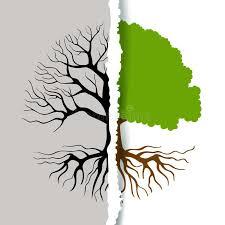
Isolated from the broader context of the book, this speech is not very theological in the narrow sense. The father does not explicitly mention ADONAI. However, by invoking the two-path theology that dominates the first part of the book, we can see exactly how theological the speech is. As described, the two paths include the path on which the father has set his son, and now he urges him to continue on that track; this contrasts with the warnings he issues the son against going on the path of the wicked. By this time, we know that the father’s path is the one that God protects. It is the way of YHVH. It is the path of light, which leads to life, as opposed to the darkness of the way of wickedness. The two-path theology does not allow for a third, compromising way. One is either on the straight path or on the crooked path.109 In the TaNaKh, the two-path theology is reminiscent of the teaching of Psalm 1, properly categorized as a wisdom psalm (see the commentary on Psalms Af – The Two Ways), and in the B’rit Chadashah, it can be seen Yeshua’s teaching of the narrow gate that leads to life and the wide gate that leads to destruction (see the commentary on The Life of Christ DwThe Narrow and Wide Gates). There are two gates, narrow and wide; two ways, narrow and broad; two destinations, life and destruction; two groups, the few and the many. Then Yeshua continues in Matthew 7:16-27 to describe two kinds of trees, good and bad; two kinds of fruit, good and bad; two kinds of builders, wise and foolish; and two foundations, rock and sand. There is no middle ground. Yeshua demands a decision. We are at the crossroads, and each of us must choose.

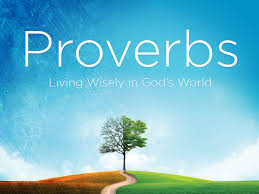
Listen, my son, and accept what I say, and you will live a long and good life (4:10 Hebrew). Every person can choose between two paths. To the right is a long straight road leading toward blessing. To the left is a shortcut that meanders in and out of the forest. The left leads to pleasures and comforts that some say are better than the blessings of the first path. But don’t believe them, Solomon says, “Stay on the long straight road, shortcuts will only disappoint you in the end.”

I will teach you in the way of wisdom and lead you in straight paths. When you walk, your steps will not be hampered; when you run, you will not stumble (4:11-12 NIV). Concerning the path on the right, Solomon tells us that it is level and clear of debris that would cause us to stumble. We can walk smoothly on it. These metaphors refer to life’s troubles that plague the wicked. Divorce, sexual diseases, depression, conflict, and ruined health are just some examples of the consequences of sinful and unwise living. But peace, joy, material blessing, and good health are some of the consequences of righteous and wise living. In other places in the Bible (Job, Ecc, and Psalm 73) exceptions to this spiritual principle are noted. But the exceptions do not invalidate the principle: Hold on to my instructions and don’t let them go. Guard them, for wisdom is your life (4:13 NLT).110

Now Solomon gives us a warning. It is not a threat. He is not saying, “Here are my arbitrary rules to control you. Keep them or else! He is simply explaining that one of these two paths leads to a minefield. Don’t follow the path of the wicked, and do not walk in the way of the evil (4:14 ESV). Avoid it, do not travel on it; turn from it and go on your way (4:15 NIV). Then he gives the reason for the urgency. For evil people can’t sleep until they’ve done their evil deed for the day. They can’t rest until they’ve caused someone to stumble (4:16 NLT). The wicked need to sin before they can sleep, and they view their sin as food for their hungry souls. For they eat the bread of wickedness, and drink the wine of violence (4:17 Hebrew). The Adversary uses tactics and devices to lead us away from ADONAI, and he is always at work against us. Those who do not actively follow the path of righteousness inevitably follow the path of wickedness, and end up doing the work of the Evil One.111 There’s only two kinds of spiritual food; there’s angel’s food and there’s devil’s food. And if you aren’t feasting on the food of righteousness . . . you’re eating the other.

The way of the wicked is like darkness; they don’t know what makes them stumble (4:19 NIV). It’s sad but true that many people whose lives are filled with sadness and heartache cannot see what’s causing their trouble. They may wreck their marriages, careers, and health, but as long as they get to enjoy their small pleasures of wickedness, they think that they are getting all they can out of life.112 Evil becomes compulsive, and none of us is above it, because this this the nature of our depraved hearts (Psalm 14:3; Isaiah 64:6; Romans 3:23). Yeshua said: Everyone who commits sin is a slave to sin (John 8:34). Sin is a slavery deep inside of us, an emotional engine we cannot shut down just by choosing to do so. How do we see this dynamic at work today? Think of politics. Human politics is not just about winning; it is about destroying the other person, and there is no stopping it. Think of the gambling industry, with its antisocial impact, but there’s no stopping it. We can hardly understand the dark powers we unleash inside ourselves when we turn one step away from the path of Messiah’s wisdom.113

But the path of the righteous (the way of wisdom) is like the light of dawn. This is the key verse in Chapter 4. The light is faint and on the horizon, but it grows brighter and brighter until the full light (4:18 NIV). In this remarkable metaphor, Solomon describes the paradox of righteousness. Righteousness leads to blessings, but at the beginning they seem dim and far off. Righteousness is a longer road and, to those used to the immediate gratification from the path of wickedness, its promises seem dim. Inner peace has a difficult time competing with the counterfeit, mind-numbing deceit of addictive substances, whatever they may be. Intimacy with ADONAI seems abstract compared to sexual intimacy. Future blessings and hope seem too far off compared with the quick money to be had today. Many choose the path to the left because it offers quick and easy promises that cause us to overlook the consequences of walking on it.114

What keeps us moving forward in the way of God’s wisdom is hope, confidence, and expectancy. You might not think your walk with the Lord is going great right now. But if you have chosen Messiah, He is becoming like the light of dawn in your life. There might only be a glimmer of light on your horizon right now. But the sun is rising and the darkness cannot stop it. Yeshua, who has begun a good work in you will bring it to completion on the day of Messiah (Philippians 1:6). That bright Gospel confidence is how you keep going, step by step, moment by moment, on the right path.115

Dear heavenly Father, praise You for being so wonderful and that when Your wisdom is followed, it always brings the best results! It is wise to follow the path that you lay out in Your Word. Everyone wants to be loved and protected. By following Your path, it is the path that You protect. It is the path of light, which leads to life, as opposed to the darkness of the way of wickedness.

Life is often so very busy with many important and some not so important things. There seems to always be something to do or someone to reply to, but making time for you is the most important that anyone can do. Time seems to fly by. The years whiz away. Life on this earth will be gone in a moment. The wisest thing for everyone to do is to start and end their day praising You and living their lives in a way that shows love and honor to you. No shame in trusting You as Lord and Savior. For if you confess with your mouth that Yeshua is Lord, and believe in your heart that God raised Him from the dead, you will be saved. For with the heart it is believed for righteousness, and with the mouth it is confessed for salvation. For the Bible says, “Whoever trusts in Him will not be put to shame” (Rom 10:9-11).

You promise rewards for those who serve you with a loving heart. You will judge the deeds to see if the heart did the good deed out of selfishness or out of obedience for You. For no one can lay any other foundation than what is already laid – which is Yeshua the Messiah. Now if anyone builds on the foundation with gold, silver, precious stones, wood, hay, straw, each one’s work will become clear. For the Day will show it, because it is to be revealed by fire; and the fire itself will test each one’s work – what sort it is. If anyone’s work built on the foundation survives, he will receive a reward (1 Cor 3:11-14). In Messiah Yeshua’s holy Name and power of His resurrection. Amen

2025-10-23T14:15:42+00:000 Comments

Ay – Get Wisdom 4: 1-9

Get Wisdom
4: 1-9

A proverb is a short and memorable saying designed to be our blueprint for living in the world that ADONAI has created. It is important to note that proverbs are not promises; they are generally true principles, all other things being equal.

The father’s fifth teaching (to see link click AjProverbs for the Youth) consists of two parts: the typical introduction that includes the addressees of sons and grandsons, warnings to retain his teaching (4:1-2), and the lesson (4:3-9), which is his grandfather’s instruction. The chapter looks like this: How to get going (4:1-9), how to keep going (4:10-19), and how not to get lost along the way (4:20-27).102

Listen, my son, to a father’s instruction; pay attention and gain understanding (4:1 BSB). For I am giving you sound teaching. Do not turn away from my instruction (Hebrew: torah) (4:2 Hebrew). We are overhearing a father of a teenage son coaching him in wisdom because the Word of God is the source of all true wisdom. How does he do it? He tells him what he learned when he himself was a teenager. He is saying, “I remember when I was a teenager, how my dad got me going into a great life.” We have seen this father/son conversation before (1:8 and 10, 2:1, 3:1, 11 and 21). But now we meet the grandfather. Now we see three generations in the family. Evidently the grandfather (King David) has died, and Solomon informs his son about how his dad made such a positive impact during his youth. So do you see? We are being invited into a tradition of wisdom; previous believers handing down to us something of their own. They have fought the good fight, they have finished the race, they have kept the faith (Second Timothy 4:7). And because they have gone the distance, they have something to say to us. The Bible says: Remember your leaders who taught you from the Word of God. Think of all the good that has come from their lives, and follow the example of their faith (Hebrews 13:7).103

For I, too, was once my father’s son, tenderly loved as my mother’s only child (4:3 NLT). ADONAI commanded His people to train their children in His mitzvot, saying: Speak to them when you sit in your house, when you walk by the way, when you lie down and when you rise up (Deuteronomy 6:7). This principle still applies today; parents should be diligent to train their children in godly wisdom. My father taught me, “Let your heart hold fast to my words, keep my mitzvah, and you will live” (4:4 Hebrew). Solomon had learned wisdom from his father, and now was passing it on to the next generation. He spoke of his boyhood when his parents, David and Bathsheba, taught him. The queen also had strong feelings toward her son, and thus a strong motivation to instruct him in wisdom. This linking of three generations demonstrates how a love of wisdom was passed down.104

So Solomon is saying to his dear son, and urging him, to set his heart firmly on a prize that cannot fail: Get wisdom, develop good judgment. Don’t forget my words or turn away from them; for you ignore them at your own peril (4:5 NLT). Perhaps David’s encouragement for Solomon to get wisdom helped him ask for it (see the commentary on the Life of Solomon AsSolomon’s Wish). Wisdom is not something one acquires once and for all; being wise requires daily refreshing from the Word of God. It is too easy to forget true wisdom when we allow our lives to become cluttered with the things of the world. Those who wish to become wise must constantly be immersing themselves in Scripture and godly teaching.105 Therefore, do not turn your back on Lady Wisdom (see AmLady Wisdom’s Rebuke of the Foolish), for she will protect you. Love her and she will guard you (4:6 NLT). God your Father is looking deeply into your eyes with great love and saying to you right now: Though it cost you everything you have, gain understanding. If you value Lady Wisdom and hold tightly to her, great honors will be yours (4:8 CEV). This metaphor implies deep intimacy and suggests the marital embrace between a man and his wife. The wise have a deep love for God’s ways, and they take His Word into the most intimate parts of their lives.106 She will place a garland of grace on your head and present you with a glorious crown (4:9 NIV).

Getting wisdom is the wisest thing you can do! Though it will cost you everything you have, gain understanding (4:7 Hebrew). If you want God’s wisdom, it will cost you. It will cost you all your preconceived ideas about how life is supposed to work. Why pay that price? Because God’s wisdom will make you alive (4:4), His wisdom will protect you and guard you (4:6), His wisdom will honor you (4:8) and present you with a glorious crown (4:9). That is how life really works, and that is a life worth living! Who else can promise you that? Every day we are being told that, if we want to really live, we need to be young, thin, tanned, sexually active, rich, and smart-mouthed. That is our cultural ideal, the wisdom of the world. Just one question. Does it work? Name one person who has thrown themselves into the lifestyle of the world and come away from it with what you would want for yourself. And how do you explain over 2,000 years of all types of people from different cultures who set their hearts on Messiah, turned to His wisdom and found fullness of life?

You face a choice today . . . the proven path of Messiah versus the meaningless way of the world (First John 2:15-16). Whichever you choose, it will cost you all that you have. But which path will give you everything you want? Yeshua is so gracious. To follow Him you do not need to measure up to a cultural ideal or youth and cool. But do need to become decisive. Though it will cost you everything you have (and it will), get Messiah. Is there something in your life that needs to change? Do you need to turn the corner? Do you want a newness of life from Messiah? Well, come and get it. Decisiveness is all you need to get going.107

Dear heavenly Father, praise You for being so extremely gracious, generous, kind and compassionate! For by grace you have been saved through faith. And this is not from yourselves – it is the gift of God. It is not based on deeds, so that no one may boast (Ephesians 2:8-9). Thank You for Your steadfast love and great wisdom. Your wisdom knows that it is always the best path to follow. How comforting it is that when I pray to You, asking for something according to Your will, You hear and promise to answer. Now this is the confidence we have before Him – that if we ask anything according to His will, He hears us. And if we know that He hears us – whatever we ask – we know that we have the requests we have asked from Him (First John 5:14-15).

With great hope and joy I trust completely in Your love and wisdom to bring all who trust in You, home to your glorious heaven. Yeshua answered and said to him: If anyone loves Me, he will keep My word. My Father will love him, and We will come to him and make Our dwelling with him (John 14:23). How wonderful heaven will be! He shall wipe away every tear from their eyes, and death shall be no more. Nor shall there be mourning or crying or pain any longer, for the former things have passed away (Revelation 21:1-4). Thank You for being such a special heavenly Father! In Messiah Yeshua’s holy Name and power of His resurrection. Amen

2025-10-23T14:15:04+00:000 Comments

Ax – Wisdom in Relationships 3: 27-35

Wisdom in Relationships
3: 27-35

A proverb is a short and memorable saying designed to be our blueprint for living in the world that ADONAI has created. It is important to note that proverbs are not promises; they are generally true principles, all other things being equal.

Proverbs Chapter 3 explains why wisdom matters and what wisdom creates. Wisdom matters, according to 3:13-26, because wisdom is the open secret of the universe. It is not a private opinion, take it or leave it. Wisdom is how life works! We can disregard that for a while and get away with it, because ADONAI built it so well. But we want the last chapter of our stories to be the best, don’t we? So wisdom matters. Wisdom also creates something, according to 3:27-35. Wisdom creates a culture of life amid this culture of death called the world (First John 2:15-16). Wisdom builds godly relationships. It is a shared experience of life in its fullness (John 10:10). Solomon makes three points about this new culture of life: help your needy neighbor, protect your innocent neighbor, and avoid your violent neighbor.97

Help your needy neighbor: First, in a culture of life, people help each other as much as they can. We cannot do the impossible. We cannot give what we do not have. But when it is in our power to do it, wisdom says, “Give it away.” The grace of Yeshua taught the Apostle Paul to say: I am a debtor (Romans 1:14 BLB). He did not see himself as a demander but a debtor. Nobody owed him a hearing. He earned the right to be heard by loving people the way ADONAI loved him – graciously. Therefore the proverb says to us: Do not withhold good from its owners when it’s in your power to help them (3:27 Hebrew). If you have good that you can do for someone, then legally you own it, but morally they own it. You cannot be forced to be generous. But we sin against each other not only by the bad things we do, but also the good things we withhold. Yeshua withheld no good thing from you. Okay, now we know how to build a culture of life, by His power. We have opportunities all around us to breathe life into many people. We cannot do everything. But we must do something, for His sake. If we have the ability, they have the ownership. And we owe it today, not tomorrow.98

Sometimes procrastination is a legitimate response to a trivial task. But because love is what matters most, it takes top priority. The Bible stresses it repeatedly. It says: Whenever we have the opportunity, we should do good to everyone (Galatians 6:10 NLT); use every chance you have for doing good (Ephesians 5:16 NCV).99 Do not say to your neighbor, “Come back tomorrow, and then I’ll help you” (Proverbs 3:28 Hebrew). We miss many opportunities for serving because we lack sensitivity and spontaneity. Great opportunities to serve never last long. You may only get one chance to serve that person, so take advantage of it.100

Protect your innocent neighbor: Trust is the glue that holds a culture of life together. What do a husband and wife, for example, most need from each other? Trust. The Lord calls us to trust Him completely (to see link click ArStraight Talk about Trust), because trust is the basis on which real relationships can happen. We all know what it’s like to trust someone and then have them turn on us. It’s painful because trust is so profound. What then does Lady Wisdom say to us here (see AmLady Wisdom’s Rebuke of the Foolish)? Negatively, do not plot hard against your neighbor, for those who live nearby trust you (3:29 NLT). Do not accuse a man without cause, when he has done you no harm (3:30 BSB). That is the culture of death. But heaven has come down to us through Yeshua Messiah. He defended us when we deserved judgment. Therefore, let’s stick up for our innocent neighbors. This is wisdom, creating a culture of safety in a world that only wants to attack us.

Avoid your violent neighbor: Too many times today it seems as if the wicked prosper, and we are tempted to envy them. Asaph declared: Surely God is good to Isra’el, to the pure in heart. But as for me, my feet almost slipped. My steps nearly slid out from under me. For I envied the arrogant, when I saw the prosperity of the wicked (Psalm 73:1-3). But ADONAI says that’s an abomination. In other words, it turns God’s stomach. Therefore, Solomon directs us: Do not envy violent people or copy their ways (3:31 NLT). For the devious person is an abomination to ADONAI and He curses the house of the wicked. God loves to defend those whom no one else defends. He’s not standing aloof; He is no spectator. But He takes the upright into His confidence and blesses the home of the righteous (3:32 NIV and 3:33 CJB). ADONAI mocks the mockers, but is gracious to the humble (3:34 NLT). The Septuagint translates verse 34 in a way that you might be familiar with: God opposes the proud but gives grace to the humble (quoted in James 4:6b). We can all do that, depending on how we understand verse 35. The wise will inherit honor, but fools are put to shame (3:35 NLT). Who are the wise? Who are the fools? Who really are the winners and the losers in this world? How you answer that question reveals how you see the cross of Yeshua. The world sees the cross as being for losers and failures and weaklings and outsiders. But those who placed their faith in the Son of God see the cross as representing everything to be admired and embraced and remembered . . . and trusted.101

Dear heavenly Father, praise You for loving me so that the last chapter of my life will be fantastic! In the book of life, the chapters are short and go by quickly, but the last chapter is so long – for all eternity! Living life with our eyes focused on pleasing you for all eternity, is wisdom. What matters most is to focus life’s time and energy on what is eternal. When I honor You as my most passionate desire- then I am at peace (Philippians 4:6-7).

David’s heart was set on pleasing God and even when he was forced to flee for his life and was so very thirsty in the wilderness. O God, You are my God, earnestly I seek You. My soul thirsts for You. My flesh longs for You in a dry and weary land, where there is no water. Not only did David not complain, but he turned his heart to praising God! Since Your lovingkindness is better than life, my lips will praise You (Psalms 63:1 and 3).

Peace and joy fill my heart when I praise You, especially in a hard time, for I recognize that You are in control. You, God, have the final word and are working it all out to Your glory. The Great Sanhedrin called in the apostles, flogged them, ordered them not to continue speaking in the name of Yeshua, and let them go. So they left their presence, rejoicing that they were considered worthy to be dishonored on account of His name. And every day, in the Temple and from house to house, they never stopped teaching and proclaiming Yeshua as the Messiah. (Acts 5:40-42).

What a comfort it is to know that God withholds nothing good from those who believe in Him. For ADONAI Elohim is a sun and a shield. ADONAI gives grace and glory. No good thing will He withhold from those who walk uprightly. (Psalms 84:11). Thank you for being so loving and wise, who plans for a wonderful last chapter of my life! In Mesiah Yeshua’s holy Name and power of His resurrection. Amen

2025-10-23T14:14:18+00:000 Comments

Aw – ADONAI’s Wisdom Founded the Earth 3: 19-24

ADONAI’s Wisdom Founded the Earth
3: 19-24

A proverb is a short and memorable saying designed to be our blueprint for living in the world that ADONAI has created. It is important to note that proverbs are not promises; they are generally true principles, all other things being equal.

Proverbs Chapter 3 explains why wisdom matters and what wisdom creates. Wisdom matters, according to verses 13 to 26, because wisdom is the open secret of the universe. It is not a private opinion, take it or leave it. Wisdom is how life works! We can disregard that for a while and get away with it, because ADONAI built it so well. But we want the last chapter of our stories to be the best, don’t we? So wisdom matters. Wisdom also creates something, according to verses 27 to 35. Wisdom creates a culture of life amid this culture of death called the world (First John 2:15-16). Wisdom is a community experience. It is a shared experience of life in its fullness (John 10:10). We have been told that the universe just happened. We have been told that we emerged out of the prehistoric goo by sheer luck. But the truth is, ADONAI created all things, and the tool He used was His own wisdom. That was all He needed: By wisdom ADONAI founded the earth.92

This proverb associates wisdom and creation. While this is the first time this connection is made in Proverbs, it will reoccur later (to see link click Bl – Wisdom’s Existence before Creation) and constitutes a profound theme in the book. By wisdom ADONAI founded the earth; by understanding He established the heavens (3:19 Hebrew). The creation is ordered, not random. God established it by His wisdom. This negates the thought that it might be the result of chance. The order of creation can be seen in Genesis 1:1 to 2:3 (see Genesis AfThe Creation of the World). This leads us to the conclusion that the apparent disorder in the world today is the result of the fall of mankind, not the original creation.

By His knowledge the deep fountains of the earth broke open (3:20a ESV). The rhythms of the water cycle are also connected to wisdom. Here the synonym knowledge is used. It is interesting to note the similarities between 3:19-20 and 24:3-4, where the latter is proclaimed: By wisdom a house is built, and by understanding it is established, and by knowledge all its rooms are filled with all sorts of precious riches and valuables (24:3-4 Hebrew). Perhaps we are to think of God’s construction of the cosmos as building a house. The words, wisdom, understanding, and knowledge, can be seen in both passages. We can see these three words and the construction of the Tabernacle in 31:1-3, and the construction of Solomon’s Temple in First Kings 7:14. Therefore, it is appropriate to make a connection between the Tabernacle and Solomon’s Temple with the building of the cosmos.93

To this very moment He sustains all things, and the clouds drop down the dew (3:20b ESV). So if God, by His wisdom, can work that wonder of nature, what will He accomplish by His wisdom in you? We are surrounded and sustained by God’s wisdom, though we barely understand it. C. S. Lewis explained why, “At present we are on the outside of the world, on the wrong side of the door. We understand the freshness and purity of the morning, but they do not make us fresh and pure. We cannot mingle with the splendors we see. But . . . someday, God willing, we shall get in.” Yeshua died to get us in. If you have ever visited a foreign country and felt how lonely it is to walk the streets of a city unable to read the signs, or unable to ask for directions, because you did not know the language. We are like that in God’s amazing creation. But God is translating His wisdom for us in Messiah. That wisdom is the true foundation and meaning of the universe. He is urging us to take it to heart and to make it our own as outsiders who put our faith/trust/belief in Him.94

Because ADONAI directs our path, He is able to protect our path. My son, do not let sound wisdom and understanding out of your sight, hang on to them, for they will be life to you, an ornament of grace around your neck (3:21-22 NIV). The loving father warns his son to stay alert and focus on the path of wisdom. He must be diligent in his pursuit of sound wisdom (2:7) and prudence (1:3a), which is the inner power that helps us get out of a jam. In 2:7 it is likened to a shield because it helps to protect us from the ups and downs of life. If a problem arises, then the recipient of God’s wisdom will be able to deal with it. Prudence implies wise behavior or good sense. Proverbs make us alert for the journey of life. Anyone who has driven long distances can affirm that bad things happen – wrong turns at best, fatal crashes at worst – when the driver is no longer alert. These proverbs in the TaNaKh help us to remain attentive to our surroundings and aware of potential dangers.95 Perhaps “insight” comes nearest to the original, but in a practical sense. This concept may be illustrated by Abigail, the wife of the foolish Nabal (see the Life of David BnAbigail Acted Quickly).

It becomes very clear that wisdom means walking with God, and these next four verses provide the motivation for doing so. Verses 23 and 24 form a kind of pair in that the first describes the safety of daily living, and the second the confidence the wise can have as they sleep. Verse 23 describes daily life as walking on the path, a common theme of the book, particularly the first nine chapters. Then you will walk on your path in safety, and your feet will not stumble (3:23 BSB). Verse 24 states that safety will continue even during the especially vulnerable time of sleep. When you lie down, you will not be afraid, and your sleep will be sweet (3:24 NIV). When people sleep, their guard is down, and they are more open to attack. The person who is armed with wisdom doesn’t have to worry about such things.

Then Solomon turns from statements about safety to a caution not to be afraid of an unexpected tragedy. Have no fear of sudden disaster or of the ruin that overtakes the wicked, for ADONAI (3:25 NIV). Such “ruin” interrupts the life of the wicked, not the life of the righteous. Verse 26 provides a reason for the confidence that follows from the life of wisdom. ADONAI will be at your side. When the Apostle Paul was suffering, the Lord was at his side: At my first defense no one came to stand by me, all deserted me. May it not be charged against them! But the Lord stood by me and strengthened me (2 Timothy 4:16-17). Solomon finishes with this assurance. God Himself will keep your foot from being caught in a snare (3:26 NIV). The presence of ADONAI is to be connected to the teaching explicit elsewhere in Proverbs that those who are wise are in a relationship with YHVH (see AiFor the Fear of ADONAI is the Beginning of Wisdom).96

Dear heavenly Father, praise You for Your great wisdom shown when You spoke the earth into existence. The amazing complexities of the earth prove a Creator with great wisdom. On what is the earth founded? When men question God as to why they have trials. Job questioned God, and God replied. “Who is this that questions My wisdom with such ignorant words? Now brace yourself like a man because I have some questions for you, and you must answer them! “Where were you when I laid the foundations of earth? Tell Me, if you know so much. Who determined its dimensions and stretched out the surveying line? What supports its foundations set, and who laid its cornerstone” (Job 38:2-6)?

Your wisdom is proven by Your creation of the universe with all its perfect intricates: each animal perfectly formed for its own environment, and mankind with so many perfectly formed systems, all working together. The body of each creature is so very vastly different, yet perfectly formed. All flesh is not the same flesh, but there is one flesh of humans, another flesh of animals, another of birds, and another of fish. There are also heavenly bodies and earthly bodies, but the glory of the heavenly is one thing while the earthly is another (First Corinthians 15:39-40).

It is an easy thing for you to know how to form new bodies for heavenly living. As you so perfectly formed the universe and each creature for living on earth, so with the same fantastic wisdom and astounding ability You are able to create bodies that will no longer die but will live in peace and eternal joy in heaven with You. He shall wipe away every tear from their eyes, and death shall be no more. Nor shall there be mourning or crying or pain any longer, for the former things have passed away (Revelation 21:4).

Your wisdom proves that you are an infinitely wise Father who can be trusted to: guide me at all times and to create a new heavenly body for everyone who loves You. So also is the resurrection of the dead: Sown in corruption, raised in incorruption! Sown in dishonor, raised in glory! Sown in weakness, raised in power! Sown a natural body, raised a spiritual body (First Corinthians 15:42-44a)! It is a joy to follow Your ways for You always choose the best path for me. In Messiah Yeshua’s holy Name and power of His resurrection. Amen

2025-12-05T10:37:57+00:000 Comments

Av – Happy is the One who Finds Wisdom 3: 13-18

Happy is the One who Finds Wisdom
3: 13-18

A proverb is a short and memorable saying designed to be our blueprint for living in the world that ADONAI has created. It is important to note that proverbs are not promises; they are generally true principles, all other things being equal.

The father’s fourth teaching (to see link click AjProverbs for the Youth) Proverbs Chapter 3 explains why wisdom matters and what wisdom creates. Wisdom matters, according to verses 13 to 26, because wisdom is the open secret of the universe. It is not a private opinion, take it or leave it. Wisdom is how life works! We can disregard that for a while and get away with it, because ADONAI built it so well. But we want the last chapter of our stories to be the best, don’t we? So wisdom matters. Wisdom also creates something, according to verses 27 to 35. Wisdom creates a culture of life amid this culture of death called the world (First John 2:15-16). Wisdom is a community experience. It is a shared experience of life in its fullness (John 10:10). Let’s go there together.

The proverb’s identity is revealed by the first word: happy . . . happy is everyone who finds it. My son, happy the one who finds Lady Wisdom, and the one who gains understanding (3:13 Hebrew). We see the word happy at the beginning of verse 13 and at the end of verse 18, marking these verses off as a paragraph. This key word, the one (Hebrew ‘adam, meaning, generic man, a human being), in this paragraph is easy to overlook because wisdom is available to everyone.86 The word “blessed: is from the Hebrew root esher, which is not strictly synonymous with another Hebrew root also often translated bless (brk). The word used here is closer to the English word happy, whereas brk speaks more of being empowered or favored as the recipient of blessing from ADONAI. Thus the proverb proclaims that those who find wisdom, who gain competence, are truly happy.

However, what does it mean to find wisdom? The text doesn’t specifically say, but from a wider context we might think of wisdom as a journey like sanctification. Over time one grows in wisdom. But in a more fundamental sense, wisdom is not a content that is accumulated; it is an attitude, a state of mind, which is most pointedly captured by the phrase the fear of ADONAI (see AiThe Fear of ADONAI is the Beginning of Wisdom). Those who fear YHVH are those who have found wisdom because, as we learn as we proceed through Proverbs, but most dramatically in Chapters 8 and 9, God is the source of all wisdom.87

Wisdom is worth whatever it takes, no price is too high. For wisdom is more profitable than silver, and her wages are better than gold, the standard measure of trade in those days. She is more precious than rubies, nothing you desire compares with her (3:14-15 NLT). Because money can put food on the table, but not fellowship around it, a house but not a home; and can give a woman jewelry but not the love she really works for. By contrast, wisdom gives both physical and spiritual benefits.88 The profit or value of wisdom surpasses them all. Solomon recognized this when he chose wisdom over wealth (see the Life of Solomon As Solomon’s Wish). This type of comparison is used frequently in Proverbs (8:10, 19, and 16) and elsewhere, but nowhere is it as fully developed as in Job 28. The text develops the idea that gold and silver are immensely valuable precisely because they are difficult to extract from the earth. Though hard, humans can do it. But, finding wisdom is not just difficult, it is impossible for men and women. They cannot exert their strength or intelligence to find it. Obviously, only God has it, and thus the fear of God is necessary to obtain it.

Even your strongest desires or most fervent longing cannot surpass wisdom. As personified, Lady Wisdom (see AmLady Wisdom’s Rebuke of the Foolish) is said to hold gifts in her hands. She offers you long life in her right hand, and riches and honor on her left (3:16 NLT). Long life, honor, and riches are greatly desired by all humans, and here, we see that these are Lady Wisdom’s gifts to distribute to those with whom she has a relationship. Again, this provides great motivation for the pursuit of Lady Wisdom. She is the insight to life and the way the world works, so that the people avoid the pitfalls that might lead to an early death or a damaged reputation. Wisdom also allows one to have the insight that will gain material wealth (see AtHonor ADONAI from Your Wealth). Other passages will grapple with the fact that some wise people are not wealthy, healthy, and powerful, while some wicked people prosper (Psalms 37 and 73; Job, Ecclesiastes 7:15).89 All her ways are pleasant, and all her paths are peaceful (3:17 BSB). The plural word “ways,” continues to represent the many individual proverbs connected with one’s behavior in taking steps along the path of wisdom (2:8). Shalom and prosperity (3:2) are nouns, not adjectives.

Lady Wisdom is personified as a tree of life for those who take hold of her. Those who hold her fast will be happy (Proverbs 3:18 NIV, also see 11:30, 13:12, 15:4 and Revelation 2:7). At this point, we must remember that the primary audience of this text is young men to whom such a metaphor speaks volumes. The concept of a tree of life is part of the ancient Near Eastern culture in which Isra’el took part. It is mentioned in Genesis 2:2, 3:22, 24; Proverbs 3:18, 11:30, 13:12 and 15:4, in later Jewish eschatological literature (Esdras 4; Revelation 2:4). The image outside of Proverbs figuratively represents immortality and in Revelation 22:2 it also signifies healing (Ezeki’el 47:12). The Genesis narrative represents ‘adam seeking wisdom independent of YHVH by reaching for the tree of the knowledge of good and evil (see the commentary on Genesis Ba – The Woman Saw the Fruit of the Tree and Ate It). His rebellion led to the exclusion from the tree of life (see the commentary on Romans BmThe Consequences of Adam). We regain that tree by humbling ourselves and receiving the words of eternal life by faith (see the commentary on The Life of Christ MsThe Eternal Security of the Believer).90

Thus, Proverbs functions symbolically as the tree of life that was lost in Genesis 2:22-24. Yeshua Himself said: He who has an ear, let him hear what the Spirit of God says to the churches then and now. It is a spiritual principle that only those who desire to know God’s will can know Him (John 7:17). Only those who have spiritual ears can hear what the Ruach says. This is His promise. To him who overcomes, I will give the right to eat from the tree of life (Gen 3:22-24), which is in the paradise of God (Rev 2:7). Believers are overcomers. For everyone born of God overcomes the world. This is the victory that has overcome the world, even our faith. Who is it that overcomes the world? Only those who believe that Yeshua is the Son of God (1 John 5:4-5). Until we reach the tree of life, meaning paradise, we take hold of life-giving wisdom of the book of Proverbs and, more importantly, to Yeshua Messiah, who supersedes Solomon’s wisdom.91

We can wreck our lives by settling for the path of worldly wisdom that makes us wealthy when YHVH is offering us godly wisdom that takes us to the tree of life. Do not accept counterfeit wisdom. Do not settle for wealth. If you like silver and gold and rubies (3:14-15), remember that they are mere metaphors for the life-giving grace of Messiah Himself. As you think of your life as a journey, what kind of path would you say you’ve spent most of your life traveling on? If you need to make some changes, what are your first steps? Take out a sheet of paper and write down the ways you walk differently when you walk in wisdom?

Dear heavenly Father, praise You for Your steadfast love and almighty power. Having faith in You is the only way to find true happiness! You embody all true wisdom. In Messian all the treasures of wisdom and knowledge are hidden (Colossians 2:2c-3). Guide me in Your truth and teach me, for You are God my Savior, and my hope is in You all day long (Psalm 25:5).

HOPE anchors the soul! Trusting in You brings sure hope!

HOPE in Salvation: You give your children access to your Heavenly Home thru Messiah’s blood. But whoever did receive Him, those trusting in His name, to these He gave the right to become children of God. (John 1:12).

HOPE in Messiah’s righteousness, not in one’s own good deeds: He made the One who knew no sin to become a sin offering on our behalf, so that in Him we might become the righteousness of God (Second Corinthians 5:21).

HOPE in eternal joy of heaven: He shall wipe away every tear from their eyes, and death shall be no more. Nor shall there be mourning or crying or pain any longer, for the former things have passed away (Revelation 21:1-4).

HOPE in never being separated from God’s love: But in all these things we are more than conquerors through Him who loved us.  For I am convinced that neither death nor life, nor angels nor principalities, nor things present nor things to come, nor powers, nor height nor depth, nor any other created thing will be able to separate us from the love of God that is in Messiah Yeshua our Lord (Romans 8:37-39).

HOPE in the LORD planning and guiding my life: For I know the plans that I have in mind for you,” declares ADONAI, “plans for shalom and not calamity – to give you a future and a hope. (Jeremiah 29:11).

HOPE in ADONAI listening to and answering my prayers: Then you will call on Me, and come and pray to Me, and I will listen to you (Jeremiah 29:12). Now this is the confidence we have before Him – that if we ask anything according to His will, He hears us. And if we know that He hears us – whatever we ask – we know that we have the requests we have asked from Him (First John 5:14-15).

HOPE in ADONAI’s abiding presence in me: Yeshua answered and said to him: If anyone loves Me, he will keep My word. My Father will love him, and We will come to him and make Our dwelling with him (John 14:23). For God Himself has said: I will never leave you or forsake you (Hebrews 13:5c). 

Thank You for being such a wonderful heavenly Father and for giving me a sure hope in You! In Messiah Yeshua’s holy Name and power of His resurrection. Amen

2025-10-23T14:12:48+00:000 Comments

Au – Do Not Despise ADONAI’s Discipline 3: 11-12

Do Not Despise ADONAI’s Discipline
3: 11-12

A proverb is a short and memorable saying designed to be our blueprint for living in the world that ADONAI has created. It is important to note that proverbs are not promises; they are generally true principles, all other things being equal.

There are two extremes in life. When good times roll and when hardship strikes. When life is sweet, trusting God with all our hearts feels unnecessary. But when life is bitter, trusting God with all our heart seems impossible. We need wisdom from those two seasons of life when we are on top of the world and when nothing seems to be going right. God is with us in both, with wisdom that makes a positive difference. Earlier in Proverbs 3:5, ADONAI calls us to trust Him wholeheartedly. Now, in Proverbs 3:9-12, He leads us to trust Him when we are pushed out to these two opposite edges of our lives: plenty as seen in the previous file (to see link click AtHonor ADONAI from Your Wealth), and pain as seen here.81

My son, do not reject ADONAI’s discipline, and do not resent His rebuke (3:11 NIV). For ADONAI corrects those He loves, just as a father corrects a child in whom he delights (3:12 NLT). Discipline is a part of God’s plan to help His children mature in godly character (see the commentary on Hebrews CzGod Disciplines His Children). ADONAI disciplines us, not as a judge punishes a criminal, for there is now no condemnation in Messiah Yeshua (Romans 8:1), but as a parent disciplines a child. His purpose is that we may share in His holiness (Hebrews 12:10b). Sometimes He disciplines us because we have rebelled and need to repent; other times He disciplines us from sinning and to prepare us for His special blessing. No matter how much the experience hurts us, it will never harm us, because ADONAI always disciplines us in love: Remember how ADONAI your God led you through the wilderness for these forty years, humbling you and testing you to prove your character, and to find out whether or not you would obey His commands (Deuteronomy 8:2-5 NLT).82

When bad times and hard times come in life (and they will come). Yeshua said: In this life you will have trouble (John 16:33). When that happens, we only have two choices. Either God loves us passionately, or He hates our guts. It has to be one or the other. And we all have had moments when it feels like Ha’Shem despises us. That is why we are thankful for God’s Word that declares: My son. Do you hear the tenderness in those words? The wise father is counseling the son he loves. This advice fits into the broader theme of Proverbs, to listen to correction and be ready to learn from one’s mistakes (9:7-12, 10:17, 12:1, 14:9, 15:10, 12, 31, 25:12, 26:11, 27:5-6, 28:13 and 23). God’s discipline, thought painful, shows that He cares for His children. It is the neglectful parent who spares the rod, after all (29:15).83 What is he saying about the hard times? Two things.

First, when we suffer, ADONAI isn’t angry with us. Suffering feels like anger; it feels like loss; it feels like God has abandoned us. But we know that can’t be true because He has promised: I will never leave you or abandon you (Deuteronomy 31:6 and Hebrews 13:5). All the heroes in Hebrews 11 suffered (see the commentary on Hebrews CjFaith in Action). They were tortured, mistreated, and killed. Was God angry with them? No. He commended them (Heb 11:2, 6). That is why it says: ADONAI is not ashamed to be called their God (Heb 11:16). He was proud of them. To use the language of Proverbs 3:12, He was delighted in them. When you are suffering, here’s what you need to remember. Your sufferings are not evidence against you, nor are they evidence against ADONAI. It is the opposite. Your sufferings are proof that God your Father cherishes you. As Hebrews 12:7 says, quoting these verses: ADONAI is treating you as sons.

Second, our wise path through suffering is to accept it and wait for ADONAI to fulfill His purpose. If you are suffering right now, you are probably being tempted in two opposite directions. Both can be seen here in 3:11. Either you reject ADONAI’s discipline, which is the active response of anger, or to be tired of His discipline, which is the passive response of despair. What is your only path forward? The Bible says: Be trained by it (Heb 12:11). We get our modern word gymnasium from that Greek word. By our sufferings, God has us working out. Is that so bad? Yeshua Himself suffered: Although He was a son, He learned obedience through what he suffered (Heb 5:8). The Bible says that Yeshua understands our weaknesses, for He faced all of the same testings we do, yet He did not sin. He neither lashed back at the Father, nor did He sin. So we have a Friend in Yeshua who is qualified to stand before God on our behalf, but who is also sympathetic with us because He knows how it feels. So the Bible tells us to come boldly to the throne of our gracious God. There we will receive his mercy, and we will find grace to help us when we need it most (Heb 4:16 NLT).84

The difficulty is knowing when suffering is to train us and when there is some other reason behind it. Job discusses these issues and caution against drawing too simplistic a conclusion about the divine purpose of suffering. Elihu, for instance, wrongly insists that discipline for sin was the purpose behind Job’s plight (Job 36:21). Nevertheless, the psalmist was well aware, suffering can often bring us closer to God: When I was prosperous, I said, “Nothing can stop me now!” Your favor, ADONAI, made me as secure as a mountain. Then you turned away from me, and I was shattered. I cried out to you, ADONAI. I begged YHVH for mercy . . . and You turned my mourning into joyful dancing. You have taken away my clothes of mourning and clothed me with joy (Psalm 30:6-8 and 11).85

Are you suffering right now? Is the pain driving you away from the Lord, or to Him? What lesson do you think that Yeshua wants you to learn? How can you be trained by your suffering? Pray that your loving heavenly Father would reveal what He wants you to learn, knowing that He wants to take away your clothes of mourning and clothe you with joy. Praise Him now, knowing that He only corrects those He loves.

Dear heavenly Father, praise You for being such a wise father who not only loves to guide me into great joy and peace; but also disciplines when I am on the wrong path. Discipline is never fun, but the results help me to produce the fruit of righteousness. Now all discipline seems painful at the moment – not joyful. But later it yields the peaceful fruit of righteousness to those who have been trained by it (Hebrews 12:10c-11). Thank you for not giving up on me when I choose the wrong path. Your pattern for how you dwelt with Isra’el provides a template for understanding how you will deal with each nation (Leviticus 26:1-13; Deuteronomy 28:1-14). Each nation will have to stand before you God for judgment or blessing and everyone is accountable to the Creator’s moral standard. Isra’el’s curses for disobedience were severe so as to serve as a warning. Curses included confusion, frustration, disease, drought, defeat by enemies and ultimately exile from the Promised Land. However, Israel’s blessings included prosperity, fruitfulness in offspring and livestock (good sales nowadays), abundant harvests (financial prosperity), victory over enemies (over competitors), and establishment as a holy people (relationship with God). It is a joy to know that even in discipline, God is always good! Thank You for Your steadfast love that both blesses and wisely disciplines me, to bring back my relationship with You. In Messiah Yeshua’s Holy name and power of His resurrection. Amen
2025-10-23T14:11:53+00:000 Comments

At – Honor ADONAI from Your Wealth 3: 9-10

Honor ADONAI from Your Wealth
3: 9-10

A proverb is a short and memorable saying designed to be our blueprint for living in the world that ADONAI has created. It is important to note that proverbs are not promises; they are generally true principles, all other things being equal.

There are two extremes in life. When good times roll and when hardship strikes. When life is sweet, trusting God with all our hearts feels unnecessary. But when life is bitter, trusting God with all our heart seems impossible. We need wisdom from those two seasons of life when we are on top of the world and when nothing seems to be going right. God is with us in both with wisdom that makes a positive difference. Earlier in Proverbs 3:5, ADONAI calls us to trust Him wholeheartedly. Now, in Proverbs 3:9-12, He leads us to trust Him when we are pushed out to these two opposite edges of our lives: plenty as seen here, and pain as seen in the next file (to see link click AuDo Not Despise ADONAI’s Discipline).76

As Ray Ortlund relates in his commentary on Proverbs, Solomon gives us his counsel with an incentive. What is his counsel? “Honor ADONAI from your wealth.” The Hebrew verb translated honor means to treat ADONAI as weighty. The root verb means to be heavy, even as we might say today that a person carries social weight. That is what money communicates . . . prestige, rank, importance. It is all around us every day. In my part of God’s world, there are some extremely wealthy people. Whose prestige is their money enhancing? The sad truth is, too much of the time we honor ourselves with our money, and ADONAI gets second best (if He’s lucky). But Lady Wisdom changes us (see AmLady Wisdom’s Rebuke of the Foolish). She is saying, “Make ADONAI famous by means of your wealth. Use your money to increase His prestige in the world.” Why is using your money to make Messiah wise? Because the more we use our money for self-importance, the sillier we look. The pretense of it, the love of appearances, the overreaching – we do that because money has an almost mystical power over us. But the more we heap prestige on Yeshua by our money, the more weighty, and significant, and relevant we become. That is the irony of money. There are three things you must understand about these verses.

Counsel: First, some translations say: Honor ADONAI with your wealth. But a more literal translation is: Honor ADONAI from your wealth. What difference does that make? I might say, “Hey, I’m honoring the Lord when I pay my cable bill on time and when I take my wife out to dinner and so forth, because all my money belongs to God and I’m doing good things with it. I’m not doing bad things, and that honors the Lord.” That is how I might honor ADONAI with my wealth, and I could do that without ever giving a dollar away. But Proverbs 3:9a is actually saying: Honor ADONAI from your wealth. That is, He gets a cut from my wealth. I part with some of my money for His sake.

The second part of verse 9 explains how I truly honor ADONAI from my wealth . . . with the firstfruits of all your produce (3:9b ESV). The firstfruits were the best of the harvest. In Numbers 18:11-13, ADONAI describes the holy gifts which could be eaten by the priests and their families at their homes. Also, yours is the wave offerings that the people of Isra’el give (see the commentary on Leviticus AuThe Wave Offering and Priestly Portion). I have given these to you, your sons and your daughters with you. They could take these holy gifts home and share them with their families. This was a perpetual mitzvah. The food remained holy and was not to be violated by any unclean person. Everyone in your family who is ritually clean may eat it. Since the best items of produce were to be given to the LORD, they became the special food of the priests and their families. All the best of the olive oil, wine and grain, the firstfruits of what they give to ADONAI, I have given to you. The first ripe fruits of all that is in their land, which they bring to ADONAI is to be yours.

The concept that God gets “the best of the first” is a constant theme in the Bible. The olive oil and wine mentioned here were not the dregs, but the finest of the first ripe fruits. In giving the first and best to Ha’Shem, believers were affirming with confidence that there would be something left over for their own needs. And if not, faithful believers still bless the Lord. As of today, believers don’t worship ADONAI just to fill their stomachs. But they (then, and we now) expect that the giving of the first and best to God will often result in enjoying more abundance than ever for themselves and for their family. Tithing in the Dispensation of Torah was about 25 percent (see Numbers CzA Tenth of the Tithe), but that is not the standard for us today in the Dispensation of Grace (see the commentary on The Life of Christ DoWhen You Give to the Needy, Do Not Do It to be Honored by Others: seven principles of scriptural giving).

Incentive: Then He will fill your barns with grain, and your vats will overflow with good wine (3:10 NLT). To truly honor God, calculate your wealth not from the net, but from the gross, because it says all your produce, that is, all our income. Don’t give Him the leftovers after we have taken care of ourselves. Think of it as ADONAI sharing His resources to expand the family business – The Gospel enterprise. He is entrusting into our care His own money, and we are investing His funds for His greater glory in the world today. He has made us investment brokers. We invest 10 percent as a tithe, and He pays 90 percent commission! He is such a good boss to work for.

ADONAI’s capacity to give far exceeds our capacity to receive. Yeshua said: The way you give to others is the way God will give to you (Luke 6:38b NCB). He doesn’t mean, “Give money to God and He will make you rich.” If that were the message, the Lord would not be honored, He would be used. Messiah isn’t arousing your greed. He means if you invest for His sake He will give you more money to invest for His sake. If you love Yeshua, nothing could make you happier than to honor ADONAI from your wealth. Why? Because of how He has treated you: Though he was rich, yet for your sakes he became poor, so that by his poverty he could make you rich (see the commentary on Second Corinthians BoThe Poverty That Made Us Rich). Someone like that should be honored, don’t you think?77

Nevertheless, these verses in Proverbs are sometimes used by people who believe in the “prosperity gospel,” but that is to misuse them. First, there is no promise of abundant wealth, any more than there was a promise of long life and peace in 3:2. To claim a proverb as a promise is to misunderstand the type of literature it is. A proverb describes only a part, not the whole, of life, and so is not always applicable in a given situation or at a given time. Therefore, Yeshua, despite honoring the Father with His whole life, had neither a long life (3:2), nor barns overflowing with plenty (3:10). Second, the material prosperity is not limited with the size of the monetary gift, but with character (honoring the Lord). Such a character trait would involve not wanting to give wealth an inordinate place in one’s desires, so that truly honoring ADONAI would entail keeping your life free from the love of money because it is the root of all kinds of evil (First Timothy 6:10). The prosperity gospel misses the important emphasis in Proverbs on the theme of contentment by discovering your sweet spot in life (see DuThe Prayer of Agur).78

The Message of Proverbs: When considering business, industry, and wealth, the book of Proverbs has several clear teachings. So for a moment, set aside any preconceived ideas you may have about the problems regarding business and wealth in the Church today and consider what the book of Proverbs teaches.

1. Common sense: Proverbs abound with statements that we refer to as common sense. If you first do this, and then that, the result will be this. Those too lazy to plow in the right season will have no food at the harvest (20:4 NLT). This is simply a true statement of common sense. If you choose to stay in your warm house and sleep when you should be working in the field, you won’t have a harvest. The book of Proverbs is packed with these kinds of profound statements. It is a collection of natural, observable truths about life.

2. Self-preservation: Throughout the book of Proverbs the reader is taught to be diligent or he might be taken advantage of, or lose what he has. Notice the underlying message of the following two verses: Don’t agree to guarantee another person’s debt or put up security for someone else. If you can’t pay it, even your bed will be snatched from under you (22:26-27 NLT). These verses apply to one who is called co-signing for a loan, when one person pledges to share the risk with someone else. But the verse implies, “Why would you do that? Why take that kind of risk? If the fellow you are co-signing the note for goes belly up, you might lose your own bed!” This underlying thought saturates Proverbs. In essence, it teaches that there are consequences to the choices we make in life. Don’t make choices that might cause you to die, to fall into trouble, or to be led into poverty. If you want to be successful, there are some things you should do and others you shouldn’t.

3. Prosperity is the reward of diligence and frugality: A hard worker has plenty of food, but a person who chases fantasies ends up in poverty (28:19 Hebrews). This message is interwoven throughout the book. If you work hard and are diligent, you will be prosperous. Proverbs also warn against seeking wealth by other means. Wealth from get-rich-quick schemes quickly disappears; wealth from hard work grows over time (13:11 NLT). The path to prosperity is clearly taught in Proverbs. Those who love pleasure become poor; those who love wine and luxury will never be rich (21:17 NLT). The man who chooses to spend money on pleasure, living it up as he goes, will never accumulate much wealth. The path to wealth is hard work and a frugal lifestyle. It was true when Proverbs was written, and it is still true today. Material prosperity is the reward of diligence and frugality.

4. Poverty is the reward of laziness: Solomon describes some things he observed while taking a walk. I walked by the field of a lazy person, the vineyard of one with no common sense (24:30 NLT). Thorns had come up everywhere, the ground was covered with weeds, and its stone wall was broken down (24:31 BSB). Then, as I looked and thought about it, I learned this lesson: A little sleep, a little slumber, a little folding of the hands to rest – and poverty will come on you like a thief, and scarcity will attack you like an armed robber (24:32-34 Hebrew). This is another recurring theme in the book of Proverbs. Material poverty is the result of poor choices, especially laziness. If you are going to extract food and blessings out of this cursed earth, you will have to work for it. It will not come easily. Just as diligence and frugality have a reward, so does laziness. And the reward for laziness is poverty.

5. Planning and saving for the future: In Proverbs the lowly ant is held up as a positive example: Take a lesson from the ants, you lazybones. Learn from their ways and become wise. Though they have no chief, officer, or ruler, they labor hard all summer, gathering food for the winter (6:6-8 NLT). Notice the ant is not only a diligent worker, but it also plans ahead. ADONAI has placed within the ant the knowledge that summer doesn’t last forever. So while there is plenty, the ant gathers and saves for the coming winter. The lesson here is evident. A wise man knows that if he is going to succeed materially, he will need to plan ahead and save during times of plenty.

6. Material wealth is a blessing from God: Proverbs also shares some of the blessings of being rich. Wealth makes many “friends,” but poverty drives them away (19:4 NLT). This verse, along with others, says that a man who is wealthy will have more friends (hopefully for the right reasons). Material wealth also provides some earthly security. The rich man’s wealth is his fortress; the poverty of the poor is their ruin (10:15 NLT). The rich man is able to defend himself against many things in life, another advantage to having wealth. Different men in the TaNaKh, whom we hold up today as righteous, like Abraham (Genesis 13:2), Isaac (Genesis 26:12), Jacob (Genesis 34:23), Joseph (Genesis 41:37-44), David (2 Samuel 7:9), and Solomon (1 Kings 10:14-25), were very wealthy. I believe this is a fulfillment of God’s promise. One verse in Proverbs says it like this: Wealth is a crown for the wise, but the effort of fools yields only foolishness (14:24 NLT).

Though the road to wisdom is not easy, it is one with great rewards. Wisdom is better than material wealth. Solomon chose wisdom over riches (see the commentary on Solomon AsSolomon’s Wish: Solomon’s prayer for wisdom). But because of his choice, he also came into great wealth. As the book of Proverbs teaches again and again, wisdom, while not fail-safe, is the most certain route to legitimate and long-lasting material wealth. Of course there are exceptions. There were poor widows who were faithful to ADONAI and wealthy men who were ungodly. But in general, wealth is a sign of God’s blessing.79

There are many good books on building wealth. Take for example Dave Ramsey. His books have been best sellers, and many would say his message has saved their finances and marriages. But we might ask the question. Does God really intend for modern believers to purposefully accumulate wealth? Are large businesses generally a sign of God’s blessing? Is the book of Proverbs really the last word in financial teaching? Dave Ramsey isn’t the only one who likes to camp out in the teachings of Proverbs. You can learn more about running a business from Proverbs than from any business seminar because it provides a sound road map for accumulating material wealth. But before we conclude that Proverbs is the last word in Kingdom-focused living, we need to investigate further. What does the B’rit Chadashah teach? What did Yeshua Himself say on this topic (see DaSayings about Wealth).80

Dear heavenly Father, praise and thank You for being such a wise, loving and generous father. Like the gracious giving of Your Son, I am delighted to give my financial resources to You. You are worthy of my resources, whether I am wealthy or poor. The Macedonian churches set a remarkable example of giving out of their poverty, which all Your children should follow. Giving out of a heart of love for You is what You desire, not giving because someone feels pressured into it. Again, the Macedonians are a perfect example of giving eagerly though they were in poverty (Second Corinthians 8:1-4). More important than giving of money, is to give oneself first, as the Macedonians did. Moreover, it was not just as we had hoped, but they gave of themselves first to the Lord and then to us in keeping with God’s will (Second Corinthians 8:5). May I follow Messiah Yeshua’s self-sacrificing example of giving. For you know the grace of our Lord Yeshua the Messiah – that even though He was rich, yet for your sakes He became poor, so that through His poverty you might become rich (2 Corinthians 8:9). Love that is only in words is not love. By their gracious giving may your children show the proof of their love (Second Corinthians 8:24b). In Messiah Yeshua’s holy Name and power of His resurrection. Amen
2026-03-13T12:30:53+00:000 Comments

As – Fear ADONAI and Turn from Evil 3: 7-8

Fear ADONAI and Turn from Evil
3: 7-8

A proverb is a short and memorable saying designed to be our blueprint for living in the world that ADONAI has created. It is important to note that proverbs are not promises; they are generally true principles, all other things being equal.

Proverbs says: There is more hope for fools than for people who think they are wise (26:12). A spirit of self-assurance will destroy you and everyone you love. It cannot work! The universe will not cooperate with our arrogant self-centeredness. But fearing ADONAI and turning away from evil – calling sin sin and turning from it – is healing and refreshing. It’s not just that you will avoid pain; you will enjoy healing and refreshment. Here is irony. The more you fear God, the less you fear other humans. The more dependent you are on ADONAI, the more independent you will be. The more you are conformed to the image of Messiah (Romans 8:29), the more of an individual you will be. The more you obey Him, the freer you will be. You will be healed spiritually and refreshed.73

There is a difference between human wisdom and wisdom from above. Not all wisdom is godly, as we can see with Solomon’s decline (see the commentary on the Life of Solomon, to see link click BxSolomon’s Wives). The wise father’s call to his son: Don’t be wise in your own eyes (3:7a NIV), is just a different way of saying: don’t depend on your own understanding (3:5b). If the son thinks he is wise, then he will try to do things with his own capabilities, which won’t work. The opposite of being wise in one’s own eyes is to fear ADONAI (see AiThe Fear of ADONAI is the Beginning of Wisdom). The warning about being wise in one’s own eyes may be found elsewhere in Proverbs (3:5, 26:12, 27:1, 28:11 and 26) as, of course, is the case with the warning to fear YHVH (1:7, 9:10, 10:27, 14:26-27, 15:16 and 33, 16:6, 19:23, 31:30) and turn away from evil.74 This verse clearly shows the connection between the fear of ADONAI and humility, which is also made clear in 22:4.

The fear of ADONAI put’s one’s own abilities and resources in proper perspective, and also leads to an aversion to evil. Fear ADONAI and turn away from evil (3:7b NIV). Yes, it’s a simple thing to say, but it’s very hard to do. The Adversary is still alive and well. As a result of our sin nature (see the commentary on Romans BmThe Consequences of Adam), we have a fatal disease that puts us on the road to death and are in need of healing. However, when we trust in ADONAI, which is intimately connected with turning from our persistent evil, we can find healing toward eternal life (see the commentary on The Life of Christ MsThe Eternal Security of the Believer).

This will bring healing to your body (3:8a BSB), and strength to your bones (3:8b NLV). This is not promoting a “prosperity doctrine” (see 3:2). Isaiah tells us that by Messiah’s wounds we are healed in a spiritual sense, not a physical sense (see the commentary on Isaiah JbYet We Considered Him Punished and Stricken by God). Nevertheless, the healing to [our] bodies is generally true, all things being equal. It provides an incentive for doing the right thing. This reward surpasses any financial gain as a result of obedience (see AtHonor ADONAI With Your Wealth). Health is a holistic, not just a physical, word; it points to a thriving and radiant wellness (see the related noun in 4:22, 6:15, 12:18, 13:17, 14:30, 15:4, 16:24, 29:1). The frequency of this concept is a key to the fact that, for Proverbs, “health” or “healing” are code words for the blessing that is God’s gift to those who walk in the path of wisdom. It is like a cool drink to a thirsty traveler.

These ingredients of trust sound like an outline of a wedding ceremony. Commitment is symbolized in the giving and receiving of rings and the endowing partner “with all worldly goods.” Denial is clearly voiced in “leaving all others, will you keep yourself only for her as long as you both shall live?” Relationship is not only in “to have and to hold from this day forward” but especially in “to love and cherish.” Well-being is promised in the blessing where ADONAI is called to make His face to shine upon you, be gracious unto you, and give you shalom (see the commentary on Numbers Bb The Aaronic Blessing). Do we need special anniversary celebrations to renew our trust in God as we do our pledge to our parters?75

Dear heavenly Father, praise You that You are such a wise, wonderful and perfect father and for the relationship You offer to always be right there to guide, love and to care for me! For God Himself has said, “I will never leave you or forsake you” (Hebrews 13:5c). Following Your guidance is always wisest. There will never be a time when You ever make a mistake, nor do you ever get tired or sleepy. My help comes from ADONAI, Maker of heaven and earth. He will not let your foot slip. Your Keeper will not slumber. Behold, the Keeper of Isra’el neither slumbers nor sleeps. (Psalms 121:2-4). The result of keeping my eyes on You is a life full of peace and joy (John 1:12). Your love, ADONAI, is in the heavens, Your faithfulness up to the skies. Your righteousness is like the mountains of God. Your judgments are like the great deep (Psalms 36:5-6). How sweet it is for me to rest in You with complete confidence that You made an eternal home in heaven (John 14:2-3) for those who believe You (John 14:23). He shall wipe away every tear from their eyes, and death shall be no more. Nor shall there be mourning or crying or pain any longer, for the former things have passed away.” (Revelation 21:4). Your guidance is always wrapped in Your steadfast love and infinite wisdom. In Messiah Yeshua’s holy Name and power of His resurrection. Amen

2025-10-23T14:10:23+00:000 Comments

Ar – Straight Talk about Trust 3: 5-6

Straight Talk about Trust
3: 5-6

A proverb is a short and memorable saying designed to be our blueprint for living in the world that ADONAI has created. It is important to note that proverbs are not promises; they are generally true principles, all other things being equal.

Why are we studying the book of Proverbs? Because we need more than ethical principles. We need new hearts. We need wisdom deep within, at an intimate level, as we hurry from one complex decision to the next, moment by moment, in the concrete realities of our daily lives. Without God’s wisdom, many difficulties in life will remain confusing and threatening. But with God’s wisdom entering our hearts, we get a hang of how life really works, and we come alive more and more. Irenaeus, the early Christian theologian, famously said, “The glory of God is man fully alive.” That’s where Proverbs 3 wants to take us.

The wisdom of Proverbs 2 offered to deliver us from evil (to see link click ApProtection from Wicked People). It offered protection. But Chapter 3 is so positive. It is an education in life at its best – how to live well in every area of life, at home, at work. As in Proverbs 2, the passage begins with, “My son” in verse 1. Therefore, God is speaking to us through the father. He is speaking to us as His adopted children. He was not stuck with us; He chose us because He loves us, and now He is coaching us in how we can be fully alive.69

In the previous file (see Aq – Don’t Forget Wisdom), the wise father encouraged his son to cultivate good relationships within his community, which we might call “horizontal relationships. Here, we find the father, once again, encouraging his son, but this time to maintain a right relationship with ADONAI, which is a “vertical relationship.” Both describe a cause-and-effect principle not unlike a law of physics or a principle of life. Drop a weight, and it will fall. Eat sensibly, exercise regularly, and your body will be fit. Live within your means, save money, and you will build wealth.

As Charles Swindoll makes clear in his book Living the Proverbs, there are four verbs in these two verses, four action words that are of special interest to all who want to live beyond the daily grind of worry (trust, depend, acknowledge, and make straight). The first three are our responsibility, but the fourth verb – make straight – is a simple declaration of ADONAI’ promise, declaring His part of the covenant.70

My son, trust in ADONAI with all your heart (3:5a Hebrew). These are the most famous verses in Proverbs. What are they saying? They are saying that our confidence cannot be in anything or anyone other than the Lord Yeshua Messiah Himself. Trust is a dramatically descriptive word that literally means “to throw oneself down upon his or her face.” To make it as graphic as I can, trusting here means to do a belly-flop on ADONAI with all our sin, failure, and fears. We stake everything on the Gospel promised of God. If the LORD fails us, then we are lost for all eternity. However, if He comes through, we are saved forever. That’s straight talk. Real trust is that blunt and simple.

How can we tell if our trust is wholehearted? None of us wants to be halfhearted, as Solomon could testify (see the commentary on the Life of Solomon CyThe Conclusion of the Matter). You men, when you were ten years old and someone asked you what you wanted to be when you grew up, not one of you said, “When I grow up, I want to be wishy-washy.” No! You said something like, “I want to be a fireman!” or “I want to be a fighter pilot!” And now today we want to be wholehearted for Messiah. So let’s examine ourselves.

And don’t depend on your own understanding (3:5b NLT). Do you let the Bible overrule your own thinking? Do you merely agree with the Bible, or do you obey the Bible? If you merely agree with the Bible, then your response is not obedience but coincidence. It’s just that the prejudices you have soaked up from your culture happen to line up with the Bible at that point. But what do you do when the Bible contradicts what you want to be true? If you are looking in the Bible for excuses to do what you want anyway, you have, in fact, rejected ADONAI.71 The danger, of course, is that when we depend on [our] own understanding and we miss the Lord’s will. This warning doesn’t suggest that God’s children turn off our brains and ignore our common sense. It simply cautions us not to depend on our own wisdom and experience, or the wisdom and experience of others. Abraham did this when he went to Egypt (Genesis 12:10-20), and so did Joshua when he attacked the little town of Ai (Joshua 7). When we become wise in [our] own eyes (3:7a), then we are headed for trouble.

In all your ways acknowledge Him (3:6a Hebrew). Acknowledge comes from a simple Hebrew term meaning to know. This kind of knowledge is personal. In fact, Hebrew writers used this term as a euphemism for sexual relations between a husband and a wife. ADONAI’s knowledge of His creatures is complete (Genesis 18:18; Deuteronomy 34:10; Isaiah 48:8; Psalms 1:6 and 37:18), and He wants us to know Him just as intimately. Rather than depending on the human crutches of our own insights or skills, we are encouraged to know the mind of YHVH, His character, His values, His attributes, and His plan.

And He will make your paths (Hebrew: derek, meaning way or road) straight (3:6b Hebrew). In the figurative sense, it refers to the choices we make and the experiences we encounter as we go through life. ADONAI encourages us to know His mind in all those decisions and circumstances. What is more, derek can also mean characteristic manner as it does in Proverbs 30:18-19. There are three things that amaze me; four that I don’t understand; how an eagle glides through the sky, how a snake slithers on a rock, how a ship navigates the ocean, and the way of a man with a virgin.

One visual image associated with derek is that of an archer’s bow, which has a natural curve to it. Psalm 7:12 uses the verb form of this root word to picture the Lord as having bent His bow and made it ready. Knowing God and doing things His way doesn’t mean we must sacrifice our uniqueness or conform to a specific manner of living: we don’t need to wear certain clothes, live like our neighbors, pursue only certain hobbies, in other words, stay between the lines. Far from it! Discover who ADONAI made you to be and follow your unique path. Just don’t neglect acknowledging, or knowing God.

Rabbi Sha’ul was, far and away, unlike any man of his time, and there has been no one like him since. He made unusual life choices – remaining single, traveling constantly, devoting himself entirely to ministry – and took a path through life no other could walk. He accomplished more in fifteen years than most people achieve in a lifetime. In addition to evangelizing much of the Roman world, he wrote more than a third of the B’rit Chadashah. Yet, nothing got in the way of his number-one priority: knowing Messiah.

But the things that used to be advantages for me, I have, because of the Messiah, come to consider a disadvantage. Not only that, but I consider everything a disadvantage in comparison with the supreme value of knowing the Messiah Yeshua as my Lord. It was because of him that I gave up everything and regard it all as garbage, in order to gain the Messiah and be found in union with him, not having any righteousness of my own based on legalism, but having that righteousness which comes through the Messiah’s faithfulness, the righteousness from God based on trust. Yes, I gave it all up in order to know Him, that is, to know the power of his resurrection and the fellowship of His sufferings as I am being conformed to His death, so that somehow I might arrive at being resurrected from the dead (Philippians 3:7-11).

ADONAI has established a paradigm to help us escape the trap of worry. This cause-and-effect principle is as much a part of creation as the law of gravity. He directs three commands to us. They are our responsibility, “trust . . . depend . . . acknowledge . . .” The fourth verb, make straight, is God’s promise, His part of the covenant. As we trust Him instead of our own perspectives and opinions. He promises to make [our] paths straight. This word picture alludes to the ancient practice of highway construction. They cleared obstacles, filled in gaps, leveled hills, and cut straight pathways into the sides of mountains. Figuratively, this phrase means to facilitate progress or to turn plans into reality. As we trust God and deepen our personal, experiential knowledge of Him, He will facilitate our progress through life and help us successfully follow the path He has marked out for us. Your eyes could see me as an embryo, but in your book all my days were already written; my days had been shaped before any of them existed (Psalm 139:16). Knowing ADONAI will keep your paths straight, which will keep you off the crooked path (2:15), which leads to the depths of sh’ol (9:18).

Now that we have analyzed all the vital parts, let’s put the verses back together in an extended paraphrase: Throw yourself completely upon the Lord. Cast all your present and future needs on Him who is your intimate Savior, and find in Him your security and safety. Do this with all your mind, feeling and will. In order to make this possible, you must refuse to support yourself with the crutch of human ingenuity. Instead, study the Lord. Learn about His character, discover His plans for you and the world, be amazed by His love and concern for you in each one of your circumstances. Then He – having been granted full control of your life – will smooth out and make straight your paths, removing obstacles along the way.72

Dear Heavenly Father, praise You that You are 100% trustworthy! What a joy and a privilege to have You as our great and wise father who is omniscient in wisdom, steadfast in love, almighty and all-powerful! There will never be a time when I cannot trust all that you say with complete confidence! Though it is great to know about how wonderful You are, a step up from knowing is to make time in our busy life schedules to spend time talking with You, listening to Your reply. How wonderful that You are always available for me to praise You, meditate on Your Word, and steadfast love! Though You never force anyone to follow Your path, it is always the wisest and best thing to do to follow You with a fully committed heart. I know that I can have confidence to ask You for Your wisdom. But if any of you lacks wisdom, let him ask of God, who gives to all without hesitation and without reproach; and it will be given to him. But let him ask in faith, without any doubting (James 1:5-6a). How great that You are a God nearby, not far away (Acts 17:27). How very special that You promise to live within those who trust in You. Yeshua answered and said to him: If anyone loves Me, he will keep My word. My Father will love him, and We will come to him and make Our dwelling with him (John 14:23).  Thank you for being such a wonderful heavenly Father who always is there to hear and to answer my prayers. Sometimes the answer is “yes,” sometimes the answer is “no,” and sometimes the answer is “not now.” My desire is to align my prayers with Your will. Then you will call on Me, and come and pray to Me, and I will listen to you (Jeremiah 29:12). In Messiah Yeshua’s holy Name and power of His resurrection. Amen

2025-10-23T14:09:40+00:000 Comments

Aq – Don’t Forget Wisdom 3: 1-4

Don’t Forget Wisdom
3: 1-4

A proverb is a short and memorable saying designed to be our blueprint for living in the world that ADONAI has created. It is important to note that proverbs are not promises; they are generally true principles, all other things being equal.

Worry is one of the more acceptable character faults, right alongside gluttony and perfectionism. After all, everybody worries, and no one quite knows how to stop. Also, the primary victim of worry is the worrier, so it seems harmless enough. But worry is a serious business. It not only causes a number of significant physical ailments, but worry can also trigger serious emotional problems, such as depression, anxiety, and even compulsive disorders. Even more, worry is a spiritual problem, as both a symptom of foolishness and a precursor to sin. Solomon therefore offered a solution to this age-old sickness of the soul.

The father (to see link click AkObey Your Parents) encouraged his son to cultivate good relationships within his community, which we might call “horizontal relationships.” This describes a cause-and-effect principle not unlike a law of physics or a principle of life. Drop a weight, and it will fall. Eat sensibly, exercise regularly, and your body will be fit. Live within your means, save money, and you will build wealth.64 My son, this is the third teaching from the father (see AjProverbs for the Youth), do not forget my instruction (Hebrew: torah, meaning teaching). Store my commands in your heart (3:1 Hebrew). The instruction was not to be forgotten. Not to forget is to remember, and to remember something in the Torah means more than mere mental retention. To remember, or not to forget, means to obey! The son’s obedience is to be more than a superficial matter; it is to be the core of his personality.65 In Solomon’s day, he called on the Israelites to write his teaching on their hearts; but today, Yeshua sends His Ruach to write ADONAI’s Word on the hearts of all those who believe in Him (see the commentary on Jeremiah EoI Will Make a New Covenant with the People of Isra’el).

The first motivation for obedience comes in the form of reward. For they will prolong your life many years and bring you shalom and prosperity (3:2 NIV). But before we go on, there is a problem here. So, let’s address it up front. The wise father offers us length of days and years of life (3:2), favor and a good reputation (3:4), barns filled with plenty and vats overflowing with good wine (3:10), and riches and honor (3:16). Is this the prosperity gospel? You know what I mean . . . the idea that God is out to make you healthy, rich, and comfortable, putting you on top of the heap because you are His child. Is this chapter saying that? Can we trust this counsel? Can we swallow it whole? I offer two answers.

First, the prosperity gospel is found nowhere in the Bible. It is coldhearted materialism in religious disguise. It chooses Bible verses selectively to fit a name-it-and-claim-it (some would call it a blab-it-and-grab-it) theory. But it does not love God. It wants to use God for selfish, immature purposes. Where does the prosperity gospel say, as the gospel clearly says in Philippians 3:7-11 (paraphrased), “I have lost everything, and I’m okay with that, because I’ve gained Yeshua. I have been stripped bare. I have nothing left. All I have is Messiah, and I’m content, because He loves me and that satisfies my heart?” That is the gospel and that is true prosperity.

Second, the rewards ADONAI offers us here in Proverbs 3 are good. No doubt. He will give them out to His wise children as He sees fit. But every believer’s life is complicated; there are consequences to our sinful behavior. Verses 11 and 12 make it clear that Ha’Shem disciplines us (Hebrews CzGod Disciplines His Children). He sends both earthly blessings and earthly sorrows. Our Lord Himself said: In this world you will have trouble (John 16:33b). Think of Yeshua. He suffered at the cross and prospered in the resurrection. And the resurrection is the prosperity you will want when your health utterly fails you, as it will. If your story is limited to the blessings of the here and now, you are in trouble, because your vats overflowing with good wine will also run dry. But if your life in this world is only the title page to your eternal story, and God gives you some barns and vats for the present, okay. Just be sure you set your heart not on the gift, which will certainly fail you, but on the Giver, who will certainly never fail you. We must always remember that this world is not our home; we are looking to our everlasting home in heaven (Hebrews 13:14 TLB).66

The commands are, in part, our blueprint for living. All things being equal, those who follow God’s way of living as taught by the wise father will live longer than those who flaunt those same commands. But more than simple longevity is envisioned here. A long life of suffering or strife is not something to be prized. The father added the qualification that the long life of the obedient son would be characterized by shalom.67 Hebrew word shalom is a comprehensive term meaning “wholeness,” all the factors which make existence complete and worthwhile. Health, prosperity and a happy domestic life lose their value when conditions threaten their destruction. Consequently, the supreme blessing which God can bestow is peace, since it is the foundation upon which everything desirable rests.

Two other qualities are also said to accompany an obedient life: truth and kindness (see the commentary on Ruth AfThe Concept of Chesed). These two words are often found together (Exodus 34;6b; Psalm 86:15, 108:4, 115:1, 117:2, and 138:2). The very character of ADONAI is described by these terms in the Torah: ADONAI, ADONAI is God, merciful and gracious, slow to anger, rich in truth and kindness (Exodus 34:6b-7a). These words thus describe God’s attitude toward His covenant partners: YHVH stays involved and takes care of us. Our verse in Proverbs personifies these abstract qualities of the LORD and says they will be constant companions to the one who obeys, which would include the fathers’ son.

The next verse reverts to caution. The father counsels his son to live a life characterized by covenant truth and kindness. He reminds him to never let truth and kindness leave him! He asks him to tie truth and kindness around his neck as a reminder (the literal interpretation of this led to the use of phylacteries among the Jews). These commands are also seen in Exodus 13:9 and Deuteronomy 6:8. The wise father pleaded for his son to write them deep within his heart (3:3 NLT). This is a metaphorical phrase based upon the Torah (see the commentary on Deuteronomy BwSh’ma Isra’el), to express the idea of keeping the instruction ever fresh in mind. If obedient, then you will find favor with both God and others. An important point is made here that service to God cannot be kept separate from the service of others, they are intertwined.

This verse provides the final motivation: favor and a good reputation. In this way (that is, by obedience) you will earn a good reputation (3:4 NLT). This verse may have influenced the wording of Luke’s summary of Yeshua’s growth to maturity: And Yeshua increased in wisdom and stature, and in favor with God and men (Luke 2:52). When truth and kindness become a natural part of our interactions with others, favor and good reputation become our reward. These will go a long way toward preventing problems, as well as draining our worry tank. In addition, we will be honored and sought after for our wisdom.

As you reflect on your most troubling problems, which are caused by conflict or poor relationships with others? What worries might you unload by making peace with someone, even if you must accept some pain and loss of some kind in the process?68

2025-10-23T14:08:56+00:000 Comments

Ap – Protection from Wicked People 2: 12-22

Protection from Wicked People
2: 12-22

A proverb is a short and memorable saying designed to be our blueprint for living in the world that ADONAI has created. It is important to note that proverbs are not promises; they are generally true principles, all other things being equal.

Deliverance from the man with perverted speech (2:12-15): With the wisdom of God rooted in our hearts, we are fortified against two temptations that we face in our fallen world. Lady Wisdom (to see link click AmLady Wisdom’s Rebuke of the Foolish) will save you from wicked people, from men of perverted speech. From those who left the straight paths to walk in darkness, who delight in doing evil and rejoice in the twisted ways of evil, whose paths are crooked, and who are devious in all their ways (2:12-15 Hebrew). The key in verse 12 is men of perverted speech.

They are often highly impressive, successful, and formidable men. You secretly hope that they will include you in their “inner ring” at the office, the dorm, or recording studio. Over coffee and in a friendly conversation, the hint will come that they want you, they are welcoming you in. It will mean a little bending of the rules now and then, but cool people are never held back by that! In your insecurity, you want to be included. But if you take that step, the next time you will go further away from Messiah, and the next time further still. You might end up in a scandal or even in prison . . . or you might end up on top of the heap. But either way, you will be a fool, with a heart that loves darkness.

Here is what you need to know, so that your heart can stay on alert as you move among such men this week. Perverted speech is not limited to bad words or dirty jokes. It even includes good words, but good words being used to turn things upside down. Upheaval, turning things upside down and inside out – that is the force of the Hebrew behind the word perverted. Words should represent reality, they should be true to what is; but words can be used to twist reality, words can be used to flip meanings into their opposite. In politics, for example, listen for the way people use a good word like “patriotism.” In sociology, listen for the way people use a good word like “family.” In the congregations of God, listen for the way people use a good word like “Jesus.” Bad men use good words to smuggle in bad realities, and some people are fooled. However, if wisdom has entered your heart, tricky words just won’t pass the smell test. You might not be able to explain what bothers you, but you will know darkness when you see it, and be protected by the wisdom that ADONAI gives us.

Deliverance from the adulteress with seductive words (2:16-19): Lady Wisdom will save you from the immoral woman, from the adulterous woman with her seductive words, who has abandoned her husband and ignores the covenant she made before God (2:16-17 NIV). The key in verse 16 is her seductive words. Again, words are what you must watch for. When a married woman says to another man, “I want you, you’re handsome, you make me feel alive again” . . . that woman, even though she might appear to be spiritual, has forsaken the man she fell in love with and has ignored her covenant before God. She is not in love, she’s in lust; her husband means nothing to her, and she wants you involved in this sordid mess?

There is no such thing as a one-night stand. It isn’t that simple. It gets complicated. Fast. Entering her house leads to death, it is the road to the grave. The man who visits her is doomed. He will never regain the paths of life (2:18-19 NLT). We need nothing less than an almighty Savior to remove us from the bondage of sexual sin (see my commentary on Deuteronomy BrDo Not Commit Adultery). Thank you Yeshua! But since wisdom has entered your heart, you will know what to do, right then and there, at the moment of temptation. Run for the hills (see Genesis JiPotiphar’s Wife said: Come to Bed with Me! But Joseph Ran)! If you are married, go home to your wife, look deeply into her eyes, tell her you love her, and give your heart to her completely, for the sheer joy of it, all over again. If you are single, go home, kneel down in prayer, and give yourself, body and soul, all over again to your Savior and Lord. This is wisdom that is protecting you.59

Protection by the path of righteousness (2:20-22): So follow the steps of the good, and stay on the paths of the righteous (2:20 NLT). For the upright will live in the Land, and the blameless will remain in it; but the wicked will be cut off from the Land, and the treacherous will be uprooted from it (2:21-22 Hebrew). In this file, the path metaphor emerges once again. The people from whom the father hopes the son will avoid are those who have left the path of wisdom and are now on the crooked path of evil. But wisdom is more than just avoiding sin; wisdom also leads us onto the path of righteousness.

The last two verses of Chapter Two reveal Solomon inviting his readers to understand God’s covenant with Isra’el. The language used here is the covenant language of the Torah. As Moses said to Isra’el, “Now if you listen obediently to the voice of ADONAI your God, taking care to do all His mitzvot that I am commanding you today, He will set you on high – above all the nations of the earth. Then all these blessings will come upon you and overtake you, if you listen to the voice of ADONAI your God” (Deuteronomy 28:1-2). All the promised blessings then listed had to do with the Land: good crops, victory over enemies occupying the Land, and a blessing over country and city dwelling in the Land (see Deuteronomy Fe – Blessings for Obedience).

However, it wasn’t all good news. Moshe continued: But if you will not listen to the voice of ADONAI your God, to take care to do all His mitzvot and statutes that I am commanding you today, all these curses will come on you and overtake you (Deuteronomy 28:15). The curses listed then perfectly align with the blessings, cursed crops, defeat by the enemies in the Land, and a curse over country and city dwellings (see the commentary on Deuteronomy Ff – Curses for Disobedience). So, when Solomon speaks of the upright having a permanent dwelling in the Land and the wicked being cut off, the reference is understood to be in terms of God’s covenant with Isra’el (see the commentary on Genesis Eg – I am the LORD, Who Brought You Out of Ur of the Chaldeans to Give You This Land). Also, the word cut off comes from the same root (Hebrew: karat) used both for the cutting of the covenant (Genesis 15:18a), and for cutting off those who fail to obey it (karat is used twenty-one times in the Torah for cutting off offenders from the covenant people). Clearly, Solomon is relating wisdom and Torah.60

Interestingly, the rabbis interpret nearly everything in Proverbs as referring to either the study of Torah or the lack of knowledge of Torah. Regarding Proverbs 1:20, Rashi states, “The wisdom of the Torah cries out in her streets to admonish [the people] to turn to them [the streets]. What are her streets? The study halls!” As Proverbs 2:21-22 shows, Solomon intended for wisdom to be related to and operate alongside the Torah. By studying and leading a life according to the Torah, “the upright will live in the Land,” also has a far eschatological context as well. As Rashi notes, the upright will live in the Messianic Kingdom but the wicked will descend to Sh’ol (see Af – Sh’ol). The promise of verse 21 is the same as found in Psalm 37:7 and 11, and Proverbs 10:30. The Land of ADONAI promised the patriarchs, is intended for God’s people whom He brought from the house of bondage in Egypt.61

While this is, no doubt, reading a bit too much of rabbinical ideas about the study of Torah into the text, the basic interpretation is not far off. As Proverbs 2:21-22 shows, Solomon intended for wisdom, as presented in Proverbs, to be related to and operate alongside the Torah. Thus, Solomon’s whole way of presenting wisdom systematically for the learner is a way to teach Torah in its most practical form. To be sure, wisdom is not identical with Torah and often extends beyond its strict mitzvot, but there is a great deal of overlap. Hence, wisdom can be seen as a great pleasure. It is a part of God’s revelation, for ADONAI gives wisdom (2:6). In learning wisdom, a person will learn righteousness, justice, and fairness. Put into practice, these would have saved the righteous of the TaNaKh (and us today) from the consequences of sin that are faced daily by those who speak deceitfully (Proverbs 2:12). Also, a regular supply of wisdom and righteousness will save one from the snares of sexual sin (2:16-19). These benefits alone are a treasure, but wisdom will do even more. It will be a part of a right relationship with ADONAI. For Solomon’s original audience, this involved a literal, physical covenant of blessing in the land of Isra’el. But even for modern readers – both Jews and Gentiles – the basic principle is the same: God will bless the righteous and punish the wicked in this life. Proverbs give us a blueprint for living. So, wisdom and righteousness will bring peace and blessing.62

Lady Wisdom is saying in Proverbs Chapter 2, “If you seek newness of life in Messiah (see AnSeek Wisdom), if you will go deep within Him, and change within yourself (see AoADONAI Gives Wisdom), then you’ll be prepared for life in the real world (see ApProtection from Wicked People).63

Dear Heavenly Father, praise You that You always abide in me (John 14:23). I do not have to wonder if you are busy elsewhere in the world handling big issues, for Your Presence fills the earth! How wonderful that You are always listening and watching over me, no matter what time of the day or the night it is! Though David was sought after by Sha’ul and he had to flee for his life, You were always watching and kept Sha’ul from killing him. You are never asleep nor busy. My help comes from ADONAI, Maker of heaven and earth. He will not let your foot slip. Your Keeper will not slumber. Behold, the Keeper of Isra’el neither slumbers nor sleeps (Psalms 121:3-4). Your love and wisdom both protected David from harm and allowed the trials to mold him to be the wise and strong king that You had promised him in the future. You never let a trial creep in that will hurt me. Your hands are both Mighty and gentle and You use the trial to perfect character. We also boast in suffering – knowing that suffering produces perseverance; and perseverance, character; and character, hope.  And hope does not disappoint, because God’s love has been poured into our hearts through the Ruach ha-Kodesh who was given to us (Romans 5:3-5). Thank you for always being right there with me to help and to guide, and for upholding me with Your righteous right hand. Fear not, for I am with you, be not dismayed, for I am your God. I will strengthen you. Surely I will help you. I will uphold you with My righteous right hand (Isaiah 41:10). In Messiah Yeshua’s holy Name and power of His resurrection. Amen
2025-10-23T14:08:10+00:000 Comments

Ao – ADONAI Gives Wisdom 2: 6-11

ADONAI Gives Wisdom
2: 6-11

A proverb is a short and memorable saying designed to be our blueprint for living in the world that ADONAI has created. It is important to note that proverbs are not promises; they are generally true principles, all other things being equal.

For ADONAI gives wisdom. He is its source. From His mouth comes knowledge and understanding (2:6 Hebrew). The words from God’s mouth are contained in Scripture: God, who at various times and in various ways spoke in time past to the father of the faith and to the prophets, has in these last days spoken to us in His Son (Hebrews 1:1:2a). Because ADONAI alone has access to wisdom (Job 28:12-28) and gave birth to it from the very beginning (Proverbs 8:22-24), He alone gives wisdom (see the commentary on Dani’el, to see link click AuDani’el’s Prayer). ADONAI, not Solomon, is the fountainhead of wisdom (First Kings 3:12). God gives some forms of wisdom in common grace to all, including both the animal’s instinctual wisdom (Proverbs 30:24-28), the farmer’s practical knowledge of raising crops (Isaiah 28:26 and 29), and whatever moral understanding mankind possesses through our common grace (Job 22:22 and 32:8). But here wisdom refers to the special religious and ethical knowledge and understanding that the LORD gave to His people through Solomon’s proverbs, which were taught by the parents (see AkObey Your Parents).53

He stores up sound wisdom for the upright. The search for wisdom cannot be fruitless, because He has deposited it and it is there to be discovered. This identifies those who are true believers – those who seek to know, love, and obey ADONAI and live righteously. These covenant keepers alone can know wisdom and experience God’s protection. He is a shield to those who walk with sound wisdom (2:7 Hebrew). People whose aim it is to proceed through this life with integrity find this a safeguard when assaulted by temptation. On the other hand, ADONAI is often described as a shield to those who deserve His protection through their obedience to His Word (Genesis 15:1; Deuteronomy 33:29; Psalm 59:12).

Guarding the paths of justice and He preserves the way of His godly ones (2:8 NLT). By being obedient to God’s wisdom, those who are wise follow His path of justice, and these, in turn, will be guarded by Him. Simply put, living wisely places us under an invisible umbrella of divine protection. By choosing to pursue wisdom, we align ourselves with ADONAI against foolishness, dishonesty, misconduct, and injustice. He delights to support us when we become a part of His agenda. Even so, the support He provides doesn’t mean we won’t suffer. We are, in fact, at war with evil. The world is a battlefield, and like soldiers, we will endure hardships and suffer wounds. Many thousands of martyrs have died as a result of the stand they took for the Gospel against powerful persecutors. His protective umbrella may be invisible, but that doesn’t make it invincible to evil. Not in this life.

But ADONAI promises that we will suffer less at the hands of evil if we accept, rather than reject His divine wisdom. Furthermore, the suffering we do experience will be used for good (Romans 8:28-39). Still more than that, the suffering we now endure is temporary, eventually giving way to a time when those who seek God’s wisdom will enjoy eternity, where: He will wipe away every tear from their eyes; and there will no longer be any death; there will no longer be any mourning, or crying, or pain; for the first things had passed away (Revelation 21:4). We receive some protection now and the ultimate protection when Messiah redeems the world from its foolishness and evil (see the commentary on First Corinthians AnThe Foolishness of Worldly Wisdom). Between now and eternity, wisdom pulls us up from our depravity, allowing us to both enjoy ADONAI’s best now and maintain an eternal perspective in the midst of a sinful and foolish world.54

Then you will understand righteousness and justice and equity, every good path in walking through life (2:9 NLT). True righteousness can only come through the sacrificial death and resurrection of Yeshua. It is a gift freely given to all who believe in Messiah and cannot be earned by anyone’s good works. On a different level, however, righteousness can refer to acts of obedience to God’s Word, as it does here. Justice is a quality of God’s character, and those who act justly are acting in a godly manner. Equity refers to fairness and impartiality – the quality of treating all people equally. This is also a trait of the character of ADONAI, who is no respecter of persons (Romans 2:11).55

Wisdom is not mere head knowledge; it is a practical daily lifestyle – a living out the principles of God’s Word. ADONAI is able to give your heart a new taste, a new relish, a new instinct for wisdom. If you want to be a better husband, if you want to get out of credit debt, if you want to know which movies to watch (or not watch), you do not need someone to beat you down with guilt and pressure. You do not need five easy steps to this or seven sure-fire principles for that. You need a new heart, new character, an awakening deep within. And God is saying, “If you will seek Me, wisdom will come into your heart, and knowledge will be pleasant to your soul” (2:10 NLT). Wise people do not pout and whine, “Do I have to?” They love the things of God as satisfying to the appetites of their renewed souls. They experience what Yeshua said: Blessed are those who hunger and thirst for righteousness, for they shall be satisfied (Matthew 5:6).56

Discretion will watch over you, understanding will guard you (2:11 NLT). This is the quality of being able to discern what course of action is the godly thing to do. Thinking through the consequences of an action and choosing the path of integrity. It is similar to prudence, which is another quality found in the book of Proverbs (see AiThe Fear of ADONAI is the Beginning of Wisdom). As the ability to think for oneself and keep one’s own counsel, it is especially valuable in withstanding temptation.57 Think of a time when you acted wisely and found yourself protected from harm. How do you think ADONAI was involved in that situation? Sooner or later, you will face a situation in which integrity, honesty, justice, or righteousness could potentially put you in harm’s way. How will past experiences of God’s protection help you choose wisely?58

Dear Heavenly Father, praise You for always knowing the perfect right answer to any situation that I am in! Thank You that when I seek wisdom, You always hear and answer. But if any of you lacks wisdom, let him ask of God, who gives to all without hesitation and without reproach; and it will be given to him (James 1:5). I never have to worry if you will hear when I call to You, for You are right there with me, upholding me. Fear not, for I am with you, be not dismayed, for I am your God. I will strengthen you. Surely I will help you. I will uphold you with My righteous right hand (Isaiah 41:10).  No evil power is able to stand against You. Even when all the armies of the world come against You, with merely the sword of Your mouth You slay them. Then the beast was captured, and along with him the false prophet who had performed the signs before him by which he deceived those who had received the mark of the beast, as well as those who had worshiped his image. These two were thrown alive into the lake of fire burning with brimstone. The rest were killed with the sword coming out of the mouth of the One riding on the horse (Revelation 19:20-21a)! Thank You for being such a wonderful Heavenly Father, with Almighty Power and always watching over and caring for me! In Messiah Yeshua’s holy Name and power of His Resurrection. Amen.

2025-10-23T14:07:06+00:000 Comments

An – Seek Wisdom 2: 1-5

Seek Wisdom
2: 1-5

A proverb is a short and memorable saying designed to be our blueprint for living in the world that ADONAI has created. It is important to note that proverbs are not promises; they are generally true principles, all other things being equal.

Proverbs Chapter 2 is one long teaching of a father to his son. Indeed, it is as if the father took a deep breath and uttered the contents of the entire chapter in one long sentence. For ease of reading, however, I have broken the chapter into three files: Seek Wisdom (2:1-5), ADONAI Gives Wisdom (2:5-11), and Protection from Wicked People (2:12-22). The chapter urges the son to actively pursue wisdom, which is associated with the father’s words, so he may discover the fear of ADONAI with all of its practical and ethical benefits. Such wisdom will save the son from all kinds of trouble in life, including the danger represented by the immoral woman. The chapter ends with the declaration that those who are upright, or innocent (presumably because they had heeded the father’s words and found the fear of ADONAI), will be allowed to stay in the Land, but those who do not (described as those who are wicked/faithless) will be driven from the Land.45

The father again makes an appeal: My son, this is the second teaching from the father (see AjProverbs for the Youth), if you listen to what I say, and store up my commands within you (2:1 NLT). “Take my teaching seriously,” is what every dedicated teacher asks of a student. The father desires that his son do more than merely listen to what he has to say, not to have only an open mind, but to store up his commands within him. Solomon had embraced the Torah of ADONAI and made it his own by faith and obedience as well as his teaching. Three steps are necessary for those who wish to receive his words and become wise. First, the person must be willing to receive or hear instruction from another person who is wiser. Second, the person must value wisdom as more precious than silver or hidden treasure. Third, as we will see in future proverbs, the person must act on those wise teachings. It is not enough for a person to merely listen and learn; he or she must also obey if he or she is to become wise.

It is essential that we receive God’s sayings, that we absorb them on a regular basis and allow them to find lodging in our minds. Few things affect our world more detrimentally than ongoing biblical ignorance. At the same time, we cannot overestimate the positive impact of Scriptural knowledge on a society. We need only to look to the founding of the United States of America.

Many scholars question whether the Founding Fathers were professing believers as our evangelical churches today would define the term “Christian.” Regardless, the vast majority at least maintained a Christian world view, held God in high esteem, revered the Bible as authoritative, knew God’s Word well, and adopted its precepts as their moral foundation. All of these are undeniable. Their knowledge of biblical wisdom led them to first think deeply and then make decisions based on principles rather than pragmatism. In fact, their scriptural knowledge made capitalism and democracy possible.46

If you tune your ears to Lady Wisdom (see AmLady Wisdom’s Rebuke of the Foolish), and turn your heart toward understanding (2:2 Hebrew). One hears with the ear, but the father requires more of the son than simply the act of listening. The heart represents what we would call the basic personality of a person. Once wisdom is properly valued, both the ear and the mind are captivated by it. Wisdom in this sense means “skill” and refers to the quality that enables a person to live life skillfully, avoiding the world’s countless traps and pitfalls. Understanding refers to one’s mind, specifically the intellectual discipline required to gain wisdom. ADONAI calls His people to work toward a deep understanding of His Word and to apply that Word to their lives. These things lead to wisdom.47

If we read this verse correctly, we must also tune our ears to the discipline of Ha’Shem (see the commentary on Hebrews CzGod Disciplines His Children), and cultivate an open heart before Him. The Bible repeatedly warns that we are naturally inclined to selfishness, shortsightedness, and shallow thinking. The English term fool appears no less than sixty-two times in the book of Proverbs alone. In no uncertain terms God urges us to remain closely connected to Him. The fear of ADONAI is the beginning of wisdom, and knowledge of the Holy One results in understanding. For through wisdom your days will be multiplied, and years will be added to your life (9:10-11). When establishing plans, making decisions, or solving problems, what practical steps do you follow as you seek divine wisdom? Is this standard operating procedure for you or carried out only in case of emergency?48

If you call out for Lady Wisdom and ask for understanding (2:3 NLT). The father desires the son to take the next step in the search for Lady Wisdom. This suggests one must desire wisdom – in order to obtain it. For the least bit of indifference will leave one without the fullness of her wisdom. The son is not only to be open to Lady Wisdom’s influence as it comes to him, but he is also to pursue it actively. Yet, this verse also reminds us that true wisdom comes only from ADONAI, and all we need to do is ask Him to give it to us: If any of you lacks wisdom, you should ask God, who gives generously to all without finding fault, and it will be given to you (James 1:5 NIV).49

Perhaps the single most overlooked discipline in the life of a believer – and among the most difficult – is consistent prayer. Prevailing prayer. Ongoing, unceasing prayer. Don’t misunderstand. I’m not suggesting we should simply spend more time in prayer. Increasing the number of minutes talking to God should not become our focus. Instead, let us cultivate a mind-set oriented to prayer and a lifestyle that includes a sustained, running conversation with the Lord throughout the day. Plagued with worry? Let that prompt you to unload your concerns before ADONAI. Discouraged by conflict? Share it with Messiah and ask for His intervention. Perplexed with a problem? Ask Yeshua to give you insight, understanding and discernment. Don’t save up your problems and questions for a long session later in the day. Talk with God moment by moment as you experience life.50

With a sense of increasing urgency, the father says: and if you look for it as for silver and search for it as for hidden treasure (2:4 NIV). Verse 3 urges the son to use his voice to call out to Lady Wisdom, while verse 4 encourages him to take action. Part of the seeking is an act of faith: But when you ask Him, be sure that your faith is in ADONAI alone. Do not waver, for a person with divided loyalty is as unsettled as a wave of the sea that is blown and tossed by the wind (James 1:6 NLT). Although the search for Lady Wisdom is described in terms of understanding, the search should have the persistence of a search for silver or hidden treasure. This points to the value of the object being sought. Throughout Proverbs, Lady Wisdom is often compared favorably to precious metals (3:14-15 for example).51

We’re talking diligence and effort here! The saying calls us to seek God’s wisdom as if we are digging for silver or to search for hidden treasure. This is no superficial game! It’s an earnest, diligent pursuit of the mind of Messiah! While we don’t have to earn His favor – and we can be sure that He’s not withholding insight to make us work harder – we must nevertheless cultivate a desire for His wisdom that’s no less intense than our natural desire for wealth.

Verse 5 brings us to the climax. If the son follows the instructions of the father in verses 1-4, then he will understand what it means to fear ADONAI (see AiThe Fear of Wisdom is the Beginning of Knowledge), and you will discover the knowledge of God (2:5 ESV). Cultivating a desire for divine wisdom begins with the decision to make it a priority and to begin pursuing it. Yeshua said: Where your treasure is, there your heart will be also (Matthew 6:21 NIV). It’s a biological principle that you will increasingly value whatever you make a habit of pursuing. Knowledge of ADONAI comes through having a close and personal relationship with Him, which is available to everyone through Yeshua. Those who are redeemed by the blood of Messiah are redeemed and continue to walk in obedience with His Word.

What most often prompts you to pray? For what do you typically ask? There’s nothing wrong with asking ADONAI to change your circumstances, but prayer has the potential to change you – your perspectives and values, attitudes and desires. Right now, think of a difficult situation and ask the Lord how He wants you to think or behave differently in response.52

Dear heavenly Father, praise You for being the most Wise, Wonderful, and Loving Father that ever could be! How great that you are a God nearby, not far away (Acts 17:27). How very special that You promise to live within those who believe in You. Yeshua answered and said to him: If anyone loves Me, he will keep My word. My Father will love him, and We will come to him and make Our dwelling with him (John 14:23). 

How wonderful it is to have the privilege to talk/pray to You 24/7- every day of the year! It is so great to be able to call upon You when there is a crisis or a problem that needs fixing, as David did so often, and You heard and stepped in to help. But know that ADONAI has set apart the godly for His own. ADONAI will hear when I call to Him (Psalm 4:3).

Amazing that though you are watching over all that happens in the entire world, you also are ready and available to listen to me! ADONAI will hear when I call to Him. “Then you will call on Me, and come and pray to Me, and I will listen to you” (Jeremiah 29:12). Now this is the confidence we have before Him – that if we ask anything according to His will, He hears us. And if we know that He hears us – whatever we ask – we know that we have the requests we have asked from Him (First John 5:14-15).

Thank You for Your Great Wisdom and Steadfast Love that hears and answers my prayers when I call out to You, seeking Your wisdom. But if any of you lacks wisdom, let him ask of God, who gives to all without hesitation and without reproach; and it will be given to him. (James 1:5). In Messiah Yeshua’s holy Name and power of His Resurrection. Amen

2025-10-23T14:06:21+00:000 Comments

Am – Lady Wisdom’s Rebuke of the Foolish 1: 20-33

Lady Wisdom’s Rebuke of the Foolish
1: 20-33

A proverb is a short and memorable saying designed to be our blueprint for living in the world that ADONAI has created. It is important to note that proverbs are not promises; they are generally true principles, all other things being equal.

In Proverbs 1:8-19 we overheard a father speaking to his son. The book of Proverbs is generally like that – a father-figure preparing his son for the wise and good path in life. Now the father points to Wisdom as the speaker, and Wisdom personified as a woman, but not a typical woman, especially for that culture. Women were not given the same voice as men. But Lady Wisdom is standing here at the crossroads of culture – where business, government, education, the arts, and athletics all intersect – right in the middle of all the bustle and noise and competition, and she stands up and shouts more loudly than everyone else. Here, Lady Wisdom is likened to a street preacher, warning, scolding, and demanding. This is the first interlude from Wisdom (to see link click AjProverbs to the Youth).

Why does Lady Wisdom go out to the streets and markets and city gates? Because the people are there. That is where they live, and where they need wisdom. God’s wisdom is not designed for a secluded life. ADONAI is speaking to the influencers of our day in Jerusalem and New York and Nashville. God wants to speak into your life with the help that only He can give. We should not think, “When I can thin out my schedule, I might be free to pay more attention.” No. God is free right now; He isn’t holding out. He’s available. But He demands a hearing above all the noise that wants to drown Him out.39

Lady Wisdom addresses all the foolish men who come across her path. She herself will not speak again until Chapters 8 and 9, but the father’s teachings will refer to her as a woman whom his son should get to know. In any case it is probably not an accident that the two voices dominating the first nine chapters; the father and Lady Wisdom, each have an introductory speech in the first chapter. She comes across as angry and unyielding in her speech. She shows no mercy to those who come to their senses in the middle of their punishment that their foolish actions have brought on themselves. But, the intention of her speech is to spur them to action. She doesn’t want for them to wait until they are in the middle of their suffering, but wants them to turn to her right away to avoid the pain.40

Don’t resist Lady Wisdom (1:20-21): We now come to the most important character in the book of Proverbs, Lady Wisdom. She is the personification of ADONAI’s wisdom and thus stands for God Himself. When she speaks, she solicits a relationship with those around her, reminding us of the motto of the book: The fear of ADONAI is the beginning of knowledge (1:7). There is, in other words, no wisdom outside of a relationship with Lady Wisdom. We will watch her closely as we proceed through the book. In the first nine chapters, she speaks to a young male audience, as do his parents. Lady Wisdom does not wait for an audience to come to her, she shouts in the streets, she lifts her voice in the square (1:20 Hebrew). Her podium is the most prominent place in the city. She calls to the crowds along the main street, to those gathered at the city gate (1:21 NLT). Lady Wisdom is no gentle persuader. She shouts, pleads, scolds, reasons, threatens, warns, and even laughs. But, as we shall see, many of her hearers are in no mood to listen, let alone obey, to what she has to say.41

Her message (1:22-27): First, she brings an indictment against them and asks how long they plan to remain in their dangerous spiritual condition. How long, you simpletons (1:4), will you insist on being gullible? Lady Wisdom urges her hearers to delay no more. She has spoken to them time and time again, but they have refused to listen. This will make their judgment even more severe. Three types of people, or perhaps three stages of rejection of wisdom, appear: simpletons, mockers, and fools. How long will you mockers, who think they know everything, delight in your mocking? How long will you fools hate knowledge (12:22 NLT)? Fools are people who are ignorant of the truth because they’re dull and stubborn. Their problem isn’t low IQ or poor education; their problem is lack of spiritual desire to seek and find the wisdom of ADONAI. Fools enjoy their foolishness but they don’t actually realize how foolish they really are! The outlook of fools is purely materialistic and humanistic. They hate knowledge and have no interest in eternal things.42

Then we hear Lady Wisdom’s invitation to these foolish people. If you had repented at my rebuke, then surely I would have poured out My Spirit on you; I would have made My words known to you (1:23 BSB). This is a call to repentance and faith. She promises to change their hearts and teach them the wisdom of God from the Word of God. This is not the permanent indwelling of the Ruach Ha’Kodesh that we see in the B’rit Chadashah (see Acts AnPeter Speaks to the Shavu’ot Crowd). During the Dispensation of Torah (see Exodus Da The Dispensation of the Torah) the Spirit of God would come and go (Exodus 31:3; First Samuel 16:14a; First Kings 7:13-14; Psalm 51:11). This was a call to join the righteous of the TaNaKh, the believing remnant of that day. This connection between Lady Wisdom and the Spirit of God will become even clearer later when we explore the relationship between ADONAI and Lady Wisdom in Chapters 8 and 9.

There is grave danger, however, in rejecting the invitation. The payment will be bitter when Lady Wisdom hands the fool over to the results of his foolishness. But since you refuse to listen when I call and no one pays attention when I stretch out my hand, since you disregard all my advice and do not accept my rebuke, I will turn and laugh when disaster strikes you. I will laugh at you when terror comes (1:24-26 NIV). They have slapped the hand that has offered them such a wonderful gift. She has offered to help them, and they have rejected her. One thing is certain, since they have rejected her advice on how to live in a way that will avoid the troubles of this life, such troubles will surely come.43 When your terror comes like a storm, when disaster sweeps over you like a whirlwind, when distress comes upon you, you will call upon me, but I will not answer (1:27-28a Heb). The end result of refusing Wisdom’s call is hopeless abandonment to suffering.

Reflection on Her message (1:28-33): Lady Wisdom will not be there to help when the fools cry out from their distress. They will be forced to meet the consequences of their actions. You will call out to me, but I will not answer. What would bring on such abandonment to suffering? You will diligently seek after me, but you will not find me since you hated knowledge and did not choose to fear ADONAI (1:28b-29 Hebrew). Refusing ADONAI and his wisdom ultimately has a price. They rejected her advice, so now they must experience the results of their own counsel. Since you would not accept my counsel, and spurned my rebuke, you will eat the bitter fruit of living your own way, choking on your own schemes (1:30-31 NLT).

The lesson concludes by addressing the fates of both the fools who disobey and the wise ones who obey Lady Wisdom. For the simple turn away from me to their own demise. Fools are destroyed by their own complacency. But all who listen to me will live in peace, untroubled from the dread of evil (1:32-33 NLT). For the first, the result is death; for the second, it is a secure life, far from trouble. Lady Wisdom’s harsh words serve the purpose of shaking some reality into their heads in order to preserve them from an awful fate and steer them toward a better future. Her invitation was an echo from Isaiah, who said: Seek ADONAI while He is available, call on Him while He is still nearby. Let the wicked person abandon his ways and the evil person his thoughts; let him return to ADONAI, and He will have mercy on him; let him return to our God, for He will freely forgive (Isaiah 55:6-7).

The contrast of the path of foolishness (1:10-19) and the path of the wise (1:20-33) sets up the fundamental choice in Chapters 1-9. Here we are given a reading strategy for the book as a whole: start with the foundation of the fear of ADONAI (1:7), allow your character and thinking to be shaped (1:2-6), and immediately reject the path of foolishness (1:10-19) in order to embrace the path of wisdom (1:20-33). The tone of warning is the more dominant one. Even in the call to follow Lady Wisdom, there is a greater focus on the folly of not doing so, rather than on the benefits of following her path.44

Dear Heavenly Father, praise you for your infinite wisdom which is wrapped in your Steadfast Love and Holiness. How wonderful it is, that you know all- including the future and the motives in the hearts and when your love and wisdom guides your child—what you say to do is always the wisest. You always have in mind what is the very best for your child and what will bring him the greatest joy for all eternity!

Thank you that you not only delight in pouring blessing and love on each of your children, you also are a wise Heavenly Father and you call each child to be wise in his choices in life. You are always there right beside him (Hebrews 13:5c) to help and to encourage; but you allow each person to make his own choices. You bless wise choices and you discipline selfish choices.

Wisdom to make the right choices is so important! No one is a robot that has to follow any of your commands.  Choose for yourselves today whom you will serve . . .But as for me and my household, we will worship Adonai!” (Joshua 24:15b).

What a joy it is to choose to follow Your path. Even when following Your path brings problems and trials, it is the wisest and best path to follow. Trials in this life will soon be over, but heaven’s joys will last for all eternity!

For I consider the sufferings of this present time not worthy to be compared with the coming glory to be revealed to us. (Romans 8:18).

Wisdom means being responsible with what God has given. The consequences of being responsible or being a slacker is shown in the parable of the talents (Matthew 25:14-30).

There are serious consequences to neglecting to follow the wisdom of God. Yeshua the Messiah told this parable to show how important it is to not ignore your wisdom, but to trust and follow you in everything. In the parable, the untrusting steward is severely chastised. Throw the worthless servant out, into the outer darkness where there will be weeping and gnashing of teeth.’” (Matthew 25:30).

Though you are a loving God, you also are a wrathful God who will not allow into heaven those who may know about you, but who are selfish and refuse to trust and to love you. He who trusts in the Son has eternal life. He who does not obey the Son will not see life, but the wrath of God remains on him.3:46).

Wisdom is not just knowing “about you,” nor is it calling you Lord with the mouth. Rather true wisdom and love flows from the heart creating acts of love for you in all that is said and done. You will chastise those whose hearts are filled with selfish thoughts of promoting themselves, even when they appear to be doing an act of kindness in your name but really have selfish pride in their hearts.

“Not everyone who says to Me, ‘Lord, Lord!’ will enter the kingdom of heaven, but he who does the will of My Father in heaven.  Many will say to Me on that day, ‘Lord, Lord, didn’t we prophesy in Your name, and drive out demons in Your name, and perform many miracles in Your name?’  Then I will declare to them, ‘I never knew you. Get away from Me, you workers of lawlessness!’” (Matthew 7:21-23).

Yes! The steward who listened and obeyed, brings joy to his master and is rewarded! His master said to him, ‘Well done, good and faithful servant! You were faithful with a little, so I’ll put you in charge of much. Enter into your master’s joy!’ (Matthew 25:23).

Those who listen and obey your Words will be rewarded with abundant eternal life (John 10:10), rest and peace for their souls. Come to Me, all who are weary and burdened, and I will give you rest.  Take My yoke upon you and learn from Me, for I am gentle and humble in heart, and ‘you will find rest for your souls.’  (Matthew 11:28-29).

Wisdom says be wise and follow wholeheartedly all that God says to do in his Word. Not only does God promise a wonderful Home in an Eternal Heaven for those who love him, but he also promises rewards for works done with a heart of love for God. (1 Corinthians 11-15).

The wisest thing to do is always to follow your Word, for your wisdom is perfect and you are always eager to guide your child to the best path. Sometimes that path may mean turning away from a frivolous pleasure, and instead receiving an eternal joy in heaven!

Real Wisdom seeks how to please you. Loving you with all one’s heart, soul and strength (Deuteronomy 6:5) is so worth it. It fills one’s heart with hope, joy and peace (Philippians 4:7) on this earth and it unlocks the door to eternal life in Heaven with you (John 14:6,23)!

Thank you that in your love and wisdom, knowing the pain and shame that Messiah would have to go through to ransom mankind, Messiah went through with his sacrificial death that those who love him would receive His righteousness. (2 Corinthians 5:21).

Wisdom tells us that though we may be mocked, laughed at and hurt for following you, it is worth it for an eternity of joy and peace await all who love and follow you! In Messiah Yeshua’s holy Name and power of His resurrection. Amen

2025-10-23T14:05:37+00:000 Comments

Al – Bad Company Corrupts Good Character 1: 10-19

Bad Company Corrupts Good Character
1: 10-19

A proverb is a short and memorable saying designed to be our blueprint for living in the world that ADONAI has created. It is important to note that proverbs are not promises; they are generally true principles, all other things being equal.

For the first time we are introduced to the metaphor of the path. As we shall see, this image will be developed in a way that involves the idea of two possible paths, one godly and one evil. Here, the son is being warned to stay off the path of those who are trying to make him involved in their evil dealings. The parents have heard and obeyed the instruction of Moses (see the commentary on Deuteronomy, to see link click BwSh’ma Isra’el). The concept of obeying your parents starts in the Torah (see Deuteronomy BpHonor Your Parents), and continues in the B’rit Chadashah (see Ephesians ByThe Responsibilities of Children and Parents: The submission of children). But what will the children do with this teaching?28

The son’s allegiance to the family’s inherited world view must be clearly set apart from that of the gang because bad company ruins good character (First Corinthians 15:33). This timeless principle can also be applied to all of us no matter what age or generation. Peer pressure, or going along with the crowd, can lead an otherwise good person into bad behavior. In warning against the wicked sinners, the father gives wisdom to the son, exposing their schemes. Unlike the father, who represents wisdom’s traditional world view, the sinners represent a counterfeit gang that has no fear of ADONAI (see AiThe Fear of ADONAI is the Beginning of Wisdom). The supposed gains of the wicked are merely counterfeits of the blessings of the wise. The father’s warning is based upon the fear of ADONAI, and the certainty that Ha’Shem will uphold justice (16:5), not the counterfeit “wisdom” of the world (see the commentary on First Corinthians AnThe Foolishness of Worldly Wisdom).29

Introduction (1:10): My son, if sinners entice you, do not give in to them (1:10 Hebrew). That this crime is treated first is an indication of its prevalence. The prophet Hosea, in particular, denounced the existence of organized gangs and bandits (Hosea 4:2, 6:9, and 7:1). The verb entice (Hebrew: pathah) is related to the noun simpleminded (Hebrew: pethi) seen in the prologue (1:4). It is also used by the Philistines when trying to enlist Samson’s new bride in their plot to discover the meaning of the riddle (Judges 14:15). Jeremiah also uses the verb to accuse ADONAI of enticing him into his role as the prophet of judgment (Jeremiah 20:7). All these instances also carry the connotation of deception. The parents are warning the son against the attraction that the violent gang of sinners represents, because under the surface of the attraction is deception. They look like they will plunder others, but in reality, they will only plunder themselves and anyone associated with them.30

Let’s understand two things here. First, who are the sinners? Every one of us is a sinner. Even the wise father-figure speaking here is a sinner. So who are the “sinners” he is warning against? The structure of the Hebrew noun suggests habitual, chronic sinners. Bullying is how some people make their way through life. In the extreme, this kind of person is a professional criminal. The key to his human profile is anyone who gets ahead by his own devices, anyone who is out for number one. They are the “sinners” whom we must be aware of. You will encounter them. Secondly, note how this scenario actually plays out in our lives. This father is not wasting his breath. He is telling his son, “When people-like-this come to you, not if they do but when they do, here’s what to do . . .” The father-figure in our passage knows what his son will experience, and he warns him. What do all of us inevitably run into? If not an urban gang, some self-centered, narcissistic back-stabber?31

Sinners’ temptation (1:11-14): The temptation consists of two couplets: the proposition to join them in their bloody butchery (verses 11-12), and their enticements for doing so (verses 13-14). Verse 11 exposes their thorough preparation for their blatant crime in verse 12. Verse 13 exposes their corruption, and verse 14 their sinister brotherhood.32

The parents even take on the voice of the sinners who try to entice their son. If they say: Come along with us; let’s lie in wait for someone’s blood, let’s ambush some harmless soul (1:11 NIV). Their cowardice is suggested by the fact that they ambush their innocent. They don’t even give their victims a fighting chance. Their only object is to get rich at the expense of others. The parents continue to associate the sinners with the dark side.33 The criminals assure the novice of swift success: Let’s swallow them alive, like the grave (see Af Sh’ol); let’s swallow the whole, like those who go down to the pit of death (1:12 NLT). They swallow up their victims as swiftly as the grave swallows up the dead. It is as if some innocent traveler falls unexpectedly into some deep pit somewhere and is utterly lost, never to be seen again. Just as the grave is never satisfied, so the evil of the wicked and their cruelty knows no end.

The motivation driving these addicted sinners is revealed as they confess: We will get all sorts of valuable things and fill our houses with plunder (1:13 NIV). As their final pitch, they promise: Throw in your lot with us, and we will share a common purse (1:14 ESV). The sinners claim to operate by a kind of “criminal code of conduct” when they say they will share the plunder. But the only “code” they live by is to get rich at the expense of others. The parents imply that while the gang wants the son to participate in the violence, and therefore benefit from the shared bag of loot, in reality, they will entangle their accomplice in guilt and ultimate retribution.

Fathers’ warning (1:15-18): Exactly halfway through his teaching, the father shifts his focus from the sinners and their alluring lies to his own rebuttal. He matches their persuasive rhetoric with his own vivid images. His warning also consists of two couplets. The first issues the command to reject joining the den of thieves because justice will prevail (verses 15-16). The second argues they trap themselves in ensnaring others (verses 17-18).34

We now turn to the words of the parents after the quotation of the gang leader. They are blunt: My son, do not go along with them, do not set foot on their paths (1:15 NIV). For the first of many times, we encounter the metaphor of the path of life. According to Chapters 1-9, there are two paths: a wise and good path, and a foolish and evil path. The parents here urge their son to stay on the wise path, while the gang tries to get him to follow them on the evil path. The parents do not leave their advice unsupported. In the rest of the proverb they tell their son why it’s a bad idea to follow the path of sinners. For their feet rush into evil, they are in a hurry to shed blood (1:16 NIV).

The next verse initiates an analogy that is based on the well-used image of the bird hunter who casts a net to catch his prey (for example Psalms 91:3 and 124:7; Proverbs 6:5; Jeremiah 5:26; Hosea 9:8). For the net to work, it has to be camouflaged. No bird is going to walk into a trap that can be clearly seen. Thus, as the verse states: How useless to spread a net in full view of all the birds!35 These men lie in wait for their own blood; they ambush only themselves (1:17-18 NIV)! That is, in hunting and robbing others, they are only hurting themselves in the long run. Punishment usually catches up with the crime. Even if punishment doesn’t catch the criminal, vengeance and rampant violence probably will. Violence produces violence. Therefore, in effect, they ambush themselves by ambushing others.36

Conclusion (1:19): The father broadens the relevance of his teaching to everyone who fits this description: Such is the end of everyone who goes after unjust gain; it takes away the lives of those who get it. Such are the ways of everyone who is greedy for unjust gain. That includes money, of course, but much more. At its core, unjust gain succeeds by stepping over, or on, someone else. This can take many forms: bullies at school, computer hackers, Islamic terrorists, racists, political candidates stealing elections, intellectuals who rationalize violence in pursuit of their social utopia, and last, but not least, a faction splitting a congregation of God. And it only takes one person to get it going.37 There are six things that ADONAI hates, yes, seven that are detestable to Him (6:16 Hebrew), and one of them is a false witness who pours out lies, and a person who stirs up descension in the congregation (6:19 Hebrew). However, the sages are not against the pursuit of profits through honest, hard work. Many of the Proverbs that follow actually encourage hard work with the intention of gaining profits (3:9-10, 22:22 to 23:11, 28:1-11, and 28:12-28).

Throughout the book of Proverbs, the parents, and in particular the father, are sources of authority addressing the son. There are good reasons for us to understand, for demands of this book to extend beyond boys and girls, young men and women and include more mature adults. We all need to listen to the voice of the parents of Proverbs as they instruct their son. However, it is important to understand that the text is not telling all children to listen without question to their parents. The parents in the book of Proverbs are not real people but an ideal couple. They are wise parents, and not everyone’s parents today are wise in the sense that Proverbs describes wisdom. In short, Proverbs asks us without reservation to listen to these parents, and to our own parents as they also reflect divine wisdom, and we will do so as we proceed. After all, the rewards are great. Here and elsewhere, wonderful rewards are presented as the motivation for following the godly path. How are we to understand the rewards in their original setting and today? As will become increasingly obvious, the blessings that flow from wise behavior are neither magical nor absolutely guaranteed. These are not promises, as such, but God’s blueprint for living.38

Dear heavenly Father, praise You for how wonderfully gracious, loving and kind You are! Life is so much better to have a relationship with You, than to have foolish friends. They are nice for a short while, but foolish friends are only looking out for themselves. But You, almighty Heavenly Father, never fail and are always there to help and to guide me. For God Himself has said: I will never leave you or forsake you (Hebrews 13:5c). You promised to place Your Presence within those who have placed their trust in You. Yeshua answered and said to him: If anyone loves Me, he will keep My word. My Father will love him, and We will come to him and make Our dwelling with him (Jn 14:23).

Everyone enjoys having friends and being liked-but when the choice is: have friends who are in the world – or be alone with only ADONAI as one’s Friend; it is so much wiser to be alone with You as the only friend- our wonderful wise and faithful Heavenly Father, who is always with me! Even if You were my only friend, Your friendship is beyond measure and worth more than all the money in the world!

Trusting You, God, is like having an army of friends, for You are Almighty and All- Powerful. Walking with You means that there is always a friend right with me who can be reached to talk to right away – no waiting for a return call, no waiting for a text. People often get busy and cannot be reached to talk to; but You are always available 24/7 to guide and to talk to (Hebrews 13:5c). But know that ADONAI has set apart the godly for His own. ADONAI will hear when I call to Him (Psalms 4:3).

Thank You so much for the peace that You give that fills me when I trust and obey Your Word. You keep in perfect peace one whose mind stays on You, because he trusts in You. Trust in ADONAI forever, for the LORD Adonai is a Rock of ages (Isaiah 26:3-4).

Even when your child is all alone, your steadfast love is always there with him to guide, and to comfort. Thus says Adonai the Maker . . . ADONAI is His Name. “Call to Me, and I will answer you – I will tell you great and hidden things, which you do not know” (Jeremiah 33:2a-3). Thank You so very much for Your continual company with those who believe in You (Hebrews 13:5c). It is such a joy and pleasure to walk with You in obedience. In Messiah Yeshua’s holy Name and power of His Resurrection. Amen

2025-10-23T14:04:48+00:000 Comments

Ak – Obey Your Parents 1: 8-9

Obey Your Parents
1: 8-9

A proverb is a short and memorable saying designed to be our blueprint for living in the world that ADONAI has created. It is important to note that proverbs are not promises; they are generally true principles, all other things being equal.

This first teaching (to see link click AjProverbs to the Youth) follows a structure that will become familiar. It begins with an exhortation for the son to hear the teaching of your father (1:3); don’t neglect the instruction of your mother (1:8b), accompanied by a motivating sentence: For what you learn from them will crown you with grace and be a chain of honor around your neck (1:9 NLT). The message follows, which concludes with a summarizing statement (1:19). The Hebrew word for here denotes more than the simple act of hearing . . . it implies obedience. The son must act on that instruction, not merely learn about it. The message of this particular teaching is to avoid association with evil people (see AlBad Company Corrupts Good Morals), who are defined as those who seek gain at the expense of others, even their lives.

The first teaching begins with a call to attention. The son is called upon to hear (Hebrew: sh’ma, meaning to pay attention to, or put into practice) the father’s instruction (1:8a Hebrew). See First Corinthians AyMarks of a Spiritual Father. The Hebrew word means more than the simple act of hearing, it implies obedience. The son must act on the teaching that follows, not just learn it as a simple fact. Two words are used to refer to the teaching that follows.24 In connection with the father, the sterner Hebrew word instruction (Hebrew: musar) is employed. It implies the threat of corporeal punishment if the son does not obey the words of instruction. The tender address, my son, implies that the father considers his son as his spiritual heir, not merely his biological offspring (4:3). The second word is teaching (Hebrew: torah). The mother’s instruction is denoted as Torah since she usually limits herself to verbal counsel. The book of Proverbs has more to say about the love and respect due to the mother than any other book in the TaNaKh.

And do not forsake your mother’s teaching (1:8b Hebrew). The mother’s teaching regarding girls and women is also very important. For she needs to protect her son from other ungodly girls (see BjAvoid the Seductress). Many boys and young men are like lambs to the slaughter. You see, her son can’t be fooled by other boys. Boys can’t fool boys. They know all the tricks and schemes prone to all boys. And girls can’t be fooled by girls. They know all the tricks and schemes prone to all girls. But just as girls can be fooled by boys; boys and young men can definitely be fooled by girls. This is why the mother’s protection is so important. The son needs to obey his mother’s teaching regarding girls and girlfriends growing up. She can sense when a girl is acting ungodly, and will only end up hurting her son. Thus, the son needs to trust his mother, knowing that she only has good intentions and is only trying to protect him. This is wisdom (see AiThe Fear of ADONAI is the Beginning of Wisdom), and to rebel against his mother only hurts himself and leads to suffering.

The parents’ desire is that the children obey what they have learned, so that the truth of ADONAI will become like a lovely ornament to beautify their lives. What you learn from them will be a wreath to grace your head, and a chain of honor around your neck (Proverbs 1:9 Hebrew). The wreath mentioned here is levyah, a rare Hebrew word in the TaNaKh. In fact it is only used here and in 4:9. The Hebrew scholar Franz Delitzsch reports that this word is related to a word in Arabic for twisting. The idea is of a twisted wreath of flowers with light branches worn on the head. Later, in the Greek Olympic games, laurel branches were woven with flowers to form a wreath for the heads of athletes who won their games (First Corinthians 9:25).

Two things will be a graceful wreath to grace their heads and a chain of honor around their neck: the instruction/discipline of the father and the Torah teaching of the mother. Suggested in these phrases is the ideal of both parents being involved in the son’s rearing. That the father is granted the role of discipline and the mother the role of teaching is not accidental, but the result of practical consideration in an agricultural society. Young children and extended family stayed at home with their mother, who cared for the home while the father worked the fields. This proverb is directed at young men who are growing and entering a new world of responsibility. To such a young man, wisdom says, “Don’t forget the wisdom you learned from your parents. It will be a source of grace in your life.”

But all too often there is little or no parental involvement from which sons can draw wisdom. In the growing number of homes with absentee fathers, godly discipline is completely absent. Malachi, the last of the prophets before the 400 years of silence until John the Baptist, gave evidence of God’s concern with this problem of estranged fathers. Malachi wrote that Messiah would turn the hearts of the fathers to the children and hearts of the children to their fathers (Malachi 4:6). Nor do many mothers have the time or the will to teach their children godly behaviors. For some it is nearly impossible, because single mothers must serve two roles: provider and mother. For others, their duty is neglected by default in a society that hands its children over to strangers for teaching. Implicit in wisdom’s direction to young men is also wisdom’s direction to their parents: Discipline and teach your boys and young men.

But the main application here is for young men and older men who have neglected the wisdom of their upbringing. Often, when a parent sees a young man going astray they ask, “Is that how your parents raised you?” This is a good question that many of us could stand to ask ourselves. Of course, many will have to look hard to see any values in the upbringing they were given, a sad fact that breaks God’s heart.25

My parents, while loving me, gave me no insight into godly living. They were both unbelievers. Although my father was a good provider, he was absent, climbing the ladder to supposed “success.” There was never a Bible in our house (although I do remember that my grandmother had a huge, dusty, King James Bible sitting on a table in her dining room), and God’s name was never mentioned. We didn’t go to church as a family and by the time I was a teenager, I was hormones with legs. Basically, I had no moral compass, like a lamb to the slaughter. I ended up having to get married at 19, and was a father by the time I was 20. I thought I was Mr Mature, but I was Mr Stupid. I eventually got saved in my 30’s and changed. But my wife didn’t like the change, had an affair with a guy at work and deserted our family. This, in turn, had a devastating result on our two children who were not saved. Thankfully, I eventually remarried to a godly woman who I met at church and we have just celebrated our forty-second wedding anniversary. We have one son, who is also saved.

Without a doubt, there are some parents whose insensitivity and unloving actions have hurt their children deeply. What if you had a father or a mother who was physically or psychologically abusive? What about the parent who has chosen to be a friend of the world and therefore become an enemy of God (James 4:4)? That parent loves everything that God hates. How can you honor that parent? I know that from a human perspective some mothers and fathers don’t appear to deserve honor. I am not saying their actions were not hurtful, nor am I rationalizing the negative effects they may have caused over the years. And if you are in physical danger, of course you need to get to a safe place away from them. You don’t have to subject yourself to abuse. However, I am saying that the only way to be free from the hurt is to honor them. Because every time we lower their value and cut them down, we’re dishonoring a part of ourselves. So, if you are in that situation, what can you do? You can make an unconditional decision to treat them (or their memory) as a valuable treasure, and grant them a position of respect and honor in your life. It’s not always easy, but the alternative isn’t very good either. In that way you can stop chasing past hurts and be at peace in the present.26

All parents make mistakes. But the wise will find what is good and grow from it. When we do this, it becomes a graceful wreath to grace our heads and a chain of honor around our neck. Torah’s command to honor your parents is a fitting promise: Honor your father and your mother just as ADONAI your God commanded you, so that your days may be long and it may go well with you in the land of ADONAI your God is giving you (see the commentary on Deuteronomy BpHonor Your Parents).27

Dear heavenly Father, praise You for being the best Father ever! How wonderful that nothing can separate me from Your love. For I am convinced that neither death nor life, nor angels nor principalities, nor things present nor things to come, nor powers, nor height nor depth, nor any other created thing will be able to separate us from the love of God that is in Messiah Yeshua our Lord (Romans 8:38-39).

Because Your love is so great, Your wisdom so infinite and Your power so Almighty – the wisest thing for me to do is to obey You in all You say. Obeying You, which includes obeying parents, with a loving heart brings the reward of inner peace and comfort. Your love tenderly cares for me and seeks to pour out eternal peace and joy on me. I have come that they might have life, and have it abundantly (John 10:10)!

Your authority Father God is higher authority and to be obeyed over any government or parent authority. Governments and parents are to be obeyed, except when they teach to do anything that is contrary to Your Holy Word. Peter chose to not follow the rulers when he was ordered not to speak of Messiah Yeshua (Acts 4:8-20).

Wisdom obeys and prays for parents to be wise and to train their children in godly ways that bring eternal peace and joy. Now this is the confidence we have before Him – that if we ask anything according to His will, He hears us.  And if we know that He hears us – whatever we ask – we know that we have the requests we have asked from Him (First John 5:14-15).

Thank you for being the perfect and loving heavenly Father, whom I can have peace about obeying at all times, for You always want the wisest and best for me! In Messiah’s holy Name and power of His resurrection. Amen

2025-10-31T12:38:18+00:000 Comments

Aj – Proverbs for the Youth 1:8 to 9:18

Proverbs for the Youth
1:8 to 9:18

This prologue forms the context for all the collections to follow (10:1 to 31:31). It is composed of eleven teachings from the father to his son, and two interludes by Wisdom (Hebrew: Sophia), a personification of the father’s teaching to simpleminded (1:4), or inexperienced youth. These teachings and interludes are tributes to Wisdom, aiming to motivate the son and the simpleminded to embrace Wisdom in order to escape the easy money offered by wicked men and easy sex thrown at them by the seductress. The teachings of the father tend to assume the son’s obedience, and the interludes of Wisdom tend to presume simpleminded disobedience.

Adolescence is the quest for a sense of identity. The son and simpleminded (1:4-5) stand on the threshold of adulthood. The time has come when they must make a decisive stand for the world view and values of their godly parents and sages. The two conflicting worldviews make their appeal of Wisdom and Foolishness, Good and just pretending to be Good, Life and Death. The son and the simpleminded must choose between them. These two competing views are each represented by two voices. On behalf of Wisdom’s worldview, the father addresses the son in the home; however, Foolishness addresses the simplemindedness from the city gate. On behalf of Foolishness, wicked men offer fast money and the seductress offers easy sex. In a pitched battle, these combatants, through their speeches more than anything else, compete for the souls of the youth. The stakes are high. It’s a matter of life and death. The two world views are also represented by the repeated metaphors of two paths (1:10-29 and 4:10-19) and two houses (2:18-19, 9:1-6 and 13-18). The father’s way leads to life, but the way of evil men and carnal women leads to death. The house of Foolishness is the entrance into the house of death; whereas, the house of Wisdom leads to life. The son and the simpleminded are already on the road to life and death respectively. The son must persevere on the path of life, while the simpleminded still needs to choose it.

A decision needs to be made, one way or the other. The young man is most vulnerable to easy money and easy sex, for his sexual passions are now the strongest and his tendency to be wise in his own eyes, and paradoxically to have group approval, has not been toughened by reality. In other words, he hasn’t had enough life experience. The invitations of his peer group and the seductress to persuade the son and the simpleminded to join them share a similar invitation to simply “Come! Since no one can force someone to be righteous, the father uses all his persuasive powers to win his son to Wisdom and away from foolishness.23

Teaching 1 from the father: Hear, and reject the peer group’s invitation (1:8-19)

The First interlude from Wisdom: Wisdom’s Rebuke of the Simpleminded (1:20-33)

Teaching 2 from the father: Safeguard against the wicked (2:1-22)

Teaching 3 from the father: ADONAI’s promises and the son’s obligations (3:1-12)

Teaching 4 from the father: Blessed are those who find Wisdom (3:13-35)

Teaching 5 from the father: Get Wisdom (4:1-9)

Teaching 6 from the father: Don’t follow the path of the wicked (4:10-19)

Teaching 7 from the father: Guard your heart (4:20-27)

Teaching 8 from the father: Adultery is Foolish, be faithful to your spouse (5:1-23)

Teaching 9 from the father: Three types of Foolish men (6:1-19)

Teaching 10 from the father: Warning against adultery (6:20-35)

Teaching 11 from the father: Avoid the seductress (7:1-27)

The Second interlude from Wisdom: Wisdom’s call to the Simpleminded (8:1-36)

Epilogue: Decision time for the son and the simpleminded (9:1-18)

2025-10-01T16:04:59+00:000 Comments

Ai – The Fear of ADONAI is the Beginning of Wisdom

The Fear of ADONAI is the Beginning of Wisdom
1: 1-7

Solomon opens Proverbs with a prologue, an overview of what the reader is to take away from the wisdom contained in his writing.

A proverb is a short and memorable saying designed to be our blueprint for living in the world that ADONAI has created. It is important to note that proverbs are not promises; they are generally true principles, all other things being equal.

Unlike other books of the Bible, Proverbs contains no direct information about the people to whom it was originally written. It doesn’t mention the people to whom it was originally written. It doesn’t mention the Hebrew nation, its culture, customs, laws, or history. The TaNaKh and history require us to draw timeless principles from words written to people living far away and long ago; the book of Proverbs, however, is timeless and universal. The wisdom of Solomon and the other sages requires no translation; the truths simply apply to all people living everywhere at any time. Even so, we must consciously exchange our twenty-first-century filter for the worldview of the Hebrew God.9

Title (1:1): The proverbs of Solomon the son of David, king of Isra’el (1:1 NIV). The first verse is a superscription, which is an inscription or heading placed at the beginning of a text, often providing context or instructions. Superscriptions appear at the beginning of many other books, most consistently with the works of prophecy. The superscription is like the title page of a modern book in that it provides information about the genre, author, and occasionally the subject matter and date of a book (for example Isaiah 1:1 and Nahum 1:1). Superscriptions are found in other wisdom contexts, the one closest to the opening of Proverbs is found in Ecclesiastes 1:1: The words of Qoheleth the son of David, king in Jerusalem. In Ecclesiastes, this is part of the frame narrator’s strategy of near identity between Qoheleth and Solomon. In the case of Proverbs, the book’s superscription provides the genre (proverbs), the authorship (Solomon the son of David), and the location (Isra’el). While the date is not mentioned, the subject matter is explained in verses 2-6. This introductory passage is jam-packed with words that are important to wisdom literature and are repeated throughout the book. For this reason, we will reflect at some length on their meanings and refer back to this file when these words appear later in the book.

What we identify as the purpose statement may be divided into four parts. It begins with a general statement of purpose that is directed toward no specific group and therefore should probably be understood as intended for all readers. Then the next two parts are distinguished by reference to the addressee. Verse 4 addresses the simple minded, while verses 5-6 speak to the wise.

Finally, the seventh verse states the motto of the book.10

Purpose (1:2-6):
An introduction to any book gives a clue to how the author wants the book to be understood. Since Hezekiah’s men collected some of Solomon’s proverbs (to see link click DfProverbs of Solomon Copied by Hezekiah’s Men), it is possible that they, or someone else, wrote this introduction to summarize the collection of proverbs. And it certainly does tell us something about the purpose of the book. In addition, the writer used a clever poetic format. Most of the lines begin with an infinitive in the Hebrew. One way of translating these verses would begin with, “to know,” “to teach,” “to acquire,” “to give,” and “to understand.” All of these are short purpose statements for the book.11

Their purpose is to know about wisdom and discipline; to help them acquire understanding and insights of the wise (1:2 NLT). The Proverbs are for learning about wisdom and discipline, which are linked together. Wisdom is using and applying knowledge intelligently and appropriately. Discipline derives from knowledge based on experiences, including learning from mistakes. The proverbs of Solomon include important life principles and wise generalized truths. The term wisdom is prominent in the books of Proverbs, Job, and Ecclesiastes, occurring 189 times in these books out of 346 occurrences in the TaNaKh.12

The statement of purpose begins with the verb to know (Hebrew: yada). Here and elsewhere in Proverbs, the verbal root has the sense of to acknowledge or to recognize (3:6a). It implies more than merely intellectual assent. This verb governs two objects. The first word is wisdom (Hebrew: chokhmah), which is the general term from which all other terms flow. The next word is discipline (Hebrew: musar) which Proverbs links together, is formed from the verb ysr, meaning to admonish or to correct. The verb as well as the noun implies the threat of punishment if one does not obey the words of discipline. As we will see later in the book (10:13, 13:24, 19:18 and 25, 20:30, 22:15, 23:13-14, 26:3), corporeal punishment was very much a possibility for the reluctant learner. The parallel colon has a second verb, understanding (Hebrew: from byn), and it governs the object, which I have translated insights of the wise. This verb means to perceive through the senses.13

The third verse again mentions discipline, but this time joins it with prudence. Their purpose is to receive instruction on how to live disciplined and prudent (Hebrew: haskel) lives (1:4a), in other words, wise behavior or good sense. The original term translated receive carries with it the idea of mobility or taking something along with you. Proverbs make us alert for the journey of life. Anyone who has driven long distances can affirm that bad things happen – wrong turns at best, fatal crashes at worst – when the driver is no longer alert. These proverbs in the TaNaKh help us to remain attentive to our surroundings and aware of potential dangers.14 Perhaps “insight” comes nearest to the original, but in a practical sense. Prudence describes one’s ability to navigate the problems of life. It carefully considers a situation before rushing in and implies coolheadedness. This concept may be illustrated by the actions of Abigail, the wife of the foolish Nabal (see the Life of David BnAbigail Acted Quickly). It is not merely knowledge that the book seeks to impart, but also righteousness, justice and fairness. The actions of a prudent person prevent wisdom and understanding from being misused (1:3a Hebrew).

To help them do what is right (Hebrew: tsedeq, meaning righteous or righteousness). This expresses conformity to a standard, as in Deuteronomy 25:15, where weights and measures were required to be right. The religious use of the term signifies what is right according to the standard of the Torah (Deuteronomy 16:18-20), namely, conduct that conforms to the moral standards of the covenantal community (Jeremiah 22:13; Hosea 10:12). Knowledge and understanding that does not lead to righteousness is not wisdom at all. However, those who are righteous conform to the principles of both wisdom and the Torah (1:3b Hebrew).

Prudent acts will also exhibit justice (Hebrew: mishpat, meaning just), which essentially signifies a “decision” like that of an arbiter (see the commentary on Deuteronomy DgJudges). It is applied to litigation (Second Samuel 15:2) and the precedent established by such (Exodus 21:9, used as a custom in First Kings 18:18). The term also means that which is fitting or proper (Judges 13:12). Proverbs will develop a life that has a sense of propriety in making decisions (1:3c Hebrew).15

The third quality is fairness (Hebrew: meisharim, which is related to yasar, meaning upright or straight). It describes that which is pleasing or liked: she is the right one for me (Judges 14:3c). Proverbs will instruct a lifestyle that is fair, one that encompasses the most pleasing aspects (1:3d Hebrew). So the disciple of Proverbs will acquire wisdom and self-control which will produce a prudent life, and that prudence will be reflected in a life of righteousness, justice, and fairness. These three terms can be found together in the next chapter: Then you will understand what is right, just, and fair, and you will find the right way to go (2:9).16

This verse is directed toward the simpleminded (Hebrew: from pethi, meaning naïve or inexperienced). The Hebrew concept of wisdom doesn’t put ignorance and foolishness in the same category. Those who have not experienced much of life or have not yet benefited from education are likely workers without tools or warriors without weapons. Youthful and naïve people approach life poorly equipped. Intellectually empty-handed, they cannot accomplish much as laborers, they remain defenseless against attack. The sages offered this prudence to the simpleminded so they can learn to be wise, and young people can gain knowledge and discernment (1:4 CEVB). The sages offered this intellectual and spiritual equipment to the simpleminded, to those who are naïve and young.

While some readers and hearers will be older than others, none have “arrived” in life’s journey. Regardless of age or experience, each person remains young and naïve in some respect. The book of Proverbs – and Solomon’s section in particular – assures us that these sayings will equip us for life’s challenges. To all those who wander aimlessly, lacking purpose and embracing merely a human viewpoint of existence, the wisdom of ADONAI offers hope!

These two verses address the wise person. Solomon invites them to feast on his holy food. Let the wise listen to these proverbs and become even wiser. Let those with understanding receive guidance by exploring the meaning of these proverbs and difficult sayings, the words of the wise and their enigmas (1:5-6 NLT). The repetition of the word understanding underscores the necessity of grasping the meaning of words and implies that this skill is learned through diligent study.

These sayings will help us think clearly: divine wisdom will give our minds a razor-sharp edge. Keep in mind such blades require the application of friction if they are to stay sharp. This process of honing causes sparks and is rarely pleasant. Like a hard stone, the proverbs prepare our minds to slice through the layers of falsehood to the core of truth in any given situation. Divine wisdom gives us the ability to understand more of life’s enigmas. Before long, the grind of a merely human viewpoint will slowly be replaced by the wisdom of God.17 We will look at the meaning of each of these four expressions separately:

1. We begin with proverbs (Hebrew: mesalim, meaning to be like). The resumption of the purpose of Proverbs here shows that it has not been abandoned, but rather that it takes a new turn at this point. Just as verses 3-5 unpacked 1:2a’s emphasis on shaping our character, now verse 6 picks up 1:2b’s emphasis on shaping our thinking. The intellectual purpose of the book is that its readers will understand the various types of “proverbs” and the meaning they convey.18 Indeed, many of the proverbs use simile and metaphor to communicate important ideas. However, the term mesalim signifies that there are many different types of writing. The proverb includes sayings (First Samuel 10:12 and 24:14; Ezeki’el 12:22-23), didactic poems (Isaiah 14:4-10), wisdom psalms (Psalm 49:4 and 78:2), and parables (Proverbs 21:12, 25, and 31), the comparison (Proverbs 10:26 and 11:22), the beatitude (Proverbs 8:32 and 34), the better saying (Proverbs 15:16-17), the numerical saying (Proverbs 30:15-16, 18-19, 21-23, 24-28, and 29-31), and the abomination saying (Proverbs 3:32, 6:16, 8:7, and 11:1).19

2. While proverb is a broad term, difficult sayings (Hebrew: melitsah) is more restrictive because it only appears in Habakkuk 2:6. (1:6d NLT). Their precise meaning is unclear, but the context shows that it describes a subgroup of sayings in the book.

3. The words of the wise (Hebrew: divrei chachamim) probably does not refer to informal sayings as much as to written wisdom collections. These wise men are the sages who teach wisdom to the young. This expression occurs in Ecclesiastes 12:11, where the unnamed narrator warns his son that the words of the wise are like goads and firmly implanted nails, things that hurt. He warns his son of them (Ecclesiastes 12:12). In this verse, however, there is a much more positive attitude toward the words of the wise. The collections of wisdom that follow in Proverbs are easily seen in such words (1:6e NLT).

4. Lastly, the prologue refers to their enigmas (Hebrew: chidotam, meaning a figure of speech that needs interpretation), the “their” being a reference to the wise. This word has generated much mystery because it is often translated “riddle,” but as we read on, we see that there are no riddles in the book of Proverbs. The word can indeed include riddles and it is used in Samson’s wedding-day riddle (Judges 14:12-19) and the hard questions the Queen of Sheba posed to Solomon (First Kings 10:1-2; Second Chronicles 9:1). However, the word is to be understood more broadly as an enigma. Many proverbs, particularly in their original Hebrew, have an element of ambiguity about them (1:6f NLT).20

The motto (1:7): The final verse of the prologue is its climax. The fear of ADONAI is the beginning of knowledge, but fools despise wisdom and discipline (1:7 NIV). This is the most foundational truth in the book and is repeated with some variation a number of times (especially in 9:10, but also see 1:29, 2:5, 3:7, 8:13, 9:10, 10:27, 14:2, 26-27, 15:16 and 33, 16:6, 19:23, 22:4, 23:17, 24:21, 28:14, 29:25, and 31:30). In the introduction to Proverbs, Solomon promises to give readers wisdom and knowledge. Then, just a few lines later, here in verse 7, he reveals the critical source of those qualities.

A person might look in many directions for the beginning of knowledge. One might look to the royal wisdom of great kings from the past. Royal wisdom abounds in Proverbs, both in Solomon’s wisdom and in the wisdom of King Lemuel’s mother (31:1-9). Or one might search for the beginning of knowledge in the sciences. Solomon was, for his day, an expert in this area, able to discuss trees, wild animals, poultry, reptiles and fish (First Kings 4:33). But Solomon’s point is this: human discovery is not the beginning place of knowledge for the wise.

Rather, knowledge begins with faith. What does the fear of ADONAI have to do with faith? Everything. We need faith to believe that behind the ups and downs of daily life is a Creator who sees all and who renders ultimate justice. It is all too easy to attribute the hard knocks and the blessings of life to any number of causes, rather than to the sovereign will of God. In Solomon’s day, the gods were a popular answer. Those “gods” were nature deities and fertility goddesses whose power was often relegated to the form of an idol (see Isaiah HyWorship the LORD, Not Idols). Others suggested fate or random chance as the source of life’s trials.

For the unbeliever, the fear of ADONAI is the judgment of Ha’Shem and eternal death, which is separation from the LORD (Luke 15:5; Hebrews 10:31). For the believer, however, fear is reverence for God. Hebrews 12:28-29 is a good description of this: Therefore, since we have received an unshakeable Kingdom, let us have grace, through which we may offer service that will please God, with reverence and awe. For indeed, “Our God is a consuming fire!” This reverence and awe are exactly what the fear of ADONAI means for believers. This is a motivating factor for us to surrender to the Creator of the Universe.

The fear of ADONAI is the beginning of knowledge. Until we understand who ADONAI is and develop a reverential fear of Him, we cannot have true wisdom. True wisdom comes only from understanding who ADONAI is and that He is holy, just, and righteous. Deuteronomy 10:12 and 20-21 records: So now, Isra’el, all that ADONAI your God asks from you is to fear ADONAI your God, follow all His ways, love Him and serve ADONAI your God with all your heart and all your being. You are to fear ADONAI your God, serve him, cling to him and swear by his name. He is your praise, and He is your God, who has done for you these great and awesome things, which you have seen with your own eyes. The fear of ADONAI is the basis for our walking in His ways, serving Him, and, yes, loving Him.

Some redefine the fear of ADONAI for believers to “respecting” Him. While respect is definitely included in the concept of fearing ADONAI, there is more to it than that. A biblical fear of ADONAI, for the believer, includes understanding how much God hates sin and the consequences that sin will have in our lives if allowed to fester. ADONAI disciplines His children (see the commentary on Hebrews CzGod Disciplines His Children), and even though it is a fearful thing, it is done in love (Hebrews 12:6). When we were children, our fear of discipline from our parents no doubt prevented some sinful actions on our part. The same should be true in our relationship with ADONAI. We should fear His discipline, and therefore seek to live our lives in a way that pleases Him.21

Unbelievers should fear the wrath of Messiah (see the commentary on Revelation FoThe Great White Throne Judgment). As He Himself said: don’t be afraid of those who kill the body and after that can do no more. But I will show you whom you should fear: Fear Him who, after your body has been killed, has authority to throw you into hell (Luke 12:4-5). Elsewhere in the TaNaKh, Deuteronomy 32:22 talks about a burning hell; Second Samuel 22:6, Psalm 18:5 and Psalm 116:3 show that hell is a sorrowful place; Psalm 9:17 says that the wicked go to hell; and Job 26:6 shows that hell is a place of destruction. However, believers are never judged. Yes, one day all believers must all appear before the bema of Messiah, so that each one may receive what is due them for the things done while in the Body, whether good or bad (Second Corinthians 5:10). The basis of blessing at the bema will be the believer’s works done in the Body of Messiah after salvation. This is illustrated in the parable of the Bags of Gold (see my commentary on The Life of Christ JxThe Parable of the Bags of Gold). Some were faithful and were rewarded, and some were not and lost their reward. The believer’s sins cannot be judged, because they have already been forgiven at the cross, and there is no condemnation for those who are in Messiah Yeshua (Romans 8:1). At the bema, it will not be a question of the believer’s sins, but a matter of reward to determine degree of authority in the Messianic Kingdom (see the commentary on Revelation CcFor We Must All Appear Before the Bema Seat of Christ).

Believers are not to be scared of ADONAI. We have no reason to be scared of Him. We have His promises that nothing can separate us from His love (Romans 8:38-39). We have His promise that He will never leave us or abandon us (Hebrews 13:5). Fearing God means having a reverence for Him that greatly impacts the way we live. The fear of ADONAI is respecting Him, obeying Him, submitting to His discipline, and worshiping Him in awe.

As you review the purpose Proverbs prepared and preserved in this body of wisdom, which one most applies to you and your needs? How has a lack of wisdom affected your life? Before we dig into the wisdom of Proverbs, write a few words down on a blank card about how the lack of wisdom has impacted your decisions. Keep the card handy and make it a matter of prayer as you dig deeper in each day.22

Dear heavenly Father, praise You for Your steadfast love that works with Your holiness and all-knowing wisdom which guide me, helping me to grow wiser as I love You and walk in holy fear of You as I follow Your path of righteousness.

Wisdom chooses to love and to follow you in all that is done, said and thought. You created people not as robots; but with the ability to make choices as to which path they would choose to follow.  Choose for yourselves today whom you will serve, but as for me and my household, we will worship Adonai (Joshua 24:15)!

On the path of life there are many and various opportunities to make all kinds of choices. Some choices bless and honor you, while other choices are selfish choices chosen for gratifying selfish desires.

You desire to give abundant life which requires making the right and wise choice to love and to follow you. I have come that they might have life, and have it abundantly (John 10:10c)!

Wisdom chooses life by obeying You. Moses spoke to the Israelites urging them to choose life by loving and following ADONAI. “I call the heavens and the earth to witness about you today, that I have set before you life and death, the blessing and the curse. Therefore choose life so that you and your descendants may live, by loving ADONAI your God, listening to His voice, and clinging to Him” (Deuteronomy 30:19-20a).

Thank you for being such a wonderful heavenly Father!

It is a comfort and joy to seek to follow You for You are such a wonderfully wise and loving heavenly Father who always desires to bless me with life in abundance and eternal peace! In Messiah’s holy Name and power of His resurrection. Amen
2026-02-19T10:51:00+00:000 Comments

Ah – Topical Index

Topical Index

As compiled in his commentary on Proverbs, Allen Ross has written a topical index that covers short sayings of the book as well as longer dialogs. Since the passages are most frequently complex – that is, showing a contrast, a “better than” statement, a consequence, or a development of ideas – it’s clear that they could each be listed under several topics. However, the headings chosen here attempt to focus on the main teaching of each passage, even though it may be clarified by contrasts and causes.

Ability, better than privilege (17:2)

Adversity, test of (24:10)

Advice:

following (23:26-28)

or a friend (27:9)

Associations:

dangerous (12:6, 17:12, 22:24-25)

evil (16:29, 24:1-2)

poor (23:20-21)

unprofitable (14:7)

with the wise or with fools (13:20)

Attention, renewed call to (23:12 and 19)

Bribery, success (17:8)

Business:

foolish indebtedness (6:1-5)

socially responsible (11:26)

Character traits (negative)

anger (29:22)

antisocial (18:1)

beauty without discretion (11:22)

blaming God (19:3)

distasteful (14:17)

greed versus trust (28:25)

hatred (29:27)

hot temper (19:19)

inappropriate positions (19:10)

jealousy (27:4)

laziness (26:13-15)

need verses desire (27:7)

pride (21 :4 and 24, 29:23, 30:13)

quarrelsomeness (26:21)

self-conceit (28:11)

self-glory (25:27)

self-righteousness (30:12)

stubbornness (29:1)

unfaithfulness (25:19)

unmerciful (21:13)

wicked (21:10)

wicked expressions (16:30)

Character traits (positive)

compassion for animals (12:10)

faithful love (20:6)

faithfulness (28:20)

humility (29:23)

integrity (25:26)

leadership (30:19-31)

loyalty (19:22)

noble wife (12:4)

praiseworthy (27:21)

reflected in thoughts (29:19)

self-control (17:27, 25:28, 29:11)

strength and honor (20:29)

strength in adversity (24:10)

teachable (15:31)

Conduct (negative)

cursing parents (20:20)

disrespect for parents (30:11)

gossip (26:20)

hated by God (6:16-19)

inappropriate (25:20)

malicious (16:27)

meddling (26:17, 30:10)

rejoicing over misfortunate (24:17-18)

robbing parents (28:24)

wicked (17:20)

Conduct (positive)

acceptable to God (15:9)

avoiding strife (20:3)

avoid unneighborliness (3:27-30)

beneficial for life (15:24)

brings life or death (11:19)

careful consideration (14:8)

consequence of (16:25)

develop moral skill and mental insight (1:2-6)

good and evil (10:11-14, 14:22)

hating falsehood or acting shamefully (13:5)

kindness to enemies (25:21-22)

moderation (26:16-17)

obedient versus reckless (28:7)

peaceful (16:7)

pleasing to God (11:20, 12:2)

righteous and wicked (11:5-6)

righteous versus self-sufficiency (28:26)

sinlessness (20:9)

straight course (15:21)

wise and foolish (10:8-10)

Confidence

in calamity (10:25, 14:32)

of the righteous (28:1)

Conscience, searching motives (20:27)

Contentment

healthy benefit of (14:30)

opposite of greed (15:27)

reward for righteousness (13:25)

Counsel

king’s (25:3)

needed for victory (24:5-6)

Criticism, helpful (27:17)

Desires, unsatisfiable (27:20, 30:15-16)

Deviousness, warning against (6:12-15)

Diligence

better than daydreaming (13:4)

lesson in (6:6-8)

motivation of (16:26)

opposite of idleness (10:5)

profitable (14:23)

progress of (15:19)

prospers (12:11)

results of (28:19, 31:22-24)

rewarded (20:13)

rules (12:24)

successful (12:27)

Discipline

acceptance of (12:1, 13:1)

effect of (19:25)

evidence of love (13:24)

lack of (29:21)

method of (29:19)

necessity of (15:10, 23:13-14)

parental (22:15)

physical (26:3)

rejected (15:12, 19:27)

spiritual value of (20:3)

value of to the discerning (17:10)

wisely heeded (15:5)

Dishonesty

effects of (20:17)

false witness (24:28)

Disputes

divinely arbitrated (18:18)

their effect (18:19)

Divine omniscience (15:3 and 11, 16:2, 17:3)

Drink

effects of (20:1)

excessive (23:29-35, 31:4-7)

Emotions

affect on health (17:22)

joy and sorrow (15:13 and 15)

joy when righteousness prevails (11:10)

love/hate (10:12)

mixed (14:13)

of a king (19:12, 20:2)

personal (14:10)

Encouragement, from rulers (16:15)

Envying, the wicked (24:19-20)

Evil

cautious avoidance (14:16)

disapproval (24:8-9)

protection from (2:12-19)

Faithfulness

appreciation (25:13)

blessing of (16:10)

rebuked (3:5-12, 5:15-17)

Family

child training (22:6)

mistreatment of parents (19:26, 30:17)

peaceful relationship (21:9 and 19, 25:24)

provisions for (31:19-21)

prudent wife (19:14)

ruin of (19:13)

Family relationships, quarrelsome wife (27:15-16)

Fear of ADONAI

advised (23:17-18)

beginning of knowledge (1:7, 9:10-11)

God and king (24:21-22)

godly (28:14)

life (14:27)

life-giving (10:27)

safety and contentment (19:23)

security (14:46)

uprightness (14:2)

wisdom and honor (15:33)

Finances

conditions of indebtedness (6:1-2)

release from indebtedness (6:3-5)

stability (24:27)

Foolishness

a grief to others (17:21)

death its consequences (9:18)

effect of on parents (17:25)

invitation of (9:13-17)

of adultery (5:20-23)

unalterable (27:22)

Fools

dangerous (26:10)

dense (24:7, 26:11)

persist in folly (26:11)

provocation of (27:3)

responding to (26:4-5)

useless as messengers (26:6)

use of proverbs (26:9)

Friends

helpful (27:10)

loyal in adversity (17:17)

Friendship

influential (19:6)

loyal (18:24)

marked by truthfulness (24:26)

Generosity

evidence of righteousness (21:26)

nature (22:9)

versus indifference (28:27)

Gifts, their influence (18:16)

Greed, effect of (28:22)

Guilt, effects of (28:17)

Honesty

approved by leaders (16:13)

better than pretension (13:7)

in business (11:1, 16:11, 20:10, 14, 23)

Honor

inappropriate to fools (26:1 and 8)

in family relationships (17:6)

parents (23:22)

Hospitality, unpleasant (23:6-8)

Human nature, God’s creation (20:12)

Humility

better than plunder (16:19)

better the self-importance (12:9)

confession of ignorance (30:2-4)

praise from others (27:2)

reward of (18:12)

wisdom of (25:6-7)

wise and honorable (11:2 and 29:33)

Immorality

results of (7:24-27)

warning against (6:20-35)

Injustice

abuse of position (30:21-23)

bribery (21:14 and 28:21)

denounced (18:5)

extortion and bribery (22:16)

Instruction

acceptance of (19:20)

benefits for life (13:14)

obedience to (19:16)

rejected for opinion (18:2)

reward for heeding (13:13)

Integrity

a preservation of (11:3)

heritage (20:7)

Judgment

certainty of (21:12 and 29:16)

divine (22:14)

just (21:18)

partiality in (24:23-25)

Justice

a king’s discernment (20:8)

corrupted (17:15)

corrupt witnesses (19:28)

cross-examination (18:17)

divine (15:25)

effects of (21:15)

for the poor (29:7)

for ungratefulness (17:13)

from ADONAI (29:26)

perceived (28:5)

perverted by bribes (17:23)

removing wickedness (20:26)

Kindness

better than cruelty (11:17)

brings respect (11:16)

Knowledge

basis of prudent acts (13:16)

divine (21:2)

evidence of forethought (14:18)

of ADONAI (2:5-8)

sought (18:15)

sought by the discerning (15:14)

stored up (10:13-14)

Law, respect for (28:4)

Laziness

avoidance (6:6-11)

consequences of (19:15)

effect of (18:9)

excuses of (22:13 and 26:13)

nature of (19:24)

outcome of (21:25)

results of (20:4 and 24:30-34)

trouble and poverty (11:29)

Life

amazing things in nature (30:18-19)

avoid ruin and regret (5:7-14)

from ADONAI (29:13)

preservation (24:11-12)

Love, shown by discretion (17:9)

Marriage, finances before (24:27)

Misfortune, of enemy (24:17-18)

Neighbors

avoid unneighborliness (3:27-30)

proper treatment of (14:21)

Obligations, fulfilled (20:16 and 27:13)

Parents

honoring (23:22)

obey father’s teaching (4:20-22 and 7:1-5)

Patience

effect of on strife (15:18)

more effective than power (16:32)

nature of (19:11)

opposite of quick temper (14:29)

Peace, value of (17:1)

Peity, reward of (22:4)

Plans

committed to ADONAI (16:3)

for evil or peace (12:20)

just and unjust (12:5)

pleasing to ADONAI (15:26)

sound advice (20:18)

uncertain future (27:1)

Pleasure

cost of (21:17)

good and evil (10:23)

Poor

susceptible to injustice (13:23)

treatment of (14:31, 22:22-23, 28:3, 29:14, 30:14, 31:8-9 and 20)

Poverty

better than foolishness (19:1)

danger of (6:9-11)

effect of (19:7 and 22:7)

Power, political (14:28)

Prayer

God’s response to (15:29)

of Agur (30:7-9)

of the lawless unanswered (28:9)

Pride

consequences of (16:18)

fall of (16:5)

Property, respect for (22:28 and 23:10-11)

Prospect for life

discouraging and encouraging (13:12)

endurance of the righteous (13:12)

fulfilled (13:19)

good or bad (11:23 and 16:22)

hopes and fears (10:24)

joy and ruin (10:28)

of the wicked (11:7)

realized desires (11:27)

Prosperity

ensured (14:11)

by fraud (21:6)

for generosity (11:24-25)

for righteous pursuits (12:12)

honest investment (13:11)

in business (14:4 and 31:16-18)

in the household (14:1)

patient planning (21:5)

reward of the righteous (13:21)

sudden but unsatisfying (20:21)

through words and works (12:14)

Protection

from evil men (2:12-15)

from evil women (2:16-19)

Providence

divine (20:24)

searched out (25:2)

Punishment

certain (22:8)

unjust (17:26)

Quarrels, private (25:9-10)

Reparation (14:9)

Repentance, effectual (28:13)

Reputation, good (10:7 and 22:1)

Restitution, by divine intervention (13:22)

Retribution

by ADONAI (20:22)

certainty of (11:21 and 31, 17:11, 19:29, 26:26-27)

divine (16:4)

just (11:8 and 21:7)

present in deeds (14:14)

vengeance (24:29)

Revelation

obedience to (29:18)

reliable (30:5-6)

Rewards

contentment for righteous (13:25)

for charity (19:17)

for righteousness (15:6)

for service (27:18)

just (28:10)

just earned (11:18)

life or ruin (10:16)

long life (16:31)

satisfaction of needs (10:3)

victory over the wicked (14:19)

words of blessing (10:6)

Righteous

enablement for living (2:20-22)

treatment of (24:15-16)

Righteousness

effect of on morale (29:2)

better than unjust wealth (16:8 and 28:6)

better than wealth (11:4)

brings life (11:30)

brings security (13:6)

brings stability (12:3)

concentration on (4:23-27)

displayed in actions (20:11)

enablement for living (2:20-22)

genuineness of (21:29)

hated by the wicked (29:10)

in government (28:12)

leads to immortality (12:28)

national (14:34)

prevention of evil (16:17)

priority of (21:3)

pursuit of (4:10-13 and 23-27)

revealed in works (21:8)

rewards of (21:21)

security (11:5-6)

stability in government (16:12)

value of (10:2)

Rulers

caution before (23:1-2)

emotions of (20:2)

good versus bad (28:16)

oppressive (28:3)

wicked (28:15)

Scolding

a part of love (27:5)

preferable to flattery (28:23)

value of (27:6)

Security

abandoned (27:8)

based on integrity (28:18)

faith in ADONAI (29:25)

knowledge of ADONAI and His protection (2:5-8)

object of faith (11:28)

of the righteous (10:30, 12:7 and 21, 29:6)

the Name of ADONAI (18:10)

the way of ADONAI (10:29)

through justice (29:4)

through wisdom (22:5)

wealth (18:11)

Seduction

avoided with wisdom (5:3-6 and 7:1-27)

deadly results of (2:24-27)

description of (7:6-23)

prevention of (5:7-14)

warning against (5:1-6 and 6:25-35)

Servants

clever or incompetent (14:35)

lazy (10:26)

wicked or faithful (13:17)

Sin

adultery (30:20)

effect of (18:3)

entanglements of (29:24)

freedom from (16:6)

Skill, benefits of (22:29)

Sovereignty of God (16:9 and 33, 19:21, 21:1-30-32, 22:2 and 12)

Speech (general)

effects of (14:3)

helpful or harmful (11:11, 13:2, 15:4)

humble or harsh (18:23)

pleasing or perverse (10:32)

true and false witnesses (12:17, 14:5-25, 21:28)

wise or foolish (10:13-14 and 15:2)

wise or willful (10:31)

wounding or healing (12:18)

Speech (negative)

arrogant and contentious (17:19)

bragging (25:14)

consequences of (18:7 and 21)

dangerous (12:13)

deceptive (26:18-19, 23, and 28, 29:5)

dishonest (17:7)

divisive (16:28)

false witness (19:5, 24:28, 25:18)

foolish (10:10)

gossip (18:8, 20:19, 26:22)

harmful (15:4)

hypocritical (26:24-25)

inappropriate greeting (27:14)

lies (29:12)

lies and slander (10:18)

malicious (17:4)

mocking the poor (17:5)

perjury (19:9)

premature (18:13)

rash vows (20:25, 22:26-27, 29:20)

sly words (25:23)

that invites trouble (18:6)

the scoffer (9:7-8)

undeserved curse (26:2)

Speech (positive)

appropriate (15:23)

avoid pledges (11:15)

beneficial (16:24)

carefully planned (15:28)

cautious testimony (25:8)

competent (16:21)

conciliatory (15:1)

controlled (10:19 and 21:23)

discretion (12:23)

divine enablement (16:1)

edifying (10:21)

encouraging (12:25)

good advice (11:14)

good news (15:30 and 25:25)

helpful (15:4)

honest and graceful (22:11)

keeping confidence (11:13)

patient and mild (25:15)

productive (18:20)

profound (18:4 and 25:11)

rebuke (9:8-9 and 25:12)

responsible (16:10)

safety from slander (11:9)

silence rather than ridicule (11:12)

skillful defense (12:6)

spreading knowledge (15:7)

truth outlasts lies (12:19)

truth pleases ADONAI (12:22)

valuable (10:20)

value of advice (15:22)

wisdom of discretion (13:3)

wisdom of silence (17:28)

wise (16:23)

wise and joyful (23:15-16)

wise words (20:15)

Spirit, healthy (18:14)

Stability

financial (24:27)

in government (20:28 and 28:2)

righteous government (28:28)

through righteousness (25:4-5)

Strife

aggravated (29:9)

controlled (17:14)

source of (22:10)

Teaching, vindicated (27:11)

Truthfulness, a mark of friendship (24:26)

Vengeance, avoid (24:29)

Vows, rash (22:26-27)

Wealth

a benefit of the wise (14:24)

a blessing (10:22)

avoid easy but unjust (1:10-19)

disadvantages of (13:8)

effect of (19:4)

fleeting (23:4-5)

popularity of (14:20)

security (10:15)

spiritual better than physical (15:16-17)

through diligence (10:4)

transitory (27:23-27)

unjustly gained (1:10-19 and 28:8)

Wickedness

avoid (4:14-19)

brazen woman (30:20)

not to be emulated (3:31-35 and 4:14-19)

Wife

a blessing (18:22)

focus of attention (5:15-19)

noble (31:10-31)

satisfaction with (5:18-19)

Wisdom

accepts discipline (13:1)

accepts rebuke (9:8-9)

acquire traditional (4:1-4a)

admonished (1:8-9, 2:1-4, 3:1-4, 4:1-4a and 20-22)

appeal of (8:1-36)

appreciation of (12:8)

averting anger (29:8)

avoiding trouble (22:3)

benefits of acquiring (4:4b-9)

benefits of seeking (2:1-22 and 8:32-36)

better than wealth (16:16)

consequences of receiving (2:5-22)

description of responses to (9:7-11)

effect of on others (10:1 and 15:20)

effect of on the family (29:3)

essential to creation (3:19-20 and 8:22-31)

estimation of (23:23-25)

exemplified in noble woman (31:10-31)

frugality of (21:20)

future of (24:13-14)

greater than strength (21:22 and 24:5-6)

importance of (21:16)

inaccessible to fools (17:16 and 24:7)

in appeasing wrath (16:14)

in business (17:18)

invitation of (8:1-5, 10, 32-36, and 9:1-6)

longevity (3:21-26)

most valuable possession (3:13-18)

motivation for (8:10-21)

noble, just, and true (8:6-9)

obedient (10:8)

overlooks insults (12:16)

possessor of (14:33)

practicality of (24:3-4)

profitable (19:8)

response of the scoffer (9:7-8a)

response of the wise person (9:8b-11)

reward of (9:12)

takes advice (12:15 and 13:10)

the purpose of Proverbs (1:2-6)

those who acquire it (14:6)

warning against despising (1:20-33)

wary of evil (27:12)

wasted on a fool (23:9)

Witness, false (24:28 and 25:18)

Worldliness, destruction of (14:12)

Worship

acceptable (15:8a)

unacceptable (15:8b and 21:27)

Zeal without knowledge (19:2)8

2025-08-26T23:24:57+00:000 Comments

Ag – The Continuing Relevance of Proverbs

The Continuing Relevance of Proverbs

The Scriptures call for us to integrate Proverbs into our daily lives. Therefore, this book should have a continuing relevance to us. Its sayings should have a direct influence on us. There are four reasons why Proverbs should have this continuing relevance. First, by their very nature, proverbs express eternal truths that are applicable to daily life. Though their expression of truth is historically conditioned by political and cultural changes; nevertheless, the truth they express is unchanging.

Second, the book’s truthfulness is certified by the Ruach Ha’Kodesh’s inclusion in the TaNaKh. The early rabbis and church fathers, synagogue and Church, have universally recognized Proverbs as a part of the Bible. Inspired by ADONAI, it, too, is profitable for teaching, rebuking, correcting, and training for righteousness, so that the people of God may be equipped for every good work (Second Timothy 3:16-17).

Third, the apostles repeatedly apply the book to the Church. The editors of The Greek New Testament sponsored by the United Bible Societies list about 60 citations of direct quotations, definite allusions, and literary parallels of Proverbs in the B’rit Chadashah. Peter uses Proverbs 26:11 as a proverb with reference to false teachers: Of them the proverbs are true: A dog returns to its vomit and a sow that is washed goes back to her wallowing in the mud (2 Peter 2:22). The apostles generally use Proverbs to teach the Church how to lead godly lives. Here are some well-known examples. Give generously according to your ability (Proverbs 3:7 and 2 Cor 8:12). Live humbly before ADONAI and people because God opposes the proud, but gives grace to the humble (Proverbs 3:34; James 4:5; 1 Peter 5:5). Fear ADONAI and the king (Proverbs 24:21 and 1 Peter 2:17). Level the path for your feet, and all your ways will be sure (Proverbs 4:26 and Hebrews 12:13). If your enemy is hungry, feed him (Proverbs 25:21-22 and Romans 12:20).

Fourth, the writer to the Hebrews understands the father’s lecture to his son in 3:11-12 as being addressed to the Church: And have you forgotten the encouraging words God spoke to you as his children? He said: My child, don’t make light of the LORD’s discipline, and don’t give up when He corrects you. For ADONAI disciplines those He loves, and He punishes each one He accepts as His child (Hebrews 12:5-6).7

2025-08-26T22:54:17+00:000 Comments
Go to Top