




Wealth and the Kingdom of God
28: 12-28
A proverb is a short and memorable saying designed to be our blueprint for living in the world that ADONAI has created. It is important to note that proverbs are not promises; they are generally true principles, all other things being equal.
We have seen that there are major differences between Proverbs and the teaching of Yeshua (to see link click Da – Ten Sayings about Wealth). In his book Jesus and Proverbs, Reconciling the teachings of Jesus and Proverbs regarding money and business, Gary Miller examines wealth and the Kingdom of God at work in our everyday lives. Most businessmen and women can easily wrap their minds around the common-sense teachings of Proverbs. But what about the teachings of Yeshua and Paul? The apostle reiterated Yeshua’s view when he told the church at Corinth: No one should seek their own good, but the good of others (First Corinthians 10:24). How can one operate a profitable business while doing this, and what does a Kingdom business look like? Let’s look at some elementary business principles. Whether you sell sweet corn in front of your house or own a large company with many employees, there are some basic biblical principles that apply.
1. The Kingdom of God is to be first. Yeshua was clear that we must first seek the Kingdom of God (Matthew 6:33). This foundational truth is easily forgotten amid the constant stress and pressure of business life, and we need to be reminded often. Following Messiah is to be first, and every other passion and pursuit must be under His control. Yeshua said those of you who do not give up everything you have cannot be My disciples (Luke 14:33). Our Lord calls us to surrender everything and follow Him, even if it means abandoning family relationships. Since Yeshua calls us to place our families on the altar, we must place our businesses there as well. Anyone who does not provide for their relatives, and especially for their own household, has denied the faith and is worse than an unbeliever (First Timothy 5:8).
The B’rit Chadashah commands us to work and provide for our families. But sometimes that can become an excuse for selfish business ambitions. God has given men a desire to make things work – an inner craving to produce and provide. This is good and normal, and we become concerned when this is absent in a man’s life. But this inner desire, which ADONAI meant for good, can become a trap when outside the lordship of Yeshua Messiah. We need to examine our motives daily. Yeshua said that your soul is worth more than the entire world. What good will it be for someone to gain the whole world, yet forfeit their soul (Matthew 16:26)? Do you really believe that? If you own a business, would someone watching your business transactions believe it? The kingdom of God must be first in our lives, and we need to be called back to this truth daily.
2. ADONAI still cares about “all these things.” A superficial reading of the teachings of the Master might cause you to conclude that God no longer blesses materially – that during the Dispensation of Torah (see the commentary on Exodus Da – The Dispensation of the Torah) Ha’Shem blessed His people with earthly things, but now His only blessings are spiritual. While it is true that Yeshua warned against the love of money, taught that it is extremely difficult for a rich man to enter the Kingdom of Heaven, and cautioned us not to worry about our physical needs, we must remember that ADONAI still provides for us materially. After strongly admonishing us not to worry about what we will eat, drink, or wear, the Lord said: Seek first His Kingdom and His righteousness, and all these things will be given to you as well (Matthew 6:33). God hasn’t forgotten our physical needs. He has made us and understands that we need food and clothing to survive. This verse isn’t saying that He will supply all of our wants. But it does promise He will be with us and provide for our needs.
3. We are to hold our possessions loosely. Many believers throughout history have been called to live in poverty, and many today are willing to live in difficult conditions to follow the Master. There are many people in foreign lands that follow Yeshua at great cost, even death. But our Lord cares about these situations and is well able to provide. Messiah declares: Truly I tell you, no one who has left home or brothers or sisters or mother or father or [husband or wife], or parents or children or fields for Me and the Gospel will fail to receive a hundred times as much in this present age: homes, brothers, sisters, [husbands, wives], mothers, children and fields – along with persecutions – for the sake of the kingdom of God. Those who follow Yeshua will receive many times as much in this age and in the age to come. They will inherit eternal life (Matthew 19:29b; Mark 10:29-30; Luke 18:29-30).
Many believers in tyrannical countries could attest to the truth of this promise. They have walked away from earthly resources and relationships, and in exchange God has provided new friends, homes with open doors, and meals around tables with people who care. So let’s follow Yeshua Messiah in faith. Let’s place our business decisions, our family budgets, in His care. He knows we have material needs and is well able to provide all of these physical things.
4. Multiplication is of God. Messiah didn’t teach it is wrong to earn a profit. In fact, all through His teachings you find the opposite. Many of His teachings, His miracles, and even nature demonstrate that profit, or increase, is of God. How many of us would plant one seed of corn if we knew at harvest time we would only get one seed in return? Multiplication is a basic principle in nature and it tells us something about the character of God. In fact, be fruitful and multiply (Genesis 1:28) was one of His first commands. It’s obvious that ADONAI loves increase!
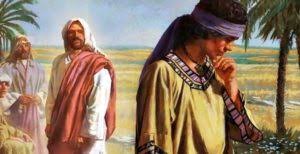
Consider how YHVH has revealed this truth about Himself in Scripture. In one parable, a servant was rebuked for not putting his money to work and earn interest before his master came back from a long trip (see The Life of Christ Iq – The Parable of the Ten Minas). In the same parable, others were praised for multiplying the investment that had been entrusted to them. Messiah multiplied the five loaves of bread and two fishes and at one point caused the apostle’s nets to break from a huge catch of fish. Yeshua was not opposed to increase. But He wants us to understand that it is from God. Sometimes we overreact to others’ selfish use of their profits and come to wrong conclusions. But ADONAI intends our fields, factories, and investments to multiply and produce a profit.
5. Much will be required. As those profits multiply, so does our responsibility as stewards of what the Lord has given us. For whoever much is given, much will be required (Luke 12:48). We live in an amazing time. America represents only about 5 percent of the world’s population, yet it controls about 45 percent of the world’s wealth. Never in the history of mankind has there been such disparity in the world or such opportunity in one country. Those of us who have grown up in this environment often fail to appreciate the blessing we have been given. If you live under a stable government or have steady employment, you have a tremendous opportunity. Compared to global reality, you have been blessed abundantly!526
When the righteous triumph, everyone is glad. Righteousness is the ethical side of wisdom, and wickedness the ethical side of foolishness. The proverb comments on the community benefits of wisdom versus the disadvantage of folly. The righteous rejoice when wisdom prevails, and when wisdom prevails there is success, not just for the individual but also for the society as a whole. Much glory increases in the community when wisdom makes its influence felt. But when the wicked rise to power, people go into hiding (28:12 Hebrew). They hide in fear that bad consequences will fall on them, through either abuse or neglect.
Whoever conceals their wickedness will not prosper. Wickedness does not lead to success in work, relationships, and life in general. This is true whether wickedness is explicit or implicit. In order to reverse their fate, the wicked must confess their wickedness and then demonstrate their commitment by stopping their wicked actions. But if they confess and turn from it they will receive mercy or compassion (28:13 Hebrew). This mercy is not running around all day saying, “Yeah, yeah, I did it again;” it’s in repenting and turning from your sin the you find mercy. This compassion may come from fellow human beings, but the unspoken agent of mercy is God Himself (see the commentary on Ruth Af – The Concept of The Concept of Chesed). In the final analysis, this verse (like 28:11) is against deception and for openness and mercy. This is the only verse in Proverbs calling for a confession. Improvement only comes when people listen to criticism are open to acknowledge their faults and changing their lifestyle.527
Blessed are those who always fear (Hebrew: mefached) ADONAI. The Hebrew word for fears in this proverb is different from the word in 1:7, where we read: The fear (Hebrew: yir’at) of ADONAI is the beginning of knowledge. The word in 28:14 is more important. It means to tremble, to shiver, or to shake. And the second colon shows us that fearing ADONAI is the opposite of a hard heart. But whoever hardens their heart will fall into trouble (28:14 Hebrew). It is the opposite of a flippant, carefree, unserious heart. But the irony here is the word blessed is a joyful word. It basically means “Congratulations!” The word blessed is a biblical high-five. Do you see the surprise? The surprise is that a meltdown before God is like a dam breaking with overflowing joy. Emotional meltdown before God, when we see Him as He really is and ourselves as we really are, it sweeps away our internal barriers, the defensiveness that keeps God at a manageable distance and makes us so sad. But then the Gospel breaks through and floods us in divine forgiveness. Getting past our image-management and trembling before ADONAI brings us deep joy.528
A roaring lion or a charging bear is like a wicked ruler over his own helpless people (28:15 Hebrew). This proverb and next one pit a cruel and oppressive tyrant against destitute people. In the first colon, this comparison proverb presents two animals, the lion and the bear, both known to be dangerous. The danger is intensified by the addition of the modifiers roaring and charging. These animals are in search of prey that they can devour. In the second colon, the wicked ruler is mentioned, and seems to be the third violent animal. This ruler’s prey is his own helpless people. Tyrants in the past, and even today, as we saw the Muslim leaders slaughtering the helpless people of Iran in 2026, suck the lifeblood out of their subjects, making themselves rich and their people poor. This comparison is an observation, but an observation that serves as a warning to wicked rulers. It is also important for us to understand that no one, in reality, is getting away with anything (see the commentary on Revelation Fo – The Great White Throne Judgment).
A ruler with no understanding will oppress his people, but one who hates corruption will have a long life (28:16 NLT). This comparison proverb is associated with the previous one according to the theme of the evil ruler. The two colons contrast bad and good rulers. The first colon describes a cruel and oppressive ruler as the one who is without understanding. In the second colon, we read about one, probably a prince, who hates unjust profit. By not exploiting his people in any economic way, this prince is showing himself to be wise. And as is well known in the book of Proverbs, wisdom leads to long life (3:16 and 13:12).
A murderer’s tormented conscience will drive him into sh’ol (see Af – Sh’ol). Don’t protect him (28:17 NLT). This proverb upholds the dignity of human life. If people take a life, their own life is forfeited (see the commentary on Genesis Cz – Whoever Sheds Human Blood, by Humans Shall Their Blood be Shed). Here the first colon describes someone who has taken the life of another and feels tormented by that act. The second colon seems to suggest that the murderer is suicidal. The proverb offers no comfort to such a person, indeed, just the opposite. Solomon advises the reader of this proverb to offer the tormented person no help. It doesn’t encourage a person to hurry the murderer’s dash to death, but it does prohibit hindering it.
Those who walk the path of blamelessness will be saved, but the crooked will be suddenly destroyed (28:18 Hebrew). The metaphor that drives this proverb is that of the path, so prevalent in the first part of the book. There are two paths: the straight and the crooked. The first colon assumes the former. Those who walk in innocence will be saved. This raises the question “From what?” At the very least, the blameless will be saved from trouble and an early death. The opposite is true for those who walk on the crooked path, which presume evil. As a result of their wickedness, they will be suddenly destroyed.
Verses 19 and 20 contrast the gaining of wealth by just and unjust means. A hard worker has plenty of food, but a person who chases fantasies ends up in poverty (28:19 Hebrew). This proverb is another version of the warning against the dangers of laziness (see Be – Don’t be Lazy). Here, as elsewhere (10:5), this truth is expressed in agricultural terms. The point is obvious. If people go out and do the work of planting, caring for their crops, and harvesting, they will have plenty of food for themselves and their families. But if they waste their time on nonessential matters, then they will have nothing at harvest time but an empty stomach. But it is important to note that proverbs are not promises; they are generally true principles, all other things being equal. It doesn’t consider all the possibilities. A storm or a drought may undermine even the hardest worker. But if one does not work hard, then there is no chance for a good crop. See 12:11 for a nearly similar proverb.
A trustworthy person will be richly blessed, but a person who wants quick riches will not go unpunished (28:20 Hebrew). Proverbs warn against those who rush to get rich (13:11). In contrast to the impulsive, this proverb says that those who are trustworthy will be richly blessed. According to the parallel, these blessings are probably thought to include wealth. A number of proverbs also associate material gain with wisdom (as in 3:15-16). However, it is also likely that the blessings could have been understood even more broadly to include things like relational happiness or long life. The punishment of those who rush to riches also is not specified. Such could include the deep disappointment of the sudden loss of wealth, since other proverbs understand the gain of get-rich-quick schemes as short-lived.
Showing partiality is never good, yet some will do wrong for a mere piece of bread (28:21 NLT). The first colon is similar, though not identical, to what is found in 24:23, where we read: It is wrong to show favoritism when passing judgment. There the context is more a courtroom scene since the expression when passing judgment is added; however, the courtroom setting is the most natural context for this proverb as well. But the principle is broader and would certainly cover other areas such as showing favoritism in business practices. The second colon provides the motivation for those who do show favoritism for personal gain. It makes fun of those who do so for a mere piece of bread.
Greedy people try to get rich quick but don’t realize they’re headed for poverty (28:22 NLT). The expression “Greedy” is a translation of evil eye. This proverb, like 28:20 and 21:6, display Solomon’s contempt for those who try to find shortcuts to riches. Those who are greedy with their time and money would not want to invest either to gain more. However, they will have a surprise waiting for them: not more, but much less. Poverty.529
In the end, people appreciate frankness far more than flattery (28:23 NLT). We have already been introduced to the idea that constructive criticism is better than superficial and misleading praise (13:1 and 17:10). It is also the subject of this proverb, with its encouragement of frankness over flattery. Real fellowship, whether in a marriage, a friendship, or in your congregation, depends on frankness. In fact, the tunnel of conflict is the passageway to intimacy in any relationship. Until you care enough to confront and resolve underlying barriers, you will never grow close to each other by facing and resolving our differences. However, frankness is not a license to say anything you want, wherever and whenever you want. It is not rude. The Bible tells us that there is a right time and a right way to do everything. There is a proper time and a proper procedure for every matter (Ecclesiastes 8:6). Thoughtless words leave lasting wounds. ADONAI tells us to speak to each other in the congregations of God as loving family members. Do not rebuke an older man harshly, but exhort him as if he were your father. Treat younger men as brothers, older women as mothers, and younger women as sisters (First Timothy 5:1-2 GWT).530
Whoever robs their father or their mother and says, “What’s wrong with that?” is no better than one who destroys (28:24 Hebrew). Proverbs insists that children show proper respect to their parents (20:20, 30:11-14 and 17). A number of these proverbs assume that the parents are godly, and this proverb probably does as well. However, the principle of not stealing would apply to anyone, and those who stoop low enough to rob their parents, no matter what their parents are like, would earn Solomon’s contempt. Stealing destroys the most intimate of relationships. What is especially reprehensible about their behavior is that they don’t feel any remorse. Perhaps they feel a sense of ownership of their parents. The one who destroys may refer to a particularly dangerous type of criminal (also see 18:9). Such children may think that they are simply taking what rightfully belongs to them because they are a member of the family. But in reality, they are no better than a criminal from outside the family. Such a proverb may come from the mitzvah to honor one’s parents (see the commentary on Deuteronomy Bp – Honor Your Parents). Stealing does not honor them.
The greedy stir up strife, but the one who trusts in ADONAI will prosper (28:25 Hebrew). The contrast here is between those who are greedy and those who trust in ADONAI. Those who trust in ADONAI do not have to stir up strife to find satisfaction with their lot in life. As the greedy stir up strife, they annoy and even anger others from who they are trying to get what they think they need. Therefore, there is always chaos around them. On the other hand, those who put their faith in ADONAI are content with life.
Those who trust in their own insight are foolish, but anyone who walks in wisdom will be safe (28:26 NLT). Wisdom involves the fear of ADONAI and an aversion to self-reliance (3:5 and 7, 26:12, 27:1, 28:11). To trust in one’s own heart is the epitome of foolishness because the heart is limited in its knowledge and also, apart from relationship with God, wicked. Solomon would have agreed with Jeremiah, who in 17:9 states: The human heart is most deceitful and desperately wicked. Who really knows how bad it is? As is taught in numerous places in Proverbs, fools are on the road to death (1:19 and 32, 2;18, 8:36, 9:18, etc), which may be implied here by the explicit statement in the second colon that those who walk on the right path, walking in wisdom, will be rescued. Proverbs typically leave the general danger from which the wise are rescued, but they would at least include things like relational entanglements and/or an early death.
Whoever gives to the poor will lack nothing, but those who close their eyes to poverty will be cursed (28:27 NLT). Proverbs consistently teaches that those with means must be generous toward the poor. This proverb motivates such generosity with the promise that the giver will lack nothing. This would imply that ADONAI would take care of such a person and would undercut the primary fear behind not giving. Not to give is a form of control and a human attempt to grasp at security. To give requires the giver to trust more. Those who don’t give, according to the second colon, will only increase their troubles. It seems obvious that ADONAI is the driving force behind the curses.
When the wicked rise up, the people go into hiding; but when the wicked perish, the righteous flourish (28:28 Hebrew). The first colon is a close variant of 28:12b, and the thought is essentially the same. When wicked people are in a position of power and influence, the harm that results is such that people “head for the hills,” if they can. People go underground because if their rulers are wicked, then it is likely that they will abuse those under their power. However, when these abusive rulers are destroyed, then the righteous can flourish. Such a situation bodes well for the public good. This proverb, among many others, points out that wisdom not only benefits the individual but also the community.531
Dear heavenly Father, praise You for Your steadfast love! Any possessions that I have are only the result of trusting in You. It is a far greater gain to follow You and grow to be like You, for godliness brings contentment, but riches often bring temptations and traps. Now godliness with contentment is great gain (First Timothy 6:6). But those who want to be rich fall into temptation and a trap and many foolish and harmful desires that plunge men into ruin and destruction. For the love of money is the root of all kinds of evil – some, longing for it, have gone astray from the faith and pierced themselves through with many sorrows (First Timothy 6:9-10a), but loving the Messiah brings eternal peace and joy! These things I have spoken to you, so that in Me you may have shalom. In the world you will have trouble, but take heart! I have overcome the world (John 16:33)! Thank You for Your great love and wisdom that puts trusting in You as the most important thing anyone can do, far above obtaining wealth. In Messiah Yeshua’s holy Name and power of His resurrection. Amen
Leave A Comment