

Ag – A Time Line for Philippians

A Time Line for Philippians

1. The letter begins at the point of Epaphroditus’ arrival, which had a two-fold purpose (a) to present the Philippians gift to Paul (reflecting their concern for him); and (b) to inform him about the situation back home. For Paul, these two matters merge into one main concern: the progress of the Gospel.

2. Paul is currently absent from them, which calls for the first two sections of the letter. First he reports about his “affairs” (1:12-26), that from his perspective (beyond what Epaphroditus would tell himhis imprisonment was advancing the Gospel; at the same time he joyfully (and hopefully) anticipates the outcome. He will be satisfied no matter what Caesar decides, for Paul, living means living for Messiah, and dying is even better (1:21), for to be absent from the body is to be present with the Lord (Second Corinthians 5:8).

3. But Paul’s real concern is their “affairs,” which in their present condition are unlikely to advance the Gospel. Although he expects to come soon for the sake of “their progress,” in the meantime a letter will take his place; thus 1:27 to 2:18 addresses their current situation, in which he points to Messiah as the model of the selflessness and humility necessary for unity to be achieved.

4. At 2:19 two kinds of chronology are at work: (a) from the perspective of his writing the letter (with both Timothy and Epaphroditus presently); (b) from the perspective of the Philippians, as the letter is being read. Thus, he writes a letter to accompany the return of Epaphroditus, which comes next in terms of actual chronology, but the second (after verses 19-24) in terms of his concerns for writing.

5. Thus, very soon Paul hoped to send Timothy, whose task is twofold: (a) to inform the Philippians about the expected outcome of his trial; but (b) to return to inform Paul as to whether the letter had done any good. Thus, Timothy was to return to Paul, before Paul himself set out, which would apparently happen shortly thereafter (2:19-24)Paul expected to be released (1:23-26, 2:17 and 19-24, especially verse 24), and never once contemplated that it might go the other way.

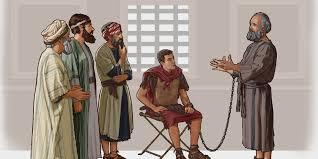
6. In the meantime Paul sent Epaphroditus back home with his letter (2:25-30).

7. The next encouraging section (3:1 to 4:3) is written from the perspective of Epaphroditus’ return and his reading this letter in their midst (which took the place of Paul’s presence). Framed by the necessity to rejoice in the Lord (3:1 and 4:4), it warns them – for their own safety – of matters Paul had often brought to their attention before, and uses that warning to refocus their attention on their eternal security (see the commentary on The Life of Christ MsThe Eternal Security of the Believer).

8. At 4:4 Paul begins the final set of essential teachings (4:4-9) with which he regularly concludes his letters.

9. But he breaks that off just before his final greetings (4:21-23) to acknowledge their gift to him, so that the final words they hear will be those of gratitude, cooperation from ADONAI Himself, and praise (4:10-20).5

2026-03-21T14:24:48+00:000 Comments

Af – Keep Your Joy

Keep Your Joy

In his book on Philippians, Be Joyful, Warren Wiersbe states that Yeshua Messiah was a man of sorrows, and well acquainted with grief (Isaish 53:3). Yet He possessed a deep joy that was beyond anything the world could offer. As He faced a cruel death on the cross, our Lord said to His followers: These things I have spoken to you, so that My joy might remain in you, and that your joy might be complete (John 14:11)Those who have trusted the Master have the privilege of experiencing fullness of joy (Psalm 16:11). Yet few believers take advantage of this privilege. They live under a cloud of disappointment when they could be walking in the sunshine of joy. What has robbed them of their joy?

The answer to this important question is found in a letter written centuries ago. It was written by the apostle Paul (see the commentary on Acts, to see link click BmPaul’s First Missionary Journey: Paul is Sha’ul and Sha’ul is Paul) when he as a prisoner in Rome about 62 ACE, and sent to his fellow believers in Philippi, a church Paul founded on his second missionary journey (see Acts BuPaul’s Second Missionary Journey). One of their members, Epaphroditus, had been sent to Rome to bring a special offering to the apostle and to help him in his imprisonment (2:25-30 and 4:10-20). Paul’s letter to the Philippian church is something of a missionary “thank you” letter, but it is much more than that. It is the sharing of Paul’s secret of biblical joy! Paul mentions joy, rejoicing, or gladness at least nineteen times in the four chapters of Philippians.

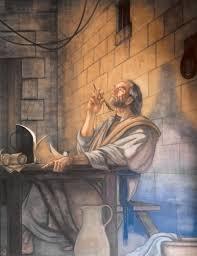
The unusual thing about this letter is that there was apparently no reason for Paul to be rejoicing. He was a Roman prisoner and his case was coming up shortly. He might be acquitted or he might be beheaded! Acts 28:30-31 indicates that he was a prisoner in his own home, but he was chained to a Roman soldier and not permitted to preach in public. The apostle had wanted to go to Rome as a preacher (Rom 1:13-16); instead, he arrived as a prisoner. And, unfortunately, the believers in Rome were divided. Some were for him and some were against him. In fact, some of the foolish believers wanted to make things more difficult for him.

Yet, in spite of the danger and discomfort, Paul overflowed with joy. What was the secret of his joy? The secret is found in another word that is often repeated in Philippians: It is the word “mind.” Paul uses the word mind ten times, and also uses the word “think” five times. Add the time he uses the word “remember” and you have a total of sixteen references to the mind. In other words, the secret to your joy is the way you think, your attitude. After all, attitude determines outcome. As we think, so we are (Proverbs 23:7)Philippians is a believers’ psychology book, based solidly on good Bible doctrine. It is not a shallow self-help book that assures us that “everything’s going to turn out okay.” It’s a book that explains the mind that we must have if we are going to have joy in a world filled with trouble.

The best way to get the total picture of the book is to first discover the four “thieves” that rob us of our joy, then determine the kinds of attitudes that we must have in order to capture and conquer these thieves.

1. Circumstances: Most of us must confess that when things are going our way, we feel a lot happier, and are much easier to live with. But have you ever stopped to consider how few of life’s circumstances are really under our control? We have no control over the weather, the traffic, or over the things people say and do. The person whose happiness depends on ideal circumstances is going to be miserable most of the time. The poet Byron (1788-1824) wrote, “Men are the sport of circumstances.” And yet here is the apostle Paul in the worst of circumstances, writing a letter saturated with joy.

2. People: All of us have lost our joy because of people: what they are, what they say, and what they do. (And no doubt we ourselves have contributed to making someone else unhappy. It works both ways.) But we have to live and work with people; we cannot isolate ourselves and still exercise our spiritual gifts and live to the glory of Messiah. We are supposed to be salt and light in this world (see the commentary on The Life of Christ DfYou are the Salt of the Earth and the Light of the World). But sometimes our saltiness becomes bitter and our light grows dim because of other people. Is there a way to have joy in spite of other people?

3. Things: What thieves they can be. Yet, the Master said: Beware! Guard against every kind of greed. Life is not measured by how much you own (Lk 12:15). In the Sermon on the Mount, Yeshua warned against laying up treasures on this earth (Mt 6:19). Things are not safe, they do not last, and they never satisfy. Yet most people today think that their joy comes from the things that they own. “Whoever dies with the most things wins,” is the philosophy of the world. In reality, things can rob us of the only kind of joy that really lasts.

4. Worry: This is the worst thief of all. How many people have been robbed of peace and fulfillment because of worry? In fact, worry even has physical consequences, and while medicine can remove the symptoms, it cannot remove the cause. Worry is an “inside job.” You can buy sleep at the drug store, but you can’t buy rest. If Paul had wanted to worry, his present situation would have been a good time to do it. He was a political prisoner. His friends in Rome were divided in their attitude toward his case. He had no missions board supporting him and no Legal Aid Society defending him. But in spite of all these difficulties, Paul did not worry! Instead, he writes a letter filled with joy, and tells us how to stop worrying.

How do we capture these thieves from stealing the joy that is rightfully ours in Messiah? The answer is that we must cultivate the right mindset. Since outlook determines outcome, the attitude of mind that we cultivate will determine our joy or lack of it. In the four chapters of PhilippiansPaul describes four attitudes of mind that will produce joy in spite of circumstances, people, and things that will keep us from worrying.4

2026-03-21T14:15:50+00:000 Comments

Ae – Judaism and Christianity: Connections and Distinctives

Judaism and Christianity: Connections and Distinctives
By Rabbi Barney Kasdan, Kehilat Ariel Messianic Congregation, San Diego, California

It seems that more and more these days people are appreciating the connection between Judaism and Christianity. It wasn’t always this way and indeed there have been some dark chapters of history between these two great religions. But the connections are all around us, if we just take a closer look. This stretches from the Liberty Bell inscribed with a verse from the Torah (Leviticus 25:10), to the structure of the Western law system with its checks and balances. Some insist that America is strictly a “Judo-Christian” value. This certainly is part of the explanation why America has been such a blessed haven for Jews for so many generations. I believe it also must be factored into the blessing that has clearly been upon our country for nearly 250 years. It is actually a manifestation of the ancient promise to our forefather Abraham. I will bless those who bless you (Genesis 12:3).

What is of special interest today is that it is not just one side or the other who is appreciating our inherent connection. It is coming from many Jews and Christians of various denominations. A trip to a local Christian bookstore will reveal new books on “Jewish Roots,” “Our Father Abraham,” plus many others. In the Jewish community we also have recently seen books on “The Kosher Jesus” and even a “Jewish Annotated New Testament.” So what are some of these newly appreciated connections?

1. The Hebrew Scriptures: Many are rediscovering the fact that we both share the same Scriptures found in the TaNaKh (Torah/Prophets/Writings). Okay, so Christians tend to call it “The Old Testament.” Nonetheless, most people realize that it is the exact same Hebrew text that is the source of these holy writings. Even though Christians (and Messianic Jews) include the B’rit Chadashah (The New Testament), it cannot be overlooked that both Christian and Jews have a huge amount of common scriptural heritage.

2. The God of Isra’el: This is obviously a direct result of the Hebrew Scriptures. Since the revelation to Moses and the forefathers, Jews have held to the description of the oneness of God and His uniqueness as the only God, Creator of all things. The most foundational declaration in the TaNaKh is affirmed by Jews three times daily: Sh’ma Yisra’el! ADONAI our God, ADONAI is one (Deuteronomy 6:4). There has certainly been considerable debate between Jews and Christians as to what this means. Sometimes it has sounded almost as if there might be three gods. Whatever one’s interpretation of the Sh’ma might be, it should be noted that Yeshua, in the New Testament, clearly agreed and even called this, the greatest commandment, for both Jews and Christians (Mark 12:28-34). Other religions of the world may have good things to say but they vary on the self-revelation of God. Jews and Christians, while dialoguing about the meaning of this, should be in unity about the meaning of this, should be in unity about our common belief in the only God.

3. The Mitzvah (a general principle for living) of Love: The Scriptures teach that you can tell a lot about a person by the fruit in their lives. For the bulk of the godless world, the fruit is pretty obvious. Just check out the evening news if you want confirmation of this depressing truth! Many times this holds true even for religious groups, especially to the radicals among them. Some religions and philosophies just seem to have a bad root. Judaism and Christianity are not without their historical controversies. But these tragic actions were a direct result of the root of the tree but of people actually straying from the clear teachings of Scripture. To the Jewish imperative to love ADONAI (Deuteronomy 6:5) and to love others (Leviticus 19:18), Christians should give a hearty “amen” (see my commentary on Romans, to see link click AfThe List of “one anther” Commands). In fact, rabbi (Sha’ul/Paul) who wrote much of the New Testament put it this way: Love does not do harm to a neighbor; therefore, love is the fullness of the Torah (Romans 13:10). Yes, there have been moral failings. But it is not coincidental that many times it has been both Jews and Christians up for social justice, building hospitals and helping the downtrodden. When properly understood, it has been another one of our common connections.

So clearly there are many good connections between Judaism and Christianity. Likewise, there are some obvious distinctives to each religion.

1. Different cultures: To see some of the differences, just follow a Jewish friend around for a week. Then follow a Christian friend. One has to keep a healthy sense of humor when it comes to the “holiday season.” Will it be a Christmas tree or a hanukkiah (a nine-branched candelabrum used specifically for the Jewish holiday of Hanukkah) or both? Will it be a matzah at Seder or a ham dinner at Easter? Will you be mowing the lawn on Saturday or Sunday? Of course these are generalizations, but the distinctive cultures hold true for the bulk of society. While some people get upset with the differences, many are coming to appreciate a positive point even here. After all, ADONAI has created so many diverse tribes and tongues. Maybe we should appreciate the diversity while holding on to our own convictions. Jews and Christians have so much to learn from each other if we would just look a little beyond our own world view. We need not compromise our own beliefs in order to have a constructive dialogue with those who differ from us.

2. Oh yeah, that Messiah Issue: It is not surprising that most Christians and Jews agree on one other foundational issue: that we disagree on the identity of Yeshua of Nazareth. Who do the Jews believe He was (see Isaiah IyThe Death of the Suffering Servant)? Who was this one who came from Galilee? Was he just a zealous Jewish reformer, or was he more? Was he a great rabbi or was he (as He claimed) the long-awaited Messiah, sent from the God of Isra’el? Both Jews and Christians believe in the concept of a coming Messiah to establish God’s order on the earth. In fact, the Christians originally got that belief directly from the Jews! So despite some rather apparent cultural differences, the watershed difference is about the identity of the true Messiah. Is it Yeshua, or do we keep looking for someone else? It is here that the Messianic Jews can be helpful. Most of the Jewish people are not interested in converting to a different religion or a different culture. In fact, most are vehemently opposed to such ideas. But what if there is a Jewish way to follow Yeshua? What if we can believe in Him within a Jewish context? What if we can have houses of worship called “messianic synagogues” where both Jews and Gentile believers can continue in a Jewish tradition?

It is true that there are some important differences between Judaism and Christianity. But there are also many strong connections that cannot be broken. Maybe all of us can be a bridge of greater understanding and appreciation between these two groups even as we prepare for the return of the Messiah.


2026-03-21T13:53:29+00:000 Comments

Ad – Glossaary

Abba: An Aramaic word used as an affectionate term of address to someone’s father. Yeshua used it to refer to God as His Father, and believers in Jesus also use it today to address God as Father. In modern Hebrew, this common name means Dad, Daddy, or Papa (also see Mark 14:36 and Romans 8:15).

Adar: the twelfth month of the Jewish biblical calendar.

Adonai: literally, my Lord, a word the TaNaKh uses to refer to God.

ADONAI: The Tetragrammaton, meaning the four-letter name of YHVH (Yud Hay Vav Hay). Since its pronunciation is not known, and also out of respect for God’s name, Jews traditionally substitute the words ADONAI and Ha’Shem. ADONAI, however, is more of an affectionate name like daddy (also see Exodus 3:15; Jeremiah 1:9; Psalm 1:2; Matthew 1:22; Mark 5:19; Luke 1:5; John 1:23).

ADONAI Elohei-Tzva’ot: the LORD God of heaven’s angelic armies. God does not have many names, as seen here and below, He has only one name – YHVH (Yud Hay Vav Hay). All the other names in the Bible describe His characteristics and His attributes.

ADONAI Elohim: This is the Hebrew word for LORD God. This title links Isra’el’s God, the God of the Covenant, with God as Creator of the universe (also see Genesis 2:4; Isaiah 48:16; Psalm 72:18; Luke 1:32; Revelation 1:8).

ADONAI Nissi: the LORD my Banner (see Exodus 17:15; Psalm 20:1).

ADONAI Shalom: the LORD of Peace.

ADONAI, The Angel of: He is called the Angel of ADONAI 58 times and He is called the Angel of God 11 times. This is never a common angel, but the second Person of the Trinity, Yeshua. This is always a reference to the pre-incarnate Messiah. Significantly, the rabbis teach that the phrase the Angel of ADONAI is sometimes used to denote God Himself.

ADONAI Tzidkenu: the LORD our Righteousness.

ADONAI-Tzva’ot: The LORD of heaven’s angelic armies (see Joshua 5:13-15; Second Kings 19:31; Psalm 24:10; Second Corinthians 6:18).

Adversary, The: Satan, the devil, the prince of the power of the air, and the old dragon.

Afikomen: Literally, “That which comes after.” Piece of matzah that is hidden during the Seder, to be found and eaten after the third cup of redemption.

Amen: At the end of a prayer, this word means, “It is true,” or “Let it be so,” or “May it become true,” indicating that the readers or listeners agree with what has just been said. Although everything Yeshua said was true, “amen” adds special emphasis (also see Deuteronomy 27:25; Jeremiah 28:6; Psalm 41:14; Nehemiah 8:6; Matthew 5:26; Mark 10:15; Luke 23:43; John 10:1).

Anti-missionaries: Today they are Orthodox Jews who champion Jews for Judaism. They do not limit their mischief to harassing missionaries; any Jewish believer is a target. It is unfortunate that so many of these anti-missionaries feel their ends justify certain unethical means. In order to “protect” Judaism, they do or encourage others to do what Judaism condemns. In Paul’s day, they were the Judaizers who wanted Gentile believers to add obedience to the 613 commandments of Moshe, circumcision, and eating kosher to Paul’s salvation equals faith-plus-nothing Gospel.

Ariel: lion of God, or fireplace on God’s altar.

Aviv: the first month of the biblical year, corresponding to the modern Jewish month of Nisan.

Avraham: Abraham

Azazel: a scapegoat or goat demon sent out in the wilderness on Yom Kippur.

Ba’al: the chief male god of the Phoenicians and Canaanites. The word means lord or master.

Bar Mitzvah: Hebrew for “Son of the Commandment.” Although not specifically mentioned in the Bible, it is a Jewish coming of age ritual in which a young man, or Bat Mitzvah for a young woman, chooses to follow the commandments of their forefathers and takes responsibility for their own relationship with the God of Isra’el. This ceremony normally takes place at age 13 for boys or age 12 for girls. Afterwards, he/she is theoretically considered to be an adult, but in modern Judaism this is mostly symbolic, and a twelve-year-old is not treated like an adult.

Beit-Lechem: Bethlehem, the birthplace of David and Yeshua, meaning house of bread.

B’midbar: Numbers

Bnei-Yisrael: The children of Isra’el.

B’resheet: Genesis

B’rit Chadashah: Hebrew for the New Covenant. Christians commonly call it the New Testament.

Challah: Challah is a special bread of Ashkenazi Jewish origin, usually braided and typically eaten on ceremonial occasions such as Shabbat and major Jewish holidays. Ritually acceptable challah is made of dough from which a small portion has been set aside as an offering.

Chesed: “mercy,” “lovingkindness,” and/or “covenant-loyalty.” It is a complex word that summarizes God’s complex and overwhelming love for His people, going beyond the concepts of love, mercy or kindness all together (also see Isaiah 63:7; Zechariah 7:1; Psalm 13:1; Psalm 86:1; Psalm 107:1; Psalm 118:1; Psalm 136:1).

Clear oil: In the oil pressing process this would have been oil from the first of three or pressings. The first pressing, most likely done by adding one stone weight to a wooden bean which then put pressure onto a bag of olives by being forced downward by the weight, was the one which produced the purest oil. This was traditionally the oil used in the Temple.

Cohen of Ha’Elyon: Priest of the God Most High.

Cohen: A priest, a man who offered sacrifices and performed other religious rituals at the Temple in Jerusalem.

Cohanim: The Cohanim were descended from Aaron, the brother of Moses. The Sadducees were from this priestly sect of Judaism.

Cohen Rosh Gadol: The Great High Priest who served as the head religious official, the only one to enter the Most Holy Place. Aaron, the brother of Moses, was the first man appointed as the Cohen Gadol. In later times, the Cohen Gadol was in charge of the Temple and its administration. The Cohen Gadol Caiaphas, played a key role in questioning Yeshua at His trial. The writer of Hebrews describes Messiah as our great Cohen Gadol, who gives us access to God’s throne in the heavenly sanctuary (also see Leviticus 21:10; Haggai 1:14; Nehemiah 3:1; Matthew 26:57ff; Mark 14:61ff; John 18:19ff; Hebrews 4:14ff and 10:19-22).

Covenant: Theologically, it speaks of the contractual relationship between God and His people. The Hebrew term is b’rit. Also see B’rit Chadashah, Hebrew for New Covenant (see Genesis 6:18 and 17:2; Jeremiah 31:30; Nehemiah 9:32; Matthew 26:28; Mark 14:24; Luke 1:72).

Defile, or tam’ei in Hebrew: This is not a sinful condition, but a condition of life. From this we can see that being tam’ei is merely a state of being unable to participate in the Temple service until cleansed because the person has come into contact with the realm of sin and/or death, not necessarily because the person has sinned himself.

Diaspora, the Dispersion: the scattering of the Jewish people in exile throughout the world. Today almost 7 million Jews live in Isra’el, and over 8 million more Jews live in the Diaspora (also see Isaiah 11:10; John 7:35).

Diver-Hayamim Alef: First Chronicles

Diver-Hayamim Bet: Second Chronicles

Diviners, Babylonian: Hebrew: gezar, primarily means to cut or divide. The term conveys a sense of separation or determination, often implying authority or finality in a decision being made. They were important in a theocratic society that was shaped by divine and royal decrees.

Drash: A drash is a long d’var.

D’var: Is a short talk on topics relating to a parashah, the weekly Torah portion.

D’vaim: Deuteronomy

Echad: The Hebrew word for “one” or “unity.” Echad is used in the Shema (Deuteronomy 6:4).

Eikhah: Lamentations

Elyon: A title for God, meaning the Most High God (see Luke 1:35 and 76; Acts 7:48). A longer form is El Elyon, God Most High (also see Deuteronomy 32:8; Isaiah 14:14; Psalm 91:1; Acts 16:17).

Elohim: God” in general terms, or as Creator. Compared with ADONAI, God’s “covenant name” is used especially in His relationship to the Jewish people. Elohim is the plural form of El, also found in the Bible occasionally with the same meaning. Yeshua is sometimes called Ben-Elohim, the Son of God (also see Genesis 2:19; Isaiah 61:11; Matthew 4:3; Mark 1:1; Luke 1:35; John 11:4).

El Shaddai: God Almighty

Emissaries: Apostles

Enchanters, Babylonian: Hebrew: ashshaph, refers to a class or wise men who were often consulted for their ability to interpret dreams, signs, and omens, and as such, were key figures in the king’s advisory team.

God-fearers: These were Gentiles who became convinced that ADONAI was the only true God, they abandoned their paganism and idolatry, but they did not choose to become a proselyte in any form, and hence there was no adoption of Jewish customs or practices (see the commentary on Acts, to see link click Bb An Ethiopian Asks about Isaiah).

Goyim: Nations, non-Jews, Gentiles

Gehenna: The word for “hell,” the place of perpetual misery and suffering after this life. It comes from the Greek word Genna and the Hebrew word Gei-Hinnom, which means the valley of Hinnom. There was actually such a valley by that name south of the Temple in Jerusalem. It was used as a garbage dump, and fires were always burning there, making it a suitable picture of life in hell. In Jewish sources, the term is used as the opposite of Gan-Eden, or the Garden of Eden or Paradise (Matthew 23:33; Mark 9:43).

Gentiles: A term for individuals or groups who are not Jewish. In Hebrew a common word for Gentile is goy or goyim is the plural form (see Isaiah 8:23; Matthew 10:18; Mark 10:33).

Go’el: Literally, a redeemer, used both for God and of people. In the book of Ruth, go’el means the kinsman-redeemer, a close relative obligated to defend and protect his kin. The go’el could buy back (redeem) land or someone who sold himself into slavery, and could marry a widow in the family in order to protect her future. The human go’el is a picture of God the greater Go’el who protects and redeems us, the members of His family (see Ruth 3:9-12).

Hag ha’Matzah: The Feast of Unleavened Bread

Halakhah: are mitzvot governing Jewish life and comes from the Hebrew root to walk. The rabbis used the term to refer to the legal way to walk out the commandments of the Torah. It can also refer to the Oral Law (see the commentary on The Life of Christ EiThe Oral Law). A (one) halakhah is a specific ruling given regarding a particular issue, “the halakhah” being the ruling accepted and observed by the Jewish community.

Hametz or Chametz: The Hebrew word for leaven, or yeast, which makes bread rise. God commanded Isra’el not to eat hametz during Passover, Yeshua teaches that both good and evil spread, the same way hametz leavens the whole batch of dough (Also see 16:6-12; Mark 8:15; Luke 12:1 Exodus 12:20; Leviticus 7:13; Amos 4:5; Matthew 13:33 and 13:21).

Hanukkah: Meaning dedication, the feast lasts eight days and commemorates the victory of the Maccabees over the armies of Antiochus Epiphanes in 165 BC and the rebuilding and dedication of the Temple after its desecration by Syrian invaders.

Hanukkiah: a candelabra specifically designed to hold the nine candles on Hanukkah, one candle for each night and an extra candle in the middle, with which to light the other candles. The candles are lit from right to left.

Ha’Shem: The Tetragrammaton, meaning the four-letter name of YHVH. Since its pronunciation is not known, and also out of respect for God’s name, Jews traditionally substitute the words ADONAI and Ha’Shem. While ADONAI is more of an affectionate name like daddy, Ha’Shem is a more formal name like sir (also see Exodus 3:15; Jeremiah 1:9; Psalm 1:2, Matthew 1:22; Mark 5:19; Luke 1:5; John 1:23).

Hellenist: In the B’rit Chadashah, it refers to Jews who lived in the Diaspora, or had moved to Isra’el from the Diaspora, spoke Greek, and were more Greek in their culture, than traditional Jewish people brought up in Isra’el (Acts 6:1, 9:29, 11:20).

Immerse: To dip the whole body under water as an act of dedication to the LORD, or as a profession of faith in Yeshua. The word is often seen in other translations as “baptize.” The ceremony of dipping is called “immersion” or “baptism.” Yeshua’s cousin was known as John the Immerser (Matthew 3:1; Mark 6:14; Luke 7:20).

Imputation: To reckon or charge to one’s account. When the Spirit gives life (John 6:63a), that means that all the righteousness of Christ is transferred to your spiritual account at the moment of faith. What is true of Messiah is true of you, minus His deity.

Incarnation: The divine revelation (Hebrews 1:1-2) of YHVH becoming one with humanity as an ordinary human being in the person of Yeshua Messiah. He was one-hundred percent man and one-hundred precent God. The Triune God knew that the Second Person would come to earth to be subject to numerous evils: hunger, ridicule, rejection, and death. He did this in order to negate sin, and therefore, its evil effects.

Iyov: Job

Judaizers: Jewish false teachers, who taught that obedience to the 613 commandments of the Torah were necessary to have a relationship with God, and opposed Paul at every turn. Everywhere Paul went, the Judaizers were sure to follow. Once Paul established a church in Galatia, as soon as he left, they would come in and distort the Gospel of Messiah (1:7).

Justification: The act of God whereby, negatively, He forgives the sins of believers and, positively, He declares them righteous by imputing the obedience and righteousness of Messiah to them through faith (Luke 18:9-14). It is not a reward for anything good we have done. It is not something we cooperate with God in (in other words, it is not sanctification). It is an utterly undeserved free gift of the mercy of ADONAI (Romans 3:24; Titus 3:7). It is entirely accomplished by God, once and for all, at the moment of salvation. It results in good deeds (James 2:14-26) and sanctification over our lifetime.

Kadosh: The Hebrew word for ‘holy.” This term describes the people set apart for God. ADONAI Himself is kodosh (Leviticus 19:1-2). Many letters to Christ’s newly formed communities (churches) address Yeshua’s followers as the Kedoshim (also see Jeremiah 2:3; Nehemiah 8:10; First Corinthians 1:2; Ephesians 1:1; Philippians 1:1; Colossians 1:2).

Kedoshim: The holy ones

Kippah: Known as a yarmulke or skullcap, a kippah is a head covering for Jews. The tradition to wear a kippah does not come from any biblical passage. Rather, it is a custom which evolved as a sign of recognition that there is Someone “above” who watches our every act.

Kohelet: Ecclesiastes

Korban: The root of the word korban, can be translated to bring near. A korban, then, should be defined as something brought near. The reason it is so named is that the person bringing an offering did so in order to be brought near to God. It was a sacrifice or offering dedicated to God, especially to fulfill a vow. If something was to be dedicated to God, it generally could not be used for other purposes. Some Pharisees and teachers of the Torah wrongly used this as an excuse not to provide for their parents in their old age, even though Jewish teaching insisted that the commandment to honor one’s father and mother extended to providing for their physical needs (see Mark 7:11).

Kosher: Kosher foods are those that conform to the Jewish dietary regulations of kashrut, primarily derived from Leviticus and Deuteronomy. Food that may be consumed according to halakha is termed kosher in English, from the Ashkenazi pronunciation of the Hebrew term kashér, meaning “fit”.

Levite: Descendants of the tribe of Levi, who served in the Tabernacle and Temple as gatekeepers, musicians, teachers, and assistants to the priests. The scribes, or Torah-teachers, originally came only from among the Levites and were the forerunners of the Pharisees. They later expanded to include members who were from all tribes, with no affiliation with Levi required. (Also see Exodus 4:14; Ezeki’el 48:12; Ezra 1:5; John 1:19).

LORD: When the translators of the King James Bible in the 1600’s came to the Hebrew word YHVH, they needed to distinguish it from the word Lord, meaning master. So, they capitalized it. Therefore, LORD is actually the Tetragrammaton, meaning the four-letter name of YHVH.

LXX (Septuagint): The “official” Greek translation of the TaNaKh, dating from the third century BC through the fourth century AD. The original translation was of the Torah (the five books of Moshe), which the Letter of Aristeas records was allegedly made by seventy Jewish scholars in Alexandria (Egypt) from which it gained its name (Septuagint). It is commonly referred to by the abbreviation, LXX (70).

Mattityahu: Matthew

Midrash: An ancient commentary on part of the TaNaKh, attached to the biblical text. It also offers existing and potential interpretations of Jewish halacha.

Mikhah: Micah

Magi, Babylonian: Hebrew: chartom, refers to a magician or wise man, often associated with the practice of interpreting dreams, or performing magic.

Mal’akhi: Malachi

Malki-Tzedek: Melchizedek.

Mashiach (Hebrew): Messiah, the Anointed One (Matthew 26:63; Mark 1:1; John 20:31).

Matzah (singular) or Matzot (plural): Unleavened bread, which is made without yeast, eaten especially during the feast of Passover. Also see hametz (also see Exodus 13:6; Leviticus 2:5; Ezeki’el 45:21; Matthew 26:17; Mark 14:22; Luke 22:19; John 13:26).

Masoretic Text: The official text of the TaNaKh edited by the Masoretes, or Jewish grammarians, during the sixth to tenth centuries AD. This text is “pointed” with various vowel signs and accents which were lacking in the previous texts.

M’chitzah, the: The middle wall of separation (see the commentary on Acts Cn Paul’s Advice from Jacob and the Elders at Tziyon).

Megillah (singular) or Megillot (plural): The five books in the Writings used for special readings during the holidays: Song of Songs, Ruth, Lamentations, Ecclesiastes and Esther.

Menorah (singular) or Menorot (plural): It is simply the Hebrew word for “lamp.” The seven branched lampstand(s) designed and commanded by God for service in the Tabernacle/Temple (Exodus 25:32; First Kings 7:49; Zechariah 4:2).

Messiah (Greek): Christ, the Anointed One, often used in speaking of a Redeemer sent from God to free His people from exile and oppression (also see Matthew 1:16; Mark 8:29; Luke 2:11 and John 1:41).

Midrash (singular) or Midrashim (plural): allegorical interpretation or application of a text. The listener is expected to understand that the writer of the midrash is not expounding the plain meaning of the text, but introducing his own ideas.

Mikveh: a bath or pool with a flow of fresh water; used in Orthodox Judaism to this day for ritual purification or ceremonial cleansing, performed at various times in a person’s life (see Matthew 3:13 and Titus 3:5).

Mishlei: Proverbs

Mishnah, The: is the first major written collection of the Jewish oral traditions that are known as the Oral Law (see below)

Mitzvah (singular) or mitzvot (plural): Primarily a commandment from God in the Torah. (Deuteronomy 11:22; Second Kings 17:37; Proverbs 6:20; Matthew 26:10; Mark 14:6). Today, a more modern meaning would be “a good deed,” more broadly, a general principle for living.

M’Lakhim Alef: First Kings

M’Lakhim Bet: Second Kings

Moshe: Moses.

Nachum: Nahum

Nechemyah: Nehemiah

Olam haba: “The age to come,” or “the world to come.” It describes a time after the world is perfected under the rulership of Messiah. This term also refers to the afterlife, where the soul passes after death. It can be contrasted with olam ha-zeh, “this world” (Matthew 12:32; Mark 10:30; Luke 18:30 and 20:35; Ephesians 1:21; Hebrews 6:5; Revelation 20-21).

Omer: Meaning “sheaf,” the bundle of barley used in the Firstfruits offering. After the Temple period it came to be identified with Sefirat ha’Omer, or the counting of the omer, the counting of the days from Firstfruits to Shavu’ot.

Oral Law: The Oral Law refers to the Talmud, which is a compilation of rabbinic commentaries on the first five books of Moses, called the Torah. The Talmud, completed around 500 ACE, consists of the Mishnah as well as commentary on the Mishnah called Gemara (Mishnah + Gemara = Talmud). The tradition grew to include a further compendium called Midrash until about the 12th century. The rabbis taught that when the Messiah came, He would not only believe in the Oral Law, but He would participate in the making of new Oral Laws (see the commentary on The Life of Christ EiThe Oral Law).

‘Ovadyah: Obadiah

Pesach: Passover. The Jewish festival commemorating deliverance from Egyptian bondage. In Biblical times Jews used to journey to the Temple, sacrifice lambs there, and eat a special meal commemorating the departure of the Jews from slavery in Egypt. It was one of the three “pilgrimage festivals” that all able-bodied Jews were expected to celebrate before YHVH in Yerushalayim. Today, Passover is celebrated at home with a special meal called a seder. Yeshua celebrated Passover with His apostles (Matthew 26:18; Mark 14:12; Luke 22:7; John 13:1).

Pharisees: One of the sects of Judaism in the first century. The Pharisees had their own views of how exactly to keep Torah. They were especially concerned with ritual impurity and (unlike the Sadducees) they believed in the resurrection of the dead. While the Sadducees were more involved with the Temple, the Pharisees were concerned more with home and synagogue life.

Propitiation: The averting of God’s wrath by means of the substitutionary and efficacious (producing the desired effect) sacrifice (death) of Yeshua Messiah (the atonement). It is the work of Messiah that satisfies every claim of God’s holiness and justice so that Ha’Shem is free to act on behalf of sinners.

Proselytes at the Gate: There were three levels of Gentile relationship to Judaism. After God-fearers and proselytes of the Gate were the second level. The Gate was the middle wall of separation (Ephesians 2:14) in the Temple compound that Gentiles were not allowed to go beyond under penalty of death (see the commentary on Acts Bb An Ethiopian Asks about Isaiah 53). These were Gentiles who adopted many Jewish practices like celebrating Shabbat and the feast of Isra’el, but did not become a full proselyte. Most of these were men because it didn’t require circumcision.

Proselytes of the Covenant: In the third level of Gentile relationship to Judaism (see above), there were proselytes of the Covenant. They entered into the Covenant of Sinai as a full Jew, so to speak. Most of these were women because this level required circumcision.

Purim: Meaning “lots,” is the holiday based on the story of Esther.

Qumran: A site overlooking the Dead Sea where Jewish sects lived in religious communities from 135 BC to 70 AD and from which we have numerous documents which are frequently referred to as the Dead Sea Scrolls. These texts include partial copies and fragments of most of the biblical books (the only whole copy is Isaiah), apocryphal writings such as Enoch, and texts produced by the community itself (the manual of Discipline and the Thanksgiving Hymns). The texts are referred to according to the number of the cave in which they were discovered (for example, 1Qs [Community Rule], 11Q Temp [Temple Scroll]).

Rasheet: One of several names for the Festival of First Fruits.

Redeemed: Setting free from slavery, buying back something lost, for a price.

Righteous of the TaNaKh: Old Testament believers.

Rosh Ha’Shanah: Hebrew for “Head of the Year.” Known as the Jewish New Year, or the Feast of Trumpets.

Ruach: The Hebrew word for “spirit,” “breath,” or “wind.” Yeshua explains wind and Spirit to Nicodemus in John 3:5-8. Scripture frequently refers to the Ruach Ha’Kodesh, the Holy Spirit (Exodus 35:31; Numbers 11:25; Malachi 2:15; Acts 2:2 and 10:44; Romans 8:4-17).

Ruach Ha’Kodesh: The Hebrew name for the Spirit of God, or the Holy Spirit (Isaiah 63:11; Psalm 51:13; Matthew 1:20; Mark 1:8; Luke 1:16; John 14:26).

Rut: Ruth

Sadducees: One of the sects of Judaism in the first century. From the Sadducees came the leading priests who managed the affairs of the Temple. In contrast to the Pharisees, they did not believe in the resurrection of the dead (Matthew 16:12; Mark 12:18; Luke 20:27).

Shir-Hashirim: Song of Solomon

Sh’mu’el Alef: First Samuel

Sh’mu’el Bet: Second Samuel

Sanhedrin: Literally, the gathering of the seated, like being a judge seated on a bench – a legal term for an officiating judge. This was the Supreme Court of ancient Isra’el. It exercised legislative and judicial authority (Matthew 26:59; Mark 15:1; Luke 22:66; John 11:47).

Sanctification: To be set apart, specifically, to the holy use and purposes of God. It is a process that takes a whole lifetime. It is the work of God in which you cooperate (Romans 12:1-2; First Corinthians 10:13; Hebrews 12:3-4; First Peter 5:8-9); and is a process Ephesians 4:11-16), trusting in God, apart from whom we can do nothing (John 15:5; Ephesians 3:16; Colossians 1:11; Hebrews 2:18 and 4:14). He who began a good work in you will carry it on to completion until the day of Christ Jesus (Phil 1:6).

Septuagint: The Septuagint is the Greek translation of the Hebrew Scriptures and was presumably made for the Jewish community in Egypt when Greek was the common language throughout the region. It is also called the translation of the Seventy because tradition states that the Septuagint was translated by seventy rabbis. In academia, the Septuagint is often abbreviated as LXX (the Roman numeral for seventy) in honor of this translation.

Shabbat: The Sabbath Day, the seventh day of the week, when work ceases. On this day God’s people are beckoned to rest and renew our relationship with our Creator, who also rested on the seventh day. Shabbat begins on Friday evening at sundown and ends Saturday evening after three stars appear (Exodus 20:10; Nehemiah 9:14; Matthew 12:10; Mark 1:21; Luke 23:56; John 9:14).

Shaddai: A common name for God in the TaNaKh, usually translated as Almighty. The name is often used in a combination such as El Shaddai, or God Almighty (Genesis 17:1; Ezeki’el 1:24; Job 11:7).

Shall be cut off: This phrase may mean that the person is stoned to death, or that he is barred from returning to the Tabernacle or Temple to offer sacrifices. This person would be cherem, literally set apart for destruction, either physically or culturally.

Sh’mot: Exodus

Shof’tim: Judges

Shaliach: A legal representative, meaning one who is sent.

Shalom: The Hebrew word for peace, wholeness, wellness and true happiness; it is a greeting used when meeting or departing (Genesis 26:31; First Samuel 16:4; Second Chronicles 18:16; Matthew 10:13; Mark 9:50; Luke 1:28; John 14:27).

Sh’khinah glory: The visual manifestation of the glory of God.

Shavu’ot: the festival of Weeks (Hebrew) or Pentecost (Greek), since it comes seven weeks after Pesach; also called Pentecost, from the Greek word for fifty because one counts fifty days after Passover. It is one of the three “pilgrimage festivals” that all able-bodied Jews were expected to celebrate before YHVH in Yerushalayim. It originally celebrated the harvest, but later commemorated the day God gave the Torah to Isra’el. After Yeshua’s resurrection, the disciples waited for God’s gift of the Ruach Ha’Kodesh, which also came on Shavu’ot (Exodus 34:22; Second Chronicles 8:13; Acts 2:1 and 20:16; First Corinthians 16:8).

Sh’ol: The Hebrew equivalent of the Greek “Hades,” the place where the dead exist.

Shofar: A ram’s horn, used in the Bible for summoning armies, calling to repentance, and in other situations. Blasts of various lengths and numbers signified different instructions. Metal trumpets were also used for similar purposes, but exclusively by the cohanim. Today, the shofar is used on Rosh ha-Shanah of Yom Kippur, the Jewish High Holy Days. The shofar also ushers in the Year of Jubilee (Leviticus 25:9-10; Zechariah 9:14; Matthew 24:31; First Corinthians 15:52; First Thessalonians 4:16-17).

Sinai: the mountain in the desert between Egypt and the land of Isra’el.

Shuwb: turn, turning, and the big idea of Jeremiah.

Son of Man: A name that Yeshua commonly used to refer to Himself. It comes from Dani’el 7:13-14, in which the Son of Man is given all authority. This name sometimes emphasizes Yeshua’s humanity and sometimes His deity (Matthew 9:6; Mark 9:31; Luke 21:36; John 6:27).

Sorcerers: Hebrew: kashaph, refers to the use of drugs, potions, or spells and is associated with “sorcery” or “witchcraft.”

Sukkot: the festival of Booths or Tabernacles, celebrating the forty years when the people of Isra’el lived in booths, tents, shacks, in the desert between Egypt and the land of Isra’el. The Hebrew word sukkah means booth and sukkot is the plural and means booths. Sukkot is one of the three “pilgrimage festivals” that all able-bodied Jews were expected to celebrate before YHVH in Yerushalayim (Leviticus 23:34; Zechariah 14:16; Second Chronicles 8:13; Matthew 17:4; Mark 9:5; Luke 9:33).

Synagogue: A place of assembly for Jews for hearing the Torah, praying and worshipping God. There were many synagogues throughout Isra’el and the Greco-Roman world (Matthew 4:23; Mark 5:22; Luke 4:16; John 9:22).

Tabernacle: A temporary dwelling, such as the booths constructed during Sukkot. It is also used in the TaNaKh of the tent in which God dwelt among the Jewish people, both in the wilderness and in the land of Isra’el. When the word is used as a verb, it refers to Yeshua coming to dwell among His people (John 1:14), reminding us of the wilderness Tabernacle and also of the Feast of Tabernacles (Exodus 25:9; First Chronicles 6:17; John 1:14 and 7:2).

Talmid (singular) or Talmudim (plural): Student or students.

Talmud: The codified body of Jewish Oral Law; includes literary creations, legends, scriptural interpretations, comprising the Mishnah and the Gemara.

TaNaKh: The Hebrew word TaNaKh is an acronym, based on the letters T for “Torah”,N for “Nevi’im” (Prophets), and K for “Ketuv’im” (Sacred Writings). It is a collection of the teachings of God to human beings in document form. This term is used instead of the phrase, “the Old Testament,” which sounds “old” and outdated.

Tehillim: Psalms

Torah: Literally, this Hebrew word means teaching or instruction (Exodus 13:9; Isaiah 2:3; Psalm 1:2; Matthew 5:17; Mark 1:22; Luke 24:44; John 7:19; Romans 7:1ff; First Corinthians 9:20-21; Galatians 3:21). It can be used for the five books of Moshe, or more generally for God’s commandments, or the whole TaNaKh (John 10:34). Uncapitalized, torah can be understood generally as a law or principle (Romans 7:21-8:2).

Torah-Teacher: A Torah scribe engaged in interpreting and transmitting the Torah. They wrote Torah scrolls, bills of divorce, and other legal documents. The Hebrew term is sofer.

Tree of Life: The tree at the center of the garden of Eden (Genesis 2:9, 3:24), the source of eternal life. Scripture points to a future in the B’rit Chadashah, with access to the Tree of Life. In the meantime, the Torah is like the Tree of Life to those who embrace her, and blessed will be all who hold firmly to her (Proverbs 3:18 also see Revelation 2:7, 22:2 and 14).

Tzedakah: Is a Hebrew word meaning righteousness, but commonly used to signify an ethical obligation to do what is right, and is commonly used to signify charity.

Tz’Fanyah: Zephaniah

Tzitzit: A fringe that was put on a garment in accordance with Numbers 15:37-41.

Tziyon: Zion, Mount Zion, was originally the City of David, south of the modern Old City of Yerushalayim. Later the name Tziyon came to refer metaphorically to the Temple Mount, Jerusalem, or the people of Isra’el. The hill now called Mount Tziyon was given its name in the fourth century AD (Isaiah 1:27; Psalm 65:2; Matthew 21:5; John 12:15).

Vayikra: Leviticus

Yarmelkes: see Kippah.

Yechezk’el: Ezeki’el

Yeshivah: The Hebrew word yeshivah comes from the word that means sit and it signifies a place for learning Torah. The Greek word schole, which gives us the English word school, means lecture hall. No English word really comes close to the real meaning of yeshivah, but the Yiddish word shul, or school, comes the closest.

Yeshua: The Hebrew name for our Messiah, known in English as Jesus, and is a masculine form, and a word play on yeshu’ah (salvation) (Matthew 1:21; Mark 6:14; Luke 2:21; John 19:19).

Yerushalayim: Jerusalem.

Yesha’yahu: Isaiah

Y’hoshua: Joshua

Y’hudah: Judah.

YHVH: The Tetragrammaton, meaning the Name, the four-letter name of God. Therefore, God does not have many names, He has only one name – YHVH (Yud Hay Vav Hay). All the other names in the Bible describe His characteristics and His attributes.

Yirmeyahu: Jeremiah

Yisra’el: Isra’el.

Yochanan: John.

Yo’el: Joel

Yom ha’Bikkurim: One of several names for The Feast of Firstfruits.

Yom Kippur: The Day of Atonement, the close of the High Holy Days, and considered the holiest day of the year in traditional Judaism.

Yonah: Jonah

Z’Kharyah: Zechariah

2026-03-30T13:27:04+00:000 Comments

Ac – Philippians from a Messianic Perspective

Philippians from a Messianic Perspective

To Evelyn, my great-granddaughter. Although she is only five years old now, may she grow in the fear of ADONAI. Lord, give her wisdom every day, and fill her with the Ruach Ha’Kodesh. Guide her parents to love her and discipline her so she can make a decision to trust in You.

As John MacArthur states in his commentary on Philippians, people today are consumed by the passionate pursuit of happiness. Self-help books, motivational speakers, and advice columnists claim to offer the key to happiness, but for many people the door remains locked. Unable to control their circumstances, they find themselves instead controlled by their circumstances. When their job, relationship, or family fails to make them happy, they dump it and look for a new one. But on the merry-go-round of life, they can never quite seem to reach the brass ring. Having fruitlessly pursued happiness through pleasure and self-gratification, they arrive at the jaded view of life expressed by the Teacher in Ecclesiastes 1:2: Pointless, pointless, everything is pointless (see the commentary on the Life of Solomon to see link click CcThe Failure of Earthly Things).

But if happiness, the fleeting feeling of exhilaration, is elusive . . . joy is not. Biblical joy, the settled conviction that God sovereignly controls the events of life for believers’ good and His glory, is available to all who obey Him. In fact, God commands believers to rejoice (2:18, 3:1, 4:4, cf. 2 Corinthians 13:11 and First Thess 5:16). As a result, divine joy is the theme of Philippians. The Greek word for joy, in both the noun and verb forms, appears a dozen times in its four chapters (1:4, 18, 25; 2:2, 17, 18, 28, 29; 3:1; 4:1, 4, 10).

The circumstances of both the writer and the recipients of this brief letter were not those that would be expected to produce joy and happiness. When the apostle Paul wrote this letter to his beloved Philippian congregation, he was a prisoner in Rome. Little in his turbulent life since his dramatic conversion on the Damascus Road three decades earlier (see Acts BcSha’ul Turns from Murder to Messiah) would have been expected to produce joy. He had faced fierce and unrelenting opposition, both from Gentiles and from his unbelieving Jewish countrymen (Second Corinthians 11:23-30). After Paul’s arrest (see Acts CoPaul’s Arrest in Jerusalem), and his subsequent journey to Rome (see Acts ClPaul’s Journey to Rome), he wrote Philippians in his fourth year of custody awaiting Emperor Nero’s final decision in his case.

The church at Philippi was a spiritually healthy congregation. They were productive and hard working. It was their blessed condition that prompted Paul to write this letter. The Philippians did not have the problems that the Corinthians or the Galatians had. They were solidly grounded in the Word of God, which they guarded so well. So, through the years they had become the delight of the apostle Paul. Nevertheless, they also had their share of problems. Its members were desperately poor, so much so that Paul was surprised at their contribution to the offering that he collected for the poor in Jerusalem (see Second Corinthians BnA Biblical Model for Giving). Like Paul, they were being persecuted for the cause of Messiah (1:27-30). Even worse, they were being attacked by false teachers (3:2, 18-19). On top of everything else, a feud between two prominent women in the congregation threatened to shatter the unity of the church (4:2-3, cf. 2:1-4, 14). Yet, despite the circumstances of both the writer and recipients, joy permeates Philippians, so much so that it may be called the letter of joy. Those who study its teachings and apply its principles will, like the human author, learn the secret of having joy, peace, and contentment in every circumstance of life.

The city of Philippi: Philippi was an important city in eastern Macedonia (northeastern Greece). It was located on the fertile alluvial plain of the Strymon River, near the deep, swift-flowing river known as the Gangites (Acts 16:13). Philippi owed its importance to its strategic location along the Via Egnatia which ran right through Philippi. The city was also important because of the gold mines in the nearby mountains.

It was those same gold mines that attracted the interest of Philip II of Macedon (the father of Alexander the Great). He annexed the region in 356 BCE and fortified the small village of Krenides (“the little fountains” so named because of the nearby springs), renaming it Philippi (“the city of Philip”) after himself. After the Romans conquered Macedonia in the second century BCE, Philippi was incorporated into the Roman province of that name. The city languished in relative obscurity for more than a century until 42 BCE when it became the site of one of the most crucial battles in Roman history. In that battle known in history as the battle of Philippi, the forces of Antony and Octavian (Caesar Augustus in Luke 2:1) defeated the republican forces of Brutus and Cassius. The battle marked the end of the Roman republic and the beginning of the empire (the senate declared Octavian emperor in 29 BCE after he defeated Antony and Cleopatra in the battle of Actium in31 BCE). Antony and Octavian settled many of their army veterans at Philippi, which was given the coveted status of a Roman colony (Acts 16:12). Later, other Roman army veterans settled there.

As a colony, Philippi had the same legal status as cities in Italy. It was Rome away from Rome. Citizens of Philippi were Roman citizens, were exempt from paying certain taxes, and were not subject to the authority of the provincial governor. The Philippians copied Roman architecture and style of dress, their coins bore Roman inscriptions, and Latin was the city’s official language (although Greek was the common language).

The church at Philippi: The Philippian church was the first church Paul founded in Europe. The apostle came to Philippi on his second missionary journey (see Acts BuPaul’s Second Missionary Journey) being directed there by the Ruach Ha’Kodesh in a most dramatic way (see Acts BxPau’s Vision of the Man of Macedonia). Though the initial converts were Jews or Jewish proselytes (see Acts BbAn Ethiopian Asks about Isaiah), Gentiles made up the majority of the congregation. That there was no synagogue in Philippi (or else the women Paul initially encountered would not have been meeting outside the city on the Sabbath) is evidence that the city’s Jewish population was small. Two dramatic conversations, those of the wealthy proselyte Lydia (see Acts ByLydia’s Conversion in Philippi), and a jailer (see Acts BzPaul and Silas in Prison), marked the birth of the church.

The Philippians had a deep affection for Paul, as he did for them. Though they were poor, they alone supported him financially at one state of his ministry (4:15). Now, after many years, they had once again sent the apostle a generous gift in his time of need. Half a century later, the Philippian church would show the same generosity to the church father Ignatius, who passed through their city on his way to martyrdom at Rome. Paul wrote his letter to his beloved Philippian congregation to thank them for their generous gift (4:10-19), explain why he was sending Epaphroditus back to them (2:25-30), inform them of his circumstances (1:12-26), and warn them about the danger of false teachers (3:2 and 18-19).

The human author: The divinely inspired text of Philippians introduces Paul as the author (1:1), thus making his authorship indisputable. In fact, except for a few radical nineteenth century critics, the Pauline authorship of Philippians has never been questioned. Today most scholars, no matter what their theological persuasion, accept it as a genuine Pauline letter. Internal evidence will appear to most readers to prove that Paul is the author beyond any doubt. This evidence is of two kinds, positive and negative. On the one hand, the letter completely reflects Paul’s mind and character even in the finest details. On the other hand it offers no motive which could have led to a forgery. Only the natural outpouring of personal feeling as a result of his immediate circumstances makes any sense. The information the writer gave about himself (3:4-6) harmonizes perfectly with Paul’s life. Lastly, the writings of early church fathers attest to Pauline authorship.

Date and place of writing: Paul wrote Philippians in 61 ACE (see the commentary on Galatians AeThe Dates of Book in the B’rit Chadashah) from prison along with Colossians, Ephesians, and Philemon. Until the end of the eighteenth century, the church accepted that the four “Prison Letters” were written during the apostle’s imprisonment in Rome (see Acts DfPaul’s Keeps Spreading the Good News). In recent times, however, both Caesarea and Ephesians have been proposed as alternative locations. The evidence that Paul wrote Philippians from Rome is impressive. The terms praetorian guard (1:13) and Caesar’s household (4:22) are most naturally understood as references to the emperor’s bodyguard and servants stationed in Rome. The details of Paul’s imprisonment as recorded in Acts harmonize well with those in Philippians. Paul was guarded by soldiers (Acts 28:16 and Philippians 1:13-14), allowed visitors (Acts 28:30 and Philippians 4:18), and was free to preach the gospel (Acts 28:31 and Philippians 1:12-14). That there was a large church in the city from which Paul wrote (1:12-14) also favors Rome. The church in the Imperial capital was undoubtedly much larger than that in either Ephesus or, especially Caesarea. However the most convincing argument that Paul wrote Philippians from Rome lies in the decisive nature of the verdict the apostle expected. He would either be set free, as he confidently hoped (1:19 and 24-26, 2:34) or be executed (1:20-21 and 23). Either way, the decision in his case would be final, and there would be no appeal. That fact appears to rule out both Caesarea and Ephesus, since as a Roman citizen Paul could, and did, exercise his right to appeal to the emperor from those cities (see Acts CwPaul’s Appeal to Cesar).1

The historic occasion: When the Philippian believers heard about Paul’s imprisonment at Rome, they sent Epaphroditus who may have been their pastor, to minister to him. Epaphroditus personally comforted Paul, expressing to him the affection of the believers at Philippi. And he brought Paul a financial contribution from them so that his confinement would be more comfortable (4:18). Three times before – twice when Paul was at Thessalonica, and once when he was at Corinth (Philippians 4:15-16 cf Second Corinthians 11:9) – the believers ministered to his needs. Thus, the book of Philippians was a thank-you letter for their generous gifts. While Epaphroditus was in Rome, he became so sick that he almost died (2:27). After recovering, he took Paul’s letter back to the church at Philippi.

The purpose of Philippians: The initial reason for writing, as indicated, seems to have been to thank the Philippians for their love gift. But Paul took the opportunity to address some of the problems in their church. Apparently rivalry and personal ambition were present among some in the congregation (2:3-4 and 4:2)The Judaizers were also gaining a foot-hold (3:1-3). In addition, an antinomian tendency was creeping into the church (3:18-19). Zuck, pages 647-648. However, in the final analysis, the real purpose of the letter lies with the phrase: your progress in the faith (1:25), which for Paul ultimately has to do with the progress of the gospel, both in their lives and in their city. This is why Epaphroditus carried the letter with him back to Philippi, why Timothy would follow on shortly, and why Paul would return East rather than go West once he was released.2

The central role of the Messiah: On anyone’s reading, Messiah plays the absolute central role in Paul’s life and thought, and nowhere is that more evident than in Philippians. For Paul, living means living for Messiah, and dying is even better (1:21), for to be absent from the body is to be present with the Lord (Second Corinthians 5:8). His ultimate goal in life was to be with Messiah (1:23), because everything else is considered rubbish only fit for dogs (3:8). Therefore, Paul declares: I press on toward the goal to win the prize for which God has called me heavenward in Messiah Yeshua (3:14). For him, everything in life that mattered was either in Messiah or through Messiah in some way or another.3

What is a Messianic Synagogue? A Messianic synagogue is a place for both Jews and Gentiles who believe that Yeshua (Jesus of Nazareth) is the promised Messiah of the Jewish Scriptures. As a Messianic synagogue we also hold to the essential doctrines of the Bible, both in the TaNaKh (the Old Testament) and the B’rit Chadashah (the New Testament), such as mankind’s need for spiritual redemption, and the provision of ADONAI through the life, death, and resurrection of Yeshua as the Messiah (Isaiah 53 and Hebrews 9). What is distinctive about our congregation is that while we believe in Yeshua, we also believe in maintaining the inherent Jewish roots of the faith. Hence, we celebrate the biblical festivals (see the commentary on Leviticus Dw – God’s Appointed Timesas well as many of the customs which are consistent with the Scriptures. For us, the Messianic synagogue is a practical way to express the B’rit Chadashah faith within the Jewish cultural framework from where it originated (Kehilat Ariel Messianic Synagogue, San Diego, CA).

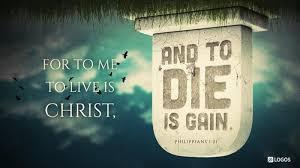
Key verse: For to me, to live is Messiah, and to die is gain (Philippians 1:21).

The use of ADONAI: Long before Yeshua’s day, the word ADONAI had, out of respect, been substituted in speaking and in reading aloud for God’s personal name, the four Hebrew letters yod-heh-vav-heh, variously written in English as YHVH. The Talmud (Pesachim 50a) made it a requirement not to pronounce the Tetragrammaton, meaning the four-letter name of the LORD, Yod-Hey-Vav-Hey, since the ancient manuscripts do not give any vowel sounds, and this remains the rule in most modern Jewish settings. In deference to this tradition, which is unnecessary but harmless, I will be using ADONAI where YHVH is meant. In ancient times when the scribes were translating the Hebrew Scriptures, they revered the name of YHVH so much that they would use a quill to make one stroke of the name and then throw it away. Then they would make another stroke and throw that quill away until the name was completed. His name became so sacred to them that they started to substitute the phrase the Name, instead of writing or pronouncing His Name. Over centuries of doing this, the actual letters and pronunciation of His Name were lost. The closest we can come is YHVH, with no vowels. The pronunciation has been totally lost. Therefore, the name Yahweh is only a guess of what the original name sounded like. Both ADONAI and Ha’Shem are substitute names for YHVH. ADONAI is more of an affectionate name like daddy, while Ha’Shem is a more formal name like sir. Therefore, Jews, being respectful of the Third Commandment, use these words as replacements. The Talmud explains, “In the Sanctuary, the Name was pronounced as written; but beyond its confines a substitute Name was employed (Tractate Sotah VII.6). God has only one name, YHVH. All His other “names” like ADONAI Elohei-Tzva’ot, ADONAI Elohim, ADONAI Nissi, ADONAI Tzidkenu, and ADONAI-Tzva’ot, merely reflect His attributes.

Contrary to what some religious groups believe today, no one can say with confidence how to pronounce God’s Name. The “name” Jehovah, for example, is a made-up word by a Franciscan monk in the dark ages. He took YHVH, and inserted vowels between the known letters to invent a new word: YeHoVaH. Jews never, NEVER, use this made-up word. The last book of the B’rit Chadashah tells us that when Yeshua returns to the earth, He will reveal the Name that no one knew but Himself (Revelation 19:12). It seems best to leave this lost pronunciation unresolved until the Messiah comes.

The use of TaNaKh: The Hebrew word TaNaKh is an acronym, based on the letters T (for “Torah”),N (for “Nevi’im,” the Prophets), and K (for “Ketuvim,” the Sacred Writings). It is the collection of the teachings of God to human beings in document form. The term “Old Covenant” implies that it is no longer valid, or at the very least outdated. Something old, to be either ignored or discarded. But Jesus Himself said: Don’t think I have come to abolish the Torah and the Prophets; I have not come to abolish but to complete (Matthew 5:17 CJB). I will be using the Hebrew acronym TaNaKh instead of the phrase the Old Testament, throughout this devotional commentary.

The Use of the phrase, “the righteous of the TaNaKh,” rather than using New Testament saints: Messianic synagogues, and the Jewish messianic community in general, never use the phrase Old Testament saints. From a Jewish perspective, they prefer to use the phrase, “righteous of the TaNaKh.” Therefore, I will be using “the righteous of the TaNaKh,” rather than Old Testament saints throughout this devotional commentary.

2026-05-11T13:17:14+00:000 Comments

Aa – Philippians, Where Life and the Bible Meet

Philippians, Where Life and the Bible Meet . . .

1. Look at the outline (Ab), and the Introduction (Ac) before starting on the commentary itself.

2. The DIG and REFLECT questions are in bold gray and will help to give you a deeper understanding of the book and make it more personal to you. Go slowly and give yourself time to answer these questions. They really strike at the heart of the commentary. What are the DIG questions for? To dig into the Scripture “story.” To find out what’s going on, to figure out the main idea, the plot, the argument, the spiritual principle, and so on. What are the REFLECT questions for? To apply the “story” in the Scripture to your own life; to take personal inventory and to decide what you are going to do about it! Many of the DIG and REFLECT questions are taken from the Serendipity Bible.

3. I would strongly suggest that you look up the references that are given in each section. Many times, this will greatly enhance the background, and hence, your understanding of the Scriptures that you are reading on a particular day. Take your time, read only as much as you can digest.

There are times when I refer you to either another file in Romans, or a file in another book of the Bible, to give you more detail on a particular person, topic, concept or theology. An example might be something like the Great Sanhedrin (see my commentary on The Life of Christ, to see link click LgThe Great Sanhedrin). If you feel you already know enough about the Great Sanhedrin, you can skip the reference and continue reading. But if it interests you, or if you don’t know what the Great Sanhedrin is, you can go to that file and read it first before continuing. It’s your choice. 

4. All Scripture is in bold print. The NIV is used unless indicated otherwise. However, sometimes the purpose of the bold print is merely for emphasizing a certain point. When bold maroon is used, it is for special emphasis. The words of Yeshua are bolded in red.

5. When bold teal is used in the text, it is quoted from one of the two Jewish commentaries listed in the bibliography. This will give you the moderate Orthodox Jewish interpretation. It is useful for word studies, but its Christology is obviously entirely wrong. Where rabbinical interpretation is cited, I will add, “The rabbis teach. . .” in front of the passage. Although it is not a Christian interpretation, I think it is interesting to see how the rabbis interpret these passages.

6. Read the Scriptures for a particular day first, then skim the DIG or REFLECT questions, read the commentary and reflect on it; answer the DIG or REFLECT questions, then read your Bible again. Hopefully, it will have greater meaning for you the second time you read it. Then live it out.

7. We have added two new features to our site. First, at the top of the page you can choose to “Save This Pages as a PDF” by simply clicking on the red rectangle; secondly, at the bottom of the page we have added a “text to speech” feature. Just click on the triangle in the middle of the black circle and you can hear the entire file. To go to the next paragraph, either forward, or backwards, click on the double arrows.

8. If you come to a Jewish word or phrase you do not understand, see the Glossary at the beginning of the book (see AdGlossary).

9. To download a pdf file, click on the red rectangle on the top of the page.

10. To hear the file read to you from the Ttsreader click on the triangle at the bottom of the page.

11. You can download anything you want from this devotional commentary for bible study. Nothing can be sold © 2026 all rights are reserved by Jay David Mack, M.Div.

2026-03-21T12:39:13+00:000 Comments
Go to Top