



Ad – Glossary

Abba: An Aramaic word used as an affectionate term of address to someone’s father. Yeshua used it to refer to God as His Father, and believers in Jesus also use it today to address God as Father. In modern Hebrew, this common name means Dad, Daddy, or Papa (also see Mark 14:36 and Romans 8:15).
Adar: the twelfth month of the Jewish biblical calendar.
Adonai: literally, my Lord, a word the TaNaKh uses to refer to God.
ADONAI: The Tetragrammaton, meaning the four-letter name of YHVH (Yud Hay Vav Hay). Since its pronunciation is not known, and also out of respect for God’s name, Jews traditionally substitute the words ADONAI and Ha’Shem. ADONAI, however, is more of an affectionate name like daddy (also see Exodus 3:15; Jeremiah 1:9; Psalm 1:2; Matthew 1:22; Mark 5:19; Luke 1:5; John 1:23).
ADONAI Elohei-Tzva’ot: the LORD God of heaven’s angelic armies. God does not have many names, as seen here and below, He has only one name – YHVH (Yud Hay Vav Hay). All the other names in the Bible describe His characteristics and His attributes.
ADONAI Elohim: This is the Hebrew word for LORD God. This title links Isra’el’s God, the God of the Covenant, with God as Creator of the universe (also see Genesis 2:4; Isaiah 48:16; Psalm 72:18; Luke 1:32; Revelation 1:8).
ADONAI Nissi: the LORD my Banner (see Exodus 17:15; Psalm 20:1).
ADONAI Shalom: the LORD of Peace.
ADONAI, The Angel of: He is called the Angel of ADONAI 58 times and He is called the Angel of God 11 times. This is never a common angel, but the second Person of the Trinity, Yeshua. This is always a reference to the pre-incarnate Messiah. Significantly, the rabbis teach that the phrase the Angel of ADONAI is sometimes used to denote God Himself.
ADONAI Tzidkenu: the LORD our Righteousness.
ADONAI-Tzva’ot: The LORD of heaven’s angelic armies (see Joshua 5:13-15; Second Kings 19:31; Psalm 24:10; Second Corinthians 6:18).
Adversary, The: Satan, the devil, the prince of the power of the air, and the old dragon.
Afikomen: Literally, “That which comes after.” Piece of matzah that is hidden during the Seder, to be found and eaten after the third cup of redemption.
Amen: At the end of a prayer, this word means, “It is true,” or “Let it be so,” or “May it become true,” indicating that the readers or listeners agree with what has just been said. Although everything Yeshua said was true, “amen” adds special emphasis (also see Deuteronomy 27:25; Jeremiah 28:6; Psalm 41:14; Nehemiah 8:6; Matthew 5:26; Mark 10:15; Luke 23:43; John 10:1).
Anti-missionaries: Today they are Orthodox Jews who champion Jews for Judaism through the organization called “Jews for Moses” to combat “Jews for Jesus.” They do not limit their mischief to harassing missionaries; any Jewish believer is a target. It is unfortunate that so many of these anti-missionaries feel their ends justify certain unethical means. In order to “protect” Judaism, they do or encourage others to do what Judaism condemns. In Paul’s day, they were the Judaizers who wanted Gentile believers to add obedience to the 613 commandments of Moshe, circumcision, and eating kosher to Paul’s salvation equals faith-plus-nothing Gospel.
Ariel: lion of God, or fireplace on God’s altar.
Aviv: the first month of the biblical year, corresponding to the modern Jewish month of Nisan.
Avraham: Abraham
Azazel: a scapegoat or goat demon sent out in the wilderness on Yom Kippur.
Ba’al: the chief male god of the Phoenicians and Canaanites. The word means lord or master.
Bar Mitzvah: Hebrew for “Son of the Commandment.” Although not specifically mentioned in the Bible, it is a Jewish coming of age ritual in which a young man, or Bat Mitzvah for a young woman, chooses to follow the commandments of their forefathers and takes responsibility for their own relationship with the God of Isra’el. This ceremony normally takes place at age 13 for boys or age 12 for girls. Afterwards, he/she is theoretically considered to be an adult, but in modern Judaism this is mostly symbolic, and a twelve-year-old is not treated like an adult.
BCE: These abbreviations, which mean “Before the Common Era,” are commonly used within the Jewish community instead of the more common BC, or, “Before Christ,” and AD, or “Anno Domini,” which is Latin for “in the year of our Lord.”
Beit-Lechem: Bethlehem, the birthplace of David and Yeshua, meaning house of bread.
B’midbar: the book of Numbers
Bnei-Yisrael: The children of Isra’el.
B’resheet: Genesis
B’rit Chadashah: Hebrew for the New Covenant. Christians commonly call it the New Testament.
Challah: Challah is a special bread of Ashkenazi Jewish origin, usually braided and typically eaten on ceremonial occasions such as Shabbat and major Jewish holidays. Ritually acceptable challah is made of dough from which a small portion has been set aside as an offering.
Chesed: “mercy,” “lovingkindness,” and/or “covenant-loyalty.” It is a complex word that summarizes God’scomplex and overwhelming love for His people, going beyond the concepts of love, mercy or kindness all together (also see Isaiah 63:7; Zechariah 7:1; Psalm 13:1; Psalm 86:1; Psalm 107:1; Psalm 118:1; Psalm 136:1).
Clear oil: In the oil pressing process this would have been oil from the first of three or pressings. The first pressing, most likely done by adding one stone weight to a wooden bean which then put pressure onto a bag of olives by being forced downward by the weight, was the one which produced the purest oil. This was traditionally the oil used in the Temple.
Cohen of Ha’Elyon: Priest of the God Most High.
Cohen: A priest, a man who offered sacrifices and performed other religious rituals at the Temple in Jerusalem.
Cohanim: The Cohanim were descended from Aaron, the brother of Moses. The Sadducees were from this priestly sect of Judaism.
Cohen Rosh Gadol: The Great High Priest who served as the head religious official, the only one to enter the Most Holy Place. Aaron, the brother of Moses, was the first man appointed as the Cohen Gadol. In later times, the Cohen Gadol was in charge of the Temple and its administration. The Cohen Gadol Caiaphas, played a key role in questioning Yeshua at His trial. The writer of Hebrews describes Messiah as our great Cohen Gadol, who gives us access to God’s throne in the heavenly sanctuary (also see Leviticus 21:10; Haggai 1:14; Nehemiah 3:1; Matthew 26:57ff; Mark 14:61ff; John 18:19ff; Hebrews 4:14ff and 10:19-22).
Covenant: Theologically, it speaks of the contractual relationship between God and His people. The Hebrew term is b’rit. Also see B’rit Chadashah, Hebrew for New Covenant (see Genesis 6:18 and 17:2; Jeremiah 31:30; Nehemiah 9:32; Matthew 26:28; Mark 14:24; Luke 1:72).
Defile, or tam’ei in Hebrew: This is not a sinful condition, but a condition of life. From this we can see that being tam’ei is merely a state of being unable to participate in the Temple service until cleansed because the person has come into contact with the realm of sin and/or death, not necessarily because the person has sinned himself.
Diaspora, the Dispersion: the scattering of the Jewish people in exile throughout the world. Today almost 7 million Jews live in Isra’el, and over 8 million more Jews live in the Diaspora (also see Isaiah 11:10; John 7:35).
Diver-Hayamim Alef: First Chronicles
Diver-Hayamim Bet: Second Chronicles
Diviners, Babylonian: Hebrew: gezar, primarily means to cut or divide. The term conveys a sense of separation or determination, often implying authority or finality in a decision being made. They were important in a theocratic society that was shaped by divine and royal decrees.
Drash: A drash is a long d’var.
D’var: Is a short talk on topics relating to a parashah, the weekly Torah portion.
D’vaim: Deuteronomy
Echad: The Hebrew word for “one” or “unity.” Echad is used in the Shema (Deuteronomy 6:4).
Eikhah: Lamentations
Elyon: A title for God, meaning the Most High God (see Luke 1:35 and 76; Acts 7:48). A longer form is El Elyon, God Most High (also see Deuteronomy 32:8; Isaiah 14:14; Psalm 91:1; Acts 16:17).
Elohim: “God” in general terms, or as Creator. Compared with ADONAI, God’s “covenant name” is used especially in His relationship to the Jewish people. Elohim is the plural form of El, also found in the Bible occasionally with the same meaning. Yeshua is sometimes called Ben-Elohim, the Son of God (also see Genesis 2:19; Isaiah 61:11; Matthew 4:3; Mark 1:1; Luke 1:35; John 11:4).
El Shaddai: God Almighty
Emissaries: Apostles
Enchanters, Babylonian: Hebrew: ashshaph, refers to a class or wise men who were often consulted for their ability to interpret dreams, signs, and omens, and as such, were key figures in the king’s advisory team.
God-fearers: These were Gentiles who became convinced that ADONAI was the only true God, they abandoned their paganism and idolatry, but they did not choose to become a proselyte in any form, and hence there was no adoption of Jewish customs or practices (see the commentary on Acts, to see link click Bb – An Ethiopian Asks about Isaiah).
Goyim: the nations, non-Jews, Gentiles
Gehenna: The word for “hell,” the place of perpetual misery and suffering after this life. It comes from the Greek word Genna and the Hebrew word Gei-Hinnom, which means the valley of Hinnom. There was actually such a valley by that name south of the Temple in Jerusalem. It was used as a garbage dump, and fires were always burning there, making it a suitable picture of life in hell. In Jewish sources, the term is used as the opposite of Gan-Eden, or the Garden of Eden or Paradise (Matthew 23:33; Mark 9:43).
Gentiles: A term for individuals or groups who are not Jewish. In Hebrew a common word for Gentile is goy or goyim is the plural form (see Isaiah 8:23; Matthew 10:18; Mark 10:33).
Go’el: Literally, a redeemer, used both for God and of people. In the book of Ruth, go’el means the kinsman-redeemer, a close relative obligated to defend and protect his kin. The go’el could buy back (redeem) land or someone who sold himself into slavery, and could marry a widow in the family in order to protect her future. The human go’el is a picture of God the greater Go’el who protects and redeems us, the members of His family (see Ruth 3:9-12).
Hag ha’Matzah: The Feast of Unleavened Bread
Halakhah: are mitzvot governing Jewish life and comes from the Hebrew root to walk. The rabbis used the term to refer to the legal way to walk out the commandments of the Torah. It can also refer to the Oral Law (see the commentary on The Life of Christ Ei – The Oral Law). A (one) halakhah is a specific ruling given regarding a particular issue, “the halakhah” being the ruling accepted and observed by the Jewish community.
Hametz or Chametz: The Hebrew word for leaven, or yeast, which makes bread rise. God commanded Isra’elnot to eat hametz during Passover, Yeshua teaches that both good and evil spread, the same way hametzleavens the whole batch of dough (Also see 16:6-12; Mark 8:15; Luke 12:1 Exodus 12:20; Leviticus 7:13; Amos 4:5; Matthew 13:33 and 13:21).
Hanukkah: Meaning dedication, the feast lasts eight days and commemorates the victory of the Maccabees over the armies of Antiochus Epiphanes in 165 BC and the rebuilding and dedication of the Temple after its desecration by Syrian invaders.
Hanukkiah: a candelabra specifically designed to hold the nine candles on Hanukkah, one candle for each night and an extra candle in the middle, with which to light the other candles. The candles are lit from right to left.
Ha’Shem: The Tetragrammaton, meaning the four-letter name of YHVH. Since its pronunciation is not known, and also out of respect for God’s name, Jews traditionally substitute the words ADONAI and Ha’Shem. While ADONAI is more of an affectionate name like daddy, Ha’Shem is a more formal name like sir (also see Exodus 3:15; Jeremiah 1:9; Psalm 1:2, Matthew 1:22; Mark 5:19; Luke 1:5; John 1:23).
Hellenist: In the B’rit Chadashah, it refers to Jews who lived in the Diaspora, or had moved to Isra’el from the Diaspora, spoke Greek, and were more Greek in their culture, than traditional Jewish people brought up in Isra’el (Acts 6:1, 9:29, 11:20).
Immerse: To dip the whole body under water as an act of dedication to the LORD, or as a profession of faith in Yeshua. The word is often seen in other translations as “baptize.” The ceremony of dipping is called “immersion” or “baptism.” Yeshua’s cousin was known as John the Immerser (Matthew 3:1; Mark 6:14; Luke 7:20).
Imputation: To reckon or charge to one’s account. When the Spirit gives life (John 6:63a), that means that all the righteousness of Christ is transferred to your spiritual account at the moment of faith. What is true of Messiah is true of you, minus His deity.
Incarnation: The divine revelation (Hebrews 1:1-2) of YHVH becoming one with humanity as an ordinary human being in the person of Yeshua Messiah. He was one-hundred percent man and one-hundred percent God. The Triune God knew that the Second Person would come to earth to be subject to numerous evils: hunger, ridicule, rejection, and death. He did this in order to negate sin, and therefore, its evil effects.
Iyov: Job
Jerusalem Council: An early guiding body of believers that convened around 50/51 CE, made up of the apostles, elders, and other prominent figures within the Messianic community (see the commentary on Acts Bs – The Council at Jerusalem). The purpose of the council was to decide whether or not Gentiles must convert to Judaism, and therefore, be obligated to be circumcised and Torah observant before becoming part of the Messianic community. The final decision, after much debate, was that Gentiles are not required to convert to Judaism, and therefore, not obligated to undergo circumcision or be Torah observant. But, they did retain some prohibitions (see Acts Bt – The Council’s Letter to the Gentile Believers).
Judaizers: Jewish false teachers, who taught that obedience to the 613 commandments of the Torah were necessary to have a relationship with God, and opposed Paul at every turn. Everywhere Paul went, the Judaizers were sure to follow. Once Paul established a church in Galatia, as soon as he left, they would come in and distort the Gospel of Messiah (1:7).
Justification: The act of God whereby, negatively, He forgives the sins of believers and, positively, He declares them righteous by imputing the obedience and righteousness of Messiah to them through faith (Luke 18:9-14). It is not a reward for anything good we have done. It is not something we cooperate with God in (in other words, it is not sanctification). It is an utterly undeserved free gift of the mercy of ADONAI (Romans 3:24; Titus 3:7). It is entirely accomplished by God, once and for all, at the moment of salvation. It results in good deeds (James 2:14-26) and sanctification over our lifetime.
Kadosh: The Hebrew word for ‘holy.” This term describes the people set apart for God. ADONAI Himself is kodosh (Leviticus 19:1-2). Many letters to Christ’s newly formed communities (churches) address Yeshua’s followers as the Kedoshim (also see Jeremiah 2:3; Nehemiah 8:10; First Corinthians 1:2; Ephesians 1:1; Philippians 1:1; Colossians 1:2).
Kedoshim: The holy ones
Kippah: Known as a yarmulke or skullcap, a kippah is a head covering for Jews. The tradition to wear a kippah does not come from any biblical passage. Rather, it is a custom which evolved as a sign of recognition that there is Someone “above” who watches our every act.
Kohelet: Ecclesiastes
Korban: The root of the word korban, can be translated to bring near. A korban, then, should be defined as something brought near. The reason it is so named is that the person bringing an offering did so in order to be brought near to God. It was a sacrifice or offering dedicated to God, especially to fulfill a vow. If something was to be dedicated to God, it generally could not be used for other purposes. Some Pharisees and teachers of the Torah wrongly used this as an excuse not to provide for their parents in their old age, even though Jewish teaching insisted that the commandment to honor one’s father and mother extended to providing for their physical needs (see Mark 7:11).
Kosher: Kosher foods are those that conform to the Jewish dietary regulations of kashrut, primarily derived from Leviticus and Deuteronomy. Food that may be consumed according to halakha is termed kosher in English, from the Ashkenazi pronunciation of the Hebrew term kashér, meaning “fit”.
Levite: Descendants of the tribe of Levi, who served in the Tabernacle and Temple as gatekeepers, musicians, teachers, and assistants to the priests. The scribes, or Torah-teachers, originally came only from among the Levites and were the forerunners of the Pharisees. They later expanded to include members who were from all tribes, with no affiliation with Levi required. (Also see Exodus 4:14; Ezeki’el 48:12; Ezra 1:5; John 1:19).
LORD: When the translators of the King James Bible in the 1600’s came to the Hebrew word YHVH, they needed to distinguish it from the word Lord, meaning master. So, they capitalized it. Therefore, LORD is actually the Tetragrammaton, meaning the four-letter name of YHVH.
LXX (Septuagint): The “official” Greek translation of the TaNaKh, dating from the third century BC through the fourth century AD. The original translation was of the Torah (the five books of Moshe), which the Letter of Aristeas records was allegedly made by seventy Jewish scholars in Alexandria (Egypt) from which it gained its name (Septuagint). It is commonly referred to by the abbreviation, LXX (70).
Mattityahu: Matthew
Midrash: An ancient commentary on part of the TaNaKh, attached to the biblical text. It also offers existing and potential interpretations of Jewish halacha.
Mikhah: Micah
Magi, Babylonian: Hebrew: chartom, refers to a magician or wise man, often associated with the practice of interpreting dreams, or performing magic.
Mal’akhi: Malachi
Malki-Tzedek: Melchizedek.
Mashiach (Hebrew): Messiah, the Anointed One (Matthew 26:63; Mark 1:1; John 20:31).
Matzah (singular) or Matzot (plural): Unleavened bread, which is made without yeast, eaten especially during the feast of Passover. Also see hametz (also see Exodus 13:6; Leviticus 2:5; Ezeki’el 45:21; Matthew 26:17; Mark 14:22; Luke 22:19; John 13:26).
Masoretic Text: The official text of the TaNaKh edited by the Masoretes, or Jewish grammarians, during the sixth to tenth centuries AD. This text is “pointed” with various vowel signs and accents which were lacking in the previous texts.
M’chitzah, the: The middle wall of separation (see the commentary on Acts Cn – Paul’s Advice from Jacob and the Elders at Tziyon).
Megillah (singular) or Megillot (plural): The five books in the Writings used for special readings during the holidays: Song of Songs, Ruth, Lamentations, Ecclesiastes and Esther.
Menorah (singular) or Menorot (plural): It is simply the Hebrew word for “lamp.” The seven branched lampstand(s) designed and commanded by God for service in the Tabernacle/Temple (Exodus 25:32; First Kings 7:49; Zechariah 4:2).
Messiah (Greek): Christ, the Anointed One, often used in speaking of a Redeemer sent from God to free His people from exile and oppression (also see Matthew 1:16; Mark 8:29; Luke 2:11 and John 1:41).
Midrash (singular) or Midrashim (plural): allegorical interpretation or application of a text. The listener is expected to understand that the writer of the midrash is not expounding the plain meaning of the text, but introducing his own ideas.
Mikveh: a bath or pool with a flow of fresh water; used in Orthodox Judaism to this day for ritual purification or ceremonial cleansing, performed at various times in a person’s life (see Matthew 3:13 and Titus 3:5).
Mishlei: Proverbs
Mishnah, The: is the first major written collection of the Jewish oral traditions that are known as the Oral Law (see below).
Mitzvah (singular) or mitzvot (plural): Primarily a commandment from God in the Torah. (Deuteronomy 11:22; Second Kings 17:37; Proverbs 6:20; Matthew 26:10; Mark 14:6). Today, a more modern meaning would be “a good deed,” more broadly, a general principle for living.
M’Lakhim Alef: First Kings
M’Lakhim Bet: Second Kings
Moshe: Moses.
Nachum: Nahum
Nechemyah: Nehemiah
Olam haba: “The age to come,” or “the world to come.” It describes a time after the world is perfected under the rulership of Messiah. This term also refers to the afterlife, where the soul passes after death. It can be contrasted with olam ha-zeh, “this world” (Matthew 12:32; Mark 10:30; Luke 18:30 and 20:35; Ephesians 1:21; Hebrews 6:5; Revelation 20-21).
Omer: Meaning “sheaf,” the bundle of barley used in the Firstfruits offering. After the Temple period it came to be identified with Sefirat ha’Omer, or the counting of the omer, the counting of the days from Firstfruits to Shavu’ot.
Oral Law: The Oral Law refers to the Talmud, which is a compilation of rabbinic commentaries on the first five books of Moses, called the Torah. The Talmud, completed around 500 ACE, consists of the Mishnah as well as commentary on the Mishnah called Gemara (Mishnah + Gemara = Talmud). The tradition grew to include a further compendium called Midrash until about the 12th century. The rabbis taught that when the Messiah came, He would not only believe in the Oral Law, but He would participate in the making of new Oral Laws (see the commentary on The Life of Christ Ei – The Oral Law).
‘Ovadyah: Obadiah
Pentateuch: Another name of the Torah, it refers to the first five books of Moses.
Pesach: Passover. The Jewish festival commemorating deliverance from Egyptian bondage. In Biblical times Jews used to journey to the Temple, sacrifice lambs there, and eat a special meal commemorating the departure of the Jews from slavery in Egypt. It was one of the three “pilgrimage festivals” that all able-bodied Jews were expected to celebrate before YHVH in Yerushalayim. Today, Passover is celebrated at home with a special meal called a seder. Yeshua celebrated Passover with His apostles (Matthew 26:18; Mark 14:12; Luke 22:7; John 13:1).
Pharisees: One of the sects of Judaism in the first century. The Pharisees had their own views of how exactly to keep Torah. They were especially concerned with ritual impurity and (unlike the Sadducees) they believed in the resurrection of the dead. While the Sadducees were more involved with the Temple, the Pharisees were concerned more with home and synagogue life.
Propitiation: The averting of God’s wrath by means of the substitutionary and efficacious (producing the desired effect) sacrifice (death) of Yeshua Messiah (the atonement). It is the work of Messiah that satisfies every claim of God’s holiness and justice so that Ha’Shem is free to act on behalf of sinners.
Proselytes of the Covenant: In the third level of Gentile relationship to Judaism (see above), there were proselytes of the Covenant. They entered into the Covenant of Sinai as a full Jew, so to speak. Most of these were women because this level required circumcision.
Proselytes at the Gate: There were three levels of Gentile relationship to Judaism. After God-fearers and proselytes of the Gate were the second level. The Gate was the middle wall of separation (Ephesians 2:14) in the Temple compound that Gentiles were not allowed to go beyond under penalty of death (see the commentary on Acts Bb – An Ethiopian Asks about Isaiah 53). These were Gentiles who adopted many Jewish practices like celebrating Shabbat and the feast of Isra’el, but did not become a full proselyte. Most of these were men because it didn’t require circumcision.
Purim: Meaning “lots,” is the holiday based on the story of Esther.
Qumran: A site overlooking the Dead Sea where Jewish sects lived in religious communities from 135 BC to 70 AD and from which we have numerous documents which are frequently referred to as the Dead Sea Scrolls. These texts include partial copies and fragments of most of the biblical books (the only whole copy is Isaiah), apocryphal writings such as Enoch, and texts produced by the community itself (the manual of Discipline and the Thanksgiving Hymns). The texts are referred to according to the number of the cave in which they were discovered (for example, 1Qs [Community Rule], 11Q Temp [Temple Scroll]).
Rasheet: One of several names for the Festival of First Fruits.
Redeemed: Setting free from slavery, buying back something lost, for a price.
Righteous of the TaNaKh: Old Testament believers.
Rosh Ha’Shanah: Hebrew for “Head of the Year.” Known as the Jewish New Year, or the Feast of Trumpets.
Ruach: The Hebrew word for “spirit,” “breath,” or “wind.” Yeshua explains wind and Spirit to Nicodemus in John 3:5-8. Scripture frequently refers to the Ruach Ha’Kodesh, the Holy Spirit (Exodus 35:31; Numbers 11:25; Malachi 2:15; Acts 2:2 and 10:44; Romans 8:4-17).
Ruach Ha’Kodesh: The Hebrew name for the Spirit of God, or the Holy Spirit (Isaiah 63:11; Psalm 51:13; Matthew 1:20; Mark 1:8; Luke 1:16; John 14:26).
Rut: Ruth
Sadducees: One of the sects of Judaism in the first century. From the Sadducees came the leading priests who managed the affairs of the Temple. In contrast to the Pharisees, they did not believe in the resurrection of the dead (Matthew 16:12; Mark 12:18; Luke 20:27).
Shir-Hashirim: Song of Solomon
Sh’mu’el Alef: First Samuel
Sh’mu’el Bet: Second Samuel
Sanhedrin: Literally, the gathering of the seated, like being a judge seated on a bench – a legal term for an officiating judge. This was the Supreme Court of ancient Isra’el. It exercised legislative and judicial authority (Matthew 26:59; Mark 15:1; Luke 22:66; John 11:47).
Sanctification: To be set apart, specifically, to the holy use and purposes of God. It is a process that takes a whole lifetime. It is the work of God in which you cooperate (Romans 12:1-2; First Corinthians 10:13; Hebrews 12:3-4; First Peter 5:8-9); and is a process Ephesians 4:11-16), trusting in God, apart from whom we can do nothing (John 15:5; Ephesians 3:16; Colossians 1:11; Hebrews 2:18 and 4:14). He who began a good work in you will carry it on to completion until the day of Christ Jesus (Phil 1:6).
Septuagint: The Septuagint is the Greek translation of the Hebrew Scriptures and was presumably made for the Jewish community in Egypt when Greek was the common language throughout the region. It is also called the translation of the Seventy because tradition states that the Septuagint was translated by seventy rabbis. In academia, the Septuagint is often abbreviated as LXX (the Roman numeral for seventy) in honor of this translation.
Shabbat: The Sabbath Day, the seventh day of the week, when work ceases. On this day God’s people are beckoned to rest and renew our relationship with our Creator, who also rested on the seventh day. Shabbat begins on Friday evening at sundown and ends Saturday evening after three stars appear (Exodus 20:10; Nehemiah 9:14; Matthew 12:10; Mark 1:21; Luke 23:56; John 9:14).
Shaddai: A common name for God in the TaNaKh, usually translated as Almighty. The name is often used in a combination such as El Shaddai, or God Almighty (Genesis 17:1; Ezeki’el 1:24; Job 11:7).
Shall be cut off: This phrase may mean that the person is stoned to death, or that he is barred from returning to the Tabernacle or Temple to offer sacrifices. This person would be cherem, literally set apart for destruction, either physically or culturally.
Sh’mot: Exodus
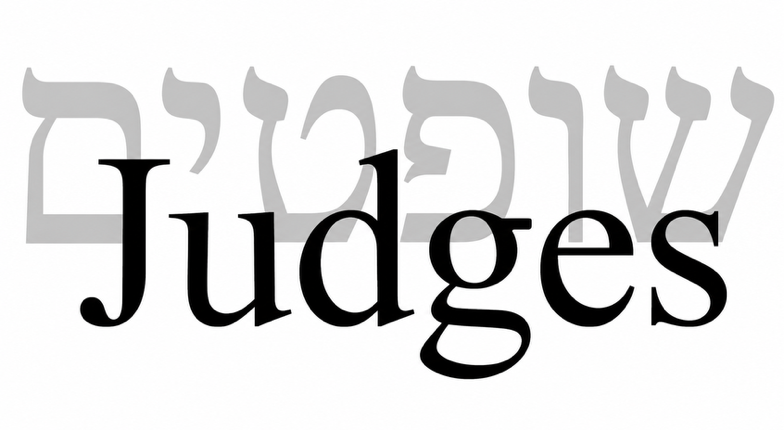
Shof’tim: Judges
Shaliach: A legal representative, meaning one who is sent.
Shalom: The Hebrew word for peace, wholeness, wellness and true happiness; it is a greeting used when meeting or departing (Genesis 26:31; First Samuel 16:4; Second Chronicles 18:16; Matthew 10:13; Mark 9:50; Luke 1:28; John 14:27).
Sh’khinah glory: The visual manifestation of the glory of God.
Shavu’ot: the festival of Weeks (Hebrew) or Pentecost (Greek), since it comes seven weeks after Pesach; also called Pentecost, from the Greek word for fifty because one counts fifty days after Passover. It is one of the three “pilgrimage festivals” that all able-bodied Jews were expected to celebrate before YHVH in Yerushalayim. It originally celebrated the harvest, but later commemorated the day God gave the Torah to Isra’el. After Yeshua’s resurrection, the disciples waited for God’s gift of the Ruach Ha’Kodesh, which also came on Shavu’ot (Exodus 34:22; Second Chronicles 8:13; Acts 2:1 and 20:16; First Corinthians 16:8).
Sh’ol: The Hebrew equivalent of the Greek “Hades,” the place where the dead exist.
Shofar: A ram’s horn, used in the Bible for summoning armies, calling to repentance, and in other situations. Blasts of various lengths and numbers signified different instructions. Metal trumpets were also used for similar purposes, but exclusively by the cohanim. Today, the shofar is used on Rosh ha-Shanah of Yom Kippur, the Jewish High Holy Days. The shofar also ushers in the Year of Jubilee (Leviticus 25:9-10; Zechariah 9:14; Matthew 24:31; First Corinthians 15:52; First Thessalonians 4:16-17).
Sinai: the mountain in the desert between Egypt and the land of Isra’el.
Shuwb: turn, turning, and the big idea of Jeremiah.
Son of Man: A name that Yeshua commonly used to refer to Himself. It comes from Dani’el 7:13-14, in which the Son of Man is given all authority. This name sometimes emphasizes Yeshua’s humanity and sometimes His deity (Matthew 9:6; Mark 9:31; Luke 21:36; John 6:27).
Sorcerers: Hebrew: kashaph, refers to the use of drugs, potions, or spells and is associated with “sorcery” or “witchcraft.”
Sukkot: the festival of Booths or Tabernacles, celebrating the forty years when the people of Isra’el lived in booths, tents, shacks, in the desert between Egypt and the land of Isra’el. The Hebrew word sukkah means booth and sukkot is the plural and means booths. Sukkot is one of the three “pilgrimage festivals” that all able-bodied Jews were expected to celebrate before YHVH in Yerushalayim (Leviticus 23:34; Zechariah 14:16; Second Chronicles 8:13; Matthew 17:4; Mark 9:5; Luke 9:33).
Synagogue: A place of assembly for Jews for hearing the Torah, praying and worshipping God. There were many synagogues throughout Isra’el and the Greco-Roman world (Matthew 4:23; Mark 5:22; Luke 4:16; John 9:22).
Tabernacle: A temporary dwelling, such as the booths constructed during Sukkot. It is also used in the TaNaKh of the tent in which God dwelt among the Jewish people, both in the wilderness and in the land of Isra’el. When the word is used as a verb, it refers to Yeshua coming to dwell among His people (John 1:14), reminding us of the wilderness Tabernacle and also of the Feast of Tabernacles (Exodus 25:9; First Chronicles 6:17; John 1:14 and 7:2).
Talmid (singular) or Talmudim (plural): Student or students.
Talmud: The codified body of Jewish Oral Law; includes literary creations, legends, scriptural interpretations, comprising the Mishnah and the Gemara.
TaNaKh: The Hebrew word TaNaKh is an acronym, based on the letters T for “Torah”,N for “Nevi’im” (Prophets), and K for “Ketuv’im” (Sacred Writings). It is a collection of the teachings of God to human beings in document form. This term is used instead of the phrase, “the Old Testament,” which sounds “old” and outdated.
Tehillim: Psalms
Torah: Literally, this Hebrew word means teaching or instruction (Exodus 13:9; Isaiah 2:3; Psalm 1:2; Matthew 5:17; Mark 1:22; Luke 24:44; John 7:19; Romans 7:1ff; First Corinthians 9:20-21; Galatians 3:21). It can be used for the five books of Moshe, or more generally for God’s commandments, or the whole TaNaKh (John 10:34). Uncapitalized, torah can be understood generally as a law or principle (Romans 7:21-8:2).
Torah-Teacher: A Torah scribe engaged in interpreting and transmitting the Torah. They wrote Torah scrolls, bills of divorce, and other legal documents. The Hebrew term is sofer.
Tree of Life, The: The tree at the center of the garden of Eden (Genesis 2:9, 3:24), the source of eternal life. Scripture points to a future in the B’rit Chadashah, with access to the Tree of Life. In the meantime, the Torahis like the Tree of Life to those who embrace her, and blessed will be all who hold firmly to her (Proverbs 3:18 also see Revelation 2:7, 22:2 and 14).
Tzedakah: Is a Hebrew word meaning righteousness, but commonly used to signify an ethical obligation to do what is right, and is commonly used to signify charity.
Tz’Fanyah: Zephaniah
Tzitzit: A fringe that was put on a garment in accordance with Numbers 15:37-41.
Tziyon: Zion, Mount Zion, was originally the City of David, south of the modern Old City of Yerushalayim. Later the name Tziyon came to refer metaphorically to the Temple Mount, Jerusalem, or the people of Isra’el. The hill now called Mount Tziyon was given its name in the fourth century AD (Isaiah 1:27; Psalm 65:2; Matthew 21:5; John 12:15).
Vayikra: Leviticus
Yarmelkes: see Kippah.
Yechezk’el: Ezeki’el
Yeshivah: The Hebrew word yeshivah comes from the word that means sit and it signifies a place for learning Torah. The Greek word schole, which gives us the English word school, means lecture hall. No English word really comes close to the real meaning of yeshivah, but the Yiddish word shul, or school, comes the closest.
Yeshua: The Hebrew name for our Messiah, known in English as Jesus, and is a masculine form, and a word play on yeshu’ah (salvation) (Matthew 1:21; Mark 6:14; Luke 2:21; John 19:19).
Yerushalayim: Jerusalem.
Yesha’yahu: Isaiah
Y’hoshua: Joshua
Y’hudah: Judah.
YHVH: The Tetragrammaton, meaning the Name, the four-letter name of God. Therefore, God does not have many names, He has only one name – YHVH (Yud Hay Vav Hay). All the other names in the Bible describe His characteristics and His attributes.
Yirmeyahu: Jeremiah
Yisra’el: Isra’el.
Yochanan: John.
Yo’el: Joel
Yom ha’Bikkurim: One of several names for The Feast of Firstfruits.
Yom Kippur: The Day of Atonement, the close of the High Holy Days, and considered the holiest day of the year in traditional Judaism.
Yonah: Jonah
Z’Kharyah: Zechariah