



Aw – The Defeat of the Canaanites 5: 19-23
The Defeat of the Canaanites
5: 19-23
The defeat of the Canaanites DIG: What had YHVH promised Isra’el? Why did the Canaanites think they had the advantage? Who were the stars from heaven? How did the sovereignty of ADONAI turn the tide of the battle? Why did Sisera flee on foot? Who was the Angel of ADONAI? Why was Meroz cursed?
REFLECT: When did the sovereignty of ADONAI show up in your life? When have you thought, “This is a God thing!” Who are the “Canaanites” you are fighting in your life today? Who are the people in your life who are aiding the enemy that you need to stay away from? How can you pray for them this week?
Suddenly, what had previously been an immeasurable advantage became a death trap.
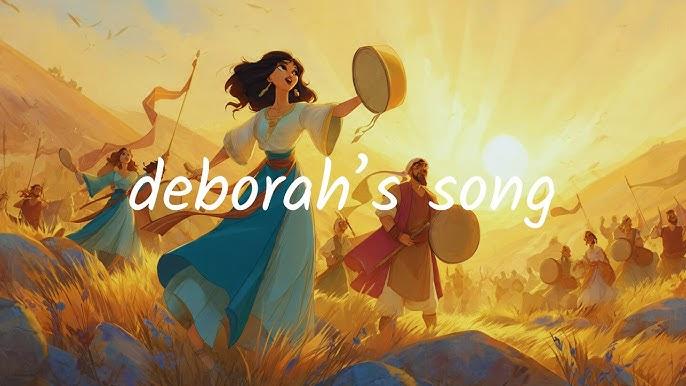
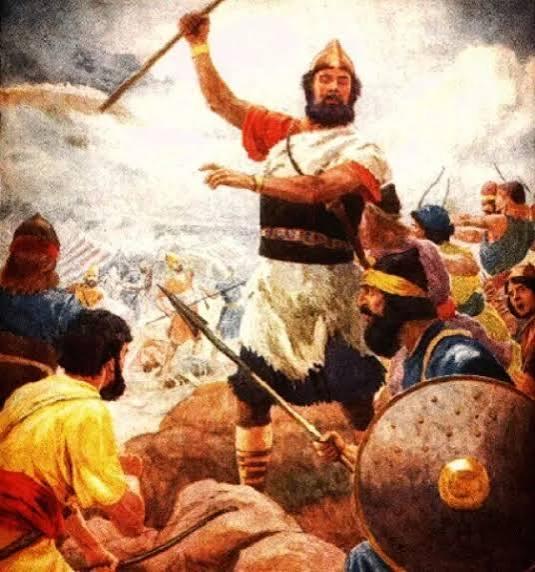
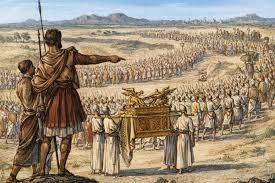
As Deborah’s victory song continues (to see link click At – Deborah’s Victory Song), we have a poetic account of the battle described in 4:13-16. It’s one thing to show up for duty and quite something else to go into battle. Sisera had organized an alliance of the Canaanite kings, and their united forces (with 900 chariots) met the Jewish army at Megiddo on the plain of Jezreel. Since it was the dry season of the year, the charioteers expected to annihilate the army of Isra’el. But ADONAI had other plans. He sent a tremendous rainstorm that turned the Kishon River to overflow and it turned the battlefield into a swamp. The army of Isra’el trusted YHVH to give them the victory because that is what He promised in 4:6-9.119
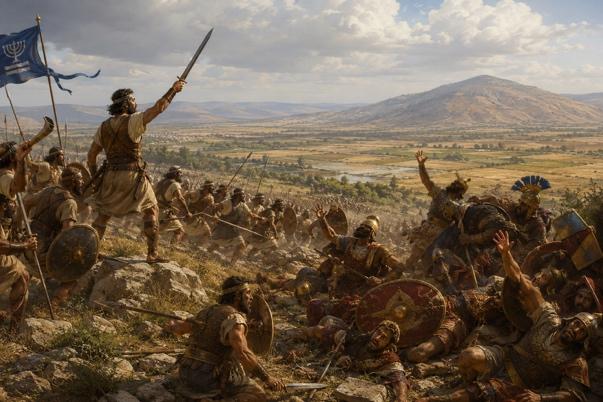
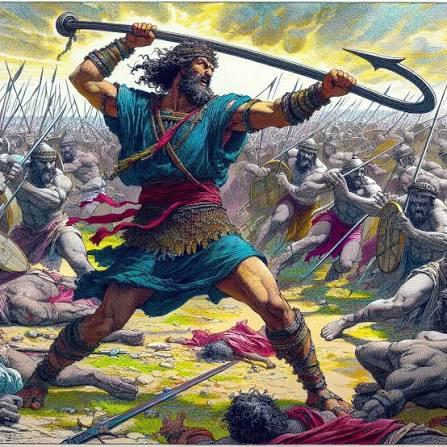
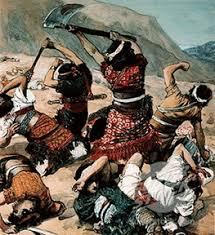
The Sixth Stanza (5:19-23): Sisera undoubtedly expected a swift and easy victory for his vastly superior military forces. The kings of Canaan came and fought at Taanach near Megiddo’s springs at the western end of the Jezreel Valley. This shows that Barak’s forces crossed the whole valley from the eastern side. But there was no way that Sisera could have prepared for what actually happened. Suddenly, what had previously seemed to be an immeasurable advantage became a death trap. Sisera and all his chariots and all his army were slain with the edge of the sword before Barak. The stars fought from heaven. The stars in their orbits fought against Sisera (5:19a-20 NLT). Heaven and stars are used here symbolically, meaning angels engaged in a war on behalf of Isra’el in the heavenly realms (see the commentary on Ephesians Ca – The Spiritual Battle). The Canaanites thought of the stars as heavenly powers that controlled the weather. Here, they are pictured as a heavenly army which fought against Sisera in a most unusual way. At the western end flowed the Kishon River, which would prove to be the Canaanites undoing. The Kishon River swept them away – that ancient river, the river Kishon (5:21a Hebrew). This is the equivalent of the avalanche of water that did the same thing to Pharaoh’s horses, chariots and charioteers in the Sea of Reeds.120
The Kishon River overflowed its banks, causing the battlefield to become muddy. This neutralized the chariot force, which was the primary military advantage that the Canaanites had over Isra’el. The flooding would also explain why Sisera fled on foot (4:17), since normally he could escape faster if he had a chariot, but not if his chariot was stuck in the mud.121 The phrase: March on, o my soul, with courage (5:21b Hebrew), is likened to: Bless ADONAI, o my soul, of Psalm 103:1, and is an indication of the strong encouragement that the singer, probably Barak, felt as he recalled the marvelous victory. Then the rhythm and sound of the stampeding Canaanite horses is captured in the next verse. The horses’ hooves hammered the ground, the galloping, galloping of mighty steeds of Sisera’s calvary fleeing the scene (5:22 NLT).122
But Isra’el’s enemies took no plunder of silver (5:19b NLT). The “taking” the plunder of silver is the poetic equivalent of what is described more matter-of-factly in 5:30. Stripping defeated enemies of anything of value was normal practice, except in Isra’el, where the plunder of a God-given victory was presented to Ha’Shem as its rightful owner. The Canaanites took no plunder in this case because they were either dead or fleeing the battlefield as the following verse describes.
“Curse Meroz,” said the Angel of ADONAI. Anywhere the Angel of ADONAI is mentioned in the TaNaKh, it is always the Second Person of the Trinity, the Pre-incarnate Yeshua Messiah. Then the reason is given. Let them be utterly cursed, because they did not come to help the LORD, to help YHVH against mighty warriors (5:23 NLT). This is the only mention of the town of Meroz in Scripture. It was an Israelite city that failed to do its duty. They sided with the Canaanites and let those fleeing through Meroz to escape when they should have blocked their path and killed them on the spot.123 The cursing of Meroz is deliberately contrasted with the blessing of Ja’el (see Ax – Blessed by Ja’el).
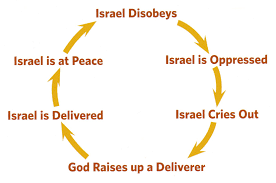
ADONAI continually demonstrates that He will not give up on His people. Even though this was the fourth time that they had apostatized, He was utterly consistent with them. He would not allow them to do as they pleased. As a result of His rich compassion, He would not leave them in prolonged oppression. While there is a decrease in the quality of the type of people He could use; nevertheless, He was able to bring restoration to His people. In fact, He used those who, in the ancient world, were deemed insufficient to fulfill the task.
The entire account is deliberately constructed to emphasize the deliverance provided by YHVH. He was the One behind the scenes, raising the generals, deploying the armies (even the enemy was indirectly controlled by him), dictating strategy, and effecting the victory. In the end, both the story and the song celebrate the saving work of the LORD. The text stresses God’s sovereignty over human events. Therefore, this passage encourages us to perceive ADONAI’s sovereignty over history and our own lives. Whether it is His discipline, in His compassionate deliverance, in His financial provision, or in His leading and guiding decisions, Ha’Shem is sovereign over our lives, and He’s working to complete His plan.124
But this wasn’t the only time that ADONAI’s sovereignty saved Isra’el. Within hours of becoming a state from UN General Assembly Resolution 181 on November 29, 1947, they were attacked by hostile Arab nations surrounding Isra’el on almost every side. However, Isra’el’s military and governmental systems were not fully organized. The main road to Jerusalem was blocked, trapping Jewish residents in the City without enough food or water. So the new state of Isra’el faced severe disadvantages, including a much smaller population, a severe lack of tanks, heavy artillery, or anti-tank weapons, no air force, while Arab nations used bombers and fighter jets, or navy to protect its coasts or stop naval blockades, and an economy that was not ready for total war against multiple professional Arab armies attacking all at once. Ammunition was so low that soldiers were often restricted to just a few rounds per day, or told to hold their fire entirely until the enemy was at point blank range, rather than receiving a standardized daily number of bullets . . . and they still won. Isra’el is still battling and defeating the “Canaanites” of today.
Dear heavenly Father, praise You for caring so deeply for Isra’el and for helping her win battles against all odds. Battles are not won by the number of men fighting, nor by the amount of artillery. A horse is prepared for the day of battle, but victory comes from ADONAI (Proverbs 21:31). You defeated Pharoah’s army without any army from Isra’el. I will sing to ADONAI, for He is highly exalted! The horse and its rider have been thrown into the sea. ADONAI is my strength and song, and He has become my salvation. This is my God, and I will glorify Him, my father’s God, and I will exalt Him. ADONAI is a warrior – ADONAI is His Name (Exodus 15:1-3)!
You defeated the great giant Goliath without any conventional weapons! Then David said to the Philistine, “You are coming to me with a sword, a spear and a javelin, but I am coming to you in the Name of ADONAI-Tzva’ot, God of the armies of Isra’el, whom you have defied. . . So David prevailed over the Philistine with a sling and a stone, struck the Philistine down and killed him (First Samuel 17:45, 50).
Even when all the armies of the world come against Messiah, Messiah will be victorious by the sword of His mouth. No need to fight; He wins without even a fight. And the armies of heaven, clothed in fine linen, white and clean, were following Him on white horses. From His mouth comes a sharp sword – so that with it He may strike down the nations – and He shall rule them with an iron rod, and He treads the winepress of the furious wrath of Elohei-Tzva’ot. On His robe and on His thigh He has a name written, “King of kings, and Lord of lords (Rev 19:11b-16).
Then the beast was captured, and along with him the false prophet who had performed the signs before him by which he deceived those who had received the mark of the beast, as well as those who had worshiped his image. These two were thrown alive into the lake of fire burning with brimstone. The rest were killed with the sword coming out of the mouth of the One riding on the horse. And all the birds gorged themselves with their flesh (Revelation 19:20-21).
Preparation for battle is necessary, but confidence must rest in Almighty ADONAI. He will answer him from his holy heaven with the saving might of his right hand. Some trust in chariots and some in horses, but we trust in the name of the Lord our God. They collapse and fall, but we rise and stand upright (Psalms 20:6c-8).
Thank you, almighty heavenly Father, that You rule over everyone and over every battle. You grant the victory that serves Your purpose. We put our trust in You and bow before You in love and worship! Knowing Your presence is within me (Hebrews 13:5), gives me the strength to proceed into the battle with my hand held tight in Yours and peace in my heart that You are in control. In Messiah Yeshua’s holy Name and power of His resurrection. Amen